

Nearly 90% of U.S. homes report better mood or calmness after adding a single houseplant. This small change can transform light, air, and style in any room.
This indoor plants list shows the best plants for apartments and houses. They combine beauty with low maintenance to fit busy lifestyles.
Each plant entry focuses on traits, basic care, and where to find them. Retailers like The Sill, Home Depot, Lowe’s, and garden centers carry many of these plants.
Readers will find plant ideas for common U.S. living conditions: low light, small spaces, and easy or varied care levels.
The guide helps beginners and intermediate growers pick plants that suit their light levels, décor, and care time.
Key Takeaways
- A single well-chosen plant can boost mood and improve indoor air quality.
- The list features easy-care houseplants accessible to most U.S. homes.
- Plants are chosen for popularity, availability, and light-level needs.
- Useful tips match plant choices with how much care you can give.
- Stores like The Sill, Home Depot, and Lowe’s are good sources.
Introduction to Indoor Plants
Indoor plants bring life and calm to homes. They fit modern design trends like biophilic design. These plants make rooms feel warmer and inviting.
This introduction shows why people choose indoor gardening. A simple indoor plant guide can help pick the right species. This is useful for living rooms, bedrooms, and home offices.
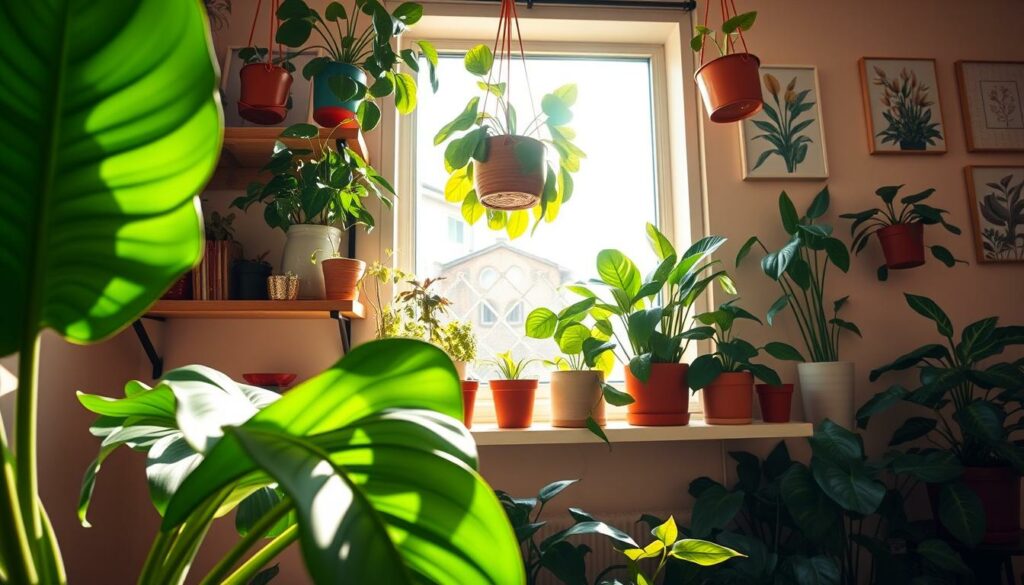
Plants matter for more than looks. They create focal points and soften hard edges. They also add texture to minimal interiors.
When placed near desks or bedside tables, plants improve mood. They can ease daily stress. Many homeowners find popular indoor plants turn plain spaces into productive areas.
Importance of Indoor Plants for Homes
People choose plants for aesthetic beauty and subtle health perks. Research like the NASA Clean Air Study sparked interest in plant air-purifying properties. In real homes, plants complement ventilation and air filters rather than replace them.
Proper airflow and a reliable air filter remain essential. Light, space, and routines determine which plants thrive. The ASPCA offers guidance on pet-safe versus toxic species. Pet owners should check recommendations before buying.
Size and willingness to prune or repot are practical factors to consider. These help when starting indoor gardening.
Benefits of Having Indoor Plants
Studies show clear benefits from indoor plants. Experiments link plant presence to less stress and better concentration in offices and classrooms.
Transpiration from leaves slightly raises indoor humidity. This helps with dry air in heated rooms.
- Reduced stress and improved focus in work and study areas.
- Slight increases in humidity that ease dry skin and sinuses.
- Lower levels of certain volatile organic compounds (VOCs) in controlled studies.
This indoor plant guide profiles popular indoor plants. Each profile covers features, care tips, and ideal placement. Readers can match plants to their light, space, and lifestyle needs.
Snake Plant: The Resilient Beauty
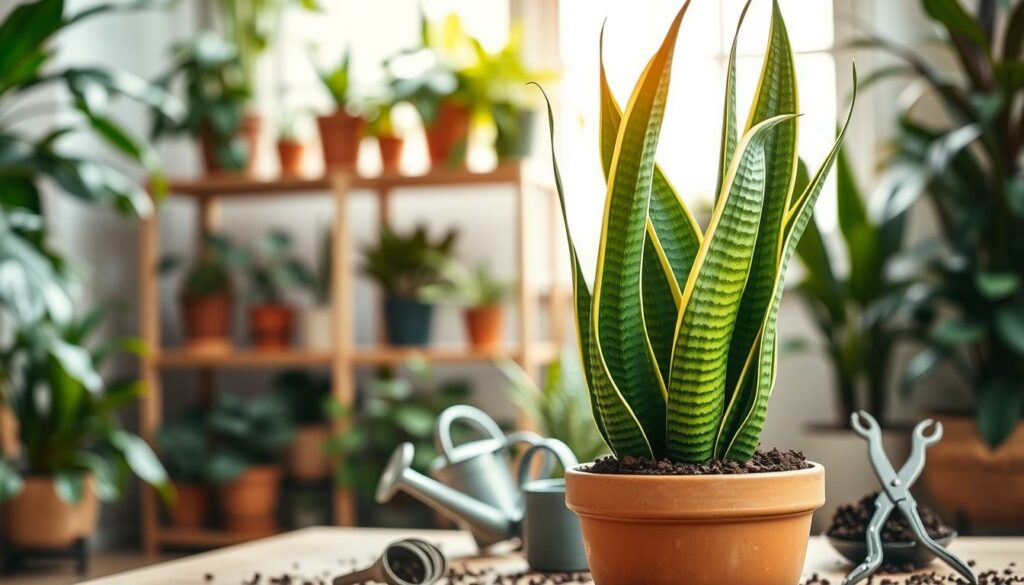
The snake plant, known as Sansevieria or Dracaena trifasciata, adds bold form and requires little care. Its upright, sword-shaped leaves give style to small apartments and large rooms. This hardy plant is perfect for those wanting style with easy upkeep.
Features and Characteristics
Leaves grow in tight rosettes with dark green bands. Some types, like ‘Laurentii’, have yellow edges to brighten spaces. It grows slowly and suits modern decor and small areas.
This plant tolerates many conditions, making it a top indoor plant choice. Its toughness makes it great for bedrooms and offices. Pests are rare, and the main risk is root rot from overwatering.
Care and Maintenance Tips
Use well-draining soil and a pot with drainage holes. Let soil dry between watering, from every two weeks in bright rooms to six weeks in dim areas. Bright indirect light helps growth, but low light works too.
Fertilize lightly in spring and summer with a balanced houseplant fertilizer. Repot every two to three years or when roots fill the pot. Remove damaged leaves to keep the plant healthy.
Signs of overwatering include soft, mushy, or yellow leaves. For style, put the snake plant in entryways, low-light corners, or with other sculptural plants. Caring for this plant fits easily into simple indoor plant routines and helps beginners explore houseplants.
Pothos: The Ultimate Easy Plant
Pothos is a top choice among indoor plants because it is forgiving and adaptable. It grows quickly and fits many indoor setups, from hanging baskets to vines. Its glossy leaves and long trails soften shelves and fill vertical space.
Why It’s Ideal for Beginners
Pothos can tolerate many conditions, making it great for beginners. Varieties like golden, neon, and satin pothos offer visual variety while staying easy to care for.
You can easily propagate pothos from stem cuttings in water or soil. New plantlets root fast, making it cost-effective for a personal collection or sharing with friends.
Growing Conditions and Light Requirements
Pothos grows best in bright, indirect light, which enhances variegation. It can survive low light, but growth slows and variegation may fade. It thrives indoors at typical temperatures of 60–85°F.
Use a well-draining potting mix and water when the top 1–2 inches of soil feel dry. Avoid waterlogging to protect roots. Feeding monthly with balanced liquid fertilizer during the growing season supports steady growth and fuller vines.
| Factor | Recommended | Notes |
|---|---|---|
| Light | Bright, indirect | Tolerates low light; best variegation with more light |
| Soil | Well-draining potting mix | Perlite or orchid bark helps drainage |
| Watering | Top 1–2 inches dry between waterings | Avoid soggy soil to prevent root rot |
| Temperature | 60–85°F (15–29°C) | Keep away from cold drafts |
| Fertilizer | Balanced liquid monthly | Feed during spring and summer growth |
| Propagation | Stem cuttings in water or soil | Fast rooting; ideal for expanding a houseplants list |
| Uses | Hanging baskets, shelves, moss poles | Versatile for many indoor plant ideas |
Spider Plant: A Classic Choice
The spider plant is a popular houseplant because it is easy to care for and looks graceful. It has arching, grass-like leaves with white variegation. Long stems produce plantlets that dangle like tiny green spiders.
This makes the spider plant perfect for decoration on shelves and hanging baskets inside the home.
Spider plants tolerate various light and humidity levels, so they are common in indoor plant guides. They prefer bright, indirect to moderate light and a well-draining potting mix. Water when the top inch of soil dries; occasional drying is fine.
Brown leaf tips are common and often caused by fluoride in tap water, low humidity, or too much fertilizer. Using filtered water or letting tap water sit overnight helps reduce this. Increasing humidity and cutting back on feeding during fall and winter also helps.
Varieties
Chlorophytum comosum ‘Variegatum’ shows bold white stripes on each leaf. Other types range from solid green to heavily variegated forms. All have the same cascading habit, which fits well in modern indoor plant decor.
Propagation
Propagating spider plants is easy and inexpensive. Cut off a spiderette and plant it in potting mix or place it in water until roots grow. When roots appear, move the plantlet into its own pot.
This makes sharing plants with friends simple and helps expand a home collection from the houseplants list.
For ongoing care, give occasional balanced fertilizer during growing season and avoid letting roots sit in water. These steps keep the spider plant resilient and attractive for anyone following an indoor plant guide.
Peace Lily: Stunning and Low-Maintenance
The peace lily is one of the best indoor plants for low-fuss blooms. Spathiphyllum species have glossy green leaves and white spathes that brighten rooms. Gardeners love cultivars like Mauna Loa and Sensation for their size and flowers.
Peace lilies fit well into collections because they combine beauty with easy care. They can improve air quality in studies and add polish to interiors. Keep them away from pets and children since they contain crystals that cause irritation.
Characteristics of Peace Lilies
Leaves are dark green and leathery, often arching from a central crown. White spathes surround a spadix and appear in spring. Under good conditions, mature plants show dramatic foliage and bloom often.
Watering and Light Preferences
These plants like consistently moist soil without standing water. Wilting means they need water and usually recover quickly after watering. Bright, indirect light helps flowers bloom while low light reduces blooms but keeps the plant alive.
Use well-draining soil that holds some moisture. Feed monthly with balanced fertilizer during spring and summer. Repot every one to two years if roots crowd the pot. Remove old blooms to help new ones grow. Mist leaves or use a pebble tray to keep humidity moderate.
| Care Area | Recommendation | Why It Matters |
|---|---|---|
| Soil | Well-draining potting mix with peat or coco coir | Balances moisture retention and aeration to prevent root rot |
| Watering | Keep evenly moist; water when top inch feels dry; avoid waterlogging | Prevents wilting while avoiding root disease from standing water |
| Light | Bright, indirect light; low light tolerated but fewer blooms | Promotes flowering and maintains leaf color without leaf scorch |
| Humidity | Moderate to high; mist or pebble tray recommended | Supports glossy leaves and reduces browning at tips |
| Fertilizer | Balanced houseplant fertilizer monthly during growing season | Supplies nutrients for blooms and healthy foliage |
| Safety | Toxic to pets and humans if ingested; place safely | Prevents accidental ingestion and associated irritation |
ZZ Plant: The Low-Light Wonder
The ZZ plant is known for its shiny, dark green leaves. It does well in offices, bathrooms, and shaded corners. Care is easy, making it a popular indoor plant.
The plant stores water in rhizomes, which helps it tolerate drought. This makes care simple for busy homes and workplaces. It also resists pests better than many other plants.
ZZ plants contain calcium oxalates and are toxic if eaten. Keep them away from pets and children. For safety, check resources from ASPCA or a vet.
Unique traits
- Glossy pinnate leaves that stay bright in low light.
- Compact, upright growth fits well in small spaces.
- Rhizomes store water, so watering is less frequent.
Care instructions for optimal growth
- Light: Low to bright indirect light is fine; avoid direct sunlight.
- Water: Let soil dry fully between watering to avoid root rot.
- Soil: Use well-draining potting mix with drainage holes in the pot.
- Feeding: Fertilize lightly every 6–8 weeks during spring and summer.
- Maintenance: Wipe leaves sometimes to remove dust and keep shine.
| Feature | ZZ Plant | Typical Care Tip |
|---|---|---|
| Light tolerance | Low to bright indirect | Place in shaded corner or near north-facing window |
| Water needs | Low; drought-tolerant | Water only when soil is dry to the touch |
| Soil | Well-draining mix | Use cactus mix or add perlite to standard potting soil |
| Pest resistance | High | Inspect leaves; treat scale or mealybugs if present |
| Toxicity | Contains calcium oxalates | Keep away from pets and children; consult ASPCA for guidance |
Fiddle Leaf Fig: A Statement Piece
The fiddle leaf fig (Ficus lyrata) is prized for its large, violin-shaped leaves. It has a dramatic vertical presence that anchors interior design.
This plant makes a strong impression in living rooms and entryways. It serves as an eye-catching example of indoor plant decoration.
Popularity and Aesthetic Appeal
Designers at Studio McGee and retailers like West Elm feature this plant for scale and texture. Its glossy leaves add height and rhythm to a room.
It pairs well with midcentury furniture or minimalist shelves. As a top indoor plant for statement styling, it defines a focal point easily.
Large leaves reflect light and brighten corners. This gives a living space an elevated, curated look.
Place it near an accent chair or console table. This helps balance the layout and adds visual interest.
Essential Care Guidelines
Fiddle leaf fig care depends on stable conditions. Offer bright, indirect light from east- or west-facing windows.
Avoid drafty spots and moving it often. Temperature swings can cause leaf drop.
Water when the top 1–2 inches of soil are dry. Use a well-draining mix with perlite or orchid bark to prevent root sogginess.
Rotate the pot every few weeks for even growth. Fertilize monthly during spring and summer with balanced houseplant fertilizer.
Prune to shape the canopy and remove yellow or damaged leaves. Repot every one to two years when roots fill the container.
Brown spots and leaf loss often come from inconsistent watering, low humidity, or pests like scale and spider mites.
Raise humidity with a humidifier or pebble tray. Inspect foliage regularly and treat pests with insecticidal soap if needed.
| Care Aspect | Recommended Practice | Common Problem |
|---|---|---|
| Light | Bright, indirect light near east or west windows | Leaf browning from direct sun or leggy growth from low light |
| Watering | Water when top 1–2 inches of soil dry; avoid waterlogging | Root rot from overwatering; brown edges from underwatering |
| Soil and Pot | Well-draining, aerated mix with perlite; pot with drainage | Poor drainage leads to soggy roots and decline |
| Humidity | Moderate to high humidity; use humidifier or pebble tray | Leaf curl and brown spots with dry indoor air |
| Maintenance | Rotate regularly, prune for shape, fertilize monthly in growth | Uneven canopy without rotation; nutrient deficiencies if unfed |
| Pests | Inspect often; treat scale or spider mites with insecticidal soap | Sticky residue or speckled leaves from infestations |
Dracaena: The Diverse Family
Dracaena plants add height, texture, and color to homes. They rank high on many houseplant lists for their shapes and easy care.
From small tabletop to tall floor-standing specimens, dracaena offers options for every room and style.
Various Types of Dracaena Plants
Popular species include Dracaena marginata, called the Madagascar dragon tree. Dracaena fragrans, known as Janet Craig, is also common. Others like Dracaena deremensis ‘Warneckei’ offer striped leaf patterns that catch the eye.
These choices expand indoor plant collections with forms fit for modern and classic interiors.
Variegated types need brighter light to keep their stripes vivid. Solid-leaf varieties tolerate lower light but still show dramatic foliage.
Sizes vary widely, making dracaena a good option for staging, corners, and mixed groupings on houseplant lists.
Common Care Techniques
Dracaena care focuses on bright, indirect light and well-draining soil. Water when the top inch of soil is dry. Avoid letting water sit to prevent root rot.
Use filtered or distilled water if fluoride or salts cause leaf tip browning. Fertilize lightly during spring and summer. Remove older canes to encourage fresh growth.
Repot every two to three years or when roots crowd the pot. You can propagate easily from cane cuttings to grow your indoor plant collection.
Watch for pests like spider mites and scale. Keep moderate humidity and gently clean leaves to keep plants healthy. With basic care, dracaena stays a durable, stylish choice among indoor plants.
Monstera Deliciosa: The Tropical Favorite
Monstera deliciosa brings a bold tropical vibe to modern homes. Its large, fenestrated leaves add drama and texture to indoor plant decorations. This plant is popular in living rooms, offices, and open-plan spaces.
Young Monsteras have solid leaves that develop splits and holes as they grow. Variegated cultivars like Albo and Thai Constellation are valued for their unique patterns and higher price. A Monstera makes a strong focal point without complex styling in any room.
Distinctive features
Monstera’s large, glossy leaves have natural splits called fenestrations. These holes help light reach lower leaves and reduce wind stress in their native habitat. The plant climbs and can be trained on a moss pole or allowed to trail, offering flexible indoor display options.
Best conditions for thriving
Give it bright, indirect light to promote big leaves and clear fenestrations. Avoid strong afternoon sun that can burn its leaves. Use a rich, well-draining potting mix with good aeration and water when the top 1–2 inches of soil are dry.
Moderate to high humidity supports healthy growth. Misting helps in small spaces, while humidifiers suit larger rooms. Fertilize monthly when the plant is growing actively to keep leaves glossy and full.
Practical care notes
- Support stems with a moss pole or stake to encourage vertical growth and a fuller shape.
- Yellow leaves can mean overwatering; brown edges may signal low humidity or underwatering.
- Check for pests like scale and spider mites and treat quickly if found.
Monstera fits many indoor decorating styles. It pairs nicely with textured pots, rattan furniture, and neutral colors. This popular plant offers a bold tropical look for anyone wanting to brighten a room with a standout centerpiece.
Rubber Plant: A Leafy Addition
The rubber plant, Ficus elastica, adds bold texture and clean lines to any room. Its large, glossy leaves make it popular.
It grows steadily and comes in various cultivars, ranging from deep green to variegated Tineke and Burgundy.
Ficus elastica can grow into a striking indoor tree with room and bright, indirect light. Variegated types need more light to keep their colors.
In low light, it may stretch and produce fewer leaves. This plant ranks high for visual impact and ease of care.
Description and Growth Habits
Rubber plants grow a single trunk with large, leathery leaves. Young plants grow compactly, while mature ones look tree-like if tall.
Growth depends on light, pot size, and feeding. Leaves start glossy and smooth. Some show cream or pink variegation that brightens rooms.
When choosing a cultivar, consider your space and light level carefully.
Maintenance Tips for Longevity
Use well-draining soil and a pot with drainage holes. Let the top inch of soil dry between waterings to avoid root rot.
Wipe leaves with a damp cloth to remove dust and help photosynthesis. Fertilize monthly in spring and summer with a balanced fertilizer.
Prune to control height; cut just above a node to encourage branching. You can propagate from stem cuttings in water or soil.
Common problems include leaf drop from drafts, sudden light changes, or too much water. Brown leaf edges may show low humidity.
Raise moisture by grouping plants or using a humidifier. Repot every two to three years when root-bound to refresh soil and support growth.
Ferns: A Lush Touch
Ferns add soft, layered greenery that enhances indoor plant decoration. They pair well with other indoor plants. These plants bring texture and a calm, natural feel to your space.
Use them in hanging baskets, on bathroom shelves, or in a bright living room corner.
Types of Ferns Suitable for Indoors
Several fern species thrive indoors. The Boston fern (Nephrolepis exaltata) has feathery fronds spilling gracefully from baskets. The maidenhair fern (Adiantum raddianum) has delicate, lacy foliage that looks elegant and fine.
The bird’s nest fern (Asplenium nidus) has broad, simple fronds and a bold shape. Each of these indoor plants fits different placement needs.
Boston ferns do well in bright, indirect light. Maidenhair ferns like steady humidity and consistent moisture. Bird’s nest ferns tolerate lower light and drier air better than many others.
Caring for Indoor Ferns
Ferns prefer bright, indirect light and soil that stays evenly moist. Use a peat-based or loam-rich mix with good organic matter to keep roots healthy.
High humidity is important for most species. Mist fronds, place pots on pebble trays, or run a small humidifier to avoid brown tips.
Water when the top inch of soil feels slightly dry. Make sure drainage prevents waterlogging.
Fertilize lightly every four to six weeks during the growing season. Check plants often for scale or mealybugs. Remove damaged fronds to keep plants looking tidy.
Adjust care if fronds turn brown from dry air or direct sunlight.
| Species | Light | Humidity | Best Placement |
|---|---|---|---|
| Boston fern (Nephrolepis exaltata) | Bright, indirect | High | Hanging baskets, north-facing rooms |
| Maidenhair fern (Adiantum raddianum) | Filtered light | Very high | Bathrooms, terrariums, humid kitchens |
| Bird’s nest fern (Asplenium nidus) | Low to bright, indirect | Moderate | Shelves, shaded corners, mixed plant displays |
Succulents: A Diverse Group
Succulents bring sculptural form and low-maintenance appeal to any indoor plant list. They fit small spaces, windowsills, terrariums, and modern shelves. These plants offer a range of textures and colors.
Many homeowners pick succulents when searching for the best indoor plants that need less fuss and more style.
Popular Succulent Varieties for Indoors
Echeveria and Haworthia provide compact rosettes and easy care. These make them staples on an indoor plant list. Sedum varieties add trailing shapes for hanging pots and shelves.
Aloe vera offers soothing gel for minor burns and skin care. Crassula ovata, the jade plant, has architectural leaves and slow, steady growth.
These indoor plants serve both decorative and practical roles. They suit bright spots and small planters. They also make ideal gifts for new plant owners.
Care Tips for Succulents
Succulent care relies on bright light and fast-draining soil. Place plants near south- or west-facing windows for direct or bright indirect light. Use cactus or succulent potting mix and pots with drainage holes to prevent soggy roots.
Watering should follow a soak-and-dry routine. Let the soil dry completely between deep waterings. Cut back watering during winter dormancy.
Overwatering leads to root rot. Too little light causes etiolation, or stretching. Feed lightly in spring and summer with diluted balanced fertilizer or one made for succulents.
Propagation from leaves and offsets is simple. This makes succulents cost-effective to expand a collection of the best indoor plants.
Conclusion: Choosing the Right Indoor Plant
Picking the right plant starts with a clear look at your space and lifestyle. Measure light at different times of day and note available room. Decide how often someone will water and repot the plant.
If pets or children live in the home, check ASPCA resources. Prioritize non-toxic plants for safety. This practical check helps avoid costly mistakes.
For low-light, low-maintenance needs, consider snake plant, ZZ plant, or pothos. For bold statement pieces that need more care, try fiddle leaf fig or monstera. In humid spots like bathrooms, ferns or peace lily do well.
These options match common indoor plant ideas and help readers fit plant personality to their home conditions.
Good indoor plant care is easy with basic habits. Follow soil drying cues before watering. Use well-draining soil and suitable pots.
Fertilize during the growing season and watch for pests. Raise humidity when needed. Start with easy species to build confidence before trying more demanding plants.
Readers can use the houseplants list to pick one or two starters. Visit local nurseries like The Sill, Bloomscape, or independent garden centers for healthy plants. Return to this indoor plant guide for care reminders and styling tips to keep spaces green and inviting.