

Nearly 70% of American homeowners wish they used their outdoor space more. Most never plan a single plant before digging. Small planning changes can double a yard’s usable value.
This guide offers a practical, step-by-step way to plan your garden layout.
The article explains how to assess site conditions and set realistic garden goals.
You will learn to choose plants suited to your local climate and soil.
The guide also shows how to add hardscaping and sustainable practices. It draws on trusted sources like USDA, Cooperative Extension, and Fine Gardening.
The guide is for home gardeners, first-time landscapers, and anyone wanting backyard inspiration.
Readers learn to create a scaled plan with zones and pick regional plants. You can use a garden layout planner tool when helpful. The guide also explains how to maintain the layout through the seasons.
The guide is modular: follow steps in order or jump to topics like plant selection or landscape layout tips.
Each step builds on the last for a clear, manageable process.
Key Takeaways
- Planning transforms underused yards into functional outdoor rooms.
- Start by assessing site conditions before choosing plants or hardscapes.
- A garden layout planner tool speeds design and helps create scaled plans.
- Use trusted sources—USDA, Cooperative Extension, and horticultural societies—for best practices.
- Follow sections in order or jump to specific topics like plant selection or pathways.
Importance of Garden Layout Planning
Good planning shapes a garden that delights and functions well. Thoughtful layout reduces maintenance and boosts productivity. It also makes outdoor areas more usable for family life.
Benefits of a Well-Designed Garden
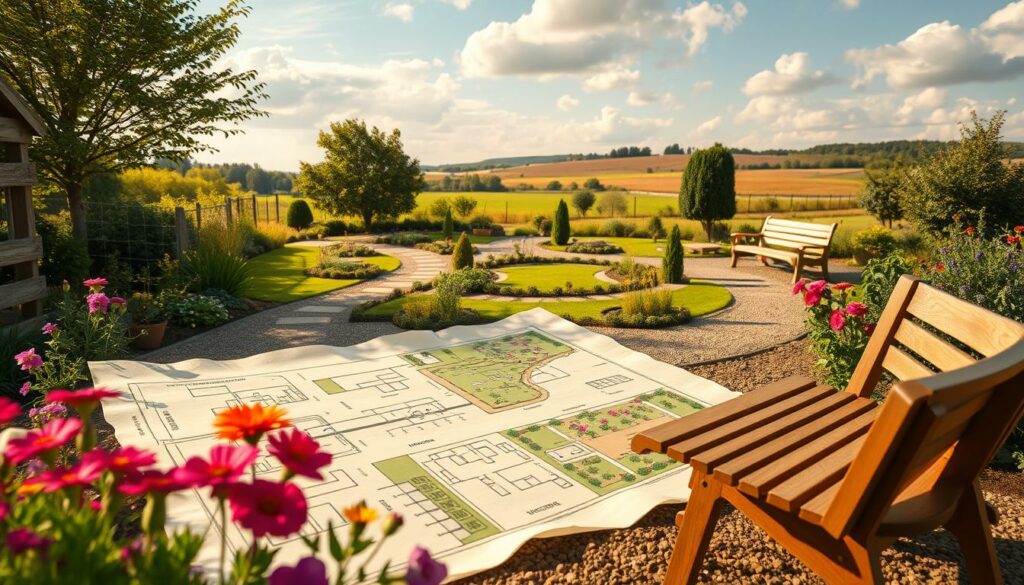
A well-designed plot raises vegetable yields and supports healthy ornamental plants. Planned beds cut time for weeding and watering. They also lower pest problems over the years.
Research by groups like the American Society of Landscape Architects shows planned landscapes need less upkeep. They add measurable property value too.
How Layout Affects Plant Growth
Microclimates form across a yard. Proper placement ensures plants get the right light and shelter. Correct spacing reduces root competition and helps air circulation.
This lowers disease risk and improves root growth. Edge effects matter as well. Wind, slope, and drainage shape soil moisture and nutrients.
Matching plant spacing and light needs to these conditions makes arrangements practical and effective.
Aesthetic Appeal and Functionality
Design that balances focal points, repetition, texture, and color makes spaces pleasing and coherent. Thoughtful hardscape placement and paths define areas for dining, play, or food growing.
Integrating seating, sight lines, and practical features enables smoother movement. It leads to better use of space. Landscape layout tips that consider beauty and utility create outdoor rooms that work year-round.
| Design Goal | Practical Strategy | Expected Outcome |
|---|---|---|
| Maximize edible yield | Use raised beds, group by water needs, and apply companion planting strategies | Higher harvests, easier maintenance, improved pest control |
| Improve plant health | Space plants by mature size and orient beds for optimal sun exposure | Better root growth, fewer fungal problems, longer plant life |
| Enhance usability | Lay clear paths, place seating near focal views, follow layout tips for flow | Comfortable entertaining areas, safe access, cohesive look |
| Lower maintenance | Group plants by maintenance needs and add mulch and drip irrigation | Reduced watering time, fewer weeds, predictable upkeep |
Assessing Your Space
Before planting, start with a clear survey. This helps in planning a good garden layout and organizing your outdoor space well.
Record measurements, light, and soil details. This way, you can match plants’ needs and make backyard layout ideas practical.
Measuring Garden Dimensions
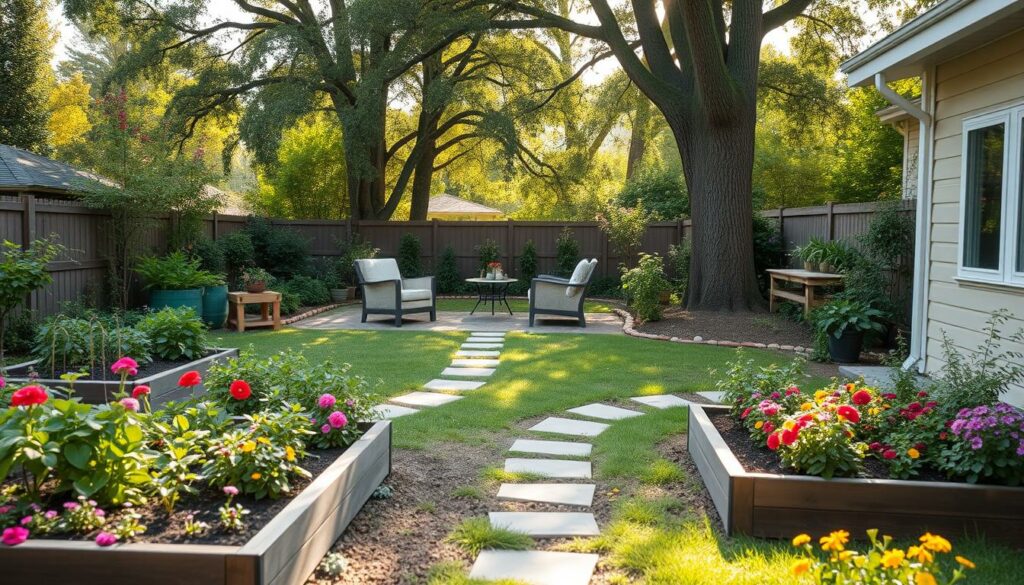
Begin by mapping property lines and fixed features. Use a tape measure or laser distance meter to record distances for garden beds, patios, fences, and overhead obstructions.
Create a scaled base map on graph paper or use digital tools. Use scales like 1:50 or 1:100. Note slopes, elevation changes, hardscape, and utility lines.
Contact local utility marking services like 811 before digging. Mark spots for sheds, arbors, and large trees.
Small, careful measurements prevent mistakes and improve outdoor space organization.
Identifying Sunlight Patterns
Track sun exposure through the day and seasons. Place sun-loving plants where they get enough light.
Use sunlight apps such as Sun Seeker or keep a simple garden journal. Record conditions at morning, noon, and afternoon for several days.
Note microclimates caused by buildings, fences, and mature trees. These cause shade or reflected heat pockets.
Classify areas as full sun (6+ hours), part sun/part shade (3–6 hours), or full shade (less than 3 hours). Use this to guide plant choices and layout planning.
Understanding Soil Quality
Test soil to learn its pH, texture, drainage, and organic matter. pH strips give quick results.
For deeper analysis, send samples to a cooperative extension lab. A jar test can show texture by letting sand, silt, and clay settle.
Check drainage with a percolation test. Time how fast water drains from a filled hole.
Measure soil depth for root crops. Shallow soils may need raised beds.
Based on tests, add amendments. Use compost or well-rotted manure to boost organic matter. Lime raises pH, while sulfur lowers it.
Contact a soil lab if you have ongoing nutrient or contamination issues.
Put all findings on your base map. Label sun zones, soil types, slopes, and utilities.
This helps anyone using a garden layout planner tool. You can create functional beds, paths, and planting schemes that fit your backyard layout inspiration and support long-term outdoor space organization.
| Assessment Step | Tools | Key Notes |
|---|---|---|
| Measure dimensions | Tape measure, laser meter, graph paper | Scale map at 1:50 or 1:100; note slopes and hardscape |
| Mark utilities | 811 utility marking, property records | Identify lines before digging; mark on base map |
| Track sunlight | Sun Seeker app, garden journal | Record morning, noon, afternoon; define sun/shade zones |
| Test soil | pH strips, jar test, percolation test, extension lab | Assess pH, texture, drainage, organic matter; choose amendments |
| Document results | Base map, digital planner | Integrate zones for plant selection and landscape features |
Defining Garden Goals
Deciding what a garden should do guides every choice that follows. Readers should list priorities like food production, entertaining space, wildlife habitat, or pure ornament. Clear goals help shape garden design ideas and focus plant selection, scale, and budget.
Types of gardens vary by purpose and upkeep. A flower plot favors ornamentals, perennial borders, and cut-flower areas that deliver color and texture with seasonal succession.
Flower garden strengths include strong curb appeal and pollinator support. A drawback is regular deadheading to keep displays fresh.
A vegetable garden centers on raised beds, row crops, and rotation to maintain soil health and steady yields. Succession planting keeps harvests going through warm months.
Vegetable garden benefits include direct food production and lower long-term plant costs. Downsides can be higher daily maintenance and pest management.
Mixed gardens combine edible landscaping with ornamentals to balance beauty and productivity. Strategically placed herbs, fruiting shrubs, and flowers support pollinators and ease harvesting.
Mixed garden pros are efficient space use and year-round interest. Cons include complex planning to avoid plant competition.
Seasonal planning secures interest across the year. Spring bulbs, summer perennials, and fall foliage provide layered color. Evergreens and ornamental grasses add winter structure.
For vegetables, succession planting and staggered beds produce continuous harvests. For ornamentals, sequencing bloom times preserves visual momentum through months.
Personal style steers aesthetic and maintenance choices. Formal gardens demand symmetry and structure. Cottage gardens welcome informality and dense planting. Xeriscape favors drought-tolerant natives for dry regions.
Practical preferences matter: low-maintenance schemes reduce chores. Showy displays require more input but reward with dramatic color.
Regional climate must guide choices. In the Northeast, cold-hardy perennials and spring bulbs dominate. The Southwest benefits from drought-tolerant species and shade solutions. The Pacific Northwest favors moisture-loving natives and layered understories.
Goal-setting tips make plans actionable. Prioritize core functions. Set realistic scale and budget. Create a wish list of features like seating, raised beds, or water sources. Use that list to inform zoning and plant arrangement strategies and to fuel backyard layout inspiration.
| Garden Type | Primary Focus | Maintenance Level | Best Use Case |
|---|---|---|---|
| Flower Garden | Ornamentals, blooms, pollinators | Medium to High | Curb appeal, cut flowers, seasonal displays |
| Vegetable Garden | Productive beds, crops, rotation | High | Food production, kitchen gardens, community plots |
| Mixed Garden | Edible landscaping, pollinator borders | Medium | Small yards needing both beauty and harvest |
| Xeriscape / Native Meadow | Drought tolerance, low water use | Low to Medium | Southwest yards, water-restricted sites |
| Formal | Symmetry, structured beds | Medium to High | Entrances, heritage homes, geometric designs |
Choosing Plant Types
Choosing the right plants sets the tone for a successful garden layout. This step mixes ecology with style to shape strategies. It also helps use garden space efficiently.
The following guide helps gardeners pick species that will thrive and support wildlife. It also ensures plants fit the garden design well.
Selecting Native Plants for Your Area
Native plants reduce maintenance and boost habitat value. The Lady Bird Johnson Wildflower Center and USDA offer region-specific lists. Local societies and botanical gardens give practical advice and sell trusted plants.
Using natives supports pollinators and fights local pests. This choice improves garden resilience and lowers irrigation needs.
Considering Climate and Hardiness Zone
The USDA Plant Hardiness Zone Map helps match plants to winter lows. Gardeners should also consider microclimates, frost dates, heat zones, humidity, and rainfall.
Pick plants rated for your zone. Watch for late frosts or heatwaves and note these on your plan. Place vulnerable species in sheltered spots.
Flowers vs. Foliage: What to Prioritize
Color from flowers offers seasonal highlights. Foliage adds texture and year-round structure. Combine perennials, shrubs, grasses, and annuals for bloom succession.
Group plants by water needs (hydrozoning) and size at maturity. Record spacing on the layout to prevent crowding. Companion planting cuts pests and boosts pollination.
| Selection Focus | Practical Tip | Benefit |
|---|---|---|
| Native plants | Use regional lists from trusted sources | Lower maintenance; wildlife support |
| Hardiness match | Reference USDA zones and microclimates | Higher survival through winter and heat |
| Flowers vs. foliage | Plan bloom succession and structural plants | Seasonal color and year-round texture |
| Hydrozoning | Group by water needs on the plan | Water savings and healthier plants |
| Spacing & maturity | Note final sizes and spacing on layout | Prevents crowding and reduces pruning |
| Reliable suppliers | Buy from local nurseries and botanical gardens | Better acclimated stock; expert advice |
Practical selection connects to plant arrangement strategies and efficient use of garden space. Clear notes on water needs, spacing, and blooming help the planting run smoothly.
These details keep the garden resilient and thriving over time. Proper planning supports long-lasting beauty and health.
Designing the Layout
Good garden layout starts with a clear vision and some practical steps. The design should balance function and beauty.
It should guide movement and make maintenance simple. Use scale, repetition, and focal points to create harmony.
Test sightlines from windows and patios. Build quick mock-ups to refine proportions and improve the design.
Creating Zones in the Garden
Divide the yard into zones for specific purposes: entertainment, kitchen garden, pollinator strip, play area, and storage.
Place high-use zones near the house for convenience and shorter trips. Group plants with similar irrigation and light needs together.
Use hedges, screens, or low walls to shield private areas. Repeat materials and plant forms between zones for smooth transitions.
Vertical Gardening Options
Vertical features add space and interest. Consider trellises, arbors, espalier, living walls, and container towers for vegetables and climbers.
These elements increase yield per square foot. They can also provide shade where it is needed in the garden.
Choose materials that support weight, like cedar, redwood, powder-coated steel, or composite panels. Anchor structures securely and follow guidelines.
Pathways and Accessibility
Paths shape movement and define garden rooms. Place routes that link key zones and allow bed access.
Design beds so they can be reached easily: 2–3 ft wide for one side, 4–6 ft for access from both sides.
Clear paths reduce trampling and make maintenance faster. Select surface materials for style and function.
Use gravel for casual paths and pavers for formal ones. Mulch works for soft edges; decomposed granite offers low-cost stability.
Consider ADA-friendly slopes and firm surfaces near seating and entrances. Plan drainage to avoid pooling and erosion.
Use layout techniques like repeating motifs and setting focal points. Transition plantings can guide eyes between areas.
These steps turn backyard layout ideas into a practical and lasting garden design.
Utilizing Garden Design Tools
A mix of digital apps, hand sketches, and professional advice helps gardeners turn ideas into plans. Choosing the right mix speeds decisions. It also reduces costly mistakes and clarifies plant placement, circulation, and maintenance.
Software and Apps for Garden Planning
SketchUp works well for 3D modeling and detailed views. Garden Planner and Gardena My Garden offer drag-and-drop plant libraries for quick layouts. Plan-a-Garden from Better Homes & Gardens and mobile apps like iScape provide easy editing and scaled measurements on the go.
Sun-tracking tools like Sun Seeker help place sun-loving beds correctly. Many programs export planting lists and material amounts. Features and prices vary with free, subscription, or one-time options.
Traditional Sketching Techniques
Start with a hand-drawn, scaled base map on graph paper. Use bubble diagrams to mark major zones like seating, beds, and lawn. Overlay tracing paper for quick variations without redoing the base.
Layer the plan in steps: base map, zoning, hardscape, planting plan, and maintenance notes. Colored pencils show seasonal color and texture. This hands-on method pairs well with digital mockups for exact measurements.
Benefits of Garden Design Consultations
Landscape architects, certified designers, and Master Gardener volunteers offer site-specific tips for grading, drainage, and lighting. They provide construction drawings contractors can use and save time by preventing errors.
Consultations customize plant choices to microclimates and can give accurate cost estimates. The American Society of Landscape Architects and local extension services offer good referrals.
Combine digital tools and sketches into a practical workflow. Draft digitally, refine by hand, and seek professional input for structural issues. Use garden layout tools to create plant lists and material counts. Test garden design ideas and follow layout tips to sequence tasks smoothly.
Incorporating Hardscaping Elements
Hardscaping gives structure to a garden and shapes how people move through outdoor areas. Thoughtful use of patios, walkways, edging, and structures improves outdoor space organization. It preserves planting room and visual interest.
Types of hardscaping: patios, walkways, and edging
Patios come in materials such as concrete pavers, flagstone, and brick. Each choice has different durability, maintenance, cost, and permeability levels.
Walkways use permeable pavers or gravel to reduce runoff. Retaining walls and raised beds add planting depth and help manage slopes.
Edging defines beds and keeps lawn edges tidy. Pergolas and durable garden furniture expand usable space. Scale matters for yard size.
A small yard benefits from compact paver patterns. Larger properties support broad flagstone patios easily without feeling crowded.
Balancing softscapes and hardscapes
Hardscape should define rooms and circulation without dominating the plot. Keeping paved areas minimal preserves soil for roots and supports biodiversity.
Choosing permeable surfaces limits heat buildup and improves stormwater management. Mix planting beds and lawn with stone or wood elements for balance and contrast.
Designing functional outdoor spaces
Place patios where sunlight and shade match their intended use. Morning light suits breakfast nooks. Afternoon shade works for dining or lounge areas.
Arrange seating and outdoor kitchens near utilities and easy access points. Integrate lighting, irrigation, and unobtrusive storage like lean-to sheds or tool racks.
Built-in benches with planters serve multiple roles and save space.
Construction considerations and resources
Check local permits and building codes before major hardscaping. Proper sub-base preparation helps prevent settling and frost heave.
In colder climates, use materials and installation methods rated for freeze-thaw cycles. Hire licensed contractors for structural work.
The National Association of Landscape Professionals offers standards and referrals to help homeowners find qualified pros.
| Element | Common Materials | Pros | Cons |
|---|---|---|---|
| Patio | Concrete pavers, flagstone, brick | Durable, comfortable for furniture, defines living area | Can be costly, may require maintenance, potential heat retention |
| Walkway | Permeable pavers, gravel, stepping stones | Improves circulation, reduces runoff with permeable options | Gravel shifts, stepping stones need careful spacing for safety |
| Retaining wall / Raised bed | Timber, stone, concrete block | Controls slopes, adds planting depth, defines terraces | Structural load needs proper drainage and base |
| Edging | Steel, stone, brick | Neat borders, protects beds, low profile | Poor installation can heave or bend over time |
| Pergola / Structures | Wood, aluminum, vinyl | Creates shade, vertical interest, supports vines | Requires anchors and periodic upkeep |
Use these landscape layout tips and garden design ideas to craft cohesive outdoor rooms. Thoughtful planning improves space organization while protecting plant health and value long-term.
Implementing Sustainability Practices
Practices that support a yard’s long-term health fit into smart garden planning. Small choices in irrigation, soil care, and pest control add up. These help wildlife, conserve water, and ease maintenance.
Water Conservation Strategies
Drip irrigation and soaker hoses deliver water straight to roots. Smart controllers adjust watering based on weather and season. Mulch slows evaporation and keeps soil cool.
Hydrozoning groups plants by their water needs so thirsty tomatoes aren’t near drought-tolerant lavender. Rain barrels capture runoff for later use. Rain gardens manage excess water and support pollinators.
Creating Compost Areas
Place compost bins near vegetable beds for easy access and good air flow. Use tumblers, open piles, or vermiculture with red worms. Different systems speed breakdown in various ways.
Compost improves soil and water retention, boosting garden efficiency. Avoid meat, dairy, and diseased plants. Local programs and EPA guides help with rules and tips.
Choosing Organic Gardening Methods
Build fertility with compost, cover crops, and green manures. Integrated pest management uses monitoring, traps, and targeted controls to protect helpful insects. Native plants and birdhouses attract pest predators.
Certified organic methods matter for edible gardens. The National Organic Program and local extensions offer standards and pest identification. Non-toxic controls like copper or sulfur are used sparingly and only when necessary.
Long-term sustainability includes reusing materials for paths and beds. Reducing chemical fertilizer and pesticide runoff helps. Plant arrangement lowers maintenance and creates strong plant communities.
| Practice | Key Actions | Benefits |
|---|---|---|
| Drip Irrigation & Mulch | Install drip lines; apply 2–3 inches of organic mulch | Less evaporation, targeted watering, healthier roots |
| Hydrozoning & Drought Plants | Group by water needs; choose native, drought-tolerant species | Lower irrigation demand, simpler maintenance |
| Compost Systems | Use tumblers, piles, or worm bins; compost kitchen scraps and yard waste | Improves soil, boosts water retention, reduces waste |
| Integrated Pest Management | Monitor pests, introduce beneficials, use targeted non-toxic controls | Fewer chemicals, healthier ecosystem, safer produce |
| Rain Capture & Rain Gardens | Install barrels or cisterns; design depressions with native plants | Stormwater control, free irrigation source, pollinator habitat |
| Recycled Materials & Habitat Features | Use reclaimed stone or timber; add native plantings and birdhouses | Lower cost, increased biodiversity, improved aesthetics |
Maintaining the Garden Layout
A well-planned garden needs steady care to stay efficient and attractive. Regular upkeep helps keep sightlines, spacing, and plant health aligned with the original layout. A short seasonal routine and a clear log make landscape layout tips easier to follow.
This turns maintenance into a predictable task rather than a chore.
Seasonal Maintenance and Adjustments
Spring begins with bed clean-up, soil amendments, and a planting and pruning schedule. Summer focuses on irrigation management and pest monitoring. In fall, gardeners should clear debris, add mulch, and sow cover crops.
Winter calls for protecting tender plants and sketching changes for next year. Setting reminders and keeping a garden journal or digital log helps keep these tasks on track.
Continuous Evaluation of Plant Growth
Monitor vigor, signs of stress, overcrowding, and disease on a monthly basis. Corrective actions include thinning, transplanting, adjusting irrigation, staking, and deadheading to boost health and yield. Periodic measurement against the original plan verifies if spacing and sightlines still work.
This supports efficient garden space use.
Adapting to Changing Conditions
Respond to climate shifts, new shade from maturing trees, or rising pest pressure by staying flexible in layout choices. Use phased implementation and small trial plots to test new plants or configurations before full adoption. Consult local extension updates and climate adaptation resources to build long-term resilience.
Refine landscape layout tips over time. Keeping plant lists with supplier and variety details, plus an annual redesign review, completes a cycle of continuous improvement for smarter garden layout planning.