

Nearly 80% of buyers form an opinion about a home within seconds of seeing its exterior. This shows how powerful front yard landscaping can be for curb appeal and resale value.
Front yard landscaping involves plant selection, hardscaping, lighting, water features, and routine maintenance. This space lies between the street and the house.
This guide helps U.S. homeowners, renters with yard permission, landscape hobbyists, and DIY enthusiasts. It aims to create an inviting and functional entrance.
Readers find practical front yard ideas, design tips, and step-by-step planning advice. It includes sustainable practices, budget-friendly DIY projects, and current trend insights.
Whether you plan a small refresh or full garden renovation, the article shows how to improve curb appeal and boost value.
It also covers creating safer walkways and achieving a cohesive landscape that reflects personal style.
The structure is logical: assess space, choose plants, add hardscaping and lighting, consider water features, and maintain landscapes seasonally.
Later sections cover plant selection, sustainable landscaping, mulch choices, and trends like minimalist and cottage garden styles.
Key Takeaways
- Front yard landscaping greatly influences curb appeal and first impressions.
- A clear plan makes garden renovation more efficient and cost-effective.
- Combining plants, hardscape, and lighting creates safe, welcoming entrances.
- Sustainable and budget-friendly options can reduce maintenance and costs.
- The guide serves homeowners and DIYers with practical, step-by-step front yard ideas.
Importance of Front Yard Landscaping
Front yard landscaping sets the tone for a home. Visitors and buyers see it first and often judge the property by it.
Thoughtful front yard design makes a property feel cared for and welcoming. It gives the home a warm first impression.
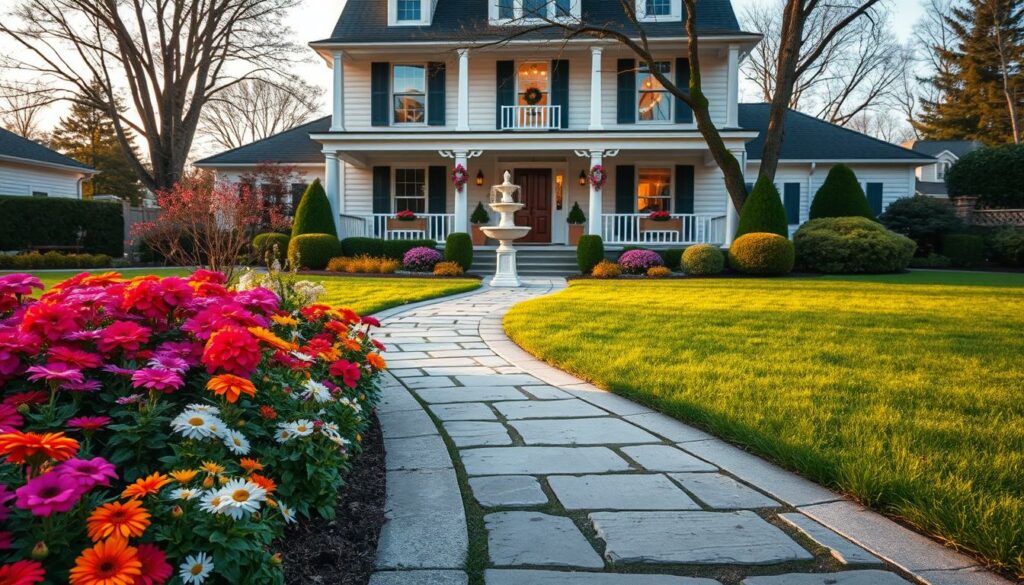
Good curb appeal depends on clear sightlines, tidy paths, balanced plantings, and an inviting entryway. Color and texture add seasonal interest and draw attention.
Mature trees, healthy lawns, and well-placed lighting show care in landscape architecture. These features reflect both design skill and simple upgrades.
Well-executed front yard landscaping can boost perceived value and shorten time on the market. Studies show strong returns when homes combine landscaping and professional design.
Typical upgrades with high resale value include mature trees, defined borders, and repaired walkways. These elements appeal to many buyers.
Practical steps produce big results. Homeowners should trim overgrown shrubs, replace dead plants, add fresh mulch, and fix cracked walkways or driveways.
Prioritize visible, low-maintenance changes that match neighborhood style. Doing so helps maximize your return on investment.
Beyond money, front yard design offers social benefits. Attractive yards improve neighborhood looks and increase safety with clear sightlines and lighting.
These improvements also raise homeowner pride. Often, these social gains matter as much as resale value.
| Element | Impact on Curb Appeal | Typical ROI Effect |
|---|---|---|
| Defined walkways and repaired driveways | Creates a neat, safe approach to the entry | High — reduces perceived neglect and speeds sale |
| Mature trees and shade plantings | Provides scale, privacy, and year-round interest | High — adds long-term value and buyer appeal |
| Balanced plantings and seasonal color | Enhances visual texture and warmth | Moderate — improves first impressions |
| Defined borders and low-maintenance beds | Makes landscape look intentional and tidy | Moderate — reduces upkeep concerns for buyers |
| Exterior lighting and clear sightlines | Boosts safety and evening curb appeal | Moderate to high — perceived as premium upgrade |
Planning Your Front Yard Layout
Good planning sets the stage for successful front yard design. A careful site analysis helps match landscaping with your needs and goals.
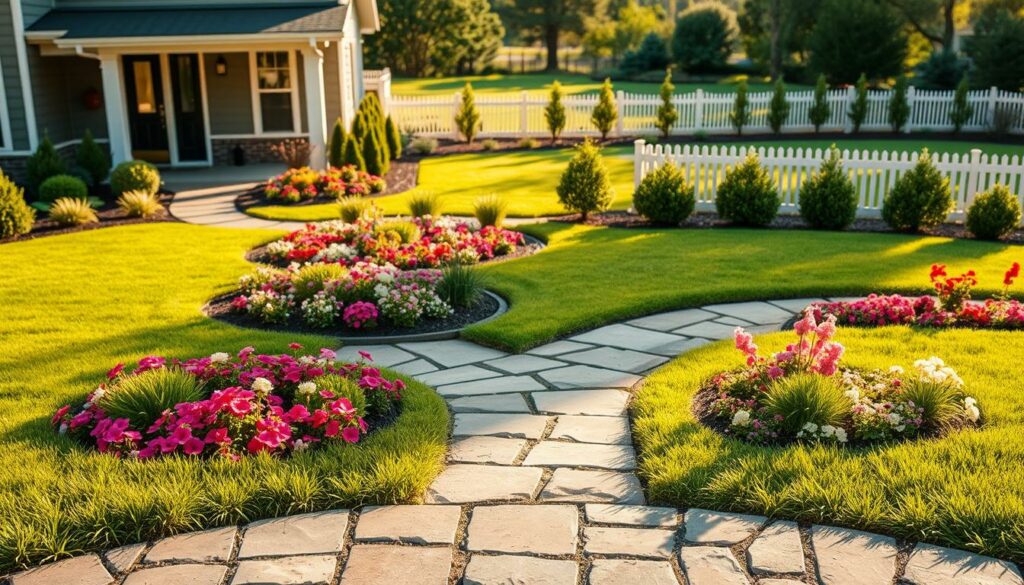
Assessing Available Space
Start by measuring dimensions and noting property lines along with utility locations. Record sun and shade patterns through the seasons.
Test soil type and drainage to avoid surprises when adding beds or hardscape later on.
Use a checklist to map key features:
- Square footage and slope
- Existing trees, driveways, and patios
- Sightlines from street and porch
- Microclimates—hot, shady, or windy spots
- Access for maintenance and service vehicles
Sketch the yard on graph paper or use digital tools like SketchUp or a free garden planner. A map helps test layout ideas and speeds decisions about plant and hardscape placement.
Considering Traffic Flow
Identify main routes like the driveway to the front door. Mark secondary paths to side yards and service points for garbage pickup and deliveries.
Design walkways to follow natural desire lines so visitors take the most direct and comfortable route.
Plan for safety and accessibility by keeping slopes gentle and surfaces non-slip. Aim for at least 36 inches in walkway width.
Minimize steps where possible and place lighting to prevent shadows that could hide hazards.
Zone the yard into functional areas: entryway, lawn or groundcover, planting beds, and a focal point. Balance hardscape with softscape for easy maintenance and strong curb appeal.
Thoughtful landscaping in this phase smooths installation and improves long-term outdoor results.
Choosing the Right Plants
Plant selection is the key to successful front yard landscaping. Choosing wisely saves time and water.
It shapes curb appeal and sets the tone for a sustainable garden renovation. Consider USDA hardiness zone, sun exposure, and soil pH before buying.
Also, check soil texture, water needs, mature plant size, growth habit, maintenance, pests, and local diseases.
Good planning starts with a soil test from a local extension office.
Take a midday and late afternoon walk through the site. Measure planting areas and note microclimates.
Mark existing roots and utilities. Group plants based on light and moisture needs to reduce work and improve health.
Native Plant Options
Native plants evolved in the local ecosystem. They fit the regional climate and need less fertilizer.
They support pollinators and wildlife. Choosing natives cuts irrigation needs, lowers maintenance, and boosts local biodiversity.
Common options across many U.S. regions include ornamental grasses such as Muhlenbergia capillaris in warmer zones. Also popular are Echinacea (coneflower), Rudbeckia (black-eyed Susan), and Salvia.
Native shrubs like Ceanothus in Mediterranean climates or Viburnum in temperate zones add structure and seasonal blooms.
For reliable species lists, consult state native plant societies or the Lady Bird Johnson Wildflower Center.
Seasonal Interest
A mix of evergreens, deciduous shrubs, flowering perennials, and bulbs keeps yards lively year-round.
Spring bulbs like tulips and daffodils bring early color. Summer perennials such as daylilies and lavender bloom in summer.
Fall bloomers like asters and sedum add interest through autumn. Ornamental grasses and evergreen shrubs hold winter form.
Design with layered heights for depth. Space plants to allow for their mature size.
Combine pollinator-friendly plants with deer-resistant types where needed. Set pruning times and mulch beds to keep moisture and stop weeds.
Buy healthy stock from trusted garden centers such as Monrovia, Proven Winners, or local nurseries.
During renovation, replace crowded plants with species suited to site conditions and your maintenance goals.
This approach creates a resilient, attractive front yard landscaping plan.
Hardscaping Elements in Front Yards
Hardscaping includes permanent and semi-permanent parts of a yard. This means paths, patios, driveways, walls, fences, and decorative rock. These features shape front yard design and offer a low-maintenance contrast to plants.
Planning hardscaping early helps you add irrigation and lighting without needing to redo work later.
The right hardscaping directs movement, frames beds, and stabilizes outdoor landscaping. Good planning moves water away from foundations and protects planting beds. It also limits future problems when adding irrigation or electrical lines.
For big jobs needing permits or heavy tools, hiring a licensed contractor is a smart choice.
Pathways and Driveways
Choosing materials affects cost, appearance, and maintenance. Concrete is strong and affordable for driveways but can look plain. Pavers add beauty and let you easily fix small sections.
Stamped concrete looks like stone and costs less, but it can crack and reveal repairs. Natural stone gives a high-end, natural look for paths. Gravel and decomposed granite save money but need edging and topping to stay neat.
Good base prep and drainage stop settling and water pooling on driveways and paths.
- Design tip: align paths with natural walking lines from porch to street to reduce turf wear.
- Design tip: use stepping stones for informal routes that protect grass and roots.
- Design tip: add edging to hold loose materials and keep clean lines in your design.
Fencing and Borders
Fences and borders protect plants, mark property edges, and add privacy. Styles include classic picket, wood privacy fences, modern horizontal slats, and wrought iron. Stone walls and composite panels last long and need little upkeep.
Low borders boost curb appeal; tall fences create privacy where wanted. Maintenance varies by material: wood needs paint or stain, metal may need rust care, and vinyl or composite just needs cleaning.
Check local rules and HOA guidelines before putting up a fence. Plan for irrigation and lighting by laying pipes and conduits before concrete or pavers to save money.
For small projects, homeowners often buy supplies from Home Depot, Lowe’s, or local masonry stores.
| Element | Common Materials | Pros | Cons |
|---|---|---|---|
| Driveways | Concrete, pavers, stamped concrete, gravel, natural stone | Durable, visual variety, repair options | Cost variation, potential settling, maintenance needs |
| Pathways | Stepping stones, pavers, decomposed granite, gravel | Flexible layout, protects plants, easy to update | Edge maintenance, weed control, base preparation required |
| Fencing and Borders | Wood, vinyl, metal, composite, stone | Privacy, definition, aesthetic framing | Upkeep varies, must follow local codes, potential HOA limits |
Incorporating Outdoor Lighting
Thoughtful outdoor lighting changes a front yard into a welcoming space after dark. It meets needs like safety and helps with navigation. It also adds drama to plants, paths, and architectural features.
Planning starts with layering ambient, task, and accent light. This supports the overall front yard design effectively.
Choose fixtures based on their function. Path lights guide visitors safely. Spotlights and uplights shape trees and focal points. Downlights and step lights improve footing on stairs.
Well lights and wall washers add soft texture to walls and shrubs. Solar lights offer easy installation for small projects.
Types of landscape lighting
Low-voltage (12V) systems balance safety and performance for many front yard projects. Line-voltage (120V) gives more power for long runs and bright fixtures but needs a professional for wiring.
Solar lighting cuts wiring needs but depends on sun exposure and battery life, which can vary.
Benefits of proper lighting
Good lighting boosts safety and security. It extends outdoor use into the evening. It also increases curb appeal by highlighting textures and key features.
Proper placement avoids glare near neighbors and meets recommended light levels for walkways.
Practical placement tips help get these benefits. Light walkways evenly for safe navigation. Use uplighting on tree trunks and large shrubs to add drama.
Place accent lights to highlight a porch, special plant, or entryway feature.
Technical tips make long-term use easy. LED fixtures save energy and last longer than incandescent bulbs. Timers or smart controllers automate lighting schedules to fit the yard design.
Homeowners can install low-voltage systems with basic electrical skills. Any mains wiring should be done by a licensed electrician for safety and code compliance.
Maintenance keeps lighting working well and looking good. Clean lenses to keep brightness. Swap bulbs for LED types when needed.
Re-aim fixtures as plants grow or landscape changes. Check for corrosion, secure connections, and fix or replace transformers quickly.
| Fixture | Best Use | Power Option | Pros | Cons |
|---|---|---|---|---|
| Path lights | Walkways and borders | Low-voltage / Solar | Safe navigation, easy layout | Can be weak in heavy foliage |
| Spotlights | Accent trees and features | Low-voltage / Line-voltage | Strong, focused beam for drama | Requires careful aiming to avoid glare |
| Uplights | Trunks, façades | Low-voltage / Line-voltage | Creates depth and texture | May disturb neighbors if misdirected |
| Downlights | Porch and entry illumination | Line-voltage / Low-voltage | Natural, safe lighting for steps | Installation above grade can be complex |
| Step lights | Stairs and level changes | Low-voltage / Line-voltage | Prevents trips, subtle integration | Cut-in installation may be needed |
| Well lights | Uplighting low plantings | Low-voltage / Line-voltage | Flush finish, discreet | Drainage and maintenance concerns |
| Wall washers | Even illumination of walls | Low-voltage / Line-voltage | Highlights textures and color | Power consumption can be higher |
| Solar fixtures | Small accents and temporary setups | Solar | No wiring, simple to move | Variable brightness and run time |
Water Features for Front Yards
Water features add sound, motion, and cooling to front yard landscaping. They create a calm focal point during a garden renovation or outdoor landscaping project.
Small bubblers and birdbaths suit compact plots. Larger ponds and tiered fountains work for expansive properties.
Popular Water Feature Ideas
Birdbaths and shallow basins fit tight spaces and invite songbirds. Ceramic or stone bowls are low-cost and easy to place among plants.
Recirculating bubblers and wall-mounted fountains suit narrow lots. They need minimal space and keep water moving to reduce mosquitoes.
Pondless designs, like disappearing streams and vanishing-edge layouts, look like water without standing pools. These are safe for yards with children.
Full ponds with fish and planted margins suit larger front yards. They support wildlife and offer room for plants that filter water.
Maintenance Considerations
Pumps and filters need regular cleaning to stay efficient. Energy-efficient pumps cut running costs and last longer.
Water chemistry matters. Managing nutrients and circulation helps prevent algae and keeps water clear. Native plants like Carex and Juncus help filter water.
Winterizing is key in freezing climates. Draining lines or insulating pumps prevents freeze damage in cold months.
Safety should guide design. Gentle slopes and shallow basins let wildlife access water safely. Barriers or pondless options reduce risk for children.
Permits may be needed for large installations. Excavation, liners, and electrical work usually require pros. Small solar or plug-in fountains are affordable DIY choices.
| Feature | Best For | Typical Cost Range | Maintenance Level |
|---|---|---|---|
| Birdbath / Basin | Compact front yards | $50–$400 | Low; occasional cleaning |
| Recirculating Bubbler | Narrow spaces, patios | $150–$800 | Low to medium; pump checks |
| Wall-Mounted Fountain | Entryways, tight lots | $300–$2,000 | Medium; filtration upkeep |
| Pondless Stream / Vanishing Edge | Medium yards seeking safety | $1,000–$5,000 | Medium; pump and basin care |
| Large Pond with Fish | Expansive properties | $3,000–$15,000+ | High; water chemistry and winter prep |
Energy-efficient pumps and rainwater harvesting reduce environmental impact. Choosing native plants during garden renovation improves filtration and supports birds.
Thoughtful planning links water features to bigger front yard landscaping and outdoor landscaping goals.
Creating a Focal Point
A focal point is the main visual element that anchors the design. It draws the eye toward the entryway or a landscape feature. It helps organize planting and guides movement across the yard.
Thoughtful placement strengthens front yard landscaping. It also ties together front yard ideas during a garden renovation.
Scale, material, and sightlines matter when choosing statues and outdoor art. Choose pieces that match your home’s style. Classic stone works well for traditional homes.
Metal sculptures and contemporary art fit modern houses. Durable materials like bronze, stainless steel, and cast stone resist weather. They need little upkeep.
Place art where it is visible from both street and porch. Add focused lighting to show the piece at night. Keep the area around it simple to avoid visual clutter.
A single, well-lit sculpture becomes the anchor for the design. Group plants with color, height, texture, and bloom times in mind. Use anchor plants like Japanese maple or crabapple for structure.
Layer in perennials and groundcovers to add seasonal interest and fullness. Apply the rule of threes and odd-number groups to make clusters feel natural. Position taller plants at the back of beds and shorter ones up front.
This gives depth and clear sightlines from the street and entry. Balance is essential. Leave negative space around the main feature to avoid competition.
Use containers or stakes to try placement before committing. Trial layouts can reduce costly changes in a garden renovation. Combine hardscape and plant focal points for year-round appeal.
An urn on a pedestal surrounded by flowers looks great in spring and summer. A small fountain framed by evergreens provides winter structure. These mixed focal points reflect good landscape design and expand front yard ideas for every season.
| Focal Type | Best Materials | Ideal Placement | Maintenance |
|---|---|---|---|
| Statue or Sculpture | Bronze, stainless steel, cast stone | Visible from street and entry; on a plinth or clearing | Low; occasional cleaning and protective patina |
| Anchor Tree or Large Shrub | Japanese maple, crabapple, holly | Set back slightly; center or offset bed | Seasonal pruning and mulching |
| Hardscape Feature (urn, pedestal) | Cast stone, concrete, sealed terra cotta | Edge of walkway or at junctions in landscape architecture plan | Moderate; reset or seal as needed |
| Water Feature | Stone basin, stainless fittings, recirculating pump | Framed by evergreens or low walls for year-round view | Regular cleaning and pump maintenance |
| Seasonal Planting Bed | Perennials, bulbs, annuals | Surrounding a hardscape focal point or entry | Planting twice yearly, deadheading, soil amendment |
Sustainable Landscaping Practices
Sustainable landscaping blends practical design with environmental care to conserve water, cut chemical use, and support wildlife. This approach fits front yard landscaping that lowers utility bills and boosts biodiversity. It also helps neighborhoods adapt to water restrictions and changing climates.
Xeriscaping centers on water-wise principles that reduce irrigation needs. It starts with thoughtful planning and design. Then it improves soil with compost and amendments.
Efficient irrigation like drip systems, smart controllers, and hydrozoning keeps moisture where plants need it most.
Plant selection matters for successful xeriscaping. Drought-tolerant and native species such as lavender, agave, salvia, grasses, and shrubs need less water and care. A layer of mulch lowers evaporation and suppresses weeds.
Choosing eco-friendly materials cuts environmental impact in construction and maintenance. Recycled pavers and sustainably harvested wood reduce demand on new resources. Permeable paving and local stone limit runoff and cut transportation emissions.
Alternatives to chemical inputs protect soil and pollinators. Composting, organic mulch, and integrated pest management invite beneficial insects and reduce the need for pesticides. These choices support long-term soil health.
Stormwater strategies add value to sustainable yards. Rain gardens, bioswales, and native plant buffers slow runoff, filter pollutants, and create habitat for pollinators and songbirds. These features help build resilient neighborhoods.
Homeowners can use local cooperative extension services and EPA water conservation guidelines for advice. Many U.S. municipalities offer incentives and rebates for water-smart upgrades. These lower upfront costs and speed payback.
Adopting sustainable landscaping yields clear benefits. It lowers water bills, reduces maintenance time, and builds biodiversity in the front yard. These gains make eco-conscious design a practical choice for modern landscaping projects.
Choosing the Right Mulch
Mulch is a low-cost hero for front yard landscaping. It conserves moisture, controls weeds, and moderates soil temperature. Mulch also gives beds a neat, finished look.
Picking the right material makes a clear difference in plant health and curb appeal.
Benefits of Different Mulch Types
Organic mulches like wood chips, shredded bark, leaves, and compost break down over time. They add organic matter and feed soil life. This improves soil structure and suits planting beds and shrub borders.
Inorganic options include river rock, gravel, and rubber mulch. They last longer and need less frequent topping up. These materials do not add nutrients to the soil. Use them where longevity and low maintenance matter.
Dyed mulches brighten front yard landscaping with lasting color. Fine dyed products break down faster. Avoid piling heavy rock mulch near foundations; heat can stress plants and harm roots.
How Mulch Affects Soil Health
Decomposing organic mulch feeds microorganisms that support soil health. Microbial activity improves water-holding capacity. It creates crumbly soil that drains well while holding moisture. This helps root growth and plant resilience.
Recommended depths vary by material. Apply 2–4 inches of organic mulch for most beds. Use shallower layers for heavy materials like gravel. Never mound mulch against tree trunks or siding; volcano mulching causes rot and invites pests.
Before applying new mulch, weed beds and think about adding compost when planting. Replenish organic mulch once a year, or twice in hot climates. Match particle size to plant type; fine mulch suits annual beds, coarser chips work well under shrubs.
For sustainable landscaping, choose locally sourced arborist wood chips or leaf mulch. Buy from trusted suppliers like Scotts, Vigoro, or local yards to avoid contaminants. This practice supports soil health and reduces transport impacts while providing trusted mulch benefits.
Seasonal Maintenance Tips
Year-round care keeps a front yard healthy and attractive. A seasonal maintenance plan protects plants and hardscape. It also helps sustain curb appeal.
Homeowners who follow clear tasks reduce costly repairs. They enjoy better blooms and cleaner beds.
Spring Preparation
Start spring preparation with a soil test or submit a sample to a local extension lab. Amend soil based on results. This helps new plants thrive.
Clean beds of debris and remove winter mulch. Prune dead growth. Delay heavy pruning on spring-blooming shrubs until after flowering to protect buds.
Divide overcrowded perennials. Plant spring annuals and bulbs. Apply pre-emergent herbicides where needed. Add mulch to conserve moisture and suppress weeds.
Inspect and service irrigation systems. Check drip lines and sprinkler heads for clogs. Set controllers for seasonal hours.
Routine checks prevent wasted water and stress on plants.
Recommended tools include quality pruners like Felco or Fiskars, a reliable soil test kit, mulching tools, and storage for equipment.
Winterizing Your Landscaping
Prepare plants and hardscape before freezes arrive. Mulch root zones of tender plants to insulate soil and keep warmth.
Wrap young trees to reduce frost cracks and rodent damage. Drain and store hoses. Winterize pumps and fountains to avoid freeze damage.
Move container plants indoors or insulate them. Use pet- and plant-safe salt products. Limit salt near planting beds to protect roots and soil life.
Maintain seasonal fertilization schedules by plant type. Monitor pests and diseases regularly. Plan major plantings in fall or spring for best establishment.
Homeowners should build a seasonal checklist. Consult local extension calendars for region-specific timing. Regular attention supports long-term curb appeal.
Trends in Front Yard Landscaping
Current landscaping trends change how homes look from the street. Homeowners choose styles that match their home’s architecture and budget. They also consider how much upkeep they want.
This brief guide compares two popular styles and offers hybrid options for smart garden renovation.
Minimalist Elements
Minimalist designs use clean lines and a limited plant palette. Large pavers, horizontal slat fencing, and gravel add structure and cut down on upkeep. Ornamental grasses give texture without making the space busy.
Monochromatic or muted colors highlight architectural features. Hardscape elements like low walls and defined beds help small urban yards look neat. This style fits modern homes needing low-water ideas and easy care.
Cottage Garden Approaches
Cottage gardens create a lush, informal style with layers of perennials. Roses, foxglove, and lavender offer romantic blooms and seasonal interest. Using repeated plant patterns keeps the look from being chaotic.
Containment methods make cottage gardens work for front yards. Clipped hedges, raised beds, and meandering paths add form and support biodiversity. Homeowners get color and habitats for pollinators in small yards.
Hybrid and Emerging Choices
Mixing minimalist and cottage styles creates modern-cottage mixes that balance structure and abundance. Adding herbs and fruit shrubs boosts function and curb appeal. Pollinator-friendly and native plants fit well with low-water goals.
Smart irrigation saves water and makes garden care easier. Homeowners should pick a style matching their home’s look and neighborhood. Then, they can scale plantings to fit their budget and upkeep needs.
Budget-Friendly Landscaping Ideas
Impactful front yard landscaping does not need a large budget. Plan projects in phases and find materials creatively. Focus first on improvements that everyone can see.
A clear budget and a short priority list will help homeowners stretch every dollar. This keeps the design both practical and cohesive.
DIY Projects for Homeowners
Practical DIY outdoor projects include installing a gravel path and building a simple raised bed from untreated cedar. Creating a stone border can also add charm.
Plant a pollinator bed with inexpensive native perennials. Add solar path lights, and refinish the front door and porch trim to boost curb appeal quickly.
Homeowners can estimate costs by pricing materials at Home Depot or Lowe’s. Renting tools from local centers is affordable. Always include safety gear and plan a phased approach focusing first on curb-facing areas.
Thrifting and Upcycling in Landscaping
Thrifting offers unique, low-cost landscaping elements. Repurpose pallets into planters and use reclaimed bricks or pavers from salvage yards. Turn a vintage ladder into a vertical plant display.
Old bathtubs or sinks can make striking container gardens. Good sources include Habitat for Humanity ReStores, local salvage yards, Craigslist, and neighborhood thrift stores.
To save on plants, buy smaller specimens and fill gaps with annuals. Join plant swaps at gardening clubs or purchase bare-root perennials and roses in season.
Seed-starting for annuals and vegetables can cut costs dramatically. Set a realistic budget, fund high-impact, low-maintenance items like mulch and pruning, and track expenses. Many places offer rebates for water-efficient upgrades that reduce long-term costs.
Start small, test ideas, and build a front yard plan that balances aesthetics, sustainability, and affordability.