

Nearly 70% of homeowners spend more time outdoors after adding thoughtful lighting. This simple change turns yards into evening living rooms.
This guide explains how garden lighting ideas can make your yard safe, usable, and beautiful. It shows you how to transform a bland space.
The goals of outdoor lighting design are clear. Build layers of light, highlight focal points, and ensure safe circulation. Set the mood for dining, relaxing, or entertaining.
You will find advice on low-voltage wired systems, solar options, and string lights. It also covers spotlights, pathway lighting, water-feature illumination, wall sconces, and smart controls.
This guide targets homeowners, renters with patios, landscape designers, and DIY enthusiasts across the United States. It balances creative backyard lighting inspiration with practical tips for choosing lighting fixtures.
Technical terms like lumens, color temperature, beam angle, and IP rating appear here. They help you match fixtures to conditions and tasks.
The text also urges checking local codes. It encourages considering seasonal factors like freeze/thaw cycles and humidity when selecting fixtures.
Key Takeaways
- Layer light for function and atmosphere: ambient, task, and accent lighting.
- Highlight focal points and ensure safe pathways for evening use.
- Compare solar and low-voltage options for cost, installation, and reliability.
- Learn basic specs—lumens, color temperature, beam angle, IP rating—before buying.
- Consider local codes and seasonal conditions when choosing fixtures.
Introduction to Garden Lighting
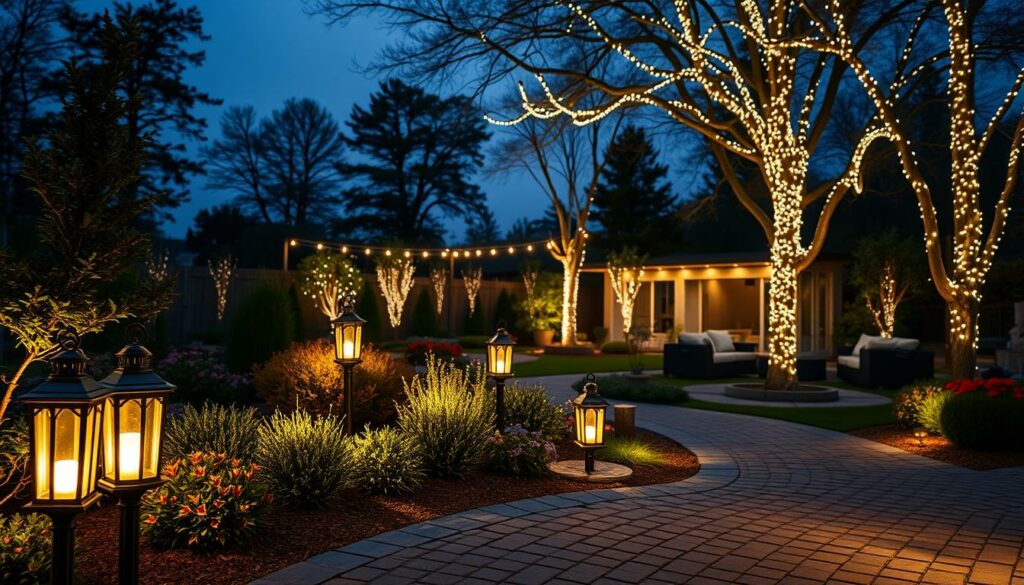
Garden lighting means choosing and placing fixtures to light outdoor spaces for beauty, safety, and use after dark. It blends art and function so pathways, plants, and seating areas feel welcoming.
Good outdoor lighting design considers sight lines, scale, and the mood each light creates.
Core principles guide any layout. Layering uses ambient, task, and accent lights to add depth. Direction matters: uplighting brings drama to trees, downlighting mimics moonlight.
Silhouetting highlights shapes against a lit backdrop. Balance between light and shadow keeps the scene natural and avoids glare.
Energy and environmental choices shape long-term performance. LEDs last longer and use less power than halogen. Solar fixtures reduce grid use for small accents.
Motion sensors and timers limit runtime. Dark-sky friendly options reduce light pollution and help neighbors sleep better.
Planning starts with a night assessment of the site. Make a simple map of features and pathways. Note power points and rank needs before shopping.
Set a budget that includes installation and maintenance. Use landscape lighting tips to match fixture power and beam angle to each task.
Common constraints affect design and selection. Power availability can limit fixture locations. Local HOAs or municipal codes may restrict brightness or color temperature.
For wet areas, choose weatherproof fixtures rated IP65 or higher to resist moisture and dust.
Next sections examine fixture types, placement techniques, lighting for special features, and upkeep. Readers will find practical garden lighting ideas, step-by-step installation tips, and advice on choosing bulbs and controls to meet goals.
| Planning Step | Action | Why It Matters |
|---|---|---|
| Night Site Assessment | Walk the yard after dark and mark focal points and hazards | Reveals true sight lines and problem areas that daytime checks miss |
| Mapping | Create a scaled sketch showing plants, paths, and power sources | Helps place fixtures logically and estimate cable runs |
| Layering Plan | Assign ambient, task, and accent roles to each area | Ensures depth and avoids flat, uniform illumination |
| Energy Choice | Compare LED, halogen, and solar options with controls | Optimizes lifespan, operating cost, and environmental impact |
| Fixture Selection | Match beam angle, lumen output, and IP rating to use | Prevents glare, ensures durability, and enhances effect |
| Regulations Check | Review HOA rules and local lighting ordinances | Avoids fines and neighbor complaints |
| Budgeting | Estimate costs for fixtures, wiring, and labor | Prioritizes spending on safety and high-impact areas |
Benefits of Garden Lighting
Well-planned lighting changes how a garden feels after dark. It adds depth, safety, and more outdoor living time. Readers will discover practical ideas to shape mood, guard walkways, and extend backyard use with modest fixtures and smart controls.
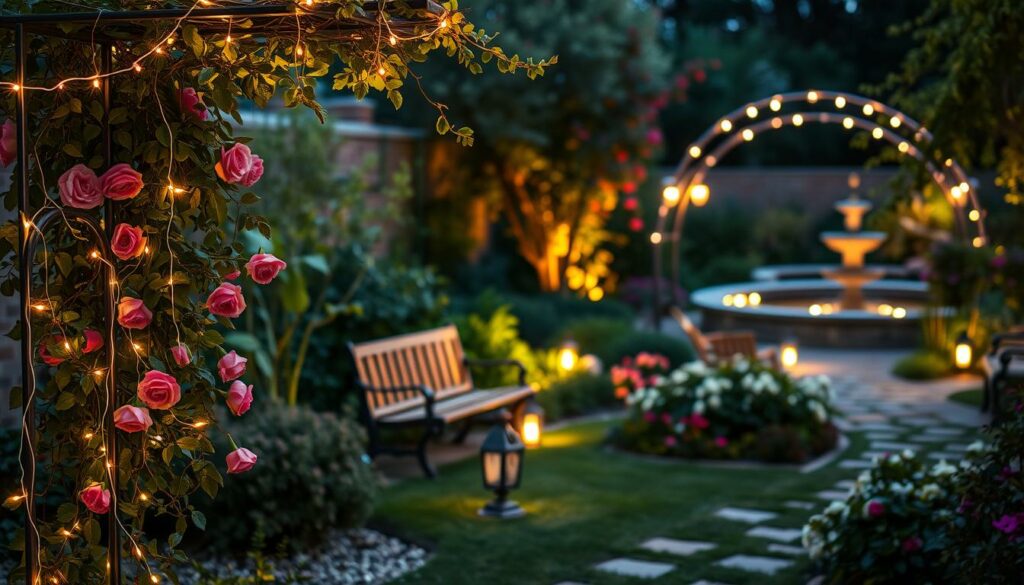
Enhancing Aesthetics
Lighting sculpts the landscape at night. It reveals texture, color, and depth. Uplighting a maple or oak shows the canopy.
Downlighting from a porch looks like moonlight. Accent lighting highlights sculptures and specimen plants apart from beds.
Color temperature is important. Warm whites (2700K–3000K) create cozy patios. Cooler whites suit modern yards. High CRI fixtures keep plant colors natural, helping you choose lamps for any planting palette.
Design tactics include layering lights and carving shadows for drama. Spotlights serve as focal points. These moves create charming garden lighting without over-illumination.
Improving Safety
Good lighting reduces trip hazards. Pathway lighting, step lights, and bright entry lights improve safety. A lit route helps navigation and discourages unwanted visitors.
Recommended lumen ranges balance visibility and glare. Walkways need 100–200 lumens per fixture. Steps require 50–100 lumens each. Motion sensors add security and save energy by activating only when needed.
Avoid glare by choosing shielded fixtures, aiming lights properly, and using cutoff designs. These keep neighbors comfortable and meet safety needs.
Extending Usability
Patio and task lighting turn twilight into prime time for dining, grilling, and reading. Focused lights over outdoor kitchens or dining tables make tasks easier and pleasant.
Controls like dimmers, timers, and smart schedules let users set scenes for dinners, gatherings, or relaxation. Automation keeps energy use low while offering flexible ambiance.
Well-lit spaces increase property appeal. They make yards usable year-round in many U.S. climates. Modest upgrades often deliver high comfort and enjoyment.
| Benefit | Typical Fixtures | Recommended Lumens | Design Tip |
|---|---|---|---|
| Enhancing Aesthetics | Uplights, spotlights, accent lights | 30–300 lumens per focal point | Use warm whites and layer for depth |
| Improving Safety | Path lights, step lights, porch lights, motion sensors | Walkways 100–200; steps 50–100 | Choose shielded fixtures to reduce glare |
| Extending Usability | Task lights, pendant lights, string lights, dimmers | 200–800 for dining and work zones | Install dimmers and smart schedules for flexibility |
| Overall Impact | Layered systems combining ambient and accent | Varies by zone; balance is key | Follow landscape lighting tips for cohesive results |
Types of Garden Lighting
A clear outdoor lighting design uses three main layers to shape mood and function. Each layer serves a purpose: general illumination, focused task light, and dramatic highlights. Blending these layers adds depth and safety. It also keeps energy use sensible and fixtures attractive.
Ambient lighting creates uniform, comfortable light that sets the scene for an evening outdoors. Examples include string lights over a patio, soffit-mounted downlights, or large lanterns near seating. Choose fixtures that spread light evenly. Consider lumen output and color temperature for a warm, welcoming feel.
Ambient Lighting
Recommended fixtures for ambient coverage include pendant lanterns, recessed patio lights, and string lights. Place fixtures to avoid dark pockets. Aim for softer color temperatures around 2700K–3000K. Balance ambient light with task and accent layers so the scene feels cohesive.
Task Lighting
Task lighting focuses on activities like cooking, reading, or potting. It should be brighter and more directional than ambient light. LED fixtures with high CRI provide true color for food prep and plant work.
Adjustable fixtures and pendant lights work well over outdoor kitchens, counters, and benches. Choose durable, weatherproof models rated for wet locations near grills or water features.
Accent Lighting
Accent lighting highlights features such as specimen trees, sculptures, and architectural details. Use spotlights, well lights, or low-voltage adjustable heads to create focal points. Narrow beam angles produce sharp highlights, while wider beams give softer emphasis.
Keep accent lights lower in lumen output than task lights to avoid over-illumination. Create contrast by placing accents against darker backgrounds. Aim fixtures to prevent glare in seating areas.
| Layer | Purpose | Recommended Fixtures | Placement Tips |
|---|---|---|---|
| Ambient | General mood and even illumination | String lights, pendant lanterns, recessed soffit lights | Even spacing, soft color temperature, avoid dark pockets |
| Task | Focused light for activities | Adjustable LEDs, pendants, under-cabinet lamps | Directly over work areas, higher lumen output, wet-location rated |
| Accent | Highlight features and create depth | Spotlights, well lights, low-voltage adjustable heads | Use beam angle to shape effect, aim for contrast without glare |
Solar Garden Lights: An Eco-Friendly Option
Solar garden lights brighten yards while cutting energy use. They work well for eco-friendly outdoor lighting. These units require no wiring, making them ideal for retrofit projects and remote corners.
Solar panels contain photovoltaic cells that convert sunlight into electricity. This energy charges a rechargeable battery during the day. A charge controller or light sensor lets the LED run after dusk.
Typical parts include a solar panel, battery (NiMH or lithium), LED module, and a small controller. Performance depends on panel size, battery capacity, and sensor quality. Positioning in direct sun and avoiding shade improves output.
Solar units face limits when sunlight is weak. Runtime shrinks on cloudy days and in winter. Panels need the right tilt and clear exposure for best results. Replacement battery cycles affect the long-term cost, so check specs before buying.
Solar lighting needs no trenching or wiring. It has lower running costs and is easy to install yourself. These features make solar great for pathway stakes, garden beds, and remote spots. Using solar reduces grid demand and lowers greenhouse gas emissions.
Cost varies with build quality and brand. Higher-lumen LEDs and bigger batteries raise the price but improve usefulness. Compare lumen ratings, battery type, and warranty before you buy. Brands like Gama Sonic, Ring Solar Pathlight, and SunLite offer clear specs and support.
Popular styles include pathway stake lights to guide walkways. Deck post caps add safety and curb appeal. String lights with built-in panels brighten patios. Spotlights with separate panels provide focused lighting. Decorative lanterns create mood and texture.
Choose stakes for walkways and borders. Use integrated string lights for outdoor dining areas. Separate-panel spotlights work well on trees or sculptures. Check IP ratings for weather resistance. Look for solid warranties and replaceable batteries to extend life.
String Lights: Creating a Festive Atmosphere
String lights turn a yard into a warm, welcoming place for nights with friends and family. This quick guide shows where to hang them. It also shares which types fit different moods. The goal is to inspire backyard lighting ideas and give tips for safe, long-lasting installs.
Where to Hang
Hang string lights over patios and pergolas to create outdoor rooms and improve patio lighting. Drape strands between trees to make a canopy over loungers and dining areas. Run lights along fences to mark property lines or across lawns for event lighting.
Use screw-in hooks on strong beams for short spans. For trees, pick straps that protect bark. For long runs, attach a tension cable first to stop sagging. Then clip the string lights to it.
Choose outdoor-rated fixtures and keep bulbs away from dry leaves, fabrics, and wood. Follow weight limits on pergolas and railings. Plug outdoor lights into GFCI outlets and follow the maker’s safety advice.
Different Types
Classic incandescent globe lights give a warm, timeless glow. LED filament bulbs copy this vintage look while using less energy. Fairy or micro-LED strings are good for small accents on shrubs or railings. Commercial-grade bistro lights fit restaurants and busy patios.
Pick from plug-in models, low-voltage systems with a transformer, or solar string lights for off-grid use. Smart options from Philips Hue and LIFX work with apps and voice assistants to control scenes.
Check IP ratings for moisture resistance. See if bulbs can be replaced or if the strand is sealed. Space bulbs about 12 to 24 inches apart to get even light, depending on bulb size and brightness.
Pathway Lighting: Guiding the Way
Pathway lighting helps visitors move safely and sets the tone for the landscape after dark. Good choices blend form and function. They turn simple sidewalks into inviting routes.
This short guide covers fixtures, placement, and practical tips. Use pathway lighting as a key part of garden lighting ideas and safety plans.
Choosing fixtures starts with the look a homeowner wants. Stake lights suit informal beds and curved routes. Bollard lights fit formal drives and wider walkways.
Recessed in-ground lights work well for modern, flush finishes. Low-profile post caps add a subtle glow to fences and short posts.
Brightness matters. Aim for warm color temperatures near 2700–3000K for residential paths to keep tones natural. Compare lumen ratings and beam spread to match the surface.
Choose fixtures with shielding or cut-off features to reduce glare and protect sightlines.
Power options include low-voltage wired systems, solar lamps, or mains-powered fixtures where code allows. For low-voltage runs, size transformers to total circuit load and use waterproof connectors.
When using solar, pick models with strong batteries and panels that get plenty of sun.
Choosing the Right Fixtures
Stake lights are affordable and easy to move during redesigns. Bollards bring height and presence for entrances.
In-ground recessed units give a clean look on modern paths. Post caps are decorative and functional on short posts.
For safety lighting, choose fixtures rated for wet locations made from stainless steel or die-cast aluminum. Brands like Kichler or RAB offer proven durability and warranties.
Shielding, beam angle, and housing finish affect appearance and longevity. Narrow beams highlight edges. Wide spreads light larger walking surfaces.
Matte finishes reduce reflections on metal surfaces.
Best Placement for Pathway Lights
Typical spacing ranges from 6–10 feet for stake lights. Place fixtures closer near steps, ramps, and sudden grade changes.
One-sided placement suits informal paths. Alternating sides creates a balanced, formal look.
Mount fixtures low and aim light downward to avoid glare. For steps, install step lights or riser lights to mark each step clearly.
Test sightlines at night to confirm there are no dark spots or blinding glare.
When paths curve, aim lights to follow the walking direction so surfaces stay evenly lit. For long straight runs, use closer spacing or higher-output fixtures.
| Fixture Type | Best Use | Typical Spacing | Power Options | Pros |
|---|---|---|---|---|
| Stake Lights | Informal gardens, curved paths | 6–10 ft | Solar or low-voltage | Flexible placement, low cost |
| Bollard Lights | Driveways, formal walkways | 8–12 ft | Low-voltage or mains | Strong presence, durable |
| Recessed In-Ground | Modern designs, flush surfaces | 8–10 ft | Low-voltage or mains | Clean look, discreet |
| Low-Profile Post Caps | Fences, short posts | 6–8 ft | Solar or low-voltage | Decorative, easy install |
Follow lighting tips by testing arrangements at night. Prioritize safety lighting for steps. Choose warm tones to complement plants.
Thoughtful pathway lighting forms a simple backbone for garden lighting ideas. It makes outdoor spaces safer and more welcoming.
Highlighting Features: Spotlights and Floodlights
A good mix of spotlights and floodlights adds depth and function to a garden. Choose lights to match the size of features and the mood the homeowner wants. The right fixtures turn ordinary parts into focal points and keep yards useful after dark.
Using spotlights for focal points
Spotlights have narrow beams and work well for statues, special trees, columns, and doorways. They create strong contrast and sharp shadows that draw attention to one feature.
Beam angle is important. Narrow beams of 10°–24° highlight statues or small sculptures. Medium beams of 25°–40° cover wider surfaces like trunks or façades. Choose an angle based on the subject’s size and the light’s distance.
For better results, place a spotlight about as far as the feature’s height for even lighting. Hide fixtures behind shrubs or mulch to keep the light source out of sight. Use adjustable mounts to aim the beam after installation.
Benefits of floodlights
Floodlights send wide beams that light yards, driveways, and building fronts. They help with security, nighttime tasks, and general area lighting that spotlights don’t cover.
LED floodlights give bright light with low energy use and last a long time. They turn on instantly and often have adjustable beam angles. Some models have motion sensors for safety and to save energy.
Limit glare and light spill with timers, motion sensors, and shields. Pick dark-sky-friendly lights when you can. This cuts neighbor disturbance and prevents too much light.
| Fixture | Beam Angle | Best Uses | Key Benefits |
|---|---|---|---|
| Spotlight (narrow) | 10°–24° | Statues, accenting small trees, architectural details | High contrast, precise focus, dramatic highlights |
| Spotlight (medium) | 25°–40° | Tree trunks, larger sculptures, entrance features | Broader wash, softer shadows, versatile placement |
| LED Floodlight | 60°–120° (adjustable) | Yards, driveways, building façades | High lumens, energy efficient, long life, instant-on |
| Floodlight with sensor | Wide, adjustable | Security zones, work areas, perimeter lighting | Motion activation, reduced runtime, enhanced safety |
When choosing garden lighting, balance spotlights for drama with floodlights for broad coverage. This mix boosts function and supports creative lighting ideas.
Water Feature Lighting: Adding Drama
Water features turn a garden into a living scene after dark. Thoughtful lighting highlights movement, texture, and depth.
This section covers common fixtures and pond lighting tips. It helps readers choose safe, stylish solutions that fit their garden lighting ideas.
Types of lights for water features
Submersible LED pond lights fit easily into rock work and ledges. Underwater RGB fixtures offer color effects for seasonal displays.
Waterproof spotlights highlight waterfalls and statues from the bank. Floating solar lights provide a low-cost, wireless accent for small ponds.
Pick fixtures rated for your intended use. Look for IP68 for submerged use and IP65 for splash zones.
Choose marine-grade stainless steel, silicone gaskets, and brass or copper fittings to resist corrosion. Low-voltage systems cut shock risk and work well with ground-fault circuit interrupter protection for safety.
Tips for illuminating ponds and fountains
Uplight cascades to emphasize motion and add sparkle. Place lights behind fountains to create crisp silhouettes.
Use color sparingly to accent plantings and create focal points. Avoid stressing fish or amphibians with too much color.
Aim lights downward and off-center to reduce glare on the water surface. Frosted lenses or diffusers soften reflections and spread light evenly.
Test lighting layouts at night. Move fixtures until light and shadow balance feels natural.
Seasonal maintenance protects lighting performance. Remove and clean lights each season, inspect seals for cracks, and follow winterizing guidelines in freezing climates.
Replace worn cables and test GFCI circuits regularly. These steps maintain safe, reliable operation of your water feature lighting.
Wall Sconces: Elevating Vertical Spaces
Choosing the right wall fixtures transforms blank siding into an inviting surface. Wall sconces add texture, shadow, and practical light. They work well on porches, patios, and garden walls.
They pair well with patio lighting solutions. Wall sconces expand the palette of garden lighting ideas for every home’s style.
Styles and materials matter for longevity and appearance. Modern minimalist sconces have clean lines and use powder-coated steel or aluminum. Lantern-style fixtures suit traditional homes and often come in brass or antique copper finishes.
Farmhouse and industrial designs bring character. These styles use stainless steel or weathered bronze. Glass choices affect light beam and look. Clear, seeded, or frosted options change diffusion and visual weight.
Durable finishes resist corrosion and match exterior colors. Bronze, black, brushed nickel, and antique copper hold up outdoors. They complement stucco, brick, and wood surfaces well.
Homeowners should choose materials rated for wet locations and UV exposure. This is important for coastal or sun-drenched sites. These are some of the best garden lighting fixtures for such areas.
Installation choices influence performance and safety. Weatherproof junction boxes and silicone caulk keep moisture out. Wiring must connect to GFCI-protected circuits and meet National Electrical Code rules.
Mounting height usually sits between 60 and 66 inches above walking surfaces. Adjust height slightly for taller doorways. Proper height ensures the best light placement.
Light direction changes mood and usability. Up-lighting sconces highlight wall texture. They create dramatic wash effects on surfaces.
Down-lighting reduces glare and helps with tasks near doors. Dual-direction fixtures combine both styles for layered illumination. This adds depth to outdoor spaces.
Permits and code compliance are essential for hardwired installations. Homeowners without electrical certification should hire licensed electricians. Professionals handle mains wiring and inspections safely.
For DIY-friendly patio lighting, consider low-voltage or solar-powered sconces. They are easy to mount and safe to operate. These options suit many outdoor areas.
Use sconces as part of a cohesive plan with pathway lights, spotlights, and string lights. Thoughtful placement integrates wall fixtures into garden lighting themes. Choose models that rank among the best garden lighting fixtures for function and style.
Smart Garden Lighting: Automation and Control
Smart garden lighting offers new ways to light your yard with style and ease. It combines programmable schedules, remote control, color scenes, and energy saving features. Garden owners can control security and mood with a phone tap or voice command.
Benefits of smart lighting
Programmable schedules allow setting dusk-to-dawn routines and timed party scenes. They also simulate presence during vacations. Remote control apps provide instant access from anywhere.
Color and scene settings create themed evenings and accent planting beds subtly. Voice assistants like Amazon Alexa and Google Assistant offer hands-free operation. Automation features, such as geofencing and motion-triggered scenes, save energy and improve safety.
Grouping fixtures by zones makes it easier to control complex setups. Lights can simulate presence or react to movement near doors and paths. One-touch party modes and quick adjustments add convenience for events.
Popular smart lighting brands
Philips Hue outdoor lights offer strong color control and advanced scenes. The Hue Bridge is often needed for full features. Ring lights work with Ring cameras and doorbells for a security view. Arlo has similar security fixtures that link to camera alerts.
Lutron provides professional-grade controls and outdoor-rated fixtures for reliability. Sylvania and Kichler offer outdoor smart lights for easy installation and dependable LEDs. Interoperability is key. Choose devices supporting Zigbee, Z-Wave, or Wi‑Fi, and use hubs or bridges when required.
Check firmware update policies for ongoing compatibility and security. Some smart bulbs run at line voltage. Many outdoor setups need low-voltage LED drivers and transformers.
Always verify outdoor ratings, waterproofing, and electrical specs before installing. This ensures safety and matches the site’s power needs.
Seasonal Garden Lighting Ideas
Outdoor light can change a landscape from functional to magical. This section looks at practical seasonal garden lighting ideas. These ideas suit holidays and long-term plans.
They aim to offer creative outdoor lighting ideas that work for events and daily outdoor living.
Holiday Lighting Inspiration
For Christmas, wrap warm white or colored string lights around railings and evergreens to create a cozy, festive look. Small clip-on light motifs let homeowners add stars or snowflakes without hurting plants. Battery-operated, weatherproof candles provide safe centerpieces for outdoor tables.
For Thanksgiving, subtle uplighting on patio walls and lanterns near seating add warmth for evening gatherings. Use low-voltage or LED bulbs to reduce glare and save energy. Stakes and soft clips secure decorations without breaking branches or stems.
For July Fourth, choose red, white, and blue bulbs for planters and pathway lights to highlight patriotic displays. Use outdoor-rated holiday lights and avoid overloaded circuits to stay safe. Coil strings neatly and store them in labeled tubs to keep them lasting longer.
Year-Round Themes
Warm layered lighting suits patios year-round. Combine overhead string lights, table lanterns, and low-level path fixtures to maintain a cozy atmosphere when temperatures drop. Dimmable fixtures let hosts adjust brightness for intimate dinners or lively gatherings.
Contemporary gardens benefit from cool, minimalist lighting using color-tunable LEDs and slim bollards. These fixtures complement modern patios and hardscape features. They allow homeowners to shift tones seasonally without rewiring.
Botanical-focused lighting highlights structural plants, like boxwood or cedar, so yards stay interesting during winter dormancy. Carefully placed uplights on evergreens add depth and texture on cold nights. Modular fixtures make it easy to change displays for events.
| Use Case | Fixture Type | Seasonal Tip | Safety/Storage |
|---|---|---|---|
| Festive string displays | Outdoor C7/C9 or LED string lights | Warm white for winter, colored for holidays | Use outdoor-rated strands; coil on reels for storage |
| Tabletop ambiance | Battery-operated lanterns and candles | Use flameless candles for wind-prone patios | Store batteries separately to prevent corrosion |
| Feature highlighting | Low-voltage uplights and spotlights | Highlight evergreens in winter; switch angles seasonally | Check seals and connectors before wet seasons |
| Path and safety lighting | Solar or hardwired pathway fixtures | Choose warmer tones for cozy feel year-round | Keep circuits balanced; remove debris each season |
| Flexible color schemes | Color-tunable LED fixtures | Set cool white for modern look; warmer for cozy nights | Program schedules and store controllers indoors in winter |
Maintenance Tips for Outdoor Lighting
Proper outdoor lighting maintenance keeps a garden safe and inviting. Regular care extends fixture life and preserves brightness. It also supports creative garden lighting ideas.
The guidance that follows covers cleaning, simple checks, and basic troubleshooting. These steps help keep systems performing well.
Cleaning fixtures
Turn off power at the breaker before any work. For low-voltage and solar units, disconnect batteries or unplug transformers when possible. Wipe housings and lenses with a soft cloth and mild detergent.
Remove leaves, dirt, and cobwebs from around mounts and stakes. Use glass cleaner on solar panels to maintain charging efficiency.
Check seals and gaskets for cracks that let moisture in. Replace damaged lenses or rubber grommets to prevent corrosion and preserve the IP rating.
Inspect bulbs and batteries seasonally, in spring and fall, and after strong storms. Replace LED modules as the manufacturer advises. Swap solar batteries every 2–4 years based on type and use.
Keep common spare bulbs on hand for quick fixes.
Checking electrical components
Shut off circuit breakers before servicing mains wiring. Visually inspect wires and connections for fraying, exposed conductors, or corrosion. Tighten loose terminal screws and re-seat worn push-on connectors.
Test transformers in low-voltage systems for correct output. Confirm the total fixture load stays within rated capacity. Verify GFCI outlets protect circuits and reset correctly.
For mains repairs, hire a licensed electrician. Watch for dim or flickering lights; these often point to voltage drop or loose connections.
Intermittent solar fixtures usually indicate weak batteries, panel shading, or dirt reducing panel output.
In coastal yards, check more often to prevent salt corrosion. After repairs, confirm fixtures still meet IP ratings and tighten seals. These tips help homeowners keep reliable lighting and support long-term garden ideas.
Conclusion: Transforming Your Garden with Light
Thoughtful lighting turns a yard into a living room under the sky. This guide shows how garden lighting can lift aesthetics and improve safety.
It also helps extend the hours people spend outdoors. A layered approach—ambient, task, and accent lighting—creates balance. This highlights patios, paths, and specimen plants for a charming effect.
Start by assessing the site and sketching a simple plan. List must-have zones like pathways, patios, feature plants, and water. Prioritize safety and weatherproofing.
Choose energy-efficient options like LEDs and solar to cut operating costs. Testing layouts at night helps fine-tune scale and glare before installs.
Use timers or smart controls for convenience. Schedule regular maintenance to prolong fixture life. DIYers should pick one or two fixture types to install first.
Those who prefer professional help can use a clear sketch to brief an installer. These design steps work well with backyard lighting inspiration. They create practical, inviting spaces.
Implementing these ideas yields a charming and functional outdoor space. Focus on layers, safety, and efficiency for a well-lit yard. Any yard can become a retreat that blends form and function.