

Nearly 40 percent of American homeowners say they spend more time and money on their yards than on indoor improvements.
This shows landscaping plants shape not just curb appeal but daily life too.
This short guide explains how to choose plants for good landscape design across the United States.
It covers how to pick garden and outdoor plants that fit site conditions, climate, and maintenance goals.
Readers will learn to combine shrubs, perennials, annuals, trees, and edible plants to create attractive and functional yards.
The guide focuses on USDA hardiness zones, native species, drought-tolerant plants, and proper sizing and spacing.
These points help make strong and lasting plant selection decisions.
Key Takeaways
- Choose plants based on climate and site conditions for reliable results.
- Mix shrubs, perennials, and annuals to balance year-round interest and seasonal color.
- Use native and drought-tolerant outdoor plants to reduce maintenance and water use.
- Include trees and edible garden plants for function, structure, and added value.
- Plan plant spacing and future growth to avoid overcrowding and extra pruning.
Understanding Landscaping Plants
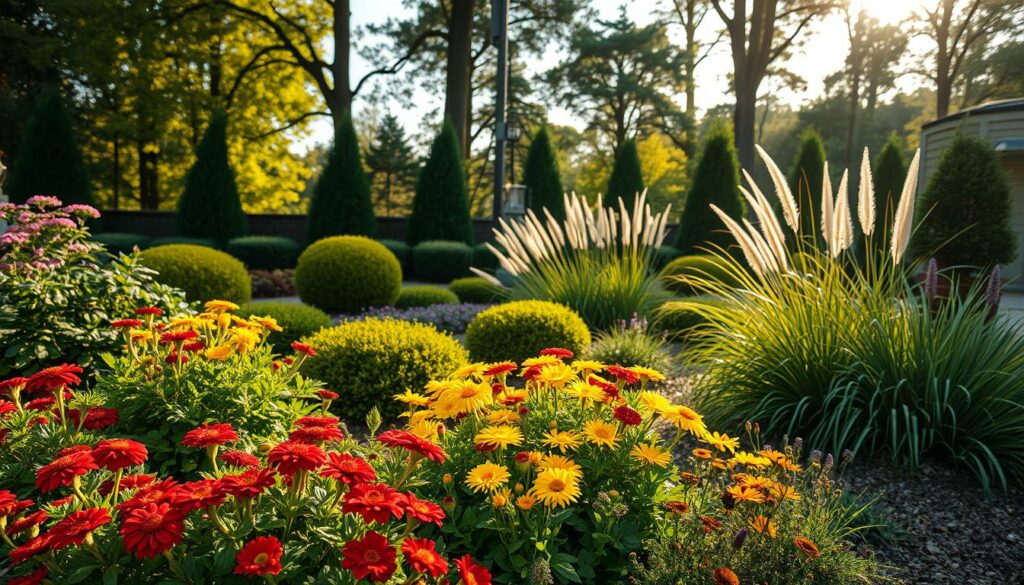
Landscaping plants shape outdoor spaces for beauty, privacy, and erosion control. They also provide wildlife habitats and balance microclimates.
The types include canopy trees, shrubs, perennials, annuals, groundcovers, and edible garden plants. Choosing plants carefully affects the look and care of a garden. It also impacts sustainability and the environment over time.
Definition and Importance of Plant Choices
Landscaping plants are chosen species arranged to meet aesthetic and practical goals. Designers study growth habits, soil, light, and life cycles to avoid failures.
Proper plant selection lowers replacement costs and reduces maintenance time. It ensures a garden remains healthy and attractive longer.
Benefits of Using Diverse Plant Types
Diversity among garden plants limits pests and disease spread. It also extends interest with staggered blooms and changing leaves.
Mixed plantings support native pollinators, birds, and beneficial insects. This mix improves the garden’s resilience to climate changes.
Layering plants into canopy, understory, shrub, and groundcover levels adds depth and function. Assessing sun, shade, soil texture, and drainage helps meet goals like low maintenance or edible yields.
Popular Types of Landscaping Plants
The right mix of garden plants shapes a yard into a welcoming outdoor room. Thoughtful plant selection balances form, color, and season. This helps a property look intentional from spring through winter.
Below are three practical groups that landscape design professionals and home gardeners rely on. These groups offer structure, repeat bloom, and seasonal impact.
Shrubs for Focal Points and Borders
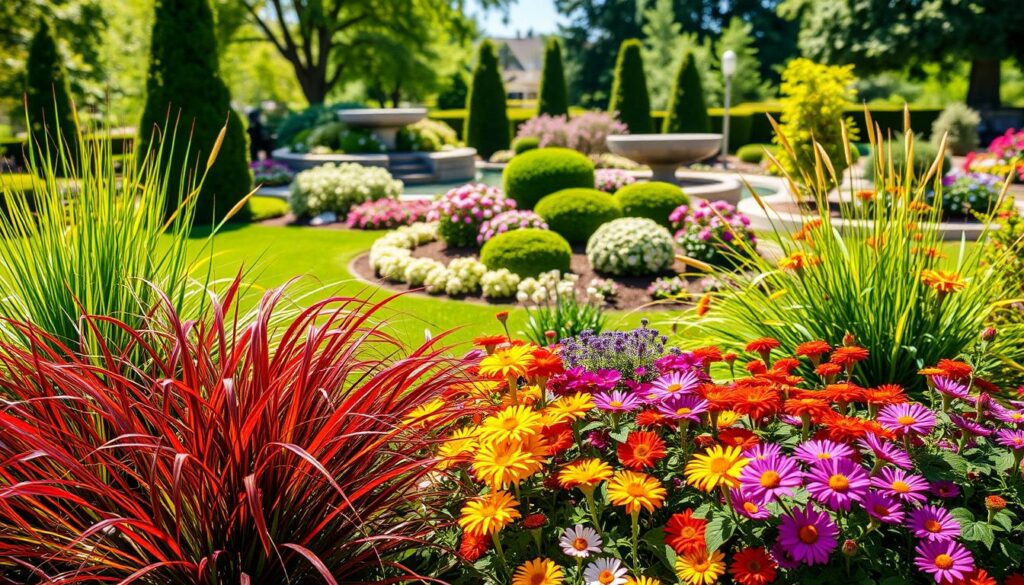
Shrubs give a landscape plants scheme backbone. Use them as hedges, foundation plantings, or specimen pieces. They add height and year-round form.
Choose Hydrangea macrophylla for bold summer blooms and Boxwood (Buxus spp.) where formal edges are needed. Rhododendron and Azalea bring spring color. Butterfly bush (Buddleja) attracts pollinators.
Match mature size to available space. Note evergreen versus deciduous habit. Plan pruning into maintenance routines to prevent overcrowding and preserve sightlines.
Perennials: Color and Longevity
Perennials return each year, which cuts long-term costs compared with seasonal plantings. They build root depth that improves soil health. This supports a thriving pollinator population.
Reliable choices include Coneflower (Echinacea), Black-eyed Susan (Rudbeckia), Salvia, Daylily (Hemerocallis), and ornamental grasses such as Miscanthus. These outdoor plants have staggered bloom times for continuous interest.
Maintain perennials by dividing crowded clumps and deadheading spent flowers. Select varieties suited to local hardiness zones for better survival and reduced water needs.
Annuals for Seasonal Brightness
Annuals deliver immediate, vibrant color and flexibility in color schemes. They are ideal for containers, borders, and beds. Use them when a seasonal refresh is needed.
Popular annuals include Petunia, Marigold, Impatiens for shade, Zinnia, and Calibrachoa. Use them to accent perennials or to change a display each year.
Expect more frequent watering and replanting. However, annuals provide bold, continuous color that fills gaps and highlights focal areas in landscape design.
Choosing the Right Plants for Your Climate
Plant selection begins with knowing your climate. Use the USDA map to find your plant hardiness zone. Choose plants rated for your zone or lower to ensure survival.
Local conditions also matter. Microclimates around your house can affect what plants grow best. Pay attention to these pockets for better results.
To find your zone, check USDA resources or your state cooperative extension. Plants are rated by the coldest zone they tolerate. Picking species rated for your zone or lower helps your plants survive winter.
Microclimates impact plant success. Sheltered courtyards, urban heat islands, and south-facing slopes create warmer spots. Mapping these allows you to grow more plant varieties outdoors.
Soil moisture is important too. Wet-tolerant plants thrive in poorly drained sites. For dry or sandy areas, choose drought-wise species. Local extension offices offer advice on cultivars and pests.
Cold climates (Zones 3–6)
Hardy perennials and shrubs work best in cold climates. Examples include conifers, spruce, juniper, peonies, daylilies, and switchgrass. Deciduous trees like sugar maple and serviceberry add spring flowers and fall color.
Temperate climates (Zones 6–8)
Temperate zones allow a wider plant palette. Hydrangea, boxwood, eastern redbud, and ornamental grasses adapt well. Mediterranean plants do well if summers are warm but not too hot.
Warm climates (Zones 8–11)
Heat- and drought-tolerant plants thrive in warm zones. Crape myrtle, oleander, lantana, agave, and native grasses resist heat stress. Citrus and some edibles also grow reliably.
Wet or dry site conditions change your choices. Redtwig dogwood and canna suit soggy areas. For dry yards, consult the low-water list for plant ideas.
Contact county extension services for region-specific cultivars and pest updates. Their bulletins help you follow best gardening practices and improve success over time.
| Climate Zone | Typical Conditions | Suggested Landscaping Plants | Notes on Plant Selection |
|---|---|---|---|
| Zones 3–6 | Cold winters, short growing season | Conifers, Spruce, Juniper, Peony, Daylily, Switchgrass, Sugar Maple, Serviceberry | Choose plants with lower zone ratings for winter hardiness; protect young trees from frost heaving |
| Zones 6–8 | Moderate winters, warm summers | Hydrangea, Boxwood, Eastern Redbud, Ornamental Grasses | Mix deciduous and evergreen to balance seasonal interest and shelter |
| Zones 8–11 | Mild winters, hot summers | Crape Myrtle, Oleander, Lantana, Agave, Native Grasses, Citrus (in warmest zones) | Prioritize heat and drought tolerance; consider summer irrigation strategies |
| Wet Sites | Poorly drained, high water table | Redtwig Dogwood, Canna, Marsh Marigold | Improve drainage where possible; select species adapted to standing moisture |
| Dry Sites | Low rainfall, fast-draining soils | Agave, Native Grasses, Drought-tolerant perennials | Group plants by water needs; mulch to conserve moisture |
Native Plants in Landscaping
Using native landscaping plants brings practical rewards. They are adapted to local seasons, soil, and rainfall. This reduces irrigation and fertilizer needs.
Native plants make selection easier for homeowners and landscapers. They thrive naturally without much extra care.
Advantages of Using Native Species
Native species support local ecosystems. They feed pollinators, birds, and beneficial insects. This increases biodiversity and strengthens habitat corridors.
Native plants often resist local pests and diseases better than many exotic choices. This lowers chemical use and long-term maintenance.
Municipal programs and conservation grants may offer incentives for native plantings. These are often used in stormwater or habitat projects.
Examples of Native Plants in Different Regions
In the Northeast, gardeners pick Eastern Red Columbine, Black-eyed Susan, and Mountain Laurel. These plants suit woodland edges and mixed beds.
The Southeast favors Southern Magnolia, Coral Honeysuckle, and Purple Coneflower. These plants handle heat and humidity well and support pollinators.
Across the Midwest and Great Plains, prairie species like little bluestem, Leadplant, and prairie coneflower form resilient, low-care landscapes. They fit meadows and buffer strips.
In arid parts of the Southwest, Penstemon, Desert Willow, agave, and yucca give drought-tolerant color and structure. These plants reduce irrigation needs and attract wildlife.
The Pacific Northwest benefits from Red Alder, Oregon Grape, and Sword Fern in moist, cool sites. They provide shade, groundcover, and seasonal interest.
For best results, consult local native plant societies or state extension resources. They offer practical gardening tips and help find reputable nurseries.
Low-Maintenance Landscaping Plants
Low-maintenance landscaping plants save time and money by reducing irrigation, pruning, fertilization, and pest control needs. Homeowners want attractive yards with minimal work. They should focus on water-wise choices, good soil preparation, and simple care routines.
Grouping plants by water needs and adding organic matter to soil helps shrubs and perennials stay healthy. Mulch also lowers stress on plants.
Choosing tough plants suited to local climates reduces long-term work.
These steps make it easier to grow drought-tolerant plants with less effort.
The list below shares drought-tolerant and pest-resistant plants for a low-care garden. Each works well with drip irrigation and seasonal planting. This encourages strong roots and needs less attention.
Drought-tolerant Varieties
- Lavandula (lavender): Fragrant, deer-resistant, thrives in well-drained soil and full sun.
- Perovskia atriplicifolia (Russian sage): Airy texture, long bloom season, tolerates poor soil.
- Agave: Sculptural succulents that need almost no supplemental water once established.
- Salvia species: Many cultivars offer pollinator value and low irrigation needs.
- Sedum: Low-growing succulents suited for rock gardens and hot, dry spots.
- Ornamental grasses (Schizachyrium, Pennisetum): Provide movement and require little water.
Pest-Resistant Plants
- Native oaks and maples: Often fare better against local pests in their home range.
- Ornamental grasses and sedges: Resist chewing insects and lower disease pressure.
- Rosemary and thyme: Aromatic herbs that repel many common garden pests.
Integrated plant care supports drought-tolerant and pest-resistant plants. Regular monitoring and proper spacing help reduce outbreaks.
Seasonal cleaning keeps plants healthy.
If treatment is needed, use targeted organic options like neem oil and insecticidal soap. These limit harm to beneficial insects.
| Plant | Water Needs | Pest Resistance | Best Use |
|---|---|---|---|
| Lavandula (lavender) | Low | High | Borders, mass plantings, pollinator gardens |
| Perovskia (Russian sage) | Low | Moderate | Focal points, mixed perennial beds |
| Agave | Very low | High | Accent plants, rock gardens |
| Salvia spp. | Low | Moderate | Pollinator strips, containers |
| Sedum | Low | High | Groundcover, green roofs |
| Schizachyrium & Pennisetum | Low | High | Screening, texture contrast |
| Rosemary & Thyme | Low | High | Herb gardens, edging |
| Native oaks & maples | Moderate | High | Shade trees, structural elements |
Simple strategies help these plants perform well. Mulch reduces evaporation. Drip systems deliver water directly to roots.
Planting in cooler months helps plants establish. Following these tips leads to a landscape that needs little work.
Creating Year-Round Interest
Thoughtful planting keeps an outdoor space lively through all seasons. A good plan stages spring bulbs, summer blooms, fall texture, and winter structure. This maintains interest for visitors and wildlife. These landscaping ideas help gardeners balance color, form, and habitat. They use hardy landscaping plants suited to local climates.
Seasonal Changes in Plants
Start with spring bulbs like tulips and daffodils to announce the season. Pair bulbs with spring-flowering shrubs such as forsythia and lilac to extend early color. Summer perennials like coneflowers and salvias carry the display into warmer months. They also attract pollinators.
For fall, rely on ornamental grasses and perennials that form strong seedheads and colorful foliage. Leaving some seedheads gives birds food and adds sculptural interest. In winter, focus on silhouettes and branch structure. This avoids dull stretches in the garden.
Maintain the plan by deadheading spent flowers and cutting back old growth at the right times. Trim ornamental grasses in late winter or early spring so new shoots emerge cleanly. These tasks keep garden plants healthy and support smooth seasonal changes.
Evergreens for All-Year Beauty
Evergreens create a steady backdrop when deciduous plants are dormant. Use boxwood and holly for formal hedges or foundation plantings that frame beds. Eastern white pine and juniper serve as vertical anchors or privacy screens.
Choose broadleaf evergreens like rhododendron in milder zones for seasonal blooms plus foliage. Match placement to mature size and growth rate to prevent shading lower plants. Thoughtful spacing makes evergreens functional without overpowering mixed borders.
| Plant Type | Examples | Seasonal Role | Maintenance Tip |
|---|---|---|---|
| Spring bulbs | Tulip, Daffodil | Early color and ground-level interest | Lift in wet climates; naturalize in drifts |
| Spring shrubs | Forsythia, Lilac | Extend spring display and fragrance | Prune after flowering to keep shape |
| Summer perennials | Coneflower, Salvia | Peak-season color and pollinator support | Deadhead to prolong bloom time |
| Ornamental grasses | Panicum, Miscanthus | Fall texture and winter seedheads | Cut back in late winter for fresh growth |
| Broadleaf evergreens | Boxwood, Rhododendron | Year-round color and structure | Monitor for scale and ensure proper drainage |
| Conifers | Eastern White Pine, Juniper | Privacy, vertical interest, winter backbone | Space for mature spread; avoid heavy root competition |
Integrating these elements creates a cohesive year-round landscape. Mixing outdoor plants across seasons makes a resilient, attractive garden. Small choices in placement and care yield strong long-term results.
Incorporating Trees into Landscape Design
Trees bring scale and purpose to landscape design. They shape outdoor rooms and offer shade. When paired with other plants, trees improve microclimates.
Thoughtful selection and placement protect foundations and utility lines. They also preserve long-term views. This careful planning boosts property value.
Benefits of Trees in Landscaping
Trees reduce cooling costs by shading homes and pavements. They store carbon and slow stormwater runoff. This eases pressure on urban drainage systems.
Birds and pollinators find habitat in mature canopies. This increases biodiversity among outdoor plants.
Trees provide vertical structure and focal points. A well-placed tree frames sightlines and anchors plant beds. It creates sheltered microclimates for shade- or sun-loving species.
Planning must consider root spread, soil compaction, and pruning needs. This avoids conflicts with foundations and overhead lines.
Best Trees for Different Landscapes
Small urban yards benefit from compact, ornamental trees. Dogwood (Cornus florida), Japanese maple (Acer palmatum), and crape myrtle provide seasonal interest. These trees suit small lots without overwhelming space.
Medium to large properties call for shade trees with broad canopies. Sugar maple (Acer saccharum), red oak (Quercus rubra), and American linden (Tilia americana) provide cooling shade. They also offer strong structure for other landscaping plants.
In hot, dry climates, drought-tolerant trees thrive with minimal irrigation. Honey mesquite (Prosopis glandulosa), Texas red oak, desert willow, and olive fit xeric landscapes. They reduce maintenance for outdoor plants.
Street trees and tough-site specimens must tolerate compacted soils and pollution. Ginkgo biloba and London plane (Platanus × acerifolia) perform well in urban areas. Resilience is key along avenues and in parks.
Fruit-bearing trees support edible landscaping goals. Apple, pear, peach, and citrus offer seasonal harvests. Pollination needs and spacing influence companion planting and tree selection.
Edible Landscaping Plants
Edible landscaping mixes fruit trees, shrubs, herbs, and vegetables into decorative beds and walkways. This makes the yard look attractive while producing food. Careful plant choices keep the yard nice and help pollinators and useful insects.
Designers suggest espaliered apples and pears along walls. They also group herbs like rosemary and thyme near seats. Berry-producing shrubs make great living borders.
Paying attention to soil health, safe pest control, and seasonal rotation helps edible plants thrive with traditional landscaping.
The tips below help gardeners plan gardens that blend beauty with usefulness.
Combining Beauty with Functionality
Put compact fruit trees on dwarf rootstock in spots where they add shade and blooms. Plant herbs among perennials to hide vegetable plots and add sweet smells to paths.
Pick edible ornamentals like blueberry bushes that add color in seasons and provide homes for birds. Use mulch and organic soil to meet vegetable and shrub needs in shared beds.
Choose plants that attract pollinators and avoid broad pesticides near food plants. Succession planting keeps containers and borders growing all season.
Top Edible Plants to Consider
Small fruits like blueberry, raspberry, and elderberry work well with shrubs. They add autumn color to yards.
Compact apple, pear, and peach trees fit small yards. Use dwarf rootstocks and match chill-hour needs for your USDA zone.
Herbs such as lavender, rosemary, sage, and thyme brighten borders and smell great. These herbs resist drought and fit containers or mixed beds well.
Vegetables like tomatoes, peppers, lettuce, and kale grow in beds and pots. Pick compact types for tight spaces. Mix them with flowers for color and longer harvests.
| Type | Examples | Best Use | Care Notes |
|---|---|---|---|
| Small Fruit & Berries | Blueberry, Raspberry, Elderberry | Borders, hedges, fall color | Acidic soil for blueberries; pruning for cane fruits |
| Fruit Trees | Apple (dwarf), Pear (dwarf), Peach (semi-dwarf) | Focal points, espalier on walls | Select rootstock for size; match chill hours to zone |
| Culinary Herbs | Lavender, Rosemary, Sage, Thyme | Borders, containers, fragrance paths | Drought-tolerant; trim to keep compact form |
| Vegetables | Tomato (bush), Pepper, Lettuce, Kale | Mixed beds, containers | Succession planting; fertile, well-drained soil |
| Pollinator-Friendly Edibles | Flowering fruit trees, Borage, Bee balm | Support bees and beneficial insects | Avoid broad-spectrum pesticides; provide water source |
Gardeners who follow basic tips can make yards that are both pretty and useful. Good plant choices and care help edible plants thrive with traditional landscaping. This adds beauty and fresh food to the home.
Color Schemes in Plant Selection
Choosing color schemes landscaping for a yard shapes mood and movement. Thoughtful plant selection helps gardeners create vivid contrasts or calm harmonies.
This short guide covers complementary color pairing and grouping strategies that work across seasons.
Complementary Colors
Complementary choices place opposites on the color wheel together to create striking contrast. Pair purple salvia with yellow rudbeckia to make blooms pop.
White garden plants form a serene backdrop for evening light and moon gardens.
Warm palettes of reds, oranges, and yellows bring energy. Cool palettes of blues, purples, and silvers soothe the space.
Planning seasonal shifts lets spring bulbs set the stage, summer perennials take the lead, and autumn foliage close with color.
Grouping for Impact
Group plants in odd numbers and drifts to mimic nature. Sweeps of one hue draw the eye to focal points.
Use smaller, softer mixtures in transition areas to avoid visual clutter.
Layering adds depth. Place low-growing perennials in the foreground, mid-layer shrubs behind them, and taller trees at the back.
Overlap bloom times or plan sequential flowering so landscaping plants offer steady interest.
| Design Goal | Plant Examples | Color Scheme Approach |
|---|---|---|
| Bold focal display | Rudbeckia, Salvia, Hemerocallis | Complementary contrast with purple and yellow sweeps |
| Calm, formal border | Lavender, white roses, Artemisia | Monochromatic whites with silver foliage accents |
| Pollinator-friendly bed | Echinacea, Monarda, Agastache | Analogous warm tones to attract bees and butterflies |
| Low-maintenance drift | Sedum, ornamental grasses, Salvia nemorosa | Restricted palette with textured foliage for year-round interest |
Good plant selection blends color, texture, and timing. Garden plants with contrasting foliage, like variegated leaves or silver Artemisia, extend visual appeal.
These landscaping ideas help designers build lasting, dynamic outdoor rooms.
Designing with Texture and Form
Good landscape design balances shape and surface. It guides the eye and shapes movement. Thoughtful plant choices create rhythm, scale, and focal points.
Texture in landscaping adds depth. It makes garden plants feel intentional, not accidental.
Combining Different Leaf Shapes
Leaf shape influences perceived scale. Large-leaf plants like Hosta create bold focal points. Fine-textured plants such as ferns provide soft backdrops.
Pair broadleaf evergreens like Rhododendron with spiky forms such as Yucca or Agave. These contrasts help plants stand out from far and near.
Scale is very important. Use small textures in intimate garden rooms. Choose larger, bolder foliage for open yards. Thoughtful selection avoids clutter and ensures harmony.
Using Textural Contrast for Visual Appeal
Mix soft, feathery textures with strong, architectural forms to maintain interest across seasons. Ornamental grasses and ferns soften edges near boxwood or cacti.
Think about seasonal texture. Trees with striking bark, like paperbark maple, and shrubs with red twig dogwood add winter structure. Seedheads from perennials extend visual interest after flowers fade.
Design for easy maintenance. Use long-lived plants as anchors. Rotate short-lived accents to refresh beds without major changes. This keeps landscapes resilient and flexible.
| Texture Role | Examples | Best Use |
|---|---|---|
| Bold focal texture | Hosta, Rhododendron, Canna | Large beds, entryways, focal points |
| Fine background texture | Ferns, Festuca, maiden grass | Understory layers, borders, fillers |
| Architectural form | Boxwood, Yucca, Agave | Formal hedges, sculptural accents |
| Seasonal structural interest | Paperbark maple, red twig dogwood, miscanthus seedheads | Winter gardens, low-maintenance beds |
| Maintenance strategy | Long-lived anchors + rotating annuals | Sustainable plant selection and renewal |
Final Tips for Selecting Landscaping Plants
Careful plant selection starts with solid research. Use university extension publications like Cornell Cooperative Extension or Texas A&M AgriLife. Check nursery tags and trusted horticulture books for mature size, bloom time, soil preferences, and light needs.
Match site conditions such as sun exposure, soil pH, drainage, and microclimates before buying plants. This helps make plant care and long-term maintenance easier.
Space plants based on their mature spread to avoid crowding and promote air circulation. Allow room for roots to grow, which cuts disease risk and need for future transplanting.
Simple soil tests or help from local extension offices can guide plant choices. This improves survival rates for trees, shrubs, and perennials.
Plan for growth by knowing mature height and root spread. Place trees away from foundations and utilities. Choose lower-maintenance cultivars if you want less upkeep.
Create a maintenance calendar for watering, mulching, pruning, fertilizing, and dividing perennials. Consider drip irrigation or smart controllers for efficient plant care.
Stage purchases and installation to fit your budget and labor limits. First, install structural elements like trees and large shrubs. Then add perennials and annuals.
Consult certified arborists for tree work and landscape designers for bigger projects. Use local nurseries for region-appropriate cultivars.
Apply the right plant, right place principle to blend looks with ecological function. This ensures landscaping plants offer lasting beauty and value.