

Nearly 60% of American homeowners say they would replace some lawn to save water. Yet, most yards still have mostly grass. This gap shows a good chance for no grass garden ideas that save water and cut maintenance.
This guide explains how to design grass-free gardens for homeowners and landscapers across the United States. It focuses on site planning like sun, soil, drainage, and microclimates. It also helps set clear goals like entertainment areas, play zones, privacy screens, and edible beds.
Early steps include measuring the site and taking photos. Collect inspiration from magazines, Pinterest boards, and local garden shows. This groundwork helps pick plants and materials for a lawn-free outdoor space.
Design principles to apply are unity, repetition, contrast, balance, scale, proportion, seasonal interest, and sustainability. Homeowners should set a maintenance budget and decide how often they want to care for the yard. This helps keep a low maintenance approach.
Before major changes, check permits and HOA rules. Some areas offer xeriscaping incentives through county Extension offices. Some homeowners associations may limit hardscape materials or require certain plants.
Key Takeaways
- Start by assessing site conditions—sun, soil, drainage, and microclimates.
- Define functional goals: entertaining, play, privacy, and edible areas.
- Follow core design principles: unity, balance, scale, seasonal interest.
- Gather measurements, photos, and inspiration before choosing plants and materials.
- Check local permits, HOA rules, and extension services for incentives and guidance.
Exploring No Grass Garden Concepts
The move away from turf opens many creative options for homeowners. Grass-free landscaping can turn small yards into usable outdoor rooms.
It can reduce upkeep and invite wildlife. This section outlines practical concepts and reasons to consider a yard without lawn.
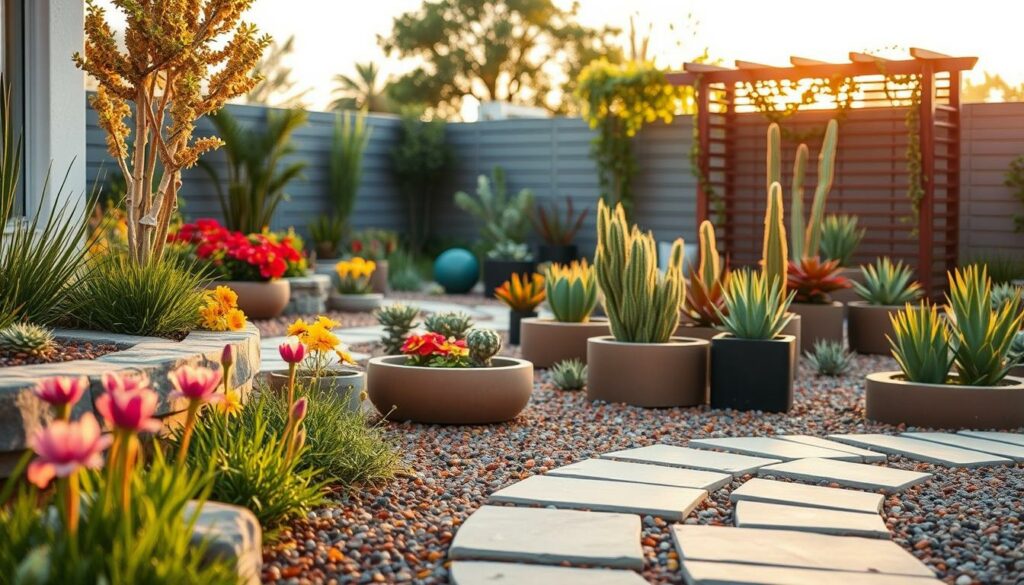
Benefits of a Grass-Free Landscape
Reduced maintenance is a top reason people choose alternatives to turf. Removing the lawn cuts out mowing, edging, and fertilization. This lowers labor and equipment costs.
Water savings follow when designers use drought-tolerant plants and xeriscaping. These choices fit regional climates better than thirsty lawns. They also reduce irrigation needs.
Replacing grass often increases usable space. Patios, vegetable beds, play areas, and rain gardens fit where turf once was. This change makes outdoor living functional and personal.
Long-term cost savings can be large. Lower water bills, less fuel for power tools, and fewer lawn chemicals add up over years.
Improved biodiversity comes when monoculture turf gives way to mixed plantings. Native flowers, shrubs, and ground covers support pollinators, birds, and beneficial insects.
Environmental Impact of Grassless Gardens
Water conservation is crucial in dry areas. Some municipal programs in the Western U.S. reward homeowners who use xeriscaping and remove grass. These programs aim to save limited water supplies.
Fewer chemicals mean less runoff. Reducing fertilizer and herbicide use lowers nutrient pollution in streams and lakes. This helps keep aquatic ecosystems healthier.
Carbon impacts depend on maintenance choices. Turf stores some carbon, but mowing and blowers emit greenhouse gases. Using electric tools or mowing less lowers emissions.
Stormwater management improves with permeable surfaces, rain gardens, and mulched planting beds. These replace compacted lawn, boost infiltration, and limit urban runoff during storms.
Practical planning matters. Homeowners should consider climate, soil health, and neighborhood norms when choosing garden designs. Check for rebates from water utilities before removing turf.
Designers and gardeners can use no grass garden ideas to craft backyards that balance beauty, function, and ecology. Thoughtful choices create landscapes that look good, save resources, and invite nature into everyday life.
Types of Plants for Grassless Gardens
Designers moving away from traditional lawns find many plants and materials that fit modern garden styles. Choosing the right mix brings interest all year. It also supports pollinators and cuts water use.
The options range from long-lived perennials to mats of ground cover and clumps of ornamental grass.
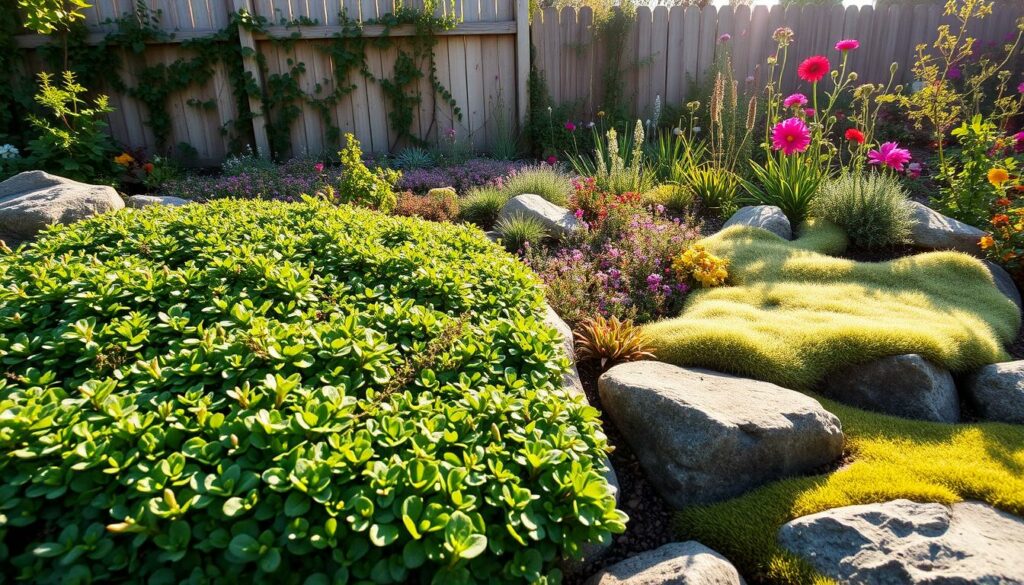
Drought-resistant perennials form the backbone of many xeriscaping ideas. In Mediterranean climates, plants such as Lavandula (lavender), Salvia species, and Agastache perform well.
Temperate gardens benefit from Echinacea and Rudbeckia for strong summer color. In arid regions, Penstemon and Lantana offer vibrant blooms with very low irrigation once established.
These perennials live long and develop deep roots that reduce water needs over time. They provide seasonal blooms, nectar for bees and butterflies, and structure in mixed beds.
When planting, gardeners should group plants with similar water needs. They should amend the soil with compost for good growth. Applying mulch helps conserve moisture.
Ground cover alternatives replace turf with low-growing plants or hardscape infill. Living options include creeping thyme (Thymus serpyllum), Lysimachia nummularia where climate allows, Vinca minor for shady spots, and Ajuga for quick cover.
These plants cool surfaces, suppress weeds, and create habitat.
Stone-based alternatives suit modern garden designs well. Gravel, decomposed granite, and permeable pavers with planted joints give ultra-low maintenance surfaces. Moss offers a soft, green carpet in shady moist spots.
Each choice has trade-offs: living covers help biodiversity, while stone raises surface temperatures but lowers upkeep.
Ornamental grasses add vertical texture and motion to grassless landscapes. Non-invasive clumping types like Pennisetum alopecuroides (fountain grass), Miscanthus sinensis for larger sites, and Festuca glauca (blue fescue) fit many designs.
These grasses help control erosion on slopes, soften hard edges, and create seasonal rhythm.
Some ornamental grasses can be aggressive in certain regions. Gardeners should check local extension services before selecting species.
Practical tips include favoring native species, checking USDA hardiness zones, and considering deer resistance and care needs like division and pruning.
| Plant Type | Recommended Species | Best Use | Maintenance Notes |
|---|---|---|---|
| Drought-resistant perennials | Lavandula, Salvia spp., Agastache, Echinacea, Rudbeckia, Penstemon, Lantana | Mixed beds, pollinator borders, long-season color | Hydrozone grouping, compost at planting, mulch to retain moisture |
| Alternative ground covers (living) | Thymus serpyllum, Lysimachia nummularia, Vinca minor, Ajuga | Path edges, slope stabilization, shady carpets | Moderate upkeep to control spread, good for cooling and habitat |
| Alternative ground covers (non-plant) | Gravel, decomposed granite, permeable pavers, moss | Courtyards, dry paths, low-traffic lawns | Very low watering, may increase heat retention, excellent durability |
| Ornamental grasses | Pennisetum alopecuroides, Miscanthus sinensis, Festuca glauca | Vertical accents, erosion control, softening hardscape | Divide every few years, check for invasiveness, low irrigation once established |
Designing with Hardscaping
Hardscaping anchors an outdoor plan. It turns a space without grass into a low-maintenance living area.
Thoughtful materials and layout shape seating, movement, and planting zones. This also helps cut water use and upkeep.
Patios and Pathways
Choose materials that fit your budget and style. Concrete offers stamped or exposed aggregate finishes for durability.
Flagstone and bluestone provide a natural look. Pavers, concrete or clay, offer many pattern options and easy repairs.
Permeable pavers allow water to infiltrate, reducing runoff. Paths need clearances for walking and moving furniture.
Create furniture zones on patios. Plan smooth flow between indoor and outdoor rooms. Add ADA-friendly slopes and firm surfaces for accessibility.
Layouts guide the experience. Stepping stones and meandering walkways encourage discovery. Rectilinear patterns suit modern garden designs and clean sightlines.
Use contrasting joints and planting strips to soften hard edges and add visual interest.
Use of Gravel and Stones
Gravel types include decomposed granite, pea gravel, crushed stone, and river rock. Each varies in texture, compaction, and drainage.
Select materials based on foot traffic and how the area will be used. Install gravel with care.
Compact a proper sub-base, add edging to contain gravel, and use landscape fabric carefully to allow infiltration.
Lighter gravels reflect heat and work well in sunny spots. Avoid broad areas of dark stone in hot climates without shade.
Gravel landscaping is cost-effective and fits xeriscaping well. It replaces turf in sunny areas and lowers maintenance.
Combine gravel beds with planting pockets to improve soil health and add visual contrast.
Incorporating Retaining Walls
Retaining walls turn slopes into terraces, raised beds, and seating. Natural stone gives a timeless look.
Concrete blocks and crib walls add structural strength. Timber or composite suits rustic styles. Gabion walls offer a modern, industrial feel.
Design walls with drainage in mind. Use gravel backfill, weep holes, and geotextile to prevent pressure buildup.
For walls that exceed local height codes, consult a licensed engineer or contractor to meet safety standards.
Soften hard edges by pairing walls with plants and permeable paving. This blend supports no grass garden ideas.
It keeps water on-site and improves habitat value with greenery combined with structure.
Effective Use of Mulch
Mulch plays a key role in gardens without grass. It ties plantings together and cuts back on chores.
Mulch keeps soil healthy. Choosing the right type shapes both look and function in a low maintenance yard. It supports sustainable landscaping solutions.
Organic versus Inorganic Choices
Organic mulch options include shredded bark, wood chips, composted mulch, and cocoa shell where permitted. These mulches improve soil structure and release nutrients slowly as they break down.
They need periodic replenishment, usually once a year or every few years.
Inorganic mulch types include gravel, rubber mulch, and landscape fabric topped with stone. These last longer and reduce reapplication needs.
They do not feed the soil and can change temperature and water infiltration. They suit paths, dry beds, and modern designs where little decomposition is wanted.
Practical Benefits in Garden Design
Mulch reduces weeds, keeps soil moist, and moderates temperature swings. It adds uniform color and texture to beds, helping define garden zones.
Mulch highlights focal plants. A thoughtful mulch palette can make a small space feel cohesive and intentional.
For planting beds, lay 2–4 inches of organic mulch. Keep it slightly away from stems and trunks to prevent rot.
Top-dress or replace mulch as needed to maintain depth. Use inorganic mulch for walkways or low-upkeep areas to create a durable surface.
Sustainability and Maintenance Notes
Locally sourced mulch reduces transport emissions and supports sustainability. Using compost as a top layer returns nutrients to soil and builds fertility.
Choosing the right blend of organic and inorganic materials helps balance appearance, function, and maintenance needs in a garden without grass.
Creating Visual Interest with Focal Points
Thoughtful focal points change an outdoor space without grass into a series of memorable rooms. A well-placed element anchors movement and guides sightlines. It gives visitors something to return to. Designers use a mix of living and built features to create balance and lasting appeal.
Statement Trees and Shrubs
Statement trees act as vertical anchors that define scale and season. Small yards benefit from species like Amelanchier, which blooms in spring and stays small. Betula (birch) brings a slender shape and light bark.
On larger properties, oaks like Quercus add permanence and canopy. Shrubs add midlevel structure and screening. Ilex (holly) offers year-round form.
Viburnum has flowers and fruit that attract birds. Elaeagnus tolerates tough sites and fills gaps quickly. Placement matters; consider roots and utilities when siting specimens.
Choose trees and shrubs with root systems that avoid damaging foundations or pipes. Prune plants for shape and health. Select species suited to the local climate and soil. This reduces maintenance and keeps focal points resilient and long-lasting.
Garden Art and Sculptures
Garden art creates instant focal interest in a grass-free plot. Contemporary metal sculptures bring crisp lines and contrast with plant textures. Ceramic installations add color and tactile weight.
Kinetic pieces add motion on windy days. Place art at path ends, sightlines, or near seating areas to draw the eye. Use low-voltage lighting to show texture after dusk.
Pair sculptures with planting beds or hardscape so each element feels part of a whole. Scale and color should relate to surrounding elements. Large metal pieces suit paved plazas, while small ceramics fit among low ground covers.
Local artisans and found-object works add unique character to modern garden designs. Use focal points to create subspaces. A pergola marks an outdoor dining room, a fountain signals a quiet seating area, and a specimen tree forms a shady retreat.
This layered approach lets designers craft varied experiences within a single outdoor space without grass.
Water Features in No Grass Gardens
Water adds motion, sound, and life to an outdoor space without grass. Thoughtful water features can anchor a design and draw wildlife. They also offer cooling relief on hot days.
Careful planning keeps these installs low-maintenance and aligned with sustainable landscaping solutions.
Koi Ponds and Waterfalls
Koi ponds need proper filtration, recirculating pumps, and biological systems to keep water healthy. Builders choose liners, concrete, or fiberglass shells based on budget and site needs.
Depth matters for fish survival in colder U.S. zones. Ponds should be deep enough for wintering. They must also fit the number of koi and plantings.
Safety is important when children visit. Fencing or screened covers help reduce risks.
Large koi ponds and waterfalls create strong focal points. They mask urban noise with flowing water. Native plants and shallow shelves support amphibians and beneficial insects.
Birdbaths and Fountains
Simple birdbaths and small fountains work well in tight yards. They fit many water feature ideas for no grass gardens. Options include shallow basins, tiered cast-stone pieces, and solar recirculating units that reduce plumbing needs.
Place birdbaths near shrubs or trees so birds have quick escape cover. Keep basins clean and change water regularly to prevent mosquito breeding.
Low-maintenance fountains often use energy-efficient pumps or solar power. Sustainable landscaping favors recirculating systems and timed fills to limit water waste.
Float valves, drip-irrigation tie-ins, and native planting around fountains help conserve water. These also support pollinators and songbirds.
Practical Considerations for Maintenance
A grass-free landscape needs a clear plan for upkeep. Thoughtful choices cut labor and water use.
These maintenance no grass garden ideas focus on simple routines, smart tools, and plant zoning. They help keep the yard healthy.
Weeding Strategies
Start with prevention by removing existing weeds, solarizing bare soil, or using sheet mulching before planting. This reduces hand-pulling later.
Use targeted hand weeding for new beds and spot herbicide treatments only when needed. Regularly refresh mulch to suppress weed seeds and keep soil moist.
For paths and gravel, mechanical tools work well. Garden hoes cover large areas quickly.
Flame weeding works on gravel but needs caution, proper protective gear, and must meet local fire codes.
Irrigation Systems for Alternative Gardens
Drip irrigation delivers water to root zones and cuts evaporation. It pairs well with drought-resistant perennials and edible plants.
Soaker hoses are low-cost for linear beds and work best when buried under mulch.
Smart controllers and soil moisture sensors reduce waste by adjusting schedules based on weather. Brands like Rachio and Hunter are common in U.S. landscapes.
Rainwater harvesting with barrels or cisterns cuts reliance on municipal water. Homeowners should check local rules before installing.
Design systems by grouping plants into hydrozones based on water needs. Pressure regulation and seasonal schedule changes keep roots healthy without extra watering.
Maintain equipment with a seasonal checklist: inspect in spring, tweak irrigation in summer, prune and add mulch in fall, and winterize hoses and controllers.
| Topic | Best Option | Notes |
|---|---|---|
| Weed Prevention | Sheet mulching / Solarization | Reduces seed bank and lowers long-term labor |
| Ongoing Weed Control | Hand weeding + Mulch | Selective, safe for beds with perennials and edibles |
| Mechanical Tools | Garden hoe / Flame weeder | Efficient for large or gravel areas; follow safety rules |
| Irrigation | Drip + Smart controller | High efficiency, ideal for xeriscaping ideas and low maintenance yard |
| Budget Option | Soaker hoses + Rain barrels | Low cost, works well under mulch for even watering |
| System Design Tip | Hydrozone plantings | Group by water need to optimize irrigation systems for no grass garden |
| Seasonal Care | Checklist schedule | Spring to winter tasks keep a low maintenance yard running smoothly |
Seasonal Color and Texture
Careful plant choices keep a garden lively through every season. Staggered bloom times and varied foliage create interest. These no grass garden ideas help small yards feel lush without turf.
Blooming Plants for Year-Round Appeal
Spring starts with bulbs and early perennials. Narcissus (daffodils), Allium, and Pulmonaria offer early nectar and bright color. Bulbs create instant drama before other plants wake up.
Summer relies on long-blooming perennials. Echinacea, Rudbeckia, Gaura, and Salvia give steady color. They attract bees and butterflies, and repeat bloomers reduce gaps.
Fall brings asters, Sedum spectabile (Autumn Joy), and late-season grasses. Their color and seed heads extend the visual season. These plants support migrating insects and birds.
Winter uses structure and bark for interest. Evergreens, Betula (birches), and Cornus (dogwoods) provide form and color. Persistent seed heads act as focal points during dormant months.
Interesting Textures to Consider
Texture in garden design guides the eye and adds depth. Mix fine-textured ferns and ornamental grasses with bold-leaf plants like hostas or Bergenia. This creates a striking contrast.
Hardscape textures matter as much as plants. Pair smooth poured concrete with rough-hewn stone. You can also combine gravel with reclaimed brick for tactile contrast and to define space.
Seasonal texture strategies keep gardens readable year-round. Use dried grasses, seed heads, and sculptural shrubs. They hold visual weight during winter and early spring.
Alternative ground covers replace turf while adding texture. Low sedums, thyme, and native clovers soften paths. These choices reduce maintenance in modern garden designs.
Designers should use texture and color to highlight focal points and guide movement. Thoughtful layering makes small spaces feel larger and richer without grass.
Incorporating Edible Landscaping
Turning an outdoor space without grass into a productive garden blends beauty and function. Edible landscaping no grass garden ideas guide choices that feed the family and support pollinators. This approach also helps reduce lawn upkeep. The section outlines plant choices and layout tips for small yards and bigger plots.
Choosing Fruit-Bearing Plants
Espaliered apple and pear trees work well in narrow yards and patios. Dwarf peach and plum varieties fit in containers and small beds. Blueberry bushes do best in acidic soil, adding spring blossoms and fall color.
Perennial options with lower maintenance include currants, raspberries grown on simple trellises, and fig trees in mild climates like coastal California. Place fruit plants where they get six to eight hours of sun for best yields.
Select compatible cultivars to help pollination when needed. Position multiple trees nearby if cross-pollination increases fruit set. Reduce pests by keeping areas clean and adding habitats for beneficial insects. Use targeted treatments only when necessary.
Vegetable Patches and Herb Gardens
Raised beds improve drainage and control soil quality. They also reduce weeding time. Build beds from rot-resistant cedar, galvanized steel, or composite boards. Keep beds no wider than four feet for easy access without stepping on soil.
Container gardening lets people grow fresh produce on patios and balconies. Use quality potting mix. Match container size to crop needs: deep pots for tomatoes and peppers, shallow trays for lettuces and herbs.
Group herbs by water needs. Mediterranean herbs like rosemary, thyme, and sage belong in drier spots. Basil, chives, and parsley prefer moister locations. Herbs can serve as edging or low ground cover, adding scent and function.
Practice succession planting and rotate crops between seasons to extend harvests. This limits pests and diseases. Mix ornamentals like calendula and nasturtium with vegetables. They attract pollinators and naturally deter pests.
| Feature | Best Choices | Benefits |
|---|---|---|
| Small-space fruit | Espaliered apple, dwarf peach, blueberry | High yield in limited area, visual interest, pollinator blooms |
| Perennial fruits | Raspberry, currant, fig | Lower maintenance, repeat harvests, soil stabilization |
| Raised beds | Cedar, galvanized steel, composite | Better drainage, fewer weeds, ergonomic access |
| Containers | Deep pots for tomatoes, medium for peppers, shallow for greens | Portable, good for patios, allows precise soil control |
| Herb grouping | Rosemary/thyme (dry) • Basil/chives (moist) | Efficient watering, attractive borders, culinary convenience |
| Integrated planting | Calendula, nasturtium with vegetables | Pollinator support, pest deterrence, visual variety |
Sustainable Practices for Grassless Gardens
Designing a no grass garden that lasts means pairing smart practices with local plant choices. Sustainable landscaping reduces water use and work, while boosting habitat value.
Simple steps—improving soil, choosing natives, and managing stormwater—bring big gains for the yard and local ecosystem.
Composting and Soil Health
Composting adds organic matter to the soil. It improves soil structure and water-holding capacity. Compost also feeds microbes vital for plant health in grassless landscapes.
Backyard tumblers, bin systems, or vermicomposting create rich compost for garden beds. Municipal green-waste programs can also support home composting.
Before planting, do a soil test with the local Cooperative Extension. This sets goals for pH and nutrients.
Mix 2–4 inches of compost into beds when planting. This helps plants establish and cuts the need for synthetic fertilizers.
Top-dress beds annually with compost. This keeps soil healthy without relying on chemicals.
Native Plant Utilization
Native plants fit the climate and soil well. They usually need less water and care than others.
Using native plants builds strong, low-input gardens that support pollinators and wildlife. For example, Midwest residents might choose Rudbeckia and Echinacea.
California gardens benefit from Ceanothus and Salvia. The Southeast favors Baptisia and Asclepias to help pollinators.
Pick plants suited to the sun, soil, and moisture of your site. Combine trees, shrubs, perennials, and groundcovers for a diverse look all year round.
Add rain gardens, permeable paving, and pest management. These complete eco-friendly gardens and keep maintenance low.