

Nearly 80% of American households have less than 1,000 square feet of outdoor space. Many still want a productive and beautiful garden. Choosing the right small garden layout is a very practical decision for homeowners and renters.
This guide explains how to plan and build Best Garden Layouts for Small Spaces for yards, patios, balconies, and urban lots across the United States. It focuses on hands‑on outdoor space design and micro garden planning. It does not dwell on abstract theory.
Readers will find step‑by‑step advice on assessing site size and light. The guide helps pick plants suited to US climates. It shows how vertical and container solutions stretch a compact garden layout.
The guide covers edible gardening, seasonal care, and practical maintenance. It also explains sustainable practices like water conservation and composting.
Whether the goal is a patio garden layout, a micro garden for herbs and vegetables, or tiny backyard landscaping, the guide’s recommendations emphasize clear, actionable steps. It offers real examples that fit different small‑space scenarios.
Key Takeaways
- Understanding site size and sun is the first step in any small garden layout.
- Vertical solutions and containers multiply planting area in compact garden layout plans.
- Select plants and varieties that match local climate and maintenance capacity.
- Combine beauty and productivity by blending ornamentals with edible plants.
- Simple sustainable practices—mulch, drip irrigation, and small compost systems—boost long‑term success.
Understanding Small Garden Layouts
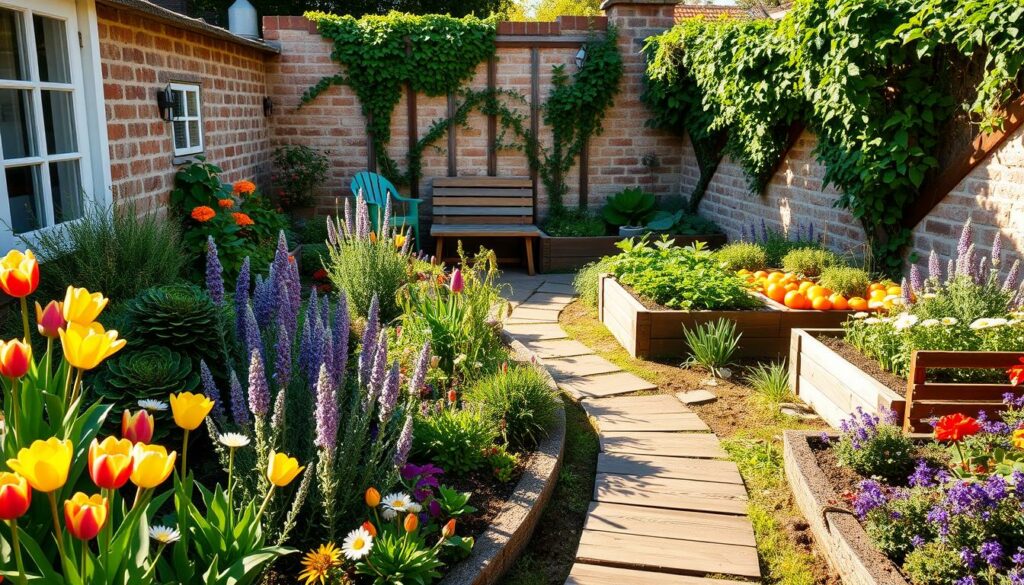
A well-planned small garden layout guides movement, frames views, and protects plants in tight yards.
Thoughtful design creates microclimates for different species and makes small areas feel larger with layered planting and clear sightlines.
Good planning groups plants by water and light needs. This makes irrigation easier and cuts maintenance time.
It also sets zones for seating, storage, and planting to keep the area useful and tidy.
Importance of Layout in Small Gardens
Layout defines circulation and access. Clear paths reduce damage during pruning and harvesting.
Focal points, contrasts, and scale tricks add depth. A single focal element with varied plant heights can transform a small courtyard.
Smart layouts improve irrigation efficiency. Grouping plants with similar moisture needs reduces waste and supports sustainable watering.
Common Challenges Faced in Small Spaces
Limited space forces choices about which features to keep. Prioritizing seating, storage, or planting maximizes usefulness.
Irregular shapes, slopes, and obstructions limit options. Raised beds and tailored containers offer custom solutions.
Sunlight varies, creating shade and sun pockets. Plants must be placed where light matches their needs.
Poor soil and drainage often cause problems. Raised beds and containers improve root health and drainage.
Microclimate extremes from heat-reflecting walls and wind stress plants. Hardy varieties and screens help manage exposure.
Tight layouts can block easy maintenance. Good design leaves space for tasks and makes tools accessible.
Assessing constraints before choosing a style leads to better results. Vertical gardens, containers, and compact plants solve many common challenges.
| Challenge | Impact | Small-Scale Solution |
|---|---|---|
| Limited square footage | Fewer plant types and less seating | Use multiuse furniture, compact plant varieties, and layered planting |
| Irregular shapes and obstructions | Restricted layout options | Install raised beds and custom container groupings |
| Sunlight variability | Poor plant placement and growth | Map light patterns and assign plants by sun/shade needs |
| Poor soil and drainage | Root stress and plant loss | Use raised beds, soil amendments, and well-draining containers |
| Microclimate extremes | Heat stress and wind damage | Add shade structures, reflective screens, and windbreaks |
| Access and maintenance | Harder pruning and harvesting | Design wider paths and reachable planting zones |
Key Considerations for Small Garden Design
A thoughtful approach to a small garden layout starts with an accurate assessment. Measure usable dimensions and note fixed elements like doors, windows, and meters. Mark clearances for walkways and furniture.
A simple scale sketch or apps such as SketchUp and Garden Planner help test furniture sizes and bed placement before you commit.
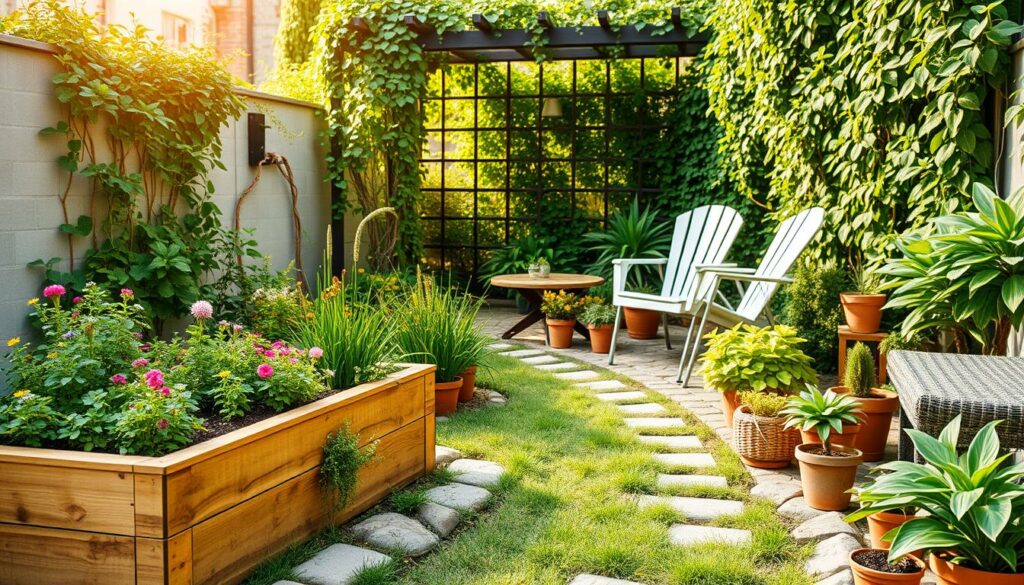
Decide primary functions early. Allocate space for growing food, relaxation, entertaining, or play. Setting priorities guides micro garden planning.
This helps avoid cluttered arrangements that break flow in a compact garden layout plan.
Assessing Available Space
Measure the length and width of the usable area. Walk the perimeter and note obstacles that reduce planting zones. Include vertical space for trellises or shelving.
When space is tight, use modular furniture and movable containers to create flexible zones for different uses.
Sketch several layout options at scale. One sketch might favor planting beds, another container clusters. Testing options reveals how pathways and sightlines will feel.
Sunlight and Shade Considerations
Track sun exposure during a typical day and across seasons. Mark full sun (6+ hours), partial sun/shade (3–6 hours), and full shade.
Place sun-loving plants on south-facing spots. Put shade-tolerant plants near tall structures. Use movable containers to shift plants with seasonal light changes.
This supports sustainable backyard landscaping ideas and fits well with micro garden planning.
Soil Quality and Drainage
Test soil texture, compaction, debris, and pH with a home kit or through county extension services. Observe puddling after rain to find drainage problems.
Run a simple percolation test to see how fast water moves through the soil.
Fix poor soil with raised beds, added topsoil or imported loam, and compost from municipal programs or brands like Miracle-Gro. Choose well-draining container mixes for pots.
These steps affect plant selection, bed construction, and irrigation design for a successful compact garden layout.
Each assessment leads to the next decision. Space measurements shape bed sizes. Sunlight mapping sets plant lists. Soil checks guide amendments.
Putting these findings together creates efficient micro garden planning and practical backyard landscaping ideas for small spaces.
Popular Design Styles for Small Gardens
Choosing a style shapes every decision in a small garden layout. The right approach matches the home’s architecture and upkeep tolerance.
It also depends on the intended use of the space. Below are three design directions good for patios, balconies, and tiny yards.
Modern Minimalist
Clean lines and a limited palette give small spaces a calm, open feel. A patio garden layout benefits from a single focal planter.
Low-maintenance grasses like Festuca and boxwood hedging work well. Materials such as Corten steel or concrete containers unify the look and reduce clutter.
This style fits contemporary homes and owners who prefer low upkeep. Using negative space makes a miniature garden feel larger than it is.
Cottage Garden Aesthetic
Dense, mixed plantings create a lush, romantic feel even in small sites. Compact roses, lavender, salvia, and dwarf foxglove fit well in raised beds or window boxes.
Soft edges and informal paths add charm without shrinking usable space. Limit the color palette to avoid overcrowding, and add vertical supports for rambler plants.
A small seating nook completes the space. It turns an urban garden layout into a cozy retreat.
Vertical Garden Techniques
Vertical solutions expand planting area without using more ground. Walls, trellises, pocket planters, and tiered shelving help herbs, trailing plants, and vining vegetables like peas thrive.
Modular living wall panels from vendors like Woolly Pocket and Sagegreenlife fit many settings. DIY pallet gardens and hanging baskets suit renters who need portable options.
Choosing a Style
The best choice fits personal taste, the home’s style, and balances beauty with food production. For low maintenance, choose modern minimalist schemes.
For a romantic feel, use cottage planting in a miniature garden design. For maximum plant variety in small spaces, try vertical methods in an urban garden layout plan.
Maximizing Vertical Space
Small yards come alive when height becomes a place to plant. Vertical methods expand growing space and boost privacy.
They also change microclimates in your garden. This approach fits well in small or patio gardens. It supports careful micro garden planning.
Wall planters and shelves
Pocket planters, mounted pots, staggered shelves, and rail-mounted containers work well on fences and balcony rails. Use lightweight containers and mixes that drain well. This helps prevent walls from holding too much weight.
Anchor hardware into studs or masonry with proper anchors. Add waterproof backing or drip trays to protect surfaces from water runoff. Slow-release fertilizer and self-watering inserts, like Lechuza planters, reduce maintenance.
Create living mosaics by mixing leaf textures and matching pot colors. Place herbs near kitchen doors for easy harvesting. These tricks make small gardens feel both neat and useful.
Trellises for climbing plants
Choose wood, metal, bamboo, or synthetic trellises to fit your style and strength needs. Tensioned wire systems work well in narrow alleys. Espalier techniques train fruit trees flat against walls.
Plant clematis, miniature roses, honeysuckle, hops, pole beans, or peas depending on your goals. For heavy vines like cucumbers, use strong trellises and check anchors often for safety.
Train young plants and prune to control growth. Single-wall plantings and vertical wires save ground space. These are key vertical garden methods for micro and patio garden planning.
- Benefits: more planting area, added height, enhanced privacy, and visual depth.
- Maintenance tips: monitor irrigation, inspect mounts, and prune seasonally.
- Design idea: combine wall planters with a trellis to form layered living walls.
Choosing the Right Plants for Small Gardens
Selecting plants for a small garden requires thinking about size, season, and where they will be placed. The right plants keep a compact garden feeling full without crowding paths or seating areas. Planting carefully helps a small garden stay attractive year-round and supports pollinators and local wildlife.
Compact varieties and dwarf plants differ in clear ways from full-size cultivars. Dwarf plants grow to smaller heights. Compact or patio varieties are made for small spaces and containers. Garden tags labeled “compact” or “dwarf” show mature height and spread. This helps gardeners plan well.
The list below shows reliable choices for small yards and containers.
- Potted shrubs: compact boxwood (Buxus), dwarf conifers, and compact hydrangeas.
- Small trees: dwarf Japanese maple cultivars and patio-sized trees for shade or focus points.
- Ornamentals: Pennisetum ‘Hameln’ and other small grasses add texture and movement.
- Edibles: patio tomatoes and compact peppers fit well in container vegetable beds.
Nurseries like Monrovia and Proven Winners provide tags with mature size and site advice. Local garden centers and extension services offer region-specific tips on cultivars and pest control.
Compact Varieties and Dwarf Plants
Always read plant labels for mature height and spread before you plant. Group plants that need similar light and water. Layer low groundcover, mid-height perennials, and taller plants for depth without clutter.
Pick pollinator-friendly native plants recommended by groups like Audubon or native plant societies. Native plants support urban wildlife and usually need less water and care.
Seasonal Plant Selection
Plan for year-round interest by mixing plants that bloom in different seasons. In spring, use early bulbs like tulips and daffodils with cool-season annuals such as pansies and violas to start color early.
Summer needs heat-tolerant perennials and annuals like sedum, lavender, and geraniums. Warm-season veggies like cherry tomatoes and peppers fit well in a small garden.
For fall, add asters, chrysanthemums, and ornamental grasses to keep blooms going. Late-season vegetables like kale and Swiss chard extend edible harvests.
Winter interest is important in a small garden. Choose evergreen shrubs, hollies, and grasses for shape and structure when perennials die back.
Helpful tip: check USDA hardiness zones. Pick plants that suit your local zone well. County extension services can guide you on pests, diseases, and soil. These steps make small gardens strong and easy to care for, while maximizing beauty in limited space.
Creative Pathways and Borders
Paths and edges shape how people move and enjoy a compact garden layout. Thoughtful routes create flow and separate seating from planting zones. This makes a small garden feel larger.
A clear plan for pathways and borders lifts backyard landscaping ideas. It creates a cohesive outdoor space design.
Defining Areas with Pathways
Choose permeable materials such as gravel, decomposed granite, or permeable pavers. These help drainage and meet stormwater best practices.
Narrow, winding paths suggest greater distance. Keep widths between 24 and 36 inches for comfortable access.
Stepping stones guide the eye toward focal points like a bench or specimen pot. Reclaimed brick and wood decking add warmth. Metal edging or low-growing plants keep materials tidy.
For maintenance, favor surfaces that resist weeds and need little upkeep.
Utilizing Natural Borders
Natural borders add privacy, habitat, and texture without bulk. Options include dwarf hedges, native groundcovers like thyme or creeping phlox, and clumping bamboo screens. Layer low edging plants, mid-height perennials, and taller shrubs to create depth.
Vertical borders use fast-growing vines on trellises or espaliered shrubs. These block sightlines without taking up floor space. Selecting native species supports local ecology and reduces maintenance.
Keep materials consistent and limit the plant palette to avoid visual clutter. A single focal point anchors the design and ties pathways and borders together.
Incorporating Garden Features
Thoughtful features can lift a tiny plot from functional to memorable. Scale and materials matter in outdoor design. Small accents create focal points without stealing room.
Water Features in Small Spaces
Choose compact water elements that fit small garden layouts. Bubbling urn fountains, wall-mounted troughs, and container fountains add sound and movement. Pondless designs work well for safety or depth concerns.
Water attracts birds and hides street noise. Place features with pump access and splash control in mind. Circulating systems reduce mosquito risks. In cold zones, plan to winterize pumps and pipes.
Match materials to your hardscape. Stone, copper, and glazed ceramic each create a different mood. Keep water features proportional to seating and plants to balance the patio garden.
Fire Pits and Seating Areas
Small fire elements suit patio gardens well. Built-in gas tables, portable propane bowls, or wood-burning pits provide warmth and focus. Check local fire codes and HOA rules before installing.
Place fire features on noncombustible surfaces like pavers or gravel. Maintain safe clearances from structures and plants. Keep a small extinguisher or water nearby for safety.
Choose space-saving seating: benches with storage, foldable bistro sets, or L-shaped built-ins. Arrange furniture toward focal points and keep clear paths. Outdoor fabrics add comfort without bulk.
Combine elements to multiply use. A bench with planters adds storage and greenery. A raised dining platform with herb boxes mixes dining and edible plants. These combos suit micro garden planning and save space.
Container Gardening for Small Layouts
Container gardening offers a flexible way to turn a small garden into a lush, productive space. It fits patios, balconies, and tiny yards where traditional beds do not work. Choosing the right containers and placing them carefully helps plants stay healthy and looks nice.
Types of containers
Materials affect how containers perform. Terracotta looks classic and breathes well, but it is heavy and dries out fast. Glazed ceramic holds moisture and adds color but may chip in cold weather.
Plastic containers are light, cheap, and keep roots insulated. Fiberglass looks like ceramic but is lighter and resists cracks. Wood, like cedar or redwood, resists rot and keeps roots warm if built well. Metal looks modern but heats up in the sun; insulated or painted options reduce heat stress.
Self-watering containers make care easier and keep moisture steady. Brands like Lechuza and Bloem have reliable reservoirs for busy gardeners. Raised planters and window boxes give good control over soil depth and make plants easier to reach. Use rot-resistant wood or composite materials for longer-lasting containers.
Size and depth guidance
Deeper containers are best for vegetables and small shrubs that need room for roots. Shallow trays suit herbs, succulents, and lettuces well. Always check for drainage holes before planting. Use quality potting mix made for containers.
Add water-retentive mixes or a gravel layer at the bottom to help drainage and keep air flowing to roots.
Arranging containers for visual appeal
Group pots in odd numbers to create a natural look. Vary heights and pot sizes to avoid boredom and create focal points in your garden. Use a limited color scheme for pots and plants to keep the space unified.
Layering adds depth and makes plants easy to access. Put tall containers at the back or against walls. Place medium pots in the middle and low pots in front. This works well in small gardens where sight and reach matter.
Mobility adds flexibility. Use pots on casters or lightweight containers to move plants for sun, privacy, or seasonal use. Moving pots can improve harvests and protect delicate plants during heat waves.
Plant combinations and maintenance
Combine trailing, upright, and filler plants in one container to create a full, gardened look. Use companion planting with edibles to boost growth and keep pests away. Containers need watering more often than garden beds. Mulch the soil surface and use water-retentive mixes to reduce plant stress.
During hot weather, move containers to partial shade when you can. Fertilize regularly using balanced liquid feeds or slow-release formulas for container plants. This keeps leaves healthy and supports blooms and fruit in small soils.
| Container Type | Pros | Cons | Best Uses |
|---|---|---|---|
| Terracotta | Breathable, classic look, good for hot climates | Heavy, dries quickly, can crack in freeze | Mediterranean plants, succulents, herbs |
| Glazed Ceramic | Retains moisture, decorative finish | Can chip, heavier than plastic | Flowering plants, foliage accents |
| Plastic | Lightweight, affordable, good insulation | Less durable long-term, can fade | Annuals, moveable displays on a patio garden layout |
| Fiberglass | Light, durable, mimics ceramic | Higher cost than plastic | Large statement pots, container gardening for trees |
| Wood (Cedar/Redwood) | Warm aesthetic, rot-resistant, good insulation | Needs maintenance, can be heavy when filled | Raised planters, vegetables, accessible beds |
| Metal | Modern look, durable | Heats quickly, may need insulation | Architectural plants, small shrubs on compact garden layout |
| Self-watering (Lechuza, Bloem) | Consistent moisture, low maintenance | Initial cost, can mask drainage issues | Busy gardeners, container vegetables, patio garden layout |
Utilizing Edible Plants in Small Gardens
Edible plants bring flavor and function to a small garden layout. They fit into tight corners, containers, and vertical systems. This boosts yield without crowding living space.
Herbs give the fastest return on effort in micro garden planning. Basil, parsley, thyme, rosemary, chives, and cilantro grow well in shallow pots. Mint spreads fast and should be kept in its own container.
Place herb strips by a kitchen door or use stacked planters for easy harvest. A vertical herb wall saves ground space and allows easy access. Most culinary herbs need four to six hours of sun and well-draining soil.
Light, frequent harvesting promotes bushy growth and regular pruning keeps herbs productive. Flowering herbs attract pollinators, adding ecological value. This also helps reduce trips to the grocery store.
Fruit trees suit tiny yards when chosen with care. Dwarf and semi-dwarf varieties of apple, pear, plum, cherry, and citrus grow well in compact plots. Container citrus like Meyer lemon and calamondin thrive on patios and move indoors in cold months.
Espalier training flattens trees against walls to save space and create a decorative screen. Choose trees grafted onto dwarfing rootstock. Nurseries such as Stark Bro’s and Raintree Nursery offer varieties for small spaces and regional diseases.
Pay attention to pollination needs when planning an urban garden layout. Some trees are self-fertile; others need a partner for fruit to grow. Prune to shape trees and improve light penetration. Feed containers regularly to keep plants productive.
Maximize yields by layering crops and using succession planting. Companion planting and intercropping make good use of compact spaces. For example, plant lettuce beneath taller tomatoes or herbs around fruit trees.
These edible strategies blend productivity with design. They turn limited yards into attractive, productive landscapes. They follow practical backyard landscaping ideas and smart micro garden planning.
Seasonal Adjustments for Small Gardens
Seasonal shifts shape how a small garden layout performs. Careful micro garden planning keeps plants healthy and spaces productive through spring and fall.
The following guidance breaks tasks into clear steps and a simple checklist for busy homeowners using backyard landscaping ideas in tight yards.
Spring Planting Strategies
Start by checking local last frost dates from the USDA or National Weather Service to time tender annuals and vegetables. Seed-starting indoors or buying transplants lets gardeners extend the season.
This helps get earlier yields in compact beds. Refresh soil with a layer of compost and test pH. Loosen compacted patches and renew container mixes each year.
Top-dress pots with fresh potting soil and compost to boost nutrients for seedlings. Plan succession plantings to keep harvests steady. Use quick crops like radishes and leaf lettuce to fill gaps between slower vegetables in raised beds or container groupings.
Begin early-season pest monitoring for slugs, aphids, and fungal spots. Physical barriers, companion plants, and integrated pest management reduce losses without heavy chemicals.
Fall Preparation and Maintenance
Remove spent annuals and compost healthy debris to cut overwintering pests and disease. Cut back perennials according to species requirements and leave seed heads for birds.
Protect sensitive containers by moving pots indoors or placing them in sheltered areas. Insulate large pots with bubble wrap or burlap in colder zones to prevent root damage.
Improve soil for next year by adding compost and spreading mulch to regulate soil temperature. In larger plots, sow cover crops or green manures to rebuild organic matter and reduce erosion.
Plant bulbs for spring bloom, such as tulips and daffodils. Add evergreens or ornamental grasses now to provide winter structure and visual interest in micro garden planning.
Seasonal garden tips work best when organized into a calendar. Use a short checklist each month to track soil prep, planting windows, pest checks, container care, and cleanup tasks.
This approach keeps maintenance manageable and ensures steady progress throughout the year.
Sustainable Practices for Small Gardens
Designing a sustainable small garden starts with smart choices. These choices save water and build healthy soil. Small yards and balconies do well when water use, waste, and plant selection fit the space.
An urban garden layout that focuses on resilience helps plants survive dry spells. It also supports local wildlife.
Water conservation starts with efficient irrigation. Drip systems, soaker hoses, and micro-spray emitters reduce water waste compared to overhead sprinklers. Smart controllers like Rachio or timers match watering to seasons and weather.
Mulch keeps soil moisture in cheaply. Use wood chips, shredded bark, or straw to cut evaporation and cool roots. Improving soil organic matter helps hold water better, which is good for raised beds and containers common in urban gardens.
Rainwater harvesting provides backup water for containers and beds. Use a rain barrel with a downspout diverter or a simple gravity-fed system to catch runoff. Check local rules before installing to stay legal.
Plant choice plays a big role. Native and drought-tolerant plants need less extra watering. Group plants by water needs to avoid overwatering and make irrigation more efficient in a small garden.
Composting in small spaces turns kitchen scraps and yard waste into useful material. Compact tumblers work well on patios. Vermicomposting with red wiggler worms fits apartments. Bokashi systems deal with food waste when outdoor bins are not an option.
Finished compost lowers the need for synthetic fertilizers. It improves soil structure in containers and raised beds. Use compost as a top-dressing or mix it into potting soil to help water retention and plant health.
Keep small compost systems healthy by balancing greens and browns. Monitor moisture and aerate regularly. Rotate tumbler turns or rake cold bins to speed decay and stop smells.
Other sustainable steps include using permeable paving, planting for pollinators, and managing pests naturally. Local extension services, the Xerces Society, and water agencies offer advice and rebates to help.
Tips for Maintenance of Small Gardens
Maintaining a small garden starts with a simple plan balancing time and plant needs. A clear routine helps small yards and balconies stay productive without heavy work. This section shows efficient watering schedules and regular pruning methods for compact spaces.
Efficient Watering Schedules
Water deeply and less often to encourage strong roots. Beds may need watering once to three times weekly. Containers might need daily checks in hot weather.
Water early in the morning or late at night to reduce evaporation. Use drip lines, soaker hoses, and moisture meters like Luster Leaf to check soil moisture exactly.
Mulching cuts surface evaporation and keeps moisture even. A simple watering chart based on plant type and sun helps when seasons change. Adjust watering after rain or heat to avoid overwatering.
Regular Pruning and Cleanup Techniques
Remove dead or diseased wood and thin crowded growth to improve air flow and plant health. Pinch back annuals to encourage bushy growth. Deadhead spent flowers to keep blooming longer.
Use clean, sharp tools—pruners, loppers, saws—and disinfect them between plants to stop disease spread. Set short weekly or biweekly cleanup times for debris, harvesting, and pest checks.
Save bigger jobs for spring and fall. Prune spring-flowering shrubs after bloom. Cut summer-flowering shrubs in late winter or early spring. These pruning steps make maintenance easier.
Keep a small tool set and wall storage for efficiency and space saving. Group high-maintenance plants in spots that are easy to reach. Use self-watering containers and refresh potting mix once a year. With these tips, a small garden stays neat, productive, and enjoyable all year with less effort.