

Surprisingly, over 80% of urban renters wish they had more greenery at home. However, they lack floor space. Hanging plants offer a simple, high-impact solution.
Hanging plants bring life to apartments, suburban rooms, and offices by using vertical space instead of floors. They create focal points and soften hard lines. This decor adds instant charm without crowding the room.
This guide is for beginners, busy plant owners, and decor fans who want low-maintenance indoor hanging plants. It offers clear care tips for low light and new growers. You’ll also find stylish ideas like macramé and terrariums.
Additionally, the guide includes seasonal advice, fun DIY projects, and tips on where to buy healthy plants. Readers will learn how hanging plants can improve air quality and boost mood. This simple addition makes any room feel complete with little effort.
Key Takeaways
- Hanging plants maximize vertical space and suit small apartments and offices.
- Indoor hanging plants offer aesthetic and air-quality benefits with low upkeep.
- The article covers care tips for low light and beginner-friendly species.
- Creative hanging plant decor includes macramé, wall shelves, and terrariums.
- Seasonal care, DIY hanger projects, and trusted buying options are included.
The Aesthetic Benefits of Hanging Plants
Hanging plants bring instant personality to a room. They lift the eye and soften hard lines. These plants add fresh decor that feels both intentional and relaxed.
Thoughtful hanging plant ideas shape a space without crowding the floor. They give designers a simple tool to play with height, scale, and rhythm.
Creating Vertical Interest
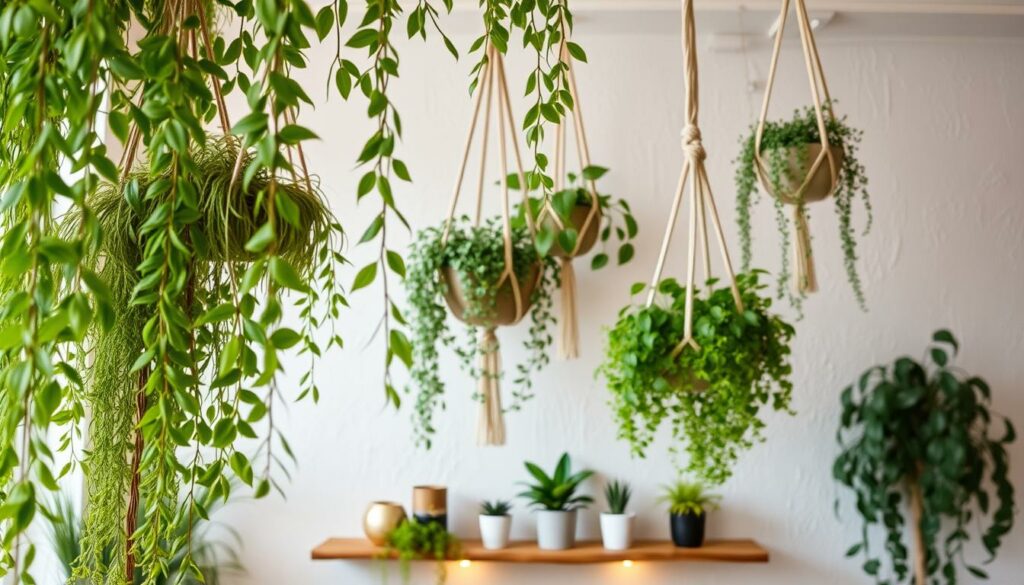
Hanging greenery draws attention upward and defines height in rooms with high ceilings. Grouping indoor hanging plants at varied lengths forms layers when paired with floor pots and shelving.
Designers often cluster pots at staggered heights or use multiple lengths of macramé. This creates cascading lines that guide the gaze through a space.
Enhancing Room Atmosphere
Plants change mood. Trailing vines like ivy add movement and a relaxed feel. Compact species such as peperomia serve as sculptural accents.
Indoor hanging plants also dampen echoes, making a room sound softer and more intimate. Seasonal shifts matter for styling. Lush foliage suits summer.
Sparsely trimmed arrangements work for winter. They let architecture show through while offering biophilic calm. Choosing the right hanging plants alters the space’s emotional tone.
Adding Color and Texture
Leaf color and surface give depth. Glossy pothos reflects light, and variegated philodendron creates contrast. Fuzzy tradescantia adds softness, and fine-leaf ferns offer airiness.
Mixing shapes and variegation enhances visual interest. Flowering hangers bring accents. String of hearts shows purple undersides that flash with movement.
Hoya clusters produce star-shaped blooms that punctuate green palettes. Combine bloom color with diverse foliage for a layered, tactile display.
Styling examples
- Bohemian macramé paired with a trailing philodendron creates a relaxed, lived-in vibe.
- Minimalist ceramic pots with grouped hoyas suit contemporary interiors and clean lines.
- Clustered pothos, ferns, and tradescantia form textured, lush corners that read like living art.
Choosing among the best hanging plants depends on light, scale, and desired effect. Select options that match the room’s architecture to keep decor deliberate and natural.
Choosing the Right Hanging Plants for Your Space
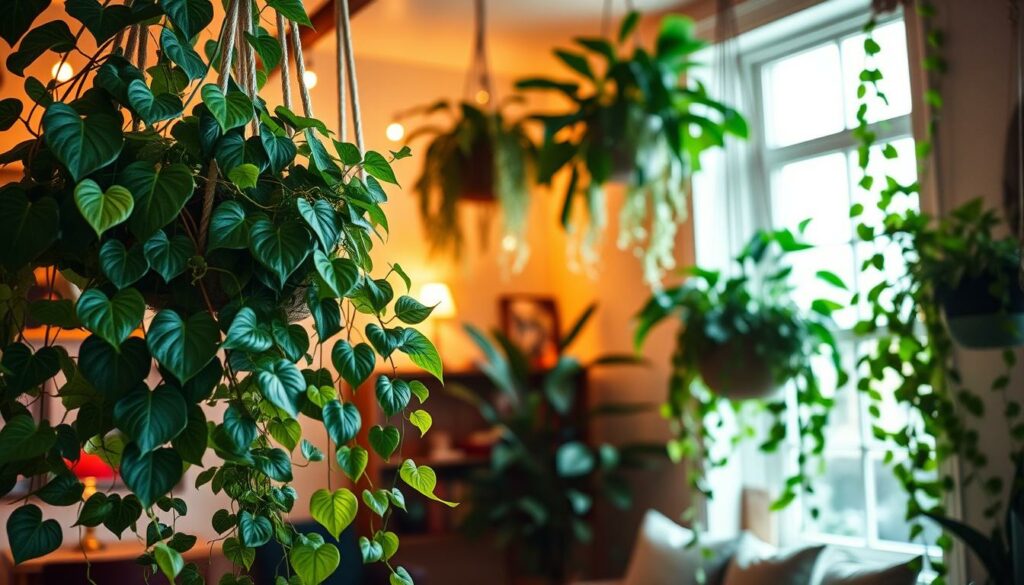
Choosing hanging greenery starts with surveying the room. Light levels, humidity, ceiling height, airflow, and pets affect which plants will thrive.
Measure light near windows and check for vents or drafty spots. This helps match plants to the conditions in your space.
Factors to Consider
Light availability matters. North-facing windows provide low light. South-facing windows give bright sun. Some plants tolerate dim rooms; others need bright indirect light.
Humidity is important. Bathrooms and kitchens suit ferns and moisture-loving plants. Living rooms and bedrooms usually have lower humidity, so pick drought-tolerant types.
Space limits affect hanger length and pot size. Low ceilings work best with compact growers or short chains. Avoid placing plants near vents or fans to protect foliage.
Pet safety should guide your plant choices. Many common plants are toxic to cats and dogs. Choose non-toxic species and check ASPCA resources before buying.
Think about how much time you can spend on maintenance. Trailing vines need regular pruning. Compact or slow growers require less care. Match plant growth to your routine.
Popular Hanging Plant Varieties
Below are reliable options for different spaces and skill levels. Each profile notes light needs and basic care to help you pick better plants.
- Pothos (Epipremnum aureum): Tolerates low to bright indirect light, is forgiving with watering, and grows vigorously. A top pick for beginners.
- Philodendron (heartleaf and cultivars): Similar in care to pothos. Variegated types add interest while staying low-maintenance.
- Spider Plant (Chlorophytum comosum): Adaptable and tough. Produces plantlets and handles various light levels. Ideal for beginners.
- String of Pearls (Senecio rowleyanus): A succulent needing bright light and infrequent watering. Its trailing form suits sunny spots.
- Boston Fern (Nephrolepis exaltata): Offers lush texture and thrives in higher humidity with indirect light. Great for bathrooms and kitchens.
- Hoya (wax plant): Has thick leaves and occasional waxy blooms. Prefers bright indirect light and dry spells between watering.
- Tradescantia (wandering Jew): Features colorful leaves and does well in bright indirect light. Easy to propagate.
- English Ivy (Hedera helix): A vigorous vine that prefers cooler places and bright indirect light. Needs pruning to control growth.
- String of Hearts (Ceropegia woodii): A delicate vine with low water needs. Likes bright indirect light and looks good in high baskets.
For rooms with low daylight, pick pothos, philodendron, or spider plant. These are best for low light indoors.
Species like string of pearls and hoya need brighter light and more specific care. Choose accordingly.
Many common hanging plants, including pothos, philodendron, and ivy, are toxic to pets and children. Choose pet-safe plants such as spider plant or Boston fern.
Always verify plant safety with ASPCA resources before placing them where pets or kids can reach them.
How to Care for Hanging Plants
Good care for hanging plants starts with simple observations and routine checks. Many beginners find success by learning light patterns and testing soil moisture. This section breaks the basics into clear steps for steady growth.
Light Requirements
Light for hanging plants falls into three categories: low, bright indirect, and direct sun. Low light is common in north-facing rooms or interior halls. Bright indirect light appears near east or west windows with sheer curtains.
Direct sun is strongest at south-facing windows or on balconies. Pothos and philodendrons tolerate low to medium light. Hoyas and string of pearls need bright light to thrive.
Use a light meter app or watch leaf behavior. Leggy stems and pale leaves mean insufficient light. Sheer curtains diffuse strong sun for sensitive leaves.
Watering Guidelines
Watering hanging plants should match each species’ needs rather than a strict calendar. Check the top 1–2 inches of soil with a finger or moisture meter. Many tropicals prefer weekly waterings in warm months.
Succulents and string of pearls dry out between waterings and may need water every 2–3 weeks. Ferns require consistent moisture but must avoid waterlogged roots. For pots without saucers, water over the sink or use a drip tray to catch excess.
Let excess water drain fully to prevent root rot. Reduce watering frequency in winter when growth slows.
Fertilization Tips
Fertilization should support active growth in spring and summer. A balanced, water-soluble fertilizer like 10-10-10 diluted to half strength works well every 4–6 weeks. Slow-growing succulents need feeding only once or twice per season.
Avoid over-fertilization. Flush the potting mix occasionally to remove salt buildup. Watch for leaf burn, a sign of too many nutrients. Organic options like compost tea provide gentler, continuous feeding for steady health.
| Need | Example Plants | Light for Hanging Plants | Watering Hanging Plants | Fertilizer Guidance |
|---|---|---|---|---|
| Low light | Pothos, Philodendron | North-facing rooms, interior corners | Allow top 1–2 in. to dry; weekly in warm months | Balanced fertilizer every 4–6 weeks |
| Bright indirect | Boston fern, Spider plant | East or west windows with sheer curtains | Keep evenly moist for ferns; moderate for spider plants | Water-soluble feed in growing season |
| Direct sun | String of pearls, Succulents | South-facing windows or outdoor balconies | Dry almost completely between waterings; 2–3 weeks | Fertilize sparsely; once or twice per season |
Best Locations for Hanging Plants in Your Home
Thoughtful placement makes indoor hanging plants feel intentional and vital. Use light, humidity, and sightlines to match plant needs with room conditions. This creates the best results for your plants.
Living Room
Place statement hanging plants near windows to catch bright indirect light and create a focal point. A trailing pothos or philodendron scandens above a sofa softens hard lines. It also adds warmth to the space.
Hang a hoya or a lush fern in a corner to balance tall furniture. This makes seating areas feel cozier. Use sturdy anchors for ceiling pots and keep plants away from fans and vents.
Kitchen
Kitchens benefit from hanging plants that tolerate occasional humidity and heat. Spider plants and pothos thrive near sunny windows. Hanging planters help save counter space.
Try trailing thyme or other culinary herbs in a small hanging basket for utility and decor. Wipe leaves often to remove grease. Avoid placing plants too close to stoves or strong heat sources.
Bathroom
Bathrooms with good light reward humidity-loving species like Boston ferns, spider plants, and pothos. These plants do well with bright, indirect light.
For low-light bathrooms, choose hardy hanging plants such as certain philodendrons or small ZZ plants if space allows. Ensure good ventilation to prevent mold. Rotate plants regularly for even light exposure.
These hanging plant ideas fit common rooms and routines. Thoughtful choices help plants thrive while improving decor and function throughout your home.
Unique Hanging Plant Displays
Creative hanging plant decor can turn empty corners into lively focal points. This section explores three stylish display options. Each option suits many interiors and care levels.
Each method balances form with function so plants thrive while rooms gain dimension.
Macramé Plant Hangers
Macramé plant hangers offer a boho-chic look that fits modern and vintage rooms. Makers use materials like cotton, jute, or synthetic cord. Choose cord that matches pot weight and room humidity.
Measure drop length from ceiling hook to pot rim to fit ceiling height. Use a ceiling hook rated for the full weight of pot, soil, and plant. Cluster several macramé plant hangers at staggered heights to create drama and depth.
Wall-mounted Shelves
Wall-mounted shelves create living galleries and work well for trailing vines and mixed containers. Floating brackets and wall planters let plants cascade down a wall without using floor space.
Mix potted plants with a few hanging pieces on the same wall for contrast in texture and height. In humid rooms like kitchens and bathrooms, choose corrosion-resistant brackets. Budget-friendly systems such as IKEA SATS or similar units provide sturdy support for many small pots.
Hanging Terrariums
Hanging terrariums use glass bowls, rope, or brass frames to suspend miniature ecosystems. They suit moisture-loving species like fittonias, baby tears, and small ferns. Open-top designs host succulents and air plants that prefer more airflow.
Closed terrariums need limited watering and indirect light. Ensure good ventilation to avoid mold and pick plants with similar water and light needs. For dim locations, add a small LED grow light to keep plants healthy.
Air Quality Benefits of Hanging Plants
Hanging plants can change indoor spaces in subtle, measurable ways. They capture attention at eye level or above. Their leaves and trailing stems bring gentle movement.
When chosen and placed thoughtfully, hanging plants support healthier indoor environments.
Natural Air Purifiers
Research shows many common houseplants remove volatile organic compounds such as formaldehyde and benzene in controlled studies. Spider plant, pothos, and Boston fern rank high among hanging plants. Their foliage and root systems help trap pollutants.
Transpiration from leaves adds moisture to dry rooms. This can reduce irritation to nasal passages and skin.
These effects do not replace mechanical systems. Proper ventilation and certified air filters remain essential for pollutant removal. Treat hanging plants as natural air purifiers that improve air quality when paired with good airflow.
Psychological Benefits
Studies link exposure to greenery with reduced stress, improved mood, and sharper focus. Hanging plants add visible greenery without taking floor space. They support biophilic design by bringing nature into everyday sight lines.
This visible connection can help occupants feel calmer and more grounded.
Care routines amplify these gains. Simple tasks like watering, pruning, and checking for pests create small rituals. These promote responsibility and mindfulness.
For beginners, routine interaction with plants can be calming. It encourages continued engagement with indoor gardening.
Seasonal Care for Hanging Plants
Seasonal care for hanging plants needs small changes to keep leaves healthy and bright. Light, water, humidity, and pests all change with the seasons. Simple habits can help plants thrive instead of stress.
Winter Care Tips
In winter, hanging plants grow slower and lose less water. Reduce watering and let the top inch of soil dry before watering again. Too much water in cold months can harm roots.
Avoid cold drafts near windows and doors. Move sensitive tropical plants away from thin glass. Keep hanging pots away from hot, dry spots like radiators and vents.
Raise humidity for tropical plants with pebble trays, a small humidifier, or grouping pots. This prevents brown leaf edges and helps new growth.
Fertilize less often. Most hanging plants rest in winter and don’t need regular feeding. Start balanced liquid fertilizer again in spring with new growth.
Summer Sun Requirements
In summer, hanging plants often need more light and longer days. Many plants grow strong and fill out with more leaves.
Protect plants from strong midday sun to stop leaf burns. Use dappled shade or place baskets on east or north sides during hot times. Move indoor plants outside slowly.
Warm weather can bring pests like spider mites, aphids, and mealybugs. Check plants weekly for bugs. Treat problems early with insecticidal soap or horticultural oil, using product instructions.
Water more during hot spells but ensure pots drain well. Check plants twice daily in extreme heat and adjust watering for growth and evaporation.
| Focus | Winter Action | Summer Action |
|---|---|---|
| Watering | Reduce frequency; allow top inch to dry | Increase frequency; monitor drainage closely |
| Light | Provide bright, indirect light; avoid cold panes | Offer more light but protect from harsh midday sun |
| Humidity | Raise humidity with pebble trays or humidifier | Normal humidity; mist if foliage dries out |
| Fertilization | Hold or cut back feeding during dormancy | Resume regular feeding during active growth |
| Pest Management | Watch for overwintering pests indoors | Inspect often for spider mites, aphids, mealybugs |
| Best Use | Focus on hanging plants for low light near north windows | Move light-loving hanging plants outdoors gradually |
DIY Hanging Plant Projects
Simple projects invite anyone to add greenery to small spaces. This section offers practical steps for making plant holders. It also shows how to upcycle everyday items into safe, stylish planters.
These tips fit hanging plants for both beginners and experienced makers.
Crafting Your Own Plant Hangers
Gather basic materials: cotton or nylon cord, a metal ring, scissors, a tape measure, and your pot. Measure the pot’s diameter and add 2 inches for knots. Allow at least 12 inches from pot to floor indoors for clearance.
Follow these knot steps for a simple macramé hanger. Fold four cords through the metal ring to make eight strands. Create a gathering knot under the ring to lock cords.
Make square knots in pairs at three equal levels to hold the pot. Finish with a gathering knot and trim extra cord.
Leather straps, recycled belts from Levi’s, or short metal chains offer modern cord alternatives. Seal natural-fiber knots using fabric glue or melted beeswax to stop fraying.
Install ceiling anchors rated for the weight for safety. Use a spring scale or load test before hanging plants on hooks.
Reusing Household Items for Planters
Choose lightweight containers to reduce stress on hooks and anchors. Mason jars work well for succulents, teapots add charm to trailing plants, and enamel coffee tins make rustic pots with drainage holes.
Old colanders serve as easy hanging planters because they already drain well.
Prepare containers before planting. Drill or punch drainage holes in metal tins and glass when possible. Add a 1–2 inch gravel layer in containers without holes to control moisture.
Line woven baskets with coconut coir or plastic liners with drainage slits to hold soil and let excess water out.
For glass bottles and terrariums, use a long funnel to add pebbles, activated charcoal, and a thin potting mix layer. Place saucers or drip trays under hung pots to protect furniture and floors.
These projects make DIY hanging plants easy and fun. They mix creativity with safety and plant care tips. Readers can craft attractive displays while reusing household items for planters.
Where to Buy Quality Hanging Plants
Finding the best hanging plants starts with choosing reliable sources. Local options let buyers inspect foliage and check for pests. Buyers can also ask staff about care. Independent nurseries and garden centers often sell healthier specimens and offer tailored advice. Larger chains like Armstrong Garden Centers, The Home Depot garden departments, and Lowe’s plant sections can be convenient. Shoppers should always examine plant condition and ask where the stock came from.
Local Nurseries and Garden Centers
Buying hanging plants from local nurseries lets you see root health, soil moisture, and true size before buying. Staff at independent shops usually provide practical tips on light and watering for each variety. For those on a budget, plant swaps and rescue groups can offer cheap or rare finds while reducing waste.
Online Plant Retailers
Many people choose to buy hanging plants online for selection and convenience. Reputable vendors like The Sill, Bloomscape, and Costa Farms/Happy Plant Co. ship to U.S. customers and are known for careful packaging. Buyers should read reviews, check clear photos and size descriptions, and verify return policies. On arrival, inspect for shipping damage. Allow plants to acclimate before heavy pruning. Follow the seller’s care instructions.
Final tips: confirm provenance to avoid invasive species. Factor in the cost of hangers and hardware. Consider insulated or expedited shipping in extreme temperatures. Whether shopping locally or online, prioritize plant health, clear lighting information, and honest vendor photos. This helps ensure a satisfying purchase of the best hanging plants for your home.