

Surprisingly, over 40% of U.S. households want to add tropical plants to their indoor spaces. This shows a clear shift toward exotic plants as popular decor and hobbies.
Exotic plants grown at home come from places outside the homeowner’s region. They often originate in tropical or subtropical climates.
These plants stand out for their unusual leaves, dramatic flowers, or unique growth habits. Examples are Bird of Paradise, Monstera deliciosa, and Fiddle Leaf Fig.
The appeal of exotic indoor plants mixes beauty with challenge. This guide helps U.S. growers with selection, care, propagation, pest control, and seasonal tips.
It also suggests trusted sources like established exotic plant nurseries and reliable online marketplaces. You’ll learn everything needed for successful cultivation.
Many tropical plants can adapt well indoors with proper light, humidity, soil, and containers. Some, though, need higher humidity or steady warmth.
These require more effort and care to keep healthy. It’s important to have realistic expectations about the time and gear needed.
Caution is necessary because some exotic plants face USDA or state restrictions. Buyers should check import rules, quarantine laws, and invasive species lists before moving plants across states.
This article aims to be practical and useful. You’ll find clear care tips and advice on choosing plants that suit your home.
It also shows where to buy or trade rare and exotic plants responsibly.
Key Takeaways
- Exotic plants and tropical flora add bold visuals and unique textures to rooms.
- Many exotic indoor plants thrive with the right light, humidity, soil, and pots.
- Some special plants demand more care, needing higher humidity or steady warmth.
- Check USDA and state rules for import, quarantine, and invasive species before buying or moving plants.
- The guide explains selection, care, propagation, pest control, seasonal tips, and plant sources.
Benefits of Growing Exotic Plants
Households and workplaces gain more than color when they add exotic plants. These specimens bring dramatic shapes, striking variegation, and blooms that lift interior design and mood.
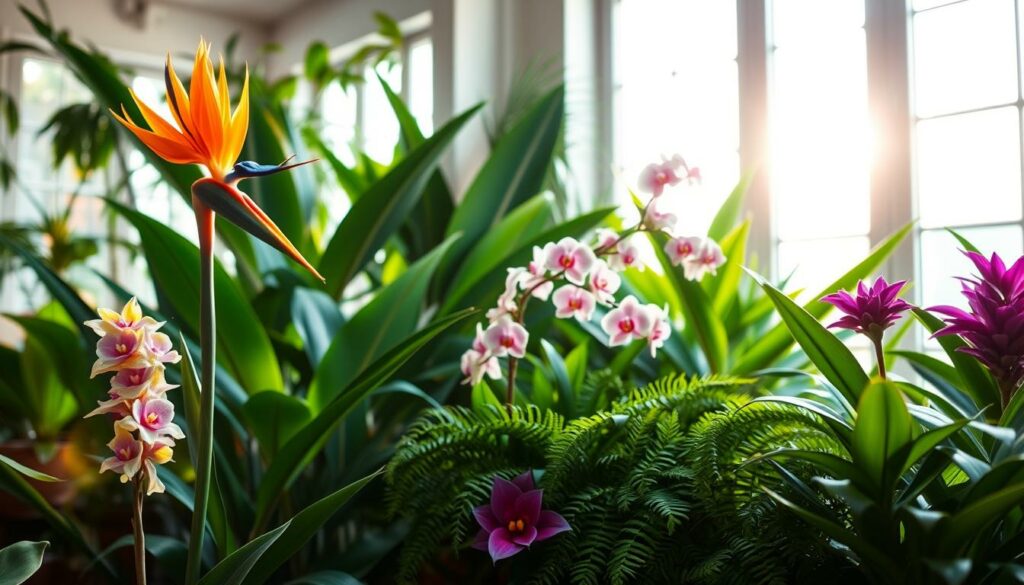
Styling with unique botanical specimens is simple when scale and placement guide choices. Place a statement plant like a Bird of Paradise near a sunny window to anchor a room. Use smaller variegated plants to add contrast on shelves.
Mix broad leaves with delicate foliage to create texture and depth.
Aesthetic Appeal
Bold leaves and unusual forms make exotic plants focal points in modern interiors. Monstera deliciosa and other dramatic specimens create visual interest without heavy decor. Grouping plants of different heights and textures balances a space and highlights rare coloration.
Health Benefits
Indoor plants can improve well-being and boost focus. NASA and peer-reviewed studies show some houseplants remove volatile organic compounds on a small scale. Benefits depend on plant biomass and species, so selecting the right plants matters.
Increased humidity from plant transpiration eases dry air problems. This helps skin comfort and may reduce respiratory irritation. Careful placement and routine watering help maintain those gains.
Environmental Impact
Responsible cultivation supports biodiversity appreciation. Ethical sourcing from reputable nurseries reduces pressure on wild populations. Exotic plant collectors should avoid wild-collected specimens and favor propagated stock.
Some exotics can naturalize and become invasive if released outdoors. Never discard plants into the wild. Propagating and trading with enthusiasts lowers demand for wild harvest and builds community around conservation.
| Benefit | Practical Tip | Who It Helps |
|---|---|---|
| Visual impact from bold foliage | Use a large statement plant as a room anchor | Interior designers, homeowners |
| Air quality improvement | Choose higher‑biomass species and group several plants | Office managers, apartment dwellers |
| Humidity increase | Place plants on trays or near humidifiers for shared benefit | People with dry indoor air |
| Conservation through ethical sourcing | Buy from licensed nurseries and propagate specimens | exotic plant collectors, conservationists |
| Community and learning | Join plant swaps and local store events to share knowledge | Hobbyists and new growers |
Practical exotic plant care tips include matching light to species and monitoring soil moisture. Learning propagation basics also protects plants. These habits support a healthy, attractive collection of unique botanical specimens.
Popular Exotic Plants for Indoor Spaces
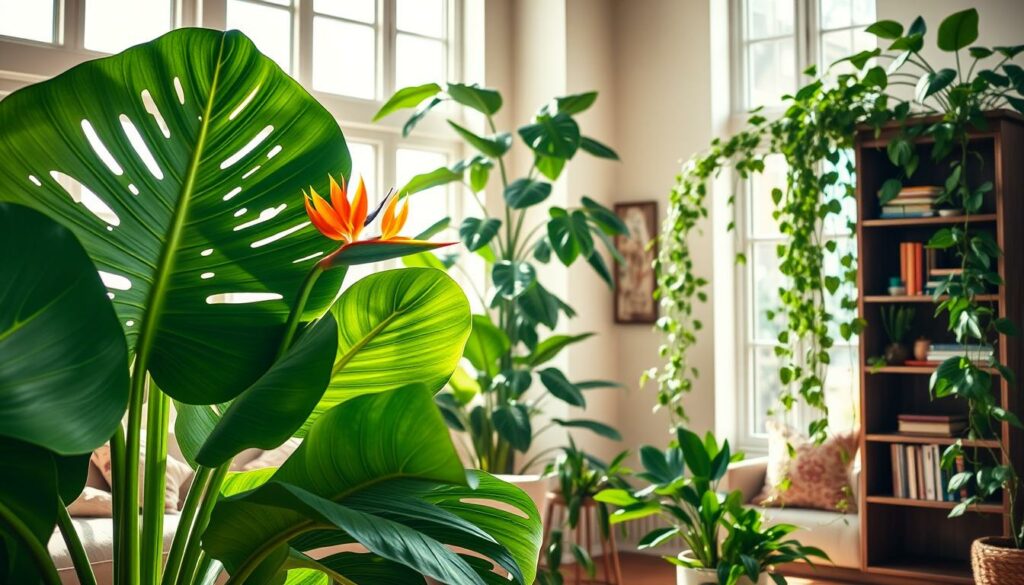
Many plant lovers add dramatic, textured plants to their indoor spaces. Tropical and unusual species fit apartments and larger homes. These selections suit beginners and collectors seeking rare plants for display.
Bird of Paradise
The Bird of Paradise (Strelitzia reginae and Strelitzia nicolai) has large, banana-like leaves that grow upright. It thrives in bright, direct or bright indirect light to bloom well. It prefers steady warmth with temperatures around 65–70°F.
Care involves deep watering with good drainage. Fertilize occasionally in spring and summer. Many indoor growers focus on its bold foliage rather than flowers unless light is optimal.
Monstera Deliciosa
Monstera deliciosa is known for split, fenestrated leaves and a vining habit. It grows best in bright, indirect light. Water only when the top 1–2 inches of soil dry out to avoid root rot.
Use a well-draining, chunky potting mix with peat, perlite, and orchid bark. Propagation is easy: stem cuttings root well in water or soil. This makes it popular for homes adding tropical plants.
Fiddle Leaf Fig
Ficus lyrata, or Fiddle Leaf Fig, has large, violin-shaped leaves that create a strong interior statement. It needs bright, consistent light, ideally from east or south windows. Moderate humidity helps it thrive.
This plant is sensitive to overwatering, low light, and drafts. Leaf browning or drop often signals water stress or pests like scale or spider mites. Even watering and regular checks keep this plant healthy.
When buying rare plants, choose healthy specimens without root-bound signs or pests. Inspect leaves and roots before purchase. Buy from reputable exotic plant nurseries and ask about recent care.
| Plant | Light | Watering | Soil | Notes |
|---|---|---|---|---|
| Bird of Paradise | Bright direct to bright indirect | Deep watering; let top surface dry slightly | Well-draining potting mix | Grown for foliage indoors; blooms need high light |
| Monstera deliciosa | Bright, indirect | Allow 1–2 inches of soil to dry | Chunky mix: peat, perlite, orchid bark | Vine benefits from moss pole; easy to propagate |
| Fiddle Leaf Fig | Bright, consistent (east or south) | Even watering; avoid waterlogging | Well-draining, rich potting soil | Sensitive to drafts and low light; inspect for pests |
Caring for Exotic Plants
Keeping exotic plants healthy means matching their needs to the plant’s native environment. Simple changes in soil, water, humidity, feeding, and pot choice make a big difference. These steps help tropical and exotic plants thrive indoors.
Ideal Soil Conditions
Most exotic and tropical houseplants like well-aerated, nutrient-rich, fast-draining soil mixes. For aroid exotics like Monstera and philodendrons, mix peat or coco coir, perlite, orchid bark, and compost. This mix keeps the soil loose and allows airflow.
Bird of Paradise and Fiddle Leaf Fig prefer loamy soil with good drainage. The soil should hold some moisture but drain well. Aim for a slightly acidic to neutral pH of 5.5 to 7.0 for best nutrients.
Watering Guidelines
Watering depends on species, pot size, soil mix, and season. Before watering, check soil moisture with your finger or a meter. Water thoroughly until extra drains out, then let the top dry to suit the plant’s needs.
Tropical plants often need weekly watering when growing. Drought-tolerant exotics may only need water every two to three weeks. Signs of overwatering include yellow leaves, wilting, or bad root smells. Underwatering shows as droopiness and brown, crispy edges.
Humidity Levels
Many exotic plants need 50–80% relative humidity to thrive. Indoor humidity often drops to 20–40% in winter, stressing tropical plants. Raising humidity helps keep leaves healthy and stops brown tips.
Use humidifiers, pebble trays, or group plants to boost humidity and create a microclimate. Bathrooms and kitchens offer good humidity for these plants. Small terrariums work well for compact exotics needing constant moisture.
Fertilization and Repotting
Feed exotic indoor plants with balanced, water-soluble fertilizer in spring and summer. Use half to full strength depending on how sensitive the plant is. Cut back feeding in fall and winter when growth slows down.
Repot plants every 1 to 3 years based on their growth. Move them to a slightly bigger pot with fresh soil to refresh nutrients and prevent root stress. Regular repotting supports healthy growth indoors.
Lighting Requirements for Exotic Plants
Light shapes growth for exotic plants. A short overview helps hobbyists match species to spots and avoid stress.
Grow lights are useful when windows do not provide enough light for these plants.
Natural Light Sources
Window orientation matters. South-facing windows give the strongest light and suit sun-loving plants like some Bird of Paradise cultivars.
East-facing windows deliver bright morning sun, which is gentle enough for plants that prefer bright, indirect light.
West-facing windows provide hotter afternoon rays that can scorch sensitive leaves. North exposures work best for shade-tolerant species or those needing filtered light.
Plants such as Monstera and Fiddle Leaf Fig thrive in bright, indirect light.
Place them a few feet from a sunny window or behind a sheer curtain to prevent bleached or crispy foliage.
Grow Lights
LED full-spectrum grow lights are energy-efficient and mimic daylight colors.
They support exotic indoor plants when natural light is limited or inconsistent.
Light intensity matters. Check PAR and lumens when comparing fixtures.
For most tropical species, place lights about 12–24 inches above the canopy. Adjustable-height fixtures help during seedlings, growth, and flowering.
Timers create reliable light cycles. Using a timer with LED panels ensures steady photoperiods and cuts human error.
Choose light bars or panels based on shelf setup and plant spacing.
Light Duration Considerations
Most tropical exotic plants need about 12–16 hours of light daily for active growth.
A dark period is essential to preserve natural rhythms and support metabolic recovery.
Flowering plants respond to photoperiod. Some need total darkness to set buds, so avoid late-night light leaks from streetlights or indoor lights.
Watch for signs of poor light: leggy stems, pale leaves, slow growth, or leaf drop.
Signs of too much light include scorched patches, bleached leaves, and crispy brown edges.
Rotate plants weekly for even growth. Adjust distance or use a sheer curtain to diffuse harsh sun when needed.
Tips for Maintaining Humidity
Steady humidity helps tropical plants thrive indoors. Small changes make a big difference for exotic plants. These methods work for beginners and experts.
Humidifiers give you the best control. Ultrasonic and evaporative types raise room humidity to 50–70%, perfect for many exotic plants. Place humidifiers near groups of plants without letting leaves stay wet.
Use a hygrometer to check humidity and clean the humidifier regularly. Keeping it clean stops mold and bacteria. Distilled water prevents minerals that can hurt leaves.
Pebble trays add local moisture without wetting soil. Fill a tray with pebbles and add water just below their tops. Pots sit above water to avoid root rot. Evaporation raises humidity around roots.
The pebble tray suits small clusters and works well with humidifiers or higher room humidity. It only affects the area nearby, so use it near plants that need mild humidity boosts.
Grouping plants creates a small humid area. When plants release water vapor, the local humidity rises. This benefits tropical and exotic plants. Keep similar plants together to make care easier.
Airflow is key when grouping plants to stop stale air that causes fungi. Leave space for air to move. Rotate pots so light and humidity reach all sides.
Other options include placing plants in humid rooms like bathrooms or kitchens. Misting can give a short moisture boost. Small plants do well in glass cloches or terrariums that keep humidity high.
Watch for too much moisture. Poor airflow and high humidity cause fungi and pests. Match humidity methods with airflow. Check plants often for mold or insects.
| Method | Best Use | Typical Humidity Range | Maintenance Notes |
|---|---|---|---|
| Ultrasonic Humidifier | Rooms with multiple exotic plants | 50–70% | Clean weekly; use distilled water to limit mineral buildup |
| Evaporative Humidifier | Larger spaces with higher airflow | 45–65% | Replace filters per manufacturer; monitor hygrometer |
| Pebble Tray | Single pots or small groupings | Localized increase near plant | Refill water below pebble tops; avoid water contact with pot base |
| Grouping Plants | Collections of tropical flora and exotic plants | Moderate local rise | Arrange by humidity needs; ensure airflow to prevent mold |
| Bathroom/Kitchen Placement | Species tolerant of variable light | Higher, variable levels | Monitor light and mold risk; rotate plants to even exposure |
| Glass Cloches/Terrariums | Small exotic indoor plants needing constant humidity | High (70%+) | Vent occasionally to prevent condensation and rot |
Common Pests and Problems
Owners of exotic plants often face a few common problems. Pests and diseases stress rare species and reduce a collection’s vigor. Early detection and steady care keep infestations small and manageable.
Identifying pests quickly stops damage to leaves and roots. Look for fine webbing from spider mites and white cottony clusters from mealybugs. Hard brown or tan bumps often signal scale insects.
Aphids gather on new growth and leave sticky honeydew behind. Fungus gnats look like tiny flies above moist soil and show overwatering.
Signs of stress include yellow leaves, distorted new growth, sticky residues, and slowed vigor. Root problems show as wilting despite wet soil. Check under leaves and at stem junctions to find early infestations.
Manual removal works well on small outbreaks. Cotton swabs dipped in isopropyl alcohol remove mealybugs and scale. Gentle rinses and wiping cut pest numbers and improve plant looks.
Insecticidal soap smothers soft-bodied pests without harming most plants. Naturally derived oils give broad control. Neem and horticultural oils coat insects and stop their life cycles.
Repeat treatments every 7–10 days until signs vanish. Bacillus thuringiensis israelensis (BTI) products target fungus gnat larvae and protect roots.
To prevent fungus gnats, let the top inch of soil dry between waterings. Sticky traps catch adults and cut breeding. A sand or grit topdressing limits where gnats lay eggs and suits many exotic pots.
Quarantine new plants for two to four weeks before placing them near prized specimens. Regular checks catch issues early. Cleaning pruning tools with isopropyl alcohol and removing dead leaves reduces disease spread.
Root rot often comes from overwatering and bad drainage. Signs include mushy roots, foul odor, and sudden plant decline. Repotting into fresh, well-draining mix and trimming dead roots helps recovery.
Severe fungal infections may need labeled fungicides if cultural fixes fail. Leaf spot and bacterial blights show as discolored patches or soft lesions. Remove affected leaves and improve air flow around plants to limit spread.
Avoid wetting leaves during watering to reduce fungal risk. An integrated approach blends monitoring, environmental changes, and targeted treatments. Keeping records of pest outbreaks clarifies patterns and reveals weak points in care.
This data helps protect rare plant species over the long term.
| Pest or Problem | Visual Clues | Non-Toxic Control | Prevention |
|---|---|---|---|
| Spider mites | Fine webbing, stippled leaves, yellowing | Rinse leaves, insecticidal soap, neem oil | Increase humidity, inspect regularly |
| Mealybugs | White cottony masses on stems and leaf joints | Swab with isopropyl alcohol, repeat neem sprays | Quarantine new plants, clean tools |
| Scale insects | Brown or tan bumps on stems and undersides | Manual scraping, alcohol swabs, horticultural oil | Inspect stems, maintain plant vigor |
| Aphids | Clusters on new growth, sticky honeydew | Wash off with water, insecticidal soap | Encourage natural predators in greenhouse settings |
| Fungus gnats | Small flying adults, larvae in moist soil | Dry soil surface, sticky traps, BTI products | Allow soil to dry, use grit topdressing |
| Root rot (Pythium/Phytophthora) | Wilting, dark mushy roots, poor drainage | Repot in fresh mix, trim dead roots, improve drainage | Avoid overwatering, use well-draining soil |
| Leaf spot / bacterial infections | Spots or lesions on leaves, soft areas | Remove affected leaves, improve air circulation | Water at soil level, sanitize tools |
How to Propagate Exotic Plants
Propagating exotic plants is a smart way to grow your collection and save money. This guide offers clear steps and gear tips. It focuses on safe methods and proper timing for typical U.S. homes.
Techniques for success
Start with healthy parent plants. For stem cuttings, select non-flowering shoots and cut below a node. Use water propagation for Pothos and Monstera to observe root growth.
Alternatively, place cuttings in a sterile mix of perlite and coco coir to help them root faster. Air layering works well on Ficus and bigger tropical trees. Wound the stem, wrap with sphagnum moss and plastic, then wait for roots to develop before cutting.
Division suits clumping plants like Bird of Paradise pups and many Calatheas. Gently separate roots and replant in fresh soil. Leaf cuttings work well for some Begonias. Trim a healthy leaf and insert its petiole into moist medium while keeping humidity high.
Seed propagation is best for rare species that resist cuttings. It requires patience and sterile conditions.
Best time to propagate
Spring to early summer is ideal for propagation. Plants have strong energy and root growth then. Warm temps and longer daylight encourage quick root and shoot development.
Some tropical plants root year-round if indoor warmth and humidity mimic native climates. Rooting slows in fall and winter. These seasons need more care and patience.
Equipment needed
Key tools include sharp sterile pruning shears, a craft knife, and nitrile gloves to avoid contamination. Rooting hormones like indole-3-butyric acid powders or gels from Clonex or Hormex help tough cuttings root.
Use sterile potting mixes with perlite blended with peat or coco coir. Clear containers suit water propagation and let you watch root progress. Humidity domes, plastic bags, or trays keep moisture high at low cost. Heat mats from brands like Hydrofarm encourage quicker root growth for warmth-loving cuttings.
Aftercare
When roots form, ease plants into normal humidity over several days. Then pot into suitable soil and containers. Follow care tips like steady warmth, bright indirect light, and regular pest control to avoid problems.
Label each plant and keep your workspace tidy and sterile. These steps turn one plant into many lush additions for your indoor garden.
Choosing the Right Containers
Picking the right containers for exotic plants shapes their health and style. The match between pot material and drainage matters.
Room design also affects exotic indoor plants and unusual plant varieties. Simple rules make maintenance easier.
These tips support successful exotic plant care.
Types of Pots
Terra cotta pots are popular for moisture regulation. Their porous walls help soil dry between waterings.
This suits species that dislike constant dampness.
Ceramic glazed pots add color and hold moisture longer. They work well for plants that prefer steady humidity.
However, they can be heavy for large specimens.
Plastic pots remain affordable and lightweight. They are easy to move, useful when arranging large exotic indoor plants.
Fabric grow bags offer excellent aeration and natural root pruning. They boost root health for many unusual plant varieties.
This also reduces the risk of circling roots in long-lived specimens.
Drainage Considerations
Effective drainage prevents root rot and supports good exotic plant care. Pots with drainage holes work for nearly all species.
Saucers protect floors by catching run-off. Empty them after watering to avoid standing water beneath the pot.
Adding a layer of coarse material, like expanded clay pellets, helps only sometimes. Use this to raise soil level or to improve aeration.
Do not substitute this for drainage holes.
Cachepots provide a decorative outer shell without holes. Keep the plant in its nursery pot and remove it to water.
Alternatively, use a moisture meter to prevent waterlogged cachepots from harming roots.
Aesthetic and Practical Choices
Pot style should complement the room and the plant. Modern minimalist planters suit architectural specimens such as Fiddle Leaf Fig.
Woven baskets enhance tropical displays. Colorful glazed pots create focal points for smaller exotic indoor plants.
Scale matters. Aim for 2–4 inches of extra room in small-to-medium pots for root growth. Increase pot size more for large specimens.
This helps avoid frequent repotting.
Choose lightweight materials for very large plants to make moving easier. Add pot feet or caster trays under heavy planters to protect floors.
These also simplify relocation.
Use liners when mixing peat-rich or messy substrates. Liners keep baskets and decorative pots clean while preserving proper soil conditions.
Seasonal Care for Exotic Plants
Seasonal shifts change how tropical flora behaves indoors. Care routines must adapt to light, temperature, and humidity swings.
The following guidance offers practical seasonal care exotic plants need without overwhelming a hobbyist.
Spring growth habits
Spring signals active growth as daylight lengthens and temperatures rise. Increase watering frequency to match new growth.
Begin a regular fertilization schedule using a balanced, slow-release or monthly water-soluble feed.
Check roots for crowding. Repot or root-prune tight pots. Start propagation and divisions while plants are vigorous.
Monitor for pests closely because new leaves attract aphids and scale.
Summer care tips
Summer care centers on managing heat and light. Ensure good ventilation to prevent fungal issues.
Use shading or rotate placement to protect sensitive species from intense midday sun.
Air conditioning dries indoor air. Supplement humidity with a humidifier or pebble trays.
Adjust watering because faster soil drying needs more frequent irrigation. Continue regular feeding.
Stake tall or vining exotics for support.
Winter dormancy
Many tropical flora slow growth during cooler, darker months. Reduce fertilization and water less often.
Allow the soil to dry slightly between waterings to match reduced uptake.
Maintain stable indoor temperatures above 60°F to avoid cold stress. Add grow lights when natural daylight is low.
Watch for overwatering in winter. It commonly causes root rot in exotic plants.
When seasons transition, reintroduce higher light and feeding gradually.
Observe each plant’s response and tweak routines to match its growth and health.
Resources for Exotic Plant Enthusiasts
Enthusiasts who want to grow exotic plants have many helpful tools and local places to learn faster. These resources help collectors check plant identities, plan care, and find good plants from trusted sellers.
Online Communities
Groups like subreddits r/houseplants and r/rareplants give quick help to ID plants and solve problems. Facebook groups for Monstera and Philodendron offer tips and show progress photos.
Forums such as TropicalPlants and HouseplantHelp have detailed talks on propagating and fighting pests. Members also organize trades, meetups, and plant swaps.
Collectors should always verify advice and carefully check plants in trades to avoid spreading pests or disease.
Gardening Apps
Apps like PictureThis and PlantSnap help identify unknown leaves and flowers fast. Care planners such as Planta and Blossom remind users to water, fertilize, and check light for many exotic plants.
Community apps like GrowIt! let users share plant photos and care updates with nearby growers. Many apps create custom schedules for tropical plants to keep routines steady and avoid overwatering.
Local Plant Stores
Visiting an exotic plant nursery or specialty garden center lets buyers see plants up close. Staff can spot pest problems early and suggest care suited for the region.
Plant fairs, swap meets, and botanical sales connect collectors with reliable sellers and rare plants. Supporting local businesses helps reduce demand for wild-collected plants and promotes ethical buying.
Other useful resources include university extension offices for local advice, books on tropical houseplants, and newsletters with ongoing care tips. Using these sources builds a strong base for healthy, thriving collections.
Expanding Your Exotic Plant Collection
Building a varied collection starts with reliable sources and careful choices. Established exotic plant nurseries and reputable garden centers across the United States often list plant condition photos, return policies, and propagation notes.
Botanical gardens also run seasonal plant sales that feature well-documented specimens. When buying exotic plants, favor sellers who disclose origin and propagation methods. Avoid wild-collected specimens to support legal and ethical trade.
Where to Buy
Local exotic plant nursery operations, both storefront and mail-order, provide healthy stock and expert advice. Buyers should read reviews, request recent photos, and confirm return terms before purchasing.
For tropical or delicate species, consider an experienced nursery that offers temperature-controlled shipping to reduce stress in transit.
Trading with Other Enthusiasts
Plant swaps and trades are an economical way to grow a collection and build community. Many local plant clubs and social media groups organize swaps.
Participants should quarantine new arrivals and label cuttings with species name and care details. Agree on fair exchanges and use sturdy packaging when mailing plants to prevent damage.
Online Marketplaces for Rare Plants
Online marketplaces include artisan sellers on Etsy, auction and classified listings on eBay, specialized nurseries with e-commerce sites, and local pickups via Facebook Marketplace. Vet sellers carefully by checking ratings, asking for clear photos of foliage and roots, and requesting shipment pictures.
Verify compliance with USDA and state regulations. Be cautious of misidentified or scam listings when shopping for rare plant species.
Final acquisition tips prioritize plant health over rarity. Factor in shipping stress for tropical specimens and avoid orders during extreme temperatures.
Track provenance and documentation to support ethical collecting and legal compliance while growing a sustainable and diverse collection.