

Nearly 75% of Americans say spending time outdoors reduces their stress. Yet, many backyards remain unused or cluttered. This guide shows how to turn any outdoor area into a calming retreat.
This guide offers step-by-step relaxing garden ideas for homeowners and renters in the United States. It helps convert yards, patios, balconies, and small urban plots into serene outdoor spaces. It covers site selection, plant choices, water features, seating, color, and lighting for realistic, scalable projects.
The scope includes container gardens and full backyard makeovers. It uses proven design principles like zen garden concepts and meditative design. The guide pairs these with affordable, hands-on tips. Benefits include stress reduction, improved mental health, and greater enjoyment of living spaces.
The guide has twelve clear sections: understanding the concept, choosing location, selecting plants, designing layout and zones, adding water and sound, seating, color psychology, lighting, mindfulness, decorative elements, and maintenance. Each section offers actionable steps to build tranquil backyard retreats.
By the end, readers will have relaxing garden ideas and a realistic plan. They can implement calming garden features that create lasting, serene outdoor spaces.
Key Takeaways
- Outdoor time reduces stress for most people; a designed garden boosts that benefit.
- The guide applies to yards, balconies, patios, and small urban plots.
- Content covers plants, layout, water, seating, color, lighting, and upkeep.
- Ideas scale from container gardens to full backyard transformations.
- Readers will leave with a practical plan to create tranquil backyard retreats.
Understanding the Concept of a Relaxing Garden
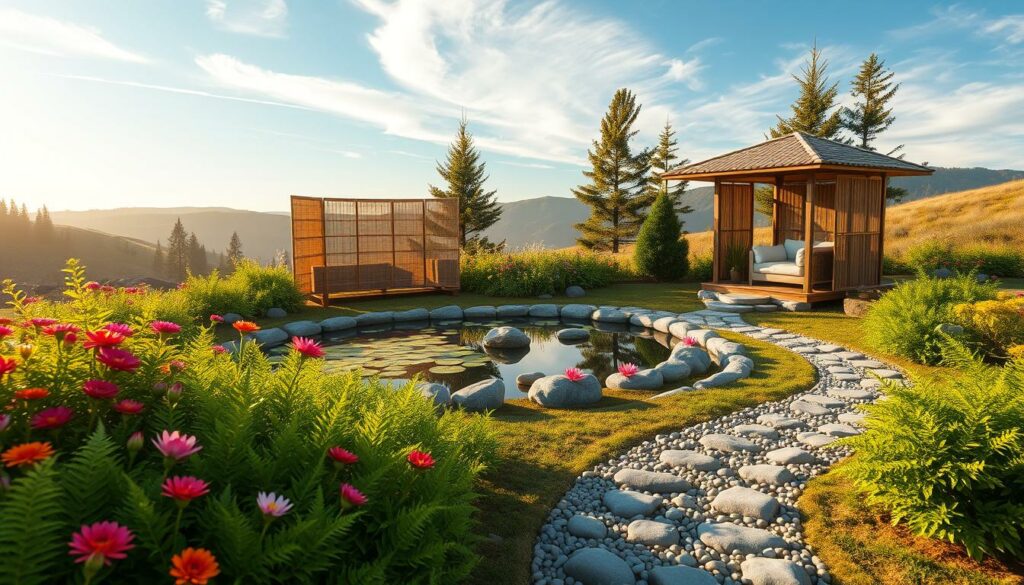
A relaxing garden is a designed outdoor space that promotes calm and reduces stress. It supports activities like reading, meditation, or quiet conversation. The design focuses on comfort, clear circulation, and sensory balance to invite mindful use.
Definition of a Relaxing Garden
A relaxing garden centers on simple, purposeful elements. Comfortable seating and soft sounds from a fountain or wind chimes are common features. Fragrant, textural plantings and subdued lighting add to the atmosphere.
Paths and open sightlines guide movement. Low-maintenance plants and safe, accessible surfaces keep chores minimal. This helps the space feel like a retreat rather than a task.
Importance of Outdoor Relaxation
Time spent outside lowers cortisol and boosts mood. It also helps the mind restore itself. Natural settings offer social spots, private retreats, and improve property appeal through good landscaping.
Designs support calm by limiting stimuli. Privacy hedges, soft materials like mulch, and quiet zones reduce sensory overload. Elements from zen and meditative gardens bring minimalism, balance, and intentional placement for peace.
Core principles include simplicity and sensory balance in sight, sound, smell, and touch. Seasonal plantings keep interest year-round. Calm garden features, clear paths, and accessible seating turn yards into peaceful spaces for rest and renewal.
Choosing the Right Location for Your Garden
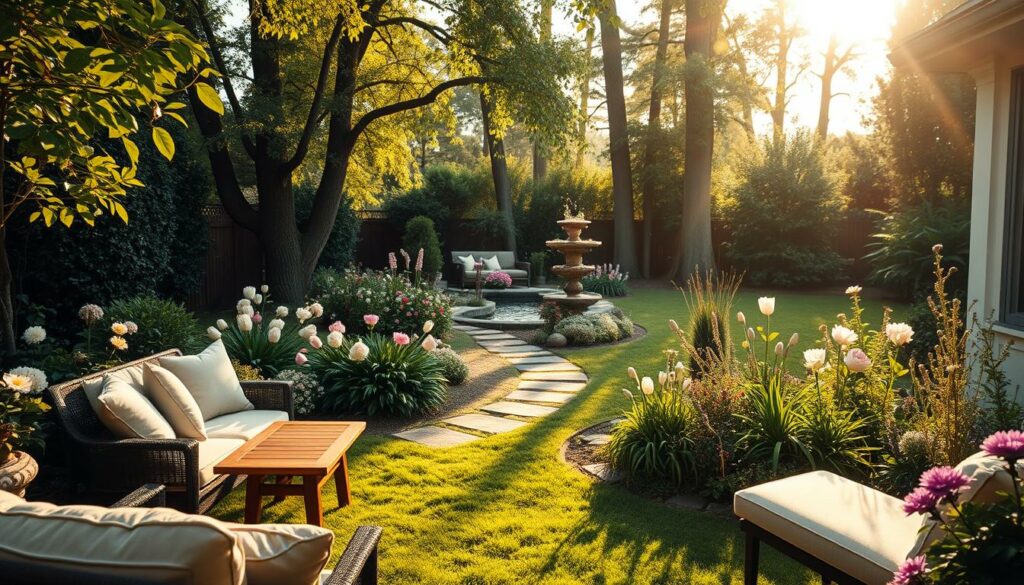
Choosing the right location shapes how your garden grows across different seasons. Walk the site at various times to notice sun patterns, winds, noise, and drainage spots. A simple sketch that shows fences, trees, utilities, and slopes helps plan peaceful outdoor spaces.
Assessing Sunlight and Shade
Begin with sun mapping by noting morning, midday, and afternoon light for several days. Label areas as full sun (6+ hours), partial sun (3–6 hours), or shade (less than 3 hours). This method helps match plants and seating to their best locations.
Put sun-loving perennials and herbs in the brightest places. Shade-loving ferns and hostas go under trees. Design seating areas where people enjoy sun or shelter at different times to support a relaxing garden.
Record seasonal changes in light since summer and winter sun angles vary. Use this data to protect delicate plants and plan shade in summer for calm outdoor spaces.
Evaluating Wind Exposure
Find prevailing winds by watching flags, trees, and smoke. Walk your property on breezy days to feel strong gusts and calm spots near buildings.
Use living windbreaks like hedges, evergreen trees, or layered shrubs to reduce strong winds. Add trellises or lattice with climbing roses or clematis as lighter barriers. Place heavy furniture and cozy nooks close to your house for comfort in backyard retreats.
Think about wind effects on water features and fragile plants. Put fountains in sheltered spots and plant sturdier species in exposed areas. Test soil drainage on slopes and low spots. Add compost if needed to prevent washout and keep plants healthy.
| Site Factor | How to Observe | Design Response |
|---|---|---|
| Sun Exposure | Daily notes at morning, noon, afternoon for several days | Allocate full-sun herbs, partial-sun perennials, shaded seating |
| Wind | Watch trees, flags; walk on breezy days to find gust paths | Install hedges, trellises, place heavy furniture near walls |
| Noise and Views | Listen at different hours; mark desirable and undesirable sightlines | Plant screening shrubs, orient seating toward calming views |
| Soil and Drainage | Dig test holes, note water pooling after rain | Amend with compost, create raised beds, install swales |
| Microclimates | Note slopes, heat from hard surfaces, cold pockets at night | Place tender plants in warm pockets, site seating where comfortable |
Selecting Plants for Serenity
Plant choice sets the tone for a calming backyard. Prioritize low-maintenance, pest-resistant species that match local USDA hardiness zones.
Use evergreen structure for year-round form. Mix textures and heights to create layered interest.
These steps support relaxing garden ideas and help build calming features that feel intentional.
Best Relaxing Plants
Choose reliable plants that perform well and demand little care. Lavender (Lavandula) provides scent and drought tolerance. Boxwood (Buxus) offers evergreen structure for hedges and form.
Ornamental grasses like Miscanthus and Pennisetum add gentle sound and movement. Hydrangeas bring soft blooms. Japanese maple (Acer palmatum) supplies delicate foliage and sculptural shape.
Ferns such as Dryopteris and Athyrium thrive in shade. Rosemary and sage serve culinary uses and add fragrant leaves.
Incorporating Fragrant Flowers
Place fragrant plants where people linger: near seating, along paths, and close to entries. Lavender and roses release scent in daytime. Gardenias and freesia offer lush daytime perfume.
For evening enjoyment, add night-blooming jasmine (Cestrum nocturnum) and evening primrose so scent greets dusk. Plant combinations that stagger bloom times ensure continuous aroma.
Creating Vertical Greenery
Vertical elements expand green space and increase privacy in small yards. Use trellised vines such as clematis, trained wisteria, or climbing roses to soften walls.
Espaliered fruit trees give structure and productivity. Modular living walls or container-trained standards bring greenery up and save ground space.
These options act as screens, create shade, welcome birds, and form a meditative enclosure. They complement soothing outdoor decor.
Designing a Peaceful Garden Layout
A thoughtful layout sets the tone for peaceful garden designs. It balances open space with planted areas and creates clear circulation. It also frames views to a focal point like a seating area or water feature.
Simple plans work best. Use one primary focal area, secondary beds, and gentle paths that invite exploration.
Importance of Space and Flow
Generous walkways and open sightlines reduce visual stress. They make a garden feel bigger and more inviting. Paths that are 3 to 4 feet wide let two people pass comfortably.
Seating areas should allow easy movement around furniture. Visitors can stand, sit, and socialize without feeling cramped. Maintain edging and buffer zones between beds and seating to prevent plants from encroaching.
Human scale is important. Keep low plants near seating and taller ones at the edges. This frames views without overwhelming the space.
Creating Different Zones
Zoning crafts tranquil backyard retreats with distinct purposes. Design a quiet meditation nook, social dining area, sensory planting bed, and service zone for tools. Each zone should feel intentional and support its use.
Use hedges, pergolas, paving changes, or level shifts to separate zones. These subtle dividers create intimacy and guide the eye, making pockets private but cohesive.
Pathways to Facilitate Movement
Choose materials and widths based on how paths will be used. Mulch or decomposed granite suits informal garden strolls. Stone pavers provide durable routes to entrances and patios. Raised boardwalks work well in damp or uneven spots.
Meandering paths encourage slow wandering and discovery. Straight paths give direct access to key areas.
- Informal strolls: 2.5–3 feet wide, decomposed granite or mulch.
- Main circulation: 3.5–5 feet wide, stone pavers or compacted gravel.
- Service access: 3–4 feet wide, durable, low-maintenance surface.
Use non-slip materials and even grades for safety. Gentle slopes and clear sightlines reduce trip hazards. This makes the garden accessible to people of all ages and abilities.
Adding Water Features for Calmness
Water adds motion, sound, and light to outdoor spaces. Even a small fountain reflects sky and plants. It attracts birds and bees.
Thoughtful water use creates calming garden features. These fit many soothing outdoor decor plans.
Choices range from plug-in tabletop fountains to full-scale ponds. Each option needs different upkeep and attracts varying wildlife. Match the feature to your space and mood.
Types of Water Features
Tabletop fountains and bubbling bowls suit patios and small decks. Brands like Campania International and Albero offer easy plug-and-play models that need little setup and power.
Recirculating pondless waterfalls give water movement without standing water. They fit small yards and are safer for families. These use a concealed reservoir and pump to recycle water.
Koi and wildlife ponds require more planning. Filtration, skimmers, and seasonal care are needed. Larger ponds provide habitat and a focal point for landscape-scale relaxing garden ideas.
Birdbaths and simple basins offer a low-cost way to draw birds. Rills and stream channels work in sloped gardens and produce longer sound travel for varied listening.
Benefits of Water Sounds
Running water masks distant noise like traffic. This creates a buffer that helps focus and lowers stress. Soft trickles create an intimate atmosphere.
Broader cascades fill background noise in busier settings. Rhythmic water sounds may slow breathing and encourage restful states.
Studies show ambient water noise improves mood and sleep near living spaces. Choose volume and pitch carefully to fit your setting.
Use small nozzles and narrow flows for quiet patios. Select wider drops and stepped cascades to mask urban sounds in larger yards.
| Feature Type | Space Suitability | Maintenance | Sound Character |
|---|---|---|---|
| Tabletop fountains | Patios, balconies | Low; plug-and-play | Soft trickle |
| Pondless waterfalls | Small to medium yards | Moderate; pump care | Gentle cascade |
| Koi or wildlife ponds | Large yards | High; filtration, seasonal care | Varied; deep resonance |
| Birdbaths/basins | Any size | Low; refill and clean | Subtle splashes |
| Stream-style rills | Sloped or expansive landscapes | Moderate; erosion control | Running flow over distance |
Pumps need power and cleaning. Winter climates require winterizing or pump removal. Moving water cuts down mosquito problems. Bubblers keep circulation in warm months.
Combine water features with plants, seating, and soft lighting for soothing outdoor decor. Careful choices make water the star of relaxing garden ideas.
Incorporating Seating Areas for Comfort
Comfortable seating turns a yard into a welcoming destination. Thoughtful choices invite rest and quiet conversation in calm backyard spaces.
Durable, well-sized pieces keep garden designs usable across seasons and for many activities.
Choosing the Right Furniture
The right materials ensure furniture lasts and looks good. Teak and cedar resist moisture and age well. Powder-coated aluminum offers a modern, low-maintenance choice.
Wrought iron gives strength in busy areas. All-weather wicker combines comfort with weather resistance.
Cushions should use outdoor fabrics like Sunbrella to avoid fading and mildew. Allow 36–48 inches per person for easy movement. Include loungers, benches, deep chairs, hammocks, and built-in seats for variety.
Positioning Seating for Views
Place seats to highlight features like water, specimen trees, or sunsets. Face seating away from noisy streets toward breezes or morning sun.
Use plants, pergolas, or trellises to create semi-enclosed spots that keep views and privacy.
Arrange furniture for both solo meditation and small group gatherings. Ensure clear paths and suitable seat heights with armrests for different mobility needs.
Flexible layouts let garden designs adapt to new uses over time.
Utilizing Color Psychology in the Garden
Color shapes how people feel in outdoor rooms. Thoughtful palettes help craft serene outdoor spaces that invite rest.
Using color with purpose turns small yards into calming garden features. This supports many relaxing garden ideas.
Calming Color Palettes
Cool hues quiet the mind. Blues like those from delphinium and hydrangea lower the pulse and encourage reflection.
Purples such as lavender and salvia add a meditative tone. Soft greens from ferns and hostas create a steady natural backdrop.
White and pale blooms widen sightlines at dusk. They add a gentle glow that enhances serene outdoor spaces.
Muted neutrals and gray foliage prevent visual noise. Repeat plant choices to unify beds.
Use varied leaf textures and variegation for interest without bright color saturation.
Effects of Different Color Groups
Blues and purples are best for quiet corners. They reduce stimulation and help form calming garden features where people can sit and breathe.
Greens foster balance because the human eye relaxes on them. Grouping greens builds restful scenes that support relaxing garden ideas focused on mindfulness.
Soft pastels like pale pink and lilac comfort without commanding attention. They work well in mixed borders and near seating to keep the mood mild.
Warm accents—soft oranges or coral—bring cheer when used sparingly. Place them as focal points near pathways or art so they lift a view without breaking the tranquility.
Practical planting notes: repeat blocks of color, layer foliage heights, and pair muted flowers with textured leaves. These steps create continuity and subtle movement in the landscape.
Implementing Garden Lighting for Relaxation
Thoughtful lighting turns a daytime refuge into a calm evening retreat. It extends usable hours and improves safety. It also sets a gentle mood that supports meditative garden design and soothing outdoor decor.
Layering task, accent, and ambient light creates depth without glare.
Types of Lighting Options
Solar path lights are an affordable, low-wattage way to mark walkways. They charge during daylight. They work well as soft guiding light near borders.
Low-voltage LED systems provide reliable, energy-efficient illumination. They work with dimmers and timers. These features make them strong choices for controlled scenes and longer runs of light.
String lights with warm-white LEDs make a casual canopy over seating areas or pergolas. They suit relaxed garden ideas for social evenings.
Spotlights and well lights highlight specimen trees, sculptures, or textured walls. Use narrow beams and dimmers to keep the calm atmosphere without harsh contrasts.
Lanterns and candles—real or LED—offer intimate, flickering light that supports meditative garden design. Choose outdoor-rated fixtures from trusted brands that have UL wet- or damp-location listings.
Creating Ambiance with Soft Lighting
Warm color temperatures between 2700K and 3000K produce cozy, calming light. Cooler tones feel clinical and can break the tranquil mood.
Use low-intensity fixtures, shielded lamps, and downward lighting to protect the night sky. Aim for pools of light on paths, seating, and focal textures instead of bright whole-yard washes.
Place lights to emphasize steps and edges for safety. Highlight stone textures, seating nooks, and water features to invite quiet reflection and evening gatherings.
Follow safety practices by installing GFCI protection and choosing weatherproof fixtures. Consult a licensed electrician for complex low-voltage or hardwired systems. Proper installation keeps both function and the garden’s relaxing character.
Creating a Garden for Mindfulness
Designing a space for presence turns a yard into a daily practice. A mindful garden supports simple routines that help reduce tension. It sharpens awareness through gentle sensory engagement.
This approach blends meditative garden design with practical planning. It creates stress-relief outdoor escapes. It also offers fresh relaxing garden ideas for busy lives.
Elements that support mindful practice
Quiet seating facing a single focal point helps attention settle. A small bench, cushion, or weatherproof mat gives a reliable spot for brief sessions.
Use a restrained plant palette to cut decision fatigue. Repeating a few species creates visual rhythm and calming continuity.
Textured paths invite barefoot walking. Smooth flagstone, pea gravel, or wooden stepping pads add tactile feedback for walking meditation.
Designate a ritual place such as a stone circle, low altar, or sheltered mat area. A discrete storage box for cushions and props keeps the space ready for use.
Layer scent, sound, touch, and color to engage the senses. Wind chimes, a small fountain, lavender, ornamental grasses, and moss patches offer gentle cues for grounding attention.
Activities to practice presence
- Short breathing sessions near flowing water. Five to ten minutes by a fountain focuses the mind on inhale and exhale.
- Walking meditation along a meandering path. Move slowly, notice each step, and let the pace guide awareness.
- Daily sensory check-ins. Name five sounds, four sights, three tactile sensations to return to the present.
- Transform chores into practice. Slow weeding or mindful pruning turns routine tasks into meditative acts.
- Keep a journal in a sheltered nook. Two to ten minutes of reflection after a session reinforces learning and gratitude.
Short sessions of five to twenty minutes fit into any schedule and build habit. Pairing apps like Headspace or Calm with outdoor practice adds guided aids. Small investments in durable storage for cushions and meditation props keep the garden ready for use.
Adding Decorative Elements to Enhance Relaxation
Decorative touches shape the mood of a garden. Thoughtful pieces act as focal points and help the space feel curated rather than cluttered.
Choosing elements that weather well and echo plant textures supports soothing outdoor decor. It enhances peaceful garden designs.
Selecting Art and Statues
Choose art that matches the garden’s scale and calm character. Small stone statues and minimalist metal pieces work well in intimate corners.
Large, subtle sculptures suit open sightlines. They create a destination at the end of a path.
Durable materials matter. Corten steel, natural stone, and sealed bronze resist the elements and age with dignity.
Shoppers should consider purchases from local artists, galleries, or reputable makers such as West Elm or Terrain. These sources offer garden-friendly finishes.
Using Natural Materials
Natural textures help visitors feel grounded. Reclaimed wood benches and natural stone paving blend with planting and invite touch.
Bamboo screens and woven seagrass planters create soft edges that fit relaxing garden ideas.
Simple additions add sensory variety. River rock works for dry stream beds. Driftwood becomes an artful accent.
Jute or cotton outdoor rugs under seating warm the area. They connect furniture to plantings.
Sound and motion enrich the scene. Gently tuned wind chimes and small kinetic sculptures add movement without harsh noise.
These elements invite attention and deepen the effect of peaceful garden designs.
Maintaining Your Relaxing Garden Space
Keeping a tranquil backyard retreat needs a simple, steady approach. Begin with low-maintenance plants, a reliable irrigation timer, and quality tools like Fiskars pruners. A sturdy hose also helps cut chore time and keeps your space a stress-relief outdoor escape.
Regular Care Tips
Weekly tasks include light watering or checking irrigation, spot weeding, and clearing debris from seating and paths. Also, inspect cushions and pots for pests or mildew. Monthly duties are pruning for shape and health, deadheading spent blooms, and checking pumps and irrigation. Top up mulch to retain moisture and suppress weeds. Annual work involves soil testing and amendments in spring. Replace worn cushions and mulch. Winterize water features and irrigation before the freeze. Plan any structural upgrades.
Seasonal Changes and Adjustments
Spring focuses on plant establishment, dividing perennials, installing new beds, and refreshing mulch. In summer, monitor irrigation closely and add shade during heat waves. Manage pests and fungal issues as well. Fall is for leaf cleanup, selective cutting back of perennials, planting bulbs, and servicing pumps and tools. Winter calls for protecting tender plants with burlap and covers. Drain and winterize water features. Use this downtime to plan next year’s improvements.
For long-term care, create a simple maintenance calendar. Consider professional help for big tasks like tree pruning or irrigation installation. Regular upkeep helps your garden stay a lasting, tranquil backyard retreat. It becomes a true outdoor escape that relieves stress.