

Nearly 40% of U.S. homeowners want a backyard that feels like a peaceful retreat. A tropical garden design brings that calm feeling. It works well even in small spaces.
This guide shows how to transform your yard, patio, or balcony into a lush oasis. It covers site assessment, plant selection, layout, hardscaping, water features, and seasonal maintenance.
Discover tropical landscaping ideas and tips for creating humidity-friendly microclimates. You can also use containers in cooler zones to grow tropical plants.
Tropical garden design focuses on bold foliage and contrasting textures. It also manages moisture to create a feeling of abundance and calm.
The advice suits U.S. climates, especially USDA zones 9–11. For colder areas, use pots, sheltered spots, and protected plants.
Key Takeaways
- Tropical landscaping ideas work for patios, balconies, small yards, and larger gardens.
- Start with a site assessment: light, soil, and microclimate guide your plant choices.
- Use layered planting, water features, and outdoor tropical decor to add depth and relaxation.
- Pick region-appropriate plants or containers to bring tropical style to cooler places.
- Follow a staged plan: site, plants, hardscape, water, and maintenance to build a lasting garden.
Understanding Tropical Garden Design
The look and feel of a tropical garden rest on bold textures, layered foliage, and a feeling of lush abundance. Designers use tall palms, broad-leaf perennials, climbing vines, and water elements to create vertical interest and depth.
This tropical garden style turns yards into immersive green rooms that feel exotic and sheltering.
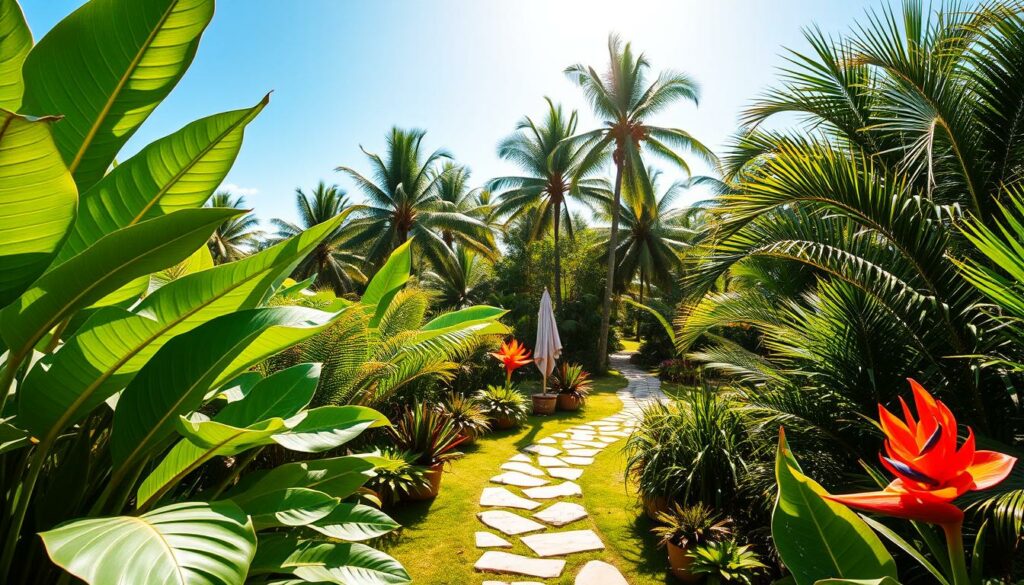
Climate matters when choosing plants. True tropical gardens need warm, humid, frost-free conditions.
Gardeners in temperate zones can mimic this look using protected microclimates, containers, cold-hardy substitutes, and site selection. Thoughtful material choices like teak furniture and rattan accents help connect plantings to garden spaces.
What Defines a Tropical Garden?
Core features include dense layers of plants and large-leaf foliage like banana, elephant ear, and philodendron. Dramatic textures with high-contrast colors create visual impact.
A lush understory of ferns and perennials completes the rainforest feel.
Design focuses on vertical elements: palms, tree ferns, and tall shrubs lift the eye. Broadleaf perennials and climbing vines fill mid and lower levels.
Natural stones and water features mimic rainforest environments and help cool the space.
Benefits of a Tropical Garden Aesthetic
This style offers a sense of escape and relaxation. It can turn small urban yards into calming retreats.
Dense planting suppresses weeds, conserves moisture, and helps moderate local temperatures. This makes the garden more resilient.
Biodiversity improves with flowering tropicals or native substitutes. Pollinators, hummingbirds, and helpful insects find food and shelter here.
Thoughtful tropical garden features boost curb appeal and create usable outdoor rooms for entertaining.
| Characteristic | Typical Elements | Practical Benefit |
|---|---|---|
| Dense layering | Ferns, perennials, understory shrubs | Weed suppression and moisture retention |
| Large-leaf foliage | Banana, elephant ear, philodendron | High visual impact and shade creation |
| Vertical interest | Palms, tree ferns, climbing vines | Depth and focal structure |
| Water and stone | Ponds, small waterfalls, natural boulders | Cooling microclimate and sound masking |
| Materials and accents | Teak furniture, bamboo, rattan planters | Cohesive tropical look and outdoor comfort |
Choosing the Right Location for Your Garden
Picking the best spot sets the stage for a successful tropical garden layout. A well-chosen location balances light, shelter, and soil. This balance helps plants thrive and supports tropical landscaping ideas. It also complements outdoor tropical decor without overwhelming the space.
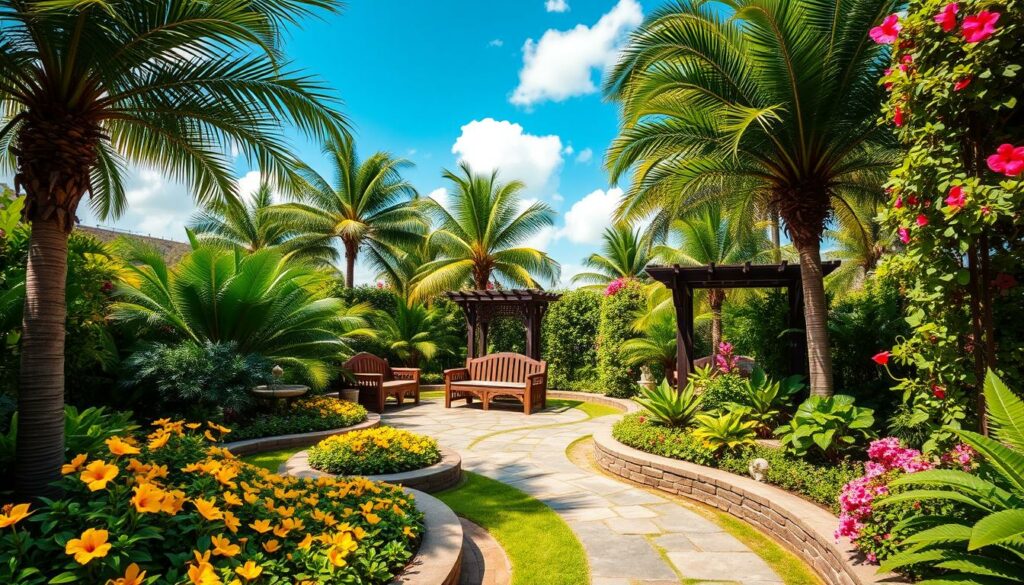
Assessing Sunlight Exposure
Start with a sun study. Observe sun and shade patterns for at least one full day. Repeat in another season if possible. This will show which areas get full sun, partial shade, or deep shade.
Match plants to light. Hibiscus and canna lilies grow well in full sun. Caladium and hosta-style plants suit low-light corners. Plan beds so sun-loving plants face bright spots. Shade-tolerant plants should be in protected areas.
Look for microclimates. South-facing walls and sheltered courtyards stay warmer and block wind. Exposed edges and slopes cool down and need stronger plants or windbreaks. Use microclimates to expand plant choices and improve tropical landscaping ideas.
Evaluating Soil Conditions
Run a basic soil test or send samples to a county extension. Check pH, nutrients, and texture. Knowing this avoids guesswork when picking amendments and fertilizers.
Check drainage before planting. Tropical plants prefer well-draining, fertile soil rich in organic matter. Add compost, coarse sand, and peat or coconut coir to heavy clay soil. This loosens texture and improves drainage.
Adjust pH as needed. Many tropical plants prefer slightly acidic to neutral soil. Use sulfur to lower pH or lime to raise it. Tailoring pH helps nutrients be available and reduces plant stress.
For patios and balconies, pick high-quality potting mixes with good drainage. Layer pots with drainage media to avoid waterlogging. Choose mixes that hold moisture and plan regular fertilization. These steps support container growth and fit outdoor tropical decor choices.
Selecting Tropical Plants for Your Garden
Building a tropical garden starts with smart plant choices. The right mix of foliage, flowers, and structure brings life to the design.
Matching climate and space keeps maintenance manageable.
Popular Tropical Plants to Consider
Large-leaf statement plants create instant drama. Banana (Musa spp.), elephant ear (Colocasia and Alocasia), and gunnera perform well with enough moisture and room.
These plants anchor beds and provide sculptural form.
Palms and tree-like accents add vertical interest. In cooler U.S. zones, Trachycarpus fortunei (windmill palm) offers cold-hardiness.
For warm climates, queen palm (Syagrus romanzoffiana) and dwarf options like pygmy date palm suit driveways and courtyards.
Flowering shrubs and perennials supply color and scent. Hibiscus, bird of paradise (Strelitzia), mandevilla vines, cannas, and gingers (Alpinia, Hedychium) bring bold blooms.
They complement leafy specimens nicely.
Shade lovers and low covers fill understory gaps. Caladium, philodendron, hosta as a temperate stand-in, creeping jasmine, and mondo grass make a cohesive ground layer.
This layer stays low-maintenance.
Vines and climbers soften walls and trellises. Passionflower and jasmine add fragrance.
Bougainvillea thrives in warm, sunny sites and provides intense color.
Edible and functional plants add utility. Papaya and pineapple grow well in pots or warm beds.
Citrus trees do well in protected spots or containers. They blend food production with tropical aesthetics.
Tips for Plant Selection
Match plants to hardiness and microclimate. Select cold-hardy cultivars where frost risk exists.
Choosing Trachycarpus over a true tropical palm extends tropical garden design into temperate yards.
Favor native or well-adapted species when possible. They support pollinators and reduce irrigation and pest issues.
These plants still deliver an exotic garden vibe.
Plan by mature size and layering. Pick species with known adult dimensions to avoid overcrowding.
Design canopy, midstory, and understory layers so each plant has room to thrive.
Mix evergreens with seasonal bloomers for year-round interest. Combining foliage and flowering cycles keeps the space lively.
This works even when some plants are out of bloom.
Source plants from reputable nurseries and brands. Local independent garden centers, native plant societies, Monrovia, and Proven Winners supply reliable stock.
They provide the best plants for tropical gardens.
Designing Garden Layout and Structure
A thoughtful plan sets the tone for successful tropical garden design. Start by sketching zones that match how the space will be used.
Place an entry focal area, a relaxation or entertainment zone, dense planting borders, and a discreet service area for tools and compost.
Layering brings depth to a tropical garden layout. Put palms and small trees at the back or center.
Surround them with mid-height shrubs and perennials. Finish with low groundcovers up front. These tiers create a lush, immersive scene and help with visual flow.
Transition planting keeps changes in scale smooth. Use gradual shifts in height and texture, and add container groupings to bridge differences.
Group plants with similar light and water needs. This helps make irrigation and maintenance efficient.
Creating practical walkways enhances access and discovery within the garden.
Choose materials that support an outdoor tropical decor. Natural stone, flagstone, decomposed granite, and tropical hardwoods such as ipe or teak work well for paths and patios.
Each material offers a distinct look and supports durability in humid climates.
Meandering paths invite exploration and reveal layered planting as one moves through the space.
Wider patios act as outdoor living rooms. They integrate furniture and plantings into the landscape.
Position shade structures like pergolas or sail shades near seating areas. This extends comfort during hot afternoons.
Design paths with safety and drainage in mind. Specify non-slip surfaces and gentle grading to prevent puddling.
Use stepping stones through soft planting beds to protect roots and keep soil compaction low.
Furnish patios with durable pieces from brands such as Brown Jordan or Article for longevity.
Select cushions made from Sunbrella fabrics for fade resistance and easy cleaning.
Add climbing vines on pergolas to link structure with planting and complete the outdoor tropical decor.
Water Features in Tropical Garden Design
Water adds motion, sound, and life to a garden. It also shapes microclimates. This helps choose plants suited to tropical landscapes.
Well-placed water features can lift outdoor tropical decor from pretty to immersive experiences.
Types of Water Installations to Consider
Small ponds and koi pools reflect light and hold water lilies. They need proper filtration and safety plans for children and pets.
Bubbling fountains and glazed urns take up little space. They raise humidity and add soothing sounds with minimal construction.
Cascading waterfalls and streamlets create movement and become focal points. Pumps and good circulation keep water clear for plants and wildlife.
Rain gardens and bog areas handle runoff naturally. They support moisture-loving plants like cannas and gingers in your garden.
Benefits of Adding Water Elements
Water improves the microclimate around your plants. Higher humidity helps tropical species thrive. It also cools the air on hot days.
The sound of trickling water soothes senses. It covers street noise and promotes relaxation in outdoor tropical decor.
Ponds and wet plantings attract frogs, dragonflies, and pollinators. This boosts biodiversity in tropical landscaping areas quickly.
Practical care is important. Pumps and filters need routine attention. Winterizing and safe edges reduce risks around open water.
Focal Points in Tropical Gardens
Tropical planting can overwhelm a small yard if it lacks visual anchors. Focal points give sightlines a clear destination. They organize dense plantings and make tropical garden design feel intentional.
A well-placed focal point guides visitors from one zone to the next. It creates memorable garden moments.
Importance of Focal Points
Focal points prevent chaos by giving the eye a place to rest amid lush foliage. They define vistas and highlight the strongest tropical garden features. A strong anchor can also serve practical needs such as seating, shade, or a small performance area.
When chosen with purpose, focal elements boost circulation and invite exploration. Lighting and placement at vista ends extend use into evening hours. They reinforce the overall tropical garden design.
Examples of Effective Focal Points
- Specimen plants: place a mature banana clump, a specimen palm, or a flowering bird of paradise on axis to end a path. This provides natural drama.
- Built features: a carved bench, pergola with jasmine or bougainvillea, or a central water bowl can anchor seating. They highlight key tropical garden features.
- Sculptural elements: bronze statues, oversized ceramic planters, or tiki carvings add texture and cultural reference. They reflect tropical garden inspiration.
- Lighting schemes: uplight a standout palm or line pathways with lanterns. This creates evening focal points and enhances nighttime ambiance.
Mixing plant specimens with art or water features multiplies visual interest. Thoughtful placement and scale keep the garden cohesive. They reinforce the tropical garden design from many viewpoints.
Incorporating Hardscape Elements
Hardscape anchors a tropical garden layout and gives outdoor tropical decor lasting form.
Thoughtful stone, wood, and terracotta choices create contrast with lush planting.
They also guide movement through the space.
Using Natural Materials
Dense tropical hardwoods like teak and ipe offer durability for decking and seating.
Natural stone such as bluestone or slate works well for patios and steps.
These materials withstand moisture well and age gracefully.
Bamboo accents and weathered terracotta planters add authentic texture.
For sustainable builds, choose FSC-certified wood, recycled composite decking, and locally sourced stone.
This lowers transport impact and supports regional suppliers.
Finish tropical hardwoods with a yearly seal to deepen their color.
Level and joint natural stone with sand or low groundcover between pavers.
This keeps surfaces stable and reduces weed growth.
Importance of Pathways and Borders
Paths define circulation, protect root zones, and divide planting beds into tidy maintenance areas.
Curved walkways shape a natural feel and reveal planting vignettes as visitors move through.
Edge beds with stone, metal, or low hedges to retain mulch and create crisp lines.
Design borders and paths to direct water toward rain gardens or planting beds.
This improves drainage and prevents erosion.
Make paths wide enough for wheelbarrows and maintenance tools.
Use slip-resistant surfaces and gentle grades to ensure accessibility and durability for all users.
| Element | Recommended Materials | Sustainability Tip | Maintenance |
|---|---|---|---|
| Decking & Seating | Teak, ipe, recycled composite | Choose FSC-certified hardwood or composite | Seal hardwood annually; clean composite with mild soap |
| Pathways | Bluestone, slate, permeable pavers | Use locally quarried stone to cut emissions | Level pavers; refill joints with sand or groundcover |
| Borders & Edging | Natural stone, corten steel, low hedges | Salvage stone when possible | Check anchors and replace damaged edging |
| Planters & Accents | Terracotta, bamboo, aged metal | Repurpose old containers for new planters | Refresh soil yearly; protect porous terracotta in freeze |
Creating Lush Foliage Layers
Layering plants adds depth to a garden and brings the feeling of being in the tropics. Thoughtful arrangement of tall palms, mid-height shrubs, and low groundcovers creates a living tapestry. This works with any tropical garden design.
Begin with a canopy of small trees or palms to set shade patterns. Add an understory of hibiscus, gingers, and small palms for mid-level interest. Finish with herbaceous perennials and dense groundcovers to hold soil and soften edges.
Repeat leaf shapes and colors across beds to create rhythm. Use glossy, feathery, and broad leaves to add texture and prevent monotony. Group plants in odd-numbered clusters or drifts for a lush, natural look.
Use containers and raised beds to lift tender plants and make them easy to move in winter. Containers also allow testing the best plants for tropical gardens before planting them in the ground.
Good irrigation is essential for steady growth. Drip systems and soaker hoses supply even moisture and reduce water loss to evaporation. Adjust watering for changing seasons and for plants that need well-drained soil.
Feed plants with slow-release fertilizer or organic inputs like compost and fish emulsion. Timed feedings support strong shoots and vibrant leaves without causing salt buildup in the soil.
Mulch with 2–3 inches of organic material to keep soil cool and moist. Keep mulch away from stems to prevent rot. Check beds regularly for nutrient shortages, wilting, or root crowding.
Divide and transplant crowded herbs and rhizomes such as cannas and gingers to keep plants healthy. Regular inspections and quick care are key for tropical garden success.
| Layer | Typical Plants | Purpose |
|---|---|---|
| Canopy | Phoenix roebelenii (Pygmy Date), Washingtonia robusta, small mango | Provide shade, structure, and vertical interest |
| Understory | Hibiscus rosa-sinensis, Alpinia spp. (gingers), Schefflera | Create mid-height color and texture |
| Herbaceous | Canna indica, Strelitzia nicolai, Colocasia | Add bold foliage and seasonal blooms |
| Groundcover | Asiatic jasmine, mondo grass, dichondra | Suppress weeds, retain moisture, and define paths |
| Containers / Raised Beds | Banana (Musa), potted hibiscus, tropical succulents | Offer mobility, microclimates, and focal accents |
| Care Focus | Drip irrigation, organic mulch, seasonal feeding | Support steady growth and reduce stress |
Enhancing Garden with Colorful Accents
A well-placed burst of color can lift a garden from pleasant to memorable. This section shows how vibrant flowers and thoughtful color balance bring tropical garden inspiration to life. It also supports strong tropical garden design choices.
Choosing Vibrant Flowers
Choose species that deliver bold hues and match local hardiness. Hibiscus, bird of paradise, and bougainvillea offer striking focal blooms. Mandevilla, cannas, gingers, and heliconias add varied form and repeat color across beds.
Place bright bloomers near seating and sightlines to maximize impact. Use containers for seasonal pops and to move color where needed most. Pair flowers with large-leaf greens like elephant ear and philodendron to emphasize contrast and shape.
Balancing Colors in Design
Start with a primary accent color, often reds or oranges. Layer in complementary greens and neutral foliage to prevent visual overload. Repeating accent tones across the yard creates cohesion and echoes tropical garden design principles.
Moderate intense hues by surrounding them with calm foliage and muted paving. Stagger plantings for successive bloom times so the site maintains color through spring, summer, and fall where climate allows. Consider warm-toned uplighting and path lights to enhance flower and foliage hues at night.
| Accent Strategy | Plants | Placement | Effect |
|---|---|---|---|
| Bold focal color | Hibiscus, bird of paradise | Near seating, entry points | Draws the eye, creates landing points |
| Repeated accents | Bougainvillea, mandevilla | Borders, containers | Creates cohesion across the garden |
| Texture contrast | Cannas, gingers, heliconias with elephant ear | Mixed beds, shade edges | Highlights color and dramatic form |
| Seasonal continuity | Mixed bloomers with staggered times | Layered beds, containers | Maintains color across seasons |
| Night enhancement | Warm path lights, uplighting | Along paths, beneath specimen plants | Changes color perception after dark |
Seasonal Considerations for Tropical Gardens
A thriving tropical garden needs seasonal care based on climate and plant choice. Readers will learn which plants stay lush all year. They will also learn how to protect delicate plants during cold snaps.
Routine adjustments keep the garden healthy and beautiful through the seasons.
Plants that Thrive Year-Round
In warm USDA zones 9–11, true tropical plants remain evergreen. Palms, bird of paradise, hibiscus, and many gingers add color and structure all year. These plants are best when frost is rare.
For cooler climates, cold-hardy substitutes work well. Trachycarpus fortunei (windmill palm) and Musa basjoo are good examples. Perennials like Hemerocallis and Hosta give tropical texture without needing much heat.
Containers offer flexibility. Citrus, pineapple, and tropical annuals can move indoors during freezes. Choosing the right pots and spots fits garden design goals.
Preparing for Seasonal Changes
Winter protection starts with mulching near roots and using frost cloth on tender plants. Wrapping sensitive palm trunks reduces frost damage. Moving containers to sunrooms stops plant losses.
Summer heat needs garden adjustments. Add mulch to conserve moisture and change watering in droughts. Use shade cloth to protect leaves during heat waves.
Spring is a time to refresh plants. Prune dead parts, divide crowded clumps, and add mulch. Early fertilizer helps new shoots grow strong and supports garden rhythm.
Storm-prone areas need extra care. Stake young palms and tall plants. Use windbreaks or hedges to shield leaves from strong winds. Good plant placement lowers damage risk and keeps the garden layered.
Incorporating Wildlife in Your Tropical Garden
Inviting wildlife into a tropical garden creates a lively, balanced ecosystem for plants and people. Thoughtful plant choices and garden features turn a yard into a habitat. This habitat supports pollinators, birds, amphibians, and beneficial insects.
It also enhances tropical garden features and offers fresh garden inspiration.
Attracting Pollinators and Birds
Choose nectar-rich flowering plants like hibiscus, Mandevilla, salvias, and passionflower to attract hummingbirds and butterflies. Plant a mix of shrubs and perennials for blooms that last through the seasons. Blend native pollinator-friendly species with exotic ones to support local wildlife better.
Include shallow water features like birdbaths and small basins with gentle edges for safe access. Add perching branches, trellises, or sparsely spaced shrubs to give birds resting spots. These simple tropical landscaping ideas boost wildlife visits and make the garden feel alive.
Creating Habitats for Local Wildlife
Provide shelter with dense shrubs, bamboo clumps, and brush piles to protect small mammals and nesting birds. Leave some dead wood where safe or mount nesting boxes to increase breeding sites. Using native plants supports insect life cycles and matches local diets.
Reduce pesticide use and adopt integrated pest management (IPM) to protect pollinators and beneficial predators. Use biological controls and targeted methods when needed. Design water features with shallow slopes for easy access by amphibians and small creatures.
Choose low-intensity, shielded lighting to reduce disturbance to nocturnal species. Consulting local Audubon societies or extension services helps pick regional plants. This supports wildlife while enhancing your tropical garden ideas and inspiration.
Maintenance Tips for a Tropical Garden
Keeping a tropical garden healthy needs careful attention and consistent care. Regular tasks like watering, adding mulch, deadheading blooms, and removing damaged leaves preserve plant vigor and looks. These also help irrigation systems work well and ease stress on plants used to warm, humid climates.
Pruning should suit each species. Remove dead or crowded growth in early spring or after flowering. Use sharp, clean tools and follow methods that match each plant. Be gentle with banana pseudostems to avoid damage.
Divide rhizomatous plants, such as gingers and cannas, every two to three years. This keeps them healthy and controls spread. Replant offsets with enough space to keep beds balanced.
Seasonal checklists make tropical garden care easier. In spring, add balanced fertilizer and check soil health. Monitor irrigation in summer and do fall cleanup and protection.
Move container plants to frost-free areas or shelter them in winter. These steps protect tropical garden features and reduce shock from cold temperatures.
Pest and disease control starts with regular inspections. Look for scale, mealybugs, spider mites, snails, and slugs. Remove pests by hand when you can. Encourage beneficial insects like lady beetles and predatory mites before using treatments.
Prevent fungal problems with good drainage and avoid watering leaves from above. Remove diseased foliage to stop spread. Begin with organic options like horticultural oils, insecticidal soaps, and Bacillus thuringiensis for caterpillars.
Use chemical controls only if needed, always following label directions. For diagnosis or region-specific advice, contact local county extension services, Master Gardener programs, or nurseries for help.