

Did you know nearly 40% of homeowner landscaping projects lose plants within the first two years? This happens because of avoidable planning errors. Small garden mistakes can cause big costs and wasted effort.
Garden design mistakes happen when planning, plant selection, site work, or maintenance choices reduce a landscape’s beauty or function. These mistakes can also harm the garden’s longevity and ecological health.
Avoiding common garden design errors is important. It saves money, reduces waste, and helps plants survive better. It also boosts property value and creates outdoor spaces people enjoy using.
This guide covers nine common planning mistakes: poor planning, ignoring climate and local conditions, overcrowding plants, neglecting maintenance, misreading sun and shade, skimping on soil quality, leaving out hardscaping, overlooking accessibility and flow, and not planning for seasonal change.
These mistakes can cause high replacement costs, ongoing plant failure, poor drainage, pests, and diseases. They also create yards that are hard to access and hardscapes that clash with plants. The advice here is based on sources like the University of California Agriculture and Natural Resources, Penn State Extension, the American Society of Landscape Architects, and USDA plant hardiness guidelines.
In the next sections, readers will find step-by-step guidance, useful tips, plant and material suggestions, and maintenance strategies. These will help correct common garden design errors and avoid planning mistakes.
Key Takeaways
- Nearly 40% of landscaping projects experience early plant loss from avoidable mistakes.
- Garden design mistakes cover planning, plant choice, site work, and upkeep.
- Avoiding errors saves money and improves long-term garden success.
- The article explores nine focused mistake categories with practical fixes.
- Advice is based on Extension services, ASLA guidance, and USDA principles.
Not Planning Before Starting the Project
A solid plan is the first defense against costly mistakes. Before work begins, a site survey and clear program are essential.
The survey records dimensions, property lines, utilities, trees, structures, drainage, and soil types. The program lists activities like entertaining, play areas, vegetable beds, and privacy screens.
These steps reduce common garden planning mistakes and stop errors early in garden design.
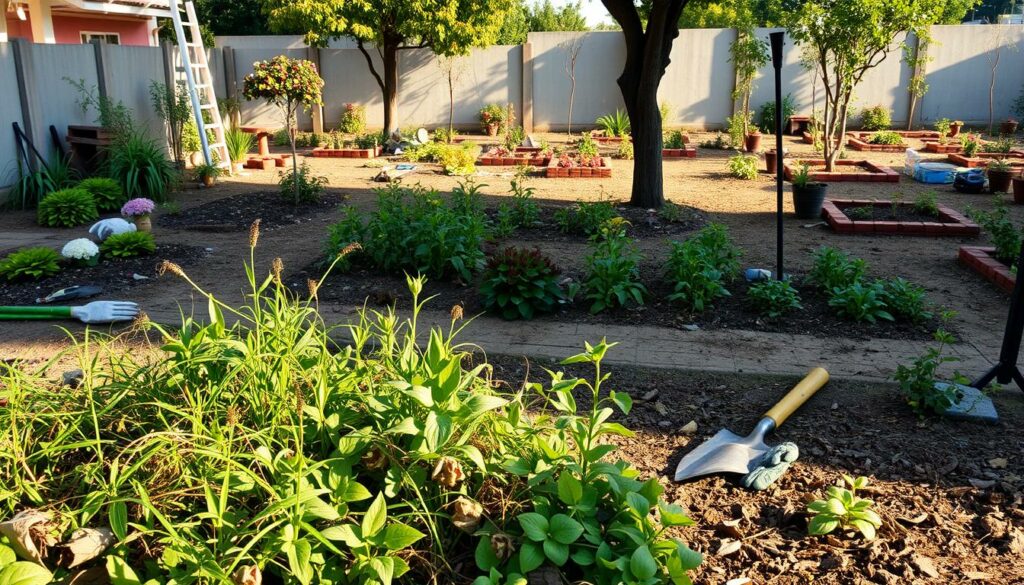
Importance of a Well-Thought-Out Design
Begin with a simple bubble diagram that groups zones: dining, lawn, beds, and storage.
Next, make scaled sketches on graph paper or use basic design software like SketchUp or SmartDraw.
For complex sites needing grading, drainage, or walls, hire a landscape designer or registered landscape architect. The American Society of Landscape Architects highlights client programming and site analysis as core steps.
Set a realistic budget and plan work in phases. Cost drivers include grading, drainage fixes, mature plants, irrigation, and hardscaping like patios and walls.
Phasing helps avoid scope creep and lets homeowners spread costs over time.
Common Oversights in Planning
Many garden mistakes come from skipped checks. Not confirming property setbacks and easements can cause costly rework.
Ignoring underground utilities risks damage and delays. Not accounting for mature plant size leads to overcrowding and root conflicts.
Omitting irrigation or drainage planning creates wet spots and plant loss. Overlooking maintenance leads to neglected plantings.
Practical steps reduce risk. Create a bubble diagram to prioritize features and circulation. Perform a site inventory noting slope, exposure, and soil type.
Include a maintenance plan that fits the homeowner’s time and budget. When needed, consult a professional; their fees often save money by preventing costly mistakes.
Consequences are clear: pathways where water pools, trees near foundations, cramped seating, and wasteful irrigation retrofits.
Addressing analysis and programming early avoids these problems and keeps the project on track.
Ignoring the Climate and Local Environment
Designing without considering climate causes common garden design mistakes and long-term disappointment. Begin with the USDA Plant Hardiness Zone Map. It helps match species to usual winter lows.
Choosing plants that survive local cold reduces replacements and protects your long-term investment.
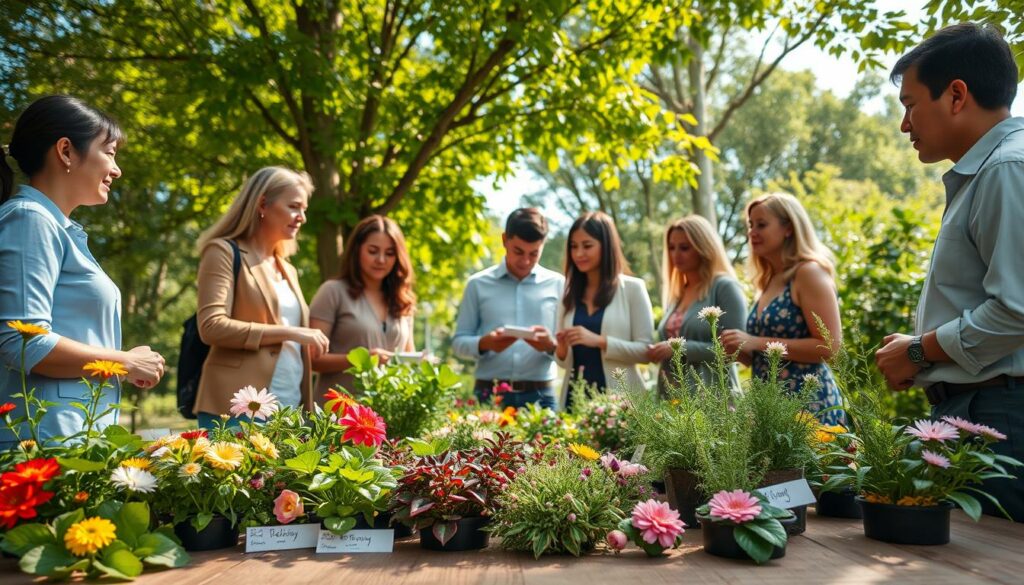
Native and well-adapted plants use less water and resist pests. They also support pollinators. Resources like the Lady Bird Johnson Wildflower Center provide region-specific plant lists.
Avoid invasive species by checking USDA and state invasive lists. This prevents harm to ecosystems and lowers maintenance needs.
Microclimates create varied growing spots within a single yard. Sun exposure, reflected heat, frost pockets, and wind corridors affect them. Mapping these zones helps place plants where they will thrive.
To map microclimates, observe sun and shade during different seasons. Note cold spots after clear nights and track wind paths. Test soil moisture in various areas. These simple steps guide your choices. They prevent design mistakes caused by one-size-fits-all plant picks.
Plant-selection by region
- Southwest: choose drought-tolerant species such as Salvia spp. and Agave for long survival in heat and low water.
- Northeast: favor cold-hardy shrubs like Viburnum and Ilex to withstand harsh winters and provide structure.
- Transitional zones: pick adaptable perennials that tolerate changing seasons and bridge regional extremes.
Group plants by water needs using hydrozoning. It saves irrigation and reduces work. Pair species with compatible mature sizes to avoid overcrowding. Also, select plants offering seasonal interest so the garden stays attractive all year.
Consult local extension services for plant lists specific to your state and county. This step reduces landscaping mistakes, improves survival rates, and matches your choices to the local ecosystem. Thoughtful selection protects wildlife, cuts maintenance, and creates strong landscapes.
Overcrowding the Space with Plants
Overcrowding plants often begins with good intentions. It ends with crowded beds, weak plants, and a cluttered look.
This happens when gardeners plant based on mature size without leaving room for growth. Plants compete for light, water, and nutrients. This competition lowers health and invites disease.
Many common garden design mistakes come from this one habit.
Minimalist planting brings clarity and health to a landscape. It opens sightlines, reduces maintenance, and improves airflow around leaves.
Better airflow lowers disease risk and helps plants show their best form. Landscape designers from Oehme, van Sweden and horticultural guides from Missouri Botanical Garden support these ideas as smart best practices.
Benefits of Minimalist Planting
Cleaner sightlines make gardens feel larger and more purposeful. Reduced maintenance frees up time for creative tasks.
Strong focal points stand out when clutter is removed. Wildlife benefits too, with open spaces between plant groupings. These outcomes help fix common garden layout mistakes by balancing form and function.
How to Properly Space Your Plants
Check plant tags and nursery info to find mature width and height. Allow 10–30% extra space in mixed beds so plants can grow.
Follow spacing charts for different plant types to guide your design.
| Plant Type | Typical Spacing | Why It Matters |
|---|---|---|
| Medium perennials | 3–5 feet apart | Prevents crowding of crowns and ensures bloom visibility |
| Shrubs | 5–8 feet apart | Allows full branching and proper airflow for disease prevention |
| Small to medium trees | 15–30 feet apart (species dependent) | Reduces root competition and prevents future canopy conflicts |
| Hedges | Plant at 50–75% of mature width | Creates dense screens without constant pruning |
| Groundcovers | Plant intervals per tag, often 12–18 inches | Fills gaps without smothering taller perennials |
Design techniques that avoid clutter include repetition, rhythm, negative space, and layered plant heights.
Group plants in odd numbers, usually three to seven, to create natural rhythm. Arrange layers from groundcover to mid-height perennials, then taller shrubs and small trees. This adds depth and clear sightlines.
Staged planting helps reduce early overcrowding. Start with smaller plants and plan to move or replace them as they grow.
Use temporary annuals to fill bare spots until perennials and shrubs reach their full size. This keeps the garden adaptable and well-designed.
Neglecting Maintenance Requirements
Good design balances beauty with realistic upkeep. Many garden design errors come from ignoring needed watering, pruning, and mulching.
It also involves fertilizing, pest control, and seasonal clean-up. These tasks take time but keep gardens healthy and vibrant.
Estimating workload helps match a design to available weekly hours. A simple yard with drip irrigation and mulch often needs one to two hours per week.
A mixed perennial border without automated irrigation can require three to six hours weekly. Heavy pruning, disease outbreaks, or seasonal resets may take full days in spring and fall.
Low-maintenance plants reduce routine work. Native grasses like Panicum virgatum (switchgrass) and sturdy shrubs like Juniperus and Hydrangea arborescens cut mowing and trimming needs.
Perennials such as Echinacea and Rudbeckia return year after year with limited care. Homeowners should check state extension service lists for region-appropriate plants.
Design strategies can lower ongoing effort. Mulching suppresses weeds and keeps soil moist. Drip irrigation with smart controllers optimizes watering and saves time.
Permeable hardscapes reduce invasive weeds and lawn area. Choose disease-resistant cultivars like modern American holly or roses to avoid frequent treatments.
Plant groupings with shared water and light needs simplify care. Xeriscaping uses dry-tolerant plants, less turf, and efficient irrigation to save water and reduce chores.
Groundcovers like clover mixes or sedges replace high-maintenance lawns and lower mowing time where appropriate.
Below is a compact guide to low-maintenance plant options by region and expected maintenance effort.
| Region | Low-Maintenance Options | Typical Weekly Time |
|---|---|---|
| Northeast | Switchgrass, Hydrangea arborescens, Echinacea | 1–3 hours |
| Southeast | Native grasses, Juniperus, Rudbeckia | 1–3 hours |
| Midwest | Panicum virgatum, disease-resistant roses, coneflower | 2–4 hours |
| West Coast | Xeric perennials, sedges, native shrubs | 1–2 hours |
| Southwest | Drought-tolerant grasses, agave alternatives, clover mixes | 1–2 hours |
Simple maintenance schedule helps set clear expectations:
- Weekly: check irrigation, light weeding, deadhead perennials.
- Monthly: inspect for pests, adjust smart controller, add mulch to busy beds.
- Seasonal: prune shrubs, test and amend soil, winterize irrigation and tender plants.
Planning for maintenance prevents common garden design errors that lead to endless work. Investing early in soil, irrigation, and plant choices reduces labor every season.
Failing to Consider Sun and Shade Patterns
Understanding sun and shade is key to avoiding common landscape design mistakes. Sunlight’s strength and length affect plant growth. Full sun means six or more hours of direct light.
Partial sun or partial shade gives three to six hours of sun. Full shade is fewer than three hours.
The sun’s angle changes each season. Deciduous trees grow leaves in spring, blocking light in summer.
Winter sun is lower and reaches areas shaded during summer. Mapping sun and shade yearly stops misplacing plants and wasting resources.
How Sunlight Affects Plant Growth
The length of light controls flowering and fruiting. High-intensity sun can burn leaves on shade-loving plants.
Low light forces sun-loving plants to grow thin and weak. Classifying spots as full sun, partial sun/shade, or full shade helps pick the right plants.
Seasonal changes shift microclimates. South-facing beds warm faster and stay sunny longer. North-facing spots stay cooler and dimmer.
Watching these patterns over time helps you choose plants that will grow well.
Optimal Plant Placement for Sun Exposure
Place sun-loving plants like tomatoes and lavender in south-facing beds. Put shade-loving perennials under tree canopies or on north sides of structures.
Good placement lowers plant failure and reduces upkeep. If light is low, you can change it.
Prune lower branches to add dappled sun. Add pergolas or shade sails to soften harsh midday light.
Use reflective surfaces like light-colored walls or gravel to increase light in dark corners.
Plants in the wrong spots look leggy, flower less, or have burnt leaves. This lowers curb appeal and wastes time and money.
Simple tools help avoid these issues.
- Use smartphone sun-tracking apps to log light hours.
- Keep observation logs during different seasons and times.
- Bring shade cloths and covers when testing plant locations.
| Light Category | Hours of Direct Sun | Recommended Plants | Common Problems if Misplaced |
|---|---|---|---|
| Full Sun | 6+ hours | Tomatoes, lavender, salvia | Scorching on hot sites; wilted foliage |
| Partial Sun / Partial Shade | 3–6 hours | Daylilies, astilbe, begonias | Reduced blooms; stretched growth |
| Full Shade | <3 hours | Hosta, ferns, hellebores | Insufficient growth for sun lovers; sparse foliage |
Skimping on Soil Quality
Soil forms the base for any successful garden. Texture, structure, pH, and organic matter control water retention, drainage, nutrient availability, and root health.
Ignoring these factors causes poor plant performance and higher long-term costs. This is a common garden design mistake.
Start by testing soil before planting. Collect samples from different spots and send them to a certified lab.
Labs analyze pH and nutrients. They often recommend lime or fertilizer rates according to test results.
Importance of Soil Testing
Soil testing is very important. It reveals nutrient deficiencies and pH imbalances that block nutrient uptake.
Following lab advice prevents guesswork and wastes less money on unnecessary products.
Corrections include adding compost to raise organic matter and applying lime or sulfur to adjust pH. Improve texture to aid drainage.
Use slow-release fertilizers to support steady plant growth without nutrient spikes.
Nutrient-Rich Soil for Thriving Plants
Different soil types present unique challenges. Clay soil compacts easily and drains poorly, while sandy soil loses water and nutrients quickly.
Compacted soil restricts root growth. Fix this by deep tilling, coring, raised beds, or engineered soil mixes when needed.
Long-term care builds strong soil. Apply compost regularly, plant cover crops like clover or winter rye, mulch, and reduce tilling.
These practices protect soil structure and microbial life. They reduce future plant replacements and maintenance costs caused by poor soil quality.
| Soil Challenge | Symptoms | Practical Fix |
|---|---|---|
| Clay soil | Waterlogged areas, slow drainage, root suffocation | Incorporate compost, gypsum if recommended, install raised beds with engineered soil mix |
| Sandy soil | Rapid drying, low fertility, nutrient leaching | Add organic matter regularly, use slow-release fertilizers, apply mulch |
| Compacted soil | Poor root penetration, shallow root systems, puddling | Perform deep coring or subsoiling, plant cover crops, avoid heavy traffic when wet |
| Imbalanced pH | Nutrient lock-up, yellowing leaves, poor growth | Use soil testing importance to guide lime or sulfur applications and follow lab rates |
| Low organic matter | Reduced microbial life, poor soil structure, low water retention | Apply compost annually, practice mulching, rotate cover crops |
Not Incorporating Hardscaping Elements
Many garden design mistakes happen when plants are seen as the only part of a landscape. Hardscaping elements include patios, pathways, retaining walls, fences, pergolas, steps, and water features.
These elements give structure and define outdoor rooms. They guide movement, control erosion, and shape planting beds.
Adding hardscape early in the plan avoids scale and drainage problems. Hard features set sightlines and bed shapes.
When designers skip these elements, they risk mismatched materials, poor circulation, and expensive rework.
The Role of Paving, Walls, and Fences
Paving choices affect durability and runoff. Concrete pavers are strong and cost-effective. Natural stone looks nicer but costs more.
Permeable pavers reduce stormwater and meet standards promoted by groups like the Interlocking Concrete Pavement Institute.
Retaining walls manage slopes and create terraces. Proper drainage behind walls is very important. Missing geotextile or small drains can cause wall failure.
Grading should consider geotechnical needs on slopes to avoid future problems.
Fences and pergolas frame views and add privacy. Their size must match the house and plants to avoid clashing designs.
Seating edges built into low walls create dual-purpose elements that combine function and style.
Harmonizing Hardscape with Softscape
Choose materials and colors that match plant tones and house architecture. Repeat textures and proportions for a cohesive look.
Align path widths to typical foot traffic and local walking routes for harmony.
Think about maintenance when selecting materials. Composite decking requires little upkeep. Slip-resistant finishes and easy snow removal work well in cold areas.
Plan drainage and access to cut down on long-term maintenance tasks.
| Element | Common Materials | Benefits | Considerations |
|---|---|---|---|
| Patios / Pathways | Concrete pavers, natural stone, permeable pavers | Durable surfaces, defined circulation, reduced erosion | Cost differences, runoff, slip resistance, maintenance |
| Retaining Walls | Segmental concrete, natural stone, reinforced concrete | Grade control, planting terraces, erosion prevention | Drainage needs, geotechnical design, proper footing |
| Fences & Pergolas | Wood, metal, composite | Privacy, framed views, support for vines | Scale to house, material longevity, finish selection |
| Decking | Wood, composite decking | Outdoor living space, low maintenance options | Cost, heat retention, slip resistance in wet climates |
| Water Features | Stone basins, concrete ponds, preformed liners | Focal points, sound masking, habitat creation | Filtration, safety, winter care, pump access |
Design tips help avoid common mistakes. Align paths with how people naturally walk. Add seating edges in beds for flexible use.
Test small material samples with plants and siding to ensure good visual harmony.
Keeping hardscaping visible early prevents mistakes like adding it late. Careful planning balances movement, drainage, and planting.
Harmonizing hardscape with softscape makes a landscape practical and beautiful.
Forgetting About Accessibility and Flow
Good garden design makes movement feel natural and safe. Accessibility and flow link paths, entries, and seating so everyone enjoys the yard.
Designers who ignore this risk one of the most common landscaping pitfalls: beautiful areas that people rarely use.
Design should anticipate users. Children, older adults, and people with mobility aids need gentle slopes, clear sight lines, and places to rest.
The Americans with Disabilities Act offers guidance for residential paths. It requires a minimum 36-inch width for single-user access, stable surfaces, and gradual grades.
Designing for Foot Traffic and Accessibility
Observe desire lines before fixing rigid routes. Desire lines show how people naturally move. Following them reduces tripping, plant wear, and wasted paving expenses.
Choose surface materials with traction and durability. Concrete or pavers work well for primary routes.
Decomposed granite or compacted gravel suits secondary trails when kept well edged. Raised boardwalks fix soggy sites without heavy excavation.
Match path widths to use. Narrow service paths of 2–3 feet guide quick access.
Primary walkways of 4–6 feet allow two people to pass comfortably and accommodate mobility devices. Add benches on longer routes.
Pathways that Enhance Garden Functionality
Lighting improves safety after dark. Low-voltage LED step lights, bollard lights by level changes, and small reflective markers aid nighttime navigation.
Durability depends on proper installation. Use edge restraints to stop material migration. Install geotextile fabric or weed suppression under permeable paths and grade for drainage.
| Path Type | Recommended Width | Best Use | Maintenance Tip |
|---|---|---|---|
| Formal paved walkway (concrete, pavers) | 4–6 feet | Primary routes, high-traffic access to house or patio | Seal joints yearly; clear debris to prevent slipping |
| Compacted gravel or decomposed granite | 3–5 feet | Secondary paths, informal circulation | Edge with steel or stone; top up surface annually |
| Raised boardwalk | 3–6 feet | Wet areas, uneven terrain | Inspect supports seasonally; use rot-resistant wood or composite |
| Stepping stones | 2–3 feet between stones | Garden glimpses, lawn protection | Set on compacted base; add gravel between for drainage |
Avoid landscaping pitfalls by planning routes that serve real habits. Thoughtful paths improve movement, protect plants, and extend time outdoors.
Pathways that enhance garden function turn pretty layouts into usable, welcoming places.
Ignoring Seasonal Changes and Plant Lifecycles
Gardeners who ignore seasonal changes often face short-lived displays and repeated replantings. Understanding plant lifecycles—annuals, perennials, biennials, and woody plants—is key to avoiding gaps in color and structure. Layering these plant types ensures lasting interest and reduces common garden design mistakes.
Year-Round Interest with Seasonal Planting
To keep a garden appealing all year, combine spring bulbs like tulips and daffodils with summer perennials such as salvia and coneflower. Add fall bloomers like asters and sedum for color, and evergreens like boxwood or holly for winter structure. Succession planting in containers and vegetable beds sustains visual appeal and harvests without major redesigns.
Planning for Seasonal Maintenance
Timing maintenance with plant lifecycles is important. Prune spring-flowering shrubs after they bloom and wait until late winter to prune summer-flowering shrubs. Balance fall cleanups with habitat needs; many native insects overwinter in hollow stems and seedheads, so leave some debris for wildlife.
Provide winter protection for tender plants and prepare soil in early spring to align care with nature’s calendar. Use a seasonal checklist to plan tasks: spring planting and pruning, summer watering and weed control, fall cleanup and mulching, plus winter protection and next-year planning. This helps gardeners avoid short-lived displays and build a resilient, attractive landscape all year long.