

Indoor air can have up to five times more pollutants than outdoor air. A few common houseplants can reduce some of these toxins.
This guide introduces practical, evidence-based plant air purifiers for homes and offices in America.
Air purifying plants remove or reduce volatile organic compounds (VOCs), formaldehyde, benzene, and other indoor pollutants. They do this through leaf and root processes.
This how-to guide shows which plants work best and explains how they purify air.
It also offers care and placement advice to help readers get real benefits indoors.
Readers will find concise tips on the best air purifying plants—Spider Plant, Peace Lily, Snake Plant, Bamboo Palm, Rubber Plant, and Areca Palm.
The guide includes scientific background, simple care tips, and ideal locations for homes, apartments, and offices.
It also discusses the realistic limits of plants as air cleaners so people can make informed choices.
Beyond reducing pollutants, these houseplants improve aesthetics and may boost well-being and productivity.
This article serves as a practical how-to resource for anyone in the United States wanting to improve indoor air quality.
Key Takeaways
- Air purifying plants reduce indoor pollutants but work best with ventilation and source control.
- Top choices include Spider Plant, Peace Lily, Snake Plant, Bamboo Palm, Rubber Plant, and Areca Palm.
- Basic care—light, water, soil—maximizes each plant’s air-cleaning potential.
- Plant air purifiers add visual appeal and may boost mood and productivity in homes and offices.
- The guide offers evidence-based tips and realistic expectations for plants improving indoor air quality.
Introduction to Air-Purifying Plants
Indoor air quality shapes comfort and health for many Americans. They spend up to 90% of their time indoors.
Building materials, furniture, cleaning products, and cooking release volatile organic compounds like formaldehyde, benzene, and trichloroethylene. These pollutants can cause irritation of the eyes, nose, and throat. They can also cause headaches, allergic reactions, and worsen asthma symptoms.
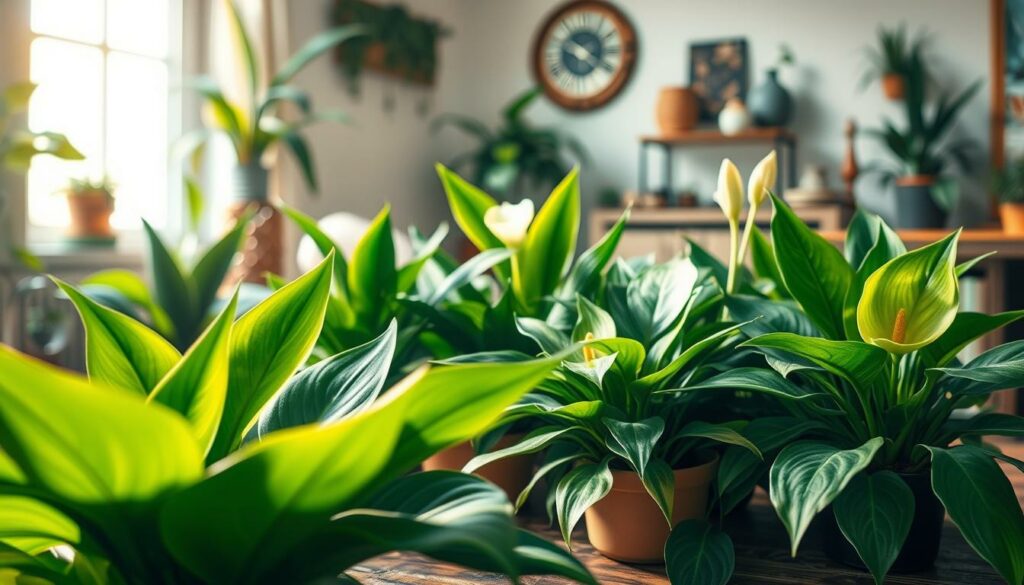
Plants play a role in a strategy that includes ventilation, filtration, and source control. They act as natural air purifiers and offer modest pollutant removal. Plants also boost humidity and add visible greenery that reduces stress and can lift mood.
Studies link indoor plants to gains in concentration and productivity in some workplaces.
Benefits of Air Quality Improvement
Cleaner indoor air lowers discomfort from irritants and can reduce asthma flare-ups. Removing VOCs helps limit long-term respiratory risks. Improved humidity from houseplants may reduce airborne dust and ease dry-air symptoms.
Greenery also provides psychological benefits. Offices and homes with plants often report reduced stress and better focus. Using air-cleaning plants as part of a layered approach boosts well-being and improves the perceived quality of a space.
Overview of Air-Purifying Properties
An air-purifying plant reduces airborne pollutants through leaf uptake, root microbes, and transpiration. Research shows species remove compounds like formaldehyde, benzene, xylene, toluene, and trichloroethylene.
Not all decorative plants work the same. Some are chosen just for looks, while others have proven VOC removal traits. Single plants offer small effects on whole-room pollutant loads. Meaningful indoor air improvement usually needs multiple plants combined with ventilation and filtration.
Top Air-Purifying Plants for Homes
Households looking to boost indoor air quality often choose easy-care greenery that doubles as natural plant air filters.
These selections fit a range of light and maintenance needs. They are some of the best air purifying plants for bedrooms, living rooms, and offices.
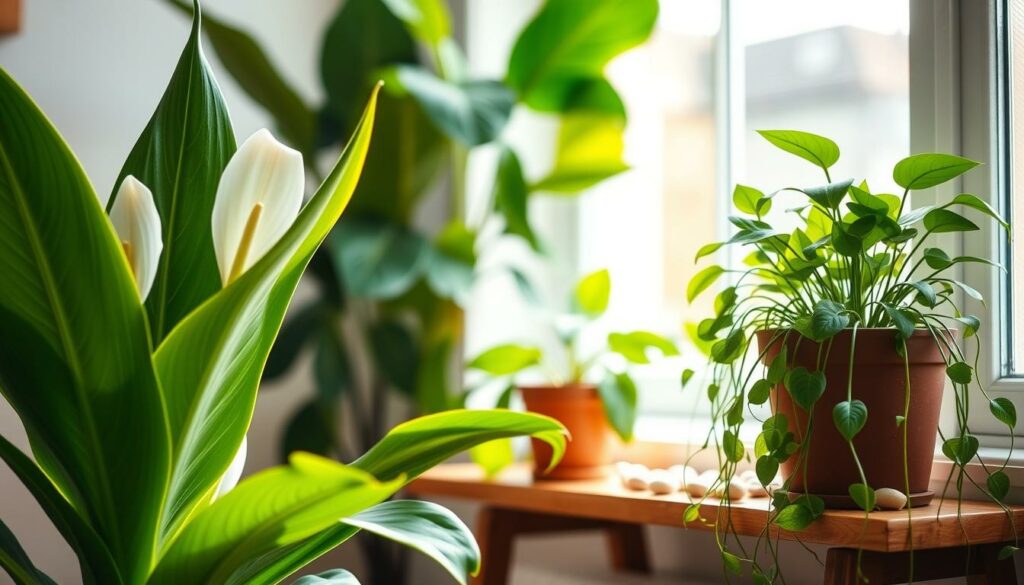
Spider Plant
The spider plant (Chlorophytum comosum) has arching, green-and-white variegated leaves that brighten corners.
It thrives in low to bright indirect light and needs moderate watering.
Fast propagation through plantlets makes this a budget-friendly pick for multiple rooms.
Researchers, including NASA, named the spider plant among effective plant air filters for removing formaldehyde and xylene.
Its low-maintenance nature places it high on lists of best air purifying plants for busy households.
Spider plants are generally safe for people but can cause vomiting in cats and dogs if chewed.
Place them out of reach of curious pets.
Peace Lily
Peace lilies (Spathiphyllum spp.) display glossy dark leaves and striking white spathes that suit shaded corners.
They prefer low-to-medium indirect light and consistent soil moisture.
Occasional fertilizer keeps blooms healthy.
Studies show peace lilies reduce VOCs such as benzene, formaldehyde, and trichloroethylene.
The broad leaves can trap some airborne mold spores, making them valuable air purifying houseplants for damp areas.
Peace lilies are toxic if ingested and can irritate sensitive skin.
Keep them away from children and pets who may nibble on foliage.
Snake Plant
Snake plant (Sansevieria trifasciata, now Dracaena trifasciata) features upright, sword-like leaves and a striking architectural presence.
It tolerates very low light and long gaps between waterings.
This suits beginners and office settings.
The snake plant is noted for removing formaldehyde, benzene, and trichloroethylene.
Its CAM photosynthesis leads to some nighttime oxygen release.
This is one reason people list it among the best air purifying plants for bedrooms.
This species is mildly toxic to pets if eaten and prefers drought over damp soil.
Avoid overwatering to keep leaves firm and healthy.
Unique Features of Popular Air-Purifying Plants
Several popular houseplants bring style and cleaner indoor air. This overview highlights key traits for choosing the right green companion. Each plant below offers benefits for humidity, VOC reduction, and room aesthetics.
Bamboo Palm (Chamaedorea seifrizii)
The Bamboo Palm has feathery fronds and a tall, elegant shape. It thrives in bright, indirect light and steady humidity. This palm removes formaldehyde and benzene from indoor air.
Routine watering and occasional misting support its growth. It fits well in living rooms and bathrooms. Added humidity reduces dust and eases breathing.
Rubber Plant (Ficus elastica)
The Rubber Plant has large, glossy leaves that create a striking look. It tolerates moderate light and needs little care. Its broad leaves help lower formaldehyde levels, detoxifying indoor air.
Prune to keep size manageable. Handle carefully; its sap can irritate skin. Leaves are toxic to pets if eaten.
Areca Palm (Dypsis lutescens)
The Areca Palm has graceful, multi-stemmed fronds that improve style and humidity. It prefers bright indirect light and regular watering without soggy soil. This palm reduces VOCs and boosts home humidity.
It needs space and steady care. It thrives best in well-lit areas, not in dark corners.
When picking plants, consider light, space, and household members like pets. Each plant helps indoor air differently. Together, they form a natural set of air-purifying plants.
Studies Supporting Air Purification Research
Early research sparked interest in using plants to improve enclosed environments. Scientists tested whether common houseplants could lower volatile organic compounds in sealed spaces.
Results led to further studies on how plants interact with indoor air and soil microbes.
NASA Clean Air Study Insights
The 1989 NASA Clean Air Study aimed to see if houseplants could remove VOCs from sealed habitats like spacecraft. The team measured reductions in formaldehyde, benzene, and trichloroethylene in small test chambers.
Species such as Spider Plant, Peace Lily, Snake Plant, and Rubber Plant showed measurable decreases in pollutants under controlled conditions.
The study’s design used small, sealed chambers and short test durations. These constraints limit application to typical homes.
Estimates showed many plants would be needed to affect whole-house air quality substantially.
Recent Research Findings
Follow-up work explored mechanisms beyond leaf uptake. Researchers examined root-zone microbes, potted-soil interactions, and biofilter setups.
Many studies confirmed that plants and their soil microbiomes can degrade VOCs. Removal rates vary with species, potting mix, and air flow.
Modern assessments compared plant systems with mechanical solutions like HEPA filters and balanced ventilation. They found that potted plant setups rarely match engineered systems for whole-room pollutant removal.
Plants still provide benefits to local micro-environments, humidity control, and occupant comfort.
Engineered hybrids became the next step. Active plant-wall systems and biofilters combine plant biology with directed airflow to boost efficiency.
These combined approaches gave the most consistent air-cleaning results in real-world tests.
Overall, the literature shows that plant air purifiers and indoor air purifying plants serve as useful supplements.
They contribute to healthier microclimates while supporting ventilation and filtration strategies.
The Science Behind Air Purification
Plants improve indoor air through several linked processes. They do more than just look green. Understanding leaf uptake, root-zone activity, and photosynthesis explains why people use plants and filters in homes and offices.
How Plants Absorb Pollutants
Leaves take in gases through tiny openings called stomata. Volatile organic compounds enter leaf tissues and undergo metabolic changes there. This leaf uptake removes some gaseous pollutants from indoor air.
Roots and the rhizosphere play a key role. Microbes in potting soil break down many VOCs that move into the root zone. Root exudates feed beneficial microbes and boost their pollutant-degrading activity.
Surface deposition affects particles. Leaf surfaces and higher humidity cause some particulate matter to settle. Though plants are not main particulate filters, this reduces local airborne dust.
Effectiveness depends on scale. Leaf surface area, plant size, soil health, and root volume all impact how much pollution a plant can process. Larger leaves and more biomass usually offer higher uptake. Many people choose several plants over one for better air cleaning.
Photosynthesis and Oxygen Release
Photosynthesis converts carbon dioxide into sugars while releasing oxygen under light. Light intensity, leaf area, and plant health shape how much fresh oxygen a plant provides to a room.
Certain plants use CAM metabolism, like the Sansevieria (snake plant). They store CO2 at night and release oxygen later. This makes them popular for bedrooms, but their oxygen is modest compared to room volume.
Indoor-air benefits mainly come from VOC removal and humidity control, not big oxygen increases. Homeowners often use plant air filters with mechanical filters to reach good air quality.
| Process | Mechanism | Practical Impact |
|---|---|---|
| Leaf Uptake | Stomatal entry and leaf metabolism of VOCs | Reduces gaseous contaminants near plants |
| Rhizosphere Degradation | Microbial breakdown of pollutants in soil | Enhanced VOC removal when soil is healthy |
| Surface Deposition | Particulate settling on leaves and increased humidity | Local reduction in dust and fine particles |
| Photosynthesis | CO2 uptake and O2 release under light | Modest oxygen addition; supports air freshness |
| CAM Metabolism | Nighttime CO2 uptake and delayed release | Useful for bedrooms; limited overall O2 change |
| Scale Factors | Leaf area, biomass, root volume, soil condition | Determines overall effectiveness of natural air purifiers and plant air filters |
Tips for Caring for Air-Purifying Plants
Proper care keeps air purifying plants healthy and effective. Small changes to light, water, and soil boost growth. These changes also preserve the plant’s ability to filter indoor air.
The following practical guidance targets common species such as spider plant, peace lily, snake plant, bamboo palm, and areca palm.
Optimal Light Conditions
Spider plant likes bright indirect to moderate light. Peace lily thrives in low to medium indirect light. Snake plant can survive low light and bright indirect light.
Bamboo palm and areca palm do best in bright indirect light. Use grow lights in homes with limited daylight to keep plants healthy. This supports the plants’ air-cleaning function.
Watch for signs of poor lighting: yellowing leaves, stunted growth, or leggy stems. Too much light causes scorched tips or bleached foliage.
Watering Guidelines
Most species do best when the top 1–2 inches of soil dry between waterings. Snake plant prefers drier intervals. Peace lily and palms like steady moisture without waterlogging.
Choose pots with drainage holes and use saucers to protect surfaces. Good drainage prevents root rot. Reduce watering in winter when growth slows. Increase watering in warm months.
Soil Types and Fertilization
Use well-draining all-purpose mixes for spider plant and snake plant. For peace lily, choose a moisture-retentive, airy mix with added perlite. Select an airy palm mix for areca and bamboo palm.
Feed plants with balanced, diluted fertilizer during spring and summer every 4–6 weeks. Cut back or stop feeding in fall and winter. Repot every 1–2 years to refresh soil and protect the soil microbiome.
Avoid overusing fungicides that harm beneficial microbes. Consider organic amendments to help root-zone pollutant breakdown.
Routine care—light checks, careful watering, and correct soil—keeps plants vigorous. These tips help owners create healthier living or working spaces.
Best Locations to Place Air-Purifying Plants
Choosing the right spots for plant air purifiers makes a big difference in comfort and how well they work. Thoughtful placement helps plants reduce odors and harmful chemicals found in daily living spaces.
High-occupancy rooms are ideal for air purifying houseplants. Living rooms, bedrooms, kitchens, and home offices have the most people and pollution sources. Plants in these rooms improve air quality and add visual calm.
Grouping plants into clusters increases the total leaf area and improves air purification. Use shelves, stands, or a green corner to concentrate benefits. Groupings work well near seating areas, desks, or windows.
Placement tips by species help match light needs and function. Put a Snake Plant in a bedroom or low-light corner for oxygen release at night. Hang a Spider Plant near a bright window or on a hook to catch dust. Set a Peace Lily on a table or pedestal away from direct sun for blooms and fragrance. Place palms, like Areca or Bamboo Palm, in larger open areas to move air gently and purify.
Safety and access matter in family homes. Keep toxic plants out of reach of children and pets by using high shelves or tall stands. Choose sturdy pots and secure stands in busy zones to avoid spills and tipping.
Ideal Indoor Spaces
Place plant air purifiers where VOCs come from. Kitchens benefit from clusters near counters but away from heat. Home offices do well with tall and trailing plants to soften screens and boost mood.
Bedrooms favor low-maintenance, low-light plants for restful air and easy care. Entryways and laundry rooms often hold odors and gases, so a small grouping or single palm helps freshen these spots. Bathrooms gain from humidity-loving plants that thrive in steam and help control microbes.
Benefits of Outdoor Placement
Moving plants outdoors during warm months helps them recover from indoor stress. Sunlight and airflow boost growth and root zone microbes, improving pollutant removal when they return inside.
Outdoor containers on patios or balconies extend design from indoors. Choose plants that suit the local climate and acclimate them to more light slowly. Plants outside don’t clean indoor air but get revitalized for future use indoors.
| Location | Best Plant Types | Primary Benefit |
|---|---|---|
| Living Room | Areca Palm, Rubber Plant, Spider Plant | Large leaf area for dust capture and VOC reduction |
| Bedroom | Snake Plant, Peace Lily | Low-light tolerance and overnight oxygen contribution |
| Kitchen | Pothos, Spider Plant | Targets cooking odors and chemical fumes |
| Home Office | Dracaena, ZZ Plant | Improves focus with low maintenance care |
| Bathroom | Boston Fern, Peace Lily | Thrives on humidity and reduces mold-friendly moisture |
| Patio / Balcony | Container palms, Geraniums (tolerant varieties) | Enhances outdoor living areas and revitalizes plants |
Common Myths about Air-Purifying Plants
People often bring houseplants indoors for beauty and comfort. Many believe these plants can clean indoor air. Clear, practical facts help set the right expectations.
These facts also guide people to make better choices about plants in their homes.
Debunking Misconceptions
Myth: One plant can clean an entire room. Laboratory studies used many plants inside sealed chambers. A single philodendron or pothos does little to reduce whole-room VOCs.
Myth: Plants can replace fans, filters, or mechanical ventilation. Fans and filters remain the main way to reduce indoor pollutants. Plants can add benefits but cannot replace them.
Myth: All houseplants work the same way. Different species vary in leaf size, metabolism, and root microbes. Studies show spider plants, peace lilies, and snake plants often work better than others.
Understanding Plant Limitations
Plants can slightly reduce some VOCs. They also help with humidity and make occupants feel better. But they do not remove particles like smoke or dust fast.
Serious indoor pollution needs active filtration and good ventilation. Practical limits include how many plants, soil health, and airflow inside rooms. Poor care, pests, or bad soil hurt plant benefits and can cause problems.
The best approach mixes methods. Use plants with source control, better ventilation, HEPA filters, activated carbon purifiers, and regular cleaning for cleaner air.
| Claim | Reality | Action |
|---|---|---|
| One plant cleans a room | Limited VOC reduction in real homes | Place several plants and use ventilation |
| Plants replace air purifiers | They do not filter particles effectively | Use HEPA/activated carbon purifiers plus plants |
| All plants are equal | Species differ in uptake rates | Choose research-backed species for best results |
| Plants solve humidity and odor alone | They help but are not rapid solutions | Combine with dehumidifiers or ventilation |
| Low maintenance keeps benefits | Pests and poor soil cut effectiveness | Ensure potting soil health and regular care |
Air-Purifying Plants for Office Spaces
Adding plants to work areas improves air quality and uplifts mood. Offices can use plant air filters for offices to reduce VOCs and soften harsh lighting.
A modest mix of desk-sized pots and floor plants creates visible green that supports focus.
Choose resilient, low-maintenance species for busy environments. Snake Plant and Spider Plant thrive on neglect and handle low light.
ZZ Plant (Zamioculcas zamiifolia) survives dry spells and is ideal for corners. Peace Lily fits meeting rooms where a polished look matters.
Placement matters for both aesthetics and function. Distribute plants across workstations and common areas so employees see greenery from their desks.
Use compact varieties on work surfaces and taller palms in receptions to create a layered effect. Hanging baskets free floor space while keeping plant air filters for offices near people.
Light and space constraints shape selections. For windowless offices, pick shade-tolerant plants like Snake Plant and ZZ Plant.
For bright atriums, choose Areca Palm or larger foliage. Desk-friendly pots should be small and stable to prevent spills.
Studies link office plants to lower stress, clearer concentration, and higher job satisfaction. Biophilic elements in design showed small gains in productivity and fewer reported headaches.
Integrating the best air purifying plants for workspaces can support these outcomes without major renovations.
Practical facility choices reduce upkeep burdens. Outsource plant maintenance or assign one staff member to water and prune.
Favor non-toxic species if pets or children may visit. Regular dusting and periodic repotting prevent mold buildup on leaves.
These steps keep plant air filters for offices effective.
Policies help sustain benefits over time. Create a care schedule with watering and fertilization dates.
Rotate seasonal plants to renew interest and vigor. Track plant locations and assign responsibility to ensure the air purifying plants office program stays healthy.
| Plant | Best Use | Light | Maintenance | Notes |
|---|---|---|---|---|
| Snake Plant (Sansevieria) | Desks, corners | Low to bright | Very low | Hardy; good night oxygen release |
| Spider Plant (Chlorophytum) | Hanging baskets, desks | Indirect light | Low | Fast-growing; great for plant air filters for offices |
| ZZ Plant (Zamioculcas) | Reception, low-light spots | Low to moderate | Very low | Drought-tolerant; sleek foliage |
| Peace Lily (Spathiphyllum) | Meeting rooms, communal areas | Low to medium | Moderate | Flowers indoors; encourages shared care |
| Areca Palm | Open spaces, lobbies | Bright, indirect | Moderate | Air humidifying qualities; visual impact |
Conclusion: The Importance of Greenery for Health
Indoor greenery does more than decorate a room. Research shows that air purifying plants reduce volatile organic compounds in controlled settings.
Plants like Spider Plant, Peace Lily, and Snake Plant improve perceived air freshness in everyday spaces. They work best with ventilation, source control, and mechanical filtration.
These plants are not stand-alone solutions but natural air purifiers that complement other methods. Beyond removing pollutants, they stabilize humidity gently and provide visual comfort.
They also may boost mood and productivity. Offices and homes using these plants with cleaning and HVAC maintenance report better occupant comfort and atmosphere.
To start, select easy-care species suited to light and lifestyle. Group plants to increase leaf area and maintain soil and watering schedules.
Monitor air quality, humidity, and comfort over time. Pair plant care with practical indoor air quality measures to get real results.
Adopt greenery gradually and choose plants fitting your space and routines. Viewed as long-term partners, these plants provide steady, low-maintenance health benefits.
They enhance the look and feel of indoor environments while supporting well-being effectively over time.