

Nearly 40% of American gardeners say they extend their harvest into winter using simple methods like row covers and cold frames.
This guide gives practical, proven winter gardening tips for home and community gardeners in common USDA hardiness zones.
It focuses on realistic goals: extending harvest times, protecting perennials and ornamentals, and keeping soil healthy during cold weather.
The guide covers outdoor and indoor seasonal gardening, low-cost options, and advice on when to invest in structures like greenhouses.
Readers learn how to choose winter vegetables, prepare beds and containers, and maintain important gardening tools.
It offers advice on trying succession planting and using cold frames. It also recommends tracking results to understand a garden’s microclimate.
The guide is organized into clear topics—benefits, tools, plant selection, preparation, protection, pests, irrigation, greenhouse use, spring planning, and community resources.
This helps gardeners jump to the sections that meet their needs quickly.
Key Takeaways
- Winter gardening can extend harvests and protect valuable plants with modest effort.
- Cold weather gardening relies on proper bed prep, mulching, and timely plant choices.
- Both outdoor and indoor seasonal gardening options suit small-scale growers and communities.
- Low-cost tools and passive structures like cold frames offer big returns on investment.
- Record-keeping and local experimentation improve results across seasons.
Understanding the Benefits of Winter Gardening
Winter offers a chance to shift gardening goals from just planting to improving long-term garden productivity. Embracing seasonal gardening techniques can protect soil, extend harvests, and strengthen winter garden plants’ resilience. These practical winter gardening ideas help gardeners prepare for a productive spring and beyond.
Improved Soil Health
Cover crops like winter rye, hairy vetch, and crimson clover reduce erosion and add organic matter to garden beds. Their roots break compacted layers and improve soil structure. This helps water soak in and supports root growth.
Legume cover crops fix nitrogen, which lowers the need for synthetic fertilizers. Thick mulch and living covers block winter weeds and stop disease cycles by removing host plants.
Sow winter rye in late summer or early fall for best results. Terminate covers by mowing, crimping, or turning them in before seed set. This adds biomass to the soil and supports beneficial microbes so nutrients become available in spring.
Extended Growing Season
Cold-tolerant crops such as kale, spinach, and carrots thrive with season-extension tools. Row covers, cold frames, and high tunnels boost temperatures and protect plants from frost. This makes it possible to harvest later in the year.
Microclimates near south-facing walls, water barrels, or stone piles raise nighttime temperatures. They keep tender plants productive through winter. Gardeners use these warm spots to push the limits of what winter plants can handle.
Succession planting keeps beds productive. For example, sow lettuce and spinach every two to three weeks through fall. This steady planting ensures continuous harvests and reduces the need to buy winter produce.
| Focus | Practical Action | Benefit |
|---|---|---|
| Cover Crops | Sow rye or crimson clover in late summer; terminate before seed set | Prevents erosion, adds organic matter, fixes nitrogen |
| Mulch & Living Cover | Apply straw or compost; maintain living mulch over winter | Suppresses weeds, moderates soil temperature, supports microbes |
| Season Extension Tools | Use row covers, cold frames, or high tunnels | Protects crops from frost; extends harvest window |
| Microclimate Use | Place beds near south walls; add thermal mass like water barrels | Raises local temperatures; supports tender winter garden plants |
| Succession Planting | Sow greens every 2–3 weeks in fall | Ensures continuous harvests and steady production |
Essential Winter Gardening Tools
Preparing for cold months begins with the right gear. Choosing proper winter gardening tools reduces effort and guards your plants. This guide covers key tools, season-extension gear, and upkeep to keep equipment ready all winter.
Must-Have Gardening Tools
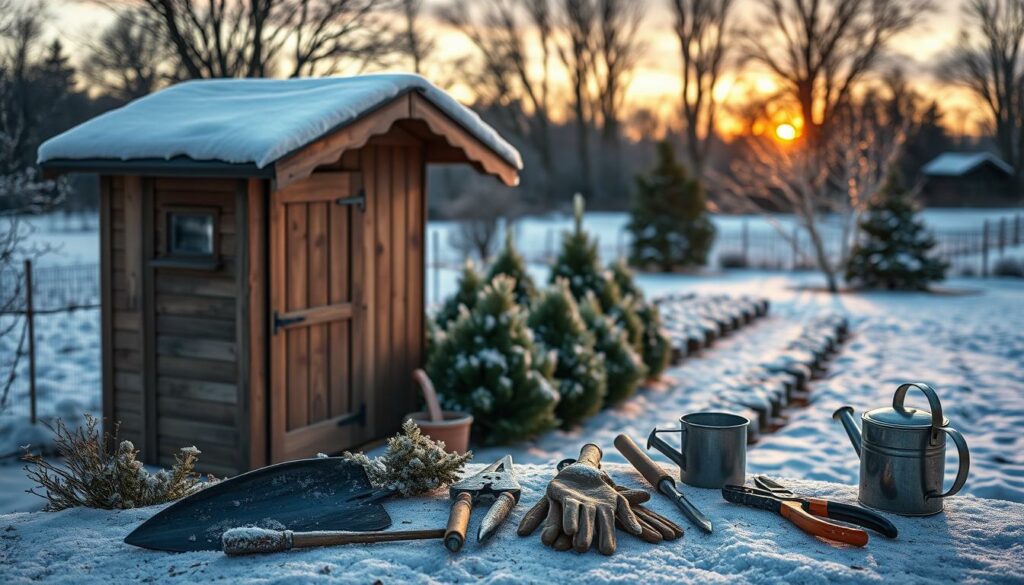
Every gardener benefits from a small kit of hand tools. A strong trowel and a hori hori knife make planting and dividing bulbs simple. Quality hand pruners like Felco or Fiskars give clean cuts that help plants heal fast.
For bigger tasks, use a steel-blade shovel with a fiberglass handle; it resists cold shocks well. A broadfork or digging fork loosens soil without tilling. A wheelbarrow helps move compost and mulch during bed prep.
Season-extension gear keeps crops growing longer. Row cover hoops, frost blankets, cold frames, and plant cloches create warm spots when frost threatens. Sources like Gardener’s Supply Company and Johnny’s Selected Seeds sell quality frames and covers.
Irrigation gear must resist freezing. Use soaker hoses rated for cold and timers with battery backup to avoid frozen schedules. Insulated gloves, waterproof boots, and kneeling pads provide comfort and safety during winter work.
Tool Maintenance Tips
Simple care keeps tools working well longer. After use, clean soil off with a wire brush, rinse, and dry tools to stop rust. Sharpen pruners with a diamond file and oil their pivots with light lubricants like 3-in-1 or sewing machine oil.
Apply linseed or tool oil to metal parts to slow rusting. Store tools in dry places like garages or sheds. Hang shovels and rakes to prevent warped handles and keep them off damp floors.
Winter steps protect gear from freeze-thaw damage. Drain and store hoses indoors, insulate faucet lines with foam covers, and bring fragile tools inside. These habits lower repair costs and keep tools ready for spring.
| Item | Recommended Type | Why It Matters | Suggested Brands/Retailers |
|---|---|---|---|
| Hand trowel | Sturdy stainless or carbon steel | Easy planting and bulb work in cold soil | Fiskars, Corona |
| Hori hori knife | Multipurpose soil knife | Cuts roots, divides bulbs, measures depth | Hori Hori brands from Gardener’s Supply Company |
| Pruners | Bypass type, sharp blades | Clean cuts speed healing and prevent disease | Felco, Fiskars |
| Shovel | Steel blade, fiberglass handle | Durable for cold, heavy soils | True Temper, Ames |
| Broadfork / Fork | No-till loosening tool | Improves aeration without turning layers | Broadfork makers sold via Johnny’s Selected Seeds |
| Row covers & cold frames | Season-extension fabrics and frames | Protects plants from frost and wind | Gardener’s Supply Company, Johnny’s Selected Seeds |
| Soaker hoses & timers | Low-temp rated hoses; battery backup timers | Reliable winter irrigation control | Drip supply brands at local retailers |
| Safety gear | Insulated gloves, waterproof boots | Comfort and injury prevention in cold work | REI, Carhartt |
Choosing the Right Winter Vegetables
Selecting winter vegetables takes planning and a close look at your local climate. Gardeners should consider frost dates, soil quality, and protection. Simple choices make winter gardening easier and more productive.
Best Vegetables for Winter Gardening
Leafy greens do well in cold beds. Spinach, Swiss chard, kale, collards, and winter lettuces like Winter Density and Arctic King grow well. They withstand frost and give steady harvests.
Brassicas thrive as temperatures fall. Broccoli, Brussels sprouts, cabbage, and kohlrabi get sweeter after light freezes. These crops are ideal for cool weather.
Root crops store flavor in cool soil. Carrots, beets, parsnips, and turnips are reliable for storage and late-season eating.
Alliums and hardy herbs complete the list. Garlic is best planted in fall for summer harvests. Onions and herbs like thyme and rosemary suit milder zones.
Planting Times and Techniques
Planting times depend on local frost dates. Many winter crops sowed in late summer or early fall grow well. Some are planted in late winter for early spring harvests.
Direct sowing works best for root crops and many greens. Transplants like broccoli started in late summer get a jump on cold weather.
Succession sowing helps keep a steady harvest. Plant small amounts every two to four weeks to handle uneven weather risks.
Protection helps success. Row covers boost germination in cool soil and protect seedlings from birds and early frosts.
Soil quality is key for winter yields. Use well-drained, fertile soil. Test pH and add compost before sowing to give nutrients to young plants.
| Crop Type | Examples | Best Planting Window | Notes |
|---|---|---|---|
| Leafy Greens | Spinach, Kale, Swiss Chard, Winter Lettuce | Late summer to early fall; late winter for spring | Fast-maturing; tolerate light frost; succession sowing recommended |
| Brassicas | Broccoli, Brussels Sprouts, Cabbage, Kohlrabi | Transplants started in late summer; direct sow where hardy | Flavor often improves after frost; give space for heads to form |
| Root Crops | Carrots, Beets, Parsnips, Turnips | Direct-sow late summer to fall | Prefer deep, loose soil; parsnips sweeten after frost |
| Alliums & Herbs | Garlic, Overwintering Onions, Thyme, Rosemary | Garlic in fall; onions in fall or early spring; herbs in mild zones | Garlic requires cold period; select hardy herb varieties for winter |
| Variety Selection | Cold-tolerant cultivars from Burpee, Johnny’s, Baker Creek | Choose varieties listed for short days and cold tolerance | Seed companies publish trial data to guide choices |
Preparing Your Garden for Winter
Preparing your garden for winter starts with a clear plan. This plan protects soil health and prepares beds for spring.
A brief fall tidy removes disease sources and dead plants. Targeted amendments give nutrients time to work well. These steps reduce pests and make later tasks easier.
Soil preparation
Begin with a soil test through your local Cooperative Extension. This test shows pH and nutrient levels to guide lime or sulfur use.
Test in the fall so treatments take effect by spring. Remove diseased material and rotate crops to limit pests.
Apply compost on the surface to feed microbes without disturbing mycorrhizae. No-dig or minimal disturbance methods help preserve soil structure.
Use slow-release organic fertilizers and compost in autumn. If needed, add rock phosphate or greensand for long-term phosphorus support.
Mulching best practices
Pick mulch based on bed type: straw or shredded leaves suit vegetables. Wood chips work well for perennials.
Apply mulch once soil is cool to avoid slowing spring warming. Aim for 2–6 inches deep to reduce freeze-thaw damage.
Mulch keeps moisture in and stops winter weeds. As it breaks down, it adds organic matter to the soil.
Avoid putting mulch against main stems and trunks to prevent rot and rodent problems. Use a small barrier at tree and shrub bases with heavy mulch.
Indoor Winter Gardening Options
Indoor winter gardening brings fresh greens and herbs into your home when outdoor beds rest for the season.
Small-space growers use thoughtful containers, light management, and humidity control to keep winter plants healthy through cold months.
Container Gardening Ideas
Choose containers with good drainage. Use insulated or double-walled pots near windows where temperatures drop.
Self-watering containers help prevent both over- and under-watering during busy weeks.
Plant leafy greens, microgreens, dwarf tomatoes, compact peppers, and herbs. Use high-quality potting mixes with light compost and slow-release nutrients.
Give active crops a liquid feed every two to four weeks.
Place containers on south- or west-facing windowsills when possible. Rotate pots weekly to ensure even growth.
Add full-spectrum LED grow lights at 20–40 watts per square foot when natural light is not enough. Adjust wattage depending on the crop.
Selecting Indoor Plants
Match plants to your available light. Low-light crops include parsley, cilantro, chives, and many types of lettuce.
High-light crops like tomatoes and peppers need supplemental lighting. Choose compact or patio varieties from seed catalogs like Burpee or Baker Creek.
Watch indoor plants for pests such as aphids, whiteflies, and fungus gnats. Use sticky traps and neem oil sprays to control them.
Keep air moving with small fans. Maintain relative humidity at 40–60% using trays of water or humidifiers to offset dry heating systems.
Protecting Plants from Harsh Weather
Winter brings cold gardening challenges that test even experienced gardeners. Protecting plants involves reducing frost, conserving heat, and blocking drying winds. Smart actions early keep beds productive and reduce stress on plants.
Using Row Covers
Lightweight floating row covers made of 0.9–1.5 oz fabric raise night temperatures by 4–8°F. They protect seedlings from light frost while allowing water and light through. For stronger defense, layer covers over hoops to form low tunnels or use heavier fabric.
Secure cover edges with soil, rocks, or staples to prevent wind lift. Build hoops from PVC or metal so fabric avoids touching leaves. Check under covers on warm days and vent to avoid overheating and fungus.
Windbreaks for Tender Plants
Porous barriers that cut wind by 30–50% reduce plant stress and water loss. Natural hedges, fences, or burlap screens work well. Place barriers 2–5 times their height away, downwind to create a sheltered zone.
For small beds, low fences or straw bales make good temporary windbreaks. Wind protection helps evergreens hold moisture and lets snow cover roots, which insulates and slowly adds moisture. Move potted or tender container plants to a porch or garage with light during extreme cold, returning them when weather improves.
Monitor plants regularly in cold weather. Use a thermometer to track how row covers and windbreaks help. Check for moisture buildup, pests, and drying signs to act timely and protect plants well.
Managing Pests in Winter Gardens
Winter brings calm and risk to gardens. Cold slows many insects, but some survive as adults, larvae, or eggs.
Gardeners should keep watch and use targeted strategies for healthy beds. These winter gardening tips help reduce damage and keep crops productive into spring.
Regular inspection is the first step. Check plant bases, under mulch, and inside covers for signs of nibbling, tracks, or frass.
Early detection limits spread and makes controlling common winter pests easier.
Common Winter Pests
Some insects overwinter in soil or plant debris. Cabbage loopers and cutworms hide among stems and mulch.
Aphids and flea beetles can persist on perennial hosts or in sheltered corners.
Small mammals create damage during snow cover. Mice and voles feed on root crops and bark of young trees.
Rabbits may nibble basal stems when other food is scarce.
Cool, wet conditions raise disease risk. Fungal pathogens like downy mildew and root rots thrive when air circulation is poor under covers.
Monitor humidity and remove infected tissue promptly.
Natural Pest Control Methods
Cultural practices reduce pest pressure. Clean plant debris in fall, rotate crops, and use trap crops to draw pests away from main plantings.
Healthy soil builds plant resilience and lowers susceptibility.
Physical barriers give direct protection. Collars stop cutworms, hardware cloth shields bulbs and roots from rodents, and breathable row covers exclude flying pests.
These covers allow light and moisture exchange.
Biological and organic tools work well in winter when temperatures allow. Release lacewings or parasitoid wasps late in the season where conditions permit.
Apply Bacillus thuringiensis (Bt) for caterpillars on brassicas. Use neem oil or insecticidal soap for soft-bodied insects when mornings are above freezing.
Enhance habitat to support natural enemies. Bird feeders and water sources attract predators that eat insects and rodents.
Leave brush piles or native plant patches away from vulnerable beds to provide shelter for beneficial insects.
| Issue | Signs | Practical Action |
|---|---|---|
| Overwintering insects (loopers, cutworms, aphids) | Swollen stems, notches on leaves, egg masses on stems | Remove debris, apply collars, use Bt on caterpillars, inspect weekly |
| Rodents and rabbits | Tunneling, gnawed bark, missing root crops | Install hardware cloth, elevate seedlings, set habitat traps away from beds |
| Fungal diseases | Discolored leaves, mold under covers, soft rots | Improve air flow, reduce overhead moisture, remove infected plants |
| Poor predator presence | High pest numbers, lack of bird or insect activity | Add bird baths, native plantings, and brush piles to encourage beneficials |
Irrigation Strategies for Winter Gardening
The cold months need a gentle, measured approach to watering. Gardeners who focus on irrigation strategies for winter gardening limit waste and keep roots healthy.
A few practical shifts in habit make a big difference for beds, containers, and irrigation systems.
Adjusting Watering Schedules
Plants use less water when temperatures drop. By adjusting watering schedules, gardeners prevent waterlogged soil and root rot. They check soil moisture instead of following a fixed routine.
Use a soil probe or moisture meter to test 2–3 inches deep for seedlings and 4–6 inches for established beds.
Water only when those depths feel dry. Time watering for the warmest part of the day. This helps foliage dry before nightfall and reduces disease risk.
Containers need closer attention because they dry out faster. Check the top inch of potting mix weekly. Water sparingly when it is dry.
Avoid watering if freeze-thaw cycles will create ice damage on roots.
Conserving Water During Winter
Conserving water during winter saves resources and helps plants survive dry spells. Mulch with straw or shredded bark to reduce evaporation. Work compost into soil to boost moisture retention and improve soil structure.
Drip irrigation and soaker hoses deliver water directly to roots, cutting waste. Add timers or smart controllers with sensors to avoid unnecessary runs.
Insulate exposed pipes and winterize valves to prevent system damage on cold nights.
Capture rainwater in barrels where local rules allow. Let stored water sit in an unheated spot so it warms slightly before use. Smart scheduling based on forecasts limits supplemental watering to targeted events.
| Area | Common Issue | Recommended Action |
|---|---|---|
| Vegetable beds | Slow drying, risk of waterlogging | Check 4–6″ depth; water only when dry; mulch with compost |
| Containers | Faster moisture loss, cold root stress | Inspect weekly; water when top 1″ is dry; group pots to conserve heat |
| Irrigation systems | Frozen lines, inefficient coverage | Use drip/soaker lines, add timers, winterize and insulate pipes |
| Water sourcing | Cold shock from very cold water | Store rainwater in unheated area; let it moderate before use |
| Scheduling | Overwatering during brief warm spells | Rely on soil checks and forecasts; use smart controllers or sensors |
Utilizing Greenhouses for Winter Gardening
Greenhouses give gardeners a controlled space to grow through cold months. They trap solar heat and manage humidity. This helps extend the season for winter vegetables and tender crops.
The following points help readers weigh benefits, costs, and practical choices when using greenhouses.
Benefits of Controlled Growing
Temperature control helps growers start seedlings earlier. It also keeps tomatoes, peppers, and herbs productive into late fall. Protection from wind, heavy snow, and pests reduces crop loss.
Controlling humidity stabilizes conditions for subtropical species. Consistent conditions boost yields and allow a wider variety of plants. Passive solar design and thermal mass lower energy needs.
Small supplemental heaters with thermostats provide backup on very cold nights.
Practical Points for Choosing Structures
Site matters. A south-facing, well-drained spot maximizes light. It also reduces snow buildup.
Match size to purpose. A bench-style greenhouse fits hobby growers. Larger spans support continuous winter vegetable production.
Material choices affect insulation and durability. Polycarbonate panels outperform single-pane glass in thermal retention and impact resistance. Polyethylene film lowers up-front cost but needs replacement more often.
Aluminum frames resist rust. Wood frames add natural insulation but require care.
Features and Budget Considerations
- Ventilation: roof and side vents prevent overheating on sunny winter days.
- Heating: passive solar, electric, or propane options depend on budget and local codes.
- Accessories: shelving, shading cloth, and drip irrigation simplify management.
Reputable suppliers such as Growers Supply, Palram, and Greenhouse Megastore offer kits and custom options. Check local permits for permanent structures. Estimate operating costs before committing.
| Consideration | Best Option | Notes |
|---|---|---|
| Insulation | Twin-wall polycarbonate | Good thermal retention, durable in snow |
| Frame | Aluminum or treated wood | Aluminum is low maintenance; wood adds insulation |
| Heating Strategy | Passive solar + thermostatic backup | Reduces fuel use, maintains steady temps |
| Site | South-facing, well-drained | Maximizes light for winter vegetables |
| Budget Range | $500–$10,000+ | Depends on size, materials, and added systems |
Planning for Spring: Winter Garden Maintenance
Winter offers a quiet time to plan for spring and smart winter garden maintenance. Gardeners can restore soils, refine seed lists, and map out beds now. Taking small, clear steps reduces rush and mistakes when planting.
Soil Enrichment Techniques
Broadcast compost or well-rotted manure across beds in late fall or early winter. This lets organic matter settle and freeze-thaw cycles help mix it in.
Plan cover crop termination so biomass and nutrients release at the best time. Wait two to four weeks after mowing before planting. No-dig mulched methods work if planting is not immediate.
Run a soil test and apply lime or sulfur based on results in winter. This timing lets soil chemistry adjust before spring crops need nutrients.
Support soil biology with compost teas, biochar, or inoculants when soils look depleted. Focus on building long-term resilience, not quick fixes.
Seed Catalogs and Planning
Use the off-season to read seed catalogs from Burpee, Johnny’s Selected Seeds, and Seed Savers Exchange. Compare days-to-harvest and choose cold-hardy plants for early sowing.
Design crop rotation maps, assign beds, and set succession-sowing schedules. Note seed amounts, expected germination rates, and backup plans for late starts.
Order seeds and supplies early to avoid shortages of popular winter-hardy varieties. Schedule indoor seed starting using last-frost dates for timely sowing and transplanting.
Keep a garden journal to track variety performance, planting dates, protection methods, and harvest results. Clear records improve future spring and winter garden maintenance planning.
Winter Gardening Community Resources
Winter gardeners gain from local networks and online resources. Local groups provide advice tailored for their microclimates. They offer workshops and help with tasks like soil testing and cold-frame building.
These groups also host seed swaps and volunteer events. This makes winter gardening more social and productive.
Local Gardening Clubs and Community Support
County Cooperative Extension offices give region-specific guidance and soil testing. They often run Master Gardener programs through state extensions.
Local garden clubs, community garden plots, and arboretums hold winter seminars and seed-starting events. These networks help with pest alerts, plant exchanges, and solving local gardening problems.
Online Resources and Forums
Authoritative sites like USDA plant hardiness maps and state extension pages offer reliable regional data. Seed companies such as Johnny’s Selected Seeds, Burpee, and Baker Creek publish variety notes and guides for winter growing.
Forums and social channels like Reddit’s r/gardening and r/wintergarden, GardenWeb, and focused Facebook groups provide photo-based troubleshooting and winter gardening ideas.
Multimedia resources such as YouTube channels and horticulture podcasts show techniques like cold-frame building and greenhouse care. Readers should check crowd-sourced advice against extension or scientific sources for safe pest control and chemical use suited to their region.