

Nearly 70% of American homeowners say yard health affects property value. Yet, most treat garden care as a single task. This gap causes many gardens to struggle through heat, frost, pests, and erratic rain.
This guide offers clear, calendar-ready steps for garden care in spring, summer, fall, and winter. It focuses on practical garden maintenance. You will learn how to prepare your garden with timely seasonal tasks. These tasks reduce pest and disease pressure, boost plant health, and improve curb appeal.
The article covers soil, water, plant choices, tools, mulch, and edibles. It also discusses climate adaptation, common mistakes, and local resources. The guide is for homeowners, community gardeners, and landscapers in the United States. It helps those who want reliable yard care routines and better edible garden yields.
Readers who follow the plan can expect stronger perennials and higher harvests. They will face fewer emergency fixes. This plan also offers a simpler approach to garden maintenance year-round.
Key Takeaways
- Seasonal garden care means planning tasks by spring, summer, fall, and winter for consistent results.
- Proper garden maintenance reduces pests and improves plant health and property value.
- How to prepare your garden includes soil work, watering plans, and seasonal plant choices.
- Seasonal gardening tasks keep yards tidy and lower the need for emergency interventions.
- Following a calendar-style plan boosts edible yields and strengthens perennial beds.
Understanding Seasonal Garden Care
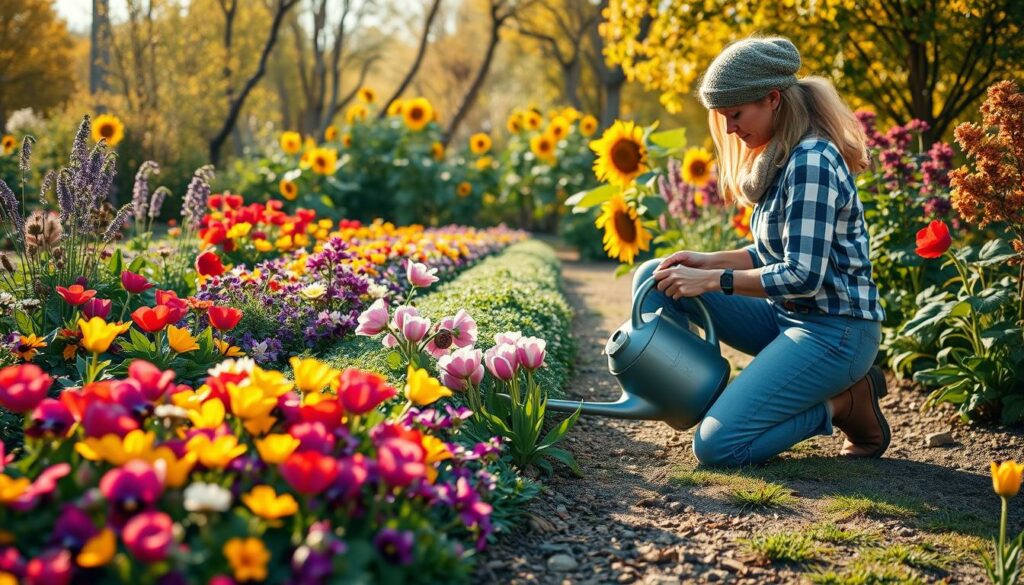
Seasonal garden care means planning tasks around plant life cycles and local climate. It covers pruning windows, planting timing, fertilization schedules, irrigation changes, and pest management tied to the season.
This approach helps align garden maintenance with natural rhythms rather than fixed calendar dates.
The Importance of Seasonal Preparation
Preparing in fall and spring reduces stress on plants. Amending soil in autumn and loosening compacted beds in early spring help roots get a head start.
Timing pruning to encourage flowering or fruiting improves crop and bloom outcomes. Using USDA Hardiness Zones and local frost dates helps gardeners schedule tasks accurately.
Staging work to match plant phenology instead of month names avoids late frosts or untimely cuts.
Benefits for Plant Health
Timely soil amendments promote stronger root growth and better nutrient uptake. Proactive controls reduce pest outbreaks and lower the need for chemical treatments.
Correctly timed fertilization improves flowering and fruit set. Mulching and proper winter pruning increase winter hardiness and reduce damage.
Keeping a simple garden journal with planting dates, fertilizer use, and pest observations makes maintenance measurable. Tracking results over seasons reduces labor and preserves landscape value.
| Planning Element | Practical Metric | Seasonal Benefit |
|---|---|---|
| Planting date | Local frost dates, USDA Zone | Improved establishment and lower frost loss |
| Soil amendment | Soil test pH and nutrient levels | Stronger roots and balanced growth |
| Pruning window | Flowering/fruiting phenology | Enhanced blooms and fruit production |
| Pest monitoring | Weekly checks recorded in journal | Fewer outbreaks and targeted controls |
| Mulch application | Late fall timing, 2–4 inches depth | Improved winter hardiness and moisture retention |
Spring: Awakening the Garden
Spring marks the garden’s restart. Tasks start with a clean sweep of beds and borders. Next, inspect trees and shrubs.
Plan seasonal garden care that fits local hardiness zones. These simple steps prepare you for detailed gardening tasks. These tasks include soil preparation and targeted fertilization.

Choosing plants that match sun exposure and USDA Hardiness Zones cuts long-term work. Home gardeners find many low-maintenance options among native species. Reliable cultivars from Proven Winners or Monrovia also help.
Selecting the right perennials, annuals, and vegetables saves time and supports seasonal lawn care. This limits invasive replacements in your garden.
Testing soil pH early helps maintain healthy beds. Kits from Luster Leaf or a professional lab reveal nutrient needs. Mix compost from municipal programs or in-home Kitchen Saver systems to improve soil structure and drainage.
For compacted lawn areas, aeration helps restore airflow and water penetration. Vegetable and flower beds need loosening with a fork or broadfork. Heavy clay soil benefits from gypsum and coarse compost to improve root growth.
Balanced fertilization starts with a soil nutrient test. Slow-release formulas like Osmocote or Espoma Plant-tone provide steady nutrients and reduce burn risk. Use higher nitrogen feeds early for leafy vegetables. Then switch to bloom-boosting fertilizers after shrubs set buds.
Choose granular or liquid feeds based on plant type and soil test results. Granular slow-release suits established beds. Liquid feeds help seedlings and container plants recover quickly.
Gardening tips include starting seeds indoors timed to the last frost date. Divide overcrowded perennials before strong growth starts. Clean and sharpen tools to reduce plant damage. Plan for drip irrigation or soaker hoses to save water during warm months.
| Focus Area | Recommended Actions | Suggested Brands/Tools |
|---|---|---|
| Plant Selection | Pick natives and zone-appropriate perennials, annuals, and veggies; consider sun and soil | Proven Winners, Monrovia |
| Soil Preparation | Test pH, add compost, aerate lawns, loosen beds, amend clay | Luster Leaf kits, municipal compost, gypsum, garden fork |
| Fertilization | Run soil nutrient test, apply slow-release or targeted feeds, adjust for vegetables and blooms | Osmocote, Espoma Plant-tone, liquid feeds |
| Seasonal Tasks | Start seeds indoors, divide perennials, clean tools, install drip or soaker hoses | Kitchen Saver composters, pruning tools, soaker hoses |
| Lawn Care | Aerate, overseed thin areas, apply starter fertilizer based on soil test | Core aerator rental, starter fertilizers formulated for spring |
Summer: Sustaining Growth
Summer needs steady care to keep a yard healthy under heat and sun. Good garden care in summer focuses on water, pest checks, and gentle support. These simple steps reduce stress on beds and turf while keeping the landscape productive.
Watering Practices for Hot Months
Water deeply but less often to build strong root systems. Water early in the morning to cut evaporation and lower fungal risk. Use a tuna-can test to measure water delivery, aiming for about one inch per week for lawns. Adjust watering for raised beds.
Drip irrigation, soaker hoses, and smart controllers like Rachio or RainMachine keep soil moist without wasting water. Mulch around plants to lock in moisture and reduce frequent watering.
Managing Pests and Weeds
Regularly check your garden to manage pests well. Look for aphids, spider mites, Japanese beetles, and beneficial insect signs. Use targeted controls like horticultural oil, insecticidal soap, or Bacillus thuringiensis (Bt) for caterpillars when needed.
Hand-weeding and timely hoeing reduce weed competition for water and nutrients. Landscape fabric slows weed growth in beds. Rotate vegetable crops to limit pests and support long-term garden health.
Supporting Plant Growth
Deadhead and pinch annuals to make blooms last longer. Stake or cage tall plants like tomatoes and dahlias to prevent breaks during storms. Side-dress vegetables with compost or balanced fertilizer when fruiting to keep yields up.
Watch plants for heat stress signs and shade them during heat waves. For healthy lawns, mow higher to shade roots. Sharpen mower blades for clean cuts and time watering to fit garden routines.
- Practical tip: Monitor soil moisture with a probe instead of guessing.
- Practical tip: Keep a log of pest sightings to help future yard care decisions.
Fall: Transition for the Winter
Fall changes garden work from summer tasks to winter preparation. This time is for harvesting, feeding soil, and protecting plants for dormancy. Good fall garden care saves effort and problems later.
Harvest crops at the perfect time to improve taste and how long they last. Use clean, sharp tools and handle vegetables gently to avoid damage. Curing crops in dry, ventilated spaces helps them last through winter.
Preparing soil for winter keeps it healthy and disease-free. Remove sick plant debris, add compost or manure, and avoid digging deeply to protect soil life. Plant cover crops like winter rye to stop erosion and boost soil health.
Plant bulbs in fall for strong spring flowers. Set daffodils and tulips at the right depth before freezing. Transplant trees and shrubs now so roots grow in milder weather. Mulch helps keep young roots warm.
Harvesting Techniques for Vegetables
Pick cool-season veggies like kale, Brussels sprouts, and carrots when their flavor is best. Use a fork to lift root vegetables carefully to avoid harm. Cure onions, garlic, and winter squash in warm, dry air to toughen their skins for storage.
Preparing Soil for Winter
Remove plant debris to reduce pests and disease through winter. Add 1–3 inches of compost or manure to give nutrients back to the soil. Avoid tilling deeply to keep soil structure and soil creatures safe.
Planting for Next Season
Plant spring-flowering bulbs now for root growth before frost. Transplant shrubs and small trees early in fall for healthy roots. Mulch around woody plants keeps soil temperature steady and lowers freeze stress.
| Task | Timing | Why It Matters |
|---|---|---|
| Harvest cool-season vegetables | Late summer to early fall | Peak flavor; reduces losses to frost |
| Cure storage crops | After harvest, 2–4 weeks | Extends shelf life for onions, garlic, squash |
| Add compost or manure | Early fall | Replenishes nutrients for spring growth |
| Plant bulbs | Before ground freezes | Allows root establishment for spring blooms |
| Seed cover crops | Early to mid-fall | Prevents erosion and adds organic matter |
| Overseed and fertilize lawn | Early fall | Improves turf density; stronger roots from seasonal lawn care |
Winter: Protecting the Garden
Cold months need special care to reduce damage and prepare for a strong spring. Proper winter garden care mixes protection, maintenance, and planning. This lets plants and tools be ready for growth.
Caring for Perennials
Cut back some perennials in late fall. Leave seedheads for birds where helpful. Mulch with 2–4 inches of organic material only after soil cools. This prevents rot.
In harsh climates, wrap tender perennials with burlap or use row covers for extra warmth. Move container plants to sheltered spots. Insulate pots with bubble wrap or straw.
Watch crowns and roots for freeze damage. Early action protects long-term health and supports seasonal garden care goals.
Winterizing Garden Tools
Clean tools with a wire brush. Then disinfect them with a 1:9 bleach solution or isopropyl alcohol to stop disease spread. Sharpen pruners and loppers. Oil metal parts with WD-40 or 3-IN-ONE oil.
Store tools in a dry place to prevent rust. For lawn mowers, drain fuel or add a stabilizer. Change the oil and remove batteries if needed.
These steps reduce repair costs and make spring startup easier for outdoor garden care.
Planning for Spring
Review notes from last season. Look for pests, successes, and trouble spots. Order seeds and new plants early from trusted suppliers like Burpee or Johnny’s Selected Seeds to ensure availability.
Schedule big projects like irrigation upgrades or hardscaping in slow months. Design crop rotations and planting maps to avoid pest problems. Careful planning turns winter downtime into a step toward next year’s harvests.
| Task | When to Do It | Key Tips |
|---|---|---|
| Caring for perennials | Late fall to early winter | Cut selectively, mulch after soil cools, protect tender varieties with burlap |
| Winterizing tools | After final use, before heavy freeze | Clean, disinfect, sharpen, oil, drain fuel or add stabilizer |
| Container plant protection | Before first hard freeze | Move to shelter, insulate pots, group containers for microclimate |
| Planning and ordering | Mid to late winter | Review notes, order seeds from Burpee or Johnny’s Selected Seeds, map crop rotation |
| Snow and salt management | Throughout winter | Brush heavy snow off shrubs, avoid piling salted snow near sensitive plants |
Seasonal Gardening Tools to Consider
Good seasonal garden care starts with the right kit. Choosing the right tools reduces work and improves efficiency. A focused set helps maintain your garden through weather and growth changes.
Essential Tools for Each Season
Spring needs a soil test kit, garden fork, hand trowel, durable gloves, and pruning shears. Fiskars pruning shears provide clean cuts and last long. Corona long-handled pruners are good for bigger branches.
Summer work needs soaker hoses and drip irrigation parts to save water. Brands like Dramm and Gilmour offer dependable hoses. Hand weeders and mulch keep beds tidy in hot weather.
In fall, use a garden rake, wheelbarrow, sharp spade, and bulb planters. Scotts and Greenworks lawn tools work well for big lawns and beds.
Winter requires pruner sharpening stones, protective covers, and insulated gloves. Keeping essentials ready cuts downtime when weather allows quick jobs.
Maintenance of Gardening Tools
Proper tool care extends life and improves work quality. After use, remove soil and dirt to stop rust. Use a wire brush and hose to clean blades and tines.
Sharpen blades once a year using a file or whetstone. Oil moving parts to keep joints smooth. Replace old handles to prevent breaks during hard work.
Store tools off the ground in a shed or garage. Wall mounts or pegboards help organize rakes, shovels, and pruners. This keeps tools easy to find.
Follow safety steps when using power tools. Wear safety glasses and tough gloves. Check tools before each season to find damage early.
| Season | Must-Have Items | Recommended Brands/Models | Maintenance Tip |
|---|---|---|---|
| Spring | Soil test kit, garden fork, hand trowel, gloves, pruning shears | Fiskars pruning shears, Corona hand tools | Clean soil off after use; dry before storage |
| Summer | Soaker hoses, drip irrigation parts, hand weeder, mulch | Dramm or Gilmour hoses and connectors | Flush irrigation lines; check for leaks |
| Fall | Garden rake, wheelbarrow, spade, bulb planters | Scotts and Greenworks lawn tools for larger yards | Tighten fasteners and inspect handles for cracks |
| Winter | Pruner sharpening stones, protective covers, insulated gloves | Quality whetstones and protective gear from trusted retailers | Sharpen blades and oil moving parts before storage |
The Role of Mulch Across Seasons
Mulch is a simple, year-round tool that supports soil health and plant vigor. It helps retain moisture and regulate soil temperature. Mulch also suppresses weeds and slowly improves soil as it breaks down. Thoughtful use of mulch supports seasonal garden care and reduces time spent on maintenance.
Benefits of Mulching
Mulch moderates soil temperature in summer. It insulates roots in winter, which reduces plant stress. This also lowers irrigation needs for outdoor garden care.
Weed suppression and erosion control are immediate benefits. Organic mulches like compost and bark add nutrients and improve soil structure as they decompose. This offers ongoing advantages for landscape maintenance.
Choosing the Right Mulch
Choosing mulch depends on plant type and bed use. Organic options include hardwood mulch for beds, pine needles for acid-loving plants, and straw for vegetable rows. These are best for vegetable beds and ornamental borders.
Inorganic choices like gravel work well for drainage areas and pathways. However, they do not improve soil health.
Apply mulch to a depth of 2–4 inches. Keep it 2–3 inches away from tree and shrub stems. This prevents moisture-related rot. Avoid piling mulch in a volcano shape around trunks.
Timing matters for seasonal applications. Lay fresh mulch in late spring after the soil warms. Then, top up in fall to protect roots during cold months. If mulch compacts or blocks soil warming, thin or remove it in early spring to help soil heat.
| Mulch Type | Best Uses | Depth | Maintenance Notes |
|---|---|---|---|
| Hardwood Bark | Ornamental beds, long-term coverage | 2–3 in | Refresh every 1–2 years; sourced from certified arborist chips reduces invasive species risk |
| Pine Needles | Acid-loving shrubs and borders | 2–3 in | Light, slow to compact; allow water penetration |
| Straw | Vegetable beds, seed protection | 2–4 in | Use clean, weed-free straw; replace each season as it decomposes |
| Compost | Soil amendment and top dressing | 1–2 in | Incorporates nutrients; best mixed into soil for garden maintenance |
| Gravel / Stone | Paths, dry areas, erosion control | 1–3 in | Durable and low maintenance; does not add organic matter |
| Rubber Mulch | Play areas, long-lasting cover | 1–3 in | Non-decomposing; avoid in edible garden beds |
Local sourcing of compost and certified wood chips supports sustainable landscape care. It also reduces the risk of spreading invasive species. Careful selection and timing make mulch an efficient part of garden care all year.
Seasonal Flowers and Their Care
Reliable choices and clear gardening tips make it easier to keep the garden colorful from spring through fall.
This brief guide highlights common options, timing for tasks, and practical steps for seasonal garden care.
With these tips, blooms last longer and plants stay healthy throughout the year.
Spring Flowering Varieties
Plant spring bulbs like daffodils and tulips in well-drained soil during fall. Space bulbs as the package directs.
Set planting depth at about three times each bulb’s height. Water newly planted bulbs to settle the soil.
Expect shoots to appear in early spring. Include early perennials such as primrose and pulmonaria for staggered color.
Add hardy annuals like pansies. Protect tender shoots from late frosts with frost cloth or cloches.
Check plant tags for sun and moisture needs to ensure healthy growth.
Summer Blooms and Maintenance
Choose heat-tolerant varieties for strong summer blooms: coneflowers, zinnias, daylilies, and salvia do well in sun.
Water deeply but less often to encourage strong roots. Deadhead spent flowers to encourage new blooms.
Stake tall plants like salvias when buds form. Use bloom-focused fertilizer midseason and follow label rates carefully.
This helps avoid too much foliage at the expense of flowers.
Fall Annuals and Perennials
Add chrysanthemums, asters, sedum, and ornamental grasses to keep color in cooler months. Divide crowded perennials in early fall for renewed vigor.
Transplant divisions before hard freezes. Cut back some perennials after the first frost, but leave seedheads on others for wildlife habitat.
Fertilize lightly in late summer when plants still grow actively. Always check cultivar recommendations from suppliers like Burpee or Proven Winners.
Match pruning, division, and fertilization to each plant’s flowering cycle. Read plant tags and supplier notes for sunlight and moisture guidelines.
These small actions help blooms last longer and support garden care all year.
Edible Gardening Throughout the Year
Edible gardening can provide fresh produce every season with good planning of rotations and succession planting. Using protection strategies and focusing on soil health and pest control helps a lot. These methods turn small plots into reliable sources of vegetables and herbs.
Seasonal garden care keeps yields steady and reduces big workload spikes.
Seasonal vegetables to plant
Plant peas, lettuce, radishes, and spinach early in spring. Summer beds grow tomatoes, peppers, cucumbers, and beans best. For fall, choose kale, broccoli, carrots, and beets.
In mild zones, winter crops like Swiss chard and mache grow well in cold frames and hoop houses.
Tips for year-round harvesting
Sow seeds every two to three weeks for a steady harvest. Plant fast-growing crops like radishes between slower ones to use space well. Replace spent plants with transplants to keep beds productive.
Use row covers, low tunnels, cold frames, and hoop houses to protect plants from frost and wind. Proper storage like canning, freezing, and root cellaring lets you enjoy food year-round.
Soil, fertility, and pest notes
Add compost and well-rotted manure to keep soil rich and support steady yields. Use compost teas and organic fertilizers like Espoma or Dr. Earth if soil tests show you need them. Rotate crop families to prevent disease and nutrient loss.
Plant flowering borders to attract pollinators and avoid broad-spectrum pesticides. This protects bees and helpful insects, cutting pest problems and improving fruit set.
Seasonal gardening tasks checklist
- Plan rotations and mark dates for succession sowing.
- Build or fix row covers, cold frames, and hoops before frost comes.
- Add compost topdressing in transition seasons.
- Check for pests weekly and release beneficial insects if needed.
- Preserve extra harvests by freezing or canning.
Adapting to Climate Variations
Gardens exist within changing weather patterns. Good seasonal garden care comes from watching how sun, wind, moisture, and cold affect a small area.
This knowledge makes climate-adaptive gardening both practical and effective for every gardener.
Microclimates are small pockets that differ from the larger neighborhood. A south-facing brick wall can raise temperatures by several degrees.
A low hollow may collect frost, while trees cast cool shade during summer. Mapping these patterns helps with smarter planting and maintenance.
Simple mapping can use a notepad and daily checks. Temperature loggers add more precise data for plant placement and timing.
Local Cooperative Extension offices and the USDA Plant Hardiness Zone map offer useful context in interpreting those readings.
Practical steps for tailoring care
- Choose varieties matched to each microclimate and your hardiness zone.
- Shift planting dates based on exposed versus sheltered spots.
- Install windbreaks to protect tender plants from drying gusts.
- Use raised beds to warm soils earlier in spring.
- Apply shade cloth during heat waves to cut stress on sun-sensitive species.
Extreme weather requires planned responses. For drought, focus on xeriscaping plants and using rain barrels to catch water.
For heavy rain, create swales and raised beds to improve drainage. For unpredictable winters, select plants with wider hardiness ranges and add thicker mulch to protect roots.
Below is a concise comparison to guide decisions about microclimate responses and landscape maintenance choices.
| Microclimate Feature | Recommended Action | Examples |
|---|---|---|
| Warm, south-facing wall | Plant heat-loving herbs and vegetables; start transplants earlier | Tomatoes, rosemary, basil |
| Shady understory | Select shade-tolerant perennials; reduce watering frequency | Hosta, ferns, Heuchera |
| Frost pocket or low spot | Delay planting of frost-sensitive crops; use row covers | Peppers, squash, tender seedlings |
| Exposed, windy ridge | Add windbreaks; choose sturdy shrubs and grasses | Arborvitae, switchgrass, Juniperus |
| Poorly drained area | Create swales or raised beds; amend soil with organic matter | Root vegetables in raised beds, moisture-tolerant sedges |
Using these gardening tips keeps plants healthier and cuts maintenance time. Climate-adaptive gardening with thoughtful care makes seasonal garden work resilient and productive.
Common Gardening Mistakes to Avoid
Seasonal garden care often fails because small errors can grow into big problems. This short guide lists frequent gardening mistakes with practical fixes. Each point links a common error to a simple step gardeners can use right away.
Errors in Seasonal Timing
Many gardeners plant tender crops before the last frost. Doing this risks frost damage and wasted effort. Use local frost dates and watch budding trees to pick safe planting times.
Pruning at the wrong time is a common mistake. Cutting spring-flowering shrubs in late winter removes flower buds and cuts blooms. Trim these plants after flowering instead.
Applying fertilizer at the wrong time leads to weak growth or nutrient runoff. Always test soil first. Match fertilizer type and timing to plant growth to avoid leaching and waste.
Over-Care and Under-Care Issues
Overwatering causes root rot, while underwatering causes stress and lower yields. Check soil moisture before watering. Deep, infrequent watering builds strong roots and lowers disease risk.
Over-pruning reduces blooms and fruit. Under-pruning lets dead wood and crowding build up. Follow moderate pruning suited to each plant. For fruit trees, remove crossing branches but keep healthy structure.
Heavy pesticide use harms beneficial insects and upsets ecosystem balance. Use integrated pest management to limit sprays and favor natural controls. This helps pollinators and predatory insects survive.
Under-mulching leaves roots exposed to temperature swings and moisture loss. Apply a consistent mulch layer in spring and fall. Mulch stabilizes soil and cuts weeds.
Practical Corrections and Troubleshooting
Use observation-based schedules instead of fixed calendars. Watch soil, buds, and weather to guide care. This reduces timing mistakes and fits care to plant needs.
Always test soil before fertilizing and amend based on results. A targeted plan prevents nutrient overload and supports steady growth.
Yellow leaves need checking soil moisture, root health, and nutrients. Yellow young leaves often show nutrient deficiency. Yellowing all over can mean overwatering or root trouble.
For bloom failure, check pruning, light, and winter damage. If a plant struggles, try pruning, soil fixes, and irrigation changes first. If it fails again, consider replacing it.
Keep these tips in a simple checklist for each season. Balance care with natural plant resilience. Let plants recover after changes to improve yard care and reduce mistakes.
Resources for Seasonal Garden Care
Seasonal garden care resources help gardeners build skills. They also help gardeners find local support.
Reliable gardening books and trusted websites offer practical guides. These guides cover garden maintenance across the year.
Extension services and seed suppliers give region-specific advice. They suggest proven plant varieties for the local climate and soil.
Recommended Reading and Websites
For hands-on techniques, try The Vegetable Gardener’s Bible by Edward C. Smith. Also consider The Well-Tended Perennial Garden by Tracy DiSabato-Aust.
Online, check the USDA Plant Hardiness Zone Map. Visit the National Gardening Association for planting schedules.
University Cooperative Extension sites like Cornell and UC Agriculture offer local guidance. They provide diagnostic tools and newsletters, too.
Local Gardening Clubs and Events
Join local gardening clubs, native plant societies, and community gardens for practical help. These groups support gardeners with advice and events.
County Master Gardener programs host workshops, plant clinics, and seasonal events. They are run by extension services.
Meetup and Facebook groups list volunteer opportunities and plant sales. These make it easy to connect with peers.
Tools like GrowVeg and Planter help plan beds and crop rotations. Weather and frost apps assist with timing.
Subscribing to local extension newsletters keeps gardeners informed on pest alerts and seasonal calendars. Learning, record-keeping, and community engagement improve garden care.