
Nearly 70% of home gardeners report their most successful gardens start with spring plants. This season offers the biggest chance for vibrant outdoor renewal.
This guide focuses on the best plants for spring gardening. It provides clear ideas for gardeners across the United States. You can quickly find seasonal blooms that thrive in cooler, wetter months.
Readers will learn which flowering bulbs and perennials do well. It covers vegetables and herbs to plant for early harvests. The guide also shares tips on soil, water management, pest control, and companion planting.
The article follows a 12-section roadmap. It begins with an introduction to spring gardening and its benefits. It covers popular spring flowers, vegetables, herbs, perennials, and annuals.
It also explains soil preparation, water management, pest strategies, and companion planting. The guide finishes with sustainable gardening practices. This helps gardeners improve their gardens naturally.
Targeted at beginning and intermediate gardeners, this piece offers planting tips and ideas for curb appeal. It features edible spring crops and low-impact gardening methods. It answers common questions about spring plants, garden flowers, and spring gardening tips with clear how-to advice.
Key Takeaways
- Spring plants offer a high success rate for fresh, seasonal blooms and early crops.
- The guide covers flowers, vegetables, herbs, perennials, and annuals suited to spring.
- Practical sections include soil testing, watering timing, and natural pest control.
- Companion planting and sustainable practices boost yield and garden health.
- Content is tailored for gardeners in the United States at beginner to intermediate levels.
Introduction to Spring Gardening
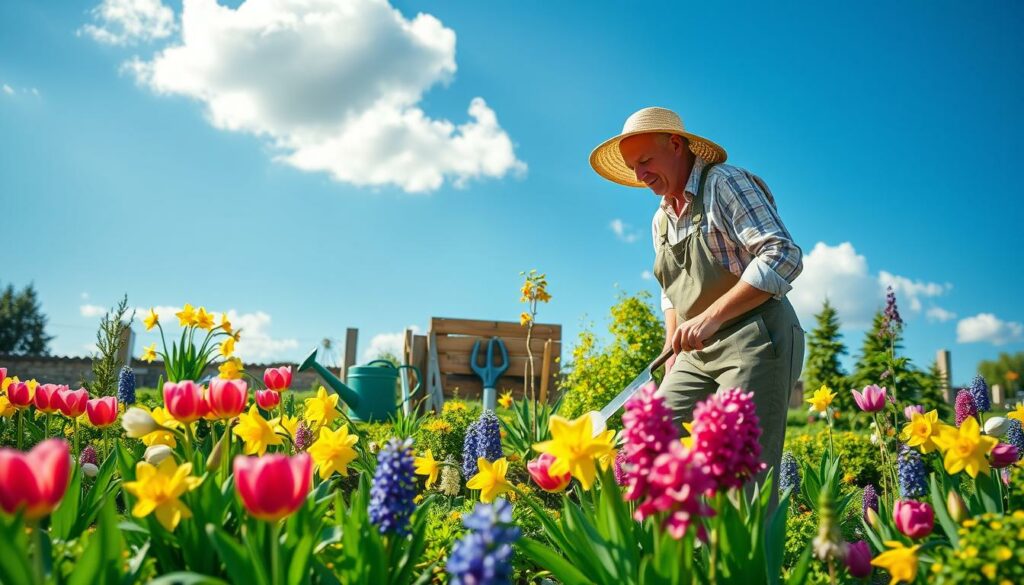
Spring opens a clear window for gardeners to plan and prepare their plants. The shift in daylight and warming soil makes this season prime for new beds and container projects. Practical spring gardening ideas help both beginners and experienced growers get a strong start.
Why Spring is the Ideal Season for Gardening
Longer days and milder temperatures let plants leave dormancy and build roots before summer heat arrives. Bees and butterflies become active, which boosts pollination for fruiting crops and flowering perennials. Gardeners can direct-sow cool-season crops like lettuce and peas or transplant cold-hardy seedlings when frost risk drops.
Regional differences matter. USDA hardiness zones and local last-frost dates help guide exact timing. Extension services such as OSU Extension and county Cooperative Extension offices provide localized calendars and recommendations.
Benefits of Planting in Spring
Planting in spring raises the chance of success for many flowers and vegetables thanks to steady moisture and agreeable temperatures. Staggered planting yields layered seasonal blooms that change from early bulbs to midseason perennials. Late annuals keep color through summer.
Early-season planting cuts pest and disease pressure because many pests are less active. Starting vegetables in spring gives fresh produce into summer and helps gardeners build food security. Basic planting tips include testing soil in late winter, preparing beds, planting bulbs first, sowing seeds for cool crops, and setting out transplants after the last frost.
| Task | When to Do It | Why It Helps |
|---|---|---|
| Soil test and amend | Late winter | Improves fertility and pH for strong root growth |
| Plant bulbs | Early spring | Ensures robust seasonal blooms before perennials take over |
| Sow cool-season seeds (lettuce, peas) | As soon as soil is workable | Faster germination and harvest in cool, moist soil |
| Transplant hardy seedlings (tomatoes after last frost) | After local last-frost date | Allows seedlings to establish before hot weather |
| Plan succession planting | Throughout spring | Extends harvest and floral interest |
Popular Spring Flowering Plants
Spring brings a fresh palette for gardeners. A few classic bulbs provide reliable color, scent, and structure.
These garden flowers suit small beds, large borders, and containers easily.
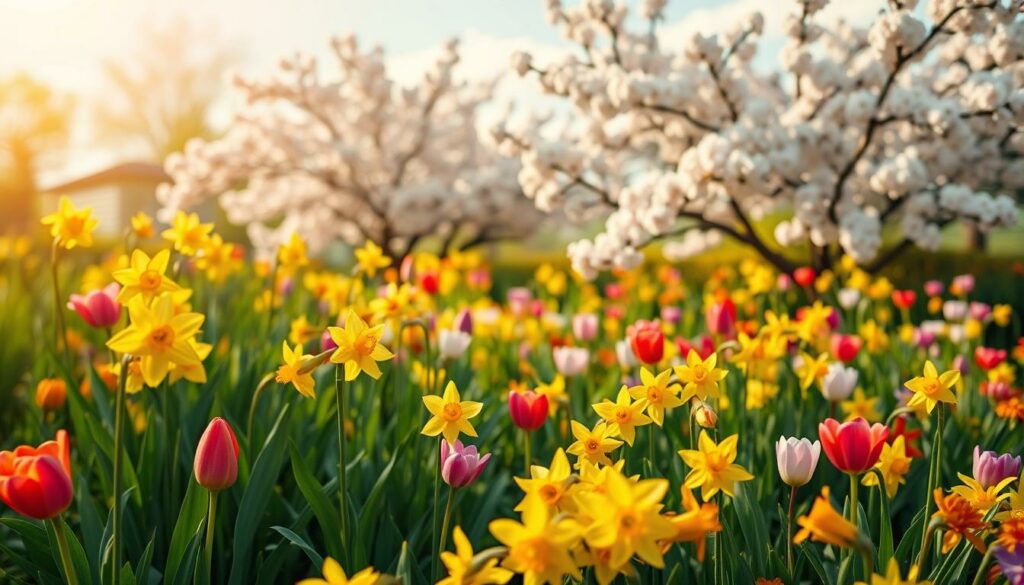
Tulips: A Colorful Addition to Gardens
Tulips have many varieties, from Darwin hybrids to Parrot types. Plant bulbs in fall, about 6–8 inches deep, 4–6 inches apart.
Choose full to part sun and plant in well-draining soil. Mid- to late-spring blooms allow layering of color in gardens.
Use tulips in mass plantings, borders, or containers for bright blossoms. In warm climates, lift and store bulbs to avoid rot.
Daffodils: Hardiness and Beauty
Daffodils, or Narcissus, are hardy and rarely bothered by deer due to natural alkaloids. Plant bulbs in fall, 3–6 inches deep, in part shade to full sun.
They naturalize well under deciduous trees and brighten cutting gardens. Good drainage stops bulb rot and helps them return yearly with cheerful colors.
Hyacinths: Fragrant and Eye-Catching
Hyacinths offer strong fragrance and dense flower spikes. They perform well in borders and containers.
Plant bulbs in fall, 4–6 inches deep, in fertile, well-drained soil. Remove spent blooms to help the bulb store energy.
Hyacinths can be forced indoors for early flowers. Pair them with early perennials and groundcovers to lengthen colorful displays.
| Plant | Depth | Sun | Best Uses | Notes |
|---|---|---|---|---|
| Tulip (Darwin, Triumph, Parrot) | 6–8 in | Full to part sun | Mass plantings, borders, containers | Lift in warm climates; varied heights and colors |
| Daffodil (Narcissus) | 3–6 in | Part shade to full sun | Naturalizing, cutting gardens, mixed beds | Deer-resistant; naturalizes well with good drainage |
| Hyacinth | 4–6 in | Full to part sun | Containers, borders, indoor forcing | Highly fragrant; remove spent blooms to strengthen bulb |
Vegetables Perfect for Spring Planting
Spring offers great conditions for many edible crops. Gardeners preparing raised beds or containers enjoy cool soils and longer daylight. These help spring vegetables grow fast and reward steady care.
Success starts with smart planting tips. Begin seeds indoors for heat-loving crops or sow cool-season types directly. Using compost-rich, well-drained soil and the right varieties helps plants grow faster and face fewer pests.
Tomatoes: timing and care
Start tomato seedlings indoors six to eight weeks before the last frost. Or buy healthy transplants from trusted brands like Burpee or Johnny’s Selected Seeds. Move plants outdoors after the last frost when the soil warms up.
Choose determinate types for containers and indeterminate vines for long-season gardens. Give them full sun, steady watering, and support with stakes or cages. Use balanced N-P-K fertilizer with calcium to avoid blossom end rot. Varieties like Sungold and Celebrity work well in many home gardens.
Lettuce varieties: quick to grow
Leaf lettuces and looseleaf mixes grow fast, maturing in 30 to 50 days. Sow seeds as soon as soil can be worked. Plant every two to three weeks for a continuous supply of salad greens.
Choose Buttercrunch, Romaine, or Oakleaf for good results. In warm areas, give partial shade during hot afternoons to stop leaves from becoming bitter and keep them tender.
Peas: easy to plant and harvest
Peas like cool weather and grow best when planted early. Sow snap, snow, or shelling peas one to two inches deep once soil is workable. Provide trellises or netting for climbing varieties.
Keep soil moist to help pods grow full. Picking often encourages more flowers and pods. Growing peas alongside low-growing flowers attracts pollinators and brightens garden beds.
Plant peas in succession, and use raised beds to warm soil quickly. Including edible flowers near vegetables adds color and helps beneficial insects thrive.
Herbs to Grow in Spring
Spring offers great conditions to start a small herb garden. It can feed your kitchen and improve your landscape. This guide covers easy-to-grow herbs, planting tips, and container ideas for outdoor gardening.
Follow simple steps to grow productive plants that fit many tastes and spaces.
Basil: Enhancing Culinary Dishes
Basil grows well as a warm-season annual. Start seeds indoors six to eight weeks before the last frost. Or buy transplants and plant them after frost danger passes.
Choose Genovese for pesto, Thai for Asian dishes, and lemon basil for bright dressings. Prune often to stop bolting and encourage bushy growth. Basil grows well in containers, perfect for small patios and raised beds.
Rosemary: A Perennial Favorite
Rosemary is a woody perennial from the Mediterranean. It is a low-maintenance hedging plant. In USDA zones 7–10, rosemary stays outdoors year-round. In colder areas, grow it in pots and bring it indoors in winter.
Plant rosemary in full sun and very well-draining soil. Water deeply but not often to build drought tolerance. Use rosemary to flavor roasts and breads, add structure to borders, and attract bees when it blooms.
Mint: Versatile and Aromatic
Mint is a strong perennial with types like spearmint and peppermint. Use it in drinks, teas, desserts, and planting near cabbage or tomatoes. Mint prefers moist soil and can grow in part shade to full sun.
Control mint’s spread by planting in containers or using root barriers in beds. Harvest often to keep it fresh and to limit growth for kitchen and cocktails.
Planting timelines help time sowing and transplanting well. Companion planting benefits include stronger tomato plants when partnered with basil. For small spaces, group herbs by sun needs in containers and raised beds for efficient gardening.
Perennials to Consider for Spring
Durable perennials form the backbone of many spring gardens. They return each year, giving gardeners a reliable framework for blooms. These plants fit both formal borders and casual cottage beds.
Daylilies: Low Maintenance and Resilient
Daylilies (Hemerocallis) thrive in varied soils and light conditions. They demand little care once established and tolerate periods of drought. This makes them perfect for low-maintenance landscapes.
Plant daylilies in spring or fall. Leave space for clump division every few years. Use them for mass plantings and long borders.
Coneflowers: Attracting Pollinators
Coneflowers (Echinacea) attract bees and butterflies. Their seed heads give winter interest and food for birds. This extends a garden’s value beyond blooming.
Place coneflowers in full sun with well-drained soil. They handle drought well. Light deadheading helps create longer displays.
Cultivars like ‘Magnus’ and newer types add colors and forms to floral varieties.
Phlox: Colorful Blooms Throughout the Season
Phlox offers options for many spots. Creeping phlox works as groundcover and on sunny slopes. Tall garden phlox blooms mid- to late-summer and adds sweet fragrance to borders.
Garden phlox likes rich, moist soil and good air circulation. This helps reduce powdery mildew problems. Creeping phlox thrives in rock gardens.
Maintain phlox by mulching and dividing overcrowded clumps. Applying seasonal fertilizer sustains blooms and plant vigor.
Annuals That Thrive in Spring
Fast-growing annuals fill gaps and add color to beds and containers. Gardeners use them to bridge the time before perennials take over.
Annuals work well in containers, borders, and mixed garden designs. They bring brightness to many outdoor gardening projects.
Petunias shine with many blooms and a wide range of colors. They are great in hanging baskets, window boxes, and edging. Start petunia seeds indoors or buy healthy transplants to get a good start.
Place petunias in full sun and remove old flowers to keep blossoms coming. Wave petunias spread like groundcover. Grandiflora types have larger blooms that serve as focal points.
Marigolds (Tagetes) are known for bright petals and pest control. They repel nematodes and trap aphids nearby vegetables.
Sow marigold seeds after the last frost. They handle poor soils well and prefer full sun. Deadhead flowers to make blooms last longer.
African marigolds grow tall and suit beds. French marigolds are compact and fit well in small urban garden containers.
Zinnias grow fast and flower early. They make great cut flowers and attract bees and butterflies. Plant zinnias directly after frost in sunny, well-drained soil.
Pinch back seedlings to grow bushier plants with more blooms. Single-flowered zinnias are perfect for pollinator plots. Dahlia-flowered zinnias add drama with their layered petals and bright colors.
Stagger planting times to extend color from early spring into summer. Annuals keep a steady show of bright flowers while perennials grow. Thoughtful flower placement helps pollinators and enhances garden beauty during peak gardening months.
Understanding Soil Preparation
Proper soil preparation sets the stage for successful spring plants and vibrant garden flowers. Simple tests and amendments save gardeners time and disappointment. These steps help when tending outdoor gardening beds.
Testing Soil pH for Optimal Growth
Soil pH affects nutrient availability for plants. Most vegetables, herbs, and garden flowers prefer a slightly acidic to neutral range of 6.0–7.0. Blueberries and some specialty crops need a lower pH to thrive.
Home gardeners can use DIY pH test kits or a digital pH meter for quick checks. For detailed analysis, send samples to a Cooperative Extension lab like Rutgers or Cornell. Labs offer specific nutrient levels and recommendations.
Interpreting results guides amendment choices. Ground limestone raises pH while elemental sulfur lowers it. Changes take weeks to months, so apply amendments early and retest before planting.
Amending Soil with Compost
Compost improves soil structure, drainage, and water retention. Adding 2–4 inches of well-rotted compost into the top 6–8 inches of bed soil boosts microbial life. It also supplies gentle nutrients for spring plants.
Sources include home compost, municipal programs, or brands like Black Kow and Espoma. Check compost for weed seeds and contaminants before using it in garden beds.
For heavy clay, double-dig and add coarse sand or perlite to improve drainage. Aged manure adds fertility. Use specific fertilizers only after soil test recommendations.
After planting, mulch to keep moisture and reduce weeds. These tips make beds more productive and help garden flowers stay healthy all season.
| Task | When to Do It | Recommended Amount | Notes |
|---|---|---|---|
| Soil pH test | Late winter or early spring | One sample per 500 sq ft | Use DIY kit or Extension lab for best results |
| Limestone (raise pH) | At least 2 months before planting | Follow soil test; common: 5–10 lbs per 100 sq ft | Work into top 6–8 inches; retest in spring |
| Elemental sulfur (lower pH) | Several months before planting | Soil-test based; often 1–3 lbs per 100 sq ft | Acts slowly; avoid over-application |
| Compost incorporation | When preparing beds for spring | 2–4 inches over surface, mix into 6–8 inches | Use well-rotted compost from trusted sources |
| Drainage amendment (sand/perlite) | When soil is heavy or poorly draining | 1–2 inches mixed into top layer | Combine with compost for best structure |
| Mulching after planting | Immediately after planting spring plants | 2–3 inches around plants | Conserves moisture and reduces weeds in outdoor gardening |
Importance of Water Management
Spring brings variable rain and warming soil. Good water management helps spring plants set strong roots. It also helps them resist stress during early growth.
Outdoor gardening benefits when watering is timed, measured, and matched to each plant’s needs.
Timing: When to Water Spring Plants
New seedlings and transplants need steady moisture until roots form. In warm, windy weather, check soil daily or every other day. Established beds need less frequent but deeper watering.
This encourages roots to grow downward. Watering early in the morning reduces evaporation. It also lowers the chance of fungal disease.
Avoid watering in the evening because wet leaves stay moist overnight. Use simple checks like the finger test for the top 1–2 inches of soil. A moisture meter can also help guide watering decisions.
Drip Irrigation vs. Traditional Methods
Drip irrigation delivers water directly to the root zone, reducing waste. Systems from Rain Bird, DripWorks, or Orbit work well with timers for consistent schedules. Drip irrigation limits wet leaves and suits beds, containers, and vegetable rows.
Soaker hoses and overhead sprinklers are easy to set up but lose water by evaporation and wet foliage. Soaker hoses work well for beds as a compromise. Use overhead sprinklers mainly for lawns.
Mulch keeps soil moisture even and cuts watering frequency. Group plants by water needs and adjust watering as temperatures rise. These tips conserve water and keep spring plants healthy outdoors.
Pest Control Strategies for Spring
Early pest management sets the tone for healthy spring growth and vibrant blooms. Integrated pest management (IPM) focuses on prevention and targeted action. It protects spring plants while supporting beneficial wildlife.
Practical planting tips and organic methods help gardeners keep pests in check. These methods avoid harm to pollinators and soil life.
Cultural controls reduce pest pressure before it starts. Rotate crops and remove old plant debris. Space seedlings to improve airflow and lower disease risk.
Healthy soil, fed with compost, makes spring plants less vulnerable. It improves resilience in outdoor gardening.
Biological controls enlist nature’s allies. Encourage ladybugs, lacewings, and parasitic wasps by planting pollinator-friendly flowers like calendula and coneflowers.
Avoid broad-spectrum insecticides so beneficial insects thrive. These allies help manage pests naturally.
Botanical and organic options provide low-toxicity defenses. Neem oil and insecticidal soap work on soft-bodied insects.
Diatomaceous earth helps slugs and crawling pests around seedlings. Bacillus thuringiensis (Bt) targets caterpillars with minimal impact on other insects. Lightweight row covers protect young plants from early infestations.
Companion planting adds passive protection. Marigolds suppress certain nematodes, and nasturtiums act as trap plants.
Aromatic herbs like rosemary and thyme deter some pests. Use these pairings for healthier beds and longer-lasting blooms.
Recognizing early signs lets gardeners act quickly. Common spring pests include aphids, slugs, snails, cutworms, flea beetles, and young caterpillars.
Look for chewed leaves, sticky honeydew, wilting, irregular holes, stunted growth, and insects on leaf undersides.
Monitoring techniques improve detection. Scout beds weekly and lift leaves to inspect undersides. Place yellow sticky traps for flying insects.
Early detection enables targeted, minimal interventions. This protects beneficial insects and reduces reliance on stronger chemicals.
| Strategy | Best Use | Impact on Beneficials |
|---|---|---|
| Cultural controls | Pre-season and weekly maintenance | High positive; supports predators and pollinators |
| Biological controls | When pests appear in small numbers | Very positive; increases natural pest predators |
| Botanical/organic sprays | Targeted outbreaks of aphids, mites, caterpillars | Moderate; choose spot treatments to limit harm |
| Physical barriers (row covers) | Protecting seedlings and seasonal blooms early | Neutral; prevents pests without chemicals |
| Companion planting | Long-term bed design and outdoor gardening plans | Positive; deters pests and attracts pollinators |
When treatments are needed, choose the least-toxic option first. Always follow label directions for safe use.
Thoughtful pest control keeps spring plants productive. It helps gardeners enjoy lush gardens with strong, healthy blooms.
Companion Planting for Spring Gardens
Companion planting brings balance to spring beds by improving yields and reducing pests. It also attracts helpful insects. Gardeners can use simple tips to match plant needs and save space. These tips encourage pollinators among garden flowers.
Benefits of Companion Planting
Planting compatible species side by side helps suppress pests by masking scents or using natural repellents. This reduces the need for chemicals. It supports healthier spring plants.
Flowering companions attract bees and beneficial predators that boost pollination for vegetables and fruits. This improves fruit production and strengthens nearby garden flowers.
Complementary root systems and nutrient needs cut competition between plants. This helps plants use soil and water more efficiently. Taller plants shade tender seedlings and create useful microclimates later in the season.
Examples of Ideal Pairings
Tomatoes pair well with basil. Both need similar sun and water. Basil may improve flavor and help keep pests away. This classic pairing works in containers and raised beds.
Carrots and onions make a practical duo. Onion scent masks carrots from carrot flies. Onions also fit well between shallow-rooted spring plants without crowding.
Beans and corn benefit each other when planted together. Pole beans climb corn stalks and add nitrogen to the soil. Adding squash as groundcover completes the Three Sisters idea. This maximizes space and yield.
Marigolds near vegetable rows repel nematodes and attract predators that eat harmful insects. Nasturtiums act as trap plants, drawing aphids away from brassicas and delicate greens.
To use these pairings, group beds by height, water needs, and bloom times. Use succession planting to keep companion benefits going all season. This keeps outdoor gardening productive with little effort.
Conclusion: Embracing Spring Gardening
Spring offers a fresh start for outdoor gardening. This article shared practical ideas for choosing the best spring plants.
From bright blooms like tulips and daffodils to easy-to-grow vegetables and herbs, picking the right plants leads to success.
Preparing soil, managing water, and companion planting build strong beds that reward gardeners with color and harvests.
Encouraging Sustainable Practices
Using sustainable practices keeps gardens healthy and lowers long-term care needs. Gardeners can compost kitchen scraps and yard waste to enrich soil.
Mulching conserves moisture, and drip irrigation saves water efficiently. Organic fertilizers from brands like Espoma and Dr. Earth support soil life.
Choosing native plants helps pollinators and local ecosystems. Crop rotation and diverse plantings protect soil health and reduce pests.
The Joy of Growing Your Own Plants
Growing your own plants offers both practical rewards and emotional benefits. Homegrown herbs, lettuces, and tomatoes add fresh flavor to meals.
Flowering beds improve curb appeal and boost mood. Trying new flowers and crops each season teaches gardeners about microclimates.
Readers should check local frost dates, plan spring layouts, and prepare soil to enjoy vibrant blooms all season long.