
Nearly 40% of American households grow food at home during the year. However, few practice true year-round gardening. They keep beds productive through winter and heatwaves.
This concise guide shows how to grow plants year-round across U.S. climate zones. It uses practical and actionable methods. The focus is on sustainability, resilience, and planning.
These tips help gardeners shift from seasonal bursts to steady, year-long gardening output.
The guide covers plant selection and garden structures like greenhouses and cold frames. It also explains vertical systems and soil management techniques.
Seasonal planting strategies, indoor growing options, and succession planting are included as well. Hydroponic and aquaponic systems receive attention. Routine maintenance, tools, troubleshooting, and learning resources support continuous gardening efforts.
The audience includes home gardeners, small-scale growers, and community garden organizers wanting longer harvests. They seek year-long herbs and greens. They also want to reduce food waste and improve local food security.
Practical outcomes include longer harvests with lower inputs over time. The guide encourages more reliable yields from all-season gardening approaches.
Readers will learn to integrate strategies like perpetual and continuous gardening into daily practice. Small investments in structures and soil can transform a summer plot. It becomes a productive, all-year gardening system.
Key Takeaways
- Year-round gardening extends harvests and improves food security across U.S. climate zones.
- Sustainable planning, soil health, and simple structures boost winter and summer productivity.
- Options range from cold frames and greenhouses to indoor and hydroponic systems.
- Succession planting and vertical systems maximize space and continuous yields.
- Small, consistent investments cut inputs over time and raise resilience.
Understanding Year-Round Gardening
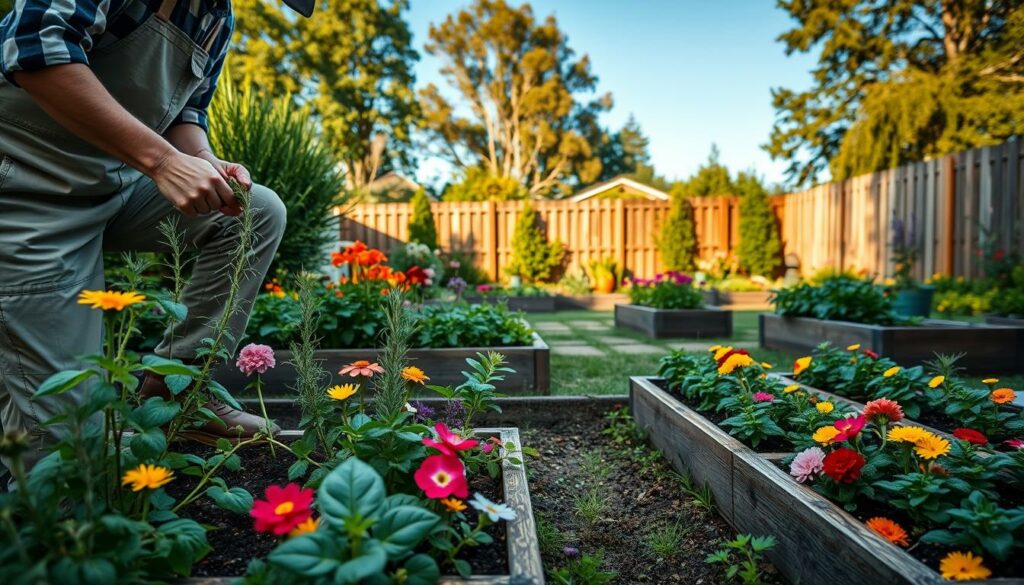
Year-round gardening means Planning and using methods that let people grow, tend, and harvest plants through every season.
It blends outdoor techniques, controlled environments, and indoor cultivation so a garden produces steadily instead of in brief bursts.
This approach differs from perennial gardening, which focuses on plants that live multiple years; year-round gardening centers on continuous production and timing.
Definition of Year-Round Gardening
Practices that support continuous yield include season-extension tools like hoop houses, greenhouses, and cold frames.
Gardeners pair those with climate-appropriate varieties and indoor systems such as grow lights and containers.
Controlled-environment agriculture can be simple, like a south-facing window setup, or complex, like a heated greenhouse that supports out-of-season crops.
Benefits of Gardening All Year Long
All-year gardening delivers measurable gains. Home growers get a steadier food supply and can stagger plantings for regular harvests.
That approach reduces grocery costs and boosts nutrition with fresher produce. Continuous gardening also cuts food miles when it replaces store purchases.
This lower food miles reduces the household carbon footprint.
Garden diversity helps break pest and disease cycles through rotation and mixed plantings.
Perpetual gardening supports mental health by giving steady outdoor activity and success across seasons.
Practical examples include winter lettuce in cold frames and staggered sowings that keep salads coming from fall through spring.
Regional factors shape what is realistic.
In USDA hardiness zones 3–5, heavy snow pushes gardeners toward greenhouses and indoor systems.
Coastal zones with milder winters can favor cold-hardy outdoor cultivars and extended outdoor seasons.
Microclimates such as south-facing slopes or urban heat islands are valuable when designing a year-round plan.
Sustainability ties into long-term productivity. Water-saving tactics like drip irrigation and rain barrels preserve resources.
Composting returns nutrients to the soil and builds structure for repeated plantings.
Integrating productive perennials such as asparagus, berry bushes, and fruit trees reduces yearly inputs while supporting a perpetual gardening system that yields over multiple seasons.
| Aspect | Practical Benefit | Typical Tools or Methods |
|---|---|---|
| Steady food supply | Regular harvests reduce grocery trips and food waste | Succession planting, indoor pots, cold frames |
| Nutrition and cost | Fresher produce with higher nutrient retention and lower cost | Raised beds, container gardening, greenhouse production |
| Environmental impact | Lower carbon footprint by replacing store-bought items | Local composting, rainwater collection, drip irrigation |
| Pest and disease control | Reduced outbreaks through diversity and rotation | Intercropping, crop rotation, integrated pest management |
| Regional adaptation | Methods tailored to zone and microclimate improve success | Greenhouses for cold regions, cold-hardy varieties for mild zones |
Choosing the Right Plants
Selecting plants for a productive garden needs thought about seasons, site conditions, and goals. The right mix gives steady harvests, supports biodiversity, and reduces work. This section shares reliable choices and selection tips for year-round gardening.
Best Plants for Each Season
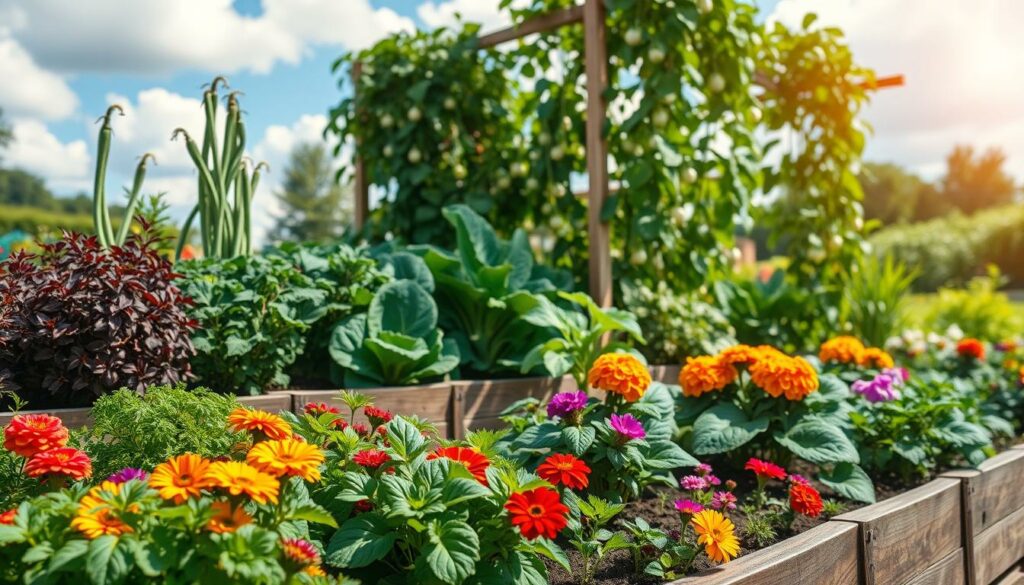
Spring favors fast, cool-season crops that start quickly and tolerate light frost. Good choices include peas, spinach, lettuces, radishes, chard, broccoli, and cabbage.
These plants give an early harvest and fill gaps in rotation.
Summer needs heat-tolerant, fruiting crops that thrive in long days. Tomatoes, peppers, eggplant, basil, cucumbers, and beans do well in warm months.
Proper spacing and staking help vining types and boost yields for all-season gardening.
Fall suits hardy greens and root crops that mature as temperatures drop. Kale, collards, carrots, beets, and garlic for overwintering are strong picks.
These plants extend harvest time and support year-long gardening plans.
Winter production is possible in milder U.S. zones or protected beds. Mache, winter lettuce, microgreens, and herbs like rosemary and thyme grow well in cold frames or under row cover.
Overwintered root crops and protected perennial herbs add strength to gardening schemes.
Perennials and edible shrubs form the backbone of a low-maintenance plot. Asparagus, rhubarb, artichokes, berry bushes, and fruit trees give recurring yields and lower replanting needs.
They anchor a garden designed for year-round success.
Considerations for Plant Selection
Hardiness is key. Gardeners should pick varieties suited to their USDA zone to match winter lows and summer highs. Photoperiod sensitivity affects flowering and yield. Select types fit for local day length.
Heat and cold tolerance guide season choice. Vining and bush habits affect spacing and support needs. Space matters for small plots; compact cultivars fit containers and raised beds.
Disease resistance limits losses. Choose cultivars from trusted seed companies like Johnny’s Selected Seeds, Baker Creek, or Territorial Seed Company.
These firms offer tested, zone-appropriate varieties with clear performance descriptions.
Companion planting and biodiversity improve pest control and pollination. Interplant herbs and flowers like marigolds, nasturtiums, and borage to attract helpful insects.
Mixing species helps sustain production, an important tactic in all-season gardening.
| Season | Top Picks | Why They Work |
|---|---|---|
| Spring | Peas, Spinach, Lettuce, Radish, Chard, Broccoli, Cabbage | Fast maturity, cool-season tolerance, fills early rotation gaps |
| Summer | Tomato, Pepper, Eggplant, Basil, Cucumber, Beans | Heat-loving, high-yielding, supports continuous harvests |
| Fall | Kale, Collards, Carrots, Beets, Garlic (overwinter) | Cold-hardy, stores well, extends the harvest season |
| Winter (mild/protected) | Mache, Winter Lettuce, Microgreens, Rosemary, Thyme | Performs under protection, adds fresh greens in cold months |
| Perennials | Asparagus, Rhubarb, Artichoke, Berry Bushes, Fruit Trees | Long-term yields, cuts annual replanting, supports year-long gardening |
| Companion Plants | Marigold, Nasturtium, Borage, Herbs | Attract pollinators, suppress pests, enhance biodiversity |
Garden Structures for Year-Round Growth
Proper garden structures help gardeners extend growing seasons beyond normal limits. They make year-round gardening possible in small yards and large plots. These structures protect plants, control climate, and increase production.
Greenhouses provide controlled environments that lengthen growing seasons. They let you grow tropical crops in colder areas. Options include lean-to attachments, freestanding frames, hoop houses, and commercial conservatories.
Many hobbyists choose kits from Palram and Rion for easy assembly and durable polycarbonate panels. Greenhouses allow precise temperature and humidity control. They exclude pests and support year-long propagation.
Heating options range from electric heaters to passive solar and thermal mass systems. Ventilation, shade cloth, thermostats, and automated vents keep conditions ideal for year-round gardening in greenhouses.
Cold frames are simple, low-cost boxes with clear tops that cover garden beds. They extend the season by two to six weeks. Cold frames protect seedlings and hardy greens from light frost.
Many gardeners build cold frames from reclaimed windows to save money. Place cold frames on south-facing slopes and angle tops for runoff. Removable lids offer ventilation to regulate temperature.
For extra insulation during cold snaps, add straw or a row cover inside. Cold frames work well with greenhouses for gradual hardening off of plants.
Vertical gardening boosts production where ground space is limited. Systems include trellises, wall planters, stacked containers, and A-frame towers. Commercial vertical systems fit balconies and small yards.
Vertical gardening raises yield per square foot and improves airflow to reduce disease. It also makes harvesting easier. Use durable trellis netting, galvanized steel, cedar, or pressure-treated lumber for support. Lightweight fabric grow bags work well on balconies.
Combining greenhouses, cold frames, and vertical gardening creates a strong, productive garden. Gardeners can mix these structures to protect plants and harvest all year long.
Soil Preparation Techniques
Quality soil is the base for successful year-round gardening. Gardeners should consider soil structure, drainage, and water-holding ability. These traits affect root growth and nutrient uptake.
Biological activity is just as important as soil chemistry. Microbes and earthworms break down organic matter. They help keep garden soil healthy.
Testing soil through local Extension services, like county Cooperative Extension offices, reveals pH and nutrient levels. These results guide corrective actions.
Importance of Quality Soil
Soil tests typically report pH, phosphorus, potassium, and micronutrients. A common issue is low phosphorus or slightly acidic pH. Lime can raise pH, while bone meal or rock phosphate adds phosphorus.
Follow Extension advice for proper application rates. Building sustainable garden soil starts with adding organic matter. Compost and well-rotted manure improve soil texture and feed microbes.
Cover crops like clover and rye protect soil. When turned under or terminated, they add organic material. Avoid deep tilling to preserve soil biology.
No-dig beds and mulching maintain soil structure and reduce erosion. Adding mycorrhizal fungi to roots can boost nutrient uptake for many crops.
Seasonal Amendments for Optimal Growth
Spring work focuses on feeding and balance. Incorporate compost and a balanced organic fertilizer like Espoma or Dr. Earth before planting. Adjust lime or sulfur as needed to reach target pH.
Summer calls for feeding heavy feeders like tomatoes and corn. Side-dress with aged manure, compost tea, or high-nitrogen organics. Keep a thick mulch layer to save moisture and stop weeds.
Fall builds reserves for cold months. Add mulch to protect microbes and soil structure. Plant cover crops such as vetch or winter rye to fix nitrogen and prevent nutrient loss.
Apply slow-release phosphorus and potassium to strengthen roots for spring. Choose amendments carefully and follow label rates. Brands like Espoma and Dr. Earth offer good organic mixes for home gardens.
Local municipal or farm compost is an excellent, sustainable source when properly cured. Crop rotation and adding perennials reduce disease and improve fertility. These methods support sustainable garden soil all year.
| Season | Primary Goals | Recommended Amendments | Best Practices |
|---|---|---|---|
| Spring | Boost nutrient levels; correct pH | Compost, Espoma 5-5-5, lime or sulfur as needed | Test soil, incorporate compost, avoid heavy compaction |
| Summer | Maintain fertility for heavy feeders; conserve moisture | Aged manure, compost tea, high-nitrogen organic options | Side-dress plants, maintain mulch, irrigate consistently |
| Fall/Winter | Protect soil biology; build root reserves | Mulch, cover crop seed (rye, clover, vetch), slow-release P/K | Plant cover crops, add mulch, avoid excessive soil disturbance |
| Ongoing | Support soil life and structure | Compost, mycorrhizal inoculants, local compost sources | Practice no-dig beds, crop rotation, monitor soil health |
Planting Strategies for Different Seasons
Successful seasonal planting begins with a plan that suits local climate and crop types. Timing and protection help keep harvests steady from spring to winter. The tips below guide gardeners through planting in spring, summer, and fall.
Spring planning focuses on soil temperature and last frost dates, not exact calendar days. Gardeners use USDA zone maps and NOAA forecasts to time sowing and transplanting.
Start warm-season crops indoors four to eight weeks before transplanting. Harden off seedlings slowly before moving them outside. Raised beds warmed by black plastic or cold frames speed early starts.
Sow lettuces and radishes every two weeks to ensure continuous harvests. Begin balanced fertilization and keep soil moist to help roots establish. A starter feed and consistent watering reduce transplant shock in spring.
Summer approach focuses on managing heat and watching for pests. Shade cloth and thick mulch cool soil and reduce water loss. Drip irrigation delivers steady moisture to roots while keeping leaves dry to prevent fungal diseases.
Choose heat-tolerant plants and give tender transplants afternoon shade if possible. Check often for aphids, spider mites, and diseases. Use row covers early and ladybugs to control pests during summer.
Direct-seed beans and plant late summer squash for fall harvests. Start fall brassicas indoors in mid-summer so strong transplants are ready for cooler weather.
Fall and winter planning targets crops that grow before the cold arrives. Sow winter-hardy greens and root crops in late summer or early fall to mature before hard frost. Plant garlic and shallots in fall for spring harvest.
Use cloches, cold frames, mulches, and hoop houses to extend growing weeks. These protect plants from frost and help gardeners practice all-season gardening with fewer losses.
Pick cold-tolerant varieties and perennial herbs to reduce care. Plan spring crops under cover to keep harvests steady and support true all-season gardening.
| Season | Timing Cue | Key Techniques | Examples |
|---|---|---|---|
| Spring | Soil temp & last frost | Indoor starts, hardening off, raised beds | Tomatoes, lettuces, radishes |
| Summer | Heat peaks & soil moisture | Shade cloth, mulch, drip irrigation, pest scouting | Beans, squash, peppers |
| Fall | Weeks before first frost | Succession sowing, cold frames, planting garlic | Brassicas, carrots, garlic |
| Winter | Frost dates & insulation needs | Cloches, hoop houses, mulches, cold-hardy crops | Kale, spinach, perennial herbs |
Indoor Gardening Options
Indoor setups let gardeners control light, temperature, humidity, and nutrients. This control helps produce steady harvests and fewer pest problems.
People in cities and those in harsh climates find indoor gardening a practical way to grow fresh produce and houseplants all year.
Benefits of Indoor Gardening
Gardening indoors year-round gives steady access to herbs and greens without depending on outdoor seasons. Plants stay safe from frost, heavy rain, and many insects.
Indoor growing also uses less land for food production. Plants like snake plant and peace lily improve indoor air quality.
This practice reduces trips to the store and provides fresh ingredients weekly. Microgreens and continuous propagation increase yields for kitchens and small restaurants.
Best Indoor Plants for Year-Round
Pick edible and ornamental plants that grow well indoors. Basil, parsley, chives, oregano, thyme, lettuce, and spinach work well in kitchens.
Dwarf tomatoes and chili peppers do well with strong light. Peace lily, snake plant, and pothos improve air quality and need little care.
Herbs like rosemary and thyme add scent, flavor, and useful kitchen ingredients. Microgreens offer fast, nutrient-rich harvests in small spaces.
Equipment matters. Full-spectrum LED grow lights from Spider Farmer or Mars Hydro help meet the 12–16 hour light needs of many edible plants.
Use well-draining soil like Espoma Potting Mix and pots with drainage holes. Regular feeding with balanced water-soluble fertilizer supports healthy growth.
| Category | Recommended Plants | Light | Notes |
|---|---|---|---|
| Quick edibles | Microgreens, Lettuce, Spinach | 12–16 hrs LED | Fast harvests; rotate every 2–4 weeks for year-long gardening indoors |
| Culinary herbs | Basil, Parsley, Chives, Oregano, Thyme, Rosemary | 12–16 hrs LED | Pinch regularly to encourage bushy growth; moderate humidity |
| Fruit-bearing | Dwarf tomatoes, Chili peppers | 14–16 hrs LED | Require stronger light and staking; fertilize during fruiting |
| Air-purifying ornamentals | Peace lily, Snake plant, Pothos | 6–12 hrs indirect light | Low maintenance; ideal for improving indoor air quality |
| Growing medium & gear | Espoma Potting Mix, LED lights (Spider Farmer, Mars Hydro) | As plant needs | Use containers with drainage and water-soluble fertilizers on schedule |
Succession Planting
Succession planting keeps harvests steady across seasons by staggering sowing and transplants. Gardeners use this method to grow crops year round. It allows continuous harvesting instead of one large crop.
Small beds, containers, and greenhouses all work well with staged planting.
What is succession planting?
Succession planting means planting in intervals so crops mature at different times. A gardener might sow lettuce every two to three weeks. This avoids a sudden surplus of harvest.
The method reduces busy work, improves space use, and lowers pest and disease problems. It prevents crowded and uniform plant stands.
How to implement succession planting
Start with a planting calendar based on local frost dates. Mark times for quick and long-season crops. Use bed maps to rotate plant families and prevent diseases and nutrient loss.
Plant at staggered intervals using close spacing and short-season varieties. For example, plant fast-growing radishes between slower brassicas. In indoor or greenhouse setups, sow monthly. This supports continuous and perpetual gardening.
Keep track of sow dates, germination, and harvest times in a journal or spreadsheet. Record-keeping helps plan better and manage seed orders for all-season planting.
| Strategy | Example | Benefit |
|---|---|---|
| Sow at intervals | Sow spinach every 10–14 days | Steady harvests, less waste |
| Interplanting | Radishes between cabbage rows | Better space use, quick yields |
| Short-season varieties | Choose 35–45 day lettuce types | Faster turnover for continuous gardening |
| Greenhouse succession | Monthly sowings under lights | Year-round supply, supports perpetual gardening |
| Record-keeping | Spreadsheet with sow/harvest dates | Improved planning, optimized seed purchases |
Hydroponic and Aquaponic Systems
Growing without soil offers a practical way to garden all year round. Both hydroponics and aquaponics use soilless methods. These methods fit hobbyists, educators, and commercial growers who want steady indoor or protected harvests.
Hydroponics uses nutrient-rich water instead of soil. Common types include nutrient film technique (NFT), deep water culture (DWC), ebb and flow, and drip systems.
Growers use reservoirs, pumps, timers, LED grow lights, and media like rockwool or expanded clay pebbles. Starting requires some cost and learning. Monitoring pH, electrical conductivity (EC), and dissolved oxygen keeps nutrient delivery steady.
Brands like General Hydroponics and Canna provide nutrient solutions for fast growth and high yields. Controlled hydroponics enables reliable production and efficient water use all year.
Aquaponics combines fish farming with plant growing. Fish waste feeds plants, and plants clean water returned to fish tanks. This cycle cuts chemical fertilizer use and yields fish plus vegetables.
Success depends on good fish care and a balanced nitrogen cycle. Tilapia works well in warm systems, trout for cold. Biofiltration and testing stop ammonia or nitrite build-up.
Aquaponics appeals to educators and city growers. It teaches ecology and produces both protein and fresh crops.
Both methods work for all-season gardening when paired with climate control and lighting. Continuous growth is possible by planning crop rotation, nutrients, and backup power for pumps and lights.
Small kits suit beginners. Larger setups require engineering, permits, and food-safety attention.
The table below compares key features to help choose and match system size to goals.
| Feature | Hydroponics | Aquaponics |
|---|---|---|
| Primary Input | Nutrient solutions supplied by manufacturers | Fish waste processed by biofilters |
| Food Outputs | Vegetables, herbs, leafy greens | Vegetables plus fish (tilapia, trout, ornamental) |
| Water Efficiency | Very high; closed recirculating systems minimize waste | High; water recirculates but requires fish care |
| Monitoring Needs | pH, EC, dissolved oxygen, nutrient balance | Water chemistry, nitrogen cycle, fish health |
| Startup Complexity | Moderate; technical but straightforward | Higher; adds aquaculture knowledge and permits |
| Best For | Indoor growers seeking fast growth and high yields | Educators and producers wanting integrated protein + produce |
| Role in Continuous Gardening | Enables hydroponics year round gardening with precise control | Supports aquaponics year round gardening through closed-loop cycles |
Seasonal Care and Maintenance
Year-round success depends on steady attention and smart timing. Seasonal care blends simple tasks with planned actions to protect plants. The right routine keeps soil healthy and crops productive across cold and warm months.
Winter care for outdoor gardens
Prepare beds by removing diseased debris. Shred healthy prunings to make compost. Mulch perennials with straw or shredded leaves to protect roots and stabilize soil temperature.
Prune dormant fruit trees to shape them and remove crossing branches. Inspect mulched areas for rodent runways and adjust barriers if damage appears. Use row covers and cold frames to extend protection.
Store tender bulbs and tubers, such as dahlias and cannas, indoors in peat or vermiculite to prevent rot.
Manage snow on greenhouses by brushing heavy snow off roofs. Monitor thermostats and ventilation in heated greenhouses to prevent humidity that causes disease. These steps reduce winter losses and set a strong start for spring.
Summer maintenance techniques
Watering is a top summer task. Use drip irrigation or soaker hoses early morning to cut evaporation and deliver moisture to roots. Mulch beds to keep soil cool and reduce water needs.
Watch plants for heat stress and provide temporary shade during heat waves. Stake tomatoes and use trellises for vining plants to maintain airflow and fruit quality. Harvest regularly to encourage more production and reduce pest attraction.
Rain barrels collect runoff for use during dry spells and support sustainable summer care.
Seasonal pest control strategies
Use integrated pest management as a guiding approach. Start with monitoring and accurate pest identification before any treatment. Cultural controls include crop rotation, sanitation, and removing infected material to limit disease spread.
Introduce biological controls like beneficial insects and Bacillus thuringiensis for caterpillar control. Hand-pick slugs and use row covers to protect brassicas. Beneficial nematodes can control root pests. Apply neem oil or insecticidal soap when needed for soft-bodied insects.
Ensure good airflow, avoid late-day overhead watering, and choose resistant cultivars to reduce disease risk. Such pest control practices protect yields without heavy chemical use.
Tools and Equipment for Year-Round Gardening
Good tools make year-round gardening easier and more productive. A compact kit of hand tools, sturdy outdoor gear, and select tech helps gardeners move from spring planting through winter protection without waste. Choosing quality items saves time and prevents plant stress.
Essential Gardening Tools
Every gardener should stock a reliable set of must-haves. A sharp spade and digging fork speed bed prep. A hand trowel and pruning shears, such as Felco, help with detailed work.
Loppers cut thicker branches. A wheelbarrow, garden hoe, and rake handle large jobs.
Measure and protect soil health with a soil thermometer and a moisture meter. Durable gloves and a sturdy watering system — a hose with an adjustable nozzle or a drip irrigation kit — keep daily chores manageable.
Specialty items include seedling heat mats, grow trays, propagation domes, cold frame materials, row cover fabric, frost cloth, and supports like cages and trellises.
Maintenance extends tool life. Sharpen blades, oil moving parts, and clean tools after use to limit disease spread. Store items in a dry, ventilated shed or cabinet to prevent rust and damage.
Technology in Modern Gardening
Gardeners can boost yields and reduce effort with targeted gardening technology. Smart irrigation controllers such as Rachio and RainMachine adjust schedules by weather. Soil moisture sensors from Ecowitt, Vegetronix, and similar brands give real-time feedback.
Automated greenhouse controllers like Inkbird manage vents and heaters to protect crops.
Grow light timers, dimmers, and energy-efficient LED fixtures help indoor and greenhouse setups run on predictable schedules.
Apps provide planting calendars, frost-date calculators, and plant ID tools like PictureThis and iNaturalist. Community platforms let gardeners trade seeds and local tips.
Budget decisions matter. Start with a few high-impact devices, such as a smart controller and a moisture sensor, then add items as needs grow. Solar-compatible pumps and LEDs cut operating costs and support sustainable continuous gardening equipment efforts.
| Category | Examples | Primary Benefit |
|---|---|---|
| Basic hand tools | Spade, fork, hand trowel, pruning shears (Felco), loppers | Versatility for planting, pruning, and soil work |
| Bulk and transport | Wheelbarrow, garden hoe, rake | Efficient material handling and bed shaping |
| Monitoring tools | Soil thermometer, moisture meter | Accurate soil condition assessment for better timing |
| Watering systems | Adjustable hose nozzle, drip irrigation kit, smart controllers (Rachio, RainMachine) | Water efficiency and automated schedules for continuous gardening equipment |
| Seasonal protection | Cold frame materials, row cover fabric, frost cloth, propagation domes | Extend growing seasons and shield plants from cold |
| Growing tech | Seedling heat mats, grow trays, automated greenhouse controllers (Inkbird), LED grow lights | Controlled environments for higher success in year-round gardening |
| Data and apps | Planting calendars, frost-date calculators, PictureThis, iNaturalist | Planning, identification, and community knowledge sharing |
Troubleshooting Common Issues
Keeping a garden productive all year needs quick diagnosis and steady care. This guide helps with common gardening problems. It gives practical steps and trusted resources to ease ongoing issues.
Identifying Pest Problems
Check plants daily for signs like chewed leaves, wilting, and egg masses. Use a magnifier or smartphone to capture details.
Compare photos with county extension guides or Penn State Extension to confirm pests. Knowing seasonal pest patterns helps narrow your search.
In spring, watch for flea beetles and cutworms. Summer pests include aphids, tomato hornworms, and spider mites.
In fall and mild winters, look for slugs and overwintering weevils. Integrated pest management works best.
Start with physical removal and handpicking. Use row covers to protect young plants and add biological controls like parasitic wasps.
For tough outbreaks, try organic sprays labeled for specific pests. If unsure, contact your local county extension office or University of California IPM for advice.
Addressing Soil Nutrient Deficiencies
Recognize nutrient symptoms to act fast. Yellowing between veins often means iron chlorosis; chelated iron helps if soil pH is high.
Interveinal chlorosis in new growth signals nitrogen deficiency. Side-dress with compost or blood meal in small amounts.
Stunted plants with purple leaves may need phosphorus. Amend with bone meal or rock phosphate, following label directions.
Test soil at planting and then every two to three years. This guides amendments and prevents guesswork.
Build organic matter to steady nutrient levels. Compost, aged manure, and cover crops improve soil and feed microbes that release nutrients.
Follow recommended application rates to avoid overcorrection and salt buildup. If excess fertilizer causes salt, flush soil with water and rotate crops.
Regular testing and measured amendments reduce ongoing problems and help keep plants healthy and resilient.
Learning and Resources for Gardeners
Gardening year-round needs reliable information and a network of peers. Printed books, university guides, and local programs give practical methods for season extension, soil care, and crop planning.
These sources help both beginners and seasoned growers build useful gardening resources that fit regional climates.
Books and Online Resources
Key books include The Year-Round Vegetable Gardener by Niki Jabbour for season-extension tactics, The New Organic Grower by Eliot Coleman for market-garden strategies, and Teaming with Microbes by Jeff Lowenfels and Wayne Lewis for soil biology.
University extension sites, such as Cornell Cooperative Extension and University of California IPM, USDA publications, and Johnny’s Selected Seeds guides provide trusted, region-specific advice.
Online courses, MasterClass-style offerings, and YouTube videos by experienced growers show greenhouse setup, succession planting, and hydroponic basics. These books and tutorials form a strong base gardeners can use to plan crops and solve problems.
Local Gardening Workshops and Communities
Local extension offices often provide soil testing, planting calendars, and workshops tailored to local conditions.
Community gardens, Master Gardener programs, and farmer cooperative meetings offer hands-on learning and peer support. Meetup groups focused on organic gardening and urban agriculture connect neighbors and share techniques.
Seed swaps, plant exchanges, botanical garden events, and seasonal plant sales strengthen year-round gardening communities.
Participating in these workshops lets gardeners exchange seeds, cuttings, and knowledge. This builds strong gardening resources at the community level.