

Nearly 60% of outdoor plants show stress during long summer heat periods. This happens even when they are watered daily. Evapotranspiration can outpace surface watering and leave roots thirsty.
This short guide explains how to water plants in hot weather. It uses practical, science-backed techniques for gardeners across the United States. The guide addresses increased evapotranspiration, heat stress, and drought risks that make summer plant care unique.
Readers will learn when to water and which methods work best, such as drip systems and soaker hoses. It explains how much water to give and how to measure soil moisture accurately. The article also covers mulch use, deep-watering techniques, container-specific tips, and adjustments for heat waves and windy days.
Following these tips will help gardeners grow healthier plants with stronger root systems. Plants will face fewer disease problems and gardeners will save water. This guide answers common questions about watering both in-ground and container plants in summer.
Key Takeaways
- Adjust watering for higher evapotranspiration during hot weather.
- Choose slow, deep methods like drip irrigation and soaker hoses for better efficiency.
- Measure soil moisture instead of relying on surface dryness alone.
- Use mulch and timely watering to reduce water loss and heat stress.
- Apply these summer watering tips to containers and garden beds for better results.
Understanding Plant Needs in Summer
Summer brings more light and heat that change how plants use water. Gardeners who follow basic summer care protect blooms, fruit, and leaves. Clear habits help keep plants productive in hot weather.
Importance of Adequate Watering
Plants open stomata to take in carbon dioxide for photosynthesis. Warm temperatures and bright sun increase transpiration, so leaves lose water faster. Regular moisture supports nutrient transport and cools tissues.
This moisture also sustains flowering and fruit set. When soil stays moist, plants avoid stress that causes dropped blooms or lower yields. Watering steadily helps roots find water without extremes.
These habits reduce pests such as spider mites that attack weakened plants.
Signs of Dehydration in Plants
Wilting during the hottest part of the day that recovers at night usually means temporary water stress. Chronic dehydration causes curled or dull foliage, crispy brown edges, and brittle stems. New growth slows and potted plants may pull soil away from pot edges.
Symptoms vary by plant type. Tropical ornamentals show rapid leaf limpness and large tears. Drought-tolerant succulents shrivel leaves but rarely collapse. Check soil depth and root firmness to tell midday wilting from long-term dehydration.
| Symptom | What to Check | Likely Cause |
|---|---|---|
| Midday wilting that recovers overnight | Surface and 2–4 inches deep soil moisture | High transpiration, temporary water deficit |
| Crispy brown leaf edges | Soil dryness, root health, pot drainage | Chronic underwatering or salt build-up |
| Slowed new growth | Fertilizer routine, watering schedule for summer | Prolonged moisture stress reducing nutrient uptake |
| Soil pulling from pot sides | Container size, watering frequency, mulch | Repeated drying between waterings |
| Succulent leaf shrinkage | Leaf plumpness and stem firmness | Normal drought response versus root damage |
Practical summer watering tips include checking moisture below the surface. Adjust the watering amount rather than just increasing frequency. Deeper, less frequent soakings work best for most garden plants.
Containers and tropical plants need special care.
Best Times to Water Plants
Proper timing greatly impacts plant health during hot weather. A smart summer watering schedule cuts waste. It also helps roots absorb moisture when plants need it most.
Choosing the right time reduces disease risk and keeps foliage healthier.
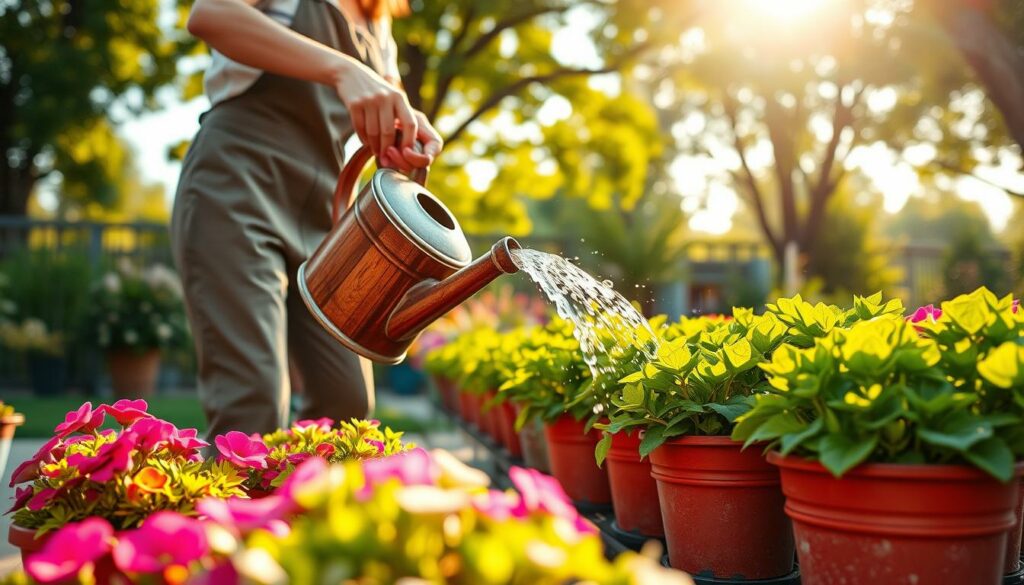
Early morning is best for most gardens. Cooler air and calm winds from about 5–9 AM limit evaporation. Water soaks deeply while leaves dry quickly, lowering fungal problems.
For automatic systems, set timers to run once during this window. Use longer, slower cycles to encourage deep roots.
Early Morning vs. Late Afternoon
Early morning watering reduces plant stress and boosts absorption. It gives roots time to take up moisture before heat rises.
Gardeners should aim for longer soakings rather than short, frequent sprays. This pushes water deep into the root zone.
Late afternoon watering can be useful for topping up fast-heating containers. These lose moisture quicker than beds and may need extra water later.
This helps steady evening temperatures for potted plants.
There is a trade-off with late watering. Damp foliage left overnight raises fungal disease risks. To avoid this, water early enough or at soil level.
Avoiding the Hottest Parts of the Day
Mid-afternoon is the worst time to water. High heat and sun cause most water to evaporate. This wastes water and leaves roots thirsty despite frequent watering.
Extremely hot soil can shock sensitive roots. During hot spells, wait for cooler periods or water shaded areas first.
Shading hoses or using soaker lines under mulch lowers surface heat and improves water delivery to roots.
For timers and irrigation systems, schedule run times in early morning. Use long, slow soakings and avoid short midday cycles.
This method matches the best way to water plants in summer. It follows practical summer watering tips gardeners can trust.
| Time Window | Pros | Cons | Best Use |
|---|---|---|---|
| Early morning (5–9 AM) | Low evaporation; deep absorption; foliage dries fast | May be impractical for some schedules | Main watering for lawns, beds, and most containers |
| Late afternoon (4–7 PM) | Replenishes daytime loss; helps hot containers | Risk of damp foliage overnight; higher disease risk if too late | Top-up for potted plants; follow with soil-level application |
| Midday (12–3 PM) | Visible immediate cooling effect | High evaporation; wasted water; possible thermal shock | Avoid except in extreme emergencies with shaded delivery |
Choosing the Right Watering Method
Picking a watering method shapes success in summer plant care. Choices should match plant type, bed layout, and water availability.
This short guide compares common approaches so gardeners can choose the best way to water plants in summer with efficiency.
It also focuses on reaching the root zone for better results.
Hand-watering gives control for containers and raised beds. It allows deep soaking and spot checks for wilting or pests.
For many edible crops, this hands-on approach saves water and avoids wetting foliage that can cause disease.
Drip Irrigation Systems
Drip systems deliver slow, targeted water at emitters placed near roots. Brands like Rain Bird, Toro, and Hunter offer timers and smart controllers.
These tools save time and tailor watering for peak summer plant care needs.
Emitter spacing depends on plant size and root spread. Use pressure regulators and filters to prevent clogging from minerals or debris.
Adjust run times seasonally; higher heat means more frequent, shorter cycles to reduce runoff and evaporation.
Drip irrigation is best for watering plants in summer when efficiency and disease prevention matter. It saves water by feeding roots directly.
This method keeps foliage dry, lowering the chance of disease.
Soaker Hoses
Soaker hoses are porous lines that seep water along their length. They work well for vegetable rows and flower beds needing uniform wetting.
Lay hoses beneath mulch and close to roots for best results.
Run soaker hoses longer at low pressure for slow water absorption. Watch for pinholes, mineral buildup, and sun damage.
Replace worn hoses every few seasons to keep water output even.
For watering plants summer in containers or raised beds, use short tubing or single emitters. Hand-watering is still handy for spots and small pots.
Overhead sprinklers suit large lawns and cooling, but they waste water and raise disease risk for ornamentals and edibles.
Choose methods that deliver water to roots for efficient and healthy summer plant care.
Factors Affecting Watering Needs
Plant water needs vary by species, soil, roots, and microclimate. Knowing these helps gardeners plan summer care. It also answers how much to water plants in summer without guesswork.
Type of Plant
High-water-use crops like tomatoes and many annual flowers need frequent moisture. Shrubs and hardy perennials have moderate water needs. Drought-tolerant species such as lavender and sedum thrive on less water.
Young transplants and newly planted trees need regular watering until roots establish. Succulents and cacti prefer infrequent, deep soakings. Tropical foliage plants favor steady moisture.
Soil Composition
Sandy soils drain quickly and need frequent watering. Clay soils hold moisture but can become waterlogged if overwatered. Loam mixes well and suits most garden plants.
Adding organic matter like compost helps soil hold water and supports roots. Compacted soil blocks water, limiting root growth. This forces shallow watering and stresses plants during heat.
Root Depth and Maturation
Shallow-rooted annuals and containers dry fast and need frequent checks. Deep-rooted shrubs and trees benefit from less frequent, deeper watering. This encourages strong roots.
Microclimates
Sun, shade, wind, and urban heat affect soil drying and plant water loss. South- and west-facing beds, rooftops, and windy sites need extra watering care in summer.
Use this summer plant watering guide to match watering frequency and volume with plant type, soil, root depth, and microclimate. These cues make summer plant care practical. They help determine how much to water plants in summer with confidence.
| Factor | Typical Effect | Practical Tip |
|---|---|---|
| High-water-use plants | Require frequent surface moisture; sensitive to drought | Water deeply two to three times weekly in heatwaves; check soil 2–3 inches down |
| Drought-tolerant species | Need infrequent water; risk overwatering | Allow soil to dry between soakings; reduce schedule to weekly or less |
| Sandy soil | Fast drainage; low water retention | Use mulches and compost; water more often in short bursts |
| Clay soil | High retention; slow drainage | Water less often but longer to avoid surface pooling; improve with organic matter |
| Container plants | Dry rapidly; roots constrained | Check daily in heat; choose larger pots or self-watering containers |
| Deep-rooted trees/shrubs | Benefit from deep, infrequent waterings | Apply slow soak at the drip line every 7–14 days during drought |
| Sunny, exposed sites | Higher transpiration and soil drying | Increase frequency; use shade cloth or mulch to reduce stress |
How Much Water is Enough?
Knowing how much to water plants in summer helps you avoid stress from drought and overwatering.
A clear starting point keeps gardens healthy. It also helps you adapt to plant type, container size, and weather.
General Guidelines for Different Plants
Lawns usually need about 1 inch of water per week. Adjust for rainfall and high heat.
Established trees and shrubs need deep soakings. Use several gallons per inch of trunk diameter each week to promote deep roots.
Vegetables and annual flowers require steady moisture in hot weather. Water daily or every other day depending on soil drainage and sun exposure.
Container plants dry faster. Small pots may need water daily, but larger containers hold moisture longer and should be checked often.
These values are starting points. Watch plant responses and adjust your summer watering schedule accordingly.
Measuring Soil Moisture
Simple tests give fast answers. Use the finger test by probing 1–3 inches deep in containers and 2–6 inches in beds.
If the soil feels dry at those depths, it is time to water. Try a screwdriver or soil probe too.
Easy penetration means moist soil. Hard resistance signals dryness.
For pots, use the weight test. Lift a container when dry and after watering. A light pot usually needs water.
Inexpensive instruments help add precision. A soil moisture meter or tensiometer shows root-zone conditions. Probe thermometers check root-zone temperature when planning watering.
Water until moisture reaches the root zone. Wet soil 6–12 inches deep for vegetables and 12–18+ inches for shrubs and trees. Soil should feel evenly moist at those depths.
- Signs to water: soil dry at root depth, wilting that does not recover by morning, pots feeling much lighter.
- Goal: deliver enough water without causing waterlogged soil or shallow roots.
Track conditions and adjust how much you water plants as heat patterns change. A good watering schedule and these tips help plants stay strong through hot spells.
Techniques for Efficient Watering
Efficient watering keeps plants healthy and saves water during hot months. This section covers practical ways gardeners can use to send moisture deep where roots need it. It also shows how to lock moisture into the soil.
Follow these summer watering tips to build stronger, drought-resilient plants. Learn the best way to water plants in summer for lasting results.
Deep Watering Practices
Deep watering means soaking the entire root zone slowly. This helps roots grow downward. It reduces heat stress and cuts the need for daily watering.
For hand-watering, apply water at the base with a slow stream. Pause to let it soak in before adding more.
Drip systems and soaker hoses work well for deep wetting. Use a flow-restricting nozzle to slow the water rate. Run times vary by soil type:
sandy soils need shorter bursts. Clay soils benefit from longer soaks at low rates to prevent runoff. Aim for fewer sessions that reach 6–12 inches deep. This is better than quick daily sprinkles.
On sloped beds, reduce runoff by placing hoses along contours or by building small berms or terraces. These steps help water soak in instead of running downhill. This is part of the best way to water plants in summer on uneven terrain.
Mulching to Retain Moisture
Mulch cuts evaporation and keeps soil cooler under the hot sun. Organic mulches like wood chips, shredded bark, straw, and compost improve soil structure as they break down.
Spread 2–4 inches of mulch for beds. Leave a 1–2 inch gap around stems and trunks to avoid rot.
Inorganic options like landscape fabric or gravel suit landscapes where decomposition is not wanted. For containers, use compost or fine bark as top-dressing. Choose water-retentive potting mixes. Moisture-retaining crystals help rarely watered pots but use them sparingly.
Mulch reduces weed growth and stabilizes moisture between deep watering sessions. Combine mulching with other summer watering tips to maximize water retention and plant vigor.
Impact of Temperature on Watering Frequency
Heat affects how plants use water. Higher air and soil temperatures increase evapotranspiration. This causes plants to lose moisture faster from leaves and roots.
Gardeners need to adjust watering schedules during summer as a result.
When temperatures rise above normal, increase watering frequency by 25–50%. Adjust the amount based on heat severity and plant type. Use a soil moisture probe or meter to monitor instead of guessing.
This helps keep soil moist and stops plants from getting stressed.
Adjusting for Extreme Heat
During heat waves, water containers and new plants twice daily: early morning and late afternoon. Trees and shrubs need deep, infrequent soakings rather than frequent, shallow sprays.
Add extra mulch to reduce evaporation from the soil surface. Use shade cloth or temporary covers for sensitive ornamentals during very hot weather.
Do not fertilize when temperatures spike, as feeding increases plants’ water needs. Always check root zone moisture before watering again to avoid overwatering compacted soil.
Seasonal Watering Strategies
Move from spring to summer by gradually increasing watering as days get hotter and longer. Then reduce frequency towards fall as nights cool and daylight shortens.
Keep records of summer watering schedules to compare results year after year.
Adjust plans to your regional climate. In the humid Southeast, evaporation is lower but fungal risk is higher. Morning waterings and good drainage are best.
In the arid Southwest, soil moisture drops quickly. Schedule deeper soakings less often. Always measure soil moisture with probes or meters to save water and avoid guessing.
- Check soil 2–4 inches deep before irrigating.
- Increase watering frequency 25–50% when temperatures exceed seasonal norms.
- For heat waves: morning and late-afternoon waterings for pots; deep soaks for trees.
Signs of Overwatering
Summer plant care needs attention to both drought stress and too much moisture. Overwatering harms plants like neglect, especially in hot weather. The tips below help gardeners spot wet-soil problems early and adjust watering habits with targeted summer watering tips.
Identifying Waterlogged Soil
Surface wetness lasting more than a day means poor drainage. If water pools or runs off, the soil might be compacted or clogged.
Heavy, dense soil that resists a trowel often stays wet below the surface. A sour smell shows low oxygen and harmful microbes inside. In containers, a heavy pot that stays soggy while the plant looks stressed is a clear warning.
Recognizing Root Rot Symptoms
Yellow leaves and wilting, even with wet soil, mean roots can’t absorb water. Stems may die back and growth slows. Gently remove the plant to check roots; healthy roots are pale and firm.
Black, mushy roots show rot from pathogens like Phytophthora or Pythium. White fungal growth or mold on soil also signals trouble.
To protect plants, improve drainage by adding compost or grit to garden beds. For containers, mix in perlite or coarse sand and use fast-draining potting mixes.
Reduce how often you water. Let soil dry to the right depth before watering plants summer again.
If roots are partly rotted, lift the plant, trim mushy roots with sterile shears, and repot in fresh, well-draining soil. For severe disease, contact a local extension office or plant clinic for diagnosis and advice on fungicides.
These summer watering tips lower the chance of disease and keep plants healthier during hot months.
Using Water Conservation Techniques
Keeping plants healthy and saving water is important for gardeners in dry areas and cities with outdoor water limits. Small changes can stretch water supplies during hot months. These steps also help landscapes stay strong over time.
The following practical approaches work well with your summer watering routines and overall water-saving goals.
Rain Barrels as a Resource
Rain barrels collect roof runoff for later garden use. Place barrels under downspouts and size them to fit your roof and rainfall. Screened lids keep mosquitoes out, and mosquito dunks give extra protection.
Add a spigot for filling buckets or connect a short hose to water drip lines. Always keep stored water covered and filtered. Some states have rules about rainwater use. Check local codes to stay safe and avoid fines.
Greywater Recycling
Greywater comes from showers, tubs, sinks, and laundry rinse cycles. It can water flowers and turf if used carefully. Don’t use water with grease, oils, or toilet waste in the garden.
Simple laundry-to-landscape systems send washer water to mulch basins or shallow trenches. Use biodegradable, low-salt detergents and wash clothes less to save water volume. Avoid letting greywater touch edible plants unless allowed by local rules.
Regular cleaning stops clogs and lowers health risks. Check city codes and follow pump and diverter instructions carefully.
Practical Tips to Combine Methods
- Group plants by water needs to reduce waste.
- Mulch beds with organic material to slow soil drying.
- Use drip irrigation or soaker hoses to water roots only.
- Water early morning or late evening to avoid midday loss.
- Plant native and drought-tolerant species to save water.
| Technique | Best Use | Benefits | Considerations |
|---|---|---|---|
| Rain barrels | Supplemental irrigation for beds and containers | Reduces municipal water use; low-cost storage | Check local regulations; keep covered and filtered |
| Greywater systems | Watering ornamentals, turf, nonedible landscape | Recycles household water; cuts freshwater demand | Use safe detergents; avoid edible-surface application |
| Drip irrigation | Row crops, garden beds, container groups | Delivers water to roots; minimizes evaporation | Initial cost; requires periodic flushing and inspection |
| Mulching | All beds and around trees | Retains moisture; suppresses weeds | Renew annually; avoid piling against stems |
Fertilizers and Watering Practices
Fertilizer choices and timing change how plants use water. Proper nutrient delivery helps roots absorb nitrogen, phosphorus, potassium, and micronutrients.
Gardeners who match feeding with smart watering lower stress and keep soil chemistry balanced. This supports healthy summer plant care.
How Nutrients Affect Water Needs
Water moves nutrients to the roots. When soil moisture is enough, roots absorb elements well and leaves stay green.
Dry soil makes fertilizer salts concentrate near roots, raising stress. This can stop nutrient uptake and cause wilting.
Too much water causes other problems. Excess water washes away nutrients like nitrate and potassium from the root zone.
This leaves plants pale or stunted even if fertilizer was applied recently. Yellow leaves or weak growth signal nutrient or watering problems.
Scheduling Watering with Fertilization
For granular fertilizers, water soil deeply before applying. This reduces the risk of root burn.
After spreading slow-release granules, water moderately. This activates nutrient release without washing it away.
Liquid feeds work best on moist soil. Apply feed, then water lightly to move nutrients to roots.
Avoid heavy fertilization during heat waves. Salt buildup and rapid nutrient uptake can scorch leaves and add drought stress.
Container plants need special care. Frequent watering causes nutrient loss due to leaching.
Use slow-release formulas or dilute liquid feeds to keep nutrients steady. Reduce fertilizer strength and watch runoff to prevent salt buildup.
Adjust fertilization to seasonal growth. Cut back feeding as plants prepare for dormancy in late summer to autumn.
This helps plants harden off for cooler weather. Also, avoid fertilizing before heavy rain to limit runoff and protect waterways.
| Scenario | Recommended Action | Why It Helps |
|---|---|---|
| Applying granular fertilizer to dry beds | Water deeply first, then apply granules, follow with moderate watering | Prevents root burn and ensures granules dissolve into active root zone |
| Using slow-release granules | Apply at planting or early season; water lightly to activate | Provides steady nutrients without frequent feeding or heavy leaching |
| Liquid feeding for shrubs and vegetables | Feed when soil is moist; follow with light irrigation | Allows quick uptake and distributes nutrients evenly to roots |
| Container plants with frequent watering | Use lower-strength feeds or slow-release pellets and flush occasionally | Reduces salt buildup and maintains balanced nutrition despite leaching |
| Hot, dry spells during summer | Hold heavy fertilization; focus on consistent watering plants summer | Prevents stress, foliage scorch and nutrient imbalances |
| Before expected heavy rain | Delay fertilization until soil conditions stabilize | Reduces runoff and protects local waterways |
The Role of Pot Size
Container plants react differently to heat than those planted in the ground. Pots expose soil on all sides and hold less volume. Choosing the right pot helps with summer watering.
Smaller pots dry out quickly. A 4- to 6-inch terracotta pot may need watering every day during hot spells. Larger containers slow evaporation but need more water each time.
Container watering tips include matching pot material to the plant’s needs. Terracotta breathes and loses moisture faster. Plastic and glazed ceramic keep water longer. These choices affect watering schedules and root health.
Container Plants and Watering Needs
Roots in containers are closer to warm air. Check moisture below the surface at root depth. Use a finger or moisture meter to test how wet the soil is under the top inch.
Pick a potting mix that balances draining and holding water. Add compost, perlite, or coco coir to keep the mix moist but not soggy. Use water-retention crystals for dry areas if the plant likes steady moisture.
Choosing the Right Size Pots
Pick pot size based on the root ball and how the plant grows. A pot slightly bigger than the root ball lets roots spread without dry soil patches.
Bigger containers reduce moisture swings and lower how often you water. People growing tomatoes and basil prefer 10- to 20-gallon pots to keep water steady through heat.
Group pots with similar needs to make watering easier. Use self-watering pots, wicking trays, or saucers without stagnant water when you can’t water often. These tips save time and help plants in heat.
Always ensure pots have drainage holes. Empty saucers after watering to stop root rot. Check soil moisture at root depth before watering to avoid overwatering in summer.
Special Considerations for Outdoor Gardens
Outdoor gardens need special care when heat and wind happen together. Summer gardening tips focus on keeping soil moisture steady. They also help conserve water. Observing plants and measuring soil moisture give the best clues for action.
Protecting Plants During Heat Waves
Use temporary shade cloth rated 30–50% for many ornamentals. Erect shade panels or garden umbrellas over seedlings and tender vegetables. Apply extra mulch to reduce surface evaporation.
Increase deep watering before heat peaks. For fruiting crops like tomatoes and peppers, keep moisture steady to avoid blossom drop and fruit cracking. Avoid transplanting and heavy pruning during heat waves. This helps reduce stress and vulnerability.
Wind and Its Effects on Watering Needs
Wind often raises transpiration and dries soil faster than sun alone. Ridge tops or urban corridors usually need more frequent watering. Install windbreaks such as fences or hedges and use heavier mulches.
Group plants to create microclimates that hold humidity. Shelter fabrics and strategic plantings cut evaporative demand. This supports better summer plant care. Heat- and wind-stressed plants attract pests like spider mites and lose water quickly. Regular monitoring and early intervention are essential.
Regional differences matter: coastal, inland, and desert gardens each face unique heat and wind effects. Tailor watering routines and consult local county extension offices or USDA resources for advice. Balancing moisture with water conservation yields the healthiest gardens in hot weather.