

Nearly 40% of American gardeners report poorer spring yields when they skip fall soil care. This gap makes winter soil preparation one of the most important tasks for a garden.
This guide explains what “winter soil preparation” means and why timing matters. It covers actions from late summer to early winter to protect soil and manage nutrients, moisture, pests, and weeds.
Most tasks start after the final harvest but before the ground freezes. The timing depends on USDA hardiness zones.
The main goals are to prevent nutrient loss and improve soil biology. It also aims to reduce compaction, stop erosion, and protect perennials and roots. The guide covers assessing soil health, removing debris and weeds, adding amendments and cover crops, choosing tilling or aeration, applying mulches, managing moisture, and preparing beds for spring planting.
Practical winter gardening starts with basic tools: a soil test kit or Cooperative Extension contact, a garden fork or aerator, and rakes.
Also needed are compost or well-rotted manure, mulch like straw or shredded leaves, cover crop seed, a hose or soaker hose, and drainage tools. Trusted sources include extension.org, USDA Natural Resources Conservation Service, and university horticulture departments at Cornell, Penn State, and the University of California.
Key Takeaways
- Start winterizing garden soil after the last harvest and before the ground freezes.
- Winter soil preparation protects nutrients, soil life, and structure to boost spring growth.
- Assess soil health, clear debris, and add organic matter or cover crops as core steps.
- Use basic tools: soil test kit, aerator or fork, rakes, compost, mulch, and drainage supplies.
- Consult Cooperative Extension, USDA NRCS, or university horticulture departments for region-specific guidance.
Understanding the Importance of Winter Soil Preparation
Preparing soil for winter sets the stage for a healthy garden in spring. Gardeners who maintain soil in winter reduce their spring workload. They also protect plant roots during cold snaps.
These steps preserve soil structure and keep nutrients in place. This ensures beds are ready when planting begins.
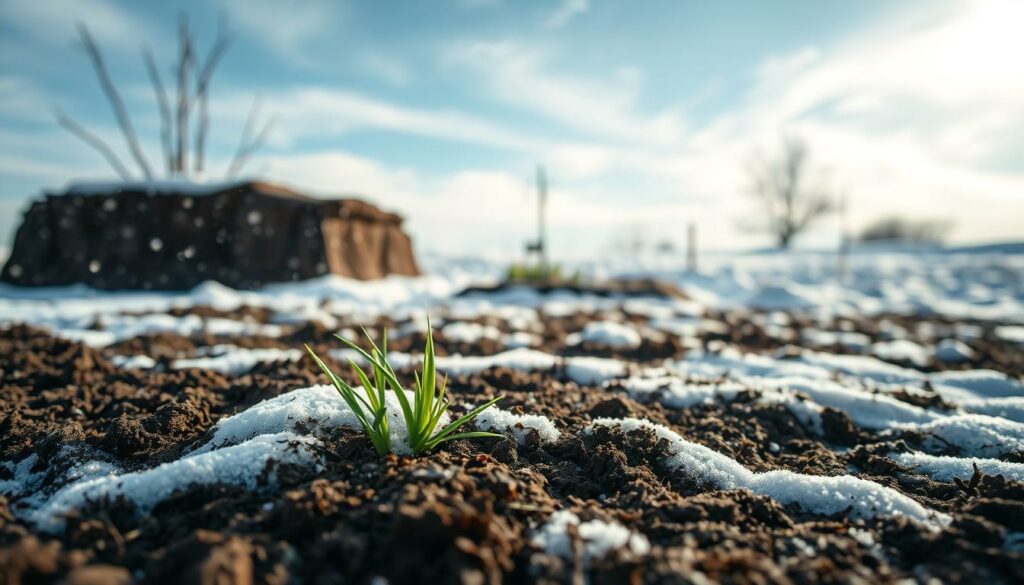
Simple winter gardening tips can make a big difference. Adding compost or planting cover crops like winter rye feeds microbes and stores nitrogen. Mulch helps reduce freeze-thaw cycles that cause clumps and heaving.
Freeze-thaw cycles can damage bulbs and shallow-rooted perennials.
The Benefits of Soil Preparation
Maintaining soil structure prevents damage from freezing and thawing. It also keeps the seedbed loose and easy to work in spring. Healthy soil in winter supports earthworms and helpful microbes.
These organisms get organic material and stable temperatures. Winter work also stops nutrients from washing away during rain and snowmelt. This means less need for corrections in spring and helps keep soil productive over time.
For example, compost adds organic matter to soil. Cover crops like winter rye hold nitrogen in the soil. Light mulching protects topsoil from erosion and compaction.
Protecting Plants from Winter Damage
Mulch and protective layers help stabilize soil temperatures. This lowers the risk of root heaving for perennials and young shrubs. Good soil also holds moisture and nutrients steady as plants rest.
Removing diseased debris and breaking pest cycles reduces spring problems. Sensitive plants need special care. Young trees and shrubs require thicker mulch and windbreaks. Bulbs need well-drained, amended beds to prevent rot.
Regional differences matter. Northern gardeners use deeper mulch for insulation. Those in milder areas focus on drainage and fighting fungal diseases. Following these best practices helps gardeners protect their gardens and face local challenges.
Assessing Soil Health Before Winter
A quick assessment helps guide effective winter soil preparation. Home gardeners and farmers should walk the site and note problem spots. Planning targeted fixes early improves results in winter soil care.
Timely checks decide which steps to take for winter soil preparation. This simple walk-through ensures better soil health during cold months.
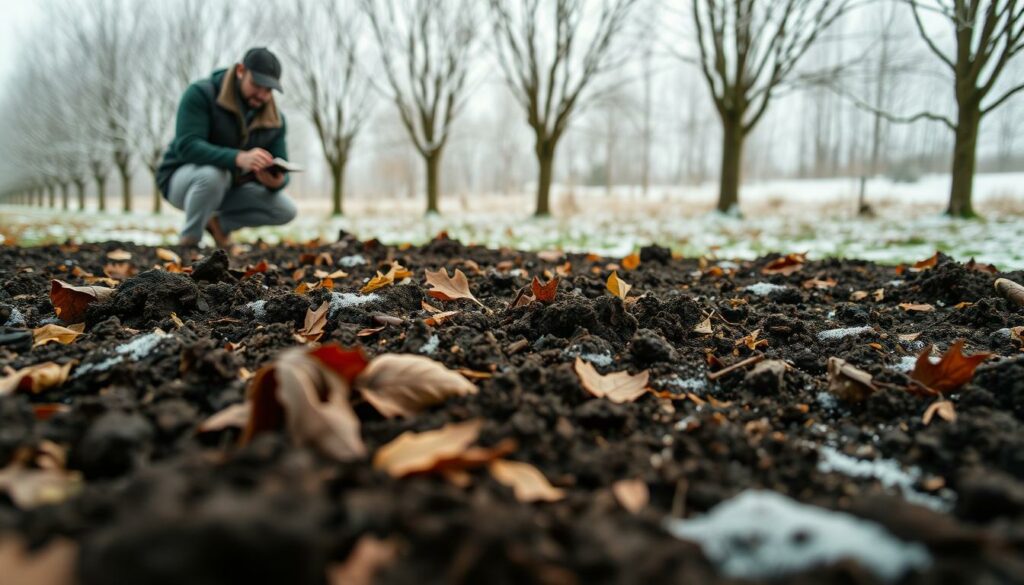
Testing Soil pH and Nutrients
Start with a soil test from a county extension or use a reliable DIY kit. Tests report pH, N-P-K, and nutrients like calcium, magnesium, and sulfur. Most vegetables grow best with pH between 6.0 and 7.0.
If pH needs adjustment, apply lime to raise it or elemental sulfur to lower it. Make these changes after harvest in fall so reactions happen over winter. Avoid heavy nitrogen late in the season; use slow-release types or cover crops instead.
Identifying Soil Compaction
Probe soil with a garden fork or soil probe. Resistance below 6–8 inches shows compaction. It often comes from foot traffic, tractor passes, or working wet ground.
Compacted soil limits roots, reduces air flow, and increases runoff. Fix this with core aeration or manual broadforking in small beds. Adding organic matter improves structure and helps prepare soil for winter.
Recognizing Signs of Erosion
Look for exposed roots, small gullies, sediment spots, bare patches after rain, or hard soil crust. Sloped beds and sandy soils face the most risk.
Prevention includes planting cover crops, mulching exposed earth, and adding contour barriers or erosion fabric. Map erosion zones now to prioritize and include these steps in winter soil care plans.
Removing Debris and Weeds
Preparing beds for winter starts with a thorough cleanup. Clearing leaves and old plants reduces spots where pests hide. This step also prepares the soil for mulching or cover crops.
Clearing Fallen Leaves and Plant Material
Remove diseased or pest-infested foliage and dispose of it. Don’t add it to the cold compost pile. Healthy shredded leaves can be composted or used as mulch to keep moisture and feed soil life.
Use a rake for beds and a mower to shred leaves on lawns. Avoid digging too much; gentle handling preserves soil structure during winter prep.
Controlling Perennial Weeds
Perennial weeds like quackgrass and ground ivy spread if left alone. Pulling them by hand when the soil is soft removes roots before frost arrives.
Digging out roots in fall works well because plants haven’t stored all reserves underground. Removing root pieces reduces regrowth and nutrient loss through winter.
Other methods include covering problem areas with tarps or thick mulch. Planting cover crops also suppresses weeds and fits winter planting goals.
If using chemicals, apply glyphosate carefully following label instructions. Check with local extension services for advice before treating sensitive beds.
| Task | When to Do It | Why It Matters |
|---|---|---|
| Remove diseased foliage | Immediately after signs appear in fall | Limits overwintering pathogens and protects next season’s plants |
| Shred healthy leaves | After most leaves have fallen | Creates usable mulch and compost input for winter gardening tips |
| Hand-pull perennials | When soil is moist and workable | Removes roots before they store reserves and spread |
| Smother or mulch problem areas | Late fall, before heavy frost | Suppresses regrowth and protects soil while winterizing your garden soil |
| Targeted herbicide application | Follow label timing; often late season | Allows effective translocation when used responsibly; check local guidance |
Mixing mechanical removal, cultural care, and careful chemical use builds a strong approach. Checking beds in spring keeps them clear and ready for winter soil preparation.
Amendments and Enhancements
Preparing soil for winter needs more than a rake and a trowel. Thoughtful amendments build resilience and improve fertility. These steps also make spring soil care easier.
These practices reflect the best ways to prep soil in winter. They show why winter soil maintenance is key for long-term garden health.
Adding Organic Matter
Adding organic matter helps sandy soils hold water better. It also improves clay soils’ drainage and structure. Well-rotted compost, aged manure, leaf mold, and composted bark feed soil biology and release nutrients slowly through winter.
Apply 1–3 inches of compost and mix it into the top 4–6 inches of soil in vegetable beds. Timing is key; add amendments in fall so microbes can break down organic matter before freeze-thaw cycles further mix it.
Incorporating Fertilizers
Soil test results should guide your choice and amount of fertilizer. Avoid using high-nitrogen fertilizers late in the season because they promote tender growth that frost can harm.
Choose slow-release or organic fertilizers like bone meal, rock phosphate, and greensand for phosphorus and potassium. Apply lime in fall if needed, since it takes months to raise soil pH.
Always follow manufacturer instructions and local advice to prevent runoff and over-application of fertilizers.
Utilizing Cover Crops
Cover crops protect soil, catch leftover nutrients, reduce erosion, and suppress weeds. They also add organic matter. Winter rye, hairy vetch, crimson clover, and oats each have different benefits.
Use rye for erosion control and biomass, legumes like vetch to fix nitrogen, and oats when winterkill is preferred. Seed about 4–6 weeks before the first hard freeze to ensure roots establish.
Plan how to end cover crops by mowing, roll-crimping, tilling in spring, or letting winterkill handle it. This avoids heavy mulch that delays planting.
| Amendment | Benefits | When to Apply | Notes |
|---|---|---|---|
| Well-rotted compost | Improves structure, feeds microbes, holds moisture | Fall, 1–3 inches worked into top 4–6 inches | Use stable compost; avoid fresh manure |
| Aged manure | Adds nutrients and organic matter | Fall, after thorough aging | Do not use raw manure before winter |
| Lime (agricultural limestone) | Raises pH over months | Fall, based on soil test | Apply according to test and local guidance |
| Slow-release/organic fertilizers | Provides phosphorus and potassium without late-season growth | Fall, matched to nutrient needs | Follow label and extension recommendations |
| Cover crops (rye, vetch, oats) | Protects soil, captures nutrients, builds biomass | 4–6 weeks before first hard freeze | Choose species by goal and region |
Following these practices helps with winter soil prep and care. They make spring planting easier and boost long-term garden productivity. These steps are part of the best ways to care for winter crop soil.
Tilling and Aerating the Soil
Proper tilling and aeration are key to getting soil ready for winter. Gardeners must choose between gentle cultivation and deeper work. Good timing and the right tools protect soil life and prepare beds for spring.
Best practices for tilling
Keep tilling shallow when you can. Reduced tillage protects soil aggregates, fungal networks, and earthworms.
Use deep tillage only to break compacted layers or to mix amendments, but do so sparingly.
Check the soil moisture before working it. Soil should crumble easily, not smear when tilled.
Tilling wet soil compacts it and creates a hard pan. This hard layer makes it tough for roots and water.
Use the right equipment for each job. Rototillers suit small plots; tractors work best for large areas with chisel plows.
Raised beds often benefit from hand tools, like a digging fork. Avoid heavy machines on wet soils to prevent compaction.
Leave some large soil aggregates intact. Breaking soil too fine causes organic matter loss and weakens pore networks.
This careful work keeps water infiltration and root channels open, which helps plants grow through winter.
Benefits of aeration for soil health
Aeration reduces compaction and adds oxygen to roots and microbes. This helps water soak in and speeds organic matter breakdown.
Core aeration pulls plugs from soil, making channels for roots. It works well on heavy soils and turf worn by foot or equipment traffic.
For home gardeners, broadforking or lifting soil with a garden fork can replace core aeration. They keep soil layers and biology intact better than tilling.
Aerate to the depth of compaction, usually 6–8 inches. How often you aerate depends on soil type and use.
Many compacted beds improve with yearly or every-other-year aeration. After aerating, add compost to fill holes and boost organic matter.
Combining tilling, aeration, mulching, and cover crops completes good winter soil care. This keeps beds healthy and ready for spring planting.
Winter Mulching Techniques
Preparing beds for cold months keeps roots safe and soil healthy. This guide covers key choices and actions for winter mulching.
These techniques support winter soil preparation and help in winterizing your garden soil.
Choosing the right material affects insulation, moisture, and soil life.
Organic mulches add nutrients as they break down. Inorganic options serve short-term goals like rapid soil warming.
Specialized covers protect young shrubs from wind and desiccation.
Types of Mulch for Winter Protection
Straw offers light insulation and stays loose, which helps airflow.
Shredded leaves build soil structure and feed microbes when they decompose.
Wood chips last longer and work well around trees and shrubs.
Avoid very fine wood chips in thick layers since they can lock up nitrogen.
Pine needles provide acidity that benefits acid-loving plants such as blueberries.
Composted bark gives steady coverage without compacting quickly.
Landscape fabric and plastic sheeting speed early warming but limit water infiltration if left too long.
Horticultural fleece and burlap shield rootballs and young trees from drying winds.
These materials are breathable and easy to remove in spring.
For exposed sites, thicker mulch layers help resist deep freezes and temperature swings.
How to Apply Mulch Effectively
Start by cleaning beds of diseased material and perennial weeds.
Apply soil amendments or cover crop residues before mulching.
This ensures winter soil preparation is complete and avoids trapping problems under mulch.
Wait until soil has cooled and plants are dormant before applying mulch.
Early mulching can encourage late growth that frost will damage.
For most organic mulches, spread 2–4 inches over beds. Use 4–6 inches on very exposed sites for extra protection.
Keep mulch 1–2 inches away from stems and trunks to prevent rot and rodent nesting.
Bulb beds benefit from a thinner layer of 1–2 inches to avoid delaying spring growth.
After the first hard freeze, mulch perennial beds to lock in warmth and moisture.
Monitor mulch through winter for matting or pest activity.
Refresh thin areas and remove excessive mats in early spring so soil can warm and seedlings emerge.
Use mulching as part of a plan including windbreaks and snow management to reduce desiccation and heaving.
| Mulch Type | Benefits | Drawbacks | Recommended Depth |
|---|---|---|---|
| Straw | Lightweight, insulating, easy to remove | Can harbor rodents if piled too deep | 2–4 inches |
| Shredded Leaves | Adds nutrients, improves structure | May mat if not shredded well | 2–4 inches |
| Wood Chips | Long-lasting, good for trees and shrubs | Fine chips can immobilize nitrogen in large amounts | 2–4 inches (4–6 for exposed sites) |
| Pine Needles | Good for acid-loving plants, airy layer | May thin out faster than wood chips | 2–3 inches |
| Composted Bark | Stable, slows erosion, adds organic matter | Slower nutrient release than fresh organics | 2–4 inches |
| Landscape Fabric / Plastic | Speeds soil warming, reduces weeds | Limits water and organic inputs long-term | Use short-term only |
| Horticultural Fleece / Burlap | Insulates against wind desiccation, breathable | Needs secure fastening and spring removal | As needed for rootball protection |
Managing Soil Moisture
Proper moisture control makes winter soil preparation effective. It also protects plants from freeze stress. Gardeners must balance water retention and runoff during dormancy.
The guidance below covers pre-winter watering techniques. It also explains how to keep soil draining well through thaw cycles.
Techniques for Watering Before Winter
Deep, infrequent watering helps roots store moisture before the ground freezes. Water thoroughly one to two weeks before hard freezes so moisture reaches the full root depth.
This practice is vital for newly planted trees and shrubs. Avoid overwatering because wet soil invites root rot and compaction.
Stop supplemental irrigation once freezes reduce evaporation and soil stays cold longer. For large beds, use soaker hoses or drip irrigation to apply water evenly and reduce runoff.
Container plants need special care. Water pots well, then move them to a sheltered spot or insulate containers to limit freeze-thaw stress on roots.
Turn off automatic irrigation systems before hard freezes to protect equipment from damage.
Ensuring Proper Drainage
Observe how water behaves after rain to check drainage. Puddles and slow absorption show poor drainage, common in clay soils.
Sandy soils drain fast but may not hold enough moisture for winter crop soil care. Improve drainage by adding organic matter and building raised beds.
Raised beds lift roots above seasonal saturation. In wet areas, install French drains or shallow swales to move excess water away from plants.
For heavy clay, broadforking or deep ripping can break hardpan and improve water and air movement. Prevent surface runoff and erosion by keeping ground cover and using mulches to stabilize soil.
Grade low spots so snowmelt flows to drains rather than pooling under snowbanks. These steps make a practical winter planting guide for moisture and drainage management.
| Issue | Sign | Recommended Action |
|---|---|---|
| Poor absorption | Surface puddles after rain | Incorporate compost, build raised beds, install French drains |
| Excess saturation | Soggy soil and slow drying | Stop watering early, improve grade, use swales to redirect water |
| Dry root zone | Wilted or drought-stressed plants before freeze | Deep soak 1–2 weeks before freeze, use drip lines for even moisture |
| Container freeze-thaw | Cracked pots or heaving soil | Insulate containers, move to shelter, avoid overwatering |
Environmental Factors to Consider
Winter soil preparation depends on the garden’s location and seasonal changes. Climatic patterns, frost dates, and microclimates guide choices for mulch and cover crops. This guide helps gardeners match actions to local conditions.
Understanding Regional Climate Impact
USDA plant hardiness zones and regional weather trends influence winter soil care decisions. In the Northeast and Midwest, thick mulches and fast cover crops protect against deep freezes and freeze-thaw cycles.
Southern gardens face milder winters but more fungal risks. Focus on drainage and pick cover crops that don’t outcompete winter vegetables.
Coastal and Pacific Northwest gardens need mulches and cover crops that reduce excess moisture and disease risk.
Urban heat islands and sheltered yards change growing conditions. City gardens may allow later planting or thinner mulch than rural sites. Gardeners should inspect their sites and adapt advice based on local microclimates.
Timing Soil Preparation Activities
Use local average first frost dates from extension services and NOAA to schedule tasks. Follow a clear sequence: finish harvest, test soil, then fix compaction.
Apply lime and slow-release amendments early to allow soil reaction. Seed cover crops at least four to six weeks before hard freeze for root growth. Add final mulches after soil cools and plants go dormant.
Avoid high-nitrogen fertilizers near frosts. Spread compost and organic matter through fall so they blend before cold arrives.
Plant perennials and shrubs several weeks before the first hard freeze. This allows roots to grow. Water them well after planting.
Stay flexible when weather is unusual. Shift timing for late warm spells or early cold snaps. Check local extension bulletins for timely advice on adapting winter gardening tips.
| Region | Primary Concern | Recommended Action |
|---|---|---|
| Northeast & Midwest | Deep freezes, freeze-thaw cycles | Thicker mulch, quick-establishing cover crops, avoid late planting |
| South | Mild winters, fungal disease | Focus on drainage, select noncompetitive cover crops, maintain winter vegetables |
| Pacific Northwest & Coast | High winter moisture | Use breathable mulches, cover crops that reduce fungal pressure, improve drainage |
| Urban vs. Rural | Microclimate variation | Adjust mulch depth and timing of tasks based on heat islands or exposure |
Preparing Garden Beds for Spring
Winter soil preparation lays the foundation for a good spring garden. Gardeners can review last season’s wins and problem spots during this time. This helps them plan rotations to break pest cycles and reduce spring work.
Planning Crop Rotation
Rotate plant groups like brassicas, nightshades, legumes, and root crops to reduce pests and balance nutrients. Record high-yield and trouble spots from last season during winter. Choose cover crops that suit what you’ll plant next.
Legumes add nitrogen for heavy feeders. Deep-rooted plants like rye or daikon can ease soil compaction before brassicas or roots. Schedule green manure early so it can be mixed in before spring planting.
Plan a late-winter soil test to check soil health after amendments and cover crop residues. These actions follow best practices and boost your rotation plan.
Developing a Maintenance Schedule
Make a seasonal calendar with clear tasks: fall—soil test, sow cover crops, and add amendments. Winter is for watching mulch and protecting plants. Early spring means ending cover crops and starting seedlings.
Late spring involves final planting and adjustments. Check soil moisture, erosion, and rodents regularly to prevent big problems. Keep written records of amendment amounts, cover crop types, dates, and problem zones.
For complex needs, use county extension services for tests or hire landscapers for drainage. Smart winter soil care improves plant health and garden strength over time.