
Surprisingly, a 2019 USDA survey found that nearly 35% of U.S. households grew food at home. This shows that growing food is no longer just a niche hobby. This guide targets beginners, busy homeowners, and apartment dwellers wanting easy vegetables that offer fresh flavor with little effort.
This short, practical guide highlights vegetables that are easy to grow and suitable for small spaces. It explains why homegrown produce matters and lists the top 10 low-maintenance crops. You’ll also find tips on growing conditions, planting, pest control, harvesting, and container gardening.
Many featured plants need only sunlight, good soil, and regular watering. These steps fit common U.S. climates but check local extension services or the USDA Plant Hardiness Zone Map for exact timing.
Key Takeaways
- Home gardening is accessible—many people already grow food at home with simple setups.
- This guide focuses on easy vegetables to grow and simple veggies to cultivate for beginners.
- No-fuss vegetables can thrive in containers, raised beds, or small yards.
- Advice is tailored to U.S. climates; check local extension resources for timing.
- The article offers step-by-step, practical tips and quick-reference recommendations for both beds and containers.
Benefits of Growing Your Own Vegetables
Home gardening offers practical benefits for small yards, balconies, and community plots. Planting containers or raised beds helps families enjoy fresh produce easily. This method fits those who want simple, beginner-friendly vegetables.
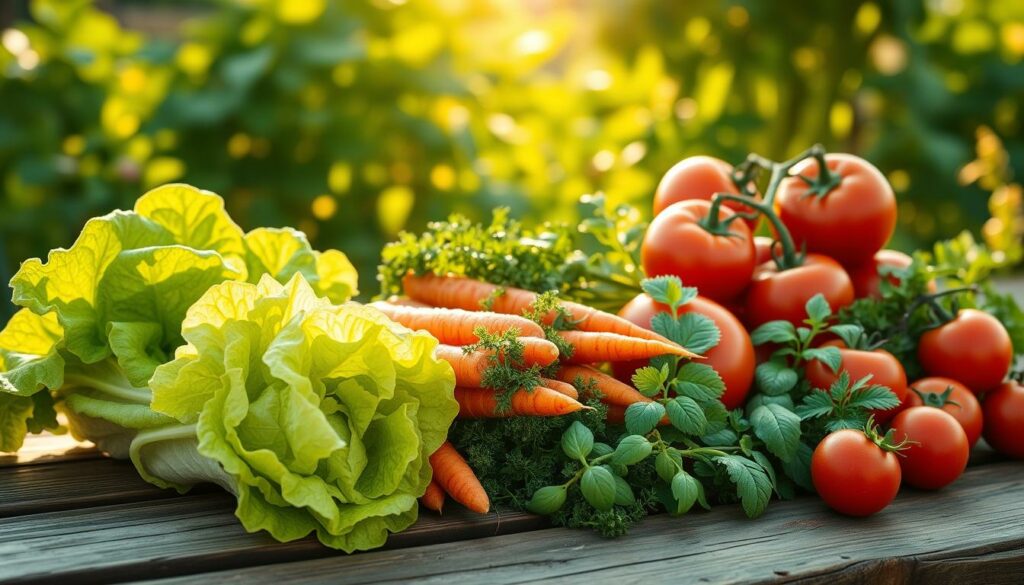
Growing vegetables at home can reduce grocery costs quickly. A packet of lettuce seeds costs under $3 and yields many heads in a season. Leafy greens, herbs, and radishes grow fast, giving quick returns on a small investment.
Fewer store trips save money on transportation and packaging.
Cost Savings
Starting with low-maintenance vegetables cuts setup and upkeep expenses. Seed packets, a trowel, and potting mix cost less than buying produce repeatedly. Growing easy vegetables like lettuce or radishes adds savings during harvest weeks.
Health Benefits
Homegrown produce keeps more nutrients because it is eaten soon after harvest. Studies show many vitamins drop within days after picking. Gardeners control soil, compost, and pest methods to avoid synthetic pesticides.
Having fresh vegetables nearby encourages healthier meals and more vegetable intake.
Freshness and Flavor
Picking vegetables at peak ripeness boosts sugars and flavor compounds. Tomatoes, carrots, and greens taste better when fresh from the garden. Supermarket produce is picked early for shipping, so backyard harvests taste brighter.
Proper cooling and storage extend homegrown vegetables’ shelf life.
Top Easy Vegetables to Start With
New gardeners benefit from choosing reliable crops that return fast. The list focuses on easy vegetables for small plots and containers. These picks suit first-timers and gardeners wanting simple veggies with modest effort.
Radishes
Radishes mature fast and can be harvested in 3–4 weeks. They grow well in loose, well-drained soil and can handle partial shade. Gardeners can plant every two to three weeks for steady crops.
Common types, like Cherry Belle, are forgiving. Avoid crowding by thinning seedlings. These no-fuss vegetables reward patience with quick results.
Lettuce
Lettuce is a cool-season leafy green with leaf, romaine, or butterhead types. Leaf lettuces are especially easy for beginners. They grow well in containers, raised beds, or garden rows with regular moisture.
Planting every 2–3 weeks provides continuous harvests of leaves or heads. Partial shade in hot weather keeps plants tender. Lettuce is among the simplest veggies to grow for fast salads.
Green Beans
Green beans have bush and pole varieties. Bush beans are great for beginners and need no trellis. They mature in about 50–60 days and prefer full sun and well-drained soil.
Avoid too much fertilizer since extra nitrogen lowers yield. Space plants well to reduce fungus and rotate crops to prevent pests. With basic care, green beans are reliable no-fuss vegetables.
Carrots
Carrots grow best in deep, loose soil without rocks. Varieties like Nantes and Danvers suit many conditions and beginner plans. Sow seeds thinly or thin seedlings to avoid misshaped roots.
Keep soil moist to prevent splitting. Carrots take 60–80 days but can be planted early spring and late summer for staggered harvests. They are solid choices following beginner garden tips.
Ideal Growing Conditions for Vegetables
Good growing conditions can turn a struggling plot into a productive garden. This short guide covers sunlight, soil, and watering. Gardeners can focus on low-maintenance vegetables they grow with confidence.
Sunlight Needs
Most vegetables need six to eight hours of direct sunlight each day. Leafy greens can tolerate three to five hours or partial shade. Partial shade helps especially in hot climates.
Test sun exposure by watching the site for a full day. Use sun calculators or smartphone apps for precise tracking when possible.
Pay attention to microclimates. A south-facing wall or reflective surface can raise temperatures and extend the growing season. Choosing spots with consistent light simplifies planting for gardeners who want straightforward vegetable gardening.
Soil Quality
Vegetables grow best in well-draining, fertile soil with good structure. Loamy soil rich in organic matter offers the ideal balance. Gardeners should test soil pH; most vegetables prefer between 6.0 and 7.0.
Local cooperative extension offices or labs like A&L Laboratories offer reliable soil testing. Amend soil with compost, well-rotted manure, or products from brands like Espoma or Dr. Earth. These improve fertility and moisture retention.
For heavy clay or sandy soils, use raised beds and sheet mulching. These alternatives are better than double digging. Such steps help keep gardens full of hassle-free veggies.
Watering Needs
Consistent moisture is important. Aim for about 1 to 1.5 inches of water per week, adjusting for rainfall and heat. Deep, infrequent watering encourages strong, deeper roots better than frequent shallow watering.
Use drip irrigation or soaker hoses to water at soil level and reduce foliar disease risk. Brands like Rain Bird and Orbit offer affordable kits for efficient watering. Mulch with straw, wood chips, or leaf mulch to save moisture and suppress weeds.
These practices support low-maintenance vegetables. They also make it easier to grow easy vegetables to grow and keep gardening simple and productive.
Tips for Planting Vegetables
Good planting starts with a plan. New gardeners who follow beginner vegetable garden tips get better results and less frustration.
This brief guide focuses on practical steps for sowing seeds, picking the right spot, and pairing plants to save space and deter pests.
Sowing Seeds
Direct sowing works best for radishes, carrots, and beans. These vegetables dislike root disturbance and grow well when seeded where they mature.
For lettuce, choose based on climate: start indoors or sow direct if temperatures are cool.
Follow seed depth and spacing to avoid crowded roots. Radish seeds go about 1/2 inch deep and 1 inch apart.
Carrots need 1/4–1/2 inch depth and should be thinned to 2–3 inches. Beans like 1–1.5 inch depth with 3–4 inches between plants.
When starting indoors, use seed-starting mix and fluorescent or LED grow lights. Reliable brands like Burpee and Johnny’s Selected Seeds offer good germination.
Check frost dates via USDA or extension service. Plant cool-season crops before the last frost and warm-season crops afterward.
Choosing the Right Location
Pick a sunny spot near water and where maintenance is easy. Most easy vegetables need six hours of sun or more.
Accessibility reduces missed watering and improves yields.
For small spaces, use south- or west-facing balconies or windowsills with grow lights. Elevate beds to reduce bending and improve drainage.
Protect beds from rabbits and deer with low fencing or mesh when needed.
Companion Planting
Companion planting boosts growth, reduces pests, and uses space well. Plant basil next to tomatoes to improve flavor and deter pests.
Marigolds help against nematodes and certain insects. Beans fix nitrogen for leafy neighbors.
Favor practical, science-backed pairings and use crop rotation to prevent soil diseases. Intercrop fast radishes between slow carrots to harvest sooner and maximize bed use.
Three-season planning keeps beds productive and allows room for no-fuss vegetables year-round.
| Task | Recommendation | Why it Helps |
|---|---|---|
| Sowing method | Direct sow radishes, carrots, beans; start lettuce indoors if needed | Avoids root shock and improves germination for sensitive crops |
| Seed depth & spacing | Radish 1/2″ deep 1″ apart; Carrot 1/4–1/2″ deep thin to 2–3″ | Prevents overcrowding and ensures healthy root development |
| Light & start | Use seed mix and LED/fluorescent lights; brands: Burpee, Johnny’s | Provides consistent germination for beginner gardeners |
| Location | Sunny spot, near water, raised beds for small spaces | Improves growth, saves time, enhances drainage |
| Wildlife protection | Low fencing or mesh | Reduces crop loss from rabbits and deer |
| Companion strategy | Basil with tomatoes; marigolds for nematodes; beans for nitrogen | Boosts yields, deters pests, and enriches soil naturally |
| Space use | Intercrop radishes with carrots; three-season planning | Maximizes bed productivity and supports simple veggies to cultivate |
| Timing | Use local frost dates; cool-season before last frost | Ensures crops avoid temperature stress and establish well |
Pest Management in Home Gardens
Effective pest management keeps a small garden productive and low-stress. Focus on monitoring, quick identification, and using the least-toxic options first.
Home gardeners who grow beginner-friendly and no-fuss vegetables benefit most from simple, repeatable habits. These habits protect yields without heavy chemicals.
Natural Pest Control Methods
Integrated pest management (IPM) starts with scouting. Check leaves, stems, and soil weekly to catch problems early.
Handpicking larger pests such as caterpillars and beetles reduces populations without spray.
Physical controls work well for easy-to-grow plants. Use row covers to shield seedlings from squash vine borers and flea beetles.
Sticky traps capture flying nuisances before they spread.
Biological controls invite allies. Plant dill, fennel, and calendula to attract ladybugs, lacewings, and parasitic wasps.
These predators eat aphids and other soft-bodied insects that attack easy vegetables to grow.
Low-toxicity sprays help when needed. Insecticidal soaps, horticultural oils, and neem oil (Azadirachtin) control aphids, whiteflies, and mites.
Always apply these sprays according to label directions.
Common Pests to Watch For
Aphids sap plant vigor and spread viruses. Flea beetles leave tiny shot holes on young leaves.
Cutworms chew seedlings at the soil line. Gardeners should watch for these early signs.
Cabbage loopers and tomato hornworms can defoliate crops quickly. Squash vine borers bore into stems, causing sudden wilting.
Slugs and snails feed on lettuce and leafy greens, leaving ragged edges and slime trails.
Specific vulnerabilities matter for top crops. Carrots may suffer from carrot rust fly larvae. Green beans attract bean beetles.
Lettuce is highly susceptible to slugs during damp weather.
Preventive Measures
Rotate crops annually to break pest life cycles. Aim for a three-year rotation when space allows to reduce soil-borne pest buildup.
Clean up diseased plant debris each fall to lower overwintering populations. Sanitize stakes and tools between uses to limit pathogen spread.
Use row covers early in the season to protect seedlings. Time plantings to avoid peak pest waves.
Keep plants healthy with balanced nutrition and steady watering. Stress weakens defenses, making even no-fuss vegetables more vulnerable.
Healthy beds produce stronger, more resilient easy vegetables. This helps sustain harvests over the season.
Harvesting Your Vegetables
Knowing when and how to harvest keeps a home garden productive and rewarding. These notes give clear signals and practical steps. They suit easy vegetables to grow and help beginners follow reliable tips.
Short routines and simple tools make harvesting hassle-free. This keeps veggies a steady part of the week.
When to Harvest
Radishes mature quickly in 3–6 weeks. Pick them once the roots look round and feel firm.
Lettuce can be cut for baby leaves in 3–4 weeks. Or allow it to form heads in 45–70 days. Harvest before leaves turn bitter or plants bolt.
Green beans ripen in 50–60 days. Harvest when pods look full, feel firm, and snap easily.
Carrots take 60–80 days. Look for tapered roots with full color and expected size for the variety.
Leafy crops taste best when picked in the morning. This is when flavor and freshness peak. Root vegetables often gain sweetness as temperatures cool late in the season.
Best Practices for Harvesting
Use clean, sharp scissors or garden shears to limit damage to plants.
For roots, loosen soil with a fork before lifting. This helps avoid breaking the produce.
Harvest regularly. Prompt picking encourages further production, especially for beans and lettuce. Remove damaged or diseased vegetables immediately.
Follow sanitary practices. Do not compost infected material unless you use hot compost methods that kill pathogens. Wash tools after use to prevent disease spread.
Storing Your Produce
Lettuce stores well in a plastic bag or airtight container with a paper towel to absorb moisture. Refrigerate to keep fresh.
Store beans in perforated bags in the crisper. This helps keep their crunch for about 5–7 days.
Carrots keep for several weeks in cool, moist places like a crisper drawer or root cellar. Clean them gently. Avoid storing carrots near fruits that emit ethylene if you want them to last.
For longer storage, blanch and freeze vegetables. Follow USDA or Ball canning guidelines for safe canning. You can also use pickling methods.
Typical shelf lives: leaf greens last about one week refrigerated. Carrots keep for several weeks. Beans stay fresh for five to seven days.
| Vegetable | Maturity Range | Harvest Signs | Storage Tip |
|---|---|---|---|
| Radishes | 3–6 weeks | Firm root, appropriate size | Refrigerate in bag; use within 2 weeks |
| Lettuce | 3–4 weeks (baby) • 45–70 days (head) | Crisp leaves, no bolting | Store in airtight container with paper towel; 1 week |
| Green Beans | 50–60 days | Full-length, firm pods that snap | Perforated bag in crisper; 5–7 days |
| Carrots | 60–80 days | Tapered root, rich color | Cool, moist storage; several weeks |
| General Tips | – | Harvest morning for leaves; loosen soil for roots | Blanch for freezing; follow canning or pickling methods for long-term |
Seasonal Considerations for Growing
Timing shapes success in the garden. Understanding what thrives in each season helps gardeners plan harvests. This guidance supports straightforward vegetable gardening and suggests easy vegetables for continuous yields.
Spring favors cool-season crops that tolerate chill and quick soil warming. Plant lettuce, radishes, carrots, peas, and spinach as soon as soil can be worked. Use row covers to shield young plants from late frosts.
Starting seeds indoors speeds yields and supports succession planting every one to three weeks for steady harvests.
Spring Vegetables
Lettuce and radishes are great for new gardeners. They grow fast and reward small efforts. Peas climb or trail, adding vertical space use.
Carrots and spinach need loose soil and steady moisture. These traits suit low-maintenance vegetables with simple care.
Summer Vegetables
Warm-season crops dominate summer. Green beans, cucumbers, tomatoes, and peppers set fruit in heat. Mulch conserves moisture and cuts weeds.
Provide afternoon shade for sensitive greens to prevent bolting. Consistent watering prevents blossom drop and supports robust growth.
Pest pressure often climbs in summer. Monitor plants regularly and use integrated pest management early. Choosing beginner-friendly vegetables reduces the need for intensive care.
Fall and Winter Vegetables
Cool-season greens return in fall. Plant lettuce, radishes, carrots, kale, and brassicas for a fall harvest. Cold frames, row covers, or hoop houses protect young plants from early frosts.
In mild U.S. winter regions, many greens persist through cold months with minimal protection.
Selecting hardy varieties and early fall plantings helps gardeners in colder zones secure a winter harvest. Succession planting and easy vegetable choices make extended-season gardening rewarding.
Container Gardening for Vegetables
Container gardening brings vegetable growing to patios, balconies, and small yards. It gives gardeners control over soil, drainage, and sun exposure.
That control makes growing vegetables easier for renters and those with poor garden soil.
Benefits of Container Gardening
Containers cut weed pressure and reduce some pest problems. They can be moved to chase sunlight or sheltered from frost.
Gardeners find this method ideal for producing fresh salad greens and herbs steadily.
Portable planters let gardeners manage water and nutrients more precisely. Using potting mixes and compost improves yields compared with compacted yard soil.
Self-watering pots ease maintenance for those who want no-fuss vegetables.
Choosing the Right Containers
Size matters. Shallow pots, six to eight inches deep, suit lettuces and herbs. Deeper containers, twelve to eighteen inches, handle carrots, bush beans, and small tomato varieties.
Material affects moisture. Plastic holds water longer while terracotta breathes and dries faster. Always pick containers with drainage holes.
Brands such as Miracle-Gro and Espoma Organic Potting Mix work well with quality potting soil and slow-release fertilizer.
Self-watering containers help maintain even moisture and reduce daily chores.
High-quality potting mixes, not garden soil, keep roots healthy and prevent compaction.
Recommended Vegetables for Containers
Some vegetables thrive in pots and reward gardeners quickly. Lettuce and salad greens grow fast and fit small spaces well.
Radishes need little depth and mature in weeks.
Bush green beans have a compact habit that fits container life. Short or baby carrot varieties like ‘Thumbelina’ and ‘Nantes’ do well in deeper pots.
Dwarf tomatoes and peppers suit growers ready for more care.
| Vegetable | Container Depth | Care Notes | Why It Fits Containers |
|---|---|---|---|
| Lettuce & Salad Greens | 6–8 in | Frequent light harvests; keep evenly moist | Quick growth; ideal for continuous harvests |
| Radishes | 6–8 in | Thin seedlings; harvest early to avoid woody roots | Shallow roots; very fast crop |
| Bush Green Beans | 10–12 in | Support not usually needed; regular feeding | Compact habit fits pots; steady yields |
| Baby Carrots (Thumbelina, Nantes) | 12–18 in | Loose potting mix; avoid crowding | Short roots adapt to deeper containers |
| Dwarf Tomatoes & Peppers | 12–18 in | Consistent watering; stake or cage small plants | Compact cultivars give good fruit in pots |
For success, water containers more often than in-ground beds. Feed with a balanced liquid fertilizer.
Watch for root-bound plants and repot when needed. These practices turn small spaces into productive vegetable patches full of easy vegetables for any skill level.
Resources for Aspiring Gardeners
New gardeners benefit from books, online sources, and local groups that provide practical advice. Start with beginner vegetable garden tips and easy vegetables to grow using trusted books. Good options include The Vegetable Gardener’s Bible by Edward C. Smith, Square Foot Gardening by Mel Bartholomew, and Rodale’s Ultimate Encyclopedia of Organic Gardening.
Seed catalogs from Johnny’s Selected Seeds, Baker Creek Heirloom Seeds, and Burpee help with choosing varieties. They also offer growing calendars for simple vegetables to cultivate.
Online resources provide quick answers and season-specific details. Use the USDA Plant Hardiness Zone Map and university extension pages like Cornell and Penn State. These sites give research-based recommendations.
Other helpful sites include the National Gardening Association, Mother Earth News, and Garden.org, which offer planting charts and plant databases. For community advice, Reddit’s r/gardening and GardenWeb share peer experiences. However, cross-check anecdotal tips with extension publications to ensure best practices for beginner-friendly vegetables.
Hands-on learning builds confidence and speeds progress. Many county extension offices run Master Gardener programs with workshops, diagnostic services, and community garden plots. Community colleges, public gardens, and local nurseries—like Burpee retail locations and independent centers—often host seasonal classes.
Joining a community garden connects gardeners with neighbors who advise on frost dates, soil amendments, and pest cycles. This support makes it easier to succeed with simple vegetables to grow.