
Nearly 80% of Americans live in cities or suburbs where yard space is very limited.
Even a single balcony box can produce a surprising amount of food.
This guide shows you how to turn small spots into productive plots, whether on a balcony, windowsill, rooftop, or tiny backyard.
A small space vegetable garden includes balcony setups, apartment gardens, container beds on patios, rooftop plots, and indoor systems with grow lights.
It focuses on micro gardening, which means getting the most produce from every square foot.
Use compact plant varieties, smart container choices, and vertical supports to boost your harvest.
The article explains practical methods: container gardening with pots and planters, raised beds when space allows, and vertical gardening using trellises and wall planters.
You can also use succession planting to keep harvests steady over time.
Each method fits different spaces and skill levels, making gardening easier for everyone.
Readers gain many benefits: fresher produce, lower grocery bills, and fewer food miles traveled.
Small-space growing also helps mental wellbeing through regular outdoor activity and seasonal routines.
The guide follows a simple timeline: planning, then planting, maintenance, and finally harvest.
Expect to check daily for watering and pests, and to prune and feed your plants weekly.
Seasonal notes reflect U.S. hardiness zones so gardeners can time plantings well for their area.
Key Takeaways
- A small space vegetable garden can thrive on balconies, patios, rooftops, and indoors with grow lights.
- Use compact varieties, containers, and vertical systems to maximize yield per square foot.
- Container gardening, raised beds, and vertical planting are practical options for urban gardening and apartment gardening.
- Benefits include fresh produce, cost savings, reduced food miles, and wellness gains.
- Plan seasonally and expect daily to weekly care for best results.
Understanding Small Space Gardening
The rise of balcony plots and compact yards has made gardeners rethink how food is grown. Small space vegetable garden setups let people bring fresh produce very close to home. This suits renters, condo owners, and those with limited outdoor space.
It links daily life with the rewards of planting and harvesting fresh food.
Benefits of a Small Space Vegetable Garden
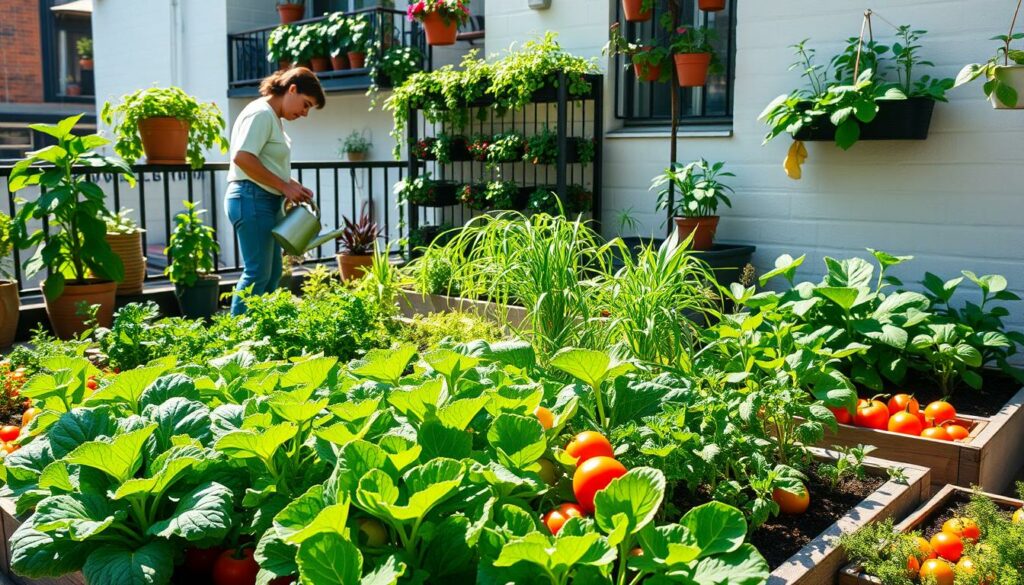
Access to fresh, nutritious produce is a main benefit of small space vegetable gardens. Homegrown herbs and greens lower grocery bills and improve food security for many families.
Smaller plots offer better pest and disease control. Gardeners can customize soil and fertilizer in containers to meet plant needs.
Daily garden care reduces stress and improves mental health. Urban gardening cuts food miles and adds pollinator-friendly plants in cities.
Apartment gardening and balcony setups brighten built environments. Shared plots build community and can grow into neighborhood gardens.
Common Challenges Faced in Small Spaces
Light is often scarce on balconies or between tall buildings. Reduced sunlight limits the plant choices and their yields.
Space limits root depth, so gardeners pick compact plant types. Containers dry out faster, meaning watering must be more frequent.
Limited soil volume causes faster nutrient loss. Microclimate problems like wind tunnels or heat from walls stress plants.
There are also rules from buildings, HOAs, and rooftop weight limits. Permits may be needed for large raised beds, which can delay or stop projects.
Solutions include vertical gardening, moisture-retentive soil, and self-watering containers. Drip systems and succession planting help keep harvests steady.
Good small garden design uses these ideas to keep plants healthy in limited spaces.
Choosing the Right Vegetables for Small Spaces
Picking vegetables for a balcony garden starts with setting realistic goals. Small spaces favor plants that stay compact and grow fast. Choose vegetables that produce well per square foot.
Gardeners should pick shallow-rooted crops and disease-resistant types. It is best to select plants suited for containers or trellises.
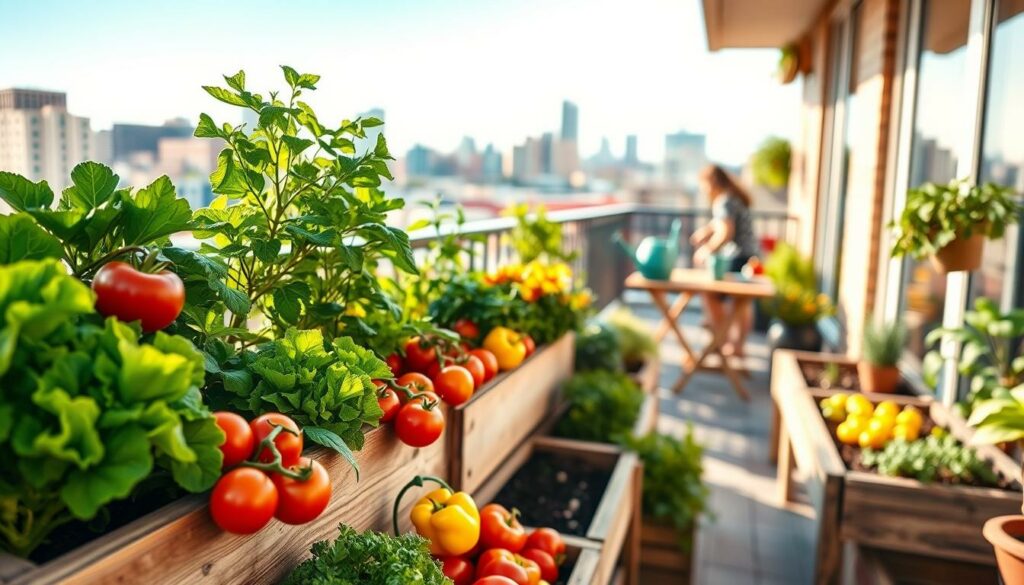
Seedlings and transplants affect the timing and yield of your garden. Tomatoes and peppers do best with an early indoor start. This extends their growing season.
Herbs, lettuces, and many salad greens suit transplants for quick harvest. This method helps apartment gardening succeed without extra fuss.
Best Vegetables for Container Growth
Pick varieties bred for pots and patios. Compact cultivars save space while giving steady harvests. Examples that work well in container gardens include:
- Cherry or patio tomatoes — Tiny Tim, Patio Princess
- Dwarf peppers — snack-sized bells and jalapeños
- Leaf lettuces and mesclun mixes — quick turnover for picking
- Spinach and arugula — fast-growing salad staples
- Swiss chard — compact types that tolerate some shade
- Bush beans — less climbing and great for pots
- Radishes and baby carrots — short-root types like Paris Market
- Beets — small-root cultivars for shallow containers
- Herbs — basil, parsley, cilantro add flavor and deter pests
Plant spacing depends on container size. A 10-12 inch pot fits one tomato or two pepper plants. Lettuce and herbs grow well closer together.
Radishes and baby carrots thrive in wide but shallow troughs.
Optimizing Vertical Space with Climbing Plants
Vertical gardening turns a small area into a productive wall. Vining crops yield well when trained on supports. Examples include pole beans, peas, cucumbers, and indeterminate tomatoes.
Use strong trellises, A-frames, bamboo poles, or coated steel frames. UV-stable polypropylene netting also lasts a long time. Cedar is good for freestanding supports since it resists rot.
Wall planters and pocket planters use balcony and apartment walls well. Training and pruning improve light and airflow.
Tie young vines loosely to guide their growth. Prune indeterminate tomatoes to one main stem to save space and help ripen fruit. Plant low crops under taller vines to shade roots and use light well.
| Vegetable | Recommended Varieties | Container Size | Support Needed | Best Use |
|---|---|---|---|---|
| Tomato | Tiny Tim, Patio Princess | 10–15 gallon | Cage or trellis | Fresh salads, sauces |
| Pepper | Mini bells, Jalapeño | 5–10 gallon | Minimal | Containers, balcony vegetable garden |
| Leaf Lettuce | Mesclun mixes | 6–10 inch troughs | None | Continuous harvests |
| Spinach / Arugula | Bloomsdale, Rocket | 6–10 inch pots | None | Salads, quick crops |
| Swiss Chard | Bright Lights (compact) | 8–12 inch pots | None | Cut-and-come-again greens |
| Bush Beans | Provider, Contender | 5 gallon | None | High yield per square foot |
| Radish / Baby Carrot | Paris Market, Thumbelina | 6–8 inch deep | None | Fast harvests for small spaces |
| Cucumber (vining) | Marketmore (vining) | 10+ gallon | Trellis or netting | Vertical gardening on balconies |
| Peas | Green Arrow | 5–10 gallon | Trellis | Spring crops on vertical supports |
| Herbs | Basil, Parsley, Cilantro | 4–8 inch pots | None | Apartment gardening essentials |
Essential Tools and Supplies for Small Gardens
Small vegetable plots and balcony setups need careful tool choices. A compact kit saves time. It also protects limited space.
The right gear makes container gardening efficient. It keeps work clean and productive.
Must-Have Gardening Tools
Keep a short set of hand tools within reach. A lightweight hand trowel and soil scoop speed planting and repotting.
A hand fork loosens compacted mix without disturbing roots. Fiskars bypass pruners offer clean cuts for harvesting and trimming.
A watering can with a long spout helps reach deep containers and hanging planters. Gardena or Dramm watering tools work well for precise pour control.
A moisture meter prevents overwatering in containers. A small rake, durable gloves, and a folding potting bench or mat protect balcony surfaces. These make potting less messy.
For confined spots, add compact aids. Small trellis panels, hanging planters, fabric grow bags, stackable planters, and self-watering containers help maximize space.
A compact compost bin or Bokashi kit keeps kitchen scraps ready for soil amendment. These micro gardening supplies boost yield without taking much room.
Soil and Fertilizer Recommendations
Choose high-quality potting mixes made for containers, not garden soil. Look for peat moss or coconut coir for water retention. Perlite or vermiculite helps drainage.
Worm castings add slow-release nutrients. FoxFarm blends suit specialty needs. Espoma and Miracle-Gro Performance Organics provide reliable options for general use.
Use a balanced, water-soluble feed for routine feeding. A 10-10-10 formula supports steady growth in small beds and containers. Organic choices include fish emulsion, compost tea, or granular feeds from Espoma.
At planting, apply a higher-phosphorus mix for tomatoes and other fruiting crops. Switch to potassium-rich feeds during fruit set to boost production.
Refresh container soil yearly with a top-dressing of compost. Replace potting mix every one to three years for long-term containers.
When refreshing, mix in compost and a slow-release organic amendment. This restores soil structure and nutrients.
Store tools dry and clean pots between seasons to reduce rust and disease. Label containers to track varieties and care.
Regular upkeep lengthens tool life and keeps plants healthy.
| Item | Purpose | Recommended Brands |
|---|---|---|
| Lightweight Hand Trowel | Planting, transplanting in containers | Fiskars, Corona |
| Hand Fork | Loosening soil without root damage | DeWit, Fiskars |
| Bypass Pruners | Pruning, harvesting clean cuts | Fiskars |
| Soil Scoop & Moisture Meter | Accurate repotting and watering decisions | Hourly Products, Luster Leaf |
| Watering Can (long spout) | Targeted watering for hanging and deep pots | Gardena, Dramm |
| Self-Watering Containers & Fabric Bags | Water retention and root health in tight spaces | Bloem, Smart Pots |
| Compact Compost Bin / Bokashi Kit | On-site organic waste recycling for soil amendment | Vita, NatureMill |
| Fertilizers | Routine feeding and crop-specific boosts | Espoma, Miracle-Gro Performance Organics, fish emulsion |
Planning Your Small Vegetable Garden Layout
The first step in any small garden design is a clear, simple plan. You should assess available space and measure hours of sun. Note wind exposure and check weight limits for balconies or roofs.
Maps help with planning. Sketch access routes for watering and harvesting. Mark outlets and water sources clearly.
Place heavier items where floors can bear weight. Design your layout with maintenance in mind. This way daily tasks stay quick and pleasant.
Importance of Garden Design
A thoughtful layout saves time and boosts yields. Group plants by water and light needs to cut down on fuss. Paths and clear sightlines make harvesting easier.
Raised planters at waist height reduce bending strain. Consider aesthetics as part of function. Simple color palettes, uniform containers, and tidy edges keep the garden feeling like living space.
Ergonomics matters for garden care. Rolling plant caddies and waist-high beds make care manageable for everyone.
Using Raised Beds vs. Containers
Raised beds vs. containers is a common choice for limited space gardening. Each has strong points. Raised beds offer deeper soil, better root growth, and easier amendment.
They hold moisture well and support larger plants. Raised beds take up permanent space and may cost more initially. For small areas, shallow raised beds of 8–12 inches reduce weight and fit compact footprints.
Containers win for mobility and flexibility. They work well on balconies and patios. Containers let gardeners control soil and drainage precisely.
Fabric grow bags, ceramic pots with drainage, and self-watering containers suit many crops. Containers dry faster and limit root volume. They need more frequent watering and feeding.
Using lightweight pots and grouping containers creates microclimates. This helps reduce water loss effectively.
Hybrid setups combine the best elements. Shallow raised beds host grouped plantings. Stackable planters and mobile pots handle herbs and quick-turn greens.
This blend supports crop rotation and easy rearrangement. An accessible layout pairs plant placement with care routines. Place thirsty plants together.
Keep sun-loving crops where they get most light. Set shade-tolerant herbs in lower-sun corners. Use rolling caddies for heavy pots to protect decking and ease repositioning.
| Feature | Raised Beds | Containers |
|---|---|---|
| Soil Depth | Deeper; supports larger roots and vegetables | Shallower; best for compact crops and herbs |
| Mobility | Fixed or limited; not easy to move | High; can relocate for light or weather |
| Water Retention | Better; holds moisture longer | Dries faster; may need self-watering solutions |
| Installation Cost | Higher initial cost for structure and soil | Lower; can start with basic pots |
| Weight | Heavier; requires sturdy support on balconies | Variable; choose lightweight materials when needed |
| Best Use | Vegetables needing root space and stable beds | Mobile crops, patio salads, and balcony vegetable garden layout |
Maximizing Sunlight and Water Access
Small gardens and balconies need smart planning to give plants enough light and water. This section shows simple steps to map sun exposure and boost light where needed.
It also helps you pick reliable watering options for tight spaces.
Strategies for Optimal Sun Exposure
Start by tracking sunlight with a smartphone app or a simple sun chart. Record light at different times to determine full sun (6+ hours), partial sun (3–6 hours), and shade.
Place tomatoes, peppers, and cucumbers in the brightest spots. Put lettuce, spinach, and herbs where they get morning light or filtered shade.
Use vertical gardening to stack plants so sun-loving crops sit above shade-tolerant ones.
Use light-colored walls or reflective panels to bounce light into darker corners. Move containers seasonally to follow the sun’s angle.
Avoid placing pots where building shadows fall for long stretches each day.
Watering Techniques for Small Gardens
Containers dry faster than garden beds. In hot months, daily watering may be needed. Check moisture with a finger test or a meter to avoid overwatering.
Hand-watering with a long spout lets you soak roots directly. For consistent moisture, try low-flow drip systems like Gilmour or Rain Bird micro drip kits.
Self-watering pots reduce watering frequency and work well for apartment gardening.
Mulch containers and raised beds with straw or shredded bark to cut evaporation. Use pea gravel in saucers where rules require dry decks.
Always ensure good drainage holes to prevent root rot. Place trays to protect balcony surfaces.
Use room-temperature water to avoid shocking roots. Collect rainwater where allowed to reduce tap-water use.
Watch local runoff rules and adjust drainage to follow regulations in shared spaces.
Soil Preparation Techniques
Healthy plants start with soil that drains well, feeds roots, and allows air to pass easily. For a small space vegetable garden, test and fix soil problems before planting. Making small changes now helps avoid weak plant growth later.
Testing and Amending Soil
Home test kits like Rapitest quickly measure pH and basic nutrients. County extension offices offer lab-quality testing for a fee through the USDA Cooperative Extension. Most vegetables grow best with a soil pH between 6.0 and 7.0.
If the soil is too acidic, use agricultural lime to raise the pH. Elemental sulfur lowers pH but takes weeks to work. Test results help make precise changes and avoid guesswork.
Add compost, well-rotted manure, or coconut coir to improve soil texture and fertility. Heavy clay soils benefit from perlite or coarse sand to improve drainage. To meet nutrient needs, apply slow-release organic fertilizers or specific amendments like bone meal for phosphorus and kelp meal for trace minerals.
When preparing soil for containers, remember mixes behave differently than garden beds. Use soilless potting mixes to avoid soil compaction and pests in containers.
Composting Basics for Beginners
Choose a composting method that fits your space. Countertop Bokashi bins use fermentation and work indoors. Worm composting, called vermiculture, uses worm bins and fits well on balconies. Small tumblers fit patios and speed up composting.
Acceptable materials include vegetable scraps, coffee grounds, eggshells, and shredded paper. Avoid adding meat, dairy, oily foods, or pet waste to keep pests and smells away. Finished compost should be dark, crumbly, and ready to use.
Use finished compost as a top dressing or mix 10–30% into potting blends. Do not add fresh, uncomposted manure to pots; it can harm roots. Always let compost cure fully before using it on seedlings.
| Task | Recommended Product or Method | Why It Helps |
|---|---|---|
| pH Testing | Rapitest home kit or county extension lab | Accurate pH guides lime or sulfur application for better nutrient uptake |
| Soil Structure | Compost, coconut coir, perlite | Improves water retention, aeration, and drainage in small garden soil amendment |
| Drainage in Containers | Soilless potting mix or DIY mix (40% coir, 30% compost, 20% perlite, 10% vermiculite) | Prevents compaction and reduces risk of soil-borne pests in testing soil containers |
| Nutrient Boost | Bone meal, kelp meal, slow-release organic fertilizer | Targets phosphorus and trace minerals without overfertilizing |
| Compost Method for Small Spaces | Bokashi, worm bin, small tumbler | Allows households to produce compost with limited outdoor space while learning composting basics |
| Using Finished Compost | Top-dress or mix 10–30% into potting mix | Feeds plants gently and improves potting media for a small space vegetable garden |
Local extension services offer advice and can recommend labs or workshops. The EPA’s composting guidelines and Cornell Waste Management Institute provide trusted, research-based information on vermicomposting and safe practices.
Seasonal Planting Tips
Seasonal timing makes the difference between a few pots of greens and a steady kitchen supply. Small-space growers should learn when cool-season and warm-season crops thrive.
Knowing local dates keeps seedlings safe and yields high.
Cool-season crops such as leafy greens, peas, and radishes do best in early spring and again in fall.
Warm-season crops like tomatoes, peppers, and cucumbers wait until after the last frost. Gardeners can find last frost dates through NOAA forecasts or their county extension office.
They use those dates to time sowing and transplanting.
Starting seeds indoors gives a head start on long-season varieties. For tomatoes and peppers, begin seeds 6–8 weeks before the last frost.
Fast growers such as lettuce and radishes can be direct-sown in succession throughout the season.
Understanding Planting Seasons
Planting seasons vary across the U.S., from short northern summers to long southern growing windows.
Urban gardeners should map local frost dates, typical heat waves, and rain patterns. This knowledge guides planting season choices.
Use seed packet days-to-maturity and local climate data to plot sowing dates. A simple calendar or planting app helps track when to start seeds indoors, harden off transplants, and direct sow outside.
Succession Planting for Continuous Harvest
Succession planting means staggered sowing or transplanting to keep a constant harvest.
For steady salad greens, sow a small batch of lettuce every 2–3 weeks. Replace early spring radishes with summer beans when soil warms up.
Intercropping pairs quick-maturing crops with slower ones. Radishes sown with carrots give an early yield and free space soon.
Relay cropping means replanting beds immediately after harvest to maximize limited space.
Season extension tools prolong productive months. Row covers, cold frames, cloches, and small balcony greenhouses protect plants from cold and wind.
In winter, container strategies work well. Plant cold-hardy greens in sheltered nooks or use grow lights indoors for herbs.
A simple calendar keeps succession planting efficient. Track seed packet maturity, plan staggered sowing, and note harvest windows.
Many gardeners use printable charts or smartphone apps to manage planting seasons with ease.
| Task | Timing | Example Crops | Space-Saving Tip |
|---|---|---|---|
| Start seeds indoors | 6–8 weeks before last frost | Tomatoes, peppers | Use cell trays on windowsills or a compact grow light |
| Direct sow fast growers | As soon as soil can be worked in spring | Lettuce, radishes | Sow small patches every 2–3 weeks for continuous harvest |
| Succession planting | Throughout growing season | Leafy greens, beans, cucumbers | Stagger plantings and replace finished crops quickly |
| Season extension | Early spring through late fall | Cold-hardy greens, early tomatoes | Use cloches, row covers, or mini-greenhouses on balconies |
| Winter container strategy | Late fall to winter | Kale, arugula, parsley | Choose sheltered spots and add mulch or grow lights |
Pest Management in Limited Space
Small gardens need a clear plan to control pests. In balconies, patios, or tiny yards, gardeners must spot problems early. Regular checks catch aphids, whiteflies, slugs, snails, beetles, mites, and caterpillars before damage spreads.
Look for signs like yellow leaves, holes, sticky residue called honeydew, and wilting. These warn of pest problems.
Organic methods work well in tight spaces where people and pets are nearby. Handpicking caterpillars and beetles quickly removes big threats.
Copper tape and slug traps protect roots and container edges from slugs and snails. Lightweight row covers block many flying pests without crowding plants.
Beneficial insects provide targeted control. Ladybugs and lacewings eat aphids and whiteflies. Entomopathogenic nematodes fight soil pests like grubs.
Gardeners can buy these from trusted suppliers like Arbico Organics or Gardens Alive to ensure quality and safe handling.
Homemade sprays work well if used correctly. Insecticidal soap controls soft-bodied insects. Horticultural oil suffocates scale and mites. Neem oil targets many pests and some fungus problems.
Always follow label directions. Avoid spraying in hot weather. Don’t spray stressed plants to prevent damage.
Preventive steps reduce the need for treatments later. Rotate crops in containers when possible. Sanitize pots, tools, and trellises between seasons.
Remove plant debris quickly to deny hiding spots for insects and fungal spores. Avoid overhead watering to keep leaves dry and reduce disease risk.
Healthy plants resist pests better than weak ones. Use compost and balanced feed to keep soil fertile. Water deeply but less often to grow strong roots.
Use mulch to keep soil moist and at steady temperatures in small pots and raised beds.
Companion planting helps deter pests and attract helpful insects. Marigolds, basil, and nasturtiums offer some protection and draw beneficial predators.
See companion planting as one tool among many. It is not a sure solution by itself.
Safe pesticide use matters in shared living areas. Choose EPA-registered garden products. Follow instructions carefully.
Check rules in apartments or community gardens before using treatments to avoid conflicts and keep neighbors safe.
The table below compares organic methods that work well in tight spaces and balcony gardens. It shows which pests each method targets and the best times to use them.
| Method | Best For | When to Use | Notes |
|---|---|---|---|
| Handpicking | Large caterpillars, beetles | Early morning or evening | Immediate impact; safe for small spaces |
| Copper tape / slug traps | Slugs, snails | High humidity or after rain | Simple barrier; works well on container rims |
| Row covers | Flea beetles, cabbage moths, whiteflies | During vulnerable growth stages | Blocks pests without chemicals; monitor pollination needs |
| Sticky traps | Flying adults: whiteflies, fungus gnats | Deploy at first sign of adults | Low-cost monitoring and reduction |
| Beneficial insects | Aphids, thrips, whiteflies | When pest populations are rising | Source from reputable suppliers; release in evening |
| Entomopathogenic nematodes | Soil pests and grubs | Apply to moist soil | Biological and safe for people and pets |
| Insecticidal soap / horticultural oil | Soft-bodied insects, scale, mites | Cool part of day; repeat as labeled | Use label rates; test on a leaf first |
| Neem oil | Many insects and some fungal issues | At first sign of infestation | Broad-spectrum; avoid during heat and on stressed plants |
| Crop rotation & sanitation | Reduces soil-borne pests and diseases | Seasonal; between plantings | Important cultural preventive measure |
| Companion planting | Deterring pests, attracting beneficials | During planting and growth | Supplementary tactic; limited alone |
Harvesting and Storing Your Vegetables
Good timing and gentle handling make all the difference in a bountiful balcony vegetable harvest. For small space garden beds, follow simple rules: pick leafy greens by removing outer leaves when young for baby greens. You can also use a cut-and-come-again approach every few weeks.
Use clean shears for herbs and greens to avoid tearing. Snip herbs in the morning after dew dries for the best flavor.
Tomatoes should be harvested when fully colored and slightly soft. Cherry tomatoes ripen earlier and can be picked continuously. Larger slicing tomatoes need full color and a gentle twist to release.
Peppers may be picked green or left to reach full color depending on how sweet you want them. Cucumbers are best when small and firm, usually 6–8 inches for slicing types, to keep their crunch.
Radishes mature in about 3–4 weeks. Carrots usually take 60–75 days or until roots reach the diameter shown on the seed packet. Avoid yanking roots from shallow containers to keep nearby plants safe.
Post-harvest handling helps keep produce quality. Rinse vegetables promptly and remove any damaged parts. Cool vegetables quickly after harvesting.
Leafy greens should be kept in the refrigerator crisper. Wrap them in damp paper towels inside sealed containers. Tomatoes stay at room temperature away from direct sunlight until fully ripe.
Refrigerate ripe tomatoes only for short-term storage if needed. Root vegetables do well in cool, dark places or the fridge depending on the type.
For extra harvests from apartment gardening or community swaps, preserve surplus by blanching and freezing vegetables, pickling cucumbers, or dehydrating herbs.
Harvest often to increase yield and reduce waste. Keep a simple harvest log to improve timing and variety choices.
Share excess vegetables with neighbors when there is too much to store. These small steps extend freshness and make the most of every balcony garden harvest.