
Nearly 60% of home gardeners lose plants due to improper watering. This is more than losses from pests or disease. This fact highlights how important proper watering is when growing food at home.
This short guide explains how to water edible plants to keep them healthy and productive. Edible plants include annual vegetables like tomatoes, peppers, lettuce, and beans. They also include perennial herbs such as rosemary and thyme, plus small fruiting plants like strawberries and blueberries.
The goal is to reduce plant stress and boost yield. It also aims to conserve water by using proven watering tips for healthy plants.
Readers will learn core ideas—soil moisture, root depth, and watering frequency. It covers hand watering, soaker hoses, drip irrigation, and sprinklers. The guide also explains mulch use, water quality, seasonal adjustments, tools, and scheduling.
These tips help gardeners create a clear and efficient plan for beds and containers. Expected results include a clearer watering schedule with less crop loss from under- or overwatering. Readers will also see improved crop quality and better water use in the garden.
This overview suits beginners and intermediate gardeners in the United States. It offers a foundation for confident and effective care of edible plants.
Key Takeaways
- Proper watering techniques are the top factor in home garden success.
- Edible plants include annual vegetables, perennial herbs, and small fruiting plants.
- Understanding soil moisture and root depth guides watering frequency.
- Choose methods—hand watering, soaker hoses, drip systems—based on bed type and plants.
- Mulch, water quality, and seasonal adjustments improve water efficiency.
- Following simple watering tips for healthy plants yields better crops and less waste.
Understanding the Watering Needs of Vegetable Gardens
Knowing how to water a vegetable garden starts with watching the site and the plants closely. Water needs change with temperature, humidity, wind, and sun. Soil texture, organic matter, and drainage affect how long moisture stays available.
Gardeners should learn about evapotranspiration, which raises plant water use on hot, dry, windy days. Adjust care to match these factors.
Factors Influencing Water Requirements
Temperature causes moisture loss from leaves and soil daily. Humid air slows evaporation, while wind speeds it up. South- and west-facing beds dry faster than shaded areas.
Raised beds warm and dry faster than in-ground plots. Containers need water more often because they hold less soil.
Soil texture matters a lot. Sandy soils drain quickly and need watering more often. Clay holds water but can stay soggy without good drainage.
Adding compost boosts organic matter and helps soil keep moisture longer. Gardeners should check moisture with their fingers or a probe. Don’t rely only on a set schedule.
Differences Between Plants
Leafy greens like lettuce and spinach have shallow roots. They need frequent, light watering to keep roots near the surface active.
Fruiting crops such as tomatoes, peppers, and squash have deeper roots. They respond best to less frequent, deep watering that encourages root growth.
Root vegetables like carrots and beets need steady moisture for even growth and to avoid cracking. Mediterranean herbs like rosemary, thyme, and sage tolerate drier conditions.
These herbs handle longer gaps between watering. Knowing each plant’s root depth and growth helps you water better.
Seasonal Considerations
Spring rains often cut down the need for extra watering. As summer heat grows, evapotranspiration rises and watering frequency should increase. Cooler fall air lowers water demand, so less irrigation is needed.
Droughts and heatwaves need quick changes and closer moisture checks. Many gardens use about 1–1.5 inches of water per week as a rough guide.
This amount can change with soil type, plant mix, and weather. Combine this rule with soil moisture checks to build a reliable watering schedule.
For hands-on tips, check soil 2–4 inches down and watch plants for wilting. Track recent rainfall to help decide watering frequency.
These simple steps keep plants productive while saving water.
Best Practices for Watering Vegetable Gardens
Water plays a central role in plant health. This guide covers deep versus shallow watering, the best timing, and why consistency matters.
These best practices help gardeners choose the right watering techniques. They also help keep a vegetable garden productive.
Deep versus shallow watering
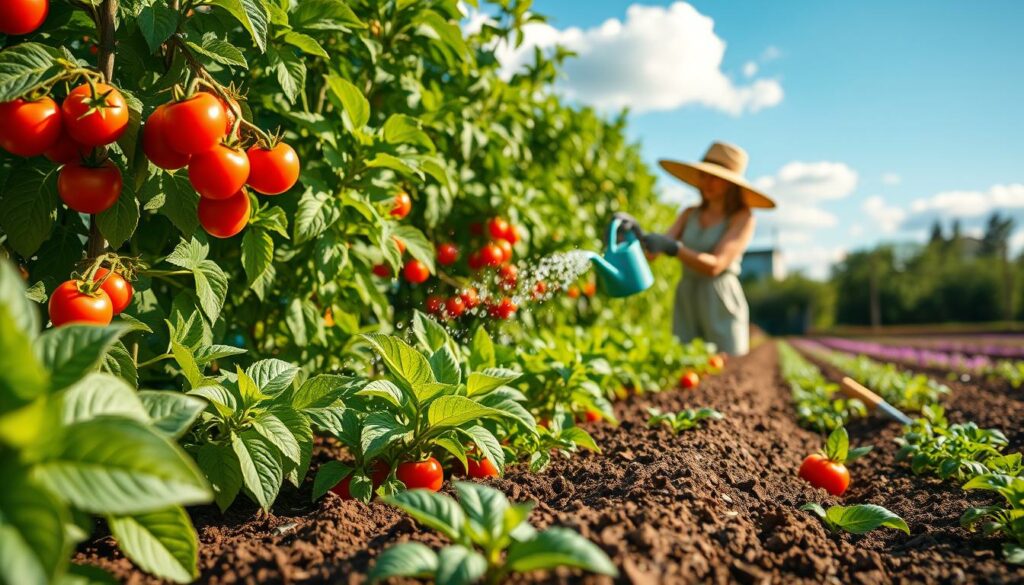
Deep watering involves applying water slowly. This wets the soil down to the active root zone, usually 6–12 inches deep for many vegetables.
Deep watering encourages roots to grow downward. Strong roots help plants resist drought and absorb nutrients steadily.
Shallow watering wets only the soil surface. It keeps roots near the top, making plants more vulnerable to dry spells and some diseases.
Use shallow watering mainly for seedlings and very shallow-rooted crops.
To deliver deep watering, use drip systems, soaker hoses, or low-flow hand-watering. Run these systems for 20–60 minutes depending on soil and flow.
Use a soil probe, screwdriver, or similar tool to check how far the moisture has reached in the soil.
Timing matters: when to water
Morning is the best time to water. Watering before sunrise or by mid-morning reduces evaporation and helps leaves dry fast.
Dry leaves lower the chance of fungal diseases. Avoid watering in the evening because leaves can stay wet all night, inviting disease.
Watering early also helps save water in a vegetable garden. If the weather is hot and windy, water more often but always deeply.
Importance of consistency
Consistent moisture helps reduce plant stress. Irregular watering can cause problems like blossom end rot in tomatoes and cracking in fruits.
Keeping an even watering schedule helps fruits and roots grow evenly.
Seedlings may need daily light watering. Established plants often need water once to three times a week, depending on heat, wind, and soil.
Adjust watering as plants grow and weather changes.
Good watering tips include checking soil moisture with a probe, mulching around roots, and grouping plants with similar water needs together.
These steps support proper watering techniques and help gardeners water their vegetable gardens confidently.
Choosing the Right Watering Method
Picking the best way to water a vegetable plot depends on garden size, budget, water access, and the gardener’s schedule.
This section outlines practical options with clear pros and cons.
It also includes simple maintenance steps for irrigation tips and proper watering techniques.
Hand Watering Techniques
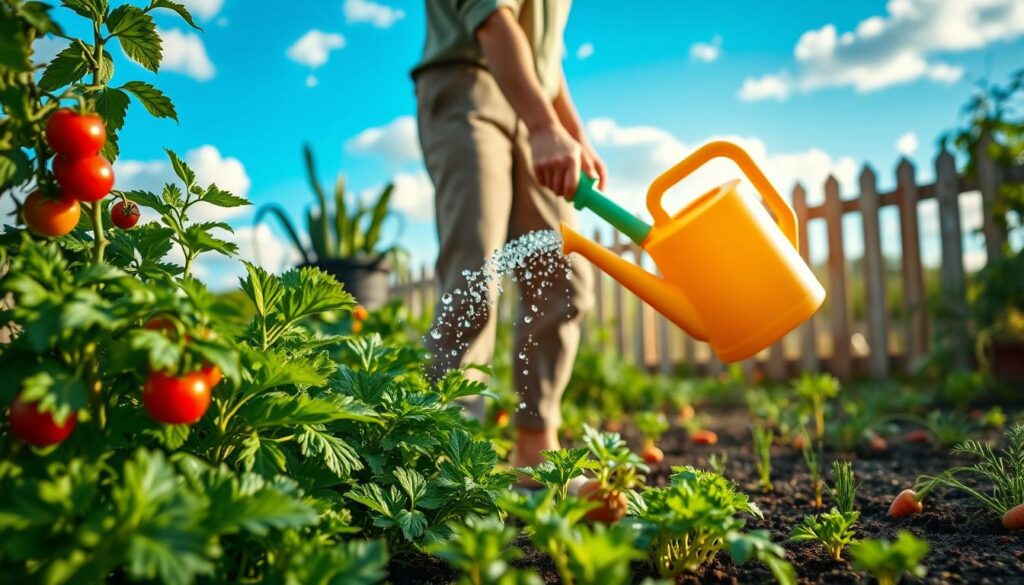
Hand watering gives direct control over moisture. Use a watering can or hose with a soft spray nozzle. Aim water at the base of each plant.
Water slowly so moisture soaks into the roots instead of running off. Keep foliage dry when possible to reduce disease.
For containers, water until excess drains from the bottom. Wait between watering sessions. Hand watering suits small beds and sensitive crops needing care.
Soaker Hoses vs. Drip Irrigation
Soaker hoses release water along a porous tube. They work well for long rows and raised beds. They are simple to install.
Covering hoses with mulch reduces evaporation and keeps roots moist. Drip irrigation uses precise emitters that often connect to timers.
Drip systems lower evaporation, save water, and give consistent root-zone watering. They fit irregular beds and scale to large plots.
Both save water compared to overhead sprinkling. Install emitters with filters if using rain or well water. Flush lines and winterize systems to prevent damage.
Benefits of Sprinklers
Sprinklers cover large areas quickly. They help when establishing lawns or broad plantings.
For vegetable beds, overhead watering wets foliage and increases disease risk. Use sprinklers sparingly. Run them early so leaves dry before nightfall.
Sprinklers fit few vegetable situations for long-term irrigation. They are useful for quick coverage, soil settling, or when water supply and labor are limited.
Choose a method matching garden size and desired watering schedule. Small plots favor hand watering or soaker hoses.
Medium to large gardens benefit from drip irrigation with timers. This supports best watering practices and proper techniques.
Soil Types and Their Impact on Watering
Understanding soil texture helps gardeners set a smart watering schedule. Soil type controls soil moisture and affects how often to water vegetables.
It also shapes strategies for maximizing water efficiency in vegetable garden beds.
Sandy Soils and Drainage
Sandy soils drain quickly and hold little water. Roots can dry out fast, so watering sandy loam needs more frequent, smaller amounts.
To boost water-holding, add compost, aged manure, or biochar. Mulch reduces evaporation and keeps soil moist between watering cycles.
Clay Soils Retention Challenges
Clay soils hold water and drain slowly. Poor infiltration causes runoff and waterlogging near roots. Water applied too fast causes puddles and waste.
Water slowly and deeply to let water reach roots where oxygen is available. Adding compost and gypsum improves soil structure and reduces compaction.
Loamy Soils for Balanced Moisture
Loam balances drainage and water retention well. It suits standard deep-watering and supports healthy root growth with steady soil moisture.
Adding organic matter keeps loam stable. This helps choose how often to water vegetables and improves water efficiency in gardens.
Simple Tests for Texture and Drainage
Try a jar test to estimate texture: shake soil in water, let it settle, then check sand, silt, and clay layers.
Do a percolation test for infiltration: dig a hole, fill with water, and time how fast water drops. Fast drop means sandy soil; slow means clay.
Practical Impact on Irrigation Scheduling
Sandy beds need shorter gaps between waterings. Clay soils need longer soaks and fewer waterings to avoid overwatering. Loam fits a middle-ground schedule.
Adjust emitters or hose timing for each soil. Small, frequent cycles work for sandy soil. Long, slow soaks suit clay, improving moisture and water use.
Amendments That Help Every Soil
Compost, aged manure, and biochar boost water and nutrient holding in all soils. Organic matter improves tilth, cuts runoff, and supports moisture-holding microbes.
Mix amendments into the top foot of soil and keep a 2–3 inch mulch layer. This reduces watering needs and helps decide how often to water vegetables.
Signs Your Vegetable Garden Needs Water
Gardeners learn to read subtle signals from plants and soil. Spotting stress early helps decide watering routines. This knowledge shows how often to water vegetables for each crop.
The following cues and quick tests guide decisions about watering edible plants. These tips remove guesswork from garden care.
Looking for Visual Cues
Leaves that wilt at midday but recover by evening often signal heat stress, not drought. Prolonged wilting that does not bounce back means the plant needs water.
Yellowing or browning at leaf edges can show under- or overwatering. Curled leaves and slow growth first appear in shallow-rooted crops like lettuce and herbs.
Flower drop and poor fruit set point to irregular moisture. Tomatoes and peppers may develop blossom end rot from inconsistent watering.
Soil Testing Techniques
Check moisture 2–6 inches down with a trowel, soil probe, or an inexpensive moisture meter. Push a probe into the root zone to feel dampness near roots.
The squeeze test gives a fast read: crumbly soil is dry. Loose soil forming a ball that falls apart is ideal. Muddy soil means waterlogged.
Tensiometers offer more precise readings for serious gardeners who want exact information about soil moisture levels.
Understanding Plant Responses
Container plants dry faster than in-ground beds because they become root-bound. Adjust watering frequency and volume when pots heat up in the sun.
Shallow-rooted vegetables show stress sooner than deep-rooted crops. Always check roots and drainage before changing feeding or repotting plants.
Troubleshooting starts with testing soil moisture. Then inspect drainage, root health, and irrigation equipment. Fix irrigation issues first, then change watering or amend soil.
The Role of Mulch in Water Retention
Mulch acts as a thin shield over soil. It reduces evaporation, keeps soil temperature steady and suppresses weeds. Mulch also helps prevent erosion. Gardeners find mulch an easy way to save water in vegetable beds.
Choosing organic or inorganic mulch affects soil health and moisture. Organic mulch like straw and wood chips breaks down and adds organic matter. That helps water retention and improves soil fertility.
Inorganic materials like gravel and black plastic cut evaporation but don’t enrich soil. These may change soil temperature in some conditions.
For vegetables, apply 2–4 inches of organic mulch. Keep mulch 1–2 inches from plant stems to avoid collar rot. Thicker layers help in hot or dry climates but avoid smothering seedlings.
Apply mulch after soil warms in spring. Refresh mulch in late summer to support late-season moisture.
Mulch benefits go beyond watering. It boosts microbial activity and lowers weed growth. Mulch also insulates roots from temperature changes and reduces soil splash that can spread diseases when watering overhead.
Below is a quick comparison to guide choices and best practices for watering when using mulch.
| Mulch Type | Water Retention | Soil Health Impact | Best Use |
|---|---|---|---|
| Straw | High; light and airy, holds moisture | Improves organic matter as it decomposes | Tomatoes, squash, root crops |
| Wood chips | Moderate to high; slows evaporation | Adds carbon; breaks down slowly | Perennial beds, pathways near raised beds |
| Shredded leaves | High; good moisture retention | Boosts soil structure and microbes | Light feeders, beds needing organic matter |
| Compost | Moderate; holds water and nutrients | Directly improves fertility and structure | Top-dressing, seedbed prep |
| Gravel | Low; reduces surface evaporation only | No organic benefit; may increase heat | Ornamental, drainage-focused areas |
| Black plastic | Very low evaporation; warms soil | No organic improvement; can alter microclimate | Warm-season crops, weed suppression |
| Landscape fabric | Low to moderate; blocks weeds and some evaporation | No soil enrichment; roots may grow through | Paths, long-term perennial borders |
Use mulch along with smart irrigation for healthy plants. Mulch supports deep, infrequent watering and helps you get the most from watering each time.
Avoiding Overwatering: A Common Mistake
Too much water can harm plants as much as too little water. Gardeners often focus on drought and forget rules to avoid overwatering. Checking the soil and plants helps prevent wasted water and sick plants.
Identifying overwatered plants
Yellow, soft leaves are early signs of overwatering. Plants may wilt even if the soil is wet. Seedlings can suffer damping-off, and mature crops may grow poorly.
Roots give clearer signals: a bad smell or brown, mushy tissue shows root rot. Fungal outbreaks and poor fruit set often follow these signs.
Adjusting watering techniques
Reduce how often irrigation runs and water deeply but less often. This helps roots grow strong. Use a probe or your hand to check soil moisture before watering.
Improve drainage by adding compost or builder’s sand to heavy soil. Raised beds and moving containers to drier spots help water runoff.
Calibrate irrigation systems to deliver set amounts with timed drip or soaker hoses. A good watering schedule keeps water use steady and prevents over-saturation.
Consequences of overwatering
Too much moisture reduces oxygen in roots and causes decay. Nutrients like nitrogen wash away, which weakens plant growth. Diseases from Pythium and Phytophthora increase with soggy soil.
Poor fruit set and wasted water often result from overwatering. This also raises overall costs for plant health and resource use.
Fix overwatering by pausing irrigation until the top soil dries a few inches. Check container roots and repot with fresh, well-draining soil when needed. For beds, add organic matter and adjust irrigation timers.
| Problem | Signs | Action | Result |
|---|---|---|---|
| Surface wetness with wilting | Soft yellow leaves, droop despite wet soil | Reduce frequency; check moisture 2–4 inches deep | Plants recover as roots reoxygenate |
| Root rot in containers | Foul smell, brown mushy roots | Repot into well-draining mix; pause watering | Lower disease risk and healthier root growth |
| Poor drainage in beds | Water pooling, slow soil drying | Amend soil with compost; create raised beds | Improved runoff and consistent moisture |
| Irrigation over-application | Repeated soggy cycles, low yield | Calibrate system; use drip or soaker hoses on schedule | Efficient water use and stable yields |
The Importance of Water Quality
Good water can make or break a harvest. Gardeners should check what flows from hoses and barrels. Water quality affects nutrient uptake and root health.
Small changes in water source or treatment often fix big problems.
Tap water and rainwater each have pros and cons. Rainwater is soft and low in salts. This works well for sensitive crops like lettuces and brassicas.
Municipal tap water is treated and usually safe. It can contain chlorine, chloramine, fluoride, or salts that build up in soil over time.
Testing water pH and total dissolved solids gives a clear starting point. Most vegetables prefer slightly acidic to neutral levels between pH 6.0 and 7.0.
High alkalinity in irrigation water can push soil pH upward. This locks out iron and zinc, causing nutrient deficiencies.
When using tap water, gardeners can let it stand for 24 hours if chlorine is the only issue. Carbon filters or activated charcoal remove chlorine taste and many organic compounds.
First-flush diverters on rain barrels keep roof debris out. This improves the safety of captured water for edible crops.
Runoff from creeks, ponds, or agricultural ditches can carry bacteria, heavy metals, or pesticides. Water used on food crops should meet safety guidance from the local county extension office.
Well owners should test periodically for nitrates, coliform bacteria, and metals. This protects both plants and people.
Practical irrigation tips include collecting rainwater with screened barrels and using simple filtration for tap water when needed. Monitor soil and plant response after changes.
Test again if leaves yellow or yields fall. Regular checks help maintain consistent water quality for plants.
| Water Source | Common Issues | Simple Fixes |
|---|---|---|
| Rainwater | Roof debris, variable supply | Screened barrels, first-flush diverters, storage cover |
| Municipal Tap | Chlorine, chloramine, dissolved salts | Let sit 24 hours (chlorine), carbon filter, monitor TDS |
| Well Water | Bacteria, nitrates, metals | Annual testing, disinfection if needed, targeted treatment |
| Surface Runoff | Pathogens, pesticides, heavy metals | Test before use, avoid for edible crops without treatment |
Seasonal Watering Adjustments
Seasonal watering helps keep a vegetable plot productive through changing weather. A good plan helps gardeners manage moisture for seedlings, mature plants, and perennials.
Watering needs change with temperature, rainfall, and plant stages.
Summer strategies for heat
In summer, water more often and deeply to reach roots. Early morning watering reduces evaporation and cuts disease risk.
Mulch with straw or wood chips to keep moisture and cool the soil. Drip irrigation with timers saves water and gives steady moisture.
Water deeply before predicted heatwaves to help plants store extra moisture.
Winter care for dormant plants
Many vegetables go dormant or are removed after frost. Reduce watering to prevent waterlogging.
Check soil drainage around overwintering crops like kale and garlic. Adjust watering to avoid standing water.
Winterize irrigation tools to avoid freeze damage. If rain is low, soak established beds occasionally.
Good drainage is more important than frequent watering in winter.
Spring and fall watering tips
In spring, warm soil needs gentle, frequent watering to help seeds sprout and roots grow. Seedlings need steady moisture until roots take hold.
Delay heavy mulching until soil warms to avoid chilling plants.
In fall, reduce watering as temps drop and crops mature. Give fall-planted greens steady moisture for root growth before cold sets in.
Lower late-season nitrogen to reduce tender new growth that needs more water.
During droughts or water limits, focus on young plants and key crops. Track soil moisture and adjust watering during dry spells.
| Season | Primary Goal | Typical Frequency | Efficiency Tips |
|---|---|---|---|
| Spring | Establish roots for seedlings and transplants | Light, frequent watering until established | Use hand-held nozzle or gentle drip; delay heavy mulch |
| Summer | Maintain soil moisture through heat | Deep, less frequent soaks; increase during heatwaves | Morning watering, drip irrigation with timers, mulch |
| Fall | Support final growth and root establishment for fall plantings | Taper frequency as temperatures fall | Prioritize established crops and cover crops; reduce nitrogen |
| Winter | Prevent waterlogging and protect overwintering crops | Minimal, as-needed watering | Ensure good drainage; winterize systems to avoid freeze damage |
Watering Techniques for Different Growth Stages
Successful vegetable gardening depends on matching water to each growth stage. Seedlings need surface moisture while mature plants benefit from deeper watering.
Gardeners using a watering schedule for vegetable garden should adapt methods as plants grow. This supports root development and improves crop quality.
Seedlings and Young Plants
Seedlings require gentle care to avoid washing away soil or drowning tender roots. Use misting, a small watering can, or micro-sprays.
These methods keep the seed-starting mix moist without becoming saturated. Light, frequent watering stops crusting and supports root growth.
Containers and seed trays dry quickly. Check them daily in warm weather and water until the surface feels evenly moist.
Established Plants and Mature Vegetables
As plants mature, switch to deeper, less frequent watering to encourage roots to grow down. Direct water to the root zone only.
Limit overhead wetting to reduce fungal problems and lower disease risk. Monitor soil moisture and adjust watering based on weather and plant size.
Using slow drips or soaker hoses improves water uptake and strengthens plants significantly. Proper watering techniques make a big difference.
Preparing for Harvest Season
Maintain steady moisture during fruit development to prevent problems like fruit splitting and blossom end rot. Cut back late-season nitrogen carefully.
Avoid sudden droughts or excess watering, as these can harm flavor and reduce storage life. For storage crops, reduce watering before harvest.
This helps skins and tubers toughen. For fruits and tomatoes, consistent watering in weeks before harvest improves size and quality.
Container-grown vegetables need special care. Pots dry faster than garden beds, so check soil daily in heat and water until runoff.
Choose potting mix that balances retention and drainage. Use proper watering techniques to keep containers productive and healthy.
Good irrigation tips include spacing watering events to promote deep roots and using mulch to conserve moisture. Observe plants for stress signals.
These simple steps create a reliable watering plan. They help deliver effective and long-lasting results for vegetable gardens.
Tools and Equipment for Effective Watering
Choosing the right gear makes watering your vegetable garden easier and more reliable. Practical tools range from hand-held cans to smart controllers. The right mix helps gardeners water efficiently and properly in vegetable beds.
Essential Hand Tools
Watering cans with a fine rose are great for seedlings and delicate transplants. A hose with an adjustable nozzle lets you target flow for young plants and containers.
A soil probe or trowel helps check moisture below the surface. A moisture meter gives quick readings to reduce guesswork. A rain gauge tracks natural rainfall so irrigation won’t overlap.
Automation Options for Busy Gardeners
Timers for hoses and drip systems create steady schedules that protect roots. Programmable controllers let users set irrigation zones for raised beds and rows. Soaker hose kits and dripline deliver water directly to roots, cutting evaporation.
Smart controllers from brands like Rachio, Rain Bird, and Hunter adjust watering based on local weather. These devices save water, reduce work, and support good garden watering practices.
Watering Accessories to Consider
Filters and pressure regulators prevent clogging in drip systems. Backflow preventers keep drinking water safe during strong connections. Quick-connect fittings make it easy to move hoses or swap tools.
Soaker hose covers protect lines from sun damage. Rain barrels or cisterns store runoff water for dry spells, helping conserve water in vegetable plots.
Routine maintenance keeps systems running well. Winterize pumps and hoses before cold weather arrives. Check emitters and hoses regularly for leaks or clogs. Flush drip lines often and replace worn nozzles for even watering.
| Item | Main Benefit | Best For |
|---|---|---|
| Watering can with fine rose | Gentle, even spray for seedlings | Seed trays, small containers |
| Hose with adjustable nozzle | Targeted flow control | Row watering, spot treatment |
| Soil probe / trowel | Direct moisture checks below surface | Any bed type |
| Moisture meter | Fast, numerical moisture readings | Precision watering, drought-prone areas |
| Rain gauge | Tracks natural precipitation | All gardens |
| Timers & programmable controllers | Consistent schedules, water savings | Busy gardeners, multi-zone plots |
| Dripline with emitters / soaker hoses | Delivers water at roots, reduces evaporation | Established beds, vegetable rows |
| Smart controllers (Rachio, Rain Bird, Hunter) | Weather-adaptive scheduling | Home orchards, large vegetable gardens |
| Filters & pressure regulators | Protects drip systems from clogging | Hard water or particulate-prone supply |
| Backflow preventer | Protects drinking water | Any potable connection |
| Rain barrels / cisterns | Harvests water for reuse | Water conservation, drought preparedness |
Maintaining an Efficient Watering Schedule
An effective watering schedule starts with clear guidelines and a flexible plan. Begin with about 1–1.5 inches of water per week. Then adjust by plant type, soil texture, and garden microclimates.
Divide beds into zones based on water needs and root depth. Note preferred watering methods like drip, soaker, or hand watering for each zone.
Creating a Watering Calendar
Create a simple weekly calendar. List zones, watering duration, and method for each. Record which vegetables grow in each zone and their water needs.
Use the calendar to decide watering frequency for different plant growth stages. Schedule deeper, less frequent watering for established crops. Give seedlings shorter, gentler sessions.
Adapting to Weather Changes
Stay flexible by using local forecasts, a rain gauge, or evapotranspiration data. Skip or shorten watering after rain. Increase watering during heat waves.
Smart controllers and timers help but avoid strict rules. Always respond to real weather conditions instead of fixed calendar dates.
Monitoring Progress and Adjusting Plans
Keep a brief log of plant health, watering frequency, and issues like wilting or low yield. Check soil moisture and visually inspect plants. Use this to adjust watering times.
Review emitters, mulch depth, and soil health regularly. Update your schedule to follow best watering practices. Local extension offices and USDA guidance provide region-specific tips and drought alerts.
In the end, a good watering schedule changes with the seasons. Observation and simple tools help gardeners boost plant health, increase yields, and save water.