

Nearly 70% of U.S. homeowners say adding greenery improved their home’s look and mood. This shows decorative plants are more than a trend. They shape how people live and feel.
This guide explains how plant decor and styling lift interiors and outdoor spaces. It focuses on simple, practical choices anyone can use to brighten their home.
The guide introduces both indoor and outdoor plants. It also covers planters, soil mixes, and basic potting tools. Readers get clear, helpful steps for choosing plants by light, size, and care needs.
It links current interior design trends and biophilic design to everyday greenery ideas. The piece uses real examples and smart techniques. This helps homeowners style plants well and avoid common mistakes.
Key Takeaways
- Decorative plants are a high-impact, cost-effective way to update a space.
- Plant styling succeeds when light, scale, and maintenance match the plant.
- Both indoor plants and outdoor plants are covered, plus essential accessories.
- Practical tips help beginners choose and care for plants with confidence.
- Eco-friendly choices and proper placement extend plant health and style.
Importance of Decorative Plants in Home Décor
Decorative plants bring texture, color, and life to interiors. They also help tie a room’s style together. Thoughtful plant styling can create focal points or add warmth to any space.
Those planning plant decor will find that small choices shape the look and flow of a home.
Enhancing Aesthetic Appeal
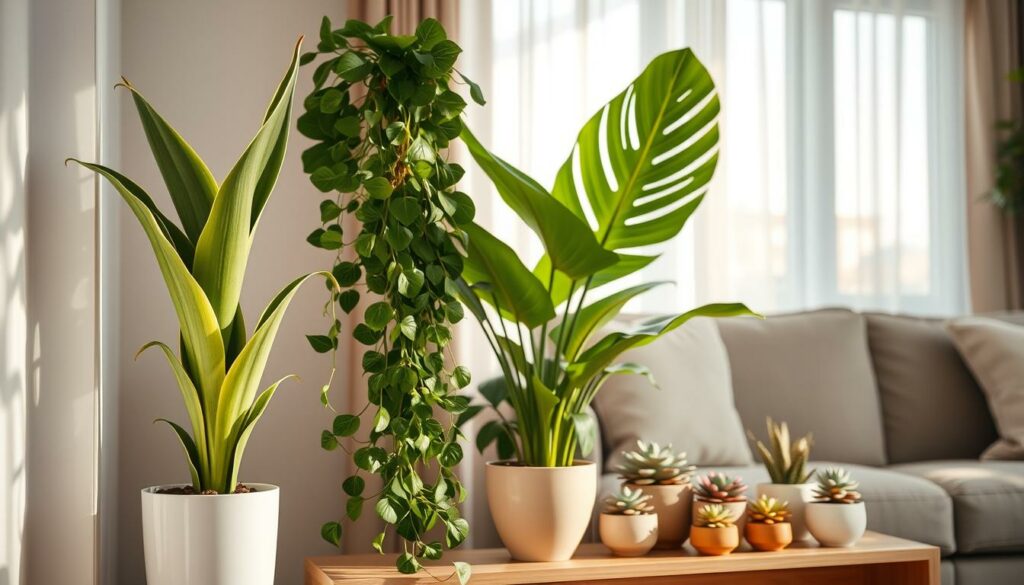
A single fiddle-leaf fig can anchor a living room and add vertical scale. Trailing pothos softens shelves with graceful drape. Grouped succulents create interest for tabletops and windowsills.
Matching plants to furniture and finishes ensures cohesion. Modern interiors benefit from sculptural plants like snake plant. Woven baskets and clay pots suit boho or rustic tones.
Clear plant styling lifts room value and creates a curated, lived-in look.
Improving Indoor Air Quality
Studies show certain indoor plants, like snake plant, spider plant, and pothos, reduce volatile organic compounds. These species help improve air freshness in smaller rooms.
Plants do not replace ventilation or mechanical air purifiers. They serve as part of a layered approach to indoor air health. Hardy varieties reduce maintenance and keep air-help benefits consistent.
Impact on Mood and Well-being
Exposure to greenery helps reduce stress and improve focus. Research links contact with plants to lower cortisol and better concentration for work and study.
Plant decor supports biophilic design by reconnecting occupants with nature. Simple additions of indoor plants boost mood and make spaces feel restorative and inviting.
Popular Types of Decorative Plants
This guide shows some favorite indoor plants that bring style and life to any living space. Each group has unique textures, shapes, and care needs. This makes it easier to pick a plant that suits a room and lifestyle.
Succulents
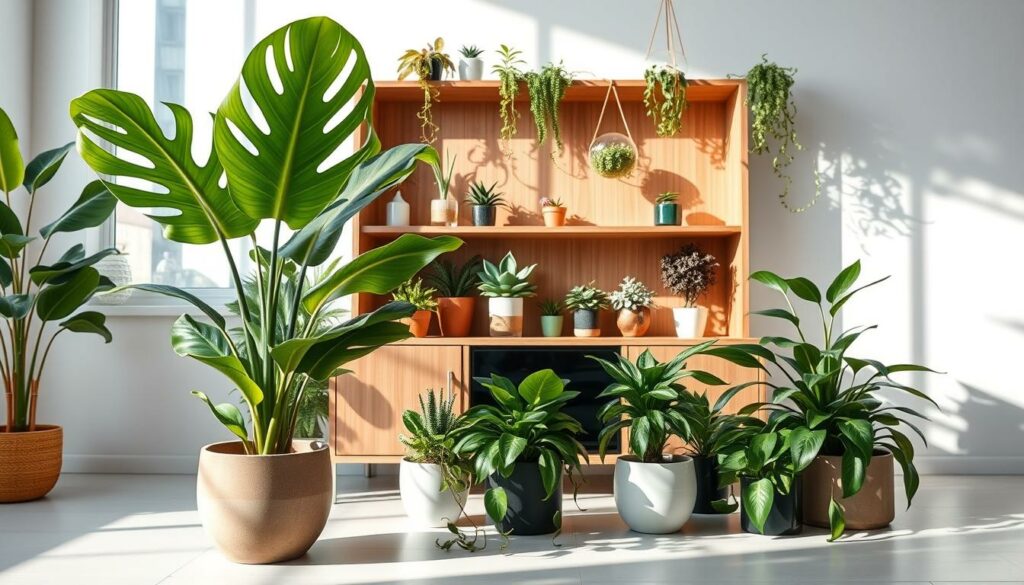
Succulents, like Echeveria, Haworthia, Aloe vera, and Sedum, are popular for needing little water. They have sculptural shapes that fit well in terrariums and small planters. Clustered arrangements make great centerpieces.
Succulent care needs bright light, well-draining soil, and infrequent watering. This helps prevent root rot and keeps them healthy.
Foliage plants
Foliage plants such as Monstera deliciosa, Philodendron, Calathea, Rubber Plant, and Pothos add volume and bold leaf patterns. They create tropical vibes and frame seating areas nicely.
Their light needs range from bright indirect light to low light. Tropical types benefit from higher humidity and occasional misting.
Flowering plants
Flowering plants like African violets, peace lilies, orchids, kalanchoe, and geraniums add seasonal blooms and color to windowsills or tables. They need feeding and proper light for blooming.
Removing dead flowers helps them bloom longer and stay vibrant. This care routine supports healthy growth.
Air plants
Air plants, or Tillandsia, grow without soil and can be mounted on driftwood, shells, or hung in glass terrariums. They do well with bright indirect light and weekly misting or occasional soaking.
Good air circulation and bromeliad fertilizer during growing season help them thrive. These care steps keep air plants healthy.
To create layered style, combine succulents for structure and foliage plants for volume. Add flowering plants for color pops and air plants for whimsy.
This mix brings texture and interest while keeping your space lively and balanced.
Choosing the Right Decorative Plants for Your Space
Selecting indoor plants means matching species to the room’s conditions and the owner’s routine. This guide helps you choose decorative plants by breaking decisions into clear steps.
Assessing Light Conditions
First, note window orientation. North-facing rooms have low light. East- or west-facing rooms get moderate light part of the day.
South-facing rooms offer bright, direct sun most of the day. Use a light meter app or watch how many hours direct sun a spot gets. Match plants to that light.
Snake plants and ZZ plants do well in low light. Succulents and cacti need bright sun. Calatheas and philodendrons prefer bright, indirect light.
Considering Plant Size and Scale
Measure floor, shelf, and tabletop space before buying. Consider ceiling height and nearby furniture. Nursery plants are smaller than their mature size. Choose with mature size in mind.
For large rooms, pick a statement plant like a fiddle-leaf fig or rubber plant to make an impact. Small rooms suit compact plants like bromeliads or small palms.
Pick planters that fit plant size and provide room for roots to grow.
Understanding Maintenance Needs
Classify plants by maintenance: low, moderate, or high care. Low-maintenance plants need infrequent watering and low humidity. Succulents fit here.
High-maintenance plants need watering, humidity control, and pruning. Orchids and some flowering houseplants need more attention. Match care to your lifestyle and weekly availability.
Use accessories like drainage trays and moisture meters to make care easier. Consistent care keeps plants healthy and lowers stress for you.
Decision Framework
Follow this sequence: assess light, measure space, decide care level, then pick accessories that help success. This process simplifies choosing decorative plants.
Indoor vs. Outdoor Decorative Plants
Choosing between indoor and outdoor plants shapes any space’s look and care routine. This section explores benefits and popular options. It also shows how to move plants without stress.
It highlights practical steps and useful plant accessories. These tools help make plant decor work for apartments, patios, and gardens.
Benefits of Indoor Plants
Indoor plants bring year-round greenery and soften interiors. Pothos, spider plant, peace lily, and small palms fit well in apartments and low-light rooms.
They improve air quality and add texture to decor without using much floor space.
Grow lights, humidifiers, and self-watering pots extend options for homes with limited natural light. These tools let people keep ferns or tropical plants indoors.
Popular Outdoor Decorative Options
Outdoor plants offer curb appeal and seasonal drama. Boxwood hedges create structure. Hydrangea and lavender add color and scent.
Ornamental grasses give movement in the wind. Container-friendly choices like geraniums and hardy succulents suit patios and balconies well.
USDA hardiness zones help pick plants for survival and bloom. Choosing plants for microclimates, like shaded porches or sun-drenched decks, keeps them thriving and easy to maintain.
Transitioning Plants Between Indoors and Outdoors
Moving plants requires care to prevent shock. Gradual exposure over seven to fourteen days helps plants adjust to new light and temperature changes.
Start with a few hours outdoors and increase the time daily. Monitor for pests after a move and adjust watering to fit new conditions.
Bring frost-sensitive plants inside before cold snaps. Harden off nursery plants before planting outdoors. Choose frost-safe containers with good drainage for outside use.
Thoughtful moves and the right accessories make plants resilient. Paying attention to light, soil, and placement keeps plants healthy in all seasons and settings.
Tips for Placing Decorative Plants
Placing decorative plants well turns greenery into intentional design. This short guide offers practical rules for placement, styling, and furniture pairing.
These tips help small and large spaces feel curated and alive with plants.
Strategic placement for maximum impact
Choose focal points like entryways, corners, mantels, and stair landings for statement plants. A tall plant by an entrance creates drama.
Matching pairs on either side of a sofa or doorway add balance. Vary heights to add depth and guide the eye through a room.
Keep high-traffic zones clear to avoid pots getting knocked over. Place humidity-loving plants near bathrooms or kitchens so they thrive.
Put sun-needing succulents on bright shelves where light is abundant for best growth.
Using plants to define spaces
Tall plants and groupings act as natural dividers in open living areas. A cluster of pots on a console defines a seating zone without blocking sightlines.
Planter stands and shelving create visual barriers while letting light through. Match plant scale to the area to keep balance.
Oversized foliage can overwhelm a small nook. Group small pots together to anchor a reading corner without cluttering the room.
Pairing plants with furniture and décor
Choose planter materials and colors that echo furniture finishes. Terracotta and glazed ceramic suit rustic interiors.
Matte black or concrete works well with modern pieces. Woven baskets complement boho layers and textiles.
Use plant shapes and textures to enhance artwork and fabrics. Trailing plants look great near hanging art or shelves.
Compact ferns sit well beside mid-century side tables. Thoughtful furniture pairing makes plant decor feel purposeful.
Creative Ways to Display Decorative Plants
Stylish plant styling can transform any room. This section explores plant display ideas that blend form and function.
Short, practical tips follow for easy adoption in living rooms, kitchens, and entryways.
Unique Planters and Pots
Choose unique planters to make a statement. Handmade ceramic pots and glazed planters add color and texture.
Vintage tins and woven seagrass baskets create a relaxed, layered look. Concrete vessels offer an industrial edge for succulents and cacti.
Check drainage holes and use saucers or liners to protect surfaces. Mix finishes and sizes for a curated feel. Highlight plant accessories like moss mats or decorative pebbles.
Vertical Gardens and Wall Displays
Vertical gardens save floor space and serve as living art. Mount pocket planters or install wall shelves to display trailing pothos and Boston ferns.
Trellises support vining ivy and philodendron to create a sculptural effect. DIY felt pockets work well for herbs on kitchen walls.
Commercial systems from Woolly Pocket and Gardener’s Supply make installation and maintenance easier. Plan for humidity control and secure mounting when creating living walls indoors.
Centerpieces and Table Arrangements
Table centerpieces should suit the surface and setting. Low floral arrangements and clusters of small potted succulents work on dining tables without blocking sightlines.
For coffee tables, use taller single specimens on trays to anchor the space. Select low-odor plants for mealtimes and keep watering needs in mind.
Grouping pots with various textures and coordinating accessories creates cohesive displays. Scale items to the table for balanced visual weight.
Safety matters when styling around children and pets. Choose non-toxic plants like spider plant and Boston fern.
Keep care access clear for watering and pruning. Thoughtful plant display ideas and smart styling ensure beauty and practicality coexist.
Seasonal Considerations in Decorative Plants
Choosing seasonal plants helps homes feel fresh and timely. This short guide shows what to bring in or move out as light and temperature shift.
It includes practical plant care tips for healthy transitions and lasting style.
Plants for Spring
Spring plants like hyacinths, potted tulips, begonias, and Easter cactus brighten interiors with color. They signal active growth, making spring a good time to repot.
Applying balanced fertilizer also helps plants thrive in this season.
Seasonal plants need more water and light as days grow longer. Check soil moisture before watering and move budding pots to indirect sun to prevent shock.
Summer Favorites
Heat-tolerant summer plants include lavender in containers, bougainvillea on patios, hibiscus for tropical blooms, and sun-loving succulents.
These plants deliver bold color during warm months. Adjust watering during hot spells and provide afternoon shade if needed.
Watch for pests like aphids and spider mites. Treat early using safe plant care methods to protect your garden.
Autumn and Winter Choices
Autumn and winter plants that do well include cyclamen and poinsettia for seasonal color. Snake plant and ZZ plant are reliable as indoor light drops.
Reduce watering and cut fertilizer as growth slows. Move frost-sensitive plants indoors before the first hard freeze.
Raise humidity around tender plants during the heating season. Seasonal style swaps refresh decor with new planter materials and accents.
Swap light terracotta for darker ceramic in autumn. You can also add decorative stones and holiday-themed pots for winter displays.
These small changes make seasonal plants feel intentional and curated.
Common Mistakes in Decorating with Plants
Decorative plants bring life to a room. However, simple mistakes can quickly spoil their charm. Readers should learn to spot early warning signs. They should also follow regular maintenance steps to keep plants thriving.
The brief guidance below covers three common issues. It also offers practical remedies.
Overwatering and Underwatering
Yellow leaves, a musty smell, or moldy soil usually mean overwatering. This can cause root rot if left unchecked. Wilting, dry soil, and crispy leaf edges point to underwatering.
To check, press the top inch of soil or lift the pot to feel its weight. You can also use a moisture gauge. Water needs vary by plant species. Succulents need less water than pothos or ferns. Adjust watering based on the season and indoor climate to avoid these mistakes.
Poor Lighting Choices
Placing succulents in dim halls or putting ferns in direct sun causes stress. Symptoms include leggy growth, leaf burn, or sudden leaf drop. These are classic signs of poor lighting.
Match light needs to the room’s exposure. South-facing windows suit sun lovers like Sansevieria and succulents. East or north windows are better for shade-tolerant plants. For dim spaces, use LED full-spectrum grow lights to promote healthy growth.
Neglecting Plant Health
Ignoring pests, skipping fertilization, and not repotting root-bound plants are common neglect forms. Mealybugs, scale, and spider mites hide on stems and leaf undersides. Low humidity also harms tropical plants.
Check plants regularly to catch problems early. Use insecticidal soap or neem oil to control pests. Repot fast-growing plants every 12–24 months. Tools like humidity trays, pruners, saucers, and pH or moisture meters help with maintenance.
Prevention Checklist
| Task | Frequency | Tools & Notes |
|---|---|---|
| Soil moisture check | Weekly | Moisture gauge or finger test; adjust watering based on weight of pot |
| Light audit | Seasonal | Assess window exposure; add LED full-spectrum grow light for dim spots |
| Pest inspection | Biweekly | Look under leaves; treat with insecticidal soap or neem oil if needed |
| Fertilize | Every 4–8 weeks during growth | Use balanced houseplant fertilizer; reduce in winter |
| Repotting | Every 12–24 months | Choose slightly larger pot; refresh soil to support plant health |
| Humidity support | As needed | Use trays or pebble trays for tropical species; mist sparingly |
Eco-Friendly Decorative Plant Options
Choosing eco-friendly plants adds style and sustainability to your home and garden. Select plants that fit the local climate well. This helps cut water use and reduce pest problems.
Pair careful plant choices with smart supplies to create a greener and more beautiful display.
Native Plant Selections
Pick native plants made for your regional conditions. In many U.S. areas, Echinacea and Rudbeckia grow with little care. They also attract important pollinators.
Native grasses and local trees like the Eastern Redbud need less water. They support birds and bees in your garden.
Using native plants cuts the need for fertilizers and pesticides. These landscapes stay healthy with less work. They also provide habitat all year long.
Using Recycled Materials
Upcycling turns old containers into plant holders and cuts waste. You can use wooden crates, glass jars, and tin cans for plants.
Fixing and reusing ceramic pots saves craftsmanship and keeps items out of landfills. When you need new containers, recycled planters work well.
Choose planters made from reclaimed plastic or other processed recycled materials. Look for brands that show recycled content on labels at garden centers.
Organic Care Solutions
Organic care uses natural inputs that protect soil and water. Compost, worm castings, and fish emulsion nourish plants without synthetic salts.
DIY soil mixes with perlite and compost improve drainage and root health. For pests, use biodegradable controls and targeted methods to reduce chemicals.
Look for organic-labeled products at nurseries and online shops. These follow U.S. organic standards and keep your garden eco-friendly.
Sustainable Practices and Extras
Save water with smart techniques to keep plants healthy. Mulching and drip irrigation reduce watering needs, especially for container plants.
Pick drought-tolerant decorative plants for less water use. Compost garden trimmings to close the waste loop.
Use plant accessories like porous saucers and natural fiber hangers. These extend planter life and reduce plastic. Small, thoughtful changes build a lasting eco-friendly display.
Plant Care Basics for Decorative Plants
Maintaining decorative plants needs simple routines that protect their health and boost their looks. This short guide shares key plant care tips. Both beginners and experienced gardeners can keep plants healthy and pretty with these easy tips.
Watering Techniques
Water each species properly. Many tropical houseplants like deep, less frequent watering that moistens the root ball. Succulents need their topsoil to dry out between waterings.
Ferns and peace lilies like soil to stay evenly moist. Bottom-watering suits sensitive plants; place pots in shallow trays of room-temperature filtered water until the surface is damp. Self-watering pots help reduce guesswork. Adjust water amount by pot size: smaller pots get less, large ones need more.
Fertilization
Feed decorative plants when they grow actively, using a balanced fertilizer like 10-10-10. Follow instructions on the label. Cut back or stop feeding when plants rest. Liquid fertilizers work fast, while slow-release granules provide steady nutrition for months.
Organic options such as compost tea or fish emulsion offer gentle nutrients and help soil health. Too much fertilizer causes salt buildup and leaf burn. Keep records of feeding times and amounts to adjust your routine.
Pruning and Repotting
Prune plants to shape them, remove dead or diseased parts, and encourage branching. Always use clean shears and sterilize between cuts to prevent spreading disease. Pinch new growth to make plants bushier when you want.
Repot plants when they become root-bound or every 12 to 24 months. Use a pot one size bigger with fresh potting mix suited to the plant. Gently loosen roots that circle inside the pot. Set the plant at the right depth and water to settle the soil.
To reduce transplant shock, keep plants out of bright sun for a few days and water steadily. Ongoing care includes checking for pests and diseases, monitoring humidity through misting or trays, and keeping a simple log of watering and fertilizing. These tips make plant care easier and keep decorative plants looking great.
| Task | When to Do It | Best Practice |
|---|---|---|
| Watering | Weekly to monthly, depending on species | Deep soak for most; allow topsoil to dry for succulents; keep ferns moist |
| Fertilization | During active growth, reduce in dormancy | Use balanced 10-10-10 or organic teas; follow label directions |
| Pruning | As needed for shape or health | Use clean shears, remove dead wood, pinch for branching |
| Repotting | Every 12–24 months or when root-bound | Move up one pot size, fresh mix, loosen roots to reduce shock |
| Humidity & Pest Checks | Weekly visual inspections | Misting, trays, humidifiers; treat pests early with gentle methods |
Conclusion: The Lasting Impact of Decorative Plants
Decorative plants offer value beyond their beauty. When matched to light, space, and schedule, they improve indoor air quality and mood. They can also make a home more appealing to visitors and buyers.
Investing in quality pots, rich potting soil, and tools like moisture meters lowers maintenance costs. This ensures sustained enjoyment over time.
Investing in Plants for Long-term Enjoyment
Smart purchases focus on durability and easy care. Choosing tough species and good accessories supports long-term health and fewer replacements. Proper maintenance like feeding, repotting, and watering keeps plants healthy and attractive.
This care turns decorative plants into lasting parts of your living space.
Creating a Personalized Green Space
Start your green space small and grow with experience. Choose reliable varieties that fit your home’s light and lifestyle. Try styling with groupings, different heights, and leaf textures.
Keep notes on what works. Documenting helps refine your taste and improve future choices.
In summary, assess light and space. Match plants to how much care you can give. Use creative displays and avoid mistakes like overwatering. Embrace eco-friendly care methods.
For more learning, visit U.S. cooperative extension services, local botanical gardens, or trusted plant-care books to gain confidence and knowledge.