

Nearly 80% of U.S. urban apartments say houseplants make their living rooms feel more comfortable. This boost in comfort is often overlooked. Indoor decorative plants do more than fill empty corners.
They affect mood, add color, and improve the air quality inside many homes across the country.
Indoor decorative plants are chosen for their looks, easy care, and helpful features. This group includes leafy greens, blooming flowers, trailing pothos, and sculptural succulents.
Some houseplants help clean the air. Others are used mainly as decor to unite a room’s style.
This guide walks readers through all steps of indoor gardening for home greenery. It explains plant decor benefits and suggests popular houseplants and those good for low light.
It also covers care tips, choosing pots, where to place plants, pet safety, pest control, seasonal care, DIY terrariums, and new trends in plant design.
The guide targets busy professionals, apartment renters, homeowners, and interior designers. It offers practical ideas for indoor plant styling.
Readers will find tips to improve their home’s look and feel. The guide suits both beginners and those experienced with styling indoor plants.
Key Takeaways
- Indoor decorative plants transform space and mood while offering practical benefits.
- “Houseplants” covers foliage, flowering, trailing, and sculptural specimens for plant decor.
- The guide offers care, placement, and potting advice for various skill levels.
- Content is tailored for U.S. readers including apartment and home contexts.
- Outcomes include improved aesthetics, well-being, and easy indoor gardening routines.
Benefits of Indoor Decorative Plants
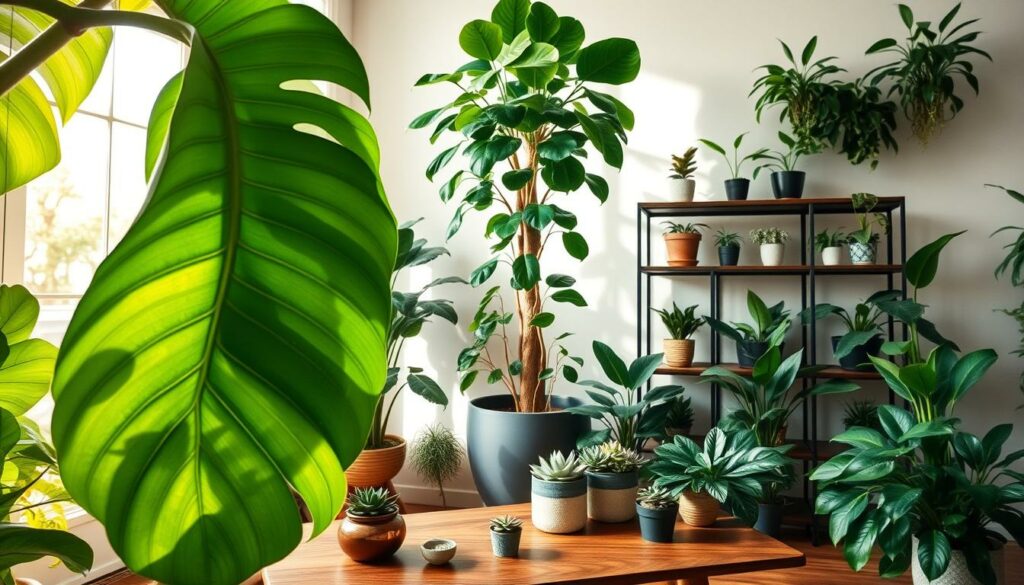
Indoor decorative plants bring gains beyond looks. They improve air quality and boost wellbeing. Home greenery makes interiors better and easier to enjoy.
Choosing the right species and placement decides how much you benefit daily.
Improved Air Quality
Studies show plants like peace lily, snake plant, and pothos remove harmful chemicals like formaldehyde and benzene. They also raise humidity by transpiration.
This humidity may help ease dry eyes and irritated airways in low-humidity rooms. However, their effects in normal homes are smaller than good ventilation or HEPA purifiers.
To get the most air benefit, pick plants known to absorb VOCs. Place them near new furniture or fresh paint, common off-gassing sources.
Regular plant care keeps leaves healthy. This boosts the plants’ ability to clean and humidify the air.
Enhanced Aesthetic Appeal
Plants add texture, color, and height to rooms. Trailing pothos soften shelves. Sculptural snake plants anchor corners. Peace lilies offer contrast with white blooms.
Mix leaf shapes and pot styles to add depth without clutter. Balanced displays feel intentional, not accidental.
Use a tall plant as a focal point. Smaller pots can guide the eye across shelves or tabletops. These design moves improve any space.
Reduced Stress Levels
Research in offices and healthcare shows indoor plants lower stress, improve moods, and help focus. Biophilic design with plants aids mental restoration.
For better wellness, keep easy-care plants near work zones. Rotate plants for visual variety. Follow simple care routines to avoid pests and dust.
Healthy plants support calm, clear spaces that help productivity and relaxation.
| Benefit | Practical Tips | Representative Species |
|---|---|---|
| Air quality improvement | Group plants near off-gassing items; maintain healthy soil and leaves | Peace Lily, Snake Plant, Pothos |
| Aesthetic enhancement | Mix leaf shapes, vary pot styles, use a tall focal plant | Pothos (trailing), Snake Plant (structural), Peace Lily (blooming) |
| Stress reduction | Place plants in work and relaxation areas; practice regular indoor plant care | ZZ Plant for low care, Spider Plant for visual texture, Peace Lily for calming blooms |
Top Indoor Plants
A few reliable, low-maintenance plants make great starters for houseplants. These picks combine strong visual appeal with toughness. They suit beginners and plant lovers who want style without much work.
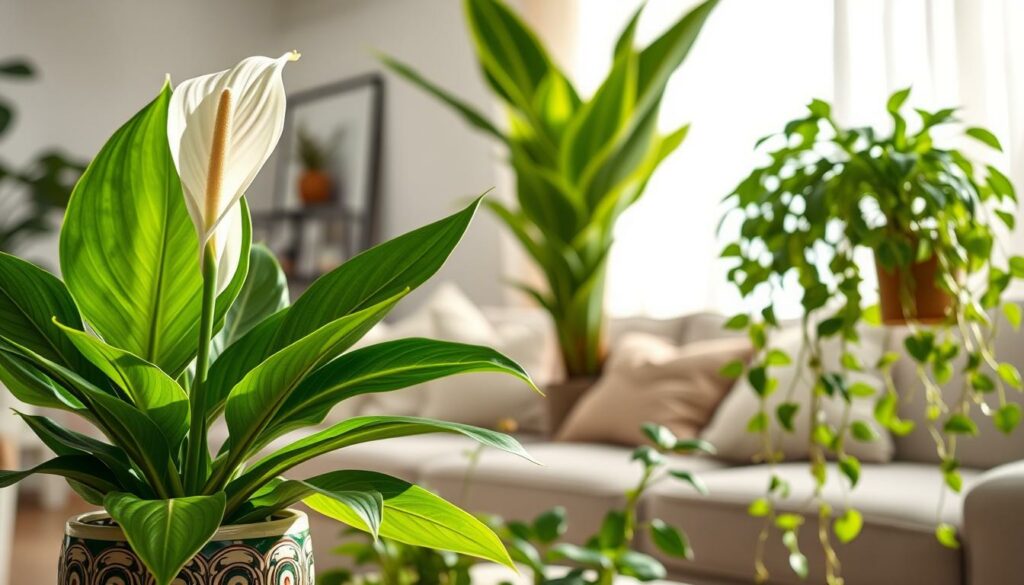
Each choice below includes simple care tips and quick styling ideas. The goal is to help readers pick plants that fit their light and space needs.
Snake Plant
The snake plant has upright, sword-like leaves with striking variegation. It works well as an architectural piece in tight corners and narrow entryways.
Care is forgiving. It tolerates bright indirect light down to low light and survives irregular watering. Let the soil dry between waterings and use a well-draining mix.
Feed sparingly during the growing season. While listed as pet-toxic, ingestion usually causes mild GI upset. Use taller pots or place the plant out of pets’ reach.
Styling tip: pair a snake plant with a textured ceramic pot for contrast. Or group several sizes for a sculptural look.
Peace Lily
The peace lily has glossy green leaves and showy white spathes that brighten dim rooms. It raises humidity slightly and often blooms indoors. This makes it a good choice for bathrooms or shaded living rooms.
It needs medium to low indirect light and evenly moist soil without waterlogging. Higher humidity helps the plant, and occasional feeding keeps blooms coming.
Keep peace lilies away from pets and small children because they are toxic if eaten. For styling, place one on a tabletop in a decorative pot or use a larger one on the floor to anchor a seating area.
Pothos
Pothos comes in varieties like Golden and Marble Queen. It grows as a fast, trailing vine. It suits shelves, hanging baskets, and can be trained along supports for vertical interest.
Pothos is versatile. It thrives in medium to low light and tolerates occasional neglect. Water when the top inch of soil dries. It propagates easily from cuttings to expand coverage.
Pothos is poisonous if ingested by people or pets. Place plants where vines add drama but keep them away from curious hands or mouths.
| Plant | Light | Water | Best Use | Pet Safety |
|---|---|---|---|---|
| Snake Plant (Sansevieria) | Bright indirect to low | Allow soil to dry between waterings | Architectural corners, narrow spaces | Toxic; mild GI symptoms if ingested |
| Peace Lily (Spathiphyllum) | Medium to low indirect | Keep evenly moist, avoid waterlogging | Tabletops, bathrooms, floor centerpieces | Toxic; keep out of reach of pets |
| Pothos (Epipremnum aureum) | Medium to low | Water when top inch of soil is dry | Hanging baskets, shelves, trained vines | Toxic; avoid ingestion by pets and children |
Low-Light Indoor Plants
Low light in homes and offices means spaces with north-facing windows, rooms with only indirect sun, or interiors lit mostly by artificial light. Choosing low-light indoor plants lets people bring greenery into bathrooms, hallways, and bedrooms without strong sunlight. These plants support indoor gardening trends and improve indoor plant design without needing bright light.
ZZ Plant
The ZZ plant has glossy, waxy pinnate leaves that shine in dim corners. It tolerates drought well and can survive long dry spells. This plant also handles very low light.
Water sparingly and let the soil dry between waterings. Use well-draining soil and feed only a few times yearly. Note that Zamioculcas zamiifolia is toxic if eaten, so use gloves when pruning. Keep it away from pets and children.
Philodendron
Philodendrons have soft, heart-shaped leaves and natural trailing growth, perfect for shelves and hanging baskets. Many types do well in low to medium indirect light. Keep soil slightly moist but avoid waterlogged roots.
Propagation is easy from stem cuttings, making sharing simple. Popular types include Philodendron hederaceum and Philodendron Brasil. Some species can be mildly toxic to pets, so be cautious.
Spider Plant
Spider plants feature arching leaves and baby plantlets that hang from the main plant. They are known for purifying the air and make great décor. Spider plants are easy to propagate from pups and tolerate many light levels.
They prefer low to medium light and evenly moist soil but can survive occasional drought. Bright indirect light helps their leaf variegation. Some cultivars are more pet-friendly, so check toxicity before placing near animals.
Good spots include bathrooms with frosted windows, dim hallways, and bedrooms without direct sun. Combining a ZZ plant, philodendrons, and spider plants creates a layered look in small rooms. These plants support indoor gardening while keeping care simple for busy homes.
Maintaining Indoor Decorative Plants
Care for indoor decorative plants depends on simple habits and regular checks. Good care keeps leaves shiny and roots healthy. A watering schedule and checking soil and light make maintenance easy for busy homes.
Proper Watering Techniques
Wilting, yellow leaves, and soft stems usually mean overwatering. Dry, crispy leaves and slow growth show underwatering. Too wet soil can cause root rot, while dry soil can stop plant growth.
Water from the top until it drains out for most tropical plants. Bottom-watering suits plants that dislike wet leaves. Use a moisture meter or press your finger an inch into the soil to check dampness.
Change watering by season and conditions. Drought-tolerant plants like snake plant need water every 3–6 weeks. Plants like peace lily may need water weekly or when soil feels dry at the top.
Light, humidity, room temperature, and pot size affect drying speed. Rotate plants and watch for signs instead of using a strict calendar.
Soil and Fertilization Tips
Use the right soil mix for each plant. Succulents and snake plants grow well in mix with sand or pumice. Tropical plants like peat-based or all-purpose soil with perlite for air circulation.
Repot every 12–24 months or when roots circle the pot. Use a pot one size larger for growth. Signs for repotting include slow growth, wilting, or roots at drainage holes.
Fertilize on a schedule during growing seasons. Use balanced, water-soluble fertilizer like 10-10-10 or 20-20-20 every 4–6 weeks in spring and summer. Cut back feeding in fall and winter.
Organic choices like compost tea or worm castings suit natural product fans. Brands like Miracle-Gro and Osmocote offer reliable products for beginners and experts.
Daily care includes wiping dusty leaves, pruning dead parts, checking pests, and rotating pots for even growth. These tasks help keep plants healthy and looking great.
Choosing the Right Pot
The right pot shapes how a plant grows and how a room feels. Attention to pot materials and pot sizing helps indoor plants thrive. Small choices about saucers, cachepots, and liners also affect watering and maintenance.
Materials and Size Considerations
Terracotta is porous and helps soil dry between waterings. It suits succulents and snake plants well. Glazed ceramic offers color and retains moisture. This type fits ferns and peace lilies.
Plastic is lightweight and affordable, ideal for hanging displays. Metal gives a modern look but can heat fast by a sunny window. Use liners with metal pots for insulation.
Choose the right pot size to avoid waterlogged roots. For small plants, select a pot 1–2 inches bigger than the root ball.
Larger plants need a pot 2–4 inches bigger to prevent root crowding and excess moisture. Saucers catch runoff, while decorative cachepots hide nursery pots with drainage holes. This preserves indoor design and prevents spills.
Drainage Importance
Drainage holes are critical to avoid root rot. If a pot has no holes, place a nursery pot with holes inside it.
Rocks at the bottom do not improve drainage. Well-draining potting mix and drainage holes work better. Layering coarse mix near holes can speed water flow.
Moisture meters check soil wetness below the surface. For travel, use self-watering systems or removable liners. These keep soil moist while the outer pot stays decorative.
Regularly test drainage by watering and timing how long water leaves the pot.
| Pot Type | Benefits | Best Use | Considerations |
|---|---|---|---|
| Terracotta | Porous, breathable | Succulents, Mediterranean plants | Dries fast; may crack in freezing temps |
| Glazed Ceramic | Colorful, retains moisture | Ferns, peace lilies, decorative displays | Heavier; ensure drainage holes |
| Plastic | Lightweight, affordable | Hanging baskets, large indoor trees | Less breathable; can overretain water |
| Metal | Modern look, durable | Contemporary interiors | Can heat in sun; use liner for insulation |
| Cachepot with Nursery Pot | Stylish outer pot, functional inner pot | Living rooms, offices | Remove inner pot to water and drain |
Aesthetic choices matter. Select colors, textures, and heights that fit furniture and plant scale. Thoughtful pot materials and correct sizing blend care with indoor design to support plant health.
Plant Placement Tips
Good plant placement helps indoor plants thrive. It also lifts home greenery from decorative to intentional. Start by checking light, humidity, and traffic in each room.
Small placement changes bring big rewards for plant health and style.
Room-Specific Recommendations
Living rooms benefit from statement floor plants or layered groupings. Choose a large philodendron or Dracaena marginata as a focal point.
Add smaller pots at varied heights to create depth. These ideas form a visual anchor without blocking pathways.
Bedrooms should have low-light, air-friendly plants. Snake plant and pothos work well near bedside tables or shelves.
Avoid strong fragrances if anyone has scent sensitivity.
Kitchens reward humidity-tolerant plants. Herbs, pothos, and spider plants near sinks or windows handle steam well.
These plant ideas brighten meal prep areas and stay practical.
Bathrooms suit peace lily, ferns, and snake plants because they tolerate moisture and low light.
Grouping humidity-loving plants creates a mini oasis and improves air quality.
Offices need compact, low-maintenance greenery. Small succulents, ZZ plant, and desk pothos fit shelves and workspaces.
Proper plant placement in offices boosts focus and reduces clutter.
Balancing Sunlight and Shadow
Assess sunlight by observing light at different times: bright direct, bright indirect, and low light. Match species to each zone for steady growth.
Philodendron and spider plants suit medium to low light. Peace lilies prefer bright indirect light to bloom well.
Rotate plants every few weeks so all sides get light. Use sheer curtains or blinds to diffuse strong sun and protect leaves.
In darker rooms, install full-spectrum LED grow lights to add natural light.
Group plants by shared water and light needs to simplify care. This styling tip prevents overwatering and keeps plants healthy.
| Room | Best Choices | Light Level | Placement Tip |
|---|---|---|---|
| Living Room | Large philodendron, Dracaena marginata, groupings | Bright indirect to medium | Use a statement floor pot or clustered heights for a focal point |
| Bedroom | Snake plant, pothos | Low to medium | Place on nightstand or shelf; avoid scented bloomers |
| Kitchen | Herbs, pothos, spider plant | Bright indirect | Keep near windows or sink where humidity helps growth |
| Bathroom | Peace lily, ferns, snake plant | Low to medium | Cluster on counters or shower shelves to benefit from steam |
| Office | Succulents, ZZ plant, small pothos | Medium to bright indirect | Use compact pots on desks or shelves to save space |
Pet-Friendly Indoor Plants
Choosing indoor decorative plants that keep pets safe requires care. Pet owners should pick species known to be non-toxic. They should place pots out of reach and watch pets around new plants.
Even non-toxic houseplants can cause mild stomach upset if chewed in large amounts.
Considerations for Pet Owners
Check the ASPCA lists for plant toxicity before bringing any specimen home. Confirm labels at The Home Depot, Lowe’s, or independent nurseries when buying.
Supervise cats and dogs near plants until their behavior is predictable. Place taller pots on stands or shelves that pets cannot access.
Use deterrents such as bitter sprays or pebble mulch in topsoil to discourage digging and chewing. Keep plant care items like fertilizer and pesticides locked away for pet safety.
Recommended Non-Toxic Varieties
The following varieties are widely available in U.S. stores. They make excellent indoor decorative plants that align with pet-friendly goals.
| Plant | Key Traits | Care Notes | Sourcing Tips |
|---|---|---|---|
| Areca palm (Dypsis lutescens) | Tropical look, pet-friendly | Bright, indirect light; moderate watering; thrives with humidity | Found at Lowe’s, Home Depot, local nurseries; buy established plants for best results |
| Boston fern (Nephrolepis exaltata) | Lush fronds, non-toxic | Likes humidity and consistent moisture; avoid direct afternoon sun | Available at garden centers and independent sellers; choose healthy, green fronds |
| Parlor palm (Chamaedorea elegans) | Low-light tolerant, pet-safe | Low to medium light; water when topsoil dries; slow grower | Common at big-box stores and online plant shops; repot as it matures |
| Calathea species | Striking patterned leaves, non-toxic | High humidity; indirect light; avoid overwatering to prevent root rot | Buy from reputable nurseries that label species and care instructions |
| Haworthia and Echeveria (select succulents) | Compact, many species are safe | Bright light; infrequent watering; wait for soil to dry between waterings | Confirm species at succulents-specialty shops or trusted online sellers |
When in doubt, consult your veterinarian about specific concerns. Proper selection and simple precautions let households enjoy indoor decorative plants safely.
This helps maintain pet safety and peace of mind.
Common Indoor Plant Pests
Indoor decorative plants brighten homes but can attract pests that hurt their health and beauty. Caregivers should learn to spot early signs of pests and use safe controls. Regular checks protect plants and stop infestations from spreading to other pots.
Identifying Common Pests
Spider mites leave fine webbing and cause pale, stippled leaves. Mealybugs appear as white, cottony clusters in leaf axils and on stems. Scale insects look like small, hard bumps clinging to leaves and twigs.
Aphids gather on new growth and feel soft-bodied. Fungus gnats are tiny flying insects that come from overly moist soil.
Look for sticky residue called honeydew, yellow leaves, stunted growth, and sudden leaf drop. Check leaf undersides and new shoots for early signs of pests.
How to Manage Infestations
Early detection is key to managing houseplant pests. Inspect plants weekly and isolate new or suspect plants for two to four weeks.
Mechanical removal works well for small pest outbreaks. Wipe leaves with a damp cloth, prune infested parts, or spray pests off with strong water. Rubbing alcohol on a cotton swab removes mealybug clusters.
Non-toxic treatments control pests effectively when used properly. Apply insecticidal soap or horticultural oil and follow label directions carefully. Neem oil helps control many pests and supports healthy indoor gardening. Keep pets and people safe by reading safety instructions and avoid contact until sprays dry.
If infestations are severe, move the plant away from others. Repeat treatments every seven to ten days. Consider systemic insecticides only as a last resort. Prevention includes avoiding overwatering and keeping good air circulation. Quarantine new plants before adding them to your collection.
Tip: A regular routine of plant care and inspection reduces chances that mealybugs, spider mites, scale insects, or other pests take hold.
Seasonal Care for Indoor Plants
Indoor decorative plants react to changes in light, temperature, and humidity. Owners who watch these shifts can help plants avoid stress.
This short guide gives practical tips for each season. It also includes simple checklists for indoor plant care.
Adapting to Seasonal Changes
Light drops in winter and gets brighter in summer. Plants rest in cooler months and grow faster in spring.
Change watering to fit their growth cycles. Watch room temperature and humidity, especially near vents and windows.
Move heat-sensitive plants away from radiators. Put sun-loving plants in bright spots in summer.
Use a hygrometer to check humidity for tropical plants. Small, regular checks stop problems early.
Specific Care Tips for Each Season
Spring checklist:
- Start regular fertilizing when new growth shows.
- Water more to match active growth.
- Repot and propagate crowded pots.
- Increase light slowly to avoid sunburn.
Summer checklist:
- Watch for heat stress; give morning or filtered light.
- Water more when it is hot.
- Mist leaves or group plants to raise humidity for tropicals.
- Check for pests drawn by warm weather.
Fall checklist:
- Reduce fertilizing as growth slows.
- Water less to avoid overwatering during rest.
- Look for pests and treat before winter.
- Repot if roots circle and plant needs space.
Winter checklist:
- Water less to prevent root rot in cool soil.
- Keep stable temperatures away from drafts and heaters.
- Use LED grow lights when daylight is short.
- Check humidity and use humidifiers or trays for tropical plants.
Following these seasonal care steps keeps indoor plants healthy all year. Regular care makes home greenery lively and strong through all seasons.
DIY Indoor Plant Projects
Hands-on projects bring indoor decorative plants to life. They turn simple pots into eye-catching focal points. This section guides readers through practical DIY indoor plant projects.
These projects suit both beginners and experienced gardeners. It covers terrarium creation and plant propagation. Clear steps, tools, and styling ideas help expand home greenery.
Creating Terrariums
Closed and open terrariums serve different plant needs. Closed terrariums create a humid microclimate ideal for ferns, Fittonia, and small air plants. Open terrariums suit succulents and cacti that need dry air.
Materials include a clear glass container, small pebbles, or activated charcoal for drainage. Use potting mix matched to the plants. Add small tools and decorative moss.
Steps include choosing the container, adding a drainage layer, and placing charcoal to limit odors. Next, add the correct potting mix, arrange plants, and finish with decoration.
Care tips: place terrariums in bright, indirect light. Water sparingly to avoid overwatering. For closed terrariums, ventilate occasionally to prevent mold and trim fast-growing plants to control size.
If condensation builds, open the lid for a few hours to clear moisture. These practices make terrarium creation an easy indoor plant idea for tight spaces.
Propagation Techniques
Plant propagation lets gardeners multiply favorites and share specimens. Common methods include stem cuttings, division, and leaf cuttings. Each method has simple rules for success.
- Stem cuttings in water: select a healthy node on pothos or philodendron. Snip below the node with clean pruners. Place the cutting in fresh water, change water every few days, and pot once roots reach 1–2 inches.
- Division: remove the plant from its pot. Gently separate root clumps for spider plants, peace lilies, or Boston ferns. Replant sections into fresh soil with even moisture.
- Leaf cuttings for succulents: let cut ends callus for several days. Lay on well-draining mix, mist lightly until roots form, then plant.
Tools and extras: use sterile pruners and labeled pots. Rooting hormone helps boost rooting. Affordable grow lights or propagation domes help during winter. Maintain warm temperatures and moderate humidity for better success.
Creative Styling and Indoor Gardening Ideas
Readers can enhance home greenery with simple crafts. Try macramé hangers for trailing plants. Upcycle teacups or mason jars for small succulents. Assemble modular planters for a living wall.
These indoor plant ideas combine function with decor. They encourage personal expression. Combining terrarium creation and propagation opens new possibilities for styling.
Small projects provide visible rewards. They keep indoor gardening fresh, practical, and inspiring.
Future Trends in Indoor Plants
Interest in indoor decorative plants is shifting toward sustainability and tech-driven convenience. Consumers now prefer eco-friendly plants and supplies like peat-free potting mixes and biodegradable pots. Local nurseries and native species are also popular since they need less water and care.
These choices fit the rise in eco-conscious plant decor and indoor plant trends.
Business models are adapting too. Plant rental services for offices and subscription-based houseplant deliveries reduce waste. They also offer flexible access to indoor plant design without long-term commitments.
This approach helps renters and small businesses adopt greener choices with ease.
On the technology side, indoor gardening tech makes plant care easier. Smart sensors and moisture monitors connect with apps to track light, moisture, and temperature.
Automated self-watering pots and programmable LED grow lights help apartment growers. Apps like PictureThis and Planta offer plant identification, care reminders, and community support to all users.
Hydroponic and aeroponic countertop systems, like AeroGarden, let people grow herbs and greens year-round. Future trends will mix interior design with indoor gardening more often.
There will be more pet-friendly and low-maintenance plant options. Tech-assisted plant care will also become more common. The best choices will balance technology with sustainable practices to suit lifestyles and the push for eco-friendly plants.