

Surprisingly, more than 80% of renters in U.S. cities live in homes under 800 square feet. Many people still want greenery. This shows the demand for plants in small spaces is huge and growing.
This short guide helps urban dwellers, balcony gardeners, and first-time plant owners with tiny rooms. It teaches how to choose, place, and care for compact plants without clutter. Small spaces include studios, micro-apartments, narrow balconies, window sills, and small offices with limited floor space.
Size, light, and maintenance matter when selecting plants for small spaces. Indoor plants can improve mood and air quality. This guide explains how to match plants to available light and which low-maintenance or compact flowering varieties work best.
The guide covers low-maintenance picks, succulents, hanging and vertical options, low-light choices, and seasonal picks. Each section offers plant selection, placement ideas, and care strategies. These tips help maximize limited space without losing style or plant health.
Key Takeaways
- Small space gardening thrives when plants are chosen for size, light needs, and easy maintenance.
- Compact plants and hanging solutions save floor space and add visual interest.
- Succulents and low-light tolerant species suit many apartments and offices.
- Placement and routine care are as important as plant selection for long-term success.
- This guide targets urban renters, balcony gardeners, and new plant owners seeking practical small space plant ideas.
Benefits of Indoor Plants in Small Spaces
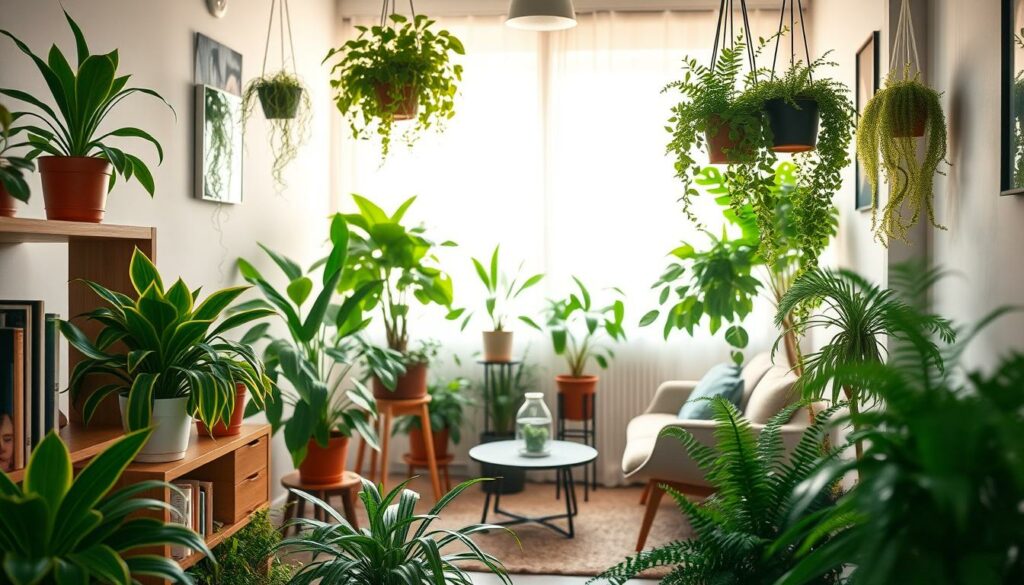
Bringing greenery into a compact home or studio changes how a space feels. Indoor plants for small spaces offer practical perks beyond looks. They freshen the air, add visual interest, and support mental well-being for people in tight quarters.
Air Quality Improvement
Certain houseplants such as pothos, snake plant, and peace lily reduce common indoor pollutants like formaldehyde, benzene, and trichloroethylene. These plants remove chemicals through leaf and root processes. Transpiration also raises humidity slightly, which helps reduce airborne dust in small, poorly ventilated apartments.
Some varieties, notably the snake plant, release modest oxygen at night. This benefits bedrooms and compact living areas. Plants support air quality but work best with ventilation and air purifiers.
Aesthetic Appeal
Compact greenery and small flowering plants transform cramped rooms into inviting places. Using scale, repetition, texture, and color creates focal points without crowding. Small pots on shelves or a statement specimen like a fiddle-leaf fig sapling anchor seating areas.
Plants for small spaces fit many decor styles. Minimalist interiors get clean lines from simple ceramics. Bohemian rooms enjoy layered textures and trailing vines. Modern apartments look sharper with sculptural succulents and precise arrangements.
Stress Reduction
Research links indoor plants to less stress, better mood, and improved concentration. These effects matter in small spaces where work, rest, and social life often share rooms. Well-placed plants can lower perceived crowding and create a calmer atmosphere.
For urban dwellers and remote workers, plants provide a daily connection to nature. This connection makes dense settings feel less claustrophobic. It also supports well-being while growing small space or urban gardens.
Choosing the Right Plants for Limited Space
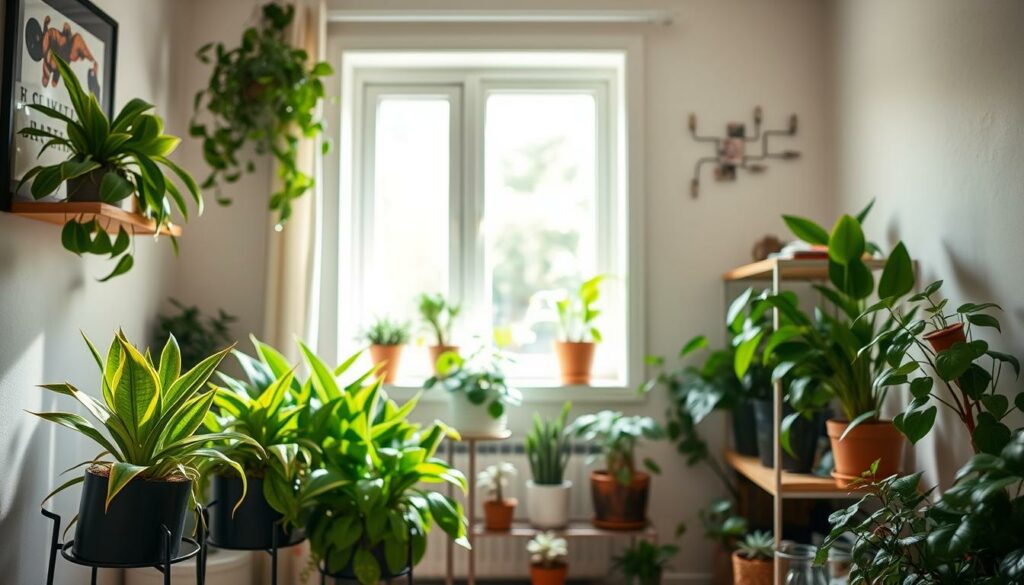
Small space gardening starts with realistic planning. Measure shelf depth, windowsill width, and ceiling height before buying plants.
Knowing exact dimensions prevents crowding and keeps rooms feeling open.
Consideration of Size
Pick compact plants and dwarf cultivars when space is tight. Dwarf Ficus and mini palms suit narrow shelves.
Use upright species where floor area is limited. Trailing varieties work well on hanging hooks or high shelves.
Match pot size to the plant’s mature dimensions. Small containers limit root spread and control top growth.
A slightly larger pot gives room to grow. Oversized pots can waste space and hold too much moisture.
Light Requirements
Assess light in each spot: bright direct, bright indirect, low light, or artificial. Succulents and most flowering plants need bright light near south- or west-facing windows.
Pothos, ZZ plant, and cast iron plant do well in north-facing rooms or shaded corners.
Install LED full-spectrum grow lights when natural light falls short. Modern LED fixtures fit into small space plant decor and balcony setups.
Place lights on timers to mimic natural cycles. This helps keep indoor plants for small spaces healthier.
Maintenance Levels
Sort plants by care needs. Low-maintenance picks like snake plant and ZZ plant tolerate irregular watering and low light.
Moderate choices such as pothos and spider plant need regular watering and occasional feeding.
High-maintenance flowering or tropical species demand humidity, frequent fertilizing, and pruning. Match plant choices to your daily schedule before adding them.
Mix maintenance levels to balance chores. Pair a few low-care compact plants with one showy, higher-care specimen.
Create simple routines: water on set days, feed monthly, and do a quick weekly health check. This keeps indoor plants thriving.
Best Low-Maintenance Plants for Small Areas
Small homes and apartments thrive when plants add life without demanding much time. This short guide highlights reliable choices that fit shelves, corners, and narrow pots.
They work well for beginners and seasoned plant owners who need easy wins.
Snake Plant
The snake plant features upright, architectural leaves suited for tight corners and narrow containers. It tolerates low light and long times between waterings, making it a top pick.
Care is simple: place it in bright to low indirect light. Allow the soil to dry before watering. Use a well-draining potting mix.
Average indoor temperatures suit this species. Compact cultivars, like Bird’s Nest, provide a smaller footprint for apartments.
Benefits include pest resilience and air-purifying qualities, boosting its appeal for small spaces.
ZZ Plant
The ZZ plant offers glossy pinnate leaves and a slow, steady growth that fits desks and narrow shelves. It adapts to low or bright indirect light, ideal for corners with little sun.
Care requires minimal watering and avoiding overwatering to prevent root rot. It tolerates varied indoor conditions and has compact cultivars suited for small spaces.
Propagation from cuttings supports a space-saving approach by creating new plants for other rooms or sharing with friends.
Pothos
Pothos is a versatile trailing vine that works in hanging baskets, on shelves, or up a small trellis. It grows well in bright indirect light and low light, making it flexible for small spaces.
Water when the top inch of soil dries. Trim to control size. Variegated types like Golden Pothos and Marble Queen add visual interest without taking floor space.
Propagation from stem cuttings is easy and economical. Choose small ceramic pots or self-watering containers to simplify care and reduce watering errors.
Pothos shows good pest resistance and fits many indoor layouts.
Practical tips: rotate pots for even light exposure, use compact cultivars when space is tight, and pick well-draining soils.
These low-maintenance plants for small spaces make care simple while improving home atmosphere.
Compact Flowering Plants for Small Spaces
Small homes and apartments can gain color without bulk by choosing compact flowering plants. These plants fit windowsills, narrow shelves, and tiny balconies. They offer steady blooms and visual interest in small spots.
Readers will find practical small space plant ideas. Care tips also help keep flowers healthy in confined spots.
African violets are classic indoor favorites that bloom repeatedly in small pots. They like bright, indirect light and steady indoor temperatures.
Use an African violet-specific mix or light potting soil to avoid compaction. Water from the bottom or soil line to prevent crown rot.
Regular deadheading helps sustain more flowers. These plants shine on windowsills and compact shelves, making them top picks for small spaces.
Miniature roses bring a traditional rose look to balconies or bright indoor spots. Patio and mini cultivars were bred for containers and stay compact.
They require six or more hours of bright light, consistent watering, and routine fertilizing during growth. Prune lightly to keep a tidy shape.
Check for pests like aphids and spider mites. Use a fast-draining potting mix and a container sized to allow root growth without crowding.
Begonias offer two benefits: dramatic foliage and dependable flowers. Rex begonias are prized for colorful, patterned leaves and stay compact.
Wax begonias provide blooms in shade to part sun and tolerate tighter quarters. Rex forms prefer bright, indirect light and higher humidity.
Wax types can take more direct light. Keep soil moist but never waterlogged to avoid root problems.
Rex begonias work as focal points, while wax begonias fill gaps with steady color. They suit indoor plants for small spaces.
Rotate bloomers seasonally to keep small spaces fresh. Pair flowering plants with non-flowering ones like ferns or small philodendrons.
This creates layered displays that feel lush but do not take up precious floor space.
Succulents: Perfect for Small Homes
Succulents are a great choice for apartments and tiny homes. They stay small and need little care. These plants add texture and color to windowsills, shelves, and terrariums.
Urban gardeners select succulents when they want a low-maintenance collection. These plants fit well with modern living spaces.
Popular Succulent Varieties
Space-friendly succulents include Echeveria rosettes, Haworthia clumps, and low-growing Sedum. Miniature Crassula, compact Aloe cultivars, and hardy Sempervivum also work well. These varieties stay manageable on shelves or in shallow dish gardens.
Many thrive in bright, sunny spots. They adapt well to life on a windowsill.
Care Tips for Succulents
Succulents need light that ranges from bright direct to bright indirect. Place each plant where it gets the light it prefers. This helps avoid stretching or sunburn.
Water using the soak-and-dry method. Let the soil dry between waterings to prevent root rot.
Use fast-draining cactus or succulent soil. Choose pots with drainage holes to keep roots healthy. Water less in winter when growth slows. Feed lightly during active growth with diluted balanced fertilizer.
Watch for pests like mealybugs and scale. Remove them with isopropyl alcohol on a cotton swab. For tough infestations, use insecticidal soap. Checking plants often helps keep collections healthy.
Arranging Succulents in Containers
Group plants with similar light and water needs to make care easier. Use shallow pots, dish gardens, small trays, or window boxes for compact arrangements. Adding decorative gravel or top dressing improves looks and reduces surface moisture.
Try vertical succulent frames or stacked planters for balcony gardening when floor space is tight. Propagate succulents by leaf cuttings or offsets. This lets you grow your collection without large pots.
Thoughtful arranging makes small spaces feel lively and carefully planned.
Hanging Plants to Optimize Vertical Space
Hanging plants free floor space and add green layers that can make small rooms feel larger. They act as living art above eye level. These plants also improve airflow and light distribution in the room.
Hanging plants are perfect for apartments, balconies, and tight corners where floor pots are not practical. They create a green, vertical display that saves room.
Benefits of Indoor Hanging Plants
Hanging plants create depth without blocking circulation or using floor space. They form focal points near windows and doorways while keeping walkways clear.
Placing plants at different heights improves light for lower pots. This layered look makes the space seem larger and more open.
Best Options for Trailing Plants
Choose trailing plants that suit your light and style needs. Pothos tolerates low light and can trail several feet. It is a top pick for many homes.
Philodendron heartleaf grows fast and does well with moderate light. String of hearts (Ceropegia woodii) likes bright, indirect light and features delicate chains.
String of pearls (Senecio rowleyanus) needs bright light and little water to stay full. English ivy climbs or trails in bright, cooler spots.
Spider plant grows in varied light and has long leaves that spill from baskets beautifully.
Tips for Care and Placement
Place hanging pots near windows that match your plant’s light needs. Use strong hooks and ceiling anchors rated to hold your plants securely.
Lightweight containers fit well on curtain rods or small balcony overhangs if ceiling mounts aren’t possible. Rotate pots weekly to give plants even light and prevent lopsided growth.
Water over a sink or use trays to protect floors. Let soil dry between waterings, especially for string of pearls and other succulents. Tropical trailing plants like more humidity, so mist them or use pebble trays.
Prune your plants to manage length and encourage bushier growth. Macramé hangers add style and save surface space.
Wall brackets and tiered hooks create compact displays for balcony gardens and small space plant décor.
| Plant | Light Preference | Trailing Length | Care Notes |
|---|---|---|---|
| Pothos (Epipremnum aureum) | Low to bright, indirect | 3–10 ft | Tolerant, forgiving; prune to control size |
| Philodendron (heartleaf) | Moderate, indirect | 3–8 ft | Fast grower; prefers consistent humidity |
| String of Hearts (Ceropegia woodii) | Bright, indirect | 1–6 ft | Likes drier soil; great in hanging baskets |
| String of Pearls (Senecio rowleyanus) | Bright light | 1–4 ft | Succulent; infrequent watering |
| English Ivy (Hedera helix) | Bright to moderate | 3–20 ft | Prune to prevent legginess; prefers cooler temps |
| Spider Plant (Chlorophytum comosum) | Low to bright, indirect | 2–4 ft (with arching stems) | Easy care; produces baby plantlets for propagation |
Plants Suitable for Low Light Conditions
Low light plants bring life to small rooms without needing bright sun. These indoor plants work well in apartments, hallways, and offices with few windows. Some species offer green texture, fresh air, and easy care for busy people.
Cast Iron
The cast iron plant (Aspidistra elatior) thrives in deep shade and handles temperature changes well. Its slow growth and lance-shaped evergreen leaves fit narrow hallways and dim apartments. Water it sparingly and keep some humidity inside. Wipe leaves sometimes to clear dust and help the plant breathe.
Spider
The spider plant (Chlorophytum comosum) adapts to bright indirect and low light. It grows baby plantlets that make propagation easy for city gardeners. Let soil dry a bit between waterings to prevent root rot. Bright indirect light makes variegation stronger, and fertilizer supports healthy growth.
Peace Lily
The peace lily (Spathiphyllum) grows well in low to medium light. It can bloom white spathes with enough filtered light. This plant improves indoor air quality and adds a dramatic look on floors or stands. Keep the soil evenly moist and provide moderate humidity. If leaves wilt, water is needed. Peace lilies are toxic to cats and dogs if eaten.
Placement is key for plants in small spaces. Set the cast iron plant in shadowed corners. Put a spider plant on a shelf or hanging basket with moderate light. Place a peace lily near a filtered window for bright indirect light and best blooms.
Creative Ways to Display Plants in Small Areas
Small apartments and narrow hallways benefit from smart plant placement. Creative displays let owners enjoy greenery without cluttering floors. The ideas below use height, walls, and compact surfaces to expand planting options.
Vertical Gardens
Vertical gardens free up floor space by turning walls into planting zones. Options include modular pocket systems, living-wall panels, and DIY pallet or trellis setups. Indoor-friendly media like felt pockets keep weight low and retain moisture.
Best plants for these systems include ferns, pothos, small succulents, and herbs. Drip irrigation or simple drip emitters reduce watering chores. Mounting hardware must suit the wall and hold the saturated weight safely.
Shelving Systems
Tiered shelves, ladder shelves, and floating boards create layered displays that use vertical space. Place sun-loving plants on top shelves and low-light species below for better light management.
Mix pot sizes and leaf textures to build visual interest. Choose sturdy materials like treated wood or metal. Add waterproof liners or trays to protect surfaces during watering.
Wall-Mounted Planters
Wall-mounted planters suit narrow spots and areas above furniture. Small wall planters and magnetic options work where floor space is minimal. Pick plants with shallow roots such as herbs, small succulents, and trailing pothos.
Use secure anchors and respect weight limits for fasteners. Favor removable pots or front-access designs to simplify watering and pruning. Add mirrors or framed art to amplify space and keep decor cohesive.
For balconies, try rail planters or vertical herb towers to maximize outdoor space. Trends favor mixed-texture groupings and coordinated pot palettes. These ideas make homes greener using every inch stylishly and practically.
Seasonal Plants That Thrive in Small Spaces
Small-space gardeners succeed by choosing plants that fit each season’s light and temperature levels.
A compact plan keeps containers and balcony gardens productive all year long.
Here are seasonal plants for small spaces with easy care tips to keep them healthy.
Spring-Blooming Options
Spring plants like African violets adapt well to bright windowsills and small pots.
They bloom steadily with moderate watering and consistent light.
Primroses grow well in cool balcony containers.
They like cool nights and steady moisture.
Plant them in well-draining soil and avoid hot afternoon sun to extend blooming time.
Miniature tulips and crocuses fit shallow pots and sunny spots.
Chill bulbs before planting if indoor air feels warm.
Cool temperatures and moderate water help these bulbs have strong spring blooms.
Summer Favorites
In hot months, compact geraniums and lantana thrive in balconies and small containers.
They handle heat well with regular watering and afternoon shade in very hot areas.
Herbs like basil add scent and function to sunny windows.
Water them more often as temperatures rise and check soil daily for dryness.
Succulents enjoy bright summer light on ledges.
Move them to shade when leaves start to scorch.
Reduce watering after heat waves pass.
Fall and Winter Choices
Cyclamen brings cool-season color indoors and brightens small spaces with little effort.
Keep it in cool, bright spots and water from below to avoid crown rot.
Christmas cactus blooms reliably in winter with short days and cool nights.
It grows well in pots on shelves or balconies that avoid freezing.
Hardy houseplants like snake plant and ZZ plant suit small spaces in winter.
They tolerate low light and need less water when indoor heat lowers humidity.
To fight dry winter air, use humidifiers or pebble trays under pots.
Grouping plants raises humidity and supports tropical plants during heating season.
| Season | Suggested Plants | Key Care Tips |
|---|---|---|
| Spring | African violets, primroses, miniature tulips, crocuses | Cool nights, moderate watering, bright indirect light |
| Summer | Compact geraniums, lantana, basil, succulents | Increase watering, provide afternoon shade in heat, check soil daily |
| Fall | Cyclamen, hardy herbs, small asters | Gradually reduce feeding, move to brighter spots as days shorten |
| Winter | Christmas cactus, snake plant, ZZ plant | Reduce watering, boost humidity, follow indoor light shifts |
Following a calendar helps small-space plants thrive. Repot and fertilize in spring to support growth.
Cut back feeding in winter and shift pots to follow changing sun angles.
These simple steps help your seasonal plants perform at their best.
Final Tips for Plant Care in Small Spaces
Keeping plants healthy in small spaces means using smart routines and the right tools. Small space gardening works best when watering, fertilizing, and checking plant health become simple habits. These tips focus on methods that fit tight corners and busy lives.
This way, plants thrive without extra fuss.
Watering Techniques
Check soil moisture with a finger or a moisture meter before watering to avoid overwatering. Bottom-watering suits African violets and reduces crown rot risk in small containers. Succulents do best with a soak-and-dry approach.
Always use pots with drainage holes and saucers. Consider self-watering pots or capillary mats for times you cannot tend plants. Keep a watering schedule based on plant type and season, not a fixed calendar.
Fertilizing Strategies
Feed houseplants during active growth with a diluted balanced liquid fertilizer every 4–6 weeks. Use bloom-boosting formulas for flowering plants and reduce feeding for succulents and slow growers. Follow label rates to avoid salt buildup, flush the potting mix now and then, and repot with fresh soil every year or two.
These habits keep nutrient levels steady for plants in small spaces.
Monitoring Plant Health
Inspect plants weekly for pests like mealybugs, spider mites, and scale. Watch for watering problems such as yellow leaves, wilting, or brown tips. Look for nutrient issues like pale leaves or poor growth.
Isolate new plants for 1–2 weeks. Clean leaves to boost photosynthesis and prune to keep compact shapes. Use a plant journal or app to track watering, light, and fertilizing. Act quickly by repotting rootbound plants, applying horticultural oil or insecticidal soap for pests, or moving plants to better light.
Choose plants that suit your available light and schedule, starting with hardy types like snake plant, pothos, and common succulents. Expand slowly using vertical gardens, hanging pots, and compact displays to add small space plant decor. With consistent watering, clear fertilizing, and routine health checks, small space gardening is manageable and rewarding.