

More than 35 million American households grew vegetables in their yards last year. Many began with the easiest plants. This guide helps beginners pick good vegetables to grow and succeed with simple gardening.
The goal is to give beginners a low-stress way to have a productive garden. It focuses on easy vegetables that give quick rewards and need little care. Recommendations come from USDA, Penn State Extension, University of California Agriculture, Burpee, and Johnny’s Selected Seeds.
Readers get a clear plan: why vegetable gardening matters, best beginner vegetables, how to match plants to growing zones, preparing garden space, tools needed, planting and care tips, harvesting advice, and mistakes to avoid.
Beginners should aim for continuous salad greens, fast-growing radishes, easy container growing for lettuce and herbs, and growing confidence for next season. These wins make gardening fun and sustainable.
Key Takeaways
- Start with easy, fast-growing vegetables for beginners.
- Follow USDA and university guides for timing and care.
- Choose simple plants for containers or small beds to succeed fast.
- Expect steady salads from greens and quick radish harvests.
- Build skills step by step; early success leads to bigger gardens.
Why Growing Vegetables is Beneficial
Growing vegetables at home offers clear rewards for the body, mind, and planet. The next paragraphs show key benefits. They also share practical reasons to try vegetable gardening tips for beginners.
Small steps like choosing beginner-friendly veggies make the process easier and more rewarding.
Health Benefits of Homegrown Vegetables
Homegrown produce is fresher and richer in nutrients because it is harvested at peak ripeness. This preserves vitamins like vitamin C and folate.
These vitamins support the immune system and prenatal health. Control over growing methods lowers the need for synthetic pesticides. Gardeners can choose organic practices to reduce chemical residues.
Easy access to fresh greens encourages eating more vegetables. This supports heart health, weight control, and lowers chronic disease risks.
Gardening benefits mental health. Time outdoors, hands in soil, and gentle exercise reduce stress and improve mood. Studies link horticultural therapy to better focus and less anxiety.
Environmental Impact of Growing Your Own Food
Home gardens cut food miles and packaging waste by removing cold chains and plastic wrapping. Fewer miles mean less fossil fuel emissions from store-bought produce.
Vegetable beds with flowering and native plants invite pollinators and beneficial insects. This biodiversity helps backyard ecosystems and can improve yields for tomatoes, peppers, and beans.
Composting kitchen scraps and mulching build soil organic matter and boost carbon storage. Small-scale gardeners use targeted watering and minimal chemicals to lower water use and runoff compared with farms.
Cost Savings from a Home Vegetable Garden
Initial costs for soil, tools, and seeds can be modest compared to steady harvests over seasons. A packet of lettuce seeds for $2–$4 can produce many heads.
A $3–$5 six-pack of seedlings yields multiple meals. High retail-value crops like herbs, cherry tomatoes, and salad greens offer quick returns on investment.
Saving seeds and extending harvests reduce repeat expenses and cut grocery bills. Growing to use also lowers food waste. Harvest-to-table timing keeps produce fresher longer and trims spoilage costs.
These cost savings add up season after season for families who follow basic vegetable gardening tips for beginners and select beginner-friendly veggies.
Top Beginner Vegetables to Consider
The best plants for new gardeners are reliable and easy to grow. A mix of quick harvests and steady producers helps build skills and confidence. The list below shows beginner vegetables that grow well in small plots, containers, and raised beds.
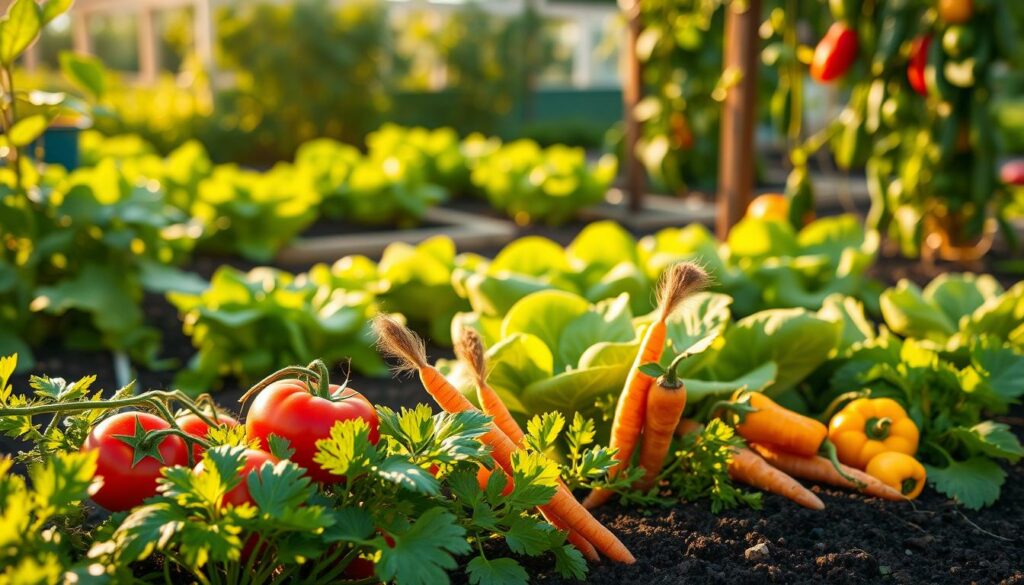
Tomatoes suit gardeners wanting summer fruit with little fuss. Choose determinate bush types like Celebrity or cherry types like Sweet 100 for easier care. These plants need full sun, rich soil with compost, regular watering, and staking or caging.
Start with transplants after the last frost. Space plants 18–36 inches apart. Watch for problems like blossom end rot, blight, and tomato hornworms. Crop rotation, mulching, and light pruning help prevent many issues.
Radishes give quick rewards and teach seed sowing. They mature in 3–6 weeks, so gardeners see fast results. Sow seeds 1/4–1/2 inch deep in loose, sandy soil and thin to 2 inches for straight roots.
Varieties like Cherry Belle and French Breakfast are reliable. Radishes can be planted between slower crops. They work well for succession planting and growing alongside other vegetables.
Lettuce suits gardeners wanting steady harvests with little stress. Leaf lettuces are good for cut-and-come-again harvests. Butterhead and romaine types fit whole-head picking. Sow every 2–3 weeks for continuous greens.
Lettuce prefers cool weather near 45–65°F. Partial shade helps in hot climates to delay bolting. Containers or raised beds are great for growing lettuce, making it very beginner-friendly.
Carrots teach patience and root care. They need deep, loose, stone-free soil or deep containers to grow straight roots. Sow small seeds directly and expect germination in 1–3 weeks. Thin seedlings to 2–3 inches apart.
Short types like Danvers or Chantenay suit heavier soils. Baby carrots can be harvested early for quick use. Storage carrots are harvested in fall for cool storage.
A balanced starter garden pairs radishes for quick crops, lettuce for steady greens, tomatoes for summer fruit, and carrots for root growing. These basic plants offer variety in timing and care. They support a successful start in gardening and build skills for more advanced projects.
Understanding Your Growing Zone
Climate shapes what will thrive in a garden. Knowing local temperatures, frost dates, and season length helps beginners grow vegetables with less risk.
A simple plan for a beginner vegetable garden layout starts with the growing window and sun exposure.
Gardeners should track average last spring frost and first fall frost to set planting dates. The USDA Plant Hardiness Zone Map gives a cold-hardiness baseline.
The National Oceanic and Atmospheric Administration provides frost-date estimates and climate data for precision. Local county extension offices and university websites add planting calendars tailored to nearby conditions.
Importance of Climate in Vegetable Selection
Temperature decides which crops mature on time. Cool-season crops like lettuce and peas prefer lower temperatures and do well early or late in the season.
Warm-season crops like tomatoes and peppers need steady heat to fruit well. Season length decides if slow-growing crops reach harvest before frost.
Heat tolerance differs by plant. Matching crop needs to local climate helps reduce losses. Gardeners should note microclimates formed by walls, trees, or pavement.
How to Determine Your Growing Zone
Start with the USDA zone as a basic cold-hardiness guide. Then consult NOAA for average frost dates. Use frost dates to find the frost-free growing period.
County extension services publish planting calendars and vegetable-specific schedules. Mapping sun, shade, wind, and soil drainage helps create a useful site plan.
This mapping guides beginner vegetable garden layout and informs vegetable gardening tips for beginners.
Common Vegetables for Different Growing Zones
Cool, short-season areas (Zones 3–5) favor quick and hardy crops. Peas, radishes, kale, lettuce, early carrots, and determinate tomatoes started indoors work well.
Moderate climates (Zones 6–7) broaden options. Tomatoes, peppers, summer squash, cucumbers, beans, and most root crops grow well there. Succession planting maximizes harvests.
Warm, long-season areas (Zones 8–10+) allow multiple plantings yearly. Eggplant, sweet potatoes, okra, tomatoes, and peppers thrive. Shade management keeps lettuce and cool-season greens healthy during hot spells.
Assess microclimates and match plants to specific yard spots. Use cool-season crops in early spring and fall. Plant warm-season crops after frost danger ends.
These steps are central to successful vegetable gardening and help beginners plan a growing zone for vegetables.
Preparing Your Garden Space
Getting ready for planting sets the tone for a productive plot. This short guide helps with practical choices for a beginner vegetable garden layout.
It also shows soil preparation tips for beginners. You’ll learn about container vs. in-ground gardening to start with confidence.
Choosing the Right Location
Pick a spot that gets at least 6–8 hours of direct sunlight for most crops. Leafy greens tolerate partial shade, so place them where sun is limited.
Keep the garden near a water source and within view of the house for easy watering and pest checks. Avoid low areas that collect water and choose places with good drainage.
Protect beds from strong winds with fencing or shrubs when possible. Plan paths so beds are easy to reach without compacting soil.
Soil Preparation Tips for Beginners
Start with a soil test from a county extension office or a home kit to check pH and nutrients. Most vegetables prefer pH 6.0–7.0.
Work in plenty of compost to boost fertility and soil structure. For heavy clay soil, add coarse sand and organic matter to loosen it.
For sandy soil, add compost and mulch to improve moisture retention. If pH needs adjusting, use lime to raise it or sulfur to lower it.
Avoid applying treatments without testing first. Consider raised beds filled with topsoil, compost, and a well-draining amendment for better warmth and easier care.
Container vs. In-Ground Gardening
Containers fit patios, balconies, and rental properties. Choose pots at least 12 inches deep for many vegetables and fill them with quality potting mix that drains well.
In-ground beds work well for root crops and larger plantings. They require more soil work upfront but often yield more per square foot.
Containers offer mobility to follow sunlight or protect plants from frost. Both setups gain from cold frames or row covers to extend the growing season.
For a simple plan, try block planting or short rows in small beds. Interplant fast crops like radishes with slower crops like carrots to save space.
These beginner ideas make starting a vegetable garden manageable. Focus on easy vegetables that build your confidence as a gardener.
Essential Tools for Vegetable Gardening
Starting a vegetable patch gets easier with the right gear. This guide covers practical choices for beginner gardeners. Each tool below keeps tasks simple, safe, and effective for new growers.
Must-Have Hand Tools for Beginners
A sturdy trowel helps transplant seedlings and dig small holes. A hand fork or cultivator loosens soil and removes weeds without disturbing roots. Garden gloves protect hands; breathable brands like Atlas and Foxgloves offer comfort and durability.
Pruners make clean cuts when harvesting or shaping plants. Felco bypass secateurs last longer. A garden rake levels beds and clears debris for tidy rows.
Watering Equipment Options
A hose with an adjustable spray nozzle covers most watering tasks for beds and containers. Soaker hoses and drip irrigation send water directly to roots. This reduces leaf wetness and limits disease.
These systems work well in raised beds and in-ground rows. Watering cans suit delicate seedlings and potted crops. Electronic timers help maintain a steady schedule, especially with drip lines.
Consistent moisture improves germination and reduces stress on young plants.
Garden Maintenance Tools
A wheelbarrow or garden cart makes moving soil, compost, and harvests easier. A garden hoe controls weeds between rows and helps cultivate surface soil. Stakes, cages, and trellises support tomatoes, peas, and vining crops.
Soil thermometers and moisture meters guide planting times and watering decisions. Keeping cutting tools sharp and disinfecting gear prevents disease spread. A 10% bleach solution or commercial disinfectant works well.
Beginners should start with a core set: trowel, pruners, hose, and gloves. Buy reputable brands for items that see heavy use to avoid frequent replacements. Adding tools as the garden grows saves money and space.
| Tool | Primary Use | Recommended Brand or Type | Tip for Beginners |
|---|---|---|---|
| Trowel | Transplanting seedlings, digging small holes | Stainless-steel blade, comfortable handle | Choose a pointed tip for dense soil |
| Hand Fork / Cultivator | Loosening soil, weeding | Three-tine hand fork | Use shallow tines to protect roots |
| Garden Gloves | Hand protection while working | Atlas or Foxgloves, breathable material | Replace when padding wears thin |
| Pruners (Bypass Secateurs) | Harvesting, pruning stems | Felco or similar quality brand | Sharpen regularly and oil pivot |
| Garden Rake | Leveling soil, removing debris | Steel head with hardwood handle | Use to break clods before planting |
| Hose with Spray Nozzle | General watering | Adjustable spray patterns | Store coiled to prevent kinks |
| Soaker Hose / Drip Irrigation | Efficient irrigation for beds/rows | Low-flow drip lines or porous soaker hoses | Pair with a timer for consistency |
| Watering Can | Gentle watering for seedlings and containers | Plastic or metal with a fine rose | Keep a light weight for easy handling |
| Timers | Automate irrigation schedules | Simple electronic timers | Set shorter runs during hot spells |
| Wheelbarrow / Garden Cart | Transport soil, compost, harvests | Single-wheel barrow or 2-wheel cart | Balance loads to ease pushing |
| Garden Hoe | Weed control, surface cultivation | Draw hoe or stirrup hoe | Use shallow strokes to cut weeds |
| Soil Thermometer & Moisture Meter | Measure soil temp and moisture | Probe-style meters | Check before planting and watering |
| Stakes, Cages, Trellises | Support for tall and vining plants | Bamboo stakes, wire cages, wooden trellises | Install early to avoid root disturbance |
Planting Techniques for Success
Good planting starts with clear choices and simple steps. This brief overview guides gardeners through seed vs seedling vegetables. It also covers planting depth, spacing, and companion methods to cut pests.
Each point aims to make planting less intimidating for those new to growing food.
Seed vs. Seedling: What to Choose
Seeds save money and offer more variety. Root crops like carrots and radishes grow best when sown directly. Lettuce and beans also thrive from seed.
Germination varies by seed type; some prefer light, others dark. Seedlings speed up harvests and reduce germination risks. Tomatoes, peppers, and eggplants benefit from transplants.
Buy quality starts from local nurseries like Home Depot or cooperatives. You can start seedlings indoors six to eight weeks before the last frost.
Harden off seedlings over seven to ten days to cut transplant shock. Move them outdoors for a few hours daily, increasing time. Let them stay out overnight before planting.
Proper Planting Depth and Spacing
Plant seeds about two to three times their thickness deep. Small seeds stay near the surface. Large seeds go deeper.
Set transplants so soil matches nursery pot level. Tomatoes can be planted deeper to help root growth.
Follow spacing on seed packets and plant tags. Lettuce needs 6–12 inches, radishes 2–3 inches after thinning, carrots 2–3 inches, and tomatoes 18–36 inches, depending on variety.
Block planting or square-foot methods often yield more than long rows. They also make garden care easier.
Companion Planting for Pest Control
Companion plants help deter pests and attract helpful insects. Basil near tomatoes can repel some pests and may improve flavor. Marigolds protect roots from nematodes. Onions and garlic discourage aphids.
Keep problematic neighbors apart. Avoid planting beans near alliums and brassicas near strawberries. Use companion planting as part of a larger plan. Include crop rotation, garden clean-up, and regular monitoring.
Timing is important. Plant cool-season crops like peas and seed potatoes in cool soil. Wait to plant warm-season transplants like tomatoes and peppers until soil and air are warm.
These beginner tips help reduce losses and improve garden yields.
Caring for Your Vegetable Garden
Good care keeps plants productive and reduces surprises. The notes here cover watering, feeding, and pest control.
These tips are clear and easy for beginner gardeners to follow and enjoy.
Watering Guidelines for Different Vegetables
Most vegetables need about 1 to 1.5 inches of water a week from rain or irrigation.
Containers dry out faster and need more frequent checking to avoid plant stress.
Deep and infrequent watering helps roots grow deep. Shallow watering causes surface roots that dry quickly.
Water early in the morning to reduce evaporation and lower risks of disease on plants.
Use soaker hoses or drip irrigation to keep leaves dry. Leafy greens need steady moisture to avoid bolting.
Tomatoes need even moisture to reduce risks of blossom end rot and fruit splitting.
Fertilization Basics for Beginners
Start with a soil test to feed plants based on their real needs.
A balanced organic fertilizer or slow-release mix at planting plus side-dressing usually works well.
Leafy crops usually require more nitrogen. Root and fruiting crops need moderate nitrogen with plenty of phosphorus and potassium.
Compost and well-rotted manure give steady nutrients without overfeeding.
Organic boosters like blood meal, bone meal, and fish emulsion help fix specific shortages.
Follow label rates and avoid heavy early applications that can harm roots.
Pest Control Strategies
Cultural practices reduce pest problems. Rotate crops yearly, clear debris, and use row covers early to block pests.
Encourage beneficial insects such as ladybugs and lacewings to protect your garden.
Handpick large pests like tomato hornworms. Use insecticidal soaps and oils for soft pests.
Bacillus thuringiensis (Bt) controls caterpillars on brassicas and does not harm pollinators.
Save synthetic pesticides for serious outbreaks and always read labels before use.
Choose disease-resistant varieties, space plants for airflow, avoid overhead watering, and rotate crops to reduce soil diseases.
Regular checks catch problems early. Watch for yellow leaves, wilting, or chewed foliage and act quickly.
These simple steps keep small vegetable plots healthy and productive.
| Task | When to Do It | Why It Helps |
|---|---|---|
| Water deeply | Early morning, 1–2 times weekly | Promotes deep roots and drought resilience |
| Soil test | Before planting season | Matches fertilizer to soil needs and saves money |
| Apply compost | At planting and mid-season | Improves structure, feeds microbes, steady nutrients |
| Use row covers | Early season, until flowering | Protects young plants from insects and frost |
| Inspect plants | Weekly | Detects pests, nutrient issues, and disease early |
| Side-dress fertilizer | Mid-season for heavy feeders | Supplies nutrients when plants need a boost |
| Handpick pests | As seen | Reduces pest numbers without chemicals |
| Drip irrigation | Install at planting | Saves water and keeps foliage dry to lower disease |
Harvesting Your Vegetables
Harvest time rewards patience and care. Gardeners watch size, color, firmness, and seed-packet days-to-maturity to decide when to harvest vegetables.
A quick taste test can confirm texture and flavor. Picking at the right moment improves beginner vegetable garden yield. It also reduces seediness or bitterness.
When to Know If Your Vegetables Are Ready
Radishes mature in 3–6 weeks when roots reach about an inch. Leaf lettuces are ready when leaves reach full size for the variety.
Tomatoes show full color and a slight give when ripe. Carrots are harvested when shoulders reach the desired diameter.
Overripe produce can be woody, bitter, bolted, or attractive to pests. Using days-to-maturity alongside visual cues helps gardeners avoid these problems.
This plan leads to better beginner vegetable garden yield and more planned harvests.
Tips for Safe and Efficient Harvesting
Use clean, sharp shears or a knife to cut heads, stems, and fruit to avoid plant damage. For roots, loosen soil with a fork before lifting to prevent broken roots.
Harvest in the cool morning to preserve crispness and extend shelf life.
Store greens in a damp towel in the refrigerator. Keep tomatoes at room temperature away from direct sun for best flavor.
Carrots prefer a cool, humid spot. Herbs can be dried, frozen, or kept in a glass of water in the fridge.
Remove damaged or diseased produce immediately to limit spread. Keep a simple harvest log of planting dates, varieties, and yields to improve timing next season.
Enjoying Your Homegrown Produce
Fresh uses are the easiest: salads with lettuce and radish, tomato sandwiches, roast carrots, and chopped herbs as garnishes.
Preserving surplus with freezing, pickling, or dehydrating stretches the harvest through colder months. For safe canning, gardeners should follow USDA guidelines.
Sharing surplus with neighbors, food banks, or community fridges reduces waste and builds local ties. Small steps in harvesting and handling make enjoying homegrown produce simple, safe, and satisfying for new growers.
Common Mistakes Beginners Make
Many new gardeners learn by doing, but some predictable errors can slow their progress. This section shows three common problems. These are overwatering, misreading plant needs, and ignoring pest management. It also offers clear solutions to fix these issues.
Overwatering and Its Consequences
Overwatering vegetables often causes yellowing leaves, soggy soil, and slow growth. Root rot and fungal diseases happen when the soil stays too wet. To prevent this, use well-draining soil mixes and improve container drainage.
Water plants deeply but less often. Moisture meters can help beginners know the right time to water. If overwatering happens a lot, repot with fresh soil or add drainage materials. Also, reduce how often you water.
Not Understanding Plant Needs
Failing to match crops to light, space, and soil leads to poor yields and disease. For example, sun-loving tomatoes in the shade or crowded lettuces cause problems. Soil tests show pH and nutrient levels. Without tests, gardeners might over- or under-fertilize.
Timing is important too. Planting warm-season crops too early can stunt growth. To better understand plant needs, follow seed packet instructions. Use local planting calendars and start small while learning crop care.
Ignoring Pest Management
Ignoring pests lets small problems become big losses. Early detection helps. Use simple methods like checking plants regularly, using row covers, and removing damaged leaves. These keep pest numbers low.
Beginner gardeners should use integrated pest management. This means using cultural controls, encouraging helpful insects, and applying treatments only when needed. Overusing pesticides can hurt pollinators and cause resistance.
Other common mistakes include poor record keeping and trying to do too much. Keep a garden journal, rotate crops, use season-extension tools, and size the garden to your available time. When problems happen, adjust watering, amend soil, remove bad plants, and learn from your notes. These steps help recover your garden and build confidence.