

Nearly 70% of homeowners say they could improve their yards but delay projects due to cost. Cheap garden ideas can close this gap with smart planning and thrift. This guide shows readers across the United States how to design attractive outdoor spaces on a budget.
The article focuses on practical how-to help: inspiration, step-by-step instructions, cost-saving methods, and hands-on resources. It explains why low-cost choices work and how to set realistic budgets. Readers also learn where to find materials and plants at a discount.
Readers will find a clear structure covering planning and creative reuse of materials. It also includes low-cost plant options, DIY projects, vertical gardening, and budget hardscaping. Sustainable practices like composting and rainwater harvesting are discussed along with simple maintenance tips.
Typical cost ranges and timeframes help set expectations. Container gardens cost under $100, while DIY raised beds range from $200 to $800 depending on size and materials. Modest patio updates start near $500. Project times vary from a weekend for planters to a few weekends for larger hardscape jobs.
For sourcing, check local garden centers such as Home Depot and Lowe’s. You can also find materials at municipal plant sales and community plant swaps. Online marketplaces like Facebook Marketplace and Craigslist offer used tools, reclaimed wood, and plants. These options help stretch every dollar further.
Key Takeaways
- Cheap garden ideas let most homeowners refresh yards without major spending.
- Budget-friendly landscaping tips cover planning, materials, plants, and DIY projects.
- Expect small projects under $100 and medium builds in the $200–$800 range.
- Sustainable practices like composting and rainwater harvesting save money over time.
- Source supplies at Home Depot, Lowe’s, plant swaps, and online marketplaces to cut costs.
1. Why Choose Budget-Friendly Garden Ideas?
Choosing budget-friendly landscaping tips helps homeowners stretch dollars while turning a yard into a pleasant outdoor space. Small changes can make a big difference in curb appeal and daily use without large expenses.
The Benefits of Affordable Landscaping
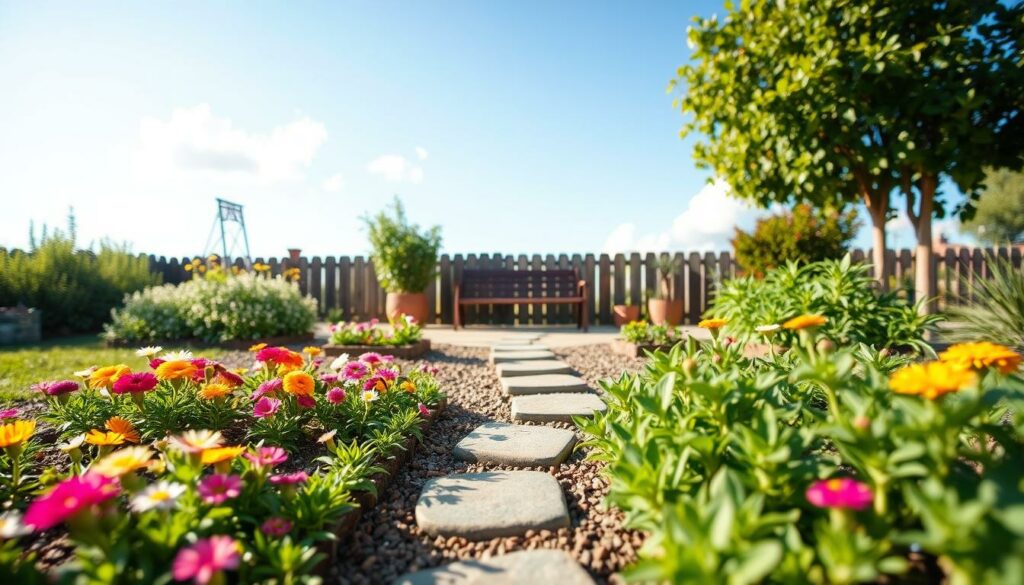
Affordable landscaping delivers visible results with lower upfront costs and modest maintenance needs. Defined planting beds, inexpensive pathways, and container arrangements transform small yards into inviting places to relax.
Simple upgrades often give strong returns. Fresh mulch, a focal container planting, neatly trimmed hedges, and a painted fence refresh a property at low cost. These moves improve outdoor livability and support mental well-being.
Environmental Considerations
Budget-conscious choices often match eco-friendly practices. Using native plants reduces water and fertilizer needs. Reclaimed materials keep waste out of landfills and add character to garden features.
Water-wise planting and consistent mulching cut irrigation needs and lower utility bills. In areas with restrictions, planting drought-tolerant species and capturing rainwater can deliver long-term savings.
Enhancing Property Value
Modest landscaping can raise a home’s perceived value and speed up sales. Real estate research shows clean walkways, defined outdoor living areas, healthy plants, and practical irrigation catch buyers’ attention.
Cost-effective updates, such as edging beds, installing a simple seating area, or improving lighting, create a strong first impression. These thrifty backyard designs and cheap garden ideas can yield measurable returns at resale.
| Upgrade | Typical Cost Range | Primary Benefit |
|---|---|---|
| Fresh mulch and bed edging | $50–$300 | Instant curb appeal, weed suppression |
| Container focal planting | $20–$150 | Visual interest, low commitment |
| Simple gravel pathway | $100–$600 | Defined circulation, low maintenance |
| Reclaimed wood planter or bench | $0–$200 | Unique style, sustainable material use |
| Drip irrigation retrofit | $75–$500 | Water savings, plant health |
2. Planning Your Garden on a Budget
A clear plan keeps costs low and stops wasted effort. This section guides readers through setting realistic budgets and choosing must-have features first.
It also covers researching plants and materials that thrive locally. Using cheap garden ideas and budget-friendly landscaping tips keeps the plan practical and inspiring.
Setting a Realistic Budget
Start with an audit of available funds. List savings, monthly amounts you can reallocate, and any gift or community grants. A simple ledger works well.
Next, write a wish list of desired features. Include seating, planting beds, irrigation, lighting, and pathways. Break each item into parts for easier cost estimates.
Estimate costs for materials, plants, tools, and labor if hiring help. Use local nursery and hardware store prices. Add a 10–20% contingency for surprises.
Offer tiered budget examples to set expectations:
- Small: under $200 — container gardens, basic soil upgrades, low-cost seeds.
- Medium: $200–$1,000 — raised beds from reclaimed wood, some shrubs, basic pavers.
- Larger DIY overhaul: $1,000–$5,000 — extensive planting, irrigation, seating, and small hardscape elements.
Prioritizing Essential Features
Put function before looks. Core needs include privacy, safe pathways, drainage, and seating. Tackle these first for early usability.
Use a must-have / nice-to-have list to phase work. Complete a few affordable wins fast, like mulching, adding native groundcover, or installing basic lighting.
Plan projects in stages to let small budgets show visible progress. This method fits low-cost gardening and keeps motivation high.
Researching Local Plants and Materials
Consult local Cooperative Extension offices for planting calendars and pest guidance. Check USDA Hardiness Zone maps to match plants with the climate.
Visit nurseries, farmer’s markets, and municipal plant sales for affordable, well-adapted specimens. Local outlets often carry proven performers for your area.
Look for inexpensive materials at reclaimed wood yards, Habitat for Humanity ReStore, salvage yards, and online marketplaces. Reused materials cut costs and add character.
3. Creative Use of Recycled Materials
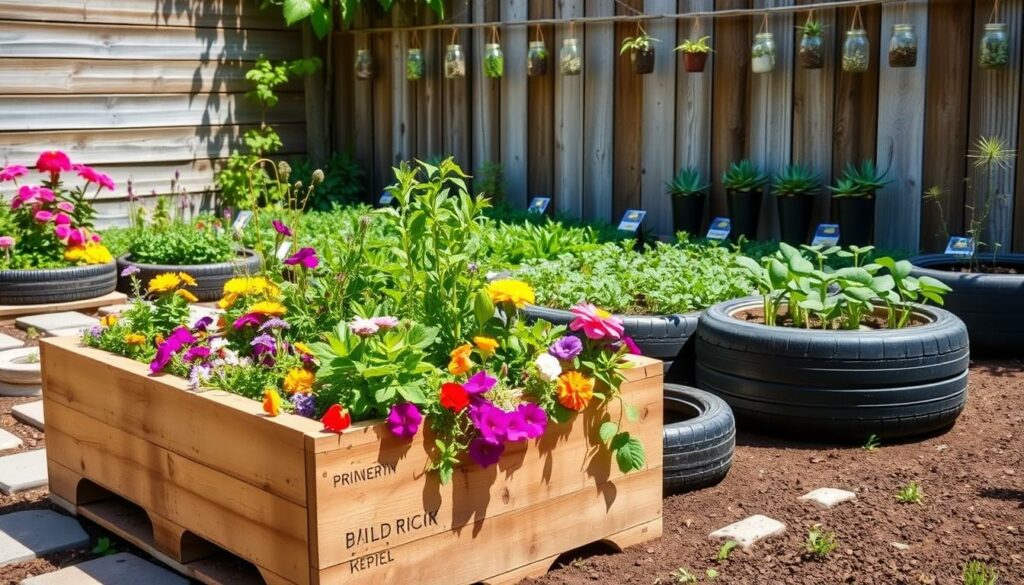
Repurposed items add character and save money in a garden. Reclaimed materials cut costs and create unique focal points. Below are safe, simple ways to change cast-offs into stylish outdoor decor and backyard designs.
Upcycling pallets creates quick, budget-friendly garden features. Many garden centers, warehouses, and retail stores give pallets away or sell them cheaply. Choose pallets stamped HT (heat-treated) and avoid those with unclear chemical treatment labels.
- Vertical pallet herb gardens: attach landscape fabric and fill slats with soil for planting herbs.
- Pallet compost bins: hinge two pallets and secure them with screws for a simple bin.
- Horizontal raised frames: place pallets flat, add landscape fabric, then fill with soil.
Basic tools keep projects easy: deck screws, a drill, a staple gun, and landscape fabric. Always wear gloves and a dust mask when cutting wood.
Old furniture can become planters and conversation pieces instantly. Dressers, drawers, chairs, and cast-iron bathtubs find new uses. Drill drainage holes and line them inside to protect from constant moisture.
- Dressers and drawers: remove backs, add drainage, then fill with potting mix for tiered beds.
- Chairs and stools: replace seats with shallow pots for cottage-style displays.
- Bathtubs and sinks: use heavy-duty liners and add gravel before planting for drainage.
Painting and sealing increase outdoor lifespan. Rust-Oleum offers affordable outdoor paint and sealers that resist weather and protect surfaces.
Reclaimed wood is strong for raised beds, edging, benches, and trellises. Find it at demolition sites, Habitat for Humanity ReStore locations, and Craigslist. Check boards for rot and nails before use.
- Sanding and staining smooth splinters and improve appearance.
- Weathered look: leave untreated for rustic charm on pieces above ground.
- In-ground use: treat wood with a rot-resistant solution or use a barrier to stop soil contact.
| Material | Common Source | Typical Uses | Key Safety Tip |
|---|---|---|---|
| Pallets | Warehouses, garden centers, retailers | Vertical planters, compost bins, raised frames | Use HT-stamped pallets only |
| Old furniture | Thrift stores, curbside finds, ReStore | Planters, focal pieces, container gardens | Drill drainage and line interiors |
| Reclaimed wood | Demolition sites, Habitat ReStore, Craigslist | Raised beds, benches, trellises, edging | Check for rot; treat if used in-ground |
4. Low-Cost Plant Options
Choosing the right plants helps cheap garden ideas work well. Native species reduce water use and resist pests. They support local pollinators and match regional soils and climate.
The Lady Bird Johnson Wildflower Center, state extension services, and Native Plant Finder help homeowners find suitable varieties.
Popular native picks vary by area. In many places, coneflower and black-eyed Susan do well. Ornamental grasses add texture and need little care.
Salvia attracts bees and hummingbirds. Gardeners should check local suitability before planting. This helps avoid problems later.
Perennials offer good long-term value for low-cost gardening projects. They cost more initially but bloom every season. Proper division and care lower lifetime expenses and create stable beds.
Annuals bring quick color and flexibility for affordable outdoor decor. They cost less per plant but must be replanted yearly. Mixing perennials with annuals balances cost and style.
Starting plants from seed saves money for cheap garden ideas. Seed packs often yield dozens of plants for just a few dollars. Seedlings usually cost $3–$8, so seeds stretch the budget.
Seed starting needs few supplies: seed trays, sterile potting mix, and a sunny window or grow light. Some plants start indoors; others sow directly outdoors. Timelines depend on zone and crop, so check local frost dates.
Easy seeds for beginners include zinnias, marigolds, and sunflowers. Vegetables like beans and radishes sprout fast and teach timing. These choices keep outdoor decor affordable and fun.
| Plant Type | Typical Upfront Cost | Maintenance | Best Use |
|---|---|---|---|
| Native Perennials (e.g., coneflower) | $8–$25 per plant | Low to moderate; divide every few years | Long-term structure, pollinator support |
| Annuals (e.g., marigolds, petunias) | $1–$4 per seed packet; $3–$8 per seedling | Moderate; replant each season | Seasonal color, quick curb appeal |
| Seeds (zinnias, sunflowers, radishes) | $1–$5 per packet | Low; need thinning and watering | High volume for flower beds and veggies |
| Ornamental Grasses | $10–$30 per clump | Low; cut back in spring | Texture, erosion control, low water use |
5. DIY Garden Projects
Hands-on projects help homeowners stretch a small budget while improving curb appeal. This section covers steps for raised beds, creative planters, and gravel walkways. Each project uses common materials and clear measurements to save time and money.
Building Your Own Raised Beds
Choose a sunny, well-drained spot and mark the area with stakes and string. Measure and cut materials to a size like 4’ x 8’ with 12–18” height for easy use. Cedar resists rot, reclaimed wood saves money, and concrete blocks offer a no-dig option.
Assemble the frame with galvanized screws or exterior brackets, level the base, and fill it with local topsoil mixed with compost and aeration material. Using home-made compost cuts costs and improves soil health. Raised beds often cost less per square foot than prebuilt kits.
Crafting Decorative Garden Planters
Use items like painted metal buckets, whiskey barrels, terra-cotta pots, or concrete molds to make striking containers. Make sure each planter has drainage holes and 8–12 inches of soil for most perennials and herbs.
Add budget-friendly finishes to match your yard’s style. Stenciling with acrylics, chalk paint accents, or rope wrapped around rims creates a fresh look without much expense. These ideas allow homeowners to refresh plant displays seasonally at low cost.
Creating Pathways with Gravel
Gravel paths cost less than pavers or poured concrete. Start by digging the path 4–6 inches deep. Lay landscape fabric to stop weeds, add edging to hold gravel, compact a crushed stone base, and spread pea gravel or decomposed granite on top.
The crushed stone base stabilizes the path and improves drainage. Compare costs per foot: gravel is much cheaper than pavers or concrete. This makes gravel a great, affordable option for patios and garden paths.
| Project | Key Materials | Estimated Dimensions | Cost Tip |
|---|---|---|---|
| Raised Bed | Cedar or reclaimed wood, screws, compost | 4′ x 8′ x 12–18″ | Use local topsoil and homemade compost |
| Decorative Planter | Buckets, barrels, terra-cotta, concrete mix | Varies by plant (8–12″ depth common) | Refinish with stencils or rope instead of buying new pots |
| Gravel Path | Landscape fabric, edging, crushed stone, pea gravel | Typical width 2–4′ ; depth 4–6″ | Choose pea gravel over pavers for lower per-foot cost |
6. Utilizing Vertical Space
Expanding planting upward helps small yards feel larger and more interesting. Vertical solutions add color, texture, and utility without taking up ground space.
This approach supports thrifty backyard designs and offers many cheap garden ideas. It keeps affordable outdoor decor in mind.
Wall-mounted systems fit tight yards and patios. Pocket planters hold herbs and annuals. Trellises guide vines and create outdoor rooms.
Living walls turn plain fences into lush features that block noise and add privacy. Construction choices range from simple DIY to ready-made systems.
Repurposed pallets become staggered planters with few tools. Pocket fabric organizers offer a quick solution for herbs. Modular vertical planters from brands like Woolly Pocket suit those who prefer plug-and-play setups.
Keep irrigation in mind. Vertical soil dries faster, so plants need more watering. Installing a drip line or soaker hose on tiers cuts daily work.
Self-watering containers reduce maintenance and help keep plants healthy.
Vertical Gardening Techniques
Use lightweight soil mixes and small pots on upper levels to limit weight. Mix trailing and upright species to add depth. Stagger planter sizes to balance visuals and improve light for each plant.
Benefits of Hanging Planters
Hanging containers free ground space and create layered sightlines. They soften hardscapes and allow seasonal swaps with little work.
Trailing ivy, petunias, ferns, and strawberries grow well in hanging pots. They provide quick impact for cheap garden ideas.
Mount hangers with proper anchors for siding or masonry. Choose stainless steel or powder-coated hooks for lasting weather resistance. Use chains rated for outdoor use and check load limits before filling containers.
Choosing the Right Climbing Plants
Clematis and climbing roses add vertical blooms on a modest budget. Honeysuckle attracts pollinators and perfumes evening air.
Trumpet vine brings bold color but needs careful control. Consider non-invasive natives like American bittersweet while monitoring to prevent spreading.
Support structures can be simple and cheap. Arbors and pergolas create focal points.
Wooden or metal trellises install easily and can be made from reclaimed materials. Train plants with soft ties and prune regularly to keep growth tidy and budget-friendly.
| Solution | Cost Range | Maintenance Needs | Best Uses |
|---|---|---|---|
| Pallet Planter | Low | Weekly watering, occasional repair | Herbs, annual flowers, seedlings |
| Fabric Pocket Organizer | Low to Medium | Frequent watering, check drainage | Salads, herbs, compact ornamentals |
| Modular Vertical Planter (Woolly Pocket style) | Medium | Moderate, integrates drip irrigation well | Mixed perennial displays, living walls |
| Hanging Planters with Hooks | Low to Medium | Regular watering, seasonal swaps | Trailing plants, strawberries, ferns |
| Trellis or Arbor | Low to Medium | Pruning and training each season | Climbing roses, clematis, honeysuckle |
7. Budget-Friendly Hardscaping Ideas
Hardscaping can change a yard without needing a large budget. Practical choices and simple prep make it possible. A few DIY skills help many homeowners upgrade patios affordably.
Affordable Patio Options
Gravel patios and compacted decomposed granite cost little. They drain well and install quickly. Patio pavers laid by hand on sand cut labor costs compared to concrete.
Reclaimed concrete slabs or secondhand patio tiles offer savings and a mature look. Level the area, install a weed barrier, and add edging. These steps keep materials in place.
Gravel and decomposed granite often cost less per square foot than pavers or poured concrete. Outdoor rugs, string lights, and used patio furniture improve comfort at low cost.
Creative Walkway Solutions
Stepping stones set in mulch or grass create casual paths cheaply. Wood slice paths add rustic charm using storm-downed trees. Compact gravel with some paver accents gives a modern look at a fair price.
Low-cost poured concrete strips can form narrow, minimalist walking routes. Check slope and drainage to avoid pooling. Space stones for natural strides and test for trip hazards.
Proper base material and tamping help prevent future shifting and uneven settling. These basics support safe, durable walkways.
Reusing Existing Stone or Brick
Salvaging stone and brick onsite lowers material costs and keeps style matching. Pieces can be used as borders, raised bed edges, or pathway pavers. You will need a pry bar, mallet, and coarse sand.
Resetting steps include lifting each unit, clearing the base, adding compacted sand or gravel, then setting the piece carefully. Check for level as you work.
Reuse adds character and sustainability to cheap garden ideas. Stability matters: proper base prep and re-tamping help stop uneven settling over time.
| Hardscape Option | Typical Cost Range (per sq ft) | Pros | Cons |
|---|---|---|---|
| Gravel Patio | $1–$3 | Low cost, excellent drainage, DIY friendly | Needs edging, can scatter |
| Decomposed Granite | $2–$5 | Stable when compacted, natural look | May need resealing in high use areas |
| DIY Pavers | $5–$15 | Durable, many styles, modular repairs | Higher material cost, requires labor |
| Poured Concrete | $6–$12 | Smooth, long-lasting, low maintenance | Higher cost, professional finish improves price |
| Reused Stone/Brick | $0–$8 | Unique character, sustainable, low material cost | Labor intensive, variable condition |
Using these ideas helps create thrifty backyard designs that look polished. Small investments in prep and placement give lasting results without costly materials.
8. Sustainable Gardening Practices
Adopting sustainable gardening boosts soil health and cuts costs. Readers will learn simple steps for composting, rainwater harvesting, and mulching. These tactics support sustainable gardening while keeping the budget low.
Composting: Cost-Effective Fertilizer
Home composting starts with kitchen scraps like vegetable peels and coffee grounds. Add yard waste such as leaves and grass clippings.
Balance carbon and nitrogen by mixing browns like dry leaves with greens like food scraps. Turn or aerate the pile weekly to speed breakdown. Check moisture; it should feel like a damp sponge.
Choose a composting method that fits your yard and budget. Tumblers give fast results. DIY bins from pallets cost nothing. A stationary pile works if space allows.
Composting reduces household waste and provides free nutrient-rich soil. It improves soil structure and supports healthy plants.
Rainwater Harvesting for Irrigation
Collecting rainwater cuts water bills and lessens strain on city supply. Place barrels under downspouts and use diverters to channel roof runoff.
Link barrels to soaker hoses or drip lines for efficient watering. Home Depot and Lowe’s offer affordable rain barrels and diverters for budget gardeners.
Check local rules before installing collection systems. Don’t use harvested water for drinking without treatment. Screen inlets and lids to keep out debris and mosquitoes.
Simple rainwater systems work well with other low-cost gardening projects to save money and resources.
Mulching Benefits
Apply 2–4 inches of organic mulch such as wood chips, bark, straw, or leaf mulch. Mulch conserves moisture and stops weeds from growing.
It moderates soil temperature and adds organic matter as it breaks down. Keep mulch a few inches from plant stems to avoid rot and pests.
Replenish mulch yearly to keep benefits. Buying local bark or asking tree services for chips can lower costs. These steps protect plants and reduce labor in low-cost gardening projects.
9. Maintaining Your Budget Garden
Keeping a low-cost garden looking good takes simple, steady care. Small, routine tasks — weeding, mulching, pruning, watching for pests, and checking irrigation — stop minor issues from becoming expensive repairs.
A basic tool kit with a hand trowel, pruning shears, rake, soaker hose, and sturdy gloves covers most jobs. Buying quality tools on sale or secondhand stretches dollars while improving results for cheap garden ideas and low-cost gardening projects.
Seasonal work keeps plants healthy and spreads expenses across the year. In spring, amend soil and focus on planting.
Summer calls for regular watering and shade management. In fall, clean beds and refresh mulch. Winter is for protecting tender plants and planning next steps.
Phase bigger tasks—planting in spring, hardscaping in late summer or fall—to balance time and budget while following budget-friendly landscaping tips.
Learning from experience makes future projects easier and cheaper. Keep a garden journal or photos to track what thrives and what fails.
Refine plant choices and layout over time. Tap local resources like county extension workshops, gardening clubs, and YouTube tutorials to build skills without costly trial and error.
Small projects and steady learning create a resilient, attractive yard. This proves that low-cost gardening and budget-friendly landscaping can be both beautiful and durable.