

Nearly 70% of Americans say a vibrant front yard makes a neighborhood more welcoming. This shows how colorful garden plants shape first impressions and daily mood.
This guide explains how colorful garden design can transform outdoor spaces with blooms and foliage. It helps gardeners, community organizers, and hobbyists across U.S. zones choose plants that fit their climate and seasons. You will learn how to build displays with strong visual impact.
Readers will discover why color matters. It can improve curb appeal, add year-round interest, attract pollinators, and boost mood. This guide also covers key design ideas like color theory, repetition, and contrast to create unity and drama in the landscape.
The article explains the importance of color in garden design. It highlights vibrant garden flowers and foliage plants. You will learn the differences between annuals and perennials and how to create a foliage color palette.
It also covers layout and container strategies, native plant options for sustainability, maintenance tips, and seasonal planning. Finally, it shows ways to showcase colorful plantings effectively.
Key Takeaways
- Colorful garden plants boost curb appeal and attract pollinators.
- Use color theory, repetition, and contrast for cohesive colorful garden design.
- Choose vibrant garden flowers and foliage suited to your U.S. climate zone.
- Mix annuals and perennials for continuous color and the best plants for visual impact.
- Containers and layered layouts extend color when space is limited.
The Importance of Colorful Plants in Garden Design
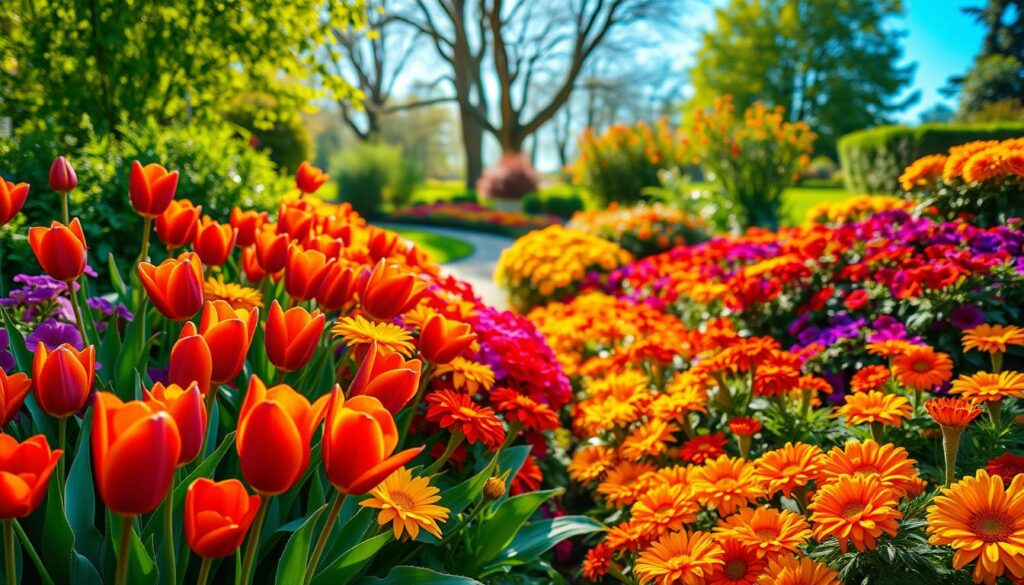
Color can turn a plain yard into a memorable space. Using colorful garden plants gives structure to paths and highlights entryways. Vivid focal points often frame patios beautifully.
Gardeners plan color just like they would a room. They use blooms and foliage to define outdoor “spaces.” These spaces invite people to linger and enjoy the view.
Enhancing aesthetic appeal
Bright blooms and unique foliage lift the look of a landscape quickly. Masses of petunias or zinnias create bold swaths visible from the street. A Japanese maple near a walkway draws attention to an entry.
A band of marigolds makes patios warmer and more inviting. These simple touches bring energy and charm to outdoor spaces.
Creating visual interest
Contrast, texture, and scale all work with color to keep design lively. Complementary colors like orange marigolds with deep purple petunias provide strong contrast. Analogous colors such as pinks and reds create a soft flow.
This soft flow gently guides the eye through beds and borders. Mixing color schemes adds depth and excitement to the garden design.
Complementing other plants
Colorful accents should support greens and evergreens without competing. Foliage-rich plants like Heuchera and Coleus offer lasting color after blooms fade. Matching plant heights and blooming times keeps interest layered throughout seasons.
This layering covers spring bulbs, summer annuals, and fall foliage changes to ensure year-round beauty.
| Design Goal | Plant Examples | Practical Tip |
|---|---|---|
| Bold focal point | Petunias, Zinnias, Japanese maple | Plant in masses near entrances or seating areas |
| High-contrast beds | Marigolds with purple petunias | Use in small drifts to avoid overwhelming neighboring plants |
| Soft transitional flow | Pink salvias, red geraniums, white alyssum | Create gradual color shifts between zones |
| Year-round interest | Coleus, Heuchera, evergreen shrubs | Mix foliage color with seasonal blooms for balance |
Popular Colorful Flowering Plants
A vibrant plant selection can transform any border, patio, or container into a lively display. Gardeners choose species that offer easy care and long-lasting color.
The following plants provide reliable performance and a wide palette for vibrant garden flowers and colorful garden plants.
Petunias: Versatile and Vibrant
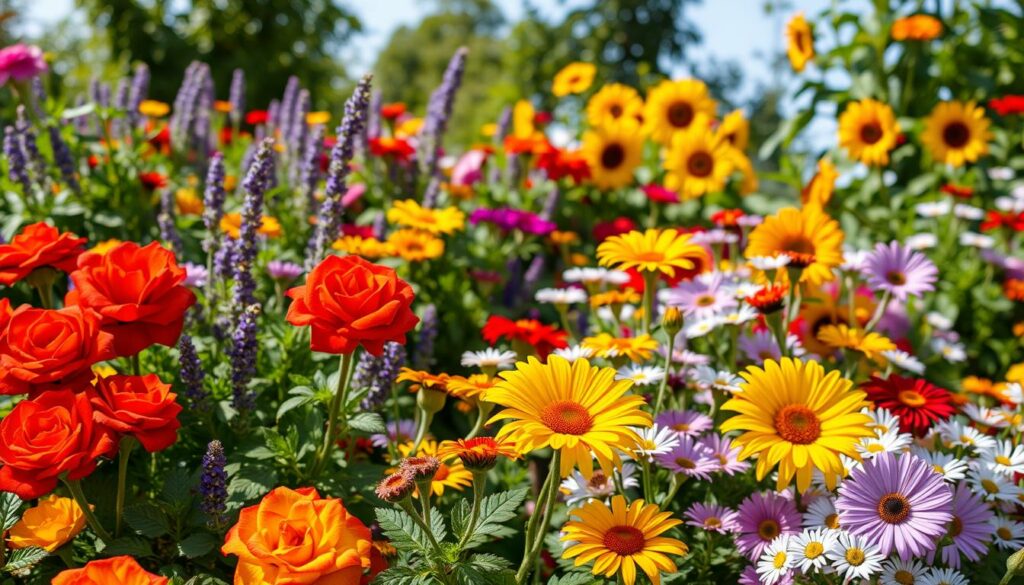
Petunias include grandiflora, multiflora, and Wave series. Grandiflora has large trumpet blooms. Multiflora sets many smaller flowers.
Wave forms spreading mats, ideal for groundcover or hanging baskets. Petunias come in colors from white to deep purple, including soft pinks and striking bicolors.
They prefer full sun to partial shade and well-drained, fertile soil. Deadheading spent flowers keeps blooms coming and extends the season.
Use petunias in hanging baskets, along borders, or massed for bold color. They grow as annuals across most of the United States in frost-free zones.
Marigolds: Bright Beloved Blooms
Marigolds come in two main forms: compact French types and taller African or triploid varieties. French marigolds form neat mounds, while African types produce larger, showy heads.
Colors include gold, orange, and deep red tones that complement many planting schemes. Marigolds do best in full sun and average garden soils.
Deadheading and moderate watering promote steady flowering. Grow marigolds near tomatoes and peppers for companion-planting benefits.
They help repel some pests and reduce nematodes, making them useful in vegetable plots as well.
Zinnias: Bold and Beautiful
Zinnia elegans, the common garden zinnia, offers vivid reds, pinks, oranges, yellows, whites, and many bi-colors. Varieties range from dwarf bedding types to tall cutting types.
Zinnias thrive in full sun and tolerate heat, making them ideal for summer color. They attract pollinators like butterflies and bees.
Space plants properly to reduce mildew risk and keep foliage dry. Use short zinnias for edging or mass color.
Tall varieties suit cutting gardens. Their long stems and steady bloom make them favorites for fresh bouquets and stunning garden displays.
Foliage Plants That Add Color
The right foliage can lift a garden as much as flowers. A thoughtful foliage color palette brings texture, contrast, and year-round interest to beds and containers.
Gardeners can build depth by mixing leaf shapes and tones from vibrant plants that complement blooms and hardscape.
Coleus: Varieties for All Seasons
Coleus (Solenostemon scutellarioides) offers dramatic leaf patterns in reds, oranges, yellows, chartreuse, and purples. Many gardeners treat it as an annual, while southern climates allow perennial growth.
Several cultivars, such as ‘Kong’ series and ‘Wizard’ series, deliver bold color for containers and shaded beds.
Coleus tolerates light from deep shade to bright filtered sun, depending on the variety. It prefers consistent moisture and benefits from pinching back to promote a bushy habit.
Pair coleus with flowering annuals to combine foliage drama with blooms along edges or in mixed pots.
Heuchera: Colorful Leaves Year-Round
Heuchera, commonly called coral bells, is prized for a wide spectrum of leaf colors. Options range from silver and lime to burgundy and chocolate. These colors offer subtle shifts through the seasons.
Cultivars like ‘Palace Purple’ and ‘Lime Marmalade’ are reliable choices for strong color impact.
These perennials perform best in part shade to full shade with well-drained soil. They work well as underplanting beneath shrubs or in woodland-style borders.
In mild winters many varieties retain foliage, making them a steady part of a diverse garden foliage plan.
Japanese Maple: Striking Foliage Options
Acer palmatum and its cultivars provide small-tree structure with dramatic seasonal color. Leaves may turn deep reds, bright oranges, or display elegant variegation.
Forms range from upright to weeping and dissectum types with finely cut leaves.
Site Japanese maples in partial shade or filtered sun to protect leaves from scorch. They prefer acidic, well-drained soil.
Planting one as a specimen brings vertical interest and frames patios, entries, or focal garden areas. Be mindful of cultivar hardiness when selecting trees for specific climates.
Annuals vs. Perennials: What’s the Difference?
Gardeners weigh options when planning colorful garden plants. Choosing between annuals and perennials shapes bloom time, maintenance, and visual strategy.
A clear plan helps pair reliable structure with seasonal bursts for the strongest displays.
Lifespan and Blooming Patterns
Annuals complete their lifecycle in a single growing season. They germinate, bloom, set seed, and die before winter.
Petunias and zinnias are classic annuals that give intense, continuous color through summer.
Perennials return year after year from roots or crowns. Many offer repeat blooms and lasting framework for the bed.
Heuchera and ornamental grasses provide steady foliage and seasonal flowers that anchor the garden.
Color Variation in Annuals and Perennials
Annuals deliver a wide immediate palette, ideal for seasonal themes and quick makeovers.
Their blooms often have higher intensity and variety. This makes them perfect for festival or holiday planting.
Perennials have narrower bloom windows but add depth through foliage, texture, and reliable reappearance.
Combining both creates a balanced display: perennials as backbone, annuals for short-term color pops.
Best Choices for Colorful Gardens
For maximum summer impact, mix zinnias, marigolds, petunias, and lantana for vibrant plant selection that commands attention.
For year-round foliage color, include Heuchera, coleus, ornamental grasses, and evergreen shrubs.
Pollinator-focused beds benefit from coneflowers (Echinacea), milkweed (Asclepias), and bee balm (Monarda).
Select cultivars suited to local USDA zones and microclimates to ensure success.
- Tip: Use perennials for structure and soil stability.
- Tip: Layer annuals in front or around perennials for seasonal contrast.
- Tip: Rotate annual varieties each year to refresh the best plants for visual impact.
Creating a Color Palette for Your Garden
A thoughtful palette turns scattered plantings into a cohesive scene. Color choices set mood, guide the eye, and keep interest through the seasons.
The following tips help gardeners craft a foliage color palette and plan for vibrant garden flowers without overwhelming the space.
Choosing Complementary Colors
Basic color theory helps. Complementary colors sit opposite each other on the color wheel and deliver high contrast.
For example, pair purple salvia with yellow coreopsis for strong contrast that reads clearly from a distance.
Analogous schemes use adjacent hues for harmony. A warm bed of pinks and reds from begonias and salvias creates a cozy, unified feel.
Test combinations with photos, paint swatches, or plant tags before committing.
Seasonal Color Schemes
Plan palettes by season so eye-catching plant combinations evolve naturally. In spring, choose pastels and bright early bulbs such as tulips and daffodils to welcome viewers.
Summer calls for bold mixes. Zinnias, petunias, and marigolds provide long-lasting, vibrant garden flowers that keep beds active through heat.
For fall, shift toward warm tones. Japanese maple, asters, and chrysanthemums offer rich reds, oranges, and golds that extend interest deep into the season.
Stagger bloom times to maintain continuous color.
Balancing Bright Colors with Neutrals
Neutrals give the eye a place to rest and highlight stronger hues. Use whites, silvers, and greens to frame intense beds.
White alyssum and silver-leaved Artemisia are reliable choices. Lamb’s ear (Stachys) and soft green foliage work as calm backdrops for bold flowers.
Repeat neutral elements to guide sight lines and unify diverse plantings across the landscape.
- Tip: Create small test beds of three to five species to judge interaction before large-scale planting.
- Tip: Keep a simple palette in small spaces and expand color complexity in larger areas.
- Tip: Use repetition of key colors to strengthen a colorful garden design and produce memorable scenes.
Designing Garden Layouts for Color
Good layout turns a mix of colorful garden plants into a coherent scene. Thoughtful placement of height, texture, and hue helps visitors move through the space and notice the best blooms.
The following techniques help gardeners build depth, add portable bursts of color, and frame pathways. They also create lasting curb appeal.
Layering Plants for Depth
Layering uses foreground, middle, and background tiers to maximize color visibility. Low annuals such as lobelia and alyssum sit at the front. Medium perennials like heuchera and salvia form the mid-row.
Tall specimens, for example Japanese maple or tall zinnias, anchor the back. Sightlines matter. Repeating color blocks and spacing rhythmically creates a guided view.
Planting templates make this simple: front row of low annuals, mid row of bushy perennials, and background of taller focal plants. This approach strengthens composition and shows an intentional plant selection.
Using Containers for a Pops of Color
Containers give flexibility to introduce bright displays on patios, balconies, and entryways. The recommended formula combines a thriller, spiller, and filler. A tall ornamental grass or begonia acts as the thriller.
Trailing petunia or bacopa serves as the spiller. Coleus or calibrachoa fills the middle. Good container soil drains well and holds nutrients.
Ensure drainage holes and use a mix with compost and coarse sand. Watering frequency rises in heat; check daily during hot spells. Rotate seasonal plants to keep combinations fresh and lively.
Pathways and Borders with Colorful Plants
Edging and border beds frame walkways and guide movement through the garden. Use durable choices like marigolds, dwarf zinnias, lavender, and sedum for long-lasting color. Plant in repeated groups to lead the eye along paths.
Curb appeal benefits from staggered heights and alternating color bands. Low shrubs or ornamental grasses add structure between bright bands. Durable borders and repeated hues create clear sightlines and enhance the overall colorful garden design.
| Design Element | Plant Examples | Purpose |
|---|---|---|
| Front Layer | Lobelia, Alyssum, Dwarf Zinnias | Showcase low color, define edges |
| Middle Layer | Heuchera, Salvia, Coleus | Provide texture and mid-height blooms |
| Background | Japanese Maple, Tall Zinnias, Ornamental Grass | Create height and a focal backdrop |
| Container Formula | Thriller: Ornamental Grass; Filler: Calibrachoa; Spiller: Bacopa | Portable, high-impact color displays |
| Border Choices | Marigolds, Lavender, Sedum, Dwarf Zinnias | Durable edging that guides movement |
| Maintenance Tips | Well-draining soil, regular watering, seasonal rotation | Keep vibrant plant selection and blooms healthy |
Native Colorful Plants for Sustainability
Choosing native colorful plants helps gardens thrive with less work. These species fit local soils and climates well.
Gardeners spend less time watering and use fewer resources on fertilizers or pesticides. Native plants support local ecosystems while adding rich hues to yards.
Native planting offers practical and ecological benefits. Plants that evolved locally are drought tolerant and resist pests and diseases better.
They build soil health and provide food and shelter for birds, bees, and beneficial insects. This fits well with sustainable garden goals.
Benefits of Native Planting
Lower maintenance is a clear benefit. Native colorful plants need less irrigation once established and reduce chemical use.
They reduce runoff and protect waterways. By encouraging local biodiversity, gardens become resilient habitats for wildlife.
Adaptation to regional conditions matters. Native species handle temperature swings and seasonal changes better than many exotic plants.
This leads to stronger plants and fewer replacements over time. Homeowners save money and improve ecological outcomes.
Top Native Colorful Plants
Across U.S. regions, certain natives stand out for color and reliability. In the Eastern and Mid-Atlantic states, Echinacea (purple coneflower), Rudbeckia hirta (black-eyed Susan), and Phlox paniculata offer repeated blooms and a strong presence.
In the Southeast, look for Lantana camara (in native-adapted varieties) and Coreopsis tinctoria for bright summer displays. The Midwest and Great Plains favor Gaillardia (blanket flower) and various Aster species that bloom late and feed migrating pollinators.
On the West Coast, Penstemon species and the California poppy (Eschscholzia californica) bring vivid color and drought tolerance. Gardeners should consult state native plant lists to confirm suitability.
Attracting Pollinators with Color
Bright, nectar-rich blooms attract bees, butterflies, and hummingbirds. Pollinators respond to color cues: bees prefer blue, purple, and yellow flowers.
Hummingbirds seek red tubular flowers. Plant combinations offering varied shapes and colors improve garden visits.
Examples include Monarda (bee balm) for bees and butterflies, plus Asclepias tuberosa (butterfly weed) for monarchs. Bloom sequences keep nectar available all season.
Provide shallow water and sheltered spots to support pollinator life cycles.
| Region | Native Colorful Plants | Key Pollinators | Design Tip |
|---|---|---|---|
| Eastern / Mid-Atlantic | Echinacea, Rudbeckia hirta, Phlox paniculata | Bees, butterflies | Cluster coneflowers for a bold color block and easy access for bees |
| Southeast | Lantana (native-adapted), Coreopsis tinctoria | Butterflies, hummingbirds | Mix lantana with native grasses for texture and drought resilience |
| Midwest / Great Plains | Gaillardia, Aster species | Bees, migrating butterflies | Plant asters in drifts to extend fall color and nectar supply |
| West Coast | Penstemon species, California poppy | Hummingbirds, native bees | Combine penstemon with sage and low groundcovers for layered color |
Tips for Maintaining Colorful Plants
Healthy beds need simple routines to keep garden plants looking their best. A few practical steps help protect vibrancy and extend blooms. Below are clear tips organized by need.
Watering and fertilization differ by plant type. Most annuals need regular moisture and a balanced liquid fertilizer every 2–4 weeks. Many perennials need less watering once established.
Mulch conserves moisture and keeps soil temperatures steady. Drip irrigation or soaker hoses deliver water efficiently and cut disease risk by avoiding wet foliage.
Soil testing guides fertilization. A simple pH check shows if lime or sulfur will improve nutrient uptake. Avoid overfertilization—it boosts leaves but hurts blooms.
Matching soil and feed to plant needs gives the fastest visual impact. Deadheading and pruning encourage more blooms. Remove spent flowers from petunias, marigolds, and zinnias to lengthen bloom cycles.
Cut back perennials after flowering to promote rebloom. Avoid removing next season’s buds on shrubs. Use sharp pruning shears and sturdy gloves for safety.
Wipe tools with rubbing alcohol between cuts to reduce disease spread. Pruning timing matters. Light shaping in spring keeps form. Heavy pruning on late bloomers waits until after flowering.
For ornamental foliage like coleus, occasional pinching keeps plants bushy. It also improves color contrast in mixed beds.
Pest management begins with close monitoring. Integrated pest management (IPM) focuses on prevention with good cultural practices. Then, it moves to mechanical and targeted treatments if needed.
Inspect plants weekly for aphids, spider mites, or fungal problems. Handpick larger pests and remove affected leaves to reduce spread. Common problems include aphids on petunias and spider mites on coleus.
Powdery mildew affects zinnias; improve air circulation to limit it. Avoid overhead watering to help. Use neem oil or insecticidal soap only when infestations rise.
Chemical controls should be a last choice. Choose ones that protect beneficial insects and pollinators.
Below is a compact reference to help gardeners match care to plant type and common issues.
| Plant Type | Water & Fertilizer | Pruning Tip | Common Pests & Strategies |
|---|---|---|---|
| Annuals (petunias, marigolds, zinnias) | Regular watering; liquid fertilizer every 2–4 weeks; mulch to retain moisture | Deadhead spent blooms weekly; pinch to encourage branching | Aphids: spray with insecticidal soap; remove infested growth |
| Perennials (heuchera, salvias) | Moderate watering after establishment; slow-release fertilizer in spring | Cut back spent stems after flowering; avoid cutting dormant buds | Slugs/snails: handpick; use beer traps or diatomaceous earth |
| Foliage plants (coleus, Japanese maple) | Consistent moisture for coleus; maples need deep, infrequent water | Pinch coleus tips; prune maples for shape in late winter | Spider mites on coleus: increase humidity, use miticide if severe |
| Mixed borders for visual impact | Use drip irrigation zones; adjust feed by bloom cycles | Stage pruning to preserve blooms and structure | Mildew and fungal issues: improve spacing, avoid overhead watering |
Seasonal Color Changes in the Garden
The garden shifts with each season. This gives you new chances to plan color schemes. It also highlights vibrant plant choices.
Good timing keeps colorful plants looking their best. It creates a rhythm of blooms from spring to fall.
Spring: The Time for Blossoms
Spring brings bulbs like tulips and daffodils that add sharp, early color. Plant these bulbs in autumn to start bright.
Pair bulbs with pansies or violas to extend the display with low-level accents.
Early perennials like lavender and primrose add texture and scent. Fresh foliage on maples and shrubs creates a great backdrop.
Summer: Peak Blooming Season
Summer shows the fullest colors from annuals and perennials. Petunias, marigolds, and zinnias provide continuous color all season long.
Daylilies and coneflowers anchor beds for long blooming periods. To keep colors vibrant, deadhead spent flowers regularly.
Refresh mulch each season and water on schedule during heat waves. Choose heat-tolerant cultivars for warmer areas to maintain vibrancy.
Fall: Foliage Changes and Lasting Color
Fall offers late interest with asters and chrysanthemums. Japanese maple and burning bush provide bold foliage changes.
Pick plants known for strong fall colors to ensure a memorable end to the growing season.
Ornamental grasses and late-season berries add texture and attract wildlife. Cut back perennials carefully and leave seedheads to feed birds.
This care helps preserve the garden’s seasonal color schemes through fall and beyond.
| Season | Key Plants | Maintenance Tips |
|---|---|---|
| Spring | Tulips, daffodils, pansies, primrose, lavender | Plant bulbs in fall, layer with pansies, clean beds early |
| Summer | Petunias, marigolds, zinnias, daylilies, coneflowers, hydrangeas | Deadhead regularly, refresh mulch, schedule deep watering |
| Fall | Asters, chrysanthemums, Japanese maple, burning bush, ornamental grasses | Plant for fall color, leave seedheads, selective cleanup |
Showcasing Colorful Plants in Your Landscape
Gardeners can boost a colorful garden design by sharing plantings at local and regional events. Flower festivals, county fair contests, and garden shows offer great chances to display striking plant combinations. Judges look at plant health, color harmony, creativity, and upkeep, so proper grooming, clear labels, and timed blooms matter.
Garden Shows and Competitions
Before a show, check plants for pests and remove dead flowers. Clean pots and leaves. Practice a short display story.
Arrange plants to highlight texture and color contrasts for visual impact. U.S. organizers expect correct plant names and care notes. Label entries and bring care records.
Community Gardens and Shared Spaces
Colorful plants boost neighborhood spirit and invite volunteer help in parks and green spaces. Choose sturdy, low-maintenance plants like marigolds, zinnias, and native perennials to ease care.
Coordinate a shared color theme, host plant swaps, and plan themed planting days. This helps neighbors create a unified and lasting display.
Photography Tips for Colorful Plants
Take photos during golden hour for soft, warm light that keeps colors true. Use a neutral background or shallow depth of field to make colors stand out.
Apply the rule of thirds or leading lines to improve your photo’s design. Set white balance right, expose carefully, and in editing, adjust exposure and white balance slightly. Avoid oversaturation that changes true colors.