

Nearly 70% of home gardens in the United States show signs of winter stress when owners skip autumn maintenance. This surprising figure highlights the need for timely cleanup.
This fall garden cleanup checklist is a practical guide for cleaning and preparing gardens for winter. It offers a timeline to ready lawns, beds, containers, and tools for cold months.
The goal is to reduce winter damage, lower spring pests and diseases, and improve soil health for easier spring planting.
The checklist is for homeowners, renters with yards, community gardeners, and small landscapers across the U.S. It blends DIY tasks with times to hire professionals for yard or leaf cleanup.
Readers find eleven focused sections. They cover why fall cleanup matters, clearing debris, leaf management, soil prep, pruning, sowing cover crops, and tool care.
The guide ends with winter protection, pest control, and final touches with planning ahead.
Users should follow the full checklist and adapt timing to local zones like USDA hardiness zones and first frost dates. Good autumn care now makes spring work easier and the garden healthier.
Key Takeaways
- Garden cleanup fall is key to reducing winter damage and spring disease.
- This checklist offers a clear seasonal timeline step by step.
- Preparing garden for winter mixes DIY tasks and optional professional help.
- Adjust timing based on local USDA zones and frost dates.
- Good autumn yard care improves soil health and speeds planting in spring.
Importance of Fall Garden Cleanup
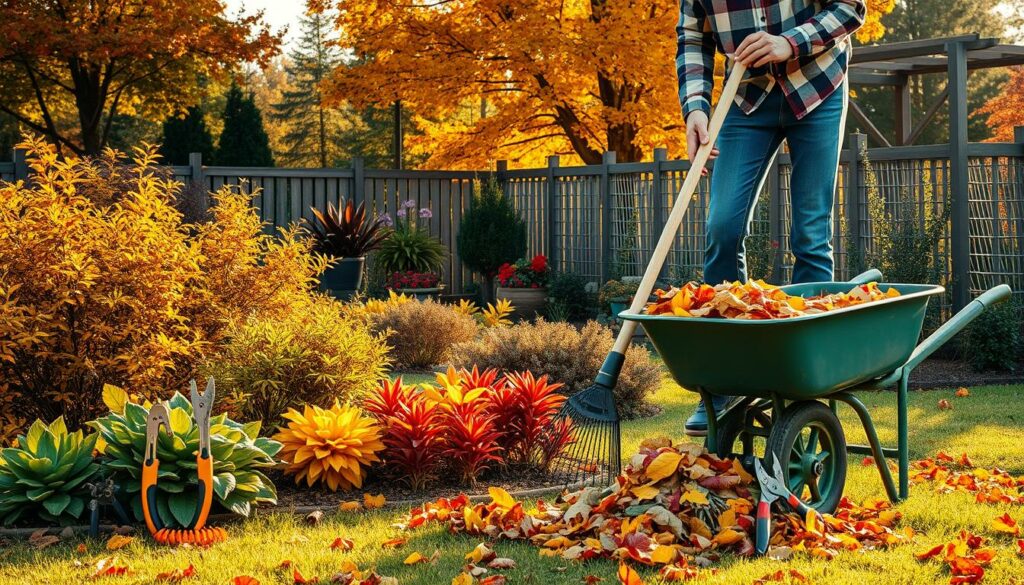
A focused fall effort makes gardens healthier and easier to manage. Routine autumn tasks clear spent annuals and tidy beds. Keeping tools organized helps with late-season enjoyment.
Small actions now pay off with stronger root systems and a neater landscape. This effort helps gardens be ready for winter.
Benefits of Seasonal Maintenance
Regular garden clean up improves appearance and reduces disease. Removing dead foliage cuts down on fungal spores and insect eggs. These would otherwise stay through winter in the beds.
Proper mulch conserves soil moisture. It helps perennials survive dry spells and live longer.
Gardeners who clean beds and sharpen tools start spring work earlier. Clear planting areas make late chores easier and reduce paid service needs.
Prevention of Winter Damage
Cutting back perennials and removing debris lowers winter rot risk. Mulch insulates roots and reduces freeze-thaw damage. It also keeps rodents from nesting near crowns.
Removing plant litter cuts down overwintering places for pests. This simple step means fewer spring diseases and lower pest problems on new growth.
Preparing for Spring Growth
Adding soil amendments and planting cover crops before winter lets nutrients work into soil. Cover crops reduce erosion and add organic matter as they break down.
Maintaining and organizing tools early helps gardeners plant sooner. For specific timing and methods, check with a local county cooperative extension. In mild-winter zones, leaving seedheads feeds birds and supports wildlife while still following good autumn yard care.
Clearing Dead Plants and Debris
A tidy garden starts with clear decisions about what to remove and what to leave for winter interest.
Good end of summer garden care helps reduce pests and diseases. It also keeps habitat for birds and pollinators where it matters.
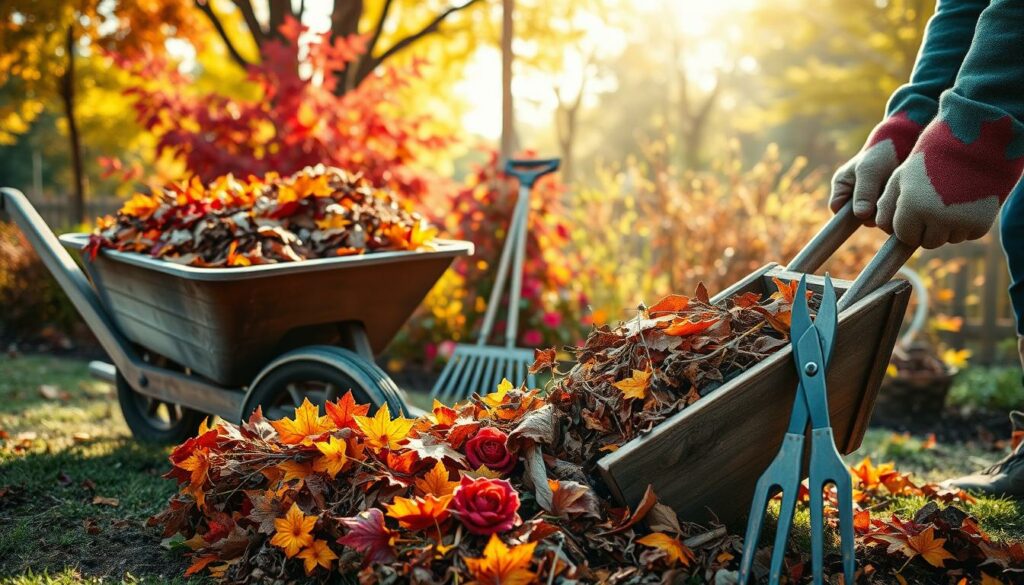
Identifying Dying Plant Material
Look for brown, mushy stems and blackened foliage. These signs mean frost damage or rot.
Powdery mildew, black spot, and large dead patches show fungal disease. Remove those parts.
Distinguish woody perennials from tender herbaceous types. Woody perennials like boxwood keep structure. Herbaceous perennials die back and can be cut low.
Frost-killed annuals should be removed to tidy beds.
Check for insect damage and larvae under stems and in soil. Heavy infestation means removal is needed.
Leave sturdy seedheads if they provide food or shelter for wildlife in cold months.
Proper Debris Removal Techniques
Cut frost-killed annuals to soil level. Use sharp pruners, loppers, or a pruning saw for thick stems.
Sterilize tools between plants with diluted bleach or isopropyl alcohol to stop pathogens spreading.
Remove diseased foliage from the garden. Don’t add it to cold compost unless it gets hot enough to kill pathogens.
If the local green-waste service takes diseased material, use their designated bags. Otherwise, discard through yard-waste services.
Chip large woody debris for mulch on-site if you can. This mulch works well for paths and beds.
Avoid burning plant waste. It causes air pollution and increases fire risk.
If you have too much debris, hire a yard cleanup service or rent a trailer. Many communities offer seasonal bulky garden waste pickup.
These steps make garden cleanup fall manageable. They protect next year’s growth and keep your landscape safe and attractive.
Leaf Management Strategies
A clear plan keeps yards healthy through fall. Smart leaf management saves time and protects turf. It also returns organic matter to soil.
This short guide explains timing, common tools, composting options, and mulching tips for effective fall outdoor care.
Best Practices for Leaf Raking
Rake after most leaves have dropped but before cold rains come often. Waiting too long can smother grass and cause disease.
Rake in the morning when leaves are dry for easier collection. Work from lawn edges toward collection points. Use a leaf rake or one with an ergonomic handle to reduce strain.
Rake every one to two weeks to prevent thick mats that harm turf.
For light leaf coverage, use a mulching mower to shred leaves in place. Remove heavy layers. Use tarps or leaf bags to move leaves to compost piles or curbside pickup.
Composting vs. Disposal
On-site composting returns nutrients and cuts landfill waste. Mix brown leaves with green materials like fresh clippings. Keep moisture even and turn the pile to add air.
Composting balances carbon and nitrogen, creating rich humus by spring.
Curbside compost or green-waste pickup works for homeowners without space. Check municipal rules for containers and pick-up schedules. Some towns offer leaf removal services that require specific bags or timed collection.
Yard waste bags and disposal work when composting is not possible. Choose biodegradable bags if allowed. Renting a leaf vacuum or mulcher helps haul leaves for large properties.
Mulching Leaves for Nutrient Recycling
Shred leaves with a mower or leaf mulcher to create fine mulch. Spread shredded leaves around beds to insulate roots and slowly release nutrients through winter.
Mulch improves microbial activity and adds organic matter to soil.
Avoid piling thick, unshredded leaves on delicate perennials. Heavy layers trap moisture and can cause rot. Use shredded leaves as a top dressing or blend them into compost to protect plants and improve soil health.
For large properties, hire professional yard cleanup services or rent equipment for efficient fall maintenance.
Keeping leaves on-site supports healthy soil and lowers environmental impact.
Soil Preparation for Winter
Preparing the garden for winter starts with a simple, focused soil plan. Good soil work keeps nutrients, improves the soil’s structure, and lowers erosion risks.
Autumn yard care that focuses on soil benefits healthier plant growth in spring.
Testing Soil Quality
Test soil pH and nutrients in the fall. This allows time for any amendments to work well.
University extension labs offer reliable tests for pH, phosphorus, potassium, nitrogen, and organic matter.
Home test kits give quick results, but lab tests guide bigger corrections. Results help gardeners choose lime or sulfur for pH problems.
Adding Organic Matter and Nutrients
In autumn, add compost, well-rotted manure, or leaf mold to improve soil and hold water.
This organic matter feeds microbes and helps soil keep moisture during winter thaw.
Use slow-release organic fertilizers if tests show nutrient gaps. Avoid high-nitrogen feeds late in fall to prevent frost damage.
Balance phosphorus and potassium based on test results. Do not overuse nitrogen.
Aeration Techniques
Use core aerators to reduce compaction on heavy clay soils in lawns and beds.
For small beds, use a garden fork to loosen soil without harming roots. Aerate when soil is moist but not wet and before it freezes.
Aeration helps compost soak in and lets cover crop roots grow strong. After aerating and amending, add mulch or sow cover crops to stop erosion and nutrient loss from winter rains and snowmelt.
Pruning and Trimming Perennials
Pruning and trimming are important tasks for garden care at summer’s end. They keep beds tidy and limit disease. The right timing and tools help perennials regrow well.
A few simple rules help decide what to cut now. They also guide what to leave for winter interest or bird habitat.
When to Prune Different Plants
Cut back tender annuals and any growth not yet frosted. Remove spent vegetables and tender bedding plants. This reduces pest and disease reservoirs.
Light trimming of spent stems is fine for many perennials in fall. Heavy pruning is best left for late winter or early spring.
Leave some seedheads, like coneflowers and rudbeckia, to feed birds through winter. They also help keep garden structure intact.
Prune dormant shrubs and trees in late fall if the climate and species allow. Otherwise, wait until late winter. Avoid winter damage by pruning most woody plants then.
Spring-blooming shrubs should be pruned after they bloom the next spring.
Prune diseased, damaged, or crossing branches right away. Doing this limits the spread of pathogens. It supports plant health during garden cleanup and spring green-up.
Tools Needed for Effective Pruning
- Bypass pruners work for small, live stems; sharp blades and ergonomic handles add comfort.
- Anvil pruners suit deadwood where precision is less critical.
- Loppers handle thicker branches up to 1 inch; long handles give better leverage.
- Pruning saws cut limbs over 1 inch; folding saws improve safety and storage.
- Hedge shears shape formal hedges and trim smaller growth.
Brands like Felco, Corona, and Fiskars offer quality tools with replaceable parts. Keep blades sharp with a file or diamond sharpener. Carry a whetstone for fine edges. Sterilize blades with 70% isopropyl alcohol or diluted bleach to prevent disease spread during pruning.
Safety Tips for Pruning
Wear gloves, eye protection, long sleeves, and sturdy shoes when pruning. This gear reduces cuts, scrapes, and eye injuries in garden care.
Use proper body mechanics. Cut at waist height when possible and keep knees bent. Avoid overreaching. When using ladders, work with a partner and place the ladder on stable ground.
Dispose of large branches per local rules or hire chipper services. Hire certified arborists for major tree work to prevent injury and property damage.
Late fall pruning can reduce pest risks but may cause winter damage. Seal large cuts only if a local extension office advises it. This protects trees without trapping moisture.
Sowing Winter Cover Crops
Cover crops help prepare your garden for winter after you finish the main harvest. They protect bare soil and build organic matter. They also feed soil life during the cold months.
This short guide helps you pick and plant species that fit your purpose and climate.
Benefits of Cover Crops
Cover crops like rye, oats, clover, and winter wheat stop erosion and hold soil during heavy rains. They shade the ground and crowd out weed seedlings. Many capture leftover nitrogen and improve soil fertility for the next season.
When turned in or left as mulch, cover crops add organic matter and create root channels. These channels boost drainage and help soil microbes recover. This makes spring planting easier and healthier.
Choosing the Right Crop for Your Garden
Choose cover crops based on your goals and region. Winter rye offers strong erosion control and lots of biomass in cold climates. Crimson clover and hairy vetch fix nitrogen, which helps soil fertility.
Oats establish quickly and work well in mild areas where they usually winter-kill. Gardeners should check USDA hardiness maps and local extension services for advice.
Mixing species balances biomass and nitrogen needs. It also lowers risks if one crop fails.
How to Properly Sow Cover Crops
Start by clearing debris and lightly raking beds. Broadcast seeds at usual rates: rye at 60–120 lb/acre (about 1–2 tablespoons per square foot), oats at lower rates, and clover more thinly. Lightly rake or press seed into the soil and water it to help germination.
Sow cover crops four to six weeks before your area’s first hard freeze. This time lets roots establish well. In spring, kill cover crops by mowing or mixing them into soil two to three weeks before planting.
No-till gardeners can use crimping to kill cover crops without turning soil.
Practical Tips
Mixing rye with legumes provides both erosion control and nitrogen benefits. Watch for volunteer plants that drop seed. Remove those that turn weedy.
Adding cover crops to your fall garden cleanup keeps beds productive. It also reduces work for you next spring.
Cleaning and Maintaining Garden Tools
Proper care of equipment keeps tasks efficient. It also reduces injury risk during garden cleanup chores. A short routine after each session protects investments and limits disease spread.
This section lists must-have tools, step-by-step cleaning practices, and storage ideas. These steps extend tool life and cut long-term costs.
Essential tools for garden work
For most yards, a basic kit covers pruning, moving debris, and soil work. Include hand pruners, loppers, a pruning saw, a sturdy rake, and a wheelbarrow.
A leaf blower or mulcher helps with big leaf piles. Add a garden fork, trowel, garden gloves, compost bins, and a core aerator for compacted soil.
On larger properties, professional-grade options matter. Heavy-duty loppers from Fiskars or Felco pruners reduce fatigue. Homeowners who prefer not to invest can hire yard cleanup services for seasonal needs.
Best cleaning practices
Start by removing soil, sap, and plant residue with a stiff brush and water. Dry tools after rinsing to limit rust. Disinfect cutting surfaces when moving between plants.
Use 70% isopropyl alcohol or a 10% bleach solution, then rinse and dry. Sharpen blades with a file or sharpening stone so cuts stay clean. Light machine oil on metal parts prevents corrosion.
Replace cracked handles or broken components promptly. Clean tools immediately after working on diseased plants to prevent pathogen spread.
Storage solutions for longevity
Store tools indoors in a dry shed or garage to keep moisture and pests away. Hang long-handled tools on wall racks or pegboards so edges do not rest on the floor.
Use blade covers for pruners and keep sharp items out of children’s reach. For power tools and battery packs, climate-controlled storage prevents battery degradation.
Label shared or rented tools and keep a simple maintenance log to track cleaning and repairs. Repair or replace parts before spring work to avoid accidents.
Protecting Plants from Winter Elements
Cold snaps and strong winds test gardens every year. Thoughtful fall outdoor maintenance helps plants survive winter. It also makes spring easier for gardeners.
The tips below cover insulation, coverings, and container care. They help prepare your garden for winter in different climates.
Using Mulch for Insulation
Mulch types include shredded leaves, straw, wood chips, and pine needles. Each material benefits soil health and texture differently. Apply 2–4 inches of mulch around perennials and shrubs.
Keep mulch a few inches away from stems to avoid rot. Spread mulch after soil cools but before frequent freezes start. A good mulch layer keeps soil temperature steady and preserves moisture.
It also reduces freeze–thaw damage and stops winter weeds from growing.
Installing Row Covers
Floating row covers, fabric cloches, and frost blankets protect tender vegetables and young perennials from early frost. Use hoops or frames so fabric won’t touch foliage. Anchor edges with soil or staples to prevent wind from lifting covers.
Remove covers on sunny days when temperatures rise to avoid overheating. Durable fabrics like Reemay or Agrofabrics work well for many seasons and fall maintenance tasks.
Strategies for Potted Plants
Pots freeze faster than ground soil and need extra care. Move containers to sheltered spots like a garage, porch, or south-facing wall. Group pots to keep heat and wrap cold-sensitive ones with bubble wrap or burlap for insulation.
Mulch the root ball and water regularly to prevent drying in winter. If possible, sink large pots into the ground. Tender plants can also overwinter indoors or in protected microclimates for better survival.
Regional Adjustments
Adjust your care practices based on your climate zone. Mild coastal areas need lighter insulation and different mulch types. Northern gardens require thicker protection with heavier mulch.
Tailor your winter plant care to local weather, plant hardiness, and soil drainage. This approach gives the best chance your plants will thrive after winter.
Managing Pests Before Winter
Preparing your garden for winter starts with reducing pests early. This lowers the food and shelter that insects and rodents use to stay warm. Tackling pests now means fewer problems in spring.
Knowing common fall pests helps you focus your work. Look for aphids, scale insects, spider mites, cutworms, slugs, snails, and beetle eggs or larvae. You might see sticky honeydew, fine webs on leaves, chewed foliage, or eggs along stems or leaf undersides.
Voles and mice can nest in heavy mulch or debris. They leave runways or chew bark around the garden.
Safe pest control uses integrated pest management techniques. Remove plant debris that shelters pests and pick off visible adults and slugs by hand. You can apply horticultural oils or insecticidal soaps to soft insects while the weather is still mild.
Beneficial nematodes attack soil pests without hurting earthworms. Avoid broad insecticides late in the season to protect pollinators and friendly predators in your garden.
For serious infestations, call licensed pest control or yard cleanup services. Always follow pesticide label instructions and wear protective gear. Check with your local county cooperative extension for guidance and regional advice.
Get your garden ready for next year by cleaning up and planning. Remove diseased plants and fallen fruit, clean tools and trellises, and rotate vegetable beds to break pest cycles. Adding compost and organic matter helps soil organisms that naturally suppress pests.
Set simple monitoring steps for spring. Place traps where pests were, note problem areas in a garden journal, and plant flowers that attract predatory insects like lacewings and lady beetles. These small steps now lower pest stress and boost your garden’s strength next season.
Final Touches for a Stunning Fall Garden
As main cleanup ends, a few finishing steps help tie the season together. These steps protect plant health. They also prepare the garden for a strong spring.
Following a fall garden cleanup checklist helps gardeners avoid winter problems. It also saves time next year.
Adding Seasonal Decorations
Choose tasteful displays that complement cleanup work, such as native grasses, ornamental pumpkins, potted mums, and wreaths. Place decorations away from crowns and stems to avoid moisture and rot. Avoid materials that hold water against trunks or mulch to protect roots and reduce pests.
Planning Future Planting Layouts
Use notes and photos taken during cleanup to map beds, sun patterns, and trouble spots like poor drainage or pest areas.
Sketch planting layouts for bloom succession and companion planting. Also, plan crop rotations for vegetable plots.
Ordering bulbs, seeds, and perennial divisions in fall makes spring easier. It also improves plant selection.
Reflecting on Garden Successes and Challenges
Review what thrived and which varieties struggled. Record which tasks took the most time. A garden journal or gardening apps help track soil tests and observations.
After reflection, gardeners can decide whether to hire yard cleanup or leaf removal services. They might also invest in tools or training to improve results.
Completing these final touches from the fall cleanup checklist reduces winter risk. It pays off in the next growing season.
Gardeners should adapt the checklist to local climate. They can consult state extension services or the National Gardening Association for region-specific advice.