

Did you know some microgreens and baby greens can grow from seed to plate in just 7 days? This speed is ideal for home gardeners who want quick results. It also means steady yields throughout the season.
This guide focuses on fast-growing vegetables and quick crops you can harvest in weeks, not months. We define “fast growing vegetables” by clear timeframes: microgreens and baby greens (7–21 days), leafy greens (21–45 days), many root crops (20–60 days), and quick legumes and herbs (30–70 days).
It is great for beginner gardeners, urban container growers, and seasonal gardeners who want faster vegetable growth. This guide highlights speedy varieties and container-friendly options. It also covers practical planting and care techniques to boost growth and protect plant health.
Readers will learn how to pick the best rapid crop plants and prepare the soil. The guide explains how to manage watering, light, and pest controls properly. Using evidence-based tips, it shows how shorter time-to-table improves freshness, flavor, and space efficiency. It is especially helpful for novice gardeners in the United States.
Key Takeaways
- Fast growing vegetables include microgreens (7–21 days) and many leafy greens (21–45 days).
- Quick growing veggies and rapid crop plants can boost harvest frequency and flavor.
- Urban and container gardeners can achieve fast results with the right varieties and care.
- Soil, light, and watering are the biggest factors in expedited vegetable growth.
- Following short-season strategies helps maintain a continuous, year-round supply.
Introduction to Fast-Growing Vegetables
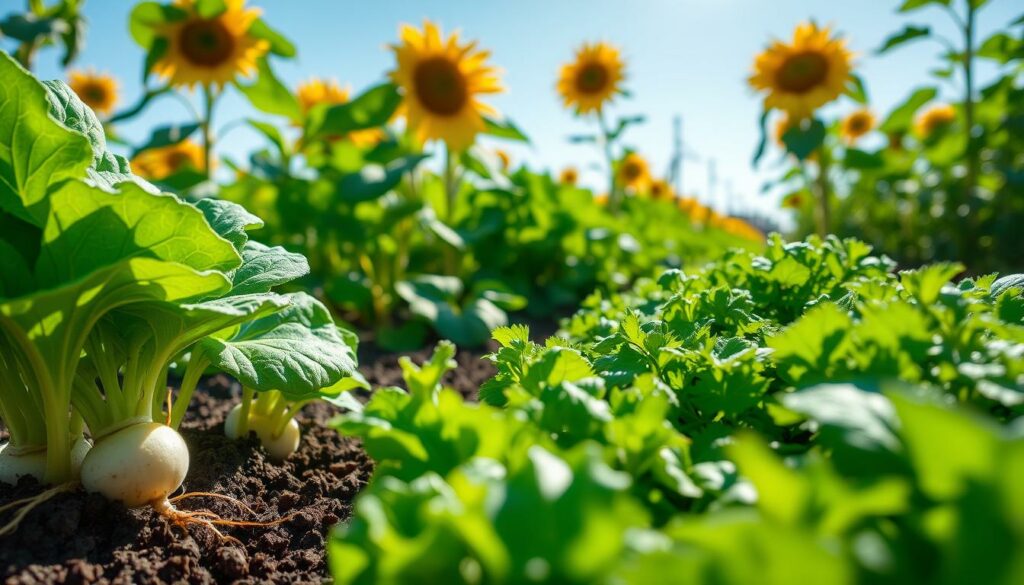
Fast-growing vegetables let gardeners see quick results and keep momentum in small plots or raised beds. They suit beginners and seasoned growers who want steady harvests. Crops that mature in weeks reduce the time plants face pests and weather stress.
Choosing rapid varieties offers faster gratification, which keeps gardeners engaged. Shorter days-to-harvest allow multiple plantings per season. Quick turnover maximizes limited space and boosts yield per square foot.
Faster maturity also helps plants resist diseases by shortening exposure to cycles and harsh conditions.
Freshly picked produce holds more flavor and nutrients at peak maturity. This freshness matters for salads, stir-fries, and quick meals. Small-scale growers benefit from lower input costs per harvest, supporting sustainable gardening.
Ideal growing conditions focus on light, soil, temperature, nutrients, and water. Most fast growers need six to eight hours of full sun. However, microgreens and baby greens tolerate bright indirect light.
Well-draining loam with good organic matter helps roots grow fast. Aim for a soil pH near 6.0–7.0 to suit most crops.
Temperature affects growth rates. Leafy greens prefer cool air between 45–75°F. Many root crops do well at 50–70°F. Heat-tolerant summer types thrive at 65–85°F.
Balanced nutrients, especially nitrogen, support leafy growth. Avoid too much fertilizer to prevent weak stems or poor roots.
Consistent moisture speeds germination and root growth without causing waterlogging. Good drainage prevents root rot and nutrient loss. Choose seeds labeled for short days-to-harvest or “baby” varieties for fast growth.
| Factor | Recommended Range | Why It Matters |
|---|---|---|
| Light | 6–8 hours full sun | Boosts photosynthesis for speedy vegetable growth |
| Soil | Loose loam, 2–4% organic matter | Improves drainage and root speed for accelerated plant cultivation |
| pH | 6.0–7.0 | Optimizes nutrient availability |
| Temperature | Leafy: 45–75°F; Roots: 50–70°F; Warm: 65–85°F | Matches crop preference to enable high-speed vegetable growth |
| Nutrients | Balanced N-P-K, moderate N | Supports vigorous early growth without excessive foliage |
| Water | Consistent moisture, no waterlogging | Promotes rapid germination and steady root development |
| Variety Selection | Short days-to-harvest, baby cultivars | Ensures predictably fast maturity and reliable harvest timing |
Top Fast-Growing Leafy Greens
Leafy greens are some of the fastest vegetables to harvest. They suit gardeners who want quick garden produce. Many varieties allow cut-and-come-again harvesting, offering repeated yields from a single sowing.
This makes them great for home plots, balcony planters, and community gardens. These spots need quick-growing veggies to keep supply steady.
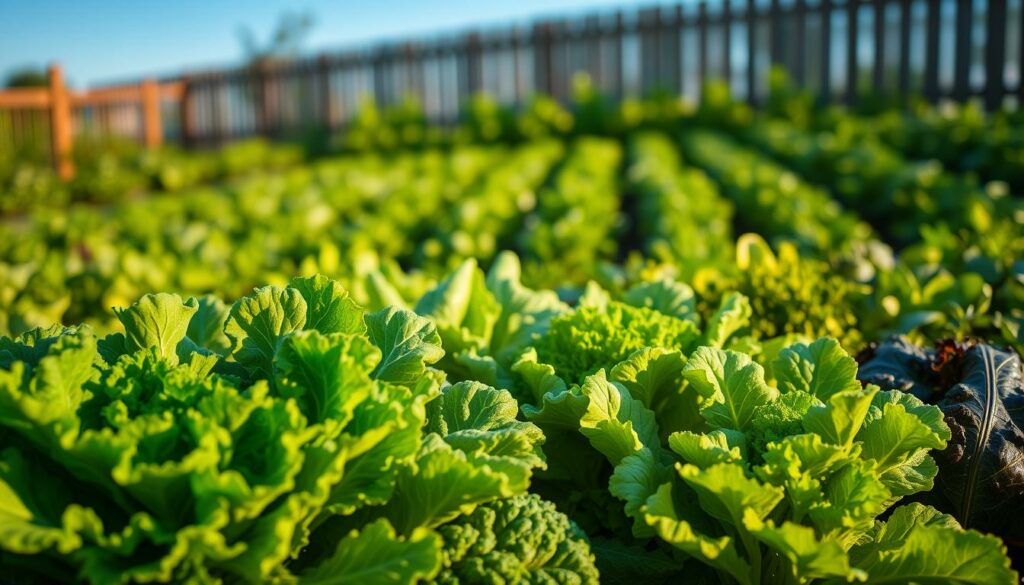
Spinach: A Nutrient-Dense Powerhouse
Spinach produces baby leaves in about 21–30 days. Full heads take 40–50 days, depending on the variety. Varieties like Bloomsdale, Space, and Tyee offer cold-hardiness and fast maturity.
It grows best in cool temperatures between 45 and 68°F. Spinach needs fertile soil high in nitrogen and steady moisture to avoid bolting. Rich in iron, vitamin K, and folate, it’s perfect for salads, sautés, and smoothies.
Plant spinach early and sow in succession to enjoy a steady stream of quick veggies.
Arugula: A Peppery Addition to Salads
Arugula can be harvested as baby leaves in 10–20 days. It reaches full size in 25–40 days. Rocket and Astro are popular for rapid germination and bold flavor.
It tolerates partial shade and benefits from sowing every 2–3 weeks for a steady supply. Hot weather causes bolting, so plant arugula in cooler windows for best results.
Use baby leaves for a milder taste in salads, pestos, and garnishes. This way, you enjoy fresh, fast garden produce.
Lettuce: Various Types for Quick Harvest
Lettuce has varied harvest times. Baby leaf mixes are ready in 20–30 days, looseleaf in 30–45 days, and heading types in 45–75 days. Varieties like Buttercrunch and Salad Bowl are great for quick harvests.
Grow lettuce in cooler seasons and use shade cloth during heat to prevent bitterness. Regular watering keeps leaves crisp. Staggered sowing supports continuous harvests.
Harvest outer leaves with cut-and-come-again or pick whole heads when mature. This maximizes fast growing vegetables and keeps salads fresh.
Quick-Developing Root Vegetables
Root vegetables have some of the shortest harvest times in the garden. Proper soil and steady moisture help gardeners grow fast crops. Choose loose, rock-free beds and thin seedlings early. This supports quicker vegetable growth.
Radishes: The Speedy Crunch
Radishes grow fast, often ready in 21–30 days. Some special types mature in about 18 days. They are great for quick yields.
Good varieties are Cherry Belle, French Breakfast, and Sparkler. Sow seeds in loose soil and thin seedlings to avoid crowding. Water regularly to prevent a woody texture. Eat radishes raw in salads, pickle them, or roast with greens.
Turnips: Dual Purpose as Greens and Roots
Turnips are flexible to harvest. Baby greens are edible in 25–30 days. Roots take 40–60 days to mature.
Hakurei is popular for sweet, tender baby roots and salad use. Thin plants properly so roots grow well. Harvest greens early for salads or sautéing.
Turnips grow well in cool weather. Roots supply carbohydrates and vitamin C. Greens provide vitamin A and calcium.
Beets: Fast-Growing With Nutritional Benefits
Beets produce baby roots in 30–40 days. Standard roots take 50–70 days. Beet greens can be harvested even earlier. This gives kitchen versatility and supports fast vegetable growth.
Good varieties are Detroit Dark Red, Chioggia, and Ruby Queen. Plant in deep, loose soil and thin seedlings for root swelling. Harvest different sizes for continuous use. Roots roast, pickle, or juice. Greens cook like Swiss chard.
| Crop | Days to Harvest (typical) | Key Varieties | Top Growing Tip | Best Uses |
|---|---|---|---|---|
| Radish | 18–30 | Cherry Belle, French Breakfast, Sparkler | Sow in loose, rock-free soil; thin early | Raw salads, pickling, roasted with greens |
| Turnip | 25–60 (greens sooner) | Hakurei, long-season storage types | Thin for root development; harvest greens early | Salads, sautéed greens, storage roots |
| Beet | 30–70 (baby to standard) | Detroit Dark Red, Chioggia, Ruby Queen | Plant in deep loose soil; thin for swelling | Roasting, pickling, juicing, cooked greens |
Fast-Maturing Legumes
Legumes offer gardeners a reliable way to get quick yields and improve soil. Peas and bush-type green beans produce harvests within one season. These fast crops fit small plots and containers well.
They are a smart choice for gardeners who want speedy vegetable growth.
Peas: A Sweet Addition to Your Garden
Peas give fast returns when planted early. Shelling peas mature in 60–70 days. Snap peas and sugar snaps usually take 55–65 days to harvest.
Gardeners can also harvest pea shoots sooner for tender greens and microgreens.
Good varieties include Sugar Snap, Sugar Ann, and Little Marvel. Vining peas need trellis support. Dwarf types like Sugar Ann grow well in containers.
Peas prefer cool weather and spring planting times. They add nitrogen to the soil, helping future crops grow better.
Peas can be eaten fresh or blanched and frozen. Pea shoots add a mild, sweet flavor to salads and stir-fries.
Green Beans: Types that Thrive Quickly
Green beans come in bush or pole types. Bush beans produce pods in 50–60 days, ideal for quick growing veggies. Pole beans take longer to start but produce pods over time.
Fast varieties include Provider, Blue Lake, and Contender. Bush beans fit well in containers and small spaces. They need full sun and steady moisture for good pod growth.
Picking pods regularly helps plants keep producing. Legumes improve soil by fixing nitrogen. New beds may use inoculants to boost root nodulation and speed vegetable growth.
| Crop | Typical Days to First Harvest | Best Uses | Top Varieties |
|---|---|---|---|
| Shelling peas | 60–70 days | Fresh eating, freezing | Little Marvel, Wando |
| Snap peas / Sugar snaps | 55–65 days | Salads, snacking, shoots | Sugar Snap, Sugar Ann |
| Bush green beans | 50–60 days | Fresh harvests, canning | Provider, Contender |
| Pole green beans | 60–75 days to start | Continuous harvests, drying | Blue Lake, Kentucky Wonder |
Popular Fast-Growing Herbs
Many herbs grow quickly and give gardeners multiple harvests. They work well in containers, windowsills, and garden edges.
These plants help vegetables grow faster when planted together in mixed beds.
Basil: Easy to Grow and Versatile
Basil offers cut-and-come-again leaves in just 3–4 weeks from seedlings. It reaches full maturity in 60 to 90 days, depending on the kind.
Varieties like Genovese, Thai, and Nufar suit various cooking styles and container sizes.
For strong growth, plant basil in full sun with well-draining soil. Keep temperatures between 70 and 85°F.
Pinch growing tips to make plants bushier and delay flowering. This extends leaf production.
Use basil in pesto, salads, and fresh sauces for delicious flavors.
Cilantro: A Flavorful Herb with a Quick Turnaround
Cilantro gives baby leaves in 20–30 days and fuller leaves by 30–45 days. It bolts quickly in heat, so pick slow-bolting kinds like Santo.
Plant new seeds every 2–3 weeks to have a steady harvest.
Grow cilantro in cool weather or offer light shade in warmer places. Harvest leaves often to slow bolting.
Cilantro is great in salsas and garnishes. Its stems and roots are also used in many recipes.
Dill: A Fragrant Option for Gardens
Dill produces leaves ready to harvest in 30–40 days. It develops seeds after blooming, with seed harvests at 90+ days.
Choose Bouquet or Fernleaf varieties for compact growth and slower bolting.
Plant dill in full sun with well-drained soil. Thin seedlings, and stake tall plants for support.
Dill pairs well with brassicas and flavors pickles, fish dishes, and salads. Its seeds add lasting spice.
These fast-growing herbs boost vegetable growth in small spaces. They provide quick flavor, regular harvests, and cooking versatility for all gardeners.
Suitable Varieties for Container Gardening
Container gardening lets gardeners use patios, balconies, and small yards for fast harvests and steady yields. Choosing the right varieties and taking good care of containers can quicken maturity. This also boosts productivity when growing vegetables in small spaces.
Compact Greens for Limited Spaces
Baby leaf mixes like lettuce, baby spinach, arugula, mâche, and microgreens grow quickly. They reach harvest size fast and can be sown closely for cut-and-come-again harvests.
Use shallow, wide containers 6–12 inches deep with sterile potting mix and compost. Dense sowing gives baby leaves sooner. Plant every 1–2 weeks to keep a steady supply.
Give them 4–6 hours of sunlight daily. Indoor gardens benefit from affordable LED grow lights for steady growth in containers.
Herbs That Flourish in Pots
Basil, cilantro in cool months, dill in larger pots, parsley, and chives grow well in containers. They fit nicely in mixed planter beds and support fast-growing vegetables. Pinch back these herbs to stop early flowering and get frequent harvests.
Use 8–12 inch pots for single plants and bigger pots for several herbs to help root growth. Make sure pots have drainage holes and use good potting soil to avoid moisture problems.
Check water daily because containers dry out fast. Use balanced liquid fertilizer every 1–2 weeks to supply nutrients. Move containers to follow the sun or find shade during heat waves to prevent bolting and keep steady growth.
Planting and Care Techniques for Quick Growth
Fast-growing vegetables reach harvest quickly when gardeners tune culture to plant needs. Proper soil, timely watering, and smart pest control speed development. These steps support accelerated plant growth from seed to harvest.
Soil Preparation Tips
Start with a soil test from a county Extension office or a reliable kit. Check pH and nutrients to know what to adjust. Amend heavy clay with compost and coarse sand to improve drainage.
Add compost or well-rotted manure for steady fertility. Use a seed-starting mix for trays and microgreens to boost germination. Incorporate a slow-release fertilizer or mild liquid feed to keep seedlings strong.
For root crops, loosen the subsoil. Ensure bed depth lets roots expand freely.
Watering Guidelines for Fast Results
Consistent moisture helps plants avoid stress that slows growth. Water on a schedule based on soil and weather not on visible wilting. Drip irrigation and soaker hoses deliver water evenly and conserve it.
Mulch around plants to keep moisture and moderate temperature. Water in the morning to reduce leaf wetness and lower disease risk. For seedlings and microgreens, keep the medium moist but not waterlogged to support rapid growth.
Pest Management Strategies
Inspect beds often for pests like aphids, flea beetles, slugs, caterpillars, and diseases such as damping-off and mildew. Early detection stops outbreaks that slow harvest.
Use crop rotation and remove diseased debris. Plant companions like marigolds or nasturtiums to deter pests. Physical barriers like row covers protect seedlings without chemicals and help fast growth.
Encourage beneficial insects like ladybugs and lacewings to control pests naturally. Apply organic treatments—neem oil, insecticidal soap, diatomaceous earth, or Bacillus thuringiensis (Bt)—when needed. Follow label directions to protect useful insects. These methods keep plants healthy and speed vegetable growth.
| Focus Area | Key Actions | Expected Benefit |
|---|---|---|
| Soil Testing | Use Extension services or kits; adjust pH; add compost | Balanced nutrients for faster, uniform growth |
| Drainage & Structure | Amend clay with sand and compost; loosen subsoil | Better root development and quicker maturity |
| Seed Starting | Seed-start mix; controlled humidity; gentle feed | High germination rates and strong seedlings |
| Watering | Drip irrigation, morning watering, mulch | Consistent moisture; reduced stress and disease |
| Pest Control | Crop rotation, companions, row covers, beneficials | Lower pest pressure and uninterrupted growth |
| Targeted Treatments | Neem oil, insecticidal soap, Bt, diatomaceous earth | Control outbreaks with minimal impact on beneficials |
Seasonal Fast-Growing Vegetables
Choosing the right variety for each season speeds harvest and reduces losses from bolting and pests. Gardeners who align plant timing with climate get fast-growing vegetables. They enjoy quicker garden produce with less effort.
This section shows spring and summer options. It also gives practical steps to boost fast vegetable growth.
Spring: Ideal Vegetables for Early Planting
Cool-tolerant crops make great first sowings. Radishes, peas, spinach, lettuce, arugula, baby beets, turnip greens, and cilantro grow fast when soil is ready. Peas sprout between 40–85°F. Spinach can sprout as low as 35°F.
Use a soil thermometer to choose the best planting day. Protect seedlings from late freezes with row covers. Sow seeds every 7–14 days to keep harvests steady.
Starting seeds indoors helps gardeners transplant strong seedlings early. This leads to quicker garden produce.
Summer: Heat-Loving Quick Growers
After the last frost, switch to warm-season plants that resist bolting. Bush beans and heat-tolerant basil give fast harvests. Some lettuces and Swiss chard bred for summer stay productive.
Green onions and certain beet types do well in cooler microclimates or shaded beds. Give cool-season crops afternoon shade or use shade cloth to reduce heat stress.
Apply thick mulch to keep soil moist and cut watering needs. Water more during hot, dry spells to keep growth steady. This ensures the fastest vegetable development.
Conclusion: Making the Most of Fast-Growing Vegetables
Fast-growing vegetables offer quick harvests and use garden space efficiently. They give fast feedback for gardeners trying new gardening techniques. Combining good variety choice with soil prep and pest control yields the best results.
These methods speed up vegetable growth and allow gardeners to experiment without long waits.
Tips for Extended Harvesting
Use cut-and-come-again harvesting for greens and herbs to keep them productive longer. Sow seeds every one to three weeks for succession planting. This approach ensures a steady supply of fast-growing vegetables.
Preserve extra vegetables by blanching and freezing them. You can also quick pickle radishes or beets and dry herbs. These methods help you enjoy abundant vegetable growth for longer.
Continuous Planting for Year-Round Availability
Plan your planting calendar using your USDA hardiness zone. Plant cool-season fast growers in spring and fall. Grow heat-loving quick vegetables in summer for year-round harvests.
Keep soil healthy with cover crops, compost, and regular soil tests. This supports fast plant growth through multiple seasons.
With smart variety choices and staggered planting, gardeners nationwide can get steady, fast harvests. Use cultural practices and season extenders like row covers and cold frames. These tools turn short growth cycles into a reliable supply of fresh produce.