

Surprisingly, studies show that adding natural elements to yards can increase curb appeal by up to 30%. This simple change brings big visual impact and lasting value.
This guide offers practical, nature-focused garden decor ideas. It is for homeowners, renters with patios, and landscaping fans across the U.S.
The guide treats garden decor as attainable projects. These boost curb appeal, create calm outdoor spaces, and inspire DIY backyard design ideas.
Using natural elements has clear benefits. These include sustainability, lower maintenance, seasonal adaptability, improved biodiversity, and textures that match native landscapes.
Plants and shade trees can reduce cooling costs. They provide natural cooling and save energy during summer months.
Before starting, assess site conditions like sun exposure, soil type, and drainage. Set a realistic budget for your project.
Decide on the mood you want—formal, cottage, Zen, or rustic. Then sketch a simple site plan to guide your work.
Focus on establishing focal points first. Then choose materials that fit the look you want to create.
Common materials include stone, wood, plants, water, mulch, and driftwood. Essential tools are a shovel, pruners, wheelbarrow, and a level.
Use local resources like landscape supply yards and plant nurseries, such as Home Depot Garden Centers or local co-ops. Community tool libraries also help make projects easier and cost less.
This section sets the stage. Later parts explore stone, wood, plants, water features, repurposing, seasonal decor, natural lighting, and simple DIY projects.
Readers are encouraged to mix and match ideas. Check local codes before bigger installations to stay within rules.
Key Takeaways
- Natural garden decor ideas can significantly boost curb appeal and homeowner satisfaction.
- Benefits include sustainability, lower maintenance, better biodiversity, and passive cooling.
- Start by assessing site conditions, setting a budget, and sketching a plan with focal points.
- Gather basic materials—stone, wood, plants, water, mulch—and essential tools before starting.
- Use local nurseries, supply yards, and tool libraries for affordable resources and materials.
- Combine ideas from subsequent sections to create personalized backyard design inspiration.
Incorporating Stone Elements in Garden Decor
Stone anchors a garden with texture and permanence. Thoughtful stone choices unlock fresh backyard design inspiration. They tie together planting beds, seating areas, and paths.
Readers will find practical tips on stone pathways, rock garden ideas, and sculptural piece placement. These lift garden decor into cohesive landscape decoration ideas.
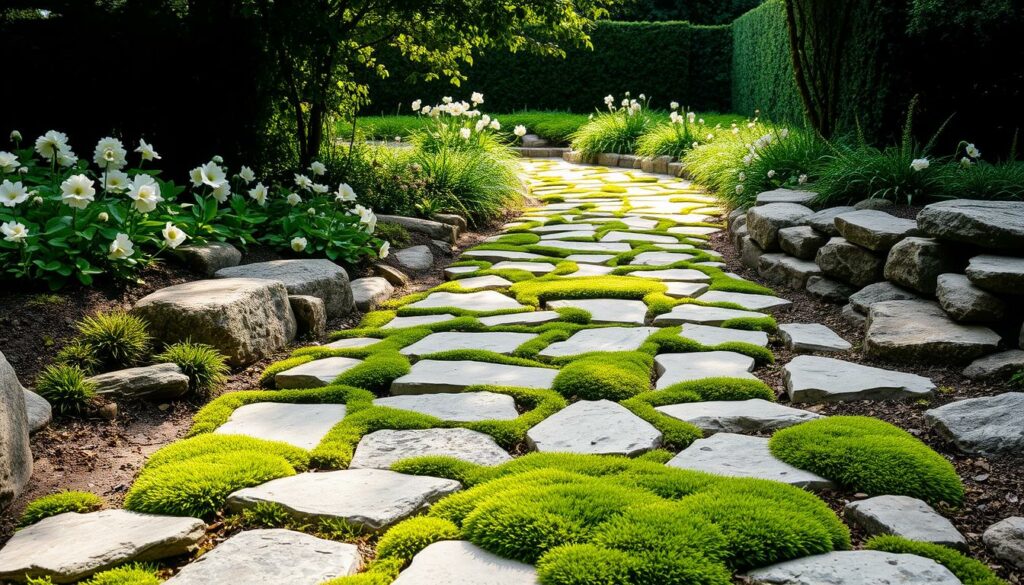
Using Natural Stone Pathways
Stone pathways guide movement and define outdoor zones. Stepping stones fit informal routes. Flagstone works well for patios, and crushed stone gives a rustic feel.
Material choice matters. Bluestone and flagstone are durable and offer cool blues and grays. Slate gives a refined look. River rock suits edging and accents. Decomposed granite compacts well for low-cost routes.
Consider slip resistance and freeze-thaw performance for U.S. climates. Installation follows steps: lay geotextile fabric to limit weeds, set compacted gravel base.
Bed stones in sand or mortar depending on permanence. Finish joints with sand or polymeric sand. Proper grading ensures water runs away from foundations.
Maintenance keeps paths safe and attractive. Reset stones that shift, clean surfaces with low-pressure washers, and replenish joint material when gaps appear.
Creating Rock Gardens
Rock gardens create low-maintenance focal points and form microclimates for drought-tolerant species. Start with scale: place large anchor boulders first.
Then layer smaller stones to mimic natural slopes. Thoughtful placement avoids a staged look. Plant choice should favor well-drained conditions.
Sedums, sempervivum, alpine asters, lavender, and native grasses thrive in gritty soils. These plants support the low-water intent of many landscape decoration ideas.
Good drainage is essential. Mix coarse sand and grit into planting substrate or build raised rock beds to prevent waterlogging. Use soil that encourages runoff for plant health.
Stone Statues and Sculptures
Stone sculptures add personality and focus. Choose classical urns or pedestaled figures for formal gardens. Select abstract natural stone pieces for contemporary yards.
Carved birdbaths suit cottage-style settings and invite wildlife. Placement matters. Set statues at eye-level focal points or along primary sightlines.
Position them beside water elements to catch attention. Scale should respect surrounding plants so pieces feel integrated, not overpowering.
Material choice affects durability. Carved limestone offers classic patina. Granite resists freeze-thaw cycles, and cast stone provides consistent finishes at lower cost.
Apply protective sealants in harsh winter climates to extend lifespan.
| Element | Best Use | Top Materials | Maintenance Notes |
|---|---|---|---|
| Stone Pathways | Define routes, connect zones | Bluestone, flagstone, slate, decomposed granite | Reset stones, clean, replenish joints |
| Rock Gardens | Low-water focal points | River rock, gravel, large boulders | Ensure fast-draining soil, occasional weeding |
| Stone Sculptures | Visual anchors, focal points | Granite, limestone, cast stone | Seal in freeze-thaw climates, clean algae |
| Accent Rocks | Edging, microclimate shaping | Pea gravel, crushed stone, river rock | Top up as needed, reposition after frost heaves |
Wood Features for an Earthy Touch
Wood adds warmth and texture to outdoor spaces. Simple wooden features can change plain yards into cozy, outdoor living rooms. This section shares wooden garden ideas that suit many budgets and styles.
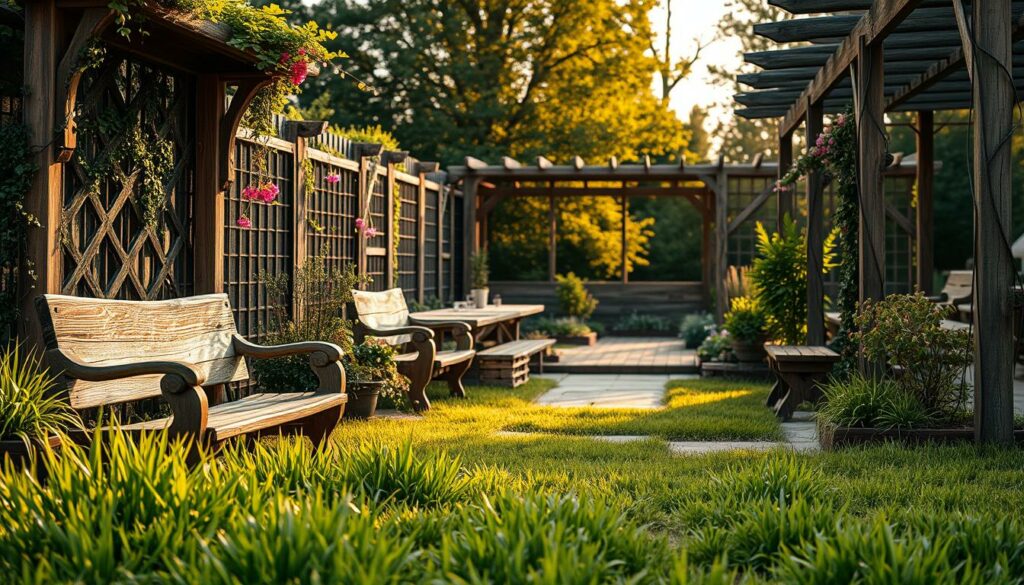
Wooden Arbors and Trellises
Arbors and trellises frame entries and add vertical interest for climbing plants. Styles include lattice designs and full pergolas. They mark paths and welcome guests to explore your garden.
Choose cedar or redwood for natural rot resistance. Pressure-treated pine is cheaper but needs sealing. Composite materials look like wood but need less care. Apply stain or sealant to make them last longer.
Anchor posts in concrete footings. Space slats so vines can grab hold easily. Pair these with roses, clematis, wisteria, or native climbers for quick coverage. These tips promote healthy plants and lasting structures.
Log Seating and Benches
Log seating creates relaxed spots for reading or socializing. Use split logs, reclaimed slabs, or rounds for bench tops. Arrange curved seating around fire pits or under shade trees for cozy focal points.
Level bases before securing to avoid wobbling. Treat surfaces to protect against insects and rot. Add weatherproof cushions for more comfort. Local sawmills and Habitat for Humanity ReStores often supply affordable, quality wood.
These wooden seating options blend function with rustic patio decor. They anchor backyard designs without taking over the space.
Incorporating Driftwood Art
Driftwood adds sculptural focus and natural lines to beds and patios. It works as a sculpture, air plant support, or rustic frame for mirrors and signs. Small pieces make mobiles; large ones highlight trellises.
Collect driftwood responsibly and follow local beach rules. Clean pieces well to remove salt and debris. A clear outdoor sealer preserves texture and protects from weather.
Driftwood projects offer low-cost, high-impact garden decor ideas. They suit rustic patio decor and add unique charm to backyard designs.
Embracing Plants as Living Decor
Plants turn a yard into a lively space that changes with the seasons. Using greenery smartly adds both function and style. This gives readers useful backyard design ideas for any space size.
Vertical Gardening with Climbing Plants
Vertical gardening saves ground space by creating lush walls and privacy screens. Structures like trellises, cables, living walls, and pocket planters fit small patios or big fences.
Vines such as clematis, climbing roses, honeysuckle, and jasmine work well where hardy. Native trumpet vine suits suitable zones. These plants attract pollinators and soften hard surfaces.
Maintenance is simple: train growth, prune to control size, and check supports for pests. Proper setup prevents wall damage and helps plants last longer.
Container Gardens with Seasonal Plants
Container gardens offer mobility and control. Pots highlight spots on decks, patios, or entryways. They also make soil, drainage, and feeding easier.
Choose terracotta, glazed ceramic, cedar, or lightweight composite pots. Use quality potting mix and feed plants regularly. Self-watering pots or wicking inserts help care in summer and reduce plant stress.
Seasonal accents include bulbs and pansies in spring, petunias and geraniums in summer, mums and kale in fall, and hardy evergreens in winter. Move or protect containers when frost might harm roots.
Flower Beds in Patterns
Designed beds add rhythm to a yard’s look. Geometric patterns, cottage drifts, color blocks, and repeated motifs add charm and structure.
Begin with soil testing and add compost for strong roots. Edge beds with stone, timber, or native grass to keep shapes sharp. Use templates or string to mark curves and angles.
Layer plants by height and bloom times to keep interest high. Mix perennials like daylilies, coneflowers, and salvia with bulbs and annuals for ongoing color. Blend textures to boost depth and seasonal appeal.
Water Elements for Serenity
Water features bring calm to a yard and tie other garden decor ideas together. A small splash can set the mood for seating areas. It guides backyard design inspiration toward a restful, natural palette.
Garden fountains made from natural materials serve as timeless focal points. Choose a stone basin or stacked stone column for a rustic feel. Copper bowls and glazed ceramic pieces add patina and warmth without clashing with plants.
Placement matters. Site a fountain so the sound carries to seating areas but does not overwhelm conversation. Keep proximity to electrical outlets in mind when planning.
Aim for visibility from windows and paths for the best backyard design inspiration.
Installation tips improve long-term performance. Match pump flow rate to fountain scale and check wattage for your outdoor circuit. Conceal tubing with gravel or planting pockets.
Heavy stone features need a compacted base or concrete pad to avoid settling.
Fountains draw wildlife. Birds and beneficial insects appreciate moving water. Routine cleaning and winterizing pumps in freezing climates reduce repairs.
Use biological treatments sparingly to limit algae while keeping water safe for animals.
Ponds designed with rocks and aquatic plants create a natural retreat. Choose liners like EPDM rubber for flexibility or a preformed liner for ease. Shape basins with shallow shelves to host marginal plants and soft edges that blend into beds.
Thoughtful rock placement builds microhabitats. Boulders and gravel form natural shores, provide fish shelter, and offer sun-warmed rocks for amphibians. Layer rocks to create crevices where frogs and beneficial insects can hide.
Planting plans support health and biodiversity. Include water lilies for shade, iris for vertical interest, water mint for fragrance, and oxygenators such as hornwort. Favor native species to lower maintenance and bolster local wildlife.
Safety and regulation are important. Check local codes for open water features and consider barriers if small children frequent the yard. Plan winter care for northern climates, including partial draining or aeration to protect fish and liners.
| Feature | Best Materials | Key Benefit | Maintenance |
|---|---|---|---|
| Natural garden fountain | Stone basins, copper bowls, glazed ceramic | Visual focal point and soothing sound | Pump checks, algae control, winterize pumps |
| Stacked stone cascade | Sandstone or granite, EPDM liner under rocks | Natural flow that fits rock gardens | Secure foundation, tubing concealment, seasonal cleaning |
| Pond with aquatic planting | EPDM or preformed liner, boulders, gravel | Wildlife habitat and diverse texture | Debris skimming, plant pruning, winter planning |
| Small recirculating bird bath | Copper, ceramic, carved stone | Attracts birds with low footprint | Frequent water refresh, pump and filter care |
Repurposing Natural Materials
Repurposing natural materials brings character to small yards and large landscapes. Readers learn practical steps for transforming found wood and stone into useful pieces.
These projects suit many garden decor ideas. They also make great DIY outdoor projects for weekend afternoons.
Upcycling Wooden Pallets
Wooden pallets can become planters, vertical wall gardens, patio coffee tables, or privacy screens. A simple pallet planter starts by fixing loose slats and lining the box with landscape fabric.
Then fill it with lightweight potting mix. This method cuts costs and shows off repurposed garden materials.
Safety matters. Use heat-treated pallets marked HT. Avoid pallets treated chemically with an MB mark.
Sand rough edges and seal surfaces with outdoor-grade sealant when using pallets as furniture.
Finishing options shape the look. Stain or paint with exterior acrylics for color. Leave surfaces weathered for rustic decor.
Add caster wheels to make mobile planters. These can move to follow sun and shade.
Logs as Plant Holders
Old logs can be carved into planters for succulents, alpine plants, or trailing herbs. Hollow out a cavity using chisels or a chainsaw.
Then drill drainage holes. Fill with well-draining mix suited to your plants.
Source reclaimed logs from arborists or tree services to keep projects sustainable. Treat wood for pests with borate solutions or heat if needed.
Place logs so water drains away from the base. Design by grouping logs of varied heights for layered visual interest.
Add moss and lichens for an aged patina. Combine log planters with native wildflowers for a natural meadow vibe.
This helps tie elements into broader garden decor ideas.
Decorative Mulch and Ground Cover
Choosing the right base layer lifts any garden decor ideas from ordinary to intentional. A mix of decorative mulch and ground cover plants shapes texture, color, and function.
This short guide outlines mulch options, application tips, and low-growing plant choices that suit sun, shade, and slopes.
Natural mulch types and their benefits
Homeowners select shredded bark, wood chips, pine straw, compost, gravel, or pea stone to match style and function. Organic mulches like shredded bark and compost boost soil organic matter as they break down.
In arid or Mediterranean-style gardens, river rock or pea stone create a clean look and reduce water loss.
Practical mulch benefits include moisture retention, reduced weeds, erosion control, and soil temperature regulation. Cocoa mulch has a rich color and scent but can be toxic to pets. It should be used cautiously.
Apply organic mulch 2–4 inches deep, refresh yearly, and keep material pulled back from woody stems to avoid rot.
Plant varieties for ground cover
Ground cover plants stabilize soil, suppress weeds, and add living texture to the landscape. Popular choices include creeping thyme for sunny paths, ajuga for shade, and sedum for rock gardens.
Also consider pachysandra under trees, creeping phlox on slopes, and clover mixes that support pollinators. Match plants to site conditions and foot traffic.
Creeping thyme tolerates light traffic and full sun. Ajuga thrives in moist shade but spreads fast if unchecked. Native plants like bearberry or wild strawberry control erosion while supporting insects.
| Material / Plant | Best Use | Maintenance | Key Benefit |
|---|---|---|---|
| Shredded bark | Flower beds, mixed borders | Refresh annually; 2–4 in. depth | Improves soil as it decomposes |
| Wood chips | Play areas, pathways | Top up yearly; avoid pile near stems | Good moisture retention |
| Pine straw | Acid-loving plants, slopes | Low maintenance; replace as needed | Lightweight, prevents erosion |
| Gravel / Pea stone | Dry gardens, Mediterranean looks | Rare upkeep; weed barrier helps | Long-lasting, low water need |
| Compost | Vegetable beds, soil improvement | Incorporate seasonally | Boosts soil fertility |
| Creeping thyme (plant) | Sunny edges, walkways | Occasional trimming | Fragrant, tolerates light traffic |
| Ajuga (plant) | Shaded ground cover | Control runners as needed | Fast cover, colorful foliage |
| Sedum (plant) | Rock gardens, dry sites | Minimal care | Drought tolerant, succulent texture |
| Pachysandra (plant) | Deep shade under trees | Thin out patches occasionally | Shade-adapted, evergreen cover |
Combining decorative mulch with ground cover plants brings mulch benefits into view. Thoughtful choices improve appearance and reduce upkeep.
Match mulch to light, soil, and intended use for the best long-term results.
Enhancing Lighting with Natural Choices
Thoughtful lighting transforms a garden after dusk. A mix of energy-wise solutions and organic materials keeps paths safe. It also makes spaces inviting.
These garden decor ideas pair function with texture. They highlight plants, stonework, and seating beautifully.
Solar fixtures simplify installation and cut running costs. They work well for pathways and accent points. Place them in full sun and keep clean.
Retailers such as Home Depot and Lowe’s offer sturdy options for many budgets.
Solar-Powered Lanterns Inspired by Nature
Solar-powered lanterns provide low-voltage illumination without wiring. Modern LED panels deliver bright output for paths or soft glows for seating areas.
Choose lumen levels based on use: higher for walkways, lower for mood lighting.
Designs include bamboo stakes, stone-look lamps, glass lanterns with leaf motifs, and hanging models for pergolas. Locate panels in direct sun and wipe them periodically to maintain charge.
Using Natural Materials for Lighting Fixtures
Fixtures made from teak, cedar, copper, woven natural fibers, and stone blend well with plantings and hardscape.
They help create a cohesive look when choosing stylish patio decor and natural lighting fixtures.
Hardwired options need outdoor-rated wiring and GFCI protection. Homeowners should hire licensed electricians for installations tied to household circuits.
| Feature | Best Use | Material Examples | Maintenance |
|---|---|---|---|
| Solar stake lights | Pathways and borders | Bamboo, plastic with stone finish | Clean panels monthly; replace batteries every 2–3 years |
| Hanging solar lanterns | Pergolas and porches | Glass with metal frame, woven rattan | Wipe lenses; secure hooks before storms |
| Teak or cedar fixtures | Accent and ambient light | Teak, cedar, warm LED bulbs | Seal wood annually; check for rot |
| Copper and stone bases | Durable focal points | Copper, natural stone | Use corrosion-resistant hardware; clean gently |
To decorate outdoors, mix solar garden lights with a few wired accents in high-use areas. Warm LED bulbs extend life and mimic candlelight for a natural feel.
These choices create a welcoming scene. They support stylish patio decor and stay practical for maintenance and longevity.
Seasonal Garden Decor Ideas
Seasonal changes offer a simple way to refresh a yard with little cost.
This section explores garden decor ideas for fall and winter. It helps gardeners add texture, color, and structure while caring for wildlife and plants.
Autumn brings warm tones and natural finds that work well with rustic displays.
Layer pumpkins and gourds by size to create instant curb appeal. Group hay bales, mums, pansies, and ornamental grasses for seasonal color and depth.
Fallen leaves serve many uses besides cleanup. Mulch leaves to enrich soil or turn them into compost.
You can also arrange leaves in temporary mosaics on stone patios for striking autumn decor. Leave some leaf piles as habitats for beneficial insects and pollinators. This balances neatness with ecology.
Watch pumpkins for decay and replace them with painted or artificial gourds when you want them to last longer.
Use harvested branches to make rustic centerpieces. Later, repurpose the wood for winter projects. These steps keep backyard designs fresh through the seasons.
Evergreens give winter structure and color all year.
Plant boxwood, holly, yew, or juniper to anchor beds and pathways. Ornamental grasses and seed heads add contrast and motion against conifers, offering strong winter garden ideas.
Natural wreaths made from pine, cedar, magnolia leaves, and fir cones create attractive, reusable accents. Add berries and seed pods for texture.
Secure materials with weatherproof ties or natural wire to withstand storms and wind.
Light and protection help plants thrive in cold months.
Warm LED string lights highlight conifers without causing heat stress. Wrap delicate shrubs in burlap to protect them from windburn.
Prune selectively to keep shape and reduce snow damage.
| Season | Key Elements | Practical Tips |
|---|---|---|
| Autumn | Pumpkins, gourds, hay bales, mums, fallen leaves | Layer sizes for visual interest; mulch or compost leaves; leave some piles for wildlife |
| Winter | Boxwood, holly, yew, juniper, pine wreaths, seed heads | Use warm LEDs for highlighting; secure wreaths with natural wire; wrap tender shrubs with burlap |
| Year-round | Ornamental grasses, natural accents, reusable materials | Choose durable materials to minimize waste; plan plant placement for structure and seasonal interest |
Simple DIY Projects for Garden Enhancement
This section shows three easy projects that add personality and texture to a yard while keeping costs low. Each idea uses natural materials and tools found at hardware stores or garden centers. They work well with other garden decor ideas and offer hands-on outdoor projects for beginners and experienced gardeners.
Creating Natural Wind Chimes
Use bamboo tubes, hollow shells, driftwood, or small stones on durable cord or nylon line to make wind chimes. Vary lengths and thicknesses to tune different tones and add a central striker for better sound. Drill clean holes with the right bits and use stainless steel or brass fittings to resist corrosion. Hang chimes in sheltered spots to avoid storm damage. For visual interest, add beads, sea glass, or hammered metal accents. Finish wood or porous pieces with an outdoor-rated sealant.
Crafting Stone Bird Feeders
Stone feeders can be simple and wildlife-friendly. Options include a flat stone slab with a shallow dip, hollowed river rocks filled with seed, or stacked flat stones stabilized with clear silicone to make a tiered feeder. Place feeders near shrubs or trees so birds have quick cover from predators. Clean them regularly to reduce disease risk. Use masonry bits when drilling and wear eye protection. Seal porous stone if needed to slow weathering. Choose seeds suited to local birds, like black oil sunflower for many songbirds.
Building a Moss-Covered Planter
Start with a porous container like terracotta or a reclaimed wood planter. Roughen surfaces to help moss stick better. Mix soil and coconut coir to hold moisture for planting. Use local moss when allowed and apply a moss slurry—blended moss with buttermilk or yogurt and water—over the surface. Keep the planter in shady, humid spots and mist often. Avoid direct hot sun to keep moss lush. Moss planters are great as living tabletop accents or shaded garden features.
These simple garden crafts can be combined to create a unified backyard look. Start with one small project and adapt materials to local USDA zones and rules. Check with cooperative extension offices for region-specific planting advice when needed.