

Nearly 70% of American homeowners say a well-designed walkway changes how they use outdoor space. Many stop at a simple strip of concrete. A thoughtful garden path does much more than connect points A and B.
It can shape the whole yard, boost curb appeal, and make everyday moments feel more intentional.
This guide offers practical how-to advice for garden path ideas and outdoor walkway inspiration. It covers front yards, backyards, and side gardens across the United States. Readers will find affordable pathway options and clear landscaping design choices.
Steps are shared for those planning to DIY or hire a professional.
The article explains what a garden path is and why it matters. It compares types like stone, gravel, wood, brick, and pavers. It also helps readers choose materials based on budget, climate, and style.
Tips include layout options—straight versus curved—plus how to integrate plants and lighting. Seasonal care and eco-friendly choices with native plants are also covered.
Intended for homeowners, renters with permission, landscapers, and gardeners, the tone stays informational and practical. The guide aims to inspire readers to plan a personalized walkway that fits their property and budget. This will create lasting value.
Key Takeaways
- Garden path ideas can transform use and curb appeal for most yards.
- Outdoor walkway inspiration ranges from simple gravel to paved and wooden options.
- Affordable pathway options exist for every budget without sacrificing style.
- Good landscaping design considers materials, layout, and seasonal care.
- The guide suits DIYers and those considering professional installation.
What is a Garden Path?
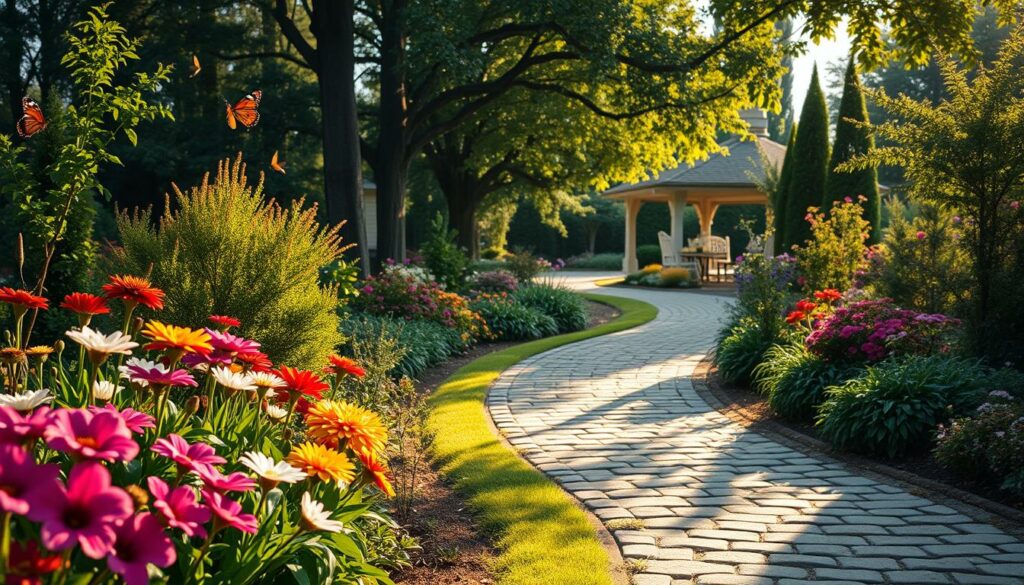
A garden path guides movement and shapes experience in outdoor spaces. It links doors, patios, and garden features. Paths also set the tone for a landscape.
Readers searching for garden path ideas will find practical and creative options. These fit both small front yards and larger backyard designs.
Definition and Purpose
A garden path is a designed walkway that provides access and visual order in planting areas. It helps with wayfinding and frames beds. It also protects plants by directing foot traffic.
Paths may be main routes to entrances or leisure paths that meander through gardens. Some serve as tracks to sheds and utilities. Others use stepping stones for quiet, contemplative walks.
Benefits of a Garden Path
Garden paths add many benefits to landscaping. They boost curb appeal and may increase property value if designed well. Proper paths reduce soil compaction and protect plants by guiding walkers away from beds.
With the right materials and lighting, paths improve safety in wet or icy weather. They make gardens more accessible for all ages. Paths also allow design freedom and inspire many walkway styles.
Some homeowners prefer modern, minimalist lines. Others choose the charm of traditional English garden paths. Permeable materials and good base layers help with drainage and durability while being practical.
| Purpose | Typical Materials | Design Focus | Best Use |
|---|---|---|---|
| Main access | Concrete, pavers, brick | Durability and curb appeal | Front yard pathway ideas leading to entry |
| Leisure | Gravel, flagstone, stepping stones | Comfort and meandering flow | Backyard pathway designs for gardens |
| Service | Compacted gravel, turf stone | Function and low maintenance | Access to sheds and utility areas |
| Ornamental | Stepping stones, mosaic pavers | Visual rhythm and focal points | Accent routes and intimate garden spots |
Types of Garden Paths
Garden path ideas range from rugged, natural routes to crisp, formal walkways. Each material offers a unique look and requires different maintenance. The choice should suit soil, garden style, and foot traffic.
Stone and Gravel Paths
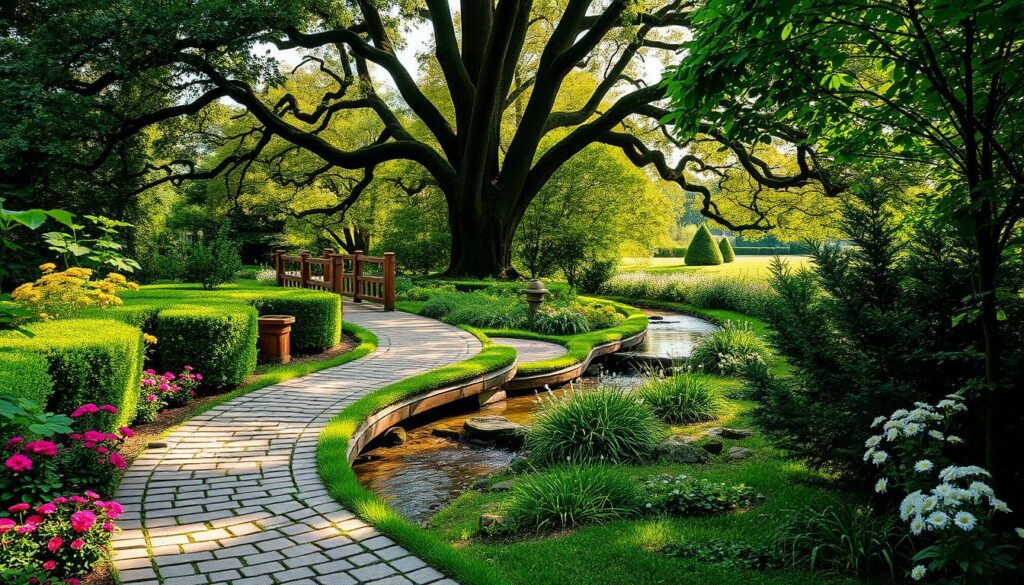
Stone pathways use materials like flagstone, bluestone, and slate for a timeless, natural feel. They work well where durability and a natural palette matter. Crushed stone and pea gravel create informal routes blending with native landscapes.
Installers suggest a compacted crushed rock base and edging to keep gravel contained. Using weed barrier fabric helps reduce growth beneath loose stones. Stone offers many textures and colors to enhance visual interest and drainage.
Wooden Walkways
Wooden walkways use pressure-treated lumber, cedar, redwood, or composite decking to create warm, inviting paths. Raised boardwalks suit wet or uneven ground and offer a stable, elevated route. This makes them ideal for marshy areas.
Wood is quick to install, especially for DIYers. Staining or sealing preserves appearance. Rot-resistant woods or composite boards reduce maintenance and resist termites. Wooden paths fit modern gardens and natural boardwalk designs.
Brick and Paver Options
Brick pavers include clay brick, concrete, permeable pavers, and interlocking stones. They provide a classic, formal look with a steady walking surface that handles heavy foot traffic. Patterns like herringbone or basketweave add curb appeal.
Proper installation needs a compacted base, sand bedding, edge restraints, and joint filling with polymeric sand or fine gravel. Concrete pavers often cost less than natural stone or premium brick. This makes them practical for front yards and busy routes.
Choosing the Right Materials
Selecting materials shapes both the feel and function of a garden path. This guide helps readers weigh practical needs against visual goals. It covers cost, climate, wear, and environmental impact to simplify landscaping material choices.
Budget matters both at purchase and over time. Natural stone and pavers cost more but often last longer. Gravel and crushed stone are affordable but may shift and need topping up.
Factors to Consider
Climate affects durability. Freeze–thaw cycles in northern areas can crack some materials. Strong sun can shorten untreated wood’s life.
Usage drives material choices. High-traffic paths do well with pavers or concrete for stability. Low-traffic strolls suit stepping stones or gravel to reduce cost.
Maintenance tolerance varies. Homeowners wanting low upkeep should pick composite decking or concrete pavers. Those who like a rustic look accept upkeep on wood and loose gravel.
Aesthetics should match the home and garden. Modern homes suit smooth pavers. Cottage gardens gain charm from irregular flagstone or compacted gravel.
Environmental impact also guides choices. Permeable materials like crushed stone and permeable pavers help manage stormwater. They meet many local rules for sustainable landscaping.
Popular Material Comparisons
Gravel versus pavers: gravel is affordable and drains well. Pavers provide a firm surface with many patterns, but they cost more initially.
Natural stone versus concrete: natural stone offers unique colors and textures. Concrete provides uniform slabs that can mimic other materials through coloring or stamping.
Wood versus composite: wood has warmth but needs sealing and can rot. Composite resists insects and moisture, cutting long-term maintenance needs.
Permeable versus impermeable surfaces: permeable materials support water infiltration and reduce runoff. They suit eco-friendly plans and often meet local stormwater rules.
| Material | Cost | Maintenance | Best Use |
|---|---|---|---|
| Gravel | Low | Moderate (top-up) | Casual paths, budget builds |
| Pavers | Medium–High | Low | High-traffic, formal layouts |
| Natural Stone | High | Low–Medium | Feature paths, textured surfaces |
| Concrete | Low–Medium | Low | Uniform modern paths |
| Wood | Medium | High | Decked walkways, warm tones |
| Composite | Medium–High | Low | Low-maintenance, moisture-prone areas |
Readers should order small samples and test them in place. Local suppliers like The Home Depot, Lowe’s, and regional stone yards make it easy to compare prices and textures. This helps when evaluating creative garden path materials and affordable pathway options.
Designing Your Garden Path Layout
Thoughtful layout turns simple garden path ideas into a cohesive landscaping design. This section guides decisions about route and scale. It also shows how pathways meet the yard’s natural features.
It covers practical widths, sightlines, and methods to blend front yard pathway ideas with backyard pathway designs. This creates a unified look.
Straight vs. Curved Paths
Straight paths feel efficient and formal. They work well for short distances and direct access to entryways. Use a straight primary walkway to create crisp sightlines to a door or porch.
Curved paths feel more natural and inviting. They soften the landscape and create a sense of discovery. Curves suit garden strolls and reveal focal points slowly, encouraging pauses and exploration.
Scale matters. A single-person path should be 24–36 inches wide. Paths for two people or service access need 3–5 feet. For curves, allow generous turning radii so movement stays comfortable and safe.
Place focal points along sightlines to add visual interest. Avoid crowding the route.
How to Incorporate Natural Features
Align routes with existing topography to reduce grading work and limit erosion. On slopes, use steps or gentle switchbacks to reduce steep runs. This makes walking easier and blends landscaping with the land.
Protect mature trees by routing paths outside critical root zones. Raised boardwalks keep foot traffic off roots and prevent soil compaction. Frame a tree with a path curve to highlight its presence.
Place paths to frame water features, rock outcrops, and garden beds. Encourage pauses at benches, birdbaths, or specimen plants so users can enjoy views.
Use permeable materials and add a slight slope of 1–2% for runoff. Where needed, include French drains or channel drains. This manages water without harming nearby plantings.
| Design Element | Recommendation | Why It Works |
|---|---|---|
| Primary Walkway | Straight, 3–5 ft wide in front yards | Provides clear access and strong visual axis for front yard pathway ideas |
| Secondary Paths | Curved, 24–36 in wide for garden strolls | Creates a sense of discovery and frames backyard pathway designs |
| Topography Handling | Steps or switchbacks on slopes | Reduces erosion and aligns with natural contours |
| Tree Preservation | Route outside root zones or use raised boardwalks | Protects mature trees and maintains soil health |
| Drainage | 1–2% slope, permeable surfaces, French drains | Prevents pooling and protects plantings |
| Focal Points | Statues, specimen plants, or arbors at ends or bends | Creates composed views and enhances unique walkway styles |
Combining styles often yields the best result. A straight main route guides visitors. Curved secondary paths lead to hidden seating areas and garden vignettes.
This mix supports creative garden path ideas. It keeps front yard pathway ideas and backyard pathway designs coherent across the property.
Enhancing Your Garden Path with Landscaping
Well-planned landscaping lifts a simple route into a memorable outdoor experience. Thoughtful plant choices, layered textures, and subtle lighting turn backyard pathways into places people want to linger.
The guidance below gives practical, safe, and attractive options for those seeking garden path ideas and walkway inspiration.
Adding Surrounding Flora
Choose low-growing groundcovers like creeping thyme, sedum, or Irish moss between pavers. These soften edges, reduce mud, and tolerate foot traffic.
These plants also add scent and color.
Frame routes with taller shrubs or ornamental grasses. Boxwood and dwarf yew provide evergreen structure. Lavender and echinacea supply summer color and attract pollinators.
Mix seasonal interest by planting tulips and daffodils for spring. Use perennials for summer bloom and asters or late sedum for fall tones.
Plan spacing for mature sizes to prevent overgrowth and reduce trimming. Use edging materials like metal or stone to separate beds from the path.
This keeps plants from encroaching and makes maintenance easier.
Include native wildflowers and nectar plants to support bees and butterflies. Consult local native plant societies and USDA hardiness zone guides for reliable species.
Place aromatic herbs such as rosemary and lavender near seating or entry points for pleasant scents.
Avoid thorny species beside narrow walkways to protect guests and pets. Regular pruning keeps sightlines clear and improves safety.
Integrating Lighting Solutions
Select lighting types that match scale and budget. Choose solar path lights for easy installs, low-voltage systems for reliable output, and LED in-ground fixtures for modern accents.
String lights work well for informal seating areas.
Place path lights about 6–8 feet apart for even illumination. Use accent fixtures to highlight focal points and specimen trees without causing glare.
Solar lights are simple to add but perform variably with sun exposure. Low-voltage systems need a transformer and proper trenching.
Follow local electrical codes and hire a licensed electrician when in doubt.
Pick warm white LEDs (2700–3000K) to create a welcoming tone. Choose downward-facing fixtures or shields to limit light spill and protect nighttime wildlife.
Keep maintenance routine: clean solar panels seasonally, inspect wiring, and replace bulbs as needed. Regular checks ensure the path remains safe and inviting.
Seasonal Considerations for Garden Paths
Garden path ideas change with the seasons. A simple plan helps protect materials and keeps walkways safe year-round.
Winter maintenance tips
Choose de-icers gentle on stone and pavers. Calcium magnesium acetate or potassium acetate reduce corrosion and protect surfaces.
Avoid rock salt on brick, wood, or porous stone to prevent staining and damage.
Shovel carefully after each snowfall. Use plastic shovels to prevent chipping or scratching.
A snow blower can speed work on wide, durable surfaces. Set it gently to avoid damaging edges.
Prevent freeze-thaw damage by checking drainage and sealing pavers or natural stone where needed.
Allow expansion joints to have flexible jointing compound so materials can move without cracking.
Keep paths lit and treated to reduce slip risks during short daylight hours. Lighting also highlights walkways for evening use.
Preparing for spring growth
Begin spring cleanup by removing winter debris and cutting back dead foliage. Pull weeds and invasive plants.
Clear space for new growth by removing weeds from gravel and joints.
Replenish materials where needed. Add fresh gravel or sand to joints.
Re-level displaced pavers or stepping stones to restore stable footing and preserve paths.
Refresh mulch and trim encroaching plants. Plant spring bulbs and early perennials to boost curb appeal.
Inspect edges for erosion or root damage. Repair base layers before peak growth starts.
| Task | Recommended Action | Best Time |
|---|---|---|
| De-icing | Use calcium magnesium acetate or potassium acetate; avoid rock salt | Winter, as needed |
| Snow removal | Plastic shovel or gentle snow blower; clear regularly to prevent compaction | During and after snow events |
| Seal and joint care | Seal pavers/stone and use flexible jointing compounds to prevent freeze-thaw damage | Late fall or early winter |
| Spring cleanup | Remove debris, pull weeds, cut back dead foliage | Early spring |
| Replenish base materials | Add gravel/sand, re-level pavers and stepping stones | Spring, before planting |
| Planting and edging | Refresh mulch, prune, plant bulbs and perennials to frame path | Early to mid spring |
| Major installations | Schedule for moderate temperatures with stable soil conditions | Spring or fall |
Practical Tips for Building a Garden Path
Creating a durable and attractive route takes planning, the right gear, and realistic choices. This guide covers must-have tools and materials. It also helps you decide whether to do the work yourself or hire help.
This guide supports common garden path ideas and highlights affordable pathway options for different budgets.
Essential Tools and Materials
Start with basic tools like a shovel, spade, wheelbarrow, tamping tool, level, rubber mallet, masonry saw, string line, measuring tape, and gloves.
Include landscape fabric for weed control, a crushed stone base (3/4 inch), bedding sand or stone dust, and edging like metal, stone, or wood.
Choose a surface such as pavers, flagstone, gravel, or wood planks. Finish with jointing compound or polymeric sand for pavers, and fasteners for decking.
Wear safety gear like eye protection, ear protection, knee pads, and sturdy work boots while working.
When buying materials, measure the area and add about 10% extra for cuts and breakage. Compare prices at stores like The Home Depot, Lowe’s, local garden centers, and stone yards for the best deals.
DIY vs. Professional Installation
DIY garden paths save money on labor and offer schedule flexibility. Simple projects like gravel routes or stepping stones suit an experienced weekend DIYer.
Expect physical work and tools like a plate compactor or masonry saw. Mistakes in drainage or base prep can shorten the path’s life and add long-term costs.
Professional installers bring expertise in drainage, base prep, leveling, and working with complex materials like natural stone or interlocking pavers.
Contractors can also handle permits and ensure local code compliance. Choose one by checking credentials, licenses, insurance, references, portfolios, and experience with your climate.
DIY gravel paths cost around $2–$6 per square foot. Professional paver installations start near $8–$25 or more per square foot depending on materials and labor.
Prices vary by region, so request local estimates when planning your garden path project.
Integrating Garden Paths into Different Yard Styles
Careful integration of a path ties the yard’s architecture to its planting. Readers will find practical garden path ideas that fit both crisp, contemporary plots and lush, romantic landscapes.
Choices in materials, planting, and lighting set the tone and guide how people move through outdoor rooms.
Modern and Minimalist Gardens
Modern garden paths favor clean lines and a restrained palette. Designers often use large-format pavers, broom-finished concrete, or bluestone slabs to create smooth planes.
Metal edging gives crisp boundaries while gravel provides subtle contrast. Planting stays architectural and low-maintenance.
Ornamental grasses, boxwood, and succulents accentuate minimalist walkways without crowding them. LED strip lighting or recessed steps keeps the focus on geometry and negative space.
Examples include stepping-stone patterns set in low groundcover and linear pavers with gravel infill.
These approaches produce modern garden paths that read as intentional design moves rather than mere circulation routes.
Traditional English Gardens
Traditional English garden paths emphasize charm and informality. Materials such as reclaimed brick, flagstone, and pea gravel suit winding routes and layered beds.
Edging with low boxwood hedges or stone borders reinforces the quaint look. Planting is abundant and seasonal.
Roses, cottage perennials, and climbers create a sequence of discovery along the route. Benches, arbors, and focal plantings placed at bends invite lingering and close observation.
Typical treatments include curved gravel paths edged with lavender and rosemary or brick paths laid in a herringbone pattern leading to a gate.
These traditional English garden paths encourage slow movement and repeated enjoyment.
For homeowners comparing backyard pathway designs, mixing elements can yield unique walkway styles. A contemporary material paired with classic planting softens modern lines.
Conversely, a tidy edge can keep a romantic path manageable without losing character.
Eco-Friendly Garden Path Ideas
Garden path ideas that reduce runoff and support wildlife make yards more resilient. This short guide highlights eco-friendly garden paths that are practical and affordable. It balances design, function, and nature-friendly choices for homeowners across the United States.
Sustainable Materials
Permeable paving like permeable pavers, porous concrete, and crushed stone lets rain seep through the ground. This helps reduce runoff and recharge groundwater. Light-colored stones absorb less heat than dark asphalt, keeping paths cooler in summer.
Recycled and reclaimed materials lower embodied energy. Reclaimed brick, recycled concrete aggregate, and salvaged timber save resources and add character. Habitat for Humanity ReStore and local reclamation yards often carry affordable pathway materials.
Low-impact choices like gravel, decomposed granite, and compacted stone dust need less processing and are often local. Using local materials cuts transport emissions and supports regional suppliers.
Incorporating Native Plants
Native plants support pollinators and need less water and fertilizer than many exotic species. Homeowners should check local extension services or native plant societies for zone-appropriate plants. Common options for many U.S. regions include purple coneflower (Echinacea), coreopsis, and native sedges for damp spots.
Plant native groundcovers between stepping stones to stabilize joints and provide habitat. Layered plantings that mimic natural communities boost biodiversity and add seasonal interest. Pair permeable paths with rain gardens or bioswales to manage stormwater and provide food and shelter for wildlife.
Plant natives during spring or fall and use mulch to keep soil moist. Avoid pesticides and synthetic fertilizers to protect pollinators and lower maintenance. These steps keep eco-friendly garden paths healthy and low-cost over time.
Quick Comparison
| Material | Eco Benefit | Typical Cost |
|---|---|---|
| Permeable pavers | Rain infiltration; reduces runoff | Moderate |
| Reclaimed brick | Reuses materials; low embodied energy | Affordable to Moderate |
| Gravel / decomposed granite | Low processing; locally sourced options | Affordable |
| Light-colored stone | Cool surface; lower heat absorption | Moderate |
Choosing sustainable materials and native plants creates eco-friendly garden paths that last. Thoughtful choices yield attractive, durable, and affordable options that help yards and ecosystems.
Final Thoughts on Garden Path Design
Every successful garden path blends style, function, and budget. It should suit the homeowner and the site perfectly. The guide’s garden path ideas help readers prepare well before building.
Collecting material samples, making simple sketches, and creating a mood board are useful steps. Small test sections or a demonstration pathway help evaluate materials. This approach manages costs while checking sightlines effectively.
Importance of Personalization
Personalizing garden paths means matching scale, texture, and color to the home and landscape. Balance current trends with timeless choices like durable stone or classic brick.
This ensures the path lasts long and stays stylish. Incremental projects help with decisions: try affordable pathway options first, note wear and drainage. This lets you refine the design before full installation.
Encouraging Outdoor Enjoyment
Well-planned walkways invite exploration and extend outdoor living space. Adding benches, potting stations, bird feeders, and layered lighting creates inviting destinations. These features encourage people to spend more time outside.
Seasonal planting, simple repairs, and lighting updates keep paths safe and appealing. They support ongoing enjoyment and promote healthier outdoor habits. Readers should use these tips and practical steps to craft enjoyable paths.
Personalizing garden paths and thoughtful planning create a lasting link between home and landscape. These ideas boost curb appeal, usability, and long-term satisfaction.