

Nearly 70% of suburban homeowners say curb appeal influenced their choice of home. This shows how a well-designed garden can boost a property’s value.
This short guide explains how to create stunning plant combinations that lift curb appeal and boost biodiversity. It also adds seasonal interest. Plant combinations garden means choosing plants for color, texture, form, height, and ecological role.
Readers will learn practical tips for designing plant combinations that aim for visual harmony and year-round interest. The guide stresses matching plants to site conditions like light, soil, moisture, and USDA hardiness zones. This helps ensure success across the United States.
Targeted at home gardeners, landscapers, and hobbyists, it covers core design principles and layering for depth. The guide also explains seasonal pairings, native and edible plants, themed compositions, and upkeep strategies. It includes recommended plant combinations with details on spacing, bloom timing, and regional adaptability.
Key Takeaways
- Plant combinations garden means grouping species for color, texture, form, and function.
- Design with site conditions and hardiness zones in mind for lasting results.
- Use layering and height to create visual depth and seasonal interest.
- Include native and edible plants to support biodiversity and practicality.
- Follow simple tips for designing plant combinations in a garden to balance beauty and low maintenance.
Understanding the Basics of Plant Combinations
The foundation of a successful garden starts with a clear plan. It blends color, texture, and height to create harmony. Gardeners who master these basics create inviting and cohesive beds.
The following guidance offers practical tips for designing plant combinations. It helps keep choices manageable and effective.
Importance of Color Harmony
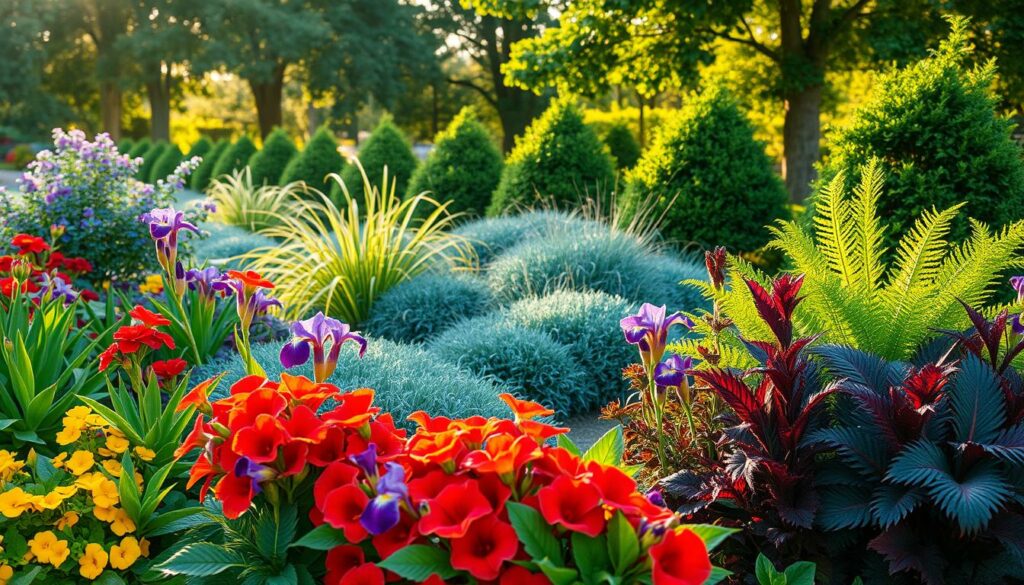
Color theory helps gardeners pick palettes that set mood and scale. Complementary schemes use opposite colors for strong contrast. Analogous schemes place neighboring hues together for calm unity.
Monochromatic schemes rely on tone shifts to create subtle elegance. Color intensity affects focal points. Bold reds and oranges draw the eye.
Pastels and muted tones recede, making space feel larger. Bloom size and foliage tone also shape where attention lands.
To guide movement through a landscape, repeat colors to create unity. Reserve bright accents for focal spots. A practical rule is one dominant color, one secondary, and one accent.
Small gardens benefit from a limited palette to avoid visual clutter.
Exploring Texture Variations
Texture includes leaf size, shape, surface, and flower form. Contrasting textures add interest and help define garden rooms. Fine-textured grasses like Muhlenbergia or Festuca pair well with large-leaf perennials like Hosta and Rodgersia.
Coarse textures act as anchors. Fine textures soften transitions and lighten plantings. Texture changes perceived density; delicate foliage opens sightlines while broad leaves create shelter and intimacy.
Considering Plant Height
Layering by height follows a simple model: foreground, middle, background. Place short plants up front, medium in the middle, and tall specimens at the back or as vertical accents.
This order keeps sightlines clear and beds easy to read. Scale matters—choose plants by mature height, not nursery pot size.
Taller plants should not overwhelm small structures or neighboring varieties. Repeating heights introduces rhythm and helps the eye travel through the garden.
Seasonal changes affect proportions. Spring bulbs stay low while later perennials and shrubs grow taller. Plan for these shifts so early and late-season interest work together without crowding.
Combine the three fundamentals by mapping a height structure first, layering textures second, and applying the color plan last.
Sketch layouts or use garden design apps to test combinations before planting. These steps lead to thoughtful, attractive plant combinations that stand up to seasonal change.
| Design Step | What to Choose | Garden Example |
|---|---|---|
| Height Structure | Short foreground, mid-height layer, tall backdrop | Spring bulbs at front, daylilies mid, salvias or Rosa ‘Knock Out’ at back |
| Texture Pairing | Fine grasses with broad-leaf perennials | Festuca with Hosta; Muhlenbergia with Rodgersia |
| Color Strategy | One dominant, one secondary, one accent | Lavender dominant, silver foliage secondary, orange nasturtium accents |
| Practical Tip | Use mature sizes and repeat elements for rhythm | Plant groups of three to five for balance and flow |
| Visualization | Sketch or use an app before planting | Test palettes and heights using photos or garden design software |
Selecting Complementary Colors for a Garden
Choosing color schemes shapes the mood of a garden plan and guides plant selections. A clear grasp of the color wheel helps plan combinations that feel balanced and intentional.
Beginners gain confidence by starting small and testing combinations in containers before planting in beds.
Color Wheel Basics
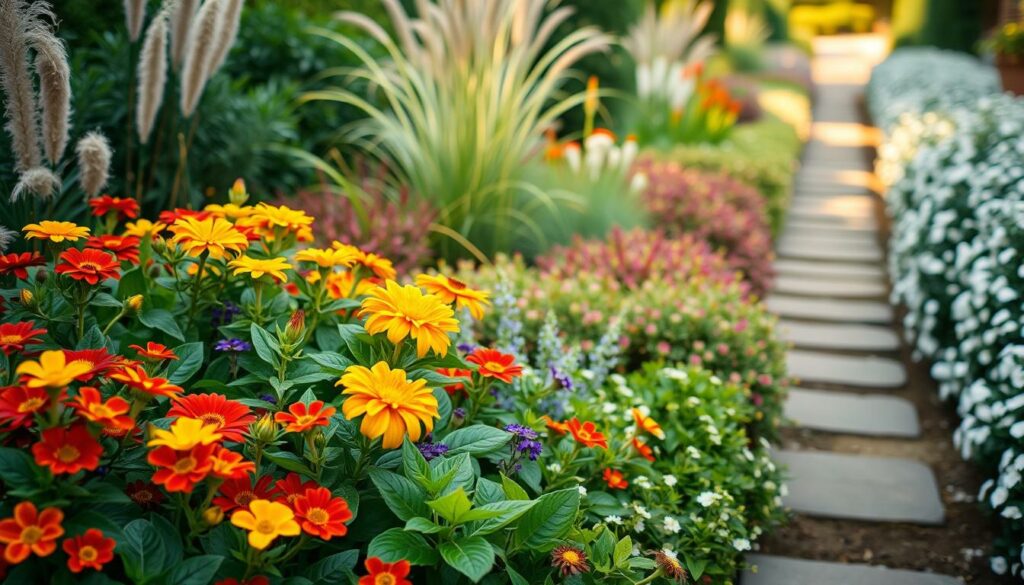
The color wheel shows relationships among hues and supports four main schemes: complementary, analogous, triadic, and monochrome. Complementary pairs sit opposite each other for bold contrast.
Analogous colors sit next to each other for a calm, unified look. Triadic schemes use three evenly spaced hues for lively balance. A monochrome plan relies on one hue with varied value and saturation to stay cohesive.
Warm colors like red, orange, and yellow tend to come forward and create energy. Cool colors such as blue, purple, and green recede and bring calm. Use these traits to shape focal points and background layers.
Color intensity matters. High-saturation flowers act as accents. Lighter colors help widen space and soften transitions. Newcomers can use an analogous base with a single complementary accent to create interest.
Examples of Harmonious Combinations
Concrete plant choices make color rules practical. Complementary combinations work well when bold contrast is needed. Try purple Salvia or lavender with yellow Rudbeckia or Coreopsis for a striking focal swath.
An analogous warm palette might pair red Echinacea, pink Phlox, and orange daylilies to evoke a sunset impression. For a monochromatic blue bed, combine Agapanthus, Nepeta (catmint), and blue fescue for a soothing scene.
A triadic mix brings vibrancy. Pair purple asters, yellow black-eyed Susans, and red bee balm to keep a lively yet balanced display throughout the season.
Timing and hardiness matter for lasting impact. Select species with staggered bloom times so colors last from spring into fall. Choose cultivars rated for local USDA hardiness zones to ensure plant combinations perform reliably.
| Scheme | Example Plants | Effect | Best Use |
|---|---|---|---|
| Complementary | Purple Salvia + Yellow Rudbeckia | High contrast, strong focal points | Accent beds, entrances |
| Analogous | Red Echinacea + Pink Phlox + Orange Daylily | Warm, cohesive flow | Borders, cottage gardens |
| Monochrome | Agapanthus + Nepeta + Blue Fescue | Serene, unified appearance | Formal beds, water features |
| Triadic | Purple Asters + Yellow Black-eyed Susans + Red Bee Balm | Vibrant balance across the bed | Mixed borders, pollinator gardens |
| Practical Tip | Analogous base + one complementary accent | Low risk, pleasing contrast | Beginner designs and container experiments |
Readers who learn to create stunning plant combinations find that planning with color reduces trial and error. Using tried and popular plant combinations speeds success. It builds seasonal interest with dependable visual results.
Creating Visual Depth with Layering Techniques
Layering plants creates a garden that feels complete and intentional. A strong backdrop of taller specimens sets the scene. Mid-height plants add rhythm and color. Low ground covers knit the composition together.
This approach helps gardeners choose plant combinations that work at every scale.
Using Tall Plants as Backdrops
Tall shrubs, small trees, and upright perennials give beds structure. Species such as Hydrangea paniculata, Amelanchier, Miscanthus, and Artemisia provide vertical interest and seasonal change. Place these at the back of borders, along fences, or as isolated focal points to frame views.
Evergreens like Ilex or Thuja make dependable year-round backdrops. Plan for root competition and shade on lower layers. Leave space for mature spread so tall plants do not crowd mid-level companions.
Mid-Level Plants for Balance
Mid-height perennials and shrubs bridge the gap between tall backdrops and ground covers. Salvia, Penstemon, Viburnum, and Heuchera deliver bloom, texture, and the main color theme of a border. These plants often define the garden’s seasonality.
Use more mid-level plants than tall specimens to create balance. Group mid-layer plants in odd numbers to make a natural rhythm. This method helps gardeners select the best plant combinations for garden beds that feel lively and ordered.
Ground Covers for Completeness
Ground covers like Ajuga, Lamium, thyme, Sedum, and creeping phlox fill gaps, suppress weeds, and protect soil. They soften edges and provide low seasonal interest. Examples include spring phlox carpets or thyme blooms in summer.
For small yards, low-growing plants can make the space feel larger visually. Choosing evergreen ground covers or those with year-round texture supports ideal plant combinations for small gardens. Ground covers also help with moisture retention and continuity across beds.
Think of beds like a layered cake: first, establish a tall structural backdrop. Then add repeated mid-layer groups for color and form. Finish with low covers and edging plants for coherence.
Thoughtful layering brings depth while keeping plant combinations practical and attractive.
Practical Plant Pairings for Seasonal Interest
Spring and summer need different plant strategies to keep borders lively. Thoughtful plant combinations ensure color, texture, and form flow well across seasons.
The right duos and groups offer continuous appeal and make maintenance easier for gardeners.
Spring Blooming Duo Suggestions
Tulips with grape hyacinth (Muscari) create bold color contrasts and a carpeted ground cover. Plant bulbs in fall so they bloom together in spring. This makes striking, low-maintenance displays.
Daffodils paired with perennial geraniums like Geranium ‘Johnson’s Blue’ work well. Daffodils give early color while geraniums hide fading foliage as they grow.
Allium and hostas form a dramatic architectural team. Tall allium globes rise above the garden, with emerging hosta leaves as a lush base. Stagger bulb depths and planting times to extend bloom into different periods.
Maintenance notes for spring pairings:
- Deadhead spent bulb blooms to tidy beds and help bulbs conserve energy.
- Stagger bulb plantings or mix varieties for longer bloom displays.
- Adjust fertilization to support both bulbs and the chosen perennials.
Summer Favorites for a Thriving Landscape
Coneflowers (Echinacea) with Russian sage (Perovskia atriplicifolia) provide season-long color and attract pollinators. Both tolerate heat and stay low-maintenance in mixed beds.
Daylilies mixed with Salvia and ornamental grasses add bold color and movement. Grasses supply texture while daylilies offer repeat blooms during hot months.
Coreopsis combined with lavender and yarrow suits sunny, dry sites. This drought-tolerant group lowers water needs and keeps form and color during summer peaks.
Practical summer care tips:
- Use drip irrigation or soaker hoses to water deeply, limiting evaporation.
- Space plants to improve air flow and reduce fungal issues like powdery mildew.
- Check for pests and remove affected leaves quickly to protect other plants.
These plant combination ideas help create a beautiful and vibrant garden. Choose plants with similar light, soil, and water needs for the best results.
Thoughtful pairings keep beds healthy and visually attractive across seasons.
Incorporating Foliage and Flowers
The strongest plant combinations in garden designs pair blooms with striking foliage to keep interest when flowers fade. This approach extends color and texture beyond peak bloom periods. It makes mixed borders feel intentional and alive.
Balancing Blooms with Leafy Greens
Designers recommend grouping flowering plants with bold-leaved companions so foliage supports and frames bloom clusters. For example, bright Salvias and asters sit well beside Heuchera (coral bells), Brunnera, or ornamental grasses. Those foliage plants add a steady backdrop while the flowers take center stage.
Foliage color can act as a neutral or contrasting element. Silver Artemisia or dusty miller calms vibrant reds and oranges. Variegated hostas or bronze Heuchera lift shady corners and reflect light.
Plant density matters: place foliage in sweeps behind or around bloom drifts to anchor the display.
For small beds, choose combinations that multiply visual effect without crowding. The ideal plant combinations for small gardens often mix one vivid flowering species with two or three textured foliage types. This strategy keeps maintenance simple and visual impact high.
Year-Round Foliage Options
To maintain structure through winter, include evergreen and semi-evergreen species. Boxwood, holly, and Euonymus deliver form and green into cold months. Bergenia and select ornamental Carex varieties add clumps of perennial interest.
Seasonal foliage changes boost interest. Maples and burning bush provide autumn color. Dogwood and red-twig cultivars give winter stems that catch light and contrast with evergreens.
Mixing deciduous and evergreen plants ensures both seasonal change and consistent framework.
Plant selection should match local USDA hardiness. For long-term health, follow basic maintenance: prune foliage shapes at recommended times and mulch to protect roots. Remove diseased leaves to reduce overwintering pests. These steps support the best plant combinations for garden beds and encourage lasting harmony between blooms and greens.
The Role of Native Plants in Combinations
Native plants form the backbone of resilient plantings. They match local climate and soil. This reduces water and fertilizer needs.
Gardeners find fewer pest problems with species that co-evolved alongside local insects and pathogens.
Using indigenous species supports pollinators and wildlife. Bees, butterflies, birds, and beneficial insects rely on native blooms and foliage for food and shelter.
A shift toward native choices boosts biodiversity and helps landscapes recover from extreme weather.
Native mixes also look intentional when paired with ornamentals. Thoughtful layering of natives with non-invasive garden plants creates a cultivated feel.
This balance produces some of the best plant combinations for garden areas designed for beauty and function.
Benefits of Using Indigenous Species
Native plants typically require less maintenance. Their deep roots improve soil structure and drought tolerance. Landscapes with local species need fewer chemical inputs and less mowing. This saves time and money.
Native species improve ecological resilience. They provide seasonal food and nesting sites many exotic species cannot. Reduced pest outbreaks occur because native plants share natural checks with local predators and parasites.
Gardeners seeking popular plant combinations will find natives pair well across layers. Groundcovers, mid-height perennials, and taller shrubs create attractive, low-input beds that serve people and wildlife.
Popular Native Plants for Various Regions
Regional choices vary across the United States. In the Northeast and Mid-Atlantic, gardeners favor Echinacea (coneflower), Solidago (goldenrod), Asclepias (milkweed), and Baptisia (false indigo).
These species support pollinators and provide strong seasonal interest.
In the Midwest and Great Plains, Rudbeckia (black-eyed Susan), Penstemon, Monarda (bee balm), and Little Bluestem (Schizachyrium scoparium) perform well.
They handle heat and wind while creating dynamic textural contrasts for plant combination garden plans.
The Southeast benefits from Muhlenbergia capillaris (pink muhly grass), Rhododendron species, Osmanthus, and Lobelia cardinalis. These choices thrive in warm, humid conditions and add color and structure to mixed beds.
In the West and California, Salvia species, Ceanothus (California lilac), Arctostaphylos (manzanita), and native sages and bunchgrasses stand out.
They pair well with drought-tolerant ornamentals to form popular native combinations for landscaping in dry climates.
Consult local cooperative extension offices and native plant societies such as the Lady Bird Johnson Wildflower Center for precise lists and plant sources.
Combining regional natives with carefully chosen ornamentals helps gardeners achieve beautiful, ecologically sound garden designs.
Mixing Edible and Ornamental Plants
Blending food plants with decorative ones creates a garden that feeds the body and delights the eye. Thoughtful planting turns herbs, berries, and dwarf fruit trees into garden highlights.
This method supports pollinators and lowers food miles, all while keeping your yard beautiful.
Designers suggest simple ways to make edibles look planned. Repeating herbs or planting chard with bright stems adds rhythm.
Containers of salad greens at the front of a border soften edges. These tips help gardeners blend beauty and harvests well.
Aesthetic Benefits of Edible Landscaping
Edible plants add texture and seasonal shape. Rosemary and sage give evergreen forms and fragrant leaves.
Blueberry bushes provide spring flowers, summer fruit, and vibrant fall color. Using edibles in hedges or mixed borders adds rich layers.
Combining edible and ornamental plants boosts biodiversity. Herb blooms attract pollinators, improving fruit production.
The result is a garden that looks beautiful and is productive.
Easy Edibles to Incorporate
Choose plants that match your style and care level. Many herbs require little care and have pretty flowers.
Nasturtiums act as groundcover and edible garnish. Swiss chard adds vivid color while filling middle border spaces.
- Herbs: rosemary, thyme, sage, chives, oregano — fragrant leaves and pollinator-friendly flowers.
- Berries: blueberry (Vaccinium) and raspberry — sturdy shrubs with tasty fruit.
- Culinary flowers & vegetables: nasturtiums, chard, mixed salad greens — bright front-border plants.
- Small fruit trees: dwarf apple or pear trained as espaliers to add vertical interest.
Good care helps mixed beds flourish. Keep heavy feeders like tomatoes away from low-nutrient ornamental plants.
Rotate annual vegetables and provide blossoms all season to support pollinators. Companion planting, such as basil near tomatoes, lowers pests and boosts flavor.
Use integrated pest management to protect crops and ornamentals. Cover rows when needed and invite beneficial insects with habitat plants.
These steps keep your garden healthy, attractive, and fruitful.
| Edible | Ornamental Role | Care Notes |
|---|---|---|
| Rosemary | Evergreen form, fragrant texture in borders | Low water, full sun, drought tolerant |
| Blueberry (Vaccinium) | Spring flowers, fall color, fruiting shrub | Acidic soil, regular watering, partial to full sun |
| Nasturtium | Trailing color, edible flowers and leaves | Poor soil tolerates, great for container mixes |
| Swiss chard | Bright stems, mid-border filler | Cool-season tolerant, cut-and-come-again harvests |
| Dwarf apple (espalier) | Vertical interest against walls, blossoms for spring | Prune annually, needs pollinator blooms nearby |
Creating a Theme with Plant Combinations
A themed planting scheme gives a garden a clear mood and direction. Choosing a cohesive palette and materials helps visitors sense a purpose. Themed layouts guide choices among popular plant combinations for landscaping.
The Mediterranean idea centers on drought-tolerant species and sun-loving textures. Silver foliage, aromatic herbs, gravel paths, terracotta pots, and informal drifts create a relaxed feel. Group lavender, rosemary, Santolina, Cistus, and Salvia officinalis near raised beds or containers.
Where climate allows, add olive trees (Olea europaea) or ornamental grasses like Stipa gigantea for height and movement.
Designers recommend hydrozoning: place plants with similar water needs together to save resources. Use stone or mosaic accents and decomposed granite walkways to reinforce the theme. This approach suits hot, dry summers in California and the Southwest but adapts easily to containers elsewhere.
Those seeking plant combination ideas for a beautiful garden will find Mediterranean palettes both low-water and decorative.
The Zen approach favors restraint and careful composition. It highlights form, texture, negative space, and seasonal subtlety. Integrate rocks, gravel, water features, and pruned evergreens to shape calm sightlines.
Select Japanese maple (Acer palmatum) for sculptural structure and autumn color. Use Hakonechloa macra for flowing texture, mosses for soft ground cover, and bamboo for screening.
Place dwarf conifers or compact azaleas to punctuate sightlines and repeat simple elements to create rhythm. Embrace asymmetry and careful spacing so each plant reads as a natural scene. Zen-style layouts need steady pruning and attention to light and moisture.
They reward with serene, ordered spaces that fit many plant combination ideas for a beautiful garden.
Both themes show how focused choices yield strong results. Whether aiming for a sunbaked Mediterranean courtyard or a quiet Japanese composition, pairing materials, textures, and maintenance plans helps any gardener assemble plant combinations that feel intentional and lasting.
Maintenance Considerations for Plant Combinations
Careful maintenance helps keep plant combinations healthy and attractive. Gardeners should match plants by light, soil, and water needs. This helps each group thrive well.
Regular checks reduce plant stress. Avoid the common mistake of mixing full-sun and shade lovers in the same bed.
Start with a simple checklist. Record sun hours, test soil pH, and note drainage.
Read plant tags and consult county extension resources to learn their water and fertilizer needs. Consider mature size and bloom time.
Routine tasks make maintenance easier. Schedule seasonal pruning and add mulch to keep moisture.
Divide crowded perennials every few years, and time fertilization to a plant’s growth cycle. These steps help a vibrant garden.
Understanding Plant Care Requirements
Group full-sun, part-shade, and shade plants separately to reduce stress. Use tags from Proven Winners or Ball Horticultural for reliable care tips.
Check soil for compaction and improve it with organic matter when needed.
Keep irrigation simple. Drip lines support deeper roots and stop overwatering that causes disease.
Watch moisture during heat waves. Lower watering in cool, wet periods to protect roots.
Managing Growth and Spacing
Plant at the mature spacing shown on labels to avoid crowding and disease. Odd-numbered groups look natural and improve airflow.
Overcrowding is a common mistake when gardeners ignore mature plant size.
Control aggressive species with root barriers, root pruning, or pots. Mint and some kiwifruit can overrun beds without control.
Stake tall perennials such as delphinium before storms to reduce wind damage.
Plan with a simple calendar. In spring, plant, divide, and mulch.
In summer, deadhead spent blooms and watch for pests. In fall, clean beds, plant bulbs, and cut back tender perennials after frost.
In winter, prune selected shrubs and add mulch for less hardy plants.
| Task | Timing | Why It Matters |
|---|---|---|
| Planting & dividing | Spring | Establishes roots and prevents overcrowding as plants mature |
| Mulching | Spring and fall | Conserves moisture, moderates soil temperature, suppresses weeds |
| Deadheading & pest checks | Summer | Extends bloom time and prevents infestations from spreading |
| Bulb planting & cleanup | Fall | Prepares beds for next season and ensures spring color |
| Winter pruning & protection | Late winter | Removes damaged growth and shields tender plants from cold |
Following these tips lowers maintenance time and improves plant health. Thoughtful care and spacing help create plant combinations that last.
These steps lead to vibrant gardens that thrive season after season.
Experimenting with Unique Plant Pairings
Seasoned gardeners know that playful mixing can yield striking results. Small, controlled trials let them test plant combinations garden-wide without risk.
They might place silver Artemisia beside hot-pink Gaura in a container. This helps see how texture and color interact before committing to a bed.
Unconventional Combinations for Creativity
Try pairings that contrast form and season. Ornamental kale with late asters extends color into cool months.
Echinacea paired with ornamental millet creates bold vertical contrast. In gravel gardens, succulents alongside Mediterranean herbs give a sun-dry, low-care look.
This style works well for plant combination ideas for a beautiful garden.
Learning from Successful Designs
Study proven displays at places like Brooklyn Botanic Garden or Chicago Botanic Garden. Also, consult university extension bulletins for advice.
Gardeners should document trials with photos and notes on bloom timing, maintenance, and competition. This record helps refine ideal plant combinations for small gardens.
Balancing creativity with practical limits—site conditions, watering, and long-term growth—keeps experimental pairings attractive and sustainable.
By testing in containers or test beds, observing pollinator responses, and learning from established designs, gardeners expand their repertoire of plant combination ideas. This protects existing plantings.