

Nearly 40% of U.S. gardeners face cold snaps each year that harm their plants. Frost can appear in late fall, winter, and early spring. This article explains practical steps to protect plants from frost damage.
It offers frost protection tips for yards, community plots, and small farms.
Frost kills tender growth, ruins blooms, and stops fruit from setting. This guide helps home gardeners, community growers, and small-scale vegetable farmers reduce their losses. It covers simple tools and habits that fit most budgets to prevent frost damage.
The article starts with frost basics and choosing cold-hardy plant varieties. It discusses timing plantings and preparing soil and mulch. It also covers physical barriers like row covers and cloches.
Watering, low-cost heat options such as Christmas lights and heat mats are included too. Longer-term strategies like greenhouses and raised beds get explained. Weather-monitoring tips and recovery steps complete the plan.
Readers who use these methods will see fewer plant losses and longer growing seasons. The guide includes actionable tips, recommended plants, and product ideas for frost protection. It is tailored to U.S. climates.
Key Takeaways
- Frost can occur unexpectedly across seasons; plan for it year-round.
- Simple tools and techniques help prevent frost damage on plants.
- Both short-term fixes (covers, lights) and long-term strategies (greenhouses) are useful.
- Moist soil, proper mulch, and timing reduce frost risk.
- Monitoring local forecasts lets gardeners act before a frost arrives.
Understanding Frost and Its Effects on Plants
Frost is a hidden threat in gardens and orchards across the United States. Gardeners who understand frost gain an advantage when planning plant protection. This section explains the science and damage to help readers choose better frost-resistant care methods.
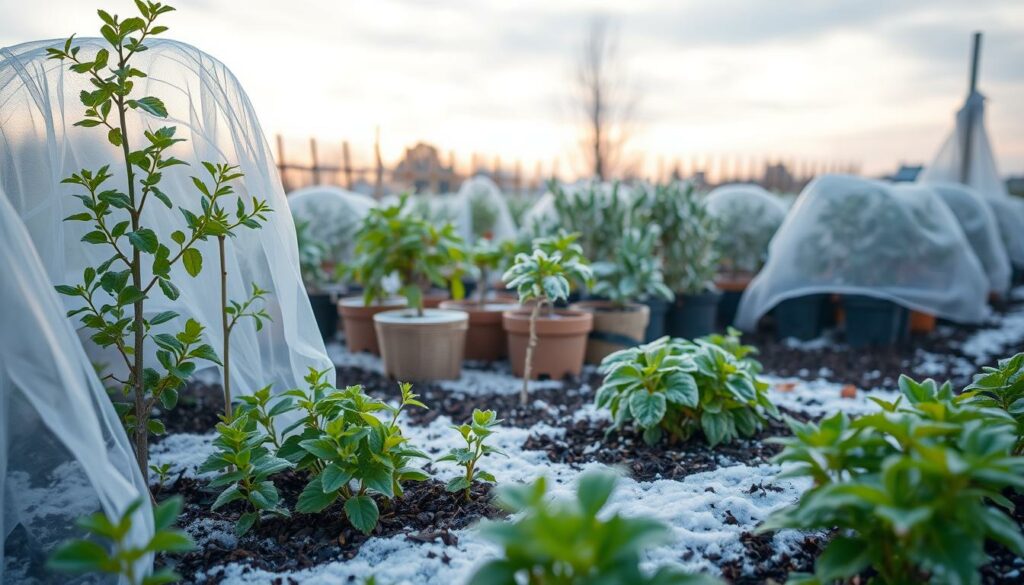
What is Frost?
Frost is ice crystals that form on plants when temperatures fall to or below 32°F (0°C). Hoar frost looks like white, feathery crystals on leaves. Black frost damages tissues without visible ice. Both types harm cells and stunt plant growth.
How Frost Forms
On clear, calm nights, radiational cooling causes soil and plant surfaces to lose heat to the sky. Moisture in the air freezes on cold surfaces. Microclimates, elevation, and nearby water affect frost risk. Low spots collect cold air. Coastal zones stay warmer than inland valleys.
Impact of Frost on Different Plant Types
Tender plants like tomatoes, peppers, and basil can die from light frost. Perennials and shrubs often lose shoots but survive with healthy roots. Woody plants and fruit trees suffer bud and blossom damage, especially from late-spring frosts.
Lawns and grasses vary in tolerance. Cool-season grasses resist light frost. Tropical grasses may die from a single cold night. Ice inside cells destroys membranes, causes drying, and blocks nutrient flow. This leads to wilting and browning.
Gardeners use USDA hardiness zones to pick plants but these maps miss many microclimates. Using zone info with site observation and frost-care techniques helps reduce losses. These practical steps teach how to prevent frost damage on plants.
Choosing Hardy Plants for Frost-Prone Areas
Selecting the right species helps protect plants from frost. Gardeners who match plants to local conditions need less emergency protection.
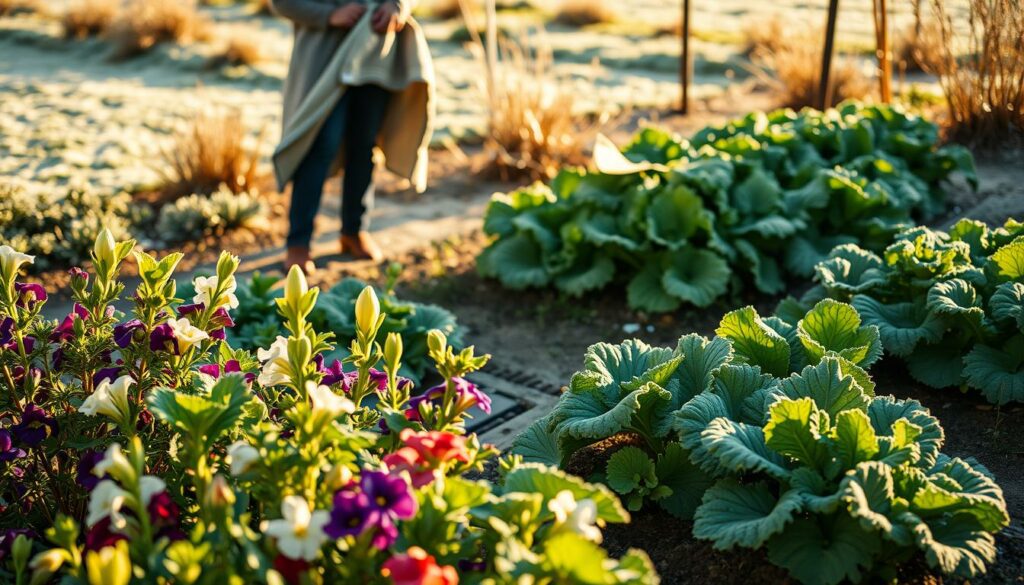
Use USDA Plant Hardiness Zone maps, cultivar labels, and seed catalogs to find cold-hardy varieties. Look for phrases like hardy to followed by minimum temperature. Check chill-hour needs for fruit trees to ensure blooms align with local winters.
Cold-hardy plants have traits that help them survive freezing nights. Many have smaller cell sizes, thicker cuticles, or dormancy strategies.
Some can supercool tissues to avoid ice damage. Knowing these traits helps gardeners pick species that need less frost protection.
Native species and cultivars adapted to local microclimates perform best. Choosing later-blooming fruit and staggering plantings reduce losses from late-spring freezes.
Contact county extension services for region-tested cultivar suggestions.
Below is a guide to vegetables, herbs, ornamentals, and fruit types for colder regions. Use it to plan beds and learn frost-resistant care to lower winter stress.
| Category | Suggested Plants | Notes on Frost Tolerance |
|---|---|---|
| Vegetables | kale, Swiss chard, spinach, Brussels sprouts, cabbage, carrots | Many brassicas and root crops improve flavor after light frost; plant hardy cultivars for extended harvests. |
| Herbs | thyme, rosemary (cold-hardy cultivars), sage, oregano | Choose rosemary varieties labeled for colder zones; sage and oregano are reliable perennials in many areas. |
| Ornamentals & Perennials | sedum, hellebore, ornamental grasses, peonies, daylilies, hardy sedges | Perennials with deep roots and seasonal dormancy recover well after frost events. |
| Fruit Trees & Berries | late-blooming apple and pear cultivars, tart cherry varieties, cold-hardy raspberries | Select cultivars bred for cold tolerance and late bloom to protect flowers from spring freezes. |
Identifying Cold-Hardy Varieties
Read plant labels carefully to find hardiness ratings. Seed catalogs list minimum temperatures and zone recommendations.
Nursery tags stating hardy to followed by a temperature give clear selection guidance.
Verify chill-hour needs for fruit plants. Cultivars needing fewer chill hours set fruit more reliably in variable winter regions.
Local extension services and university trials publish cultivar performance for each zone.
Recommended Plants for Cold Climates
Choose kale and spinach as reliable winter greens. Root crops like carrots and cabbages store well and handle light freezes.
Brassicas often taste sweeter after frost, making them excellent choices.
For herbs and ornamentals, favor thyme, sage, sedum, and hellebores. These plants are resilient and low maintenance.
In colder zones, pick rosemary cultivars tested for winter survival.
When selecting fruit trees and berries, pick late-blooming, cold-hardy cultivars. Apples and pears bred for northern areas reduce blossom loss risk.
Consult local lists to find varieties proven for nearby microclimates.
Choosing plants carefully and picking good sites lowers the need for frost protection. Using frost-resistant care builds a resilient landscape and reduces winter work.
Timing Your Planting Schedule
Good timing reduces risks when protecting plants from late spring frost. Gardeners who plan planting dates based on local climate patterns save time and cut losses.
Below are practical steps for scheduling seedlings, direct sowing, and stage-based planting. These steps improve chances of success in spring.
Start tender annuals indoors. Transplant them after the expected last frost.
Seedlings should be hardened off over 7–14 days. Expose them to increasing outdoor conditions during this time. This helps plants adapt and limits transplant shock.
Best Planting Times to Avoid Frost
Direct-sow cold-season crops like peas, spinach, and kale early in cool soil.
Wait to plant frost-sensitive crops such as tomatoes, peppers, and basil until well after the last frost date.
Stagger planting dates. This reduces risk from late cold snaps.
Plant in warmer microclimates when possible. South-facing walls, raised beds, and gentle slopes warm earlier in spring.
Containers can be moved under covers or near structures if frost threatens unexpectedly.
Recognizing the Last Frost Dates
Use NOAA, the National Weather Service, local extension services, and USDA zone maps to find average last frost dates for your area.
These average dates guide planting decisions but do not guarantee safety.
Check historical variability and recent trends to apply risk-based planning. Plant in stages instead of all at once. This avoids losing the entire crop to a single frost event.
| USDA Zone Range | Typical Last Frost Window | Recommended Action |
|---|---|---|
| Zones 5–6 | Mid-April to Mid-May | Start tender annuals indoors 6–8 weeks before; direct-sow peas and lettuce early; transplant warm-season crops late May. |
| Zones 7–8 | Late March to Early April | Begin seeds indoors 4–6 weeks before; direct-sow many crops earlier; transplant tomatoes and peppers after mid-April to late April. |
| Zones 9–10 | Rare to no hard frost | Plant most warm-season crops earlier; watch for occasional late cold snaps and protect container plants when needed. |
To prevent frost damage, combine timing, location, and staged planting. This gives gardeners an edge against late freezes.
Preparing Your Garden for Winter
Ready soil and smart mulching help protect plants from frost. Taking a few steps in autumn reduces winter damage. This also helps gardens recover quickly in spring.
Soil Preparation Techniques
Improve soil by adding well-rotted compost. Organic matter keeps heat in and helps drainage. This reduces freeze-thaw stress on roots.
Avoid late-season high-nitrogen fertilizers that cause tender growth. Such growth struggles in cold and can harm frost protection efforts.
Amend low-lying beds to improve cold drainage. You can also convert to raised beds to control soil temperature and moisture better.
Clean up dead or diseased plant debris to limit pests and diseases that survive winter in the garden.
Mulching for Frost Protection
Choose mulch carefully. Straw, shredded bark, leaves, and compost all work well. Apply 2–4 inches around perennials to insulate soil.
This mulch layer protects root crowns from cold. Apply mulch after the first hard freeze for herbaceous perennials. This timing lets plants harden off properly.
Mulching too early over warm soil can delay dormancy. It also raises the risk of frost damage.
For container plants, wrap pots with insulation or move them to sheltered spots on cold nights. Pull mulch slightly away from tree trunks to prevent rodent damage and rot.
Mulch alone can’t protect tender above-ground shoots. Use covers or cloches on frosty nights for better protection of frost-sensitive parts.
Physical Barriers Against Frost
Physical barriers offer practical, low-cost protection when temperatures dip. Gardeners use covers to keep heat close to plants. They also stop ice crystals from forming on leaves.
These methods are among the best ways to protect plants from frost when applied correctly.
Blankets, burlap, and lightweight frost cloths work well for beds or groups of plants.
The goal is to trap warm air near the soil surface.
Use full coverage by pulling fabric down to the ground. Anchor edges with soil, rocks, or landscape staples to block cold drafts.
Cover plants before sunset and remove covers after mid-morning when temperatures rise. This helps avoid overheating and excess moisture.
Choose materials based on need. Lightweight floating row covers let air and moisture pass while offering modest protection.
Heavier frost blankets or quilts keep more heat but need support to avoid crushing tender stems.
For single plants, cloches give focused warmth. Commercial glass or plastic cloches provide steady insulation.
A common DIY option is a cut plastic bottle placed over a seedling. Ventilate cloches on sunny days to prevent heat stress and humidity buildup.
Floating row covers and low tunnels extend the growing season for cool crops. Manufacturers rate fabrics by degrees of protection.
Typical options offer around 3°F to 5°F of frost resistance.
Low tunnels use hoops and plastic or fabric to create a protected microclimate. Open or prop covers on warm, sunny days to reduce heat and allow gas exchange.
Inspect covers regularly for tears. Secure anchors well to resist wind.
Removable covers help with pollination needs. For flowering crops that depend on bees, such as squash and cucumbers, remove covers during bloom.
Alternatively, switch to targeted protection to preserve fruit set.
| Method | Typical Protection | Best Use | Pros | Cons |
|---|---|---|---|---|
| Lightweight floating row cover | About 3°F–5°F | Seedlings, leafy greens | Allows gas exchange; easy to handle | Limited warmth on very cold nights |
| Heavier frost blanket or bed sheet | Up to 7°F in some cases | Young shrubs, small beds | Greater insulation; simple materials | Can crush plants without support |
| Garden cloche (glass or plastic) | Moderate localized warming | Individual transplants, herbs | Focused protection; reusable | Must be ventilated on sunny days |
| Low tunnel (hoops + plastic/fabric) | 3°F–10°F depending on material | Season extension for rows | Good for early planting; pest barrier | Requires anchoring and maintenance |
| Plastic bottle cloche (DIY) | Small localized warming | Single seedlings | Inexpensive; easy to make | Limited coverage; needs ventilation |
Watering Techniques Before a Frost
Preparing water management before a freeze is one of the simplest frost protection methods for gardens. Moist soil stores heat and releases it slowly overnight. This helps keep root zones warmer than dry ground.
Gardeners who plan irrigation carefully give plants a better chance to survive cold snaps.
Benefits of Moist Soil
Moist soil holds more thermal energy than dry soil, which raises night temperatures around roots. This stored warmth lowers the risk of roots experiencing lethal cold. Well-watered plants resist drying out when air near frozen tissues is dry.
This makes them less prone to leaf and stem damage. Keeping the root zone hydrated helps plant metabolism stay stable during sudden cooling. Irrigation before a frost adds resilience for vegetables, ornamentals, and shrubs.
How to Water Before a Frost
Water deeply in the afternoon on the day of an expected freeze. Late afternoon watering lets water soak in and helps plants recover before temperatures drop. Use slow soaking irrigation or soaker hoses to move moisture into deeper soil layers rather than wetting only the surface.
Avoid overwatering that leaves roots waterlogged. Good drainage prevents freeze-thaw damage to roots. For container plants, water thoroughly, then move pots to a sheltered spot. Wrap them in insulating material like burlap or bubble wrap to protect root systems.
Do not spray foliage to form an ice coating unless using properly calibrated overhead systems in commercial orchards. Improper icing can harm tissues instead of helping them. These systems maintain tissue temperature at or just above 32°F and require precise control.
| Action | When to Do It | Why It Helps |
|---|---|---|
| Deep afternoon watering | Several hours before nightfall | Allows soil to store daytime heat and keeps roots warmer overnight |
| Soaker hoses / slow soak | On predicted freeze days | Ensures deep moisture, reducing surface evaporation and desiccation |
| Container watering + insulation | Before moving pots to sheltered areas | Protects limited root volume from rapid temperature swings |
| Avoid light surface wetting | Any time before frost | Prevents false sense of protection and shallow root cold stress |
| Do not form ice on plants unless controlled | Only with calibrated commercial systems | Uncontrolled icing damages tissue; proper systems maintain safe temperatures |
These watering steps work well with other frost protection tips to protect plants on frost-prone nights. When used with mulching and protective covers, they form reliable garden frost protection methods that reduce winter losses.
Utilizing Heat Sources for Plant Protection
Adding gentle heat helps when nights drop below freezing. Gardeners mix electric and passive options to protect plants. The choice depends on garden size, plant type, and budget.
Safety must always be considered when using heat sources around plants.
Using Christmas Lights
Old-fashioned incandescent Christmas lights give off low heat. This warmth raises temperatures under covers by a few degrees. You can string lights around a frame or weave them inside row covers.
This method helps keep tender foliage warm through cold nights. It is one of the best frost shields for small beds and container plants.
Use only outdoor-rated lights and heavy-duty extension cords. Keep bulbs away from dry leaves, straw, fabric, and other flammable materials.
LED lights give little heat. They rarely raise temperatures alone but can help slightly with insulation.
Heat Mats and Other Solutions
Seedling heat mats work great for trays, small containers, and greenhouse benches. They keep root zones warm, which speeds recovery and reduces frost stress on young plants.
For bigger enclosed spaces, consider portable space heaters or greenhouse heaters with thermostats to provide steady warmth.
Always install fuel-burning heaters with carbon monoxide detectors and ensure good ventilation. Electric cable heaters, heat tape, and hot caps protect specific plant parts like graft unions.
Dark water barrels placed inside tunnels or by south walls absorb sun heat and release it overnight. This helps smooth out temperature swings.
Match your heating method to your garden’s size and budget. Small plots do well with lights and mats. Larger areas might need professional greenhouse heating or thermostatic systems.
Choosing easy frost protection methods helps keep plant losses low and gardens healthier during cold snaps.
Long-Term Frost Protection Strategies
Long-term frost protection keeps a garden strong through changing seasons and weather. It helps reduce emergency work when cold snaps hit. Using both structures and plant choices protects plants and cuts losses.
Planting in a Greenhouse
A greenhouse controls temperature, humidity, and extends the growing season. Cold frames work well for small plots. Hoop houses cover rows flexibly.
Commercial greenhouses offer full insulation and space for heating systems. Each type fits different budgets and frost protection needs.
Heating includes electric or propane heaters and passive solar systems with thermal mass like water barrels. Double glazing improves insulation.
Thermostats, vents, and shade cloth keep temperatures steady and stop overheating on sunny days.
Good air flow lowers disease risk. Monitoring humidity helps avoid fungal growth. Regular care makes a greenhouse a key frost protection tool.
Raised Beds for Temperature Control
Raised beds warm soil faster in spring and drain better than low plots. They stop frost pooling in low spots.
Building beds 6 to 12 inches high or more warms soil sooner. Using rich soil and compost improves heat retention and plant health.
South-facing beds catch more sun. Adding row covers or low tunnels protects plants on cold nights. Durable sides made from wood, composite, or stone last longer.
Insulating bed edges with straw bales adds warmth in harsh climates. Placing hardy perennials in protected beds creates microclimates.
Walls, fences, and windbreaks help form favorable spots. These design choices create lasting garden frost protection.
Monitoring Weather Conditions
Timely information on overnight lows and local microclimates gives gardeners an important edge. Monitoring weather for frost helps decide when to cover tender plants or run irrigation. Small investments in tools and trusted forecasts reduce crop loss and improve plant health.
For reliable hourly and low predictions, check the National Weather Service, NOAA, and Weather.gov. Apps like AccuWeather and Weather Underground offer push alerts and radar to help plan before a freeze. Local university climate sites and county extension services provide planting calendars and microclimate data for U.S. regions.
Weather Apps and Local Forecasts
Gardeners should set freeze alerts on smartphones. They can also subscribe to email warnings from trusted services. Backyard weather stations from Ambient Weather or Davis Instruments give real-time temperature and humidity at plant level.
Wireless soil sensors and portable thermometers offer precise data for beds and containers. Use hourly trend graphs to spot rapid overnight temperature drops. If predicted lows approach freezing, cover plants, position row tunnels, or activate heat sources.
Combining app alerts with personal sensor networks improves frost protection response time and outcomes.
Recognizing Signs of Upcoming Frost
Natural cues often come before frost. Clear skies, calm winds, and strong radiational cooling raise frost risk. Evening ground fog or heavy dew can also signal fast temperature drops after sunset.
Plants give vegetative signs of cold. Leaves that fold or show heavy condensation react to chill. White crystals or limp leaves seen early in the morning confirm frost damage, but earlier observation helps prevention.
Note microclimates inside the garden. Low spots, north-facing corners, and open fields freeze sooner than terraces, sheltered beds, or areas near buildings. When forecasts hit 32°F or below, start preparing covers, watering, and heat to protect plants from late spring frost.
| Tool or Source | Best Use | Typical Benefit |
|---|---|---|
| National Weather Service / NOAA | Regional hourly and overnight low forecasts | Authoritative alerts and official freeze warnings |
| AccuWeather / Weather Underground | Mobile push alerts and local radar | Quick notifications for sudden temperature drops |
| County Extension & University Portals | Microclimate data and planting calendars | Region-specific guidance for planting and protection |
| Ambient Weather / Davis Instruments | Backyard weather stations | Real-time on-site temperature and humidity tracking |
| Wireless Soil & Air Sensors | Plant-level monitoring in beds and containers | Precise triggers for covers, watering, or heaters |
Post-Frost Recovery for Plants
After a hard freeze, gardeners should wait for a fully warm day before judging damage. Immediate browning can be misleading. Midday warmth shows which tissues still work.
A calm, step-by-step check helps decide if you should treat, prune, or replace plants.
Assessing Damage
Look for blackened or water-soaked leaves, wilted stems, brittle tissue, and lost blossoms or buds.
For shrubs and trees, scratch a small bark patch to check the cambium. Green under the bark means the branch survived.
Separate surface damage from structural harm by testing stems for flexibility. Check the crown and roots too. Save crowns and roots if damage is mostly leaves.
Rehabilitation Strategies
Prune only dead foliage and stems. This lowers disease risk.
Delay heavy pruning on partly damaged woody plants until spring when real dieback shows.
Avoid heavy nitrogen fertilizers right after frost. Give plants balanced nutrients and steady moisture to recover. Replace lost mulch to keep soil temperature stable and conserve water.
Watch for pests and disease as stressed plants are more vulnerable. Cover plants on cold nights. Use frost protection tips to limit new damage.
For annual plants lost to frost, reseed with fast-growing or frost-tolerant types. Or plan to plant warm-season crops later.
If perennials or shrubs have severe damage, get advice from a county extension office or certified arborist. They can suggest if you should replace plants and recommend cold-hardy types for future strength.
| Step | What to Look For | Action |
|---|---|---|
| Initial wait | Allow one warm day for true symptoms | Hold off on major pruning or fertilizing |
| Damage check | Blackened foliage, brittle stems, cambium color | Remove dead tissue; mark questionable branches for later review |
| Recovery care | Soil moisture, mulch loss, pest activity | Restore mulch, water consistently, monitor for pests |
| Fertilization | Plant vigor and growth signs | Use balanced feeds; avoid high nitrogen immediately after frost |
| Replacement planning | Severe crown or root damage | Consult extension or arborist; choose cold-hardy cultivars |
Following these steps helps gardeners reduce frost damage in future seasons. Careful rehab and frost protection tips lower long-term loss. This keeps plants safe on frost-prone nights.
Conclusion: Overall Strategies for Frost Protection
Successful frost protection starts with knowledge. Gardeners must understand how frost forms and use cold-hardy plants for local conditions. Timing plantings, preparing soil, and adding mulch also reduce risk.
Combine cultural practices with physical measures for better results. Use row covers, cloches, or protective fabrics to shield plants from frost. Adding moisture before a freeze helps soil hold warmth.
For active defense, small heat sources like string lights or heat mats protect tender crops on cold nights.
Long-term planning is important. Greenhouses, cold frames, and raised beds help control microclimates. Monitor forecasts from trusted local sources to adapt frost protection methods.
Consult Cooperative Extension offices or university resources for regional advice. Stagger plantings and maintain soil health to limit losses from freezes.
Keep covers, lights, and hoses ready during frost season. Use passive and active tactics together to best shield plants from frost. These steps help gardeners extend growing seasons and build resilience.