

Nearly 60% of American households want to grow food at home. Most never plant a single seed. This shows how simple steps and guidance can help create fresh produce.
This beginner’s guide to vegetable gardening offers a clear, step-by-step plan. It fits urban and suburban homeowners, renters with balcony space, families, and retirees. A small raised bed or some containers can produce meaningful harvests.
Many first-time gardeners enjoy picking veggies in their first season. The article explains how to choose location and easy vegetables. It also covers soil preparation, planting, watering, natural pest control, harvesting, seasonal planning, and local resources.
The guide stresses beginner goals: start small and choose easy vegetables. Learn essential tools and build confidence over one growing season.
Readers learn time and space needs. A 4×4 raised bed or three 12-inch containers fit most yards and patios. Basic safety tips include wearing gloves, using proper lifting technique, and protecting skin from sun.
The guide encourages planning. Sketch a simple layout and check local last frost dates. Set realistic weekly care time.
Key Takeaways
- A vegetable garden for beginners can start small and still yield meaningful food.
- This beginner’s guide to vegetable gardening covers location, soil, planting, watering, pests, and harvest.
- Simple steps to create a beginner vegetable garden include sketching a plan and checking frost dates.
- Containers or a small raised bed work well for renters and homeowners with limited space.
- With basic care and common-sense safety, many gardeners harvest in their first season.
Understanding the Benefits of a Vegetable Garden
Starting a plot at home brings clear rewards. Vegetable gardening benefits health, environment, and household budgets.
A quick look shows new growers why a vegetable garden helps more than just meals.
Health Benefits of Homegrown Vegetables
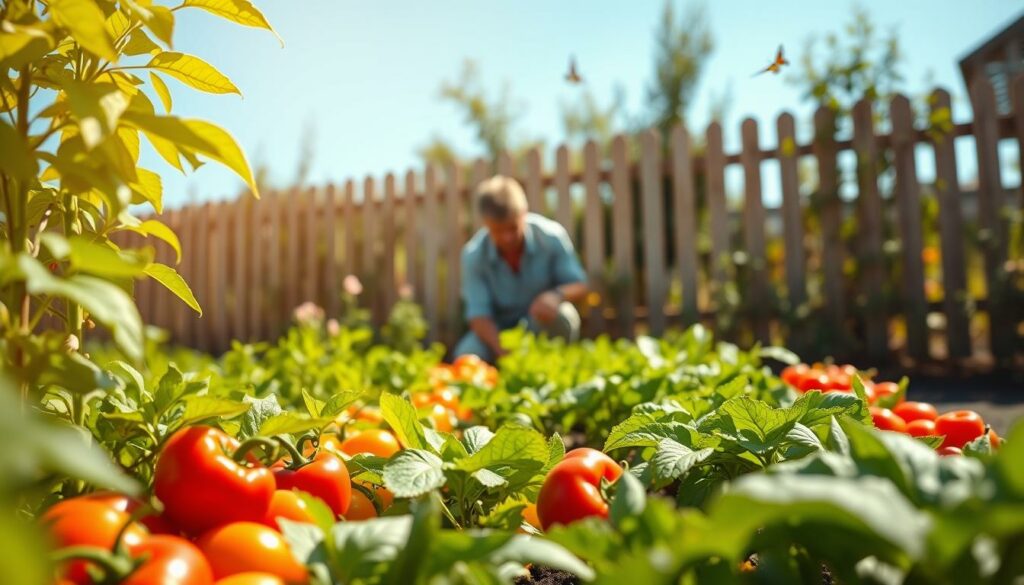
Freshly picked produce keeps more nutrients than store-bought items that travel far. Homegrown tomatoes, greens, peppers, and herbs improve vitamin and mineral intake.
Gardening offers gentle physical activity. Tasks like digging, planting, and weeding boost flexibility and strength.
It also lowers stress and improves mood, supporting daily exercise guidelines from health groups.
Environmental Impact of Vegetable Gardening
Growing food at home cuts food miles and reduces packaging waste compared to supermarket produce.
Small practices like composting kitchen scraps and using mulch build soil health. They also help pollinators like bees and butterflies.
Water-wise methods such as drip irrigation and mulching save water. Native cover crops and companion plants boost garden resilience and support biodiversity.
Cost Savings from Growing Your Own Food
Initial costs for seeds, soil, and tools often pay back during a season. Many households save money growing high-yield, expensive items like herbs, salad greens, and tomatoes.
A single packet of lettuce seeds can produce many heads over weeks, costing less than store-bought heads. Extra savings come from fewer grocery trips and better food quality.
Growing food also offers hands-on lessons for children.
| Benefit Category | Practical Examples | Why It Matters |
|---|---|---|
| Health | Fresh tomatoes, kale, basil; regular gardening activity | Higher nutrient intake, more fiber, regular moderate exercise |
| Environmental | Composting, mulch, drip irrigation, native cover crops | Lower food miles, less packaging, improved soil and pollinator habitat |
| Financial | Lettuce from seed packets, home herbs, backyard tomatoes | Reduced grocery bills, long-term savings, fewer store trips |
| Social / Educational | Family gardening, school projects, community sharing | Practical skills, nutrition education, stronger community ties |
Choosing the Right Location for the Garden
Picking a site is one of the most important decisions for a successful garden plot. A well-chosen spot saves time and boosts yield. It also reduces pest and disease problems.
Beginners should assess light, water access, and daily convenience before building beds or placing containers.
Sunlight Requirements for Vegetables
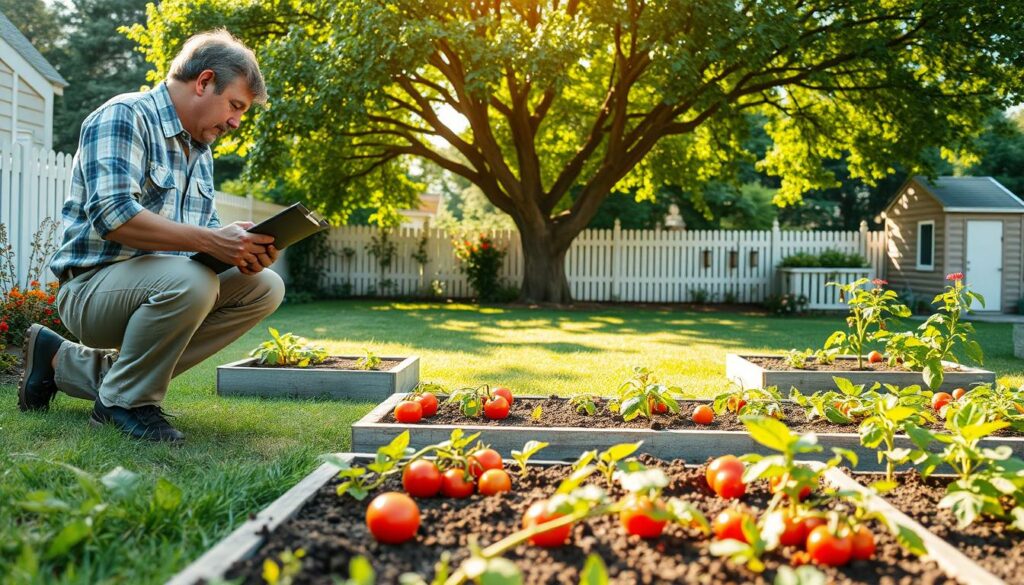
Most vegetables need 6 to 8 hours of direct sun each day. Tomatoes, peppers, and cucumbers grow best in full sun. Leafy greens, beets, and peas tolerate partial shade well.
They can produce well with four to six hours of light. To track sun exposure, observe the site over a full day. You can also use a sun-tracking app or note shadows in spring and summer.
Too little light causes legginess, smaller yields, and dense foliage. Dense foliage traps moisture and raises disease risk.
Accessibility and Water Source Considerations
Easy access to water affects how often you will irrigate. Place beds within 50 feet of an outdoor spigot when possible. If spigots are far, use rain barrels or drip irrigation to water efficiently.
Being close to the kitchen helps with frequent harvesting of herbs and salad greens. It also makes carrying tools, compost, and soil amendments easier.
Level ground improves safety and stability for raised beds and wheelbarrows. Good drainage prevents waterlogged roots and reduces fungal problems. Shelter from strong winds and falling tree debris protects plants and lowers maintenance.
Renters or those with limited space can use balconies, rooftops, or patios. However, check structural load limits and HOA or landlord rules first.
| Factor | What to Check | Practical Tip |
|---|---|---|
| Sunlight | Hours of direct sun; seasonal shadow changes | Observe for a full day or use a sun-tracking app |
| Water Access | Distance to spigot; options for rainwater or hoses | Place beds within 50 feet of a spigot or add rain barrels |
| Accessibility | Proximity to kitchen; ease of moving tools and soil | Keep high-use crops near the house for quick harvests |
| Soil & Drainage | Level ground; tendency to waterlog after rain | Use raised beds on poorly drained sites |
| Safety & Regulations | Wind exposure; HOA or landlord rules | Verify structural support for rooftop gardens and permissions |
Selecting the Best Vegetables for Beginners
Choosing the right crops makes the first season rewarding. When selecting vegetables as a beginner, pick plants that tolerate mistakes and grow fast. Also, choose plants that fit your local climate.
Start small to build confidence. This helps you learn garden rhythms without feeling overwhelmed.
Easy vegetables to grow for beginners include reliable and space-efficient choices. These plants yield fast results. New gardeners find success with leafy greens, roots, and vining plants.
Recommended starter crops:
- Lettuce and mixed salad greens — fast to harvest and handle light shade well.
- Radishes — mature quickly, giving you fast wins and motivation.
- Short-root carrots — select Nantes or Chantenay types for containers or shallow beds.
- Bush beans — require little care and give high yields per square foot.
- Cherry tomatoes — choose determinate or patio varieties for compact, steady harvests.
- Zucchini and summer squash — prolific producers that need simple care.
- Herbs like basil, parsley, and chives — useful, fast-growing, and pest-resistant.
- Green onions — quick growers, perfect for small spaces.
- Peas — early producers with low soil needs and sweet results.
For first-time gardeners, choosing three to six crops keeps work manageable. This mix adds variety to your meals. It also lowers risk and helps you learn care routines for each plant.
Understanding seasonal planting is key for timing sowing and transplanting. Knowing your local frost dates avoids losses and boosts yields.
Cool-season crops like lettuce, spinach, peas, and kale do best in early spring or fall. Warm-season crops such as tomatoes, peppers, and cucumbers need warm soil and air, free from frost risk.
Gardeners should use local resources like county extension offices, Penn State Extension, or University of California Cooperative Extension. These help make a planting calendar. Following these schedules applies seasonal planting to real dates and zones.
Succession planting stretches harvests and uses space well. Sow lettuce every few weeks. Follow early peas with summer squash to keep beds productive all season.
Preparing the Soil for Planting
Healthy soil is the base for a strong vegetable garden. This short guide helps new gardeners focus on key steps. It offers practical tips to improve soil in the first season.
Start by checking the ground. Look for compaction, crusting, and leftover organic material. These signs help you decide how to test and fix the soil. Fix drainage problems early to avoid trouble later.
Testing and Amending Soil Quality
Gardeners should get a soil test from the state Cooperative Extension. You can also use DIY kits like Rapitest or Luster Leaf. Tests show pH, N-P-K levels, and organic matter. Most vegetables grow best at pH 6.0–7.0.
To raise pH, add garden lime. To lower it, apply sulfur. Mix amendments well into the top 6–8 inches of soil. Add compost, leaf mold, or well-rotted manure to improve soil structure and fertility. Commercial products, like Black Kow composted manure, can speed this process.
Use balanced organic fertilizers labeled 5-5-5 or vegetable-specific mixes when tests show nutrient gaps. For a quick nitrogen boost, use fish emulsion or slow-release granular formulas as directed on the package.
Importance of Drainage in Vegetable Gardens
Good drainage stops root rot, fungal diseases, and nutrient problems. Signs of poor drainage include standing water, yellow leaves, and slow growth. These signs need fast action.
Check drainage by digging an 8–12 inch hole and filling it with water. It should drain in a few hours. If water stays longer, you must fix the bed or change the layout.
Fixes include raised beds at least 8–12 inches high, mixing coarse sand with organic matter to loosen heavy clay, or adding drainage tiles in big plots. Containers with good draining potting mix work well for small or tight spaces.
This beginner’s guide gives clear steps for testing and fixing soil quality. It also shows how to manage drainage so new gardeners can plant confidently.
Gardening Techniques for Beginners
This section outlines core gardening techniques for beginners. It helps readers pick the right method based on space, soil, budget, and mobility.
It covers practical choices, common trade-offs, and quick setup advice. This is for those starting a vegetable garden at home.
Raised bed option offers improved soil control, better drainage, and warmer soil in spring. It also means less bending for older or injured gardeners.
Using cedar, redwood, composite lumber, or prefabricated kits from brands like Greenes Fence or Burpee raised bed kits speeds installation. A 4×8-foot bed with a width no more than 4 feet stays reachable without stepping into the soil.
Raised beds require an initial material cost. They last longer when built from rot-resistant wood or composite material.
Wallet-friendly options include untreated pine for short-term projects and composite boards for longevity. Waist-high raised beds improve access for gardeners with limited mobility.
In-ground gardening has a lower start-up cost. It gives a larger planting area when native soil is healthy. Over time, it supports a richer soil ecosystem.
Poor native soil needs compost, manure, or other amendments. These improve fertility to match raised beds. Choosing between raised beds vs in-ground gardening depends on soil quality and budget.
Raised beds simplify pest control and drainage. In-ground plots offer more space per dollar. Gardeners should test soil before deciding and consider long-term amendments.
Container gardening basics suit patios, balconies, and rooftops where ground space is limited. Containers should be at least 12 inches deep for many vegetables. Root crops need deeper pots.
Compact or bush varieties like patio tomatoes and bush beans perform best in pots. Use high-quality potting mixes, not garden soil. Espoma Organic Potting Mix and Miracle-Gro Performance Organics provide good drainage and nutrients.
Containers need more frequent watering and regular feeding with balanced fertilizer, especially during hot spells. Place containers where plants get adequate sun.
Use saucers or trays to catch runoff and protect decking. Ensure drainage holes stay clear to prevent root rot. Use lightweight pots if mobility or lifting is a concern.
Essential tools for beginner vegetable gardeners include a sturdy hand trowel, a hori-hori knife, a durable rake, pruning shears, a watering wand, and a soil thermometer. These tools speed planting, soil testing, and routine care.
| Method | Best For | Key Advantages | Typical Costs |
|---|---|---|---|
| Raised Beds | Small yards, gardeners needing soil control | Improved drainage, warmer soil, easier weeding and pest control | Moderate to high (materials: cedar, composite, kits) |
| In-Ground | Large plots, low initial cost | Greater planting area, long-term soil health if amended | Low initial; may need ongoing amendment costs |
| Containers | Balconies, patios, rooftops | Flexible placement, portable, great for small spaces | Low to moderate (pots, potting mix, saucers) |
| Accessibility Options | Gardeners with mobility limits | Waist-high beds, lightweight containers, raised planters | Moderate (specialty beds or planters) |
Sowing Seeds vs. Transplanting Seedlings
Deciding whether to sow seeds in place or transplant seedlings affects timing, effort, and crop success. This guide helps new gardeners weigh their options. It helps choose the right method for each vegetable and plan planting tasks.
Practical tips for starting a vegetable garden appear throughout to make these choices easier.
When to Start Seeds Indoors
Warm-season crops like tomatoes, peppers, and eggplants need a head start indoors. Start seeds 4–8 weeks before the last frost date for these plants. Read the seed packets for timing and adjust for your local climate.
Use seed trays and a fine, sterile seed-starting mix. Brands like Burpee and Ferry-Morse offer good seed-starting kits. Heat mats help seeds that love warmth to sprout faster.
Keep moisture steady and provide good air flow to avoid damping-off disease. Put seedlings under T5 fluorescent or LED grow lights. Give about 12–16 hours of light daily.
When seedlings have two true leaves, pot them up into bigger cells to prevent crowding. Harden off the plants by moving them outdoors a few hours each day for 7–10 days. This prepares them for planting outside.
Benefits of Using Seedlings
Transplants have established roots and speed up harvests. Seedlings shorten waiting time for slow-germinating crops. They increase success for fragile plants and can yield earlier.
Nursery seedlings from Home Depot, Lowe’s, or garden centers offer convenience for first-time growers. Choose healthy, stocky plants without flower buds. Seedlings cost more than seeds but lower the risk and save time.
| Approach | Pros | Cons |
|---|---|---|
| Direct sowing | Less initial cost, simpler for root crops and beans, minimal transplant shock | Longer wait to harvest, vulnerable to weather and pests, uneven germination |
| Transplanting seedlings | Earlier harvests, higher success for slow starters, easier spacing control | Higher upfront cost, need for indoor setup, risk of transplant shock if not hardened off |
| Nursery seedlings | Convenient, time-saving, good for beginners to avoid germination issues | Quality varies by supplier, may be root-bound or overpriced |
Many gardeners find a mixed approach works best. Direct sow beans, carrots, and radishes outdoors. Start tomatoes and peppers indoors to manage spring weather.
Use the table and tips for beginners to match planting methods with the right crop and calendar.
Watering Your Vegetable Garden
Water is a must-have for any garden. This short guide gives practical steps for watering your vegetable garden. It helps keep plants healthy and productive.
The guide covers common needs, typical amounts, and easy methods gardeners can use.
Understanding watering needs by plant type
Leafy greens and root crops need steady moisture to grow well. They also avoid bolting or split roots with even soil moisture.
Tomatoes and peppers benefit from deep, less frequent watering. This encourages strong roots and helps prevent blossom end rot in tomatoes.
Many vegetables do well with about 1–1.5 inches of water per week from rain and irrigation. Adjust for hot weather, sandy or clay soils, and containers.
Signs of under-watering include wilting and dry, crumbly soil. Over-watering shows as yellow leaves, soggy soil, and weak roots. Watch plants daily, especially in heat.
Tips for efficient watering techniques
Drip irrigation and soaker hoses bring water right to roots and cut evaporation. Brands like Rain Bird and Orbit offer drip kits with timers for steady watering.
Water early in the morning to reduce evaporation and lower fungal disease risk. Add mulch like straw or bark to keep soil moist and reduce watering frequency.
Rain barrels can add water supply and save money. Check local rules and use screened lids or mosquito-proofing to keep water safe.
Containers dry out faster than garden beds. Check container moisture daily. Self-watering pots, capillary mats, or small drip lines help busy gardeners.
| Plant Type | Recommended Watering Pattern | Weekly Amount | Signs to Watch |
|---|---|---|---|
| Leafy greens (lettuce, spinach) | Frequent shallow watering to keep soil evenly moist | 1–1.5 inches | Bloating, bolting, dry edges |
| Root crops (carrots, beets) | Consistent moisture; avoid major dry spells | 1–1.5 inches | Split roots, stunted growth |
| Tomatoes and peppers | Deep, less frequent watering to develop roots | 1–1.5 inches; increase in heat | Blossom end rot, crack fruit |
| Containers | Daily checks; use self-watering or drip to maintain level | Varies by size; often more than in-ground | Rapid drying, wilting between waterings |
These beginner-friendly tips help new growers save water and boost their yields. Understanding plant watering needs and using good techniques makes gardening easier and more rewarding.
Controlling Pests and Diseases Naturally
Keeping a vegetable patch healthy starts with simple, preventive habits. This guide offers hands-on steps for natural pest and disease control.
New gardeners can protect crops without using harsh chemicals or complicated methods.
Monitoring and signs
Check your garden regularly to spot problems early. Look for holes in leaves, sticky residue on stems, and chewed fruit.
Sudden wilting also signals issues. Noting these signs helps you use targeted solutions from a beginner’s pest guide.
Common Pests and How to Manage Them
Knowing common pests and how to manage them quickly reduces damage to crops.
Common offenders include aphids, slugs, snails, caterpillars, flea beetles, squash bugs, tomato hornworms, and whiteflies.
- Aphids: check new growth and wash them off with a strong water spray. Introduce ladybugs or lacewings as natural control.
- Slugs and snails: set out beer traps at night. Use diatomaceous earth around seedlings, and pick them by hand after dusk.
- Caterpillars and tomato hornworms: handpick large caterpillars. Apply Bacillus thuringiensis (Bt) if infestations grow.
- Flea beetles: protect seedlings with floating row covers. Keep soil free of debris to reduce their hiding spots.
- Squash bugs: inspect leaf undersides and remove egg clusters. Rotate squash to a different bed next season.
- Whiteflies: use yellow sticky traps and encourage insects that feed on them.
Combine handpicking, traps, and cultural changes to keep pest pressure low and crops healthy.
Organic Pest Control Methods
Organic methods offer reliable options suited for home gardens. Use insecticidal soap and neem oil against soft-bodied insects and mites.
Apply diatomaceous earth near stems to deter slugs and other crawling pests. Bt is safe for caterpillars on brassicas and tomatoes.
For fungal issues, use copper or sulfur products to control early blight and powdery mildew, if labels allow use on edible crops.
Plant marigolds, nasturtiums, or basil near vegetables to repel pests. These plants also attract pollinators and beneficial predators.
Encourage ladybugs, lacewings, and parasitic wasps to naturally reduce aphid and whitefly numbers.
Integrated pest management
Use IPM steps: identify the pest correctly, assess damage, apply targeted control, and monitor results.
Rotate crops and remove plant debris. Space plants for good air circulation to reduce disease risk.
Gardeners selling produce should follow organic certification rules and read labels for safe use.
These simple routines help beginners control pests and diseases naturally with success.
Harvesting and Storing Your Vegetables
Good timing and careful handling keep homegrown produce flavorful and safe. This guide shows practical steps to extend shelf life and boost taste.
It gives clear, usable tips to help gardeners get the most from easy vegetables for beginners and larger efforts.
Signs of Ripeness in Common Vegetables
Leafy greens show best quality when outer leaves are tender and bright. Pick outer leaves early for salads.
Leave inner growth to mature fully before harvesting.
Tomatoes are ripe when color is even and they yield slightly to gentle pressure. They should detach easily from the vine.
Cherry tomatoes must be fully colored before harvest for best flavor.
Cucumbers and summer squash are ready when firm and at the size on the seed packet.
Pick at recommended sizes to avoid bitterness and tough skin.
Root crops like carrots, radishes, and beets are judged by diameter and visible tops.
Pull one sample to check size before harvesting the whole bed.
Herbs give best flavor when harvested in the morning after dew dries and before flowering.
Frequent, light harvesting helps plants grow bushier and healthier.
Best Practices for Harvesting and Storage
Use clean, sharp shears or scissors to cut fruits and vegetables. Cutting avoids tearing and protects plants.
Avoid pulling on stems to keep roots and future growth safe.
Store crops at proper temperatures to maintain freshness. Keep leafy greens and herbs refrigerated with moderate humidity.
Keep tomatoes at room temperature to preserve their flavor. Store root vegetables in cool, dark, and humid places for longer freshness.
Preserve extra harvest by freezing, canning, pickling, dehydrating, or making sauces.
Follow USDA and National Center for Home Food Preservation guidelines to ensure safe preservation.
Track harvest amounts in a simple log. Recording yields helps plan next season and choose varieties.
This also helps estimate how many easy vegetables to grow for your household needs.
| Vegetable | Ripeness Indicator | Immediate Storage | Long-Term Preservation |
|---|---|---|---|
| Leafy greens | Young outer leaves, bright color | Refrigerate, moderate humidity | Blanch and freeze |
| Tomatoes | Full color, slight softness, easy detachment | Room temperature, out of direct sun | Make sauces, can or freeze |
| Cucumbers & summer squash | Firm, recommended size on seed packet | Refrigerate short term | Pickle or quick-preserve |
| Carrots, radishes, beets | Desired diameter, healthy tops | Cool, dark, humid storage | Root cellar, freeze after blanching |
| Herbs | Harvest before flowering, morning after dew | Refrigerate wrapped in damp paper towel | Dry or freeze in oil or ice cube trays |
Seasonal Gardening Tips
Seasonal gardening tips help gardeners extend harvests and protect soil health. A few simple steps let gardeners move from summer production into fall and winter.
This transition involves less work and better results.
Start by assessing days to maturity and the local first frost date before sowing late-season crops.
This practice is essential when planning for fall and winter vegetables. Tools from Johnny’s Selected Seeds and High Mowing Seeds can guide variety choice and timing.
Short-season greens like spinach, kale, collards, and lettuces mature quickly and tolerate cool weather. Radishes and many brassicas, such as broccoli and cauliflower, succeed when started early enough.
Use compact varieties if space is limited.
Season-extension tools protect crops from light frosts and lengthen harvest windows.
Row covers, low tunnels, cold frames, and cloches add several weeks of production. Choose breathable fabrics for row covers to reduce disease risk.
When preparing beds for winter, remove spent plants to lower pest and disease carryover.
Compost healthy plant material. Dispose of diseased plants following extension service guidelines to protect next season’s crops.
Add a winter layer of compost and mulch to preserve soil structure and feed microbes.
Plant cover crops such as winter rye or clover to prevent erosion, suppress weeds, and fix nitrogen.
These steps support long-term soil health.
Store and maintain tools before cold weather sets in. Sanitize pruners, drain hoses, and check irrigation systems.
Repair raised bed frames and fencing to avoid spring delays when gardeners ask how to plan a vegetable garden for beginners.
Plan next season during the off months by cataloging successes and failures.
Prepare seed lists, mark preferred varieties, and note which season-extension methods worked best. Good records simplify planning for next year.
Follow these seasonal gardening tips to conserve effort and build soil strength through the off-season.
Thoughtful prep makes spring planting smoother and increases the chances of a productive year-round garden.
Additional Resources for New Gardeners
New gardeners benefit from steady, local support and reliable online guidance. This section points to practical options for ongoing learning and community help. It also highlights tools that simplify starting and growing a vegetable patch.
Local Gardening Clubs and Communities
Contact county Cooperative Extension offices for region-specific advice, soil testing, and planting calendars. Examples include University of California Agriculture & Natural Resources, Ohio State University Extension, and Cornell Cooperative Extension.
Local gardening clubs, Master Gardener programs, and community garden plots offer hands-on help, plant swaps, and seed exchanges. Neighborhood networks on Facebook and Nextdoor connect gardeners for local tips.
Visiting farmers markets and independent nurseries shows what grows well locally. They also help you find regionally adapted seedlings and seeds.
Online Tools and Apps for Garden Planning
Use online tools and apps to plan beds, track tasks, and select crops. The USDA Plant Hardiness Zone lookup, Bonnie Plants, and Burpee planting calendars assist with timing. Apps like GrowVeg and Gardening Companion help with layout and task reminders.
Garden Planner by Miracle-Gro and SmartGardener support bed design and crop rotation planning. Educational sites like the National Gardening Association and the National Center for Home Food Preservation provide pest ID guides and planting publications.
Weather apps and local frost-date calculators help schedule planting. They also set reminders for watering, fertilizing, and pest scouting.
For best results, combine local groups with online tools and keep essential gardening tools on hand. Start small, use these resources, and expand your garden as your skills and confidence grow.