

Nearly 60% of home gardeners who start seeds indoors see earlier harvests by two to four weeks. This is based on extension advice from Penn State and the University of Minnesota.
This indoor seed starting guide explains how to start seeds indoors during winter. Gardeners in the United States can get a jump on spring this way.
It describes why starting plants indoors matters: a head start on the season, protection from frost, and growing a wider variety of vegetables, herbs, and flowers.
The guide offers step-by-step instructions, essential supplies, and troubleshooting tips. These come from trusted sources like Johnny’s Selected Seeds and the National Gardening Association.
It emphasizes evidence-based best practices to help seeds sprout and grow strong seedlings. This helps maximize germination and seedling vigor.
This resource is for beginners and intermediate gardeners. It shows practical indoor seed starting methods, timing by region, and expected outcomes.
These outcomes include healthier transplants, cost savings compared to nursery plants, and a greater variety of garden plants.
Key Takeaways
- Starting seeds indoors gives a reliable head start for earlier, stronger crops.
- Trusted guidance from Penn State Extension and University of Minnesota supports timing and technique.
- Proper supplies and simple best practices improve germination and seedling vigor.
- This guide suits beginners and intermediate gardeners seeking practical, evidence-based tips.
- Indoor seed starting can save money and expand what can be grown in home gardens.
Understanding the Benefits of Starting Seeds Indoors
Starting seeds indoors gives gardeners an advantage when winter lasts long. It lets them extend the growing season and protect fragile seedlings from late frosts. They can also choose from a wider variety of plant types.
Many experienced growers say starting seeds indoors improves germination rates and crop timing.
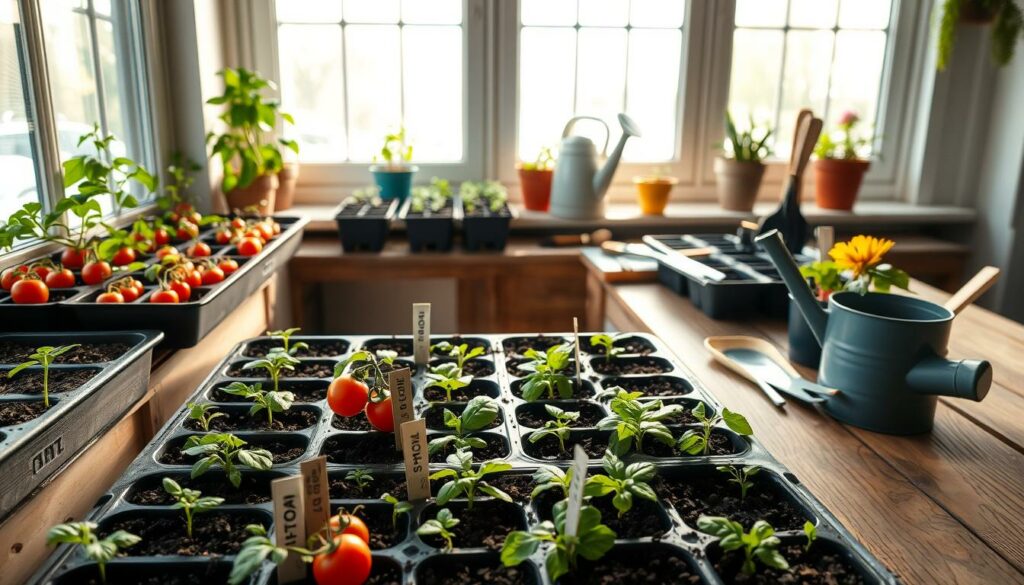
Early Growing Season Advantages
Gardeners who start seeds indoors can plant weeks or months earlier. Crops like tomatoes, peppers, and basil often need six to eight weeks under lights before planting outside.
Penn State Extension and University of California Cooperative Extension recommend timing seed-starting by last frost dates. This ensures earlier harvests.
More time in the garden usually leads to quicker harvests and bigger yields. For home and small-scale gardeners, this means more vegetables and herbs during the season.
Controlled Environment for Germination
Indoor seed starting lets growers control temperature, moisture, and light. Heat mats set to 70–80°F help warm-season crops sprout well. Humidity domes and regular watering reduce damping-off and uneven germination.
Seed companies like Burpee and Johnny’s Selected Seeds offer advice on ideal germination conditions. Grow lights provide precise light duration and intensity, helping seedlings grow strong stems before going outside.
Cost-Effectiveness of Starting Seeds Indoors
Seeds cost a few dollars per packet and often contain dozens of seeds. A single packet of tomato seeds can produce many plants, unlike paying $3–$5 or more per nursery transplant.
Initial equipment like trays, mix, and lights requires some upfront cost. These purchases pay off over several growing seasons.
Many gardeners reuse containers and use simple fluorescent or LED lights to reduce costs while keeping good success rates.
Selecting the Right Seeds for Indoor Starting
Choosing seeds is the first step to successfully start seeds indoors. The right seeds save time and reduce losses. They also help seedlings grow strong from the start.
This introduction covers what to pick and how to read seed packets. It also explains heirloom versus hybrid seed choices.
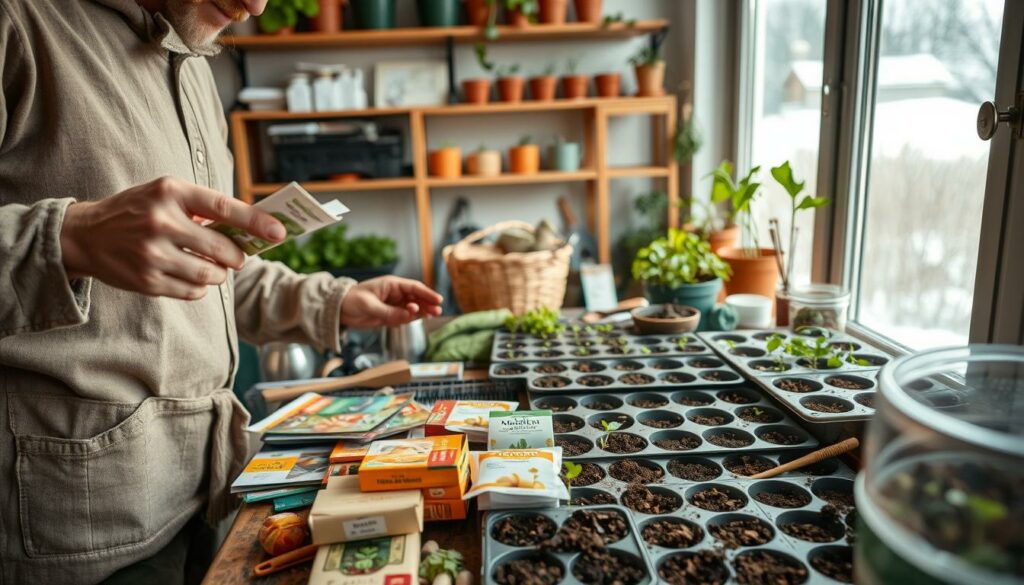
Types of Seeds Ideal for Indoor Germination
Vegetables like tomatoes, peppers, eggplant, and brassicas such as cabbage, broccoli, and kale grow well indoors. Leafy crops like lettuce and herbs including basil and oregano transplant easily too.
Flowers like marigolds and zinnias do well with early indoor starts. They bloom sooner when started inside.
Crops that dislike transplanting should be direct-sown outside. Carrots, beets, parsnips, corn, and most beans and peas prefer this method. They have long roots or dislike being disturbed.
Seed size matters for beginners. Large seeds like beans and peas are easy to handle and sow. Tiny seeds, such as petunias and some begonias, require surface sowing and finer technique.
Seed Packet Information to Consider
Read packets carefully for days to maturity, seed depth, spacing, and germination time. Check for light needs and suggested sowing dates based on last frost.
Look at germination temperature ranges and viability dates. These show if seeds will sprout indoors and how fresh they are. Fresh seeds improve success rates.
Buy seeds from trusted brands like Burpee, Baker Creek Heirloom Seeds, Johnny’s Selected Seeds, and High Mowing Organic Seeds. They provide clear packet information.
Store seeds in a cool, dry place to keep them viable longer. Use a sealed container in a refrigerator or cool basement. This supports better indoor seed starting.
Heirloom vs. Hybrid Seeds: Making the Choice
Heirloom seeds are open-pollinated and keep their traits over generations. Gardeners who want flavor variety and to save seeds like heirlooms.
Hybrid seeds, often labeled F1, are bred for vigor, uniformity, and disease resistance. They give predictable results and reduce early problems for new gardeners.
Heirlooms offer unique taste and let you save seeds. Hybrids provide reliability and better pest and disease resistance.
For beginners, hybrids may be safer for starting seeds indoors. Experienced gardeners who value variety and saving seeds choose heirlooms. Use these tips to match seeds with your skill and garden goals.
Essential Supplies for Starting Seeds Indoors
This indoor seed starting guide covers the core items gardeners need to succeed. The right supplies save time and cut losses. A few quality choices make winter seed starting far less fussy.
Seedling Trays and Pots
Seedling trays come in many styles: multi-cell plastic trays, single starter pots, peat pots, and biodegradable fiber pots. Recycled containers, like cleaned yogurt cups with drainage holes, can work well.
Multi-cell trays save space and keep seedlings organized. Peat or coir pots reduce transplant shock since roots stay mostly undisturbed. Biodegradable pots cut waste and let gardeners plant pots directly in soil.
Recommended brands include Bootstrap Farmer and Grow!T. Local garden centers offer hands-on selection. Choose trays with drainage holes and use saucers to protect surfaces indoors.
Potting Mix: What to Look For
Use a sterile, lightweight seed-starting mix instead of garden soil to prevent disease. Ideal mixes have a fine texture and good drainage. They hold enough moisture for tiny roots.
Look for ingredients like peat moss or coconut coir, plus perlite or vermiculite for aeration. A small amount of compost or gentle starter fertilizer helps after true leaves appear.
Trusted brands include Espoma, FoxFarm, and Miracle-Gro Seed Starting Mix. Organic choices like Black Gold Natural & Organic suit gardeners who prefer certified organic products.
Grow Lights vs. Natural Light
Natural window light can work if a south-facing window provides enough intensity and time. Many U.S. regions lack enough winter daylight for strong seedlings.
Supplemental grow lights give consistent results. Types include T5 fluorescent tubes, compact fluorescent (CFL) bulbs, and LED grow lights. LEDs use less energy, run cooler, and many full-spectrum models mimic sunlight well.
Keep lights about 2–6 inches above seedlings. Run them 14–16 hours each day and use timers for reliable schedules. Rotate trays when using window light to prevent legginess.
This short checklist helps when shopping: seedling trays with drainage, a sterile potting mix for seeds, and grow lights to match daylight. These essentials improve the chance for strong, healthy transplants.
Preparing the Seed-Starting Area
Creating a reliable workspace helps gardeners who want to start seeds indoors. A small, organized area cuts stress and improves success. Focus on stable temperatures, easy access to power, and cleanable surfaces.
Choosing the best location
Select a spot with steady temperatures and minimal drafts. Basements with supplemental light, spare rooms, insulated garages, or sunny windowsills work well if light is adequate. Place trays on flat tables, benches, or shelving that is easy to clean.
Keep the area near electrical outlets for lamps and timers. Avoid high-traffic places where trays might get bumped. Consider daily watering and monitoring when choosing where to start seeds indoors.
Setting up grow lights effectively
Mount lights on adjustable stands, hang them with chains, or use multi-tier shelving with LED fixtures. Keep fluorescent/T5 bulbs 2–6 inches above seedlings. Many LED fixtures work best 6–12 inches above plants, depending on output.
Run lights 14–16 hours a day to prevent legginess. Use timers to keep light cycles consistent. Add reflective surfaces like white walls or Mylar to boost light distribution and improve results.
Maintaining temperature and humidity
Ideal germination temperatures vary by crop. Cool-season seeds prefer 65–75°F. Warm-season crops do better at 70–85°F. Use heat mats for warm crops and allow lower temperatures for cold-tolerant species.
Humidity domes or plastic covers help retain moisture during the first days. Vent domes regularly to reduce the risk of damping-off. Digital thermometers and hygrometers offer low-cost monitoring for temperature and humidity.
Adjust conditions with small space heaters for warmth and fans for air circulation. Use humidity trays to raise moisture when needed. These tools help maintain humidity without overwatering seedlings.
| Task | Recommended Options | Notes |
|---|---|---|
| Location | Basement with lights, spare room, insulated garage, sunny windowsill | Choose a flat, cleanable surface near outlets and away from drafts |
| Light Setup | Adjustable stands, hanging chains, LED shelving fixtures, T5 fluorescents | Keep fluorescent 2–6″ above plants, LED 6–12″; use timers for 14–16 hrs/day |
| Temperature | Heat mats, small space heaters, ambient room heat | 65–75°F for cool crops, 70–85°F for warm crops; monitor with digital thermometer |
| Humidity Control | Humidity domes, humidity trays, hygrometers, regular ventilation | Use domes early, vent often to avoid damping-off; keep hygrometer readings in target range |
| Airflow | Clip fans, small oscillating fans | Introduce gentle circulation to strengthen seedlings and reduce disease |
How to Sow the Seeds Properly
A careful approach to seed placement improves germination. It also saves time later. This guide explains clear seed sowing steps.
It helps gardeners start seeds indoors with confidence. Follow these practical techniques for better results.
Begin by filling trays or cells with moistened seed-starting mix. Firm the surface lightly so it holds shape without compacting.
Label each tray with the variety and sowing date to track progress when growing many varieties.
Techniques for precise sowing
For very small seeds, surface sowing works best. Scatter seeds on the mix and press gently with a flat tool.
Do not cover small seeds unless packet directions advise light covering. For accurate placement, use a toothpick, chopstick, or seed sowing tool.
Large seeds benefit from individual placement in cells or small pots. Make holes with a dibber, pencil tip, or dowel.
Drop one seed per hole to reduce thinning later. This method helps start seeds indoors with uniform seedlings.
Depth and spacing considerations
Sow seeds at a depth about two to three times their diameter. Tiny seeds need light and sit on the surface.
Tomatoes and peppers usually go about 1/4 inch deep. Basil prefers roughly 1/8 inch. Lettuce is often surface-sown or lightly covered.
For small cells, place two to three seeds per cell. Thin to the strongest seedling after true leaves appear.
Leave enough room for roots to develop before potting or transplanting. Proper spacing reduces competition and lowers disease risk.
Watering techniques for new seeds
Bottom-watering is effective. Set trays in a shallow pan of water and let the mix wick moisture up.
Remove trays once the surface feels evenly damp. This keeps seeds in place and prevents crusting or displacement.
If top watering is needed, use a fine mist or a watering can with a gentle flow.
Keep the mix evenly moist but not soggy until most seeds germinate. After germination, let the surface dry slightly between waterings.
This encourages stronger roots.
Watch for over-saturation. Standing water and wet mix invite damping-off disease.
Use humidity domes or clear covers briefly. Remove them as soon as most seedlings appear. Check drainage often for healthy conditions.
| Task | Method | Why it helps |
|---|---|---|
| Filling trays | Use moistened seed-starting mix; firm lightly | Ensures even contact for consistent germination |
| Small seeds | Surface sow; press gently; use toothpick for placement | Prevents burial of light-dependent seeds and improves accuracy |
| Large seeds | Sow individually in cells; use dibber for consistent depth | Reduces thinning and root disturbance |
| Depth rule | About 2–3× seed diameter; follow packet for exceptions | Promotes timely emergence and healthy seedlings |
| Spacing | 2–3 seeds per small cell; thin to strongest | Prevents overcrowding and makes transplanting easier |
| Watering | Bottom-watering or fine mist; keep mix evenly moist | Avoids displacement and reduces damping-off risk |
| Humidity control | Use dome briefly; remove after germination | Balances moisture and airflow for healthy growth |
Providing Appropriate Care for Seedlings
Proper seedling care starts once sprouts break through the soil. Gardeners move from constant moisture to a watering schedule. This encourages strong roots and steady growth.
Clear rhythms for watering, feeding, and spacing build the foundation for successful transplants.
Watering and Moisture Management
After cotyledons open, use a wetter-dry cycle to encourage roots to explore the soil mix. Let the top 10–20% of the potting medium dry slightly between waterings. This prevents waterlogging and root rot.
Check soil moisture by touching its surface. For accuracy, use a moisture meter with larger trays. Good drainage is vital; pick trays and mixes that drain excess water fast.
Air circulation lowers humidity pockets where fungus grows. A small clip fan on low keeps leaves dry and reduces disease risk without stressing plants.
Fertilizing Young Plants
Commercial seed-starting mixes have low nutrients. Start fertilizing once the first true leaves appear, usually one to two weeks after sprouting. Use diluted liquid feed at half-strength, like a balanced 10-10-10 or seedling-specific products.
Brands like Miracle-Gro and Schultz provide clear instructions; follow their directions to avoid overfeeding. Organic options, such as fish emulsion, seaweed extract, or weak compost tea, work well if applied cautiously.
Foliar feeding can give seedlings a quick boost during slow growth. Use light sprays and dilute solutions to protect delicate seedling tissues.
Thinning Seedlings for Healthier Growth
Thinning seedlings reduces competition for light, nutrients, and water. Removing weaker plants prevents legginess and helps improve airflow, lowering disease risk.
Thin seedlings when their first true leaves appear and vigor can be judged. Snip weak sprouts at soil level with clean scissors to avoid disturbing roots.
If a cell has multiple sprouts, keep the strongest seedling. This step gives the chosen plant better access to resources and improves its chances for strong growth.
| Care Task | Timing | Recommended Action | Common Tools/Products |
|---|---|---|---|
| Watering seedlings | After cotyledons open | Wetter-dry cycle; allow top 10–20% to dry | Moisture meter, trays with drainage |
| Fertilizing young plants | 1–2 weeks after germination | Half-strength liquid feed or gentle organic feed | Miracle-Gro, Schultz, fish emulsion |
| Thinning seedlings | When first true leaves appear | Snip weak seedlings at soil level; keep strongest | Clean scissors, labels for spacing |
| Air circulation | Continuous | Low-speed fan to reduce humidity pockets | Clip fan, small oscillating fan |
| Drainage | Always | Use well-draining mix and trays with holes | Seed-starting mix, perforated trays |
Monitoring Seedling Growth
Careful monitoring helps gardeners catch small problems before they grow big. Check leaves, stems, soil moisture, light, and temperature daily. Use notes or photos to track progress and record changes.
Recognizing Germination Signs
Germination starts with the cotyledons, the first seed leaves that push above the soil. True leaves follow, showing the plant’s real shape. Many vegetables germinate in 3–14 days, while peppers take 7–21 days.
Healthy seedlings have upright stems, a vibrant green color, and steady growth. Watch for yellowing, stretching (legginess), or failure to emerge as warning signs.
Common Issues and How to Address Them
Common problems include damping-off, legginess, nutrient deficiencies, and pests. Damping-off is caused by fungi like Pythium or Rhizoctonia and shows as collapsing stems or mold.
Prevent damping-off by using a sterile mix, ensuring good airflow, avoiding overwatering, and using fungicide for stubborn outbreaks.
Legginess happens from too little light. Fix it by increasing light intensity, lowering fixtures, or using fluorescent or LED grow lights closer to plants. Nutrient deficiencies show as yellow lower leaves for nitrogen shortage or purple tints for low phosphorus.
Start balanced feeding once true leaves appear. Pests like fungus gnats thrive in overwatered mixes rich in organic matter. Manage them by letting the top layer dry between waterings, using yellow sticky traps, and applying Bacillus thuringiensis israelensis (BTI) when needed.
Adjusting Light and Temperature as Needed
Use a thermometer and hygrometer to track conditions. Make small, steady adjustments to avoid shock. Raise or lower lights, adjust thermostat settings, or add a heat mat to keep conditions within species recommendations.
Check seedlings daily. Make gradual changes over several days instead of sudden shifts.
| Issue | Signs | Quick Action |
|---|---|---|
| Damping-off | Collapsing stems, mold at soil line | Discard affected seedlings, use sterile mix, improve airflow |
| Legginess | Long, thin stems; leaning toward light | Increase light intensity, lower fixtures, rotate trays |
| Nutrient deficiency | Yellow lower leaves, purple tints | Begin balanced fertilizing when true leaves appear |
| Fungus gnats | Flying adults, larvae in soil | Dry topsoil, sticky traps, apply BTI |
| Temperature stress | Slow growth, wilted or scorched leaves | Adjust thermostat or heat mat, allow gradual changes |
When to Transplant Seedlings Outdoors
Knowing when to transplant seedlings outdoors helps gardeners avoid shock and loss. This guide shows clear readiness signs and how to harden off young plants.
It also offers tips for picking the best day to move seedlings to the garden. Follow these steps to transplant seedlings outdoors with confidence after starting seeds indoors successfully.
Signs That Seedlings Are Ready
Seedlings ready to transplant usually have several true leaves and firm stems. Their roots fill the cell or show at drainage holes.
Seedlings typically stand 3–6 inches tall, depending on the crop. Tomatoes and peppers take extra time.
Plan 6–8 weeks before transplanting tomatoes and peppers. Wait until nighttime temperatures stay above 50°F. Peppers prefer warmer nights than tomatoes.
Check small cells for rootbound plants. If roots circle the cell, move the seedling to a larger container first.
Hardening Off: What It Entails
Hardening off means slowly helping plants get used to outdoor sun, wind, and temperature changes. This lowers transplant shock and helps plants survive.
Start by placing seedlings in a shaded, protected spot for a few hours. Increase their outdoor exposure daily over 7–14 days.
Bring seedlings indoors at night if frost or cold weather is expected. Use a cold frame, porch, or moveable trays to control conditions.
Protect plants from strong wind, heavy rain, and pests during this adjustment period.
Choosing the Right Time for Transplanting
Time transplanting based on the last frost date and the crop’s cold tolerance. Check USDA hardiness zones and local extension calendars for details.
Transplant seedlings on cloudy days or late afternoons to reduce stress from strong sun. Water seedlings well before moving them.
Amend garden soil as needed for healthy growth. Plant tomatoes deep to encourage roots along the buried stem. Follow seed packet spacing instructions.
| Factor | What to Check | Practical Action |
|---|---|---|
| Leaf Development | Several true leaves beyond the seed leaves | Delay transplant until true leaves are present |
| Root Health | Roots visible at drainage holes or circling cells | Pot up if rootbound, then transplant |
| Stem Strength | Sturdy, 3–6 inch stems depending on crop | Support or wait until stems thicken |
| Night Temperatures | Nighttime lows reliably above crop threshold | Wait until nights stay warm; peppers need higher lows |
| Hardening Off | 7–14 day gradual outdoor exposure | Start in shade, extend time and sun exposure daily |
| Best Transplant Window | Cloudy day or late afternoon after hardening off | Water well, plant at recommended depth and spacing |
Common Mistakes to Avoid
Starting seeds indoors helps gardeners control the process and get a head start on the season.
A few common mistakes can undo weeks of careful work. This guide shows signs to watch for.
It also offers tips to keep seedlings healthy and ready for transplant.
Overwatering and overfertilization cause quick, visible stress in seedlings.
Overwatering leads to yellow leaves, soggy soil, and weak roots that may rot or die.
Overfertilization causes leaf burn, brown edges, and stunted growth.
To prevent these issues, ensure good drainage and water from the bottom.
Let the soil surface dry a bit before watering again. Only fertilize after true leaves appear.
Dilute fertilizer to half or quarter strength and follow the label directions carefully.
If salts build up, flush pots with clean water or repot with fresh mix.
Neglecting light needs causes leggy, weak seedlings that often fail after transplant.
Too little light results in pale leaves and long spaces between leaf joints.
Seedlings should be short with leaves close together.
Use grow lights set to give steady, even light. Adjust their height and time as seedlings grow.
Winter window light in the US is usually not enough for starting seeds, so don’t rely on it alone.
If seedlings stretch and lean, increase light intensity or add more hours.
Ignoring pest and disease control allows problems that spread quickly in crowded trays.
Keep trays and tools clean, use sterile soil, and wash hands before touching seedlings.
Improve air flow and avoid crowding to lower humidity.
Watch for aphids and fungus gnats. Use yellow sticky traps to catch them early.
Consider biological controls like beneficial nematodes or Bacillus thuringiensis when needed.
At signs of fungal infection, remove sick seedlings, increase air flow, and water less on soil surface.
- Check trays daily for wet spots or pests.
- Space seedlings to help air circulate.
- Record watering and lighting to find patterns.
FAQs about Starting Seeds Indoors
Gardening beginners and seasoned growers often ask practical questions about indoor seed starting. This brief FAQ gives clear steps to improve success. It focuses on starting seeds indoors during winter or early spring.
How Long Does It Take for Seeds to Germinate?
Germination times change depending on the seed type. Most vegetable seeds sprout between 3 and 21 days. For example, lettuce sprouts in 2 to 10 days, tomatoes in 5 to 10 days, and peppers in 7 to 21 days. Gardeners should check the seed packet for timing details.
Temperature, moisture, seed viability, and seed size also affect timing. Keeping warmth and moisture steady helps seeds sprout faster. If seeds take longer, check conditions before discarding them.
Can Any Seed Be Started Indoors?
Many seeds grow well indoors, but some do better sown directly in the garden. Root crops and quick seedlings, like carrots, parsnips, corn, beans, and peas, dislike transplanting. These are usually direct-sown outdoors.
Some seeds need pretreatment like cold stratification for perennials or scarification for hard-coated types. Gardeners should follow packet directions and check extension resources. This helps know which seeds to start indoors and which to plant outside.
What to Do If Seedlings Don’t Grow
Seedlings may fail due to old seed, wrong temperature, poor watering, weak light, or disease. Start by checking the seed packet date and growing conditions.
To revive seedlings, try fresh seeds and adjust warmth with a seedling heat mat. Improve lighting with full-spectrum grow lights. Use a sterile, well-draining soil mix and avoid overwatering. If problems continue, share photos with local extension offices or gardening forums for advice.
Seasonal Considerations for Indoor Seed Starting
Timing is key when gardeners plan seed schedules. This guide covers seasonal tips for starting seeds indoors. It offers clear timelines and notes regional differences across the U.S.
Best months to start seeds inside
Cool-season crops start 4–8 weeks before the last frost in your area. Warm-season crops like tomatoes and peppers need 6–8 weeks before last frost. Some slow varieties require 8–10 weeks under grow lights.
For example, if your last frost is May 1, start tomatoes from mid-February to early March. Lettuce can be started from mid-March through April.
Use local last frost dates from NOAA, state extension offices, or the Old Farmer’s Almanac. These sources provide exact dates tailored to your garden’s location.
Seasonal variances U.S.
In northern zones (USDA 3–5) with short seasons, indoor seed starting is earlier to get full crops. Southern zones (8–10) can delay starts and direct-sow many cool-season crops outdoors. Winter daylight shortage in northern states increases the need for grow lights.
Milder southern winters lower heating needs and sometimes allow outdoor sowing for winter greens. State extension programs offer region-specific calendars and advice. Examples include the University of California Master Gardener Program and Texas A&M AgriLife Extension.
Adjusting techniques for local climate
In cold, drafty homes, use insulated shelves and bottom heat to keep seed trays warm. Humid areas need good airflow or dehumidifiers to stop mold and damping-off. Low light in winter calls for longer lighting with LED grow lights to grow healthy seedlings.
Stagger sowing dates for a steady harvest. Move hardened seedlings into cold frames or high tunnels to extend outdoor growing seasons. These tips improve success across different microclimates.
Resources for Further Learning
Gardeners wanting to learn more beyond this indoor seed starting guide have many options. Books, online groups, and local classes offer helpful, region-specific advice. These resources make it easier to manage germination and choose the right plant varieties for your climate.
Books on Seed Starting and Gardening
Trusted books on seed starting explain step-by-step methods and seed biology basics. Recommended titles include The Seed Starting Bible, Seed to Seed by Suzanne Ashworth, and The Vegetable Gardener’s Bible by Edward C. Smith. Indoor Kitchen Gardening helps small-space growers. Check publisher reputations and recent editions to get current advice for your area.
Online Gardening Communities and Forums
Active online gardening communities give quick answers and seasonal tips. Subreddits like r/gardening and r/seedstarting, plus GardenWeb forums and the National Gardening Association connect gardeners of all skills.
Extension programs at Penn State, University of Minnesota, and NC State offer research-based advice. Seed companies like Johnny’s Selected Seeds, Baker Creek Heirloom Seeds, Burpee, and Botanical Interests post helpful tips on social media.
University extension YouTube channels also reinforce techniques from this indoor seed starting guide.
Local Workshops and Classes on Gardening
Hands-on learning helps gardeners apply theory to local soils and weather. County cooperative extension offices, Master Gardener programs, and community colleges offer classes and demos often.
Local nurseries and garden centers run seed-starting workshops and seed exchanges focused on regional varieties. Many community groups host seasonal webinars and live demos matching local gardening times.