

Nearly 40% of U.S. home gardeners lose plants each year because they underestimate seasonal changes. This shows that gardening is a year-round project, not just a one-season hobby.
This guide covers the basics of a successful garden seasonal transition. It frames gardening tips as a cycle of planning, hands-on tasks, plant selection, and design tweaks. These steps keep plants healthy and landscapes attractive through all seasons: spring, summer, fall, and winter.
The main goals are clear. Gardeners need to protect vulnerable plants and improve soil health. They also work to extend growing seasons, reduce pests and diseases, and keep the garden looking good.
For U.S. gardeners, these actions lead to higher vegetable yields and longer bloom times for flowers. They also cut plant losses and lower maintenance costs over time.
Readers will learn the seasonal rhythm. This includes spring awakening, summer care, fall harvest and prep, and winter protection. The guide also offers advice on dealing with late frosts, heat waves, changing daylength, pest cycles, soil issues, and microclimate differences.
Later sections suggest useful tools and resources. These include soil test kits from local extension services, mulches, frost covers, irrigation timers, pruning tools, and fertilizers. It also provides seasonal plant lists based on USDA hardiness zones. These help make weather transitions easier and more effective.
Key Takeaways
- Transitioning a garden is a year-round process that combines planning and physical tasks.
- Primary aims include plant protection, soil health, extended seasons, and pest reduction.
- Understanding seasonal rhythm helps time tasks for best results.
- Common challenges include late frosts, heat waves, and microclimate differences.
- Tools like soil test kits, mulches, frost covers, and irrigation timers simplify seasonal gardening tips.
Understanding Seasonal Changes in Gardening
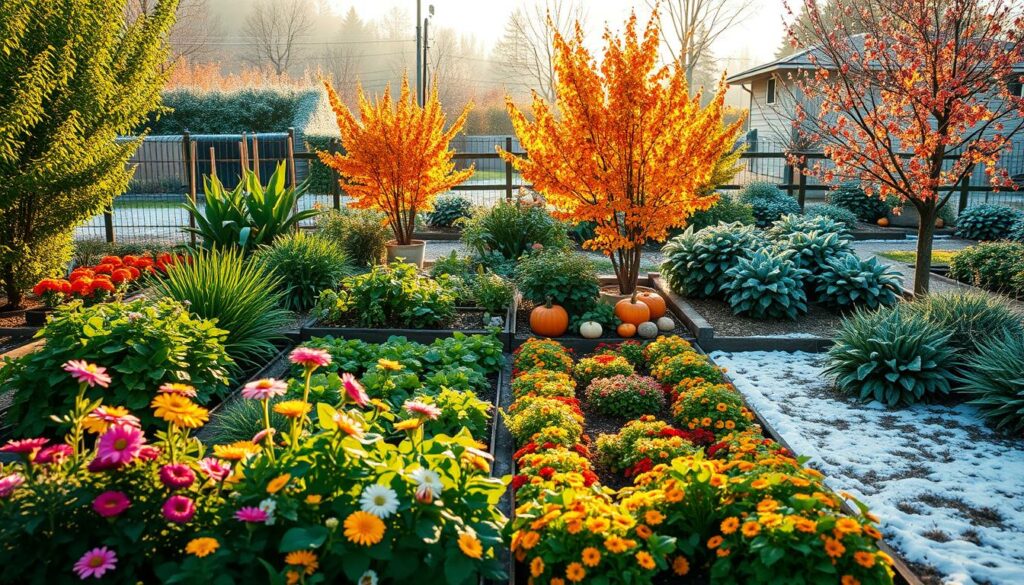
Gardening follows cycles of temperature, frost dates, daylength, and rainfall. These drive dormancy, flowering, and fruiting. Gardeners use USDA hardiness zones and AHS heat zones to pick plants and plan timing.
Watching forecasts from the National Weather Service and county extension office alerts helps avoid mistakes. Simple actions turn this knowledge into success. Set calendar reminders for pruning, soil amendments, and planting windows.
Keep a gardening journal to note first blooms and frost nights. Map microclimates in your yard for sun, shade, and wind. These steps improve care and reduce surprises during seasonal changes.
The Importance of Seasonal Awareness
Temperature averages and frost dates tell when to move seedlings outdoors or protect tender plants. Daylength triggers flowering in many species. Precipitation patterns affect irrigation and soil work.
Knowing these cues helps make garden care predictable and manageable. Local extension services and the National Weather Service offer region-specific advice. Use their frost alerts, heat warnings, and planting guides to align tasks with local timelines.
Schedule soil tests, amendments, and major pruning according to regional advice. This protects plant health and improves timing for your efforts.
Common Seasonal Plants
Spring favors bulbs like tulips and daffodils, early perennials such as bleeding heart and primrose, and cool-season vegetables like lettuce, peas, and spinach. These need early soil prep and timely planting.
Summer suits heat-tolerant annuals like marigold and zinnia. Vegetables such as tomatoes, peppers, and basil also thrive. Perennials like coreopsis and coneflower offer color and habitat through warm months.
Fall brings mums, asters, kale, and other brassicas. Crops like pumpkins and winter squash also grow well. Planting times shift by region, so check local extension plant lists for dates.
Winter depends on evergreen shrubs such as boxwood and holly. Cover crops like winter rye and dormant bulbs like snowdrops grow in mild climates. These plants support year-round structure and help maintain the garden during colder months.
Adjust planting calendars by region for best results. Northern gardeners follow later frost-free dates and shorter seasons. Southern gardeners use longer warm periods and mild winters to extend planting times. This regional tuning improves garden care and boosts long-term success.
Preparing for the Spring Transition
Spring is a busy time in the garden. Preparing early for weather changes reduces stress on plants. This helps plants recover quickly after winter.
Following a clear, step-by-step plan makes cleanup easier. It also sets the stage for healthy growth when temperatures rise.
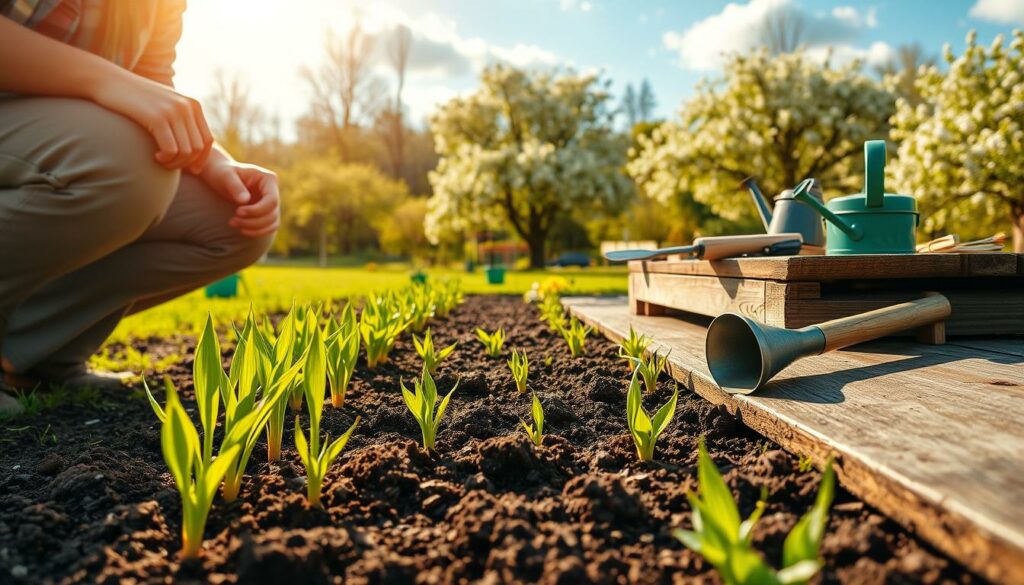
Cleaning Up Winter Debris
Start cleanup after the last hard freeze but before new buds open. Remove fallen leaves, dead stems, and old annuals to limit pests and fungal disease.
Leave some seed heads for birds and insects if you want to support wildlife. Use a leaf rake for broad cleanups and pruning shears for tough stems.
A blower-vacuum can help with heavy debris but use it sparingly. Sanitize tools between cuts on diseased plants with a 10% bleach solution to stop spreading disease.
Compost healthy debris to return nutrients to beds. Place diseased material in sealed bags for disposal or burn where allowed. Clear gutters and drains to prevent standing water near roots during spring rains.
Assessing Soil and Plant Health
Run a soil test to check pH and nutrients. County extension labs offer reliable analysis. Home kits like Rapitest are good for quick checks.
Test results show how much lime, sulfur, or fertilizer to add during cleanup. Check drainage and compaction too. If water pools, think about raised beds or improving soil structure.
For compacted lawns, core aeration loosens soil. This improves root access to air and water. Replace or enrich soil in raised beds if it is heavily depleted.
Inspect perennials and shrubs for winter damage. Look for dieback, rodent nibbling, and sunscald. Prune only clearly dead wood.
Delay heavy pruning on plants that bleed sap until later spring to avoid stress. Add compost, aged manure, or leaf mold to improve soil before planting.
Selecting Spring Plants
Choose cool-season crops and early bloomers that fit the local last frost date. Peas, radishes, spinach, pansies, and violas grow well in cooler soil.
Mix perennials and annuals to stagger blooms and keep color through the season. Pick disease-resistant and native plants like Echinacea and Rudbeckia to support pollinators and reduce care.
Pay attention to planting depth, spacing, and watering. Use row covers for tender plants if late frosts still occur during the spring transition.
Summer Gardening Strategies
Summer brings long days and intense heat that test a gardener’s planning and effort. Practical seasonal gardening tips help plants thrive while reducing stress on soil and roots. Good routines keep beds productive through peak growth and reduce common gardening challenges.
Watering Techniques for Heat
Water deeply and less often to help roots grow downward. Most established plants need about 1 inch of water per week, adjusted for heat and soil type. Water in the early morning to reduce evaporation and disease risk.
Use soaker hoses, drip irrigation, smart timers, and moisture sensors to water well. Mulch around plants to save moisture. Containers need more frequent checks; use water-retentive mixes or self-watering pots.
Pest Management during Summer
Warm weather encourages pests like aphids, spider mites, whiteflies, caterpillars, squash bugs, and tomato hornworms. Regular monitoring catches infestations early to lower damage. Hand removal and row covers help with small outbreaks.
Attract beneficial insects like ladybugs and lacewings to reduce pests. Apply insecticidal soaps, neem oil, or Bt when needed and follow label instructions. Keep good air flow and avoid evening overhead watering to prevent disease.
Pruning Techniques for Summer Growth
Summer pruning shapes shrubs, removes water sprouts, and clears dead wood. Pinching back annuals promotes bushier growth and more blooms. Deadheading perennials extends flowering and keeps beds tidy.
Prune spring-blooming shrubs after they finish flowering. Use sharp, sterilized pruners and loppers for bigger cuts. Avoid heavy pruning late in summer to protect new growth from early fall chills.
Transitioning to Fall: Key Steps
As warm days get shorter and nights cool down, gardeners must plan for a smooth seasonal change. This guide covers harvesting, soil care, and plant choices. It helps keep beds productive and healthy during this transition.
Harvest ripe fruits and vegetables quickly to reduce pest problems. Pick tomatoes, squash, beans, and peppers before the first frost. Bring green tomatoes indoors to ripen on a sunny windowsill.
Preserve extra harvest by blanching and freezing leafy greens. Store root crops in a cool, dark root cellar. Remove spent, diseased plants to prevent disease from overwintering. This cleaning step is vital in seasonal garden care.
Prepare soil for fall planting by clearing plant debris and adding compost. Test soil to adjust pH and nutrient levels. Avoid deep tilling to protect soil structure and microbes.
Plant cover crops like winter rye, clover, or vetch to stop erosion and control weeds. They also add nitrogen to the soil. Mulch with organic material to keep moisture in and moderate soil temperature.
Choose fall crops that fit the local frost schedule. Brassicas such as broccoli, kale, and cabbage thrive in cool weather. Root vegetables like carrots and beets do well if planted early enough to mature before hard freezes.
Add ornamental plants like mums, sedum, asters, and grasses to extend garden color into late season. In warmer U.S. areas, fall planting may continue into winter. In colder zones, use cold frames or row covers to extend the growing season and support garden care.
| Task | When to Do It | Why It Matters |
|---|---|---|
| Harvest ripe produce | Before first hard frost | Prevents pest attraction and preserves yields |
| Sanitation: remove diseased plants | Immediately after harvest | Reduces overwintering inoculum and disease pressure |
| Soil testing and compost addition | Early fall | Balances nutrients and improves soil structure |
| Plant cover crops | Mid to late fall | Protects soil, fixes nitrogen, suppresses weeds |
| Apply organic mulch | After planting cover crops or beds are cleaned | Conserves moisture and moderates temperature |
| Install cold frames/row covers | As nights approach freezing | Extends season for cool-season crops in cold zones |
Winter Preparations for Your Garden
Winter asks for careful attention to keep plants safe and soil healthy. A few focused steps now cut down on work in spring. These steps also reduce gardening problems later.
The following short guide covers frost protection, mulch and soil care, plus simple planning tasks. It will help make spring smoother.
Protecting Plants from Frost
Use frost blankets, row covers, burlap, cloches, or portable cold frames to shield plants during cold snaps. Cover plants before nightfall. Remove covers in daylight so sunlight reaches foliage.
Anchor covers with rocks, stakes, or soil to stop wind damage. For potted plants, move containers to sheltered spots like a porch or garage. Insulate pots with bubble wrap or burlap and group them to reduce heat loss.
Wrap thin-barked trees with tree wrap to prevent sunscald and rodent damage. Stake young trees to protect them from strong winter winds.
Covering Soil and Mulching Tips
Mulch acts as insulation for roots and cuts harmful freeze-thaw cycles. Apply 2–4 inches of shredded bark, leaf mulch, or straw around beds. Keep mulch a few inches away from stems and trunks to avoid rot.
Use cover crops like winter rye or clover as living mulch. They fix nitrogen and control erosion. Avoid heavy autumn raking in all areas. Leaving leaf litter in low-traffic zones protects beneficial insects and pollinators during winter.
Focus garden cleanup on paths, patios, and vegetable beds where tidy conditions matter most.
Planning for Spring
Winter is a good time to order seed catalogs, plan crop rotation, and map layout changes. Repair tools, service irrigation systems, and sharpen pruners while outdoor work slows. Keeping a garden journal with planting dates, pest notes, and trial results helps improve next year’s choices.
Use the off-season to research new varieties and join local gardening groups or extension workshops. This preparation supports steady garden maintenance during seasonal changes. It also helps you anticipate gardening challenges before they arise.
| Task | When to Do It | Benefit |
|---|---|---|
| Cover tender plants with frost blankets | Before nightfall on cold nights | Prevents frost damage and preserves blooms |
| Insulate and group potted plants | At first hard freeze | Reduces heat loss and root stress |
| Apply 2–4 inches mulch | Late autumn to early winter | Insulates roots, retains moisture, suppresses weeds |
| Plant cover crops | After harvest, before heavy frost | Prevents erosion, improves soil fertility |
| Service tools and irrigation | Mid to late winter | Saves time in spring and prevents breakdowns |
Choosing Plants for Each Season
Choosing the right mix of plants makes garden design for seasonal changes easier. A thoughtful palette balances long-term structure with short-term color.
This supports seasonal garden plant care and smooth transitions of plants from one season to the next.
Perennials vs. Annuals
Perennials return year after year. Examples like Echinacea and daylilies build structure and reduce long-term maintenance.
They need time to establish and should be divided every few years.
Annuals like marigolds and petunias give instant color and flexible seasonal design. Use them as accents to refresh beds quickly.
Self-seeding annuals and short-lived perennials can create near-continuous displays with less replanting.
Gardeners should match plants to USDA hardiness zones and local microclimates. Choosing zone-appropriate perennials lowers replacement needs and eases seasonal care.
Seasonal Flower Options
Spring bloomers such as tulips, daffodils, hyacinths, and pansies brighten early beds.
Stagger planting of bulbs to ensure waves of color over several weeks.
Summer choices include coneflowers, black-eyed Susans, daylilies, and roses. These flowers provide strong midsummer presence and support pollinators.
Fall interest comes from asters, sedum, chrysanthemums, and ornamental grasses. Their textures and seed heads extend visual appeal and help wildlife.
Winter structure depends on hellebores in mild climates, evergreen hollies, and bark or branches of dogwood and birch.
These elements keep yards interesting during the dormant months.
Stagger bloom times and mix textures to smooth transitions. Thoughtful layering aids garden design for seasonal changes and graceful transitions.
Edible Plants for Seasonal Variety
Spring edibles like lettuce, spinach, peas, radishes, and strawberries jump-start harvests.
They grow well with early annuals in raised beds or containers.
Summer crops such as tomatoes, peppers, cucumbers, basil, and beans thrive with good watering and pest care.
Succession planting extends yields during hot spells.
Fall and winter edibles include kale, collards, Brussels sprouts, and garlic. These crops keep flavor and nutrition as temperatures drop.
Using intercropping and succession planting maximizes harvests in small spaces.
Container gardens extend growing seasons on patios and balconies to support seasonal garden plant care goals.
| Season | Examples | Role in Design | Care Notes |
|---|---|---|---|
| Spring | Tulips, Daffodils, Pansies, Lettuce, Peas | Early color, soil awakening, cool-season yields | Plant bulbs in fall, start cool crops early, monitor frost |
| Summer | Roses, Coneflowers, Daylilies, Tomatoes, Basil | Peak bloom and productivity, pollinator support | Consistent watering, shade in extreme heat, pest checks |
| Fall | Asters, Sedum, Chrysanthemums, Kale, Garlic | Extended color, seed heads, cold-hardy crops | Mulch, transplant cool crops, plant garlic for next year |
| Winter | Hellebores, Holly, Dogwood bark, Collards | Structure, evergreen interest, hardy greens | Protect young plants, use windbreaks, minimal watering |
Understanding Microclimates in Your Garden
Microclimates are small zones within a garden that differ in temperature, light, wind, and moisture. They form where walls, slopes, trees, and paths change conditions. Recognizing them helps with garden seasonal transition and reduces challenges.
To map microclimates, observe sun and shade at different times through the year. Note low spots where frost settles. Watch wind corridors near fences or open areas.
Check soil moisture in sunny beds and shaded corners. Simple tools like a handheld thermometer, soil moisture meter, and sun app give reliable data.
Use observations to draw a simple map. Mark hot, dry areas and cool, damp spots. A south-facing wall often becomes a heat sink for Mediterranean plants.
A north-facing nook stays cool and suits ferns and hostas. These distinctions inform garden design and practical plant placement.
Identifying Microclimates
Start with a week of notes in spring and fall when conditions shift quickly. Measure morning and afternoon temperatures. Track hours of direct sun.
Test soil moisture after rain and drought. Label frost pockets and sheltered corners. Create microclimate zones on paper or with a digital photo.
Mark where heat accumulates, where wind strips leaves, and where water gathers. This survey helps match plants to microclimate realities.
Plant Selection Based on Microclimates
Match plants to local conditions. For hot, dry spots choose drought-tolerant species such as lavender and sedum. For cool, low-light corners pick shade lovers like heuchera and ferns.
For exposed sites use wind-tolerant shrubs such as Ilex (holly) or Myrica (bayberry). Microclimates can extend growing seasons. Plant cold-sensitive crops near heat-retaining walls to delay frost.
Use sheltered corners to overwinter containers. These tactics support smoother seasonal transition and improve garden resilience.
Modify microclimates when needed. Erect a windbreak of lattice or evergreen shrubs. Add shade cloth over tender beds in summer.
Use reflective mulch to raise soil warmth for early planting. Build raised beds to improve drainage and warmth on heavy soil.
| Microclimate Type | Key Traits | Plant Suggestions | Practical Fixes |
|---|---|---|---|
| South-facing heat sink | High daytime temps, quick drainage | Lavender, rosemary, sedum | Use rock mulch, group drought-tolerant plants |
| North-facing shade | Low light, cool soil, retained moisture | Ferns, hostas, heuchera | Use shade-loving groundcover, avoid heavy mulch |
| Low-lying frost pocket | Cold air settles, early frost risk | Cold-hardy perennials, late-season sowing | Improve drainage, avoid tender transplants |
| Wind corridor | High exposure, drying winds | Bayberry, holly, juniper | Install windbreaks, use protective mulches |
| Damp shade | Persistent moisture, low evaporation | Astilbe, primula, iris | Improve drainage, raise beds, choose moisture-loving plants |
Seasonal Fertilization Techniques
Effective seasonal fertilization keeps plants healthy and strong through changing weather. A clear plan helps gardeners time nutrients with plant needs. This improves growth while limiting runoff and waste.
Soil testing guides fertilizer rates and choices. This supports long-term soil health and plant vitality.
Best Practices for Each Season
Spring feeding supports new shoots and leaf growth. Use a balanced slow-release fertilizer or add compost to beds. Adjust N-P-K ratios using soil test results for roses, perennials, and vegetable starts.
Summer needs light, targeted feeding to keep blooms and fruits healthy. Choose a low-nitrogen formula late in the season to avoid soft growth that frost can harm. Water plants after applying fertilizer to help nutrients reach roots.
In fall, focus on root strength and cold tolerance. Reduce nitrogen and increase phosphorus and potassium. Mulch with compost or well-rotted manure to add organic matter instead of heavy synthetic doses.
Winter usually requires little fertilizer as many plants are dormant. Save major inputs for soil improvement and planning spring feeding. Fruit trees and lawns have special schedules. For example, apple trees do well with spring feeding and light summer top-ups. Cool-season lawns benefit from fall fertilizer to strengthen roots.
Organic vs. Synthetic Fertilizers
Organic fertilizers like compost, well-rotted manure, bone meal, blood meal, feather meal, kelp, and fish emulsion release nutrients slowly. They also improve soil structure and support beneficial microbes.
Synthetic fertilizers, such as balanced granules or water-soluble formulas like 10-10-10, provide nutrients quickly. They fix nutrient shortages but can cause salt buildup and harm microbes if overused.
Choosing the right fertilizer depends on soil tests, nutrient urgency, environmental concerns like runoff, and organic preferences. Gardeners should follow label instructions closely to avoid overuse and pollution.
Practical tip: Use soil tests to set fertilizer rates and apply them at the right times. Include seasonal plant care as part of overall garden maintenance during changes in the seasons.
Using Seasonal Decor in the Garden
Seasonal decor makes gardens feel planned through each seasonal change. Thoughtful colors, accents, and useful pieces keep outdoor spaces welcoming when plants shift.
This short guide offers clear ideas and steps for adding decor that supports garden design with seasonal changes.
Enhancing Aesthetic Appeal
Start with seasonal colors that match plant cycles. Pastel bulbs suit spring, bright annuals fit summer, warm grasses look good in fall, and evergreens shape winter gardens.
These choices make garden transitions smooth and pleasant to see.
Use hardscape features that stay useful all year. Paths, raised beds, containers, benches, and statues add form when plants are few.
They also help when changing container plants as seasons shift.
Lighting lets you enjoy the garden after dark and shows off winter shapes. Low-voltage lights highlight trees, grasses, and evergreens.
Practical items like rain barrels and trellises can look good and be helpful.
DIY Seasonal Decor Ideas
Spring projects are simple and bright. Plant bulbs in mixed containers, paint pots with soft colors, and make wreaths from branches and early flowers.
These touches pair well with garden design to welcome warmer days.
Summer decor focuses on texture and attracting pollinators. Hang mixed annual baskets, add colorful shade sails, and group pollinator planters to attract bees and butterflies.
These ideas boost both garden beauty and wildlife support.
Fall brings warm colors and rich tones. Arrange pumpkins with grasses, string white lights through shrubs, and craft grapevine wreaths with dried flowers.
Such pieces help show the garden’s seasonal change and protect late crops.
Winter decor should both protect and charm. Use evergreen boughs, wrap pots in burlap, add solar lights, and cover sensitive perennials with decorative cloches.
These methods keep interest and shield plants from cold weather.
Sustainability is important when choosing materials. Pick local wood, natural fibers, and weather-proof finishes.
Select decor that stores easily between seasons to reduce waste and support long-term garden design.
| Season | Key Decor Elements | Functional Benefit |
|---|---|---|
| Spring | Bulb containers, painted pots, foraged wreaths | Boosts curb appeal, easy planting swaps |
| Summer | Hanging baskets, shade sails, pollinator planters | Provides shade, attracts beneficial insects |
| Fall | Pumpkins, ornamental grasses, string lights | Extends outdoor time, showcases texture |
| Winter | Evergreen boughs, burlap pots, cloches, solar lights | Protects plants, preserves visual structure |
Maintaining Year-Round Gardening Habits
Consistent routines keep a garden strong during each seasonal change. A simple schedule helps catch early problems. Weekly checks happen in spring and summer. Winter reviews are biweekly or monthly.
During visits, note soil moisture, pests, nutrient signs, plant health, and hardscape issues. Record-keeping turns observations into useful data for future seasons.
A gardening journal or digital log tracks planting dates, fertilization, pest outbreaks, yields, and weather events. These notes make garden care during seasonal changes more effective. Helpful tools include soil probes, pH meters, planning apps, and alerts from local extension services.
Lifelong learning and small experiments improve gardening results over time. Gardeners can attend workshops, join Master Gardener programs, or take extension courses. Testing new cultivars, rotation plans, or methods like no-dig beds and drip irrigation helps find what works best.
Community support and flexibility matter as climates shift. Local gardening clubs, seed swaps, and social media groups provide helpful seasonal tips. Adapting planting dates, watering, and pest control to microclimates keeps gardens productive all year. Gardening with others builds strength and knowledge through every season.