

Nearly 40% of U.S. households plan to grow some food at home this year. Many choose indoor vegetable gardening to do it year-round.
Indoor vegetable gardening means growing edible vegetables inside homes, apartments, greenhouses, or grow tents. People use containers, raised beds, or hydroponic systems to do this.
This guide gives practical, step-by-step advice for readers in the United States who want to start or improve indoor gardens.
The guide covers site selection, light and climate control, plant choice, soil, containers, watering, nutrition, pest management, harvesting, and troubleshooting. It suits beginners and intermediate growers who want better yields and fewer mistakes.
Benefits include year-round food, fresher produce, less pesticide exposure, efficient space use, and improved food security. Readers will learn about common setups like windowsill containers, shelf gardens with LED grow lights, and hydroponics such as Kratky, deep water culture, aeroponics, and grow tents.
Essential tools include a pH meter, moisture meter, LED grow lights from brands like Spider Farmer or Mars Hydro, quality potting mix, and containers sized right. Other tools are hand pruners, organic fertilizers like fish emulsion or compost tea, and gentle pest controls such as insecticidal soap.
Safety notes remind gardeners to ensure proper ventilation using fans and use fire-safe lighting setups. They should also contain water to avoid mold. Checking local building rules is important, especially for rentals or multi-family housing, before installing an indoor vegetable garden.
The guide invites readers to follow the sections in order for practical tips. This helps build a plan customized to their space and goals.
Key Takeaways
- Indoor vegetable gardening lets gardeners grow fresh produce year-round in small spaces.
- The guide covers site choice, light, climate, soil, watering, nutrition, pests, and harvests.
- Common setups include windowsill pots, shelf gardens with LEDs, hydroponics, and grow tents.
- Basic tools: pH and moisture meters, LED lights (Spider Farmer, Mars Hydro), potting mix, and pruners.
- Follow safety steps: ventilation, water containment, and checking rental or building rules.
Introduction to Indoor Vegetable Gardening
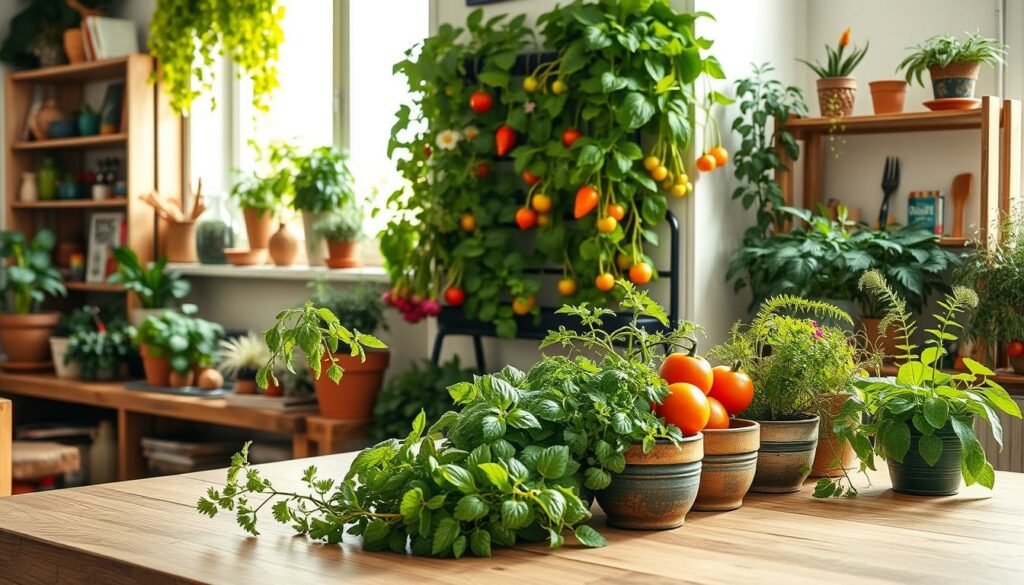
Indoor vegetable gardening brings fresh produce into homes all year. It works well in apartments, small houses, and for busy people. With simple setups, anyone can grow salad greens, herbs, and small fruiting plants.
Benefits of Growing Vegetables Indoors
A key benefit is continuous harvest. Indoor conditions remove seasons, so you get leafy greens and herbs anytime you want.
Harvesting at peak ripeness improves flavor and nutrients. This is better than buying produce from stores.
Space matters, especially in cities. Vertical shelves, stacked containers, and dwarf plants help use small spaces well. These indoor vegetable garden ideas prove small areas can yield lots of food.
Pest problems drop in indoor gardens. There are fewer soil diseases and less insect pressure. This means healthier crops and less need for pesticides.
Growing indoors cuts grocery trips and lowers food costs over time. It also helps reduce stress. Many find joy and pride tending their plants.
Common Challenges in Indoor Gardening
Light limits are the biggest challenge. Most windows don’t give enough light or time. Grow lights are often needed to help plants grow.
Temperature and humidity can be hard to control. Indoor air is often dry in winter or changes in old homes. Most vegetables do best with steady conditions.
Pollination is a problem for some fruit plants. Without bees, gardeners must hand-pollinate or use a small brush for pollen transfer.
Space and airflow limits raise disease risk. Crowded pots hold moisture and cause fungal problems. Good spacing and a small fan help prevent issues.
Indoor pests like aphids, fungus gnats, spider mites, and whiteflies may appear. Careful checking and quick action stop spread and loss.
Watering mistakes and nutrient problems are common for beginners. Overwatering, poor drainage, and uneven feeding hurt plant growth. Learning proper watering and soil helps plants thrive.
Startup costs and learning can discourage new gardeners. Quality LED lights, good potting mix, and basic hydroponics cost money. Planning well and following indoor gardening tips make starting easier and fun.
Choosing the Right Location for Your Indoor Garden
Picking the right spot sets up a successful indoor vegetable garden. Light, temperature, and access to power and water matter.
Choose low-traffic areas that still offer convenience. Good options include a sunny windowsill, a sunroom, or a kitchen counter near an east- or south-facing window.
A spare bathroom with a window also works well. For larger setups, try a grow closet or tent near an outlet and water source.
Light Requirements for Vegetables
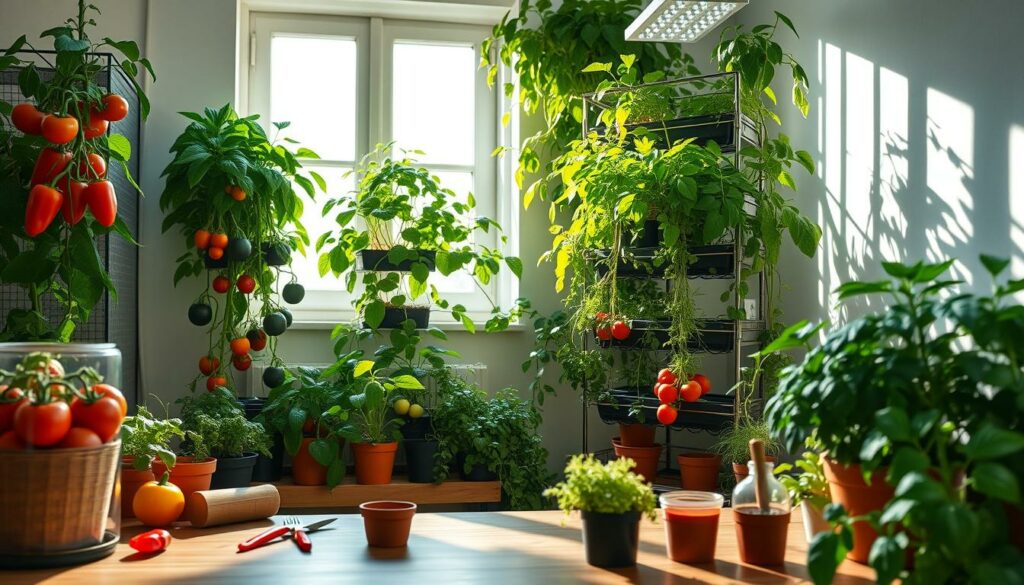
Most indoor vegetable plants need 12–16 hours of light daily for strong growth. Leafy greens can manage with 8–12 hours.
Fruiting crops like tomatoes and peppers need more light, between 14–16 hours, to produce fruit well.
Use full-spectrum LED grow lights to fit plant needs. Aim for PAR and PPFD targets: roughly 100–300 µmol/m2/s for herbs and lettuce and 400–700 µmol/m2/s for fruiting crops.
Position LEDs according to manufacturer instructions. Seedlings usually sit 12–24 inches below lights. Adjust closer for low-output and higher for high-output fixtures. Rotate plants regularly for even growth.
Natural light is important in the U.S. South-facing windows provide the strongest sunlight. East- and west-facing windows suit many herbs and greens.
North-facing windows usually need extra lighting to support vegetable growth.
Optimal Temperature and Humidity Levels
Temperature impacts growth and flavor. Daytime temperatures between 60–75°F (15–24°C) suit most vegetables. Night temperatures of 55–65°F (13–18°C) work best.
Leafy greens tolerate slightly cooler spots. Peppers and tomatoes prefer warmer air, around 65–80°F (18–27°C).
Relative humidity near 40–60% suits many crops. Seedlings benefit from 60–70% humidity. However, high humidity raises disease risks if airflow is poor.
Use a digital thermometer and hygrometer to keep track of conditions.
Control tools include small fans for better air movement. Humidifiers or dehumidifiers can help adjust moisture levels. Space heaters with safety features work in cool rooms.
Keep microclimates in mind: higher shelves may be warmer and drier than lower racks. Measure conditions at each level. Then adjust light placement and ventilation to meet your garden’s needs.
| Location Option | Best Use | Light Need | Notes |
|---|---|---|---|
| South-facing windowsill | Leafy greens, herbs, compact fruiting plants | High natural light | Great for passive setups; check weight support for planters |
| East-/West-facing counter | Herbs, lettuce, small containers | Moderate morning or afternoon light | Requires supplemental LEDs in winter months |
| Sunroom or conservatory | Mixed indoor vegetable garden plants; larger systems | Very bright; seasonal variation | Watch temperature swings; add shading in heat |
| Grow tent/closet | Controlled indoor vegetable garden setup for fruiting crops | Fully supplemental LED lighting | Best for precise control of PPFD, temp, and humidity |
| Spare bathroom with window | Seed starting and humidity-loving seedlings | Variable natural light; often needs LEDs | Good humidity for seedlings; add ventilation to reduce disease |
Selecting Suitable Indoor Vegetable Varieties
Choosing the right varieties makes indoor vegetable gardening productive and enjoyable. The best indoor vegetables to grow are those bred for containers, compact spaces, or quick harvests.
Growers should weigh growth habit, pollination needs, time to harvest, and light demands when planning an indoor vegetable garden.
Start with plants that fit small spaces and beginner routines. Focus on patio, bush, dwarf, or compact cultivars listed on seed packets.
Those labels show plants suited to container life and frequent harvesting.
Best Vegetables for Indoor Growing
Leafy greens perform well under moderate light. Lettuce, spinach, arugula, Swiss chard, and kale offer steady cut-and-come-again harvests.
They rank among the best indoor vegetables to grow for continuous yield.
Herbs add flavor and value to the kitchen. Basil, parsley, cilantro, chives, mint, thyme, and oregano stay compact and fit well indoors.
These herbs need simple care and reward frequent harvesting.
Small fruiting crops need brighter light but can thrive in containers. Cherry tomato varieties such as Micro Tom and Tiny Tim, dwarf peppers, and patio cucumbers produce fruit in limited space.
Expect occasional hand pollination for reliable yields.
Root crops and quick-turn microgreens expand indoor vegetable garden ideas. Radishes and baby carrots suit deeper pots for small but satisfying harvests.
Microgreens and sprouts, like broccoli, sunflower, and mung beans, grow fast with little room.
Edible flowers such as nasturtiums and violas add color and flavor while fitting into many indoor setups.
Fast-Growing Options for Beginners
Beginners should pick rapid, forgiving crops when exploring indoor vegetable gardening. Radishes mature in 20–30 days and tolerate partial indoor light.
Lettuce mixes offer baby leaves in three to four weeks. Mature heads take closer to six weeks, giving quick satisfaction and frequent harvests.
Microgreens finish in seven to twenty-one days. They maximize yield in tiny trays and teach new growers about timing and light control.
Herbs such as basil and chives establish quickly and respond well to regular trimming. Basil grows strong under 14–16 hours of light and becomes a staple indoor vegetable garden plant.
Sprouts like alfalfa and mung beans germinate in two to five days with minimal equipment. They offer one of the fastest wins for indoor gardeners learning routines and harvest timing.
Soil and Container Choices for Indoor Vegetables
Good soil and the right containers are key to a successful indoor vegetable garden setup. Choose mixes that drain well and hold nutrients. Pest-resistant mixes help plants thrive in limited spaces.
Types of Soil for Indoor Gardens
Use high-quality potting mixes made for containers. They are lightweight, sterile, and well-draining. These mixes stop compaction common in garden soil indoors.
Choose blends with coconut coir or peat moss to keep moisture. Add perlite or vermiculite for aeration. Compost and worm castings provide nutrients and beneficial microbes.
Soilless mixes suit hydroponic-style setups. They need regular fertilization but reduce disease risk. Keep a pH between 6.0 and 7.0 for most vegetables. A handheld pH meter helps maintain steady levels.
Trusted brands like Espoma, FoxFarm, and Miracle-Gro offer sterilized potting mixes in the United States. If you reuse soil, pasteurize it to kill pathogens first.
Container Options: Size and Material
Match container depth to root size. Microgreens and small herbs do well in 3–6 inch pots. Leafy greens need 6–8 inches of soil depth.
Small root crops and compact tomatoes grow best in 8–12 inch containers. Large tomatoes and peppers need 12–18 inches or more.
Plastic pots are light and affordable. Terra cotta gives better aeration but dries quickly. Fabric grow bags promote air pruning and strong roots. Self-watering planters keep moisture steady for busy gardeners.
Drainage is crucial. Use pots with enough holes and saucers to protect floors. Hydroponic setups need net pots and reservoirs sized for the system. Space-saving options include vertical towers, hanging baskets, and stackable planters.
Balance looks with function. UV-stable containers resist fading near bright windows. Beginners benefit from practical containers that help plants grow well and produce steady harvests.
| Plant Type | Recommended Depth | Best Container Materials | Drainage Notes |
|---|---|---|---|
| Microgreens & Small Herbs | 3–6 inches | Plastic trays, shallow ceramic | Shallow drainage holes; tray to catch runoff |
| Leafy Greens (Lettuce, Spinach) | 6–8 inches | Plastic pots, fabric grow bags | Multiple drainage holes; avoid waterlogging |
| Small Root Crops & Compact Tomatoes | 8–12 inches | Fabric bags, deep plastic pots | Good drainage and frequent watering checks |
| Large Tomatoes & Peppers | 12–18+ inches | Large plastic containers, self-watering pots | Large holes; saucer recommended for indoor floors |
| Space-Saving Systems | Varies by design | Vertical towers, hanging baskets, stackable planters | Ensure each pocket or tier has drainage; reservoir systems preferred |
Watering Techniques and Schedules
Proper moisture control is key to indoor vegetable gardening. Most vegetables like evenly moist soil that is not waterlogged.
Wet roots cause root rot and fungal problems. Dry soil stresses plants and lowers yields. This section shares tips for checking soil and setting watering schedules.
Signs of overwatering and underwatering often look similar. Simple tests help tell the difference.
For small pots, stick a finger 1–2 inches into the soil. You can also use a moisture meter or lift the container to feel its weight. These easy checks prevent guesswork and help you water at the right time.
Overwatering shows as yellowing lower leaves and wilting foliage, even though the soil is damp. You might see mold or algae on top, a sour smell, and fungus gnats.
Seedlings can get damp-off disease if the mix stays soggy and there is poor air circulation.
Underwatering causes dry, brittle leaves that curl or brown at the edges. Growth may slow, and the pot feels light. Soil might pull away from the container sides.
Spotting these signs early keeps your indoor garden healthy.
Top watering is simple: water until extra drains from holes. This helps flush out fertilizer salts.
Bottom watering means placing pots in a shallow tray of water for 10–30 minutes so soil draws up moisture. This reduces wetting the leaves, which lowers fungal risks.
Self-watering containers hold water reservoirs that balance moisture between waterings. They are good for busy growers or beginners.
Larger or automatic systems like drip irrigation and hydroponics deliver exact water and nutrients on a schedule.
Water quality matters. Use room-temperature water. Cold water can shock roots.
If tap water has chlorine, let it sit overnight or use filtered or rainwater for crops sensitive to chlorine.
How often to water depends on pot size, plant type, and environment. Small pots in warm, dry rooms may need daily watering.
Larger pots in mild conditions usually need watering every three to seven days. Watch soil closely and adjust watering with the seasons.
For seedlings, keep soil moist but not soaked and raise humidity if needed.
For mature plants, keep moisture steady to avoid swings from dry to soggy. Watching plants daily and following a simple routine leads to better growth and higher yields.
Nutrition and Fertilization for Indoor Plants
Good nutrition for indoor plants starts with knowing what vegetables need. Container growth changes how nutrients are supplied. Roots in pots have limited access to soil reserves.
Regular feeding keeps leafy greens strong. It also helps flowering crops stay productive. Indoor vegetable gardening works best with a plan.
This plan balances steady nutrients with occasional corrections.
Primary macronutrients drive core growth. Nitrogen supports leaf and stem growth. Phosphorus builds roots and flowers.
Potassium boosts overall vigor. Secondary nutrients include calcium, magnesium, and sulfur. Micronutrients like iron, manganese, and zinc are needed in small amounts.
They matter for yield and color.
Types of Fertilizers: Organic vs. Chemical
Organic fertilizer options feed soil life and plants. Compost, worm castings, fish emulsion, kelp extracts, bone meal, and blood meal slowly release nutrients.
Brands like Espoma and Dr. Earth offer balanced organic granular formulas. These improve soil structure and boost microbial activity.
Synthetic fertilizers provide precise N-P-K ratios and quick fixes. Water-soluble mixes such as 10-10-10 or 20-20-20 supply predictable results.
Controlled-release granules also work well. Liquid hydroponic nutrients come in A/B formulas for soilless systems. These allow tight control of ppm and pH.
Organics are sustainable and boost microbes but act slowly and vary in strength. Chemical fertilizers act fast but can build salts and need careful dosing.
Growers often use a hybrid approach. They start with organic base amendments. Later, they add synthetic feeds to fix deficiencies.
Fertilization Schedule for Indoor Vegetables
Seedlings need gentle care. Avoid heavy feeding for two to three weeks. Start with quarter-strength liquid feeds after true leaves appear.
This reduces burn risk and supports healthy roots.
During vegetative growth, feed every one to two weeks. Use a balanced liquid fertilizer or follow slow-release product labels.
Increase nitrogen for leafy crops. Later, shift nutrients to favor fruiting.
At flowering and fruit set, use formulas higher in phosphorus and potassium. These support blooms and yields.
Keep feeding consistent to prevent stress and loss in production.
Watch for trouble signs. Yellowing or interveinal chlorosis signals deficiencies.
Leaf burn and white crust on potting mix show salt buildup. Flush containers with plain water every four to eight weeks if salts build up.
Hydroponic and soilless growers should use EC and pH meters. Most vegetables grow best between 5.5 and 6.5 pH.
Follow manufacturer guidance for ppm targets. Adjust A/B mixes to match the crop stage.
| Crop Stage | Recommended Feed | Frequency | Notes |
|---|---|---|---|
| Seedlings | Quarter-strength balanced liquid (e.g., 10-10-10) | Every 7–14 days | Begin after true leaves; avoid strong feeds |
| Vegetative | Balanced fertilizer or slow-release organic | Every 7–14 days or per label | Raise nitrogen for leafy greens; use Espoma or Dr. Earth for organics |
| Flowering/Fruiting | Higher P and K formula or bloom booster | Every 7–14 days | Consistent feeding supports fruit set and size |
| Soilless/Hydroponic | Formulated hydroponic A/B nutrient solution | As system requires; monitor ppm daily | Use EC and pH meters; keep pH 5.5–6.5 |
| Maintenance | Flush with plain water | Every 4–8 weeks | Prevents salt buildup and toxicity |
Simple indoor gardening tips include watching leaf color and testing runoff for salts. Keep a feeding journal.
Small adjustments make a big difference in yield and plant health when growing indoor vegetables.
Pest Management in Indoor Vegetable Gardens
Indoor vegetable gardening works best when plants are healthy and pests are controlled. Integrated pest management focuses on prevention and careful monitoring. It uses the least-toxic controls to keep plants safe.
Good sanitation and quarantining new plants for one to two weeks helps reduce outbreaks. Steady plant care also makes other treatments more effective.
Common Pests and Their Identification
Watch for tiny signs to spot infestations early. Aphids cluster on new growth and leave sticky honeydew that attracts sooty mold. Spider mites create fine webbing and cause leaves to fade or become stippled.
Fungus gnats hover over damp pots, while larvae feed on roots and organic matter. Whiteflies flutter from under leaves and suck plant sap. Thrips move quickly and scar leaves with silvery streaks.
Mealybugs look like white cottony masses, and scale shows as hard, immobile bumps. Common warning signs include sticky residues, wilting, leaf holes, distorted growth, and webbing. Use a magnifying glass to spot tiny pests. Inspect plants weekly and record observations to detect early problems.
Organic Pest Control Methods
Cultural steps are the first defense in indoor gardening. Prune infested parts and clear fallen debris. Improve airflow around plants to keep them healthy.
Let the topsoil dry slightly to discourage fungus gnats. Cover pot surfaces with sand or grit when needed. Quarantine new plants to avoid introducing pests.
Mechanical methods help with localized infestations. Hand-pick larger pests and rinse leaves with a gentle spray. Use yellow sticky cards to trap flying insects.
A blast of water can remove many small pests and slow their growth. Biological controls work well in greenhouse-style setups and larger gardens. Beneficial insects like predatory mites or ladybugs reduce aphids and mites.
Nematodes target larvae in soil pests when used according to directions. Botanical and low-toxicity sprays offer targeted control while protecting beneficial insects. Insecticidal soap, horticultural oil, and neem oil work well indoors when used as labeled.
Pyrethrin-based sprays control severe outbreaks but require good ventilation. Follow wait times before harvest to ensure safety. Soil treatments help with gnat larvae and root pests.
Hydrogen peroxide soil drenches, properly diluted from 3% solutions, reduce larvae levels. Bacillus thuringiensis israelensis (Bti) targets gnat larvae in potting mixes. Always follow label directions and safety guidance for edible plants.
| Pest | Key Sign | Nonchemical Control | Organic Treatment |
|---|---|---|---|
| Aphids | Clusters on new growth; sticky honeydew | Prune, blast with water, introduce ladybugs | Insecticidal soap, neem oil |
| Spider mites | Fine webbing; stippled leaves | Increase humidity, wash leaves, predatory mites | Horticultural oil, insecticidal soap |
| Fungus gnats | Small flies over soil; weak seedlings | Dry top layer, sand cover, yellow sticky cards | Bti products, hydrogen peroxide soil drench |
| Whiteflies | White moth-like insects under leaves | Sticky traps, remove heavily infested leaves | Neem oil, insecticidal soap |
| Thrips | Silvery streaks; distorted flowers | Blue sticky cards, remove damaged blooms | Spinosad where label allows, horticultural oil |
| Mealybug / Scale | White cottony masses or hard bumps | Wipe with alcohol-dipped swab, prune | Horticultural oil, repeat insecticidal soap |
Regular monitoring makes indoor pest management practical and predictable. Keep a short log of sightings, treatments, and results. Always follow label pre-harvest intervals and ventilate rooms after spray applications to protect people and beneficial insects in your garden.
Harvesting Techniques and Timing
Successful indoor vegetable gardening depends on timely harvests and gentle technique. Proper timing keeps plants productive. It also ensures the best flavor.
The following guidance helps gardeners spot readiness, protect plants, and store produce. This leads to peak freshness.
How to Know When to Harvest
Leafy greens are easy to manage with cut-and-come-again harvesting. Pick outer leaves when they reach a good size. Baby leaves are ready in three to four weeks.
Mature heads often form by six weeks. This timing depends on the variety.
Herbs should be harvested once established. Cut above a node to encourage branching. Basil tastes best before flowers form.
Regular light harvesting promotes bushier growth.
Tomatoes and peppers show ripeness through color and slight softness. Indoor cherry tomatoes often ripen earlier and in waves. Taste a sample to confirm peak flavor.
Root crops need occasional checks. Radishes can be ready in 20–30 days. Carrots and beets require inspection of crown size.
Pull one to test rather than harvesting the whole row. This helps verify maturity.
Microgreens are fast and precise. Harvest when cotyledons and first true leaves appear, usually seven to 21 days. Cut at soil level for clean, tender stems.
Best Practices for Harvesting Vegetables
Use clean tools. Sterilized scissors or pruners reduce disease spread. Sanitize tools between plants if disease is suspected.
Make clean cuts rather than tearing stems. Harvest in the morning when plants are turgid. This preserves flavor and shelf life.
For cut-and-come-again crops, stagger harvests. This extends productivity.
Handle produce gently during post-harvest care. Rinse lightly and dry before storage. Store herbs upright in jars with water or wrapped in damp paper towels.
Keep delicate greens in breathable containers in the fridge. Rejuvenation pruning helps perennial herbs and overgrown plants. Heavier pruning stimulates new growth and helps manage size in small spaces.
Keep a simple log of harvest dates and yields. Tracking results improves future planning. It also refines variety choices and planting dates.
This aligns planting with peak production for harvesting indoor vegetables.
| Crop | Typical Time to Harvest | Visual Cues | Best Post-Harvest Handling |
|---|---|---|---|
| Leafy Greens | 3–6 weeks | Outer leaves large or full heads formed | Rinse, spin dry, store in breathable container |
| Herbs (e.g., basil) | 4+ weeks | Established stems; before flowering | Trim above node; jar with water or damp towel |
| Tomatoes & Peppers | Varies by variety | Full color and slight softness | Handle gently; refrigerate only if overripe |
| Radishes | 20–30 days | Visible round shoulder at soil line | Trim tops, rinse, store cool |
| Carrots & Beets | Depends on variety (check crown size) | Diameter matches expected size | Brush off soil, refrigerate in damp sand or towel |
| Microgreens | 7–21 days | Cotyledons and first true leaves visible | Cut at soil level, rinse, pat dry |
Troubleshooting Common Indoor Gardening Problems
Indoor vegetable gardening can bring surprises. A clear troubleshooting routine keeps most problems small. Observe leaves, stems, and roots when possible.
Log light hours, temperature, humidity, watering, and feeding. Start by ruling out pests, then water issues. Next, check light and nutrition.
Keeping records helps reveal patterns. This prevents repeating mistakes in your indoor garden care.
Dealing with Light Deficiencies
Plants with leggy stems, small pale leaves, or slow growth often show light stress. Short-term fixes include rotating plants and moving them closer to windows.
Trim lower foliage that shades the canopy. For steady results, install full-spectrum LED grow lights matched to the canopy’s PPFD needs. Use reflective surfaces like white walls or mylar to boost light efficiency.
Adjust photoperiods to crop needs—leafy greens need 12–16 hours. Fruiting vegetables prefer 14–16 hours of light. Use timers for consistency and set lamp distance to avoid stretching or burns.
These indoor gardening tips save energy while giving plants the right spectrum and intensity.
Solutions for Nutrient Deficiencies
Identify nutrient deficiencies by leaf pattern and plant age. Nitrogen deficiency shows as uniform yellowing on older leaves. Treat with N-rich fertilizer or fish emulsion.
Iron deficiency causes interveinal chlorosis on young leaves. Check and lower pH or apply chelated iron. Magnesium loss appears as interveinal yellowing on older leaves.
Epsom salts by foliar spray or soil drench can help magnesium loss. Potassium deficiency shows leaf-edge browning and weak stems. Correct with higher potassium feed.
Confirm problems with a soil test kit or local extension service such as the University of California Cooperative Extension. If micronutrient lockout is suspected, adjust pH to 6.0–7.0 range first.
Make slow, incremental corrections and flush containers regularly to prevent salt buildup. After changes, monitor for 7–14 days and fine-tune the plan.
These steps make troubleshooting nutrient problems manageable for home growers.