

Nearly 70% of American homeowners wish their yard needed less time to maintain. This shows that practical outdoor spaces are becoming very popular.
A low-maintenance garden is designed to cut down on time, effort, and costs. It aims to keep a garden beautiful and functional with little work.
It uses tough plants, smart layouts, and good water and soil care. This way, the garden looks great but needs few chores.
This guide is for busy people. It helps working professionals with little weekend time, retirees wanting less physical work, and renters with small patios.
It also suits homeowners who want a yard that is easy to care for but still inviting. It offers simple garden design ideas with big impact.
The article explains practical steps. These include picking the right plants and planning an efficient layout.
It also covers preparing soil, using smart watering, managing weeds and pests, and adding sustainable hardscaping. The goal is to spend less time on upkeep.
It aims to lower water and fertilizer use and extend time between chores. The goal is to have a garden that looks good all year.
Key Takeaways
- A low maintenance garden reduces time and cost while keeping strong curb appeal.
- Easy care landscaping relies on the right plant choices and simple garden design.
- Smart soil and watering cut chores and save water in a low upkeep yard.
- Good planning and hardscaping minimize routine maintenance tasks.
- Even small spaces and rentals can benefit from low-maintenance strategies.
Understanding Low-Maintenance Gardening
Creating a low maintenance garden starts with smart choices and realistic expectations. Thoughtful design, soil improvement, and plant selection reduce routine chores. This makes yards easier to enjoy.
Initial effort pays off later with fewer weekly tasks and lower costs.
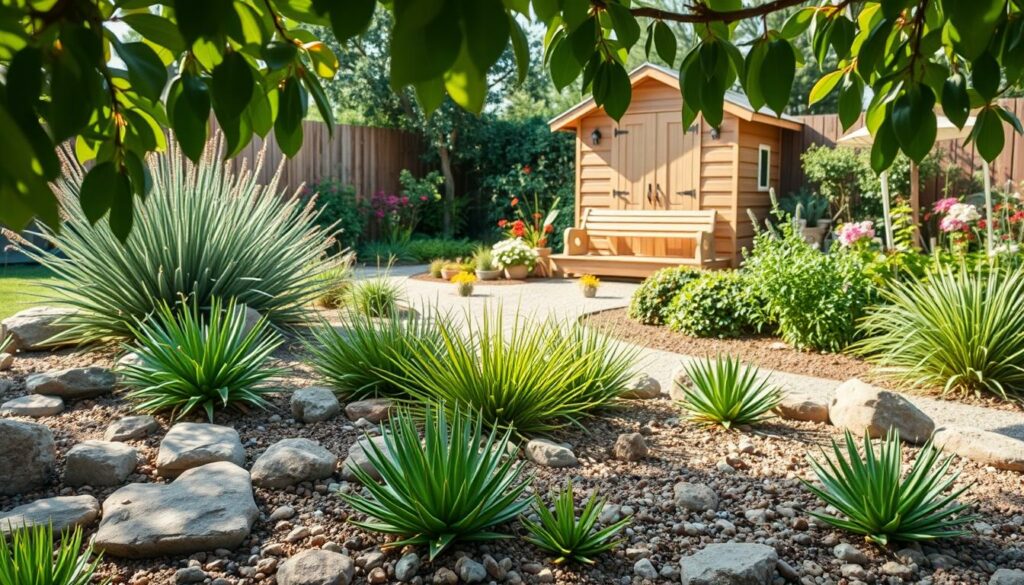
Benefits of a Low-Maintenance Garden
A minimal maintenance garden saves time. Families and professionals spend less time mowing, weeding, and hand-watering. This frees evenings and weekends for relaxation or social time.
Cost savings follow. A well-planned low upkeep yard cuts water bills and reduces spending on fertilizers and hired help. Long-term savings often offset early investments.
Environmental gains are significant. Drought-tolerant plantings and reduced chemical use conserve water and support pollinators like bees and butterflies. Healthier soil improves drainage and resilience.
Designing for simplicity raises usability. A tidy, low maintenance garden invites more outdoor activity and boosts curb appeal without constant upkeep. People feel calmer in such green spaces.
Common Misconceptions About Low-Maintenance Gardens
One myth says low-maintenance means no maintenance. The truth shows thoughtful choices reduce chore frequency and difficulty. Seasonal checks, pruning, and mulching keep a garden healthy.
Another belief says minimal maintenance gardens look dull. Combining evergreens, textured foliage, and flowering perennials creates year-round interest and color variety.
Some assume strategies only suit large landscapes. The same principles apply to balconies, container gardens, and small urban plots. Scalability makes low upkeep yards possible for many properties.
Practical planning matters. Setting realistic goals and budgeting for initial soil amendment and planting helps ensure long-term ease. Small up-front investments reduce ongoing labor.
Choosing the Right Plants for Your Garden
Plant choice sets the tone for an easy care landscaping plan. Picking species that match local climate, soil, and light cuts chores. This keeps the garden looking good year after year.
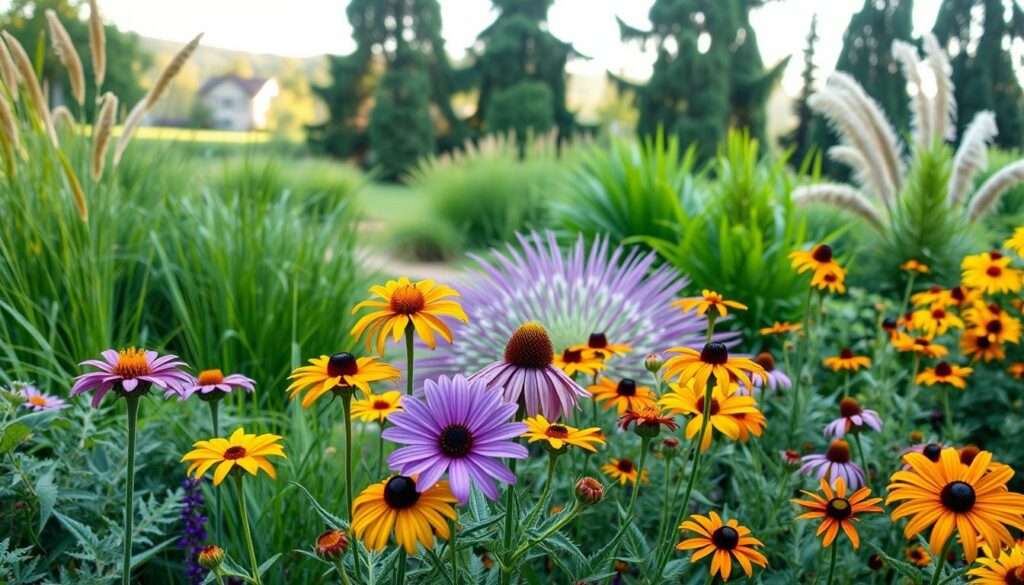
The next sections outline practical options and simple rules. These help gardeners pick low maintenance plants that thrive with minimal attention.
Native Plants: A Smart Choice
Native plants save time and inputs because they evolved for local rainfall, pests, and soils. They need less fertilizer and irrigation once established. They support native pollinators, which boosts overall garden health.
Good U.S. examples include purple coneflower (Echinacea) and black-eyed Susan (Rudbeckia) for many zones. Switchgrass (Panicum virgatum) suits prairie-style gardens, and mountain laurel (Kalmia) fits eastern woodlands. Gardeners should consult county extension offices for lists tailored to their region.
Drought-Resistant Options
Drought-resistant plants reduce watering needs and keep beds attractive during dry spells. Look for plants labeled low water use or xeric when shopping.
Popular choices are lavender, sedum, yarrow, Russian sage, ornamental Festuca grasses, agave, and yucca. These species pair well in mixed borders or rock gardens. They help achieve easy care landscaping in arid yards.
Perennials vs. Annuals
Choosing between perennials and annuals shapes long-term maintenance. Perennials cost more up front, but they return every season. This cuts work over time. Examples include daylilies, hostas, and salvia.
Annuals provide seasonal color and design flexibility. They need replanting each year. Low-maintenance bedding plants such as zinnias and marigolds work well in containers. They offer quick color with limited upkeep.
Gardeners should group plants by water needs and pick disease-resistant cultivars. Keeping evergreen structure adds year-round interest. Hydrozoning beds into similar-need areas reduces wasted irrigation and simplifies care.
| Plant Type | Maintenance Level | Water Needs | Best Use |
|---|---|---|---|
| Native perennials | Low | Low to moderate | Pollinator beds, naturalized borders |
| Drought-resistant perennials | Low | Low | Rock gardens, dry slopes |
| Ornamental grasses | Low | Low to moderate | Structure, mass planting |
| Annual bedding plants | Moderate | Moderate | Seasonal color, containers |
| Succulents (agave, yucca) | Low | Very low | Arid landscapes, focal points |
Designing Your Low-Maintenance Garden Layout
Thoughtful planning sets the stage for a simple garden design that lasts. A quick assessment of the site helps. Check sun, shade, soil, slope, drainage, and microclimates.
This helps place beds, paths, and irrigation where they work best and last longer.
Use a master plan or an app like iScape or SketchUp to sketch zones. Predict mature plant sizes to reduce future rework. This keeps the yard accessible for upkeep.
Leaving clear access makes a low upkeep yard feel effortless over time.
Importance of Garden Planning
Start with sun maps and soil tests. Note existing structures and drainage lines. Group plants by water need to simplify irrigation.
Predict growth so paths and borders do not require repeated edits. Create irrigation zones and mark maintenance routes.
This approach supports a low maintenance garden layout that saves time. It lets homeowners focus on enjoyment, not constant fixes.
Creating Efficient Pathways
Design durable paths that cut down on trampling and weeds. Materials like compacted crushed stone, decomposed granite, pavers on sand, and permeable flagstone balance cost and care.
Set widths for easy movement and equipment use. A three-foot standard walkway suits most tasks.
Add edging to stop grass encroachment and make mowing quicker. Well-placed garden pathways protect plants and make a yard easier to manage.
Utilizing Vertical Space
Vertical gardening stretches small plots and lowers ground-level upkeep. Trellises, arbors, espaliered fruit trees, and living walls create layers without more lawn to mow.
Choose low-maintenance climbers like clematis or trained grape vines where appropriate.
Use modular planters and wall-mounted systems for herbs and compact perennials to keep soil contained and reduce weeding. These tactics make a simple garden design feel rich while keeping chores light.
Soil Preparation and Gardening Basics
Good soil is the backbone of a low maintenance garden. It holds moisture, feeds plants, and lowers pest and disease problems.
Spending time preparing soil means fewer repairs and less fertilizer in the future.
Importance of Quality Soil
Homeowners should test soil pH and nutrients before planting. Kits from Cornell, the University of Minnesota, or local county extension services give clear results.
Tests show whether soil is sandy, silty, or clay. This helps guide which amendments to use.
Adding organic matter helps sandy soil retain water. Clay soils benefit from gypsum and compost to loosen their structure.
Balanced soil means plants need less watering and fewer chemical feeds.
Simple Soil Enhancements
Start by adding 2–3 inches of compost or well-rotted manure to existing beds when planting. For new beds, mix amendments 6–8 inches deep.
This kind of preparation builds soil fertility that lasts a long time.
Use organic mulches like wood chips or shredded bark. Mulch keeps moisture in, controls temperature, and stops weeds from growing.
As mulch breaks down, it improves soil and lowers future work.
Choose slow-release organic fertilizers such as Espoma or Dr. Earth based on your soil test results. These feed plants steadily and reduce extra work.
Use landscape fabric only sparingly. Thick organic mulch is better for soil health and creating a low maintenance garden over time.
Practical steps include testing soil, amending it well when starting, then checking once a year and adding compost on top.
This routine reduces repeated labor and keeps beds productive.
| Task | When to Do It | Recommended Product or Method | Benefit for Low Maintenance Garden |
|---|---|---|---|
| Soil testing | Before planting, then annually | Cornell/University of Minnesota kits or county extension | Guides precise amendments and reduces overfeeding |
| Amend existing beds | At planting | 2–3 inches compost or well-rotted manure | Improves moisture retention and fertility |
| Build new beds | At installation | Mix amendments to 6–8 inch depth | Creates stable, productive soil with less upkeep |
| Mulching | Spring and as needed | Wood chips, shredded bark | Suppresses weeds and conserves moisture |
| Fertilizing | Based on soil test | Slow-release organic fertilizers (Espoma, Dr. Earth) | Steady nutrition without extra applications |
| Top-dressing | Annually | One inch compost spread over beds | Maintains soil health with minimal labor |
Watering Techniques for Less Maintenance
Efficient watering saves time on chores and reduces plant stress. A few key strategies help a low maintenance garden thrive. They also cut water waste effectively.
The following items explain practical setups, simple upgrades, and easy ways to capture water for later use.
Drip irrigation systems put water directly where plants need it most. Mainline tubing, emitters, pressure regulators, and timers deliver water slowly to the roots. Brands like Rain Bird, DripWorks, and Orbit offer kits for flower beds, vegetable gardens, and container groups.
These systems reduce evaporation and plant diseases by keeping leaves dry. Once installed, they require very little routine care. Tips include burying tubing slightly in beds and using pressure-compensating emitters for even flow.
Also, remember to winterize lines in cold climates to prevent damage.
Smart watering solutions use real-time data to automate watering schedules. Smart timers and soil moisture sensors from Rachio, Hydrawise, and Hunter adjust irrigation based on weather and soil moisture levels. This saves water and time for gardeners.
Grouping plants by water needs, called hydrozoning, works well with smart controllers. Mulching around plants slows evaporation and cuts the need for frequent watering in a low maintenance garden.
Rainwater harvesting collects roof runoff to use in the garden. Rain barrels or small cisterns from Good Ideas and EarthMinded store water for dry periods. This reduces use of municipal water and provides soft water some plants prefer.
Follow local codes when installing water storage. Add first-flush diverters to improve water quality if needed. Combining rainwater harvesting with drip irrigation and smart watering makes a strong, low maintenance garden that needs less daily care.
Weed Management Strategies
Effective weed management keeps a garden tidy and cuts time spent on chores. Prevention and long-term suppression matter more than quick fixes.
A few smart choices at planting time make a minimal maintenance garden much easier to keep.
Mulching reduces light at the soil surface and stops many seeds from sprouting. Organic materials like shredded bark, hardwood chips, and straw work well. Apply them 2–4 inches deep.
As these mulches break down, they enrich soil structure and feed beneficial organisms. This supports healthier plant growth in a low upkeep yard.
Apply a fresh layer of mulch each year. Avoid piling it against stems to prevent rot. In dry, Mediterranean-style beds, inorganic options like landscape gravel create a neat look.
Gravel cuts weed germination and requires almost no upkeep. Choosing the right mulch type helps the yard stay a minimal maintenance garden.
Dense living mats are a smart alternative to bare soil. Ground covers such as ajuga, creeping thyme, sedum, and vinca minor reduce open soil where weeds take hold.
Native grasses and clover mixes act as living mulch in lawns. They lower mowing needs and limit weed penetration.
For pathways and high-traffic zones, permeable pavers with jointing gravel keep footpaths tidy and reduce weeding. Select plants and materials that tolerate use while keeping maintenance low.
Hand-pull small weeds early before they set seed to prevent bigger problems. For stubborn patches, targeted spot treatments like horticultural vinegar offer control without broad chemical use.
Keeping soil healthy and plantings dense helps desirable species outcompete weeds over time.
| Strategy | Best Use | Maintenance Level | Notes |
|---|---|---|---|
| Organic Mulch (bark, chips, straw) | Beds, around shrubs and perennials | Low | 2–4 in. depth; refresh annually; improves soil |
| Inorganic Mulch (gravel) | Dry gardens, Mediterranean styles, drainage areas | Very Low | Does not enrich soil; durable and neat |
| Living Mulch / Ground Covers | Open soil, between stepping stones, lawns | Low | Ajuga, creeping thyme, sedum, clover mixes; choose natives when possible |
| Permeable Pavers with Jointing Gravel | High-traffic paths, patios | Minimal | Limits weed growth; supports drainage and hardwear |
| Manual & Targeted Spot Control | Small patches, early-season seedlings | Variable | Hand-pulling and horticultural vinegar reduce chemical use |
Pest Control in a Low-Maintenance Garden
Keeping a garden low maintenance starts with smart pest control that cuts repeat work. Gardens using prevention, monitoring, and biological methods need fewer chemical treatments.
This approach works well with easy-care landscaping and low maintenance plants. Together, they create a resilient outdoor space.
Natural Pest Deterrents
Encouraging beneficial insects is key to organic pest control. Ladybugs, lacewings, and parasitic wasps prey on common pests and thrive near pollinator-friendly, native species.
Physical barriers reduce maintenance by stopping damage before it starts. Row covers, stem collars, and sticky traps protect young plants and help with monitoring.
Targeted organic treatments protect beneficials when pests cross thresholds. Insecticidal soap, neem oil, and Bacillus thuringiensis (Bt) treat specific problems when used sparingly.
Strong plant health lowers vulnerability to pests. Proper watering, mulching, and balanced nutrition reduce stress. This helps low maintenance plants resist attacks and cut down on interventions.
Companion Planting
Companion planting pairs crops and ornamentals to deter pests or attract helpful insects. Marigolds reduce nematode problems in some beds. Basil near tomatoes may repel certain pests. Nasturtiums act as sacrificial hosts for aphids.
Rotating crops in edible plots breaks pest and disease cycles. A simple rotation plan prevents buildup and keeps the garden manageable for busy gardeners.
Regular scouting and clear action thresholds keep work minimal. Checking plants weekly and acting only when damage is harmful preserves beneficial populations. This approach supports easy care landscaping without overreacting.
Seasonal Maintenance Tips
Seasonal maintenance keeps chores small and predictable. Planning for each season helps focus work into short sessions. This prevents surprise problems and fits a low maintenance garden.
It also frees up time to enjoy your garden more.
Spring offers tasks that have a big impact but take little time. Follow simple spring garden tips to start the year well. Light pruning of dead wood and a quick mulch refresh reduce weeds and conserve moisture.
Set up or check irrigation early. Divide crowded perennials where needed. Delay heavy pruning on spring-flowering shrubs until after they bloom to protect flowers.
Remove winter debris to lower disease risk but leave some stems for pollinators. Run a soil test in early spring to guide feeding. Plant container annuals for instant color with little effort.
These steps keep the yard tidy without long work sessions.
When fall arrives, use selective cleanup methods to protect beds for winter. Focus fall cleanup on problem areas while leaving some habitat for wildlife. Cut back perennials selectively and remove diseased foliage to reduce pests.
Mulch tender perennials and new shrubs to insulate roots. Winterize irrigation lines to prevent freeze damage to pipes and valves. Plant bulbs in fall for spring color with little later work.
Rake leaves into compost or use them as mulch where suitable. Leaving seed heads on some plants supports birds and pollinators. Regular seasonal maintenance prevents bigger issues and supports long-term ease of care.
| Task | When | Time Needed | Why It Helps a Low Maintenance Garden |
|---|---|---|---|
| Light pruning of dead wood | Early spring | 30–60 minutes | Improves plant health and reduces future trimming |
| Mulch refresh | Spring and fall | 1–2 hours | Suppresses weeds and conserves moisture |
| Irrigation check and winterize | Spring setup, fall winterize | 30–90 minutes | Prevents system damage and saves water |
| Soil test | Early spring | 15–30 minutes plus lab time | Targets fertilization and avoids overfeeding |
| Divide crowded perennials | Spring or fall | 1–3 hours | rejuvenates plants and limits extra planting |
| Selective fall cutback | Late fall | 1–2 hours | Reduces pests while preserving habitat |
| Plant bulbs | Fall | 30–60 minutes | Low-effort spring color with lasting impact |
Sustainable Practices in Low-Maintenance Gardens
Adopting sustainable gardening methods helps reduce inputs and saves money. It also supports local ecology in a low-maintenance garden. Simple choices can boost soil health, save water, and improve plant vigor.
The next points offer practical, easy steps for busy gardeners. These help achieve long-term benefits without heavy upkeep.
Composting made easy
Backyard tumblers speed up composting and reduce odor. Vermicomposting with red wigglers fits small spaces and apartments. Classic bin systems handle yard waste with little fuss.
Kitchen scraps, yard trimmings, and shredded paper work well. Avoid meat, grease, and diseased plants to keep pests away. Mixing green (nitrogen) and brown (carbon) materials ensures steady breakdown.
Turning the pile every one to two weeks speeds decomposition. Finished compost works well as top-dressing or mixed into planting holes. This lowers waste, improves water retention, and supplies free soil amendment.
Eco-friendly fertilizers
Slow-release organic granules like Milorganite and Espoma Plant-tone feed plants steadily and reduce nutrient leaching. Liquid seaweed and fish emulsion provide quick foliar boosts when plants need fast help.
Test your soil before adding nutrients. Applying fertilizer only when tests show a need prevents overuse and protects nearby streams. Cover crops such as clover or vetch fix nitrogen and build organic matter in vegetable beds during the off-season.
Combining compost and mulch cuts irrigation needs by keeping soil cool and moist. Permeable paving and gravel beds manage runoff and recharge groundwater. These tactics support sustainable gardening and keep maintenance low for easy-care landscaping.
| Practice | Best For | Benefits | Maintenance Level |
|---|---|---|---|
| Backyard Tumbler | Home yards with moderate kitchen waste | Faster compost, fewer pests, neat setup | Low |
| Vermicomposting | Apartments, small patios | Compact, nutrient-rich castings, odor controlled | Low to Medium |
| Bin System | Larger gardens, heavy yard waste | Scalable, simple to manage, bulk compost | Medium |
| Slow-Release Organic Fertilizers | Flower beds, shrubs, lawns | Steady nutrient supply, less runoff | Low |
| Liquid Seaweed / Fish Emulsion | Vegetables, container plants | Quick uptake, stress relief for plants | Low |
| Cover Crops | Vegetable beds, fallow plots | Soil building, nitrogen fixation, erosion control | Low |
Incorporating Hardscaping Into Your Garden
Hardscaping can turn a crowded lawn into a useful outdoor room with less fuss. It reduces planted area that needs constant care. It creates clear zones for sitting, dining, and moving around. Thoughtful use of hardscaping supports a low upkeep yard while keeping a simple garden design aesthetic.
Patios make outdoor living comfortable year-round. Walkways keep foot traffic off delicate beds and cut mowing and edging time. Well-placed patios and walkways boost accessibility and add property value. They also make seasonal use more reliable. Choosing permeable surfaces helps manage stormwater and reduces runoff without sacrificing style.
Benefits at a glance
- Defined spaces for seating and dining that lower lawn area and trimming needs.
- Durable surfaces that stand up to weather and frequent use.
- Improved accessibility for all ages and reduced seasonal cleanup.
Materials matter for ongoing upkeep. Concrete pavers, poured concrete sealed properly, porcelain tiles, and natural stone like bluestone offer long service life. Compacted gravel like decomposed granite gives a softer look while staying low maintenance. Composite decking and recycled plastic lumber cut the need for staining and repair on decks.
Smart material choices
| Material | Maintenance Profile | Best Use |
|---|---|---|
| Concrete pavers | Low; durable, easy to replace; use polymeric sand in joints | Patios, walkways, driveways |
| Poured concrete (sealed) | Low; occasional resealing; resists frost when mixed for climate | Large patios, modern decks |
| Porcelain tile | Very low; resists staining and UV fade; slip-resistant options available | Patio floors, outdoor dining areas |
| Bluestone / Flagstone | Medium; durable, may need joint care; natural look | Formal patios, stepping areas |
| Decomposed granite | Low; stabilizers reduce shifting; permeable | Paths, casual seating pads |
| Composite decking | Very low; resists rot and insects; minimal cleaning | Raised patios, decks |
Details reduce how much work a garden needs. Use polymeric sand to lock joints and stop weed growth. Add planting pockets and permeable joints to keep green accents. This does not increase maintenance. Pick frost-resistant stone in cold zones. Use UV-resistant finishes for sunny areas.
Furniture and fixtures affect upkeep. Choose powder-coated metal or marine-grade fabrics that resist fading. Built-in planters and fixed seating reduce moving and simplify cleaning. They fit a simple garden design aimed at low maintenance.
Using these ideas creates a hardscaped layout that supports a low upkeep yard. The result is an outdoor space that feels finished and stays usable. It requires less time behind a mower or a hose.
Tools and Resources for Gardeners
The right mix of gear, books, and digital tools turns a hard yard into a relaxed landscape. A small set of reliable tools speeds work. It cuts effort and fits a minimal maintenance garden style.
Storage, upkeep, and smart subscriptions keep tools ready for each season.
Essential Gardening Tools
Quality matters more than quantity. For pruning, use Felco bypass pruners and sturdy loppers. They handle routine cuts and larger stems well.
A long-handled spade or shovel makes planting and edging easier. A hand trowel and rake help keep beds tidy.
A garden fork aerates compacted soil. A hose with a shutoff nozzle and drip irrigation kits from DripWorks or Rain Bird save watering time. Ergonomic tools from Fiskars and Corona reduce fatigue in long sessions.
Storage and upkeep extend tool life. A clean shed or lockable box keeps tools dry. Sharpen pruners often and oil metal parts to prevent rust. These steps help tools last for years.
Recommended Books and Apps
Trusted reading builds long-term confidence. Recommended books include The American Meadow Garden by John Greenlee and Joe Eck for natural plantings. Planting: A New Perspective by Piet Oudolf and Noel Kingsbury offers low-input design advice. The Vegetable Gardener’s Bible by Edward C. Smith covers efficient edible plots.
Digital tools speed planning and irrigation. Design apps like iScape and Garden Planner help map beds and test layouts. Smart controllers such as Rachio and RainMachine connect with local weather to save water. Local extension service websites and the Lady Bird Johnson Wildflower Center database provide region-specific plant advice.
For hands-on learning, try Master Gardener programs and extension newsletters. These resources add timely tips and seasonal reminders for successful minimal maintenance gardens.
Getting Started with Your Low-Maintenance Garden
Starting a low maintenance garden begins with a clear, short roadmap. Busy people can follow simple steps to turn a yard into a reliable, low-upkeep space.
This section outlines a practical approach to starting garden projects. It also offers a list of resources for gardeners seeking ongoing support.
Steps for Planning Your First Garden
Step 1: Assess the site. Record sun exposure, soil type, drainage, and microclimates across the yard.
Step 2: Define goals—decide if the space will serve entertaining, pollinators, edibles, or curb appeal. Step 3: Draw a simple plan that zones plants by water needs, highlights low maintenance plant choices, and marks hardscaped areas.
Step 4: Improve soil and install irrigation. Test soil, add compost, and set up drip or smart irrigation to cut routine work.
Step 5: Plant strategically—use established shrubs and perennials for instant structure, mulch heavily, and group plants by water needs.
Step 6: Schedule minimal seasonal tasks—spring setup, summer checks, fall prep, and occasional pruning or dividing. For budgeting, prioritize soil, irrigation, and structural plants.
Then phase decorative items over time.
Resources for Ongoing Learning
Local county extension offices and Master Gardener programs offer region-specific guidance and soil testing. National resources like the USDA plant hardiness maps, Lady Bird Johnson Wildflower Center, and Native Plant Trust help with plant selection.
Online communities such as Reddit r/gardening and GardenWeb plus workshops at local nurseries and botanical gardens provide practical tips and peer support.
With a concise plan, the right plant palette, and simple systems — mulch, drip irrigation, and durable hardscape — anyone can enjoy a low maintenance garden that saves time and delivers lasting beauty.