

Nearly 70% of American homeowners plan to upgrade their outdoor spaces in the next five years. Much of that investment goes toward modern garden design. This style blends fashion with sustainability.
Modern garden design balances form and function to create outdoor spaces with clean lines and durable materials. It uses human-centered ideas. Contemporary landscaping includes low-maintenance plants, smart hardscaping, and multifunctional yards for busy lives.
This guide offers practical, modern garden aesthetics for U.S. homeowners, urban gardeners, and landscape pros. It shows why modern design matters now. Growing urban density and climate issues change outdoor living priorities.
Readers get strategies on key themes: minimalism, native plants, and sustainable practices. It also explores vertical gardening and outdoor living extensions. Other topics are better lighting, smart technology, color planning, hardscapes, and artful focal points. Advice suits both small city plots and larger suburban yards.
Key Takeaways
- Modern garden design marries clean aesthetics with practical use for everyday outdoor living.
- Contemporary landscaping ideas prioritize low-maintenance plant palettes and durable materials.
- Trendy backyard designs respond to urban density and climate challenges with multifunctional spaces.
- Cutting-edge garden aesthetics include sustainable choices, smart tech, and layered lighting.
- Guidance is tailored to U.S. climates and lot sizes while remaining adaptable for varied sites.
Embracing Minimalism in Garden Spaces
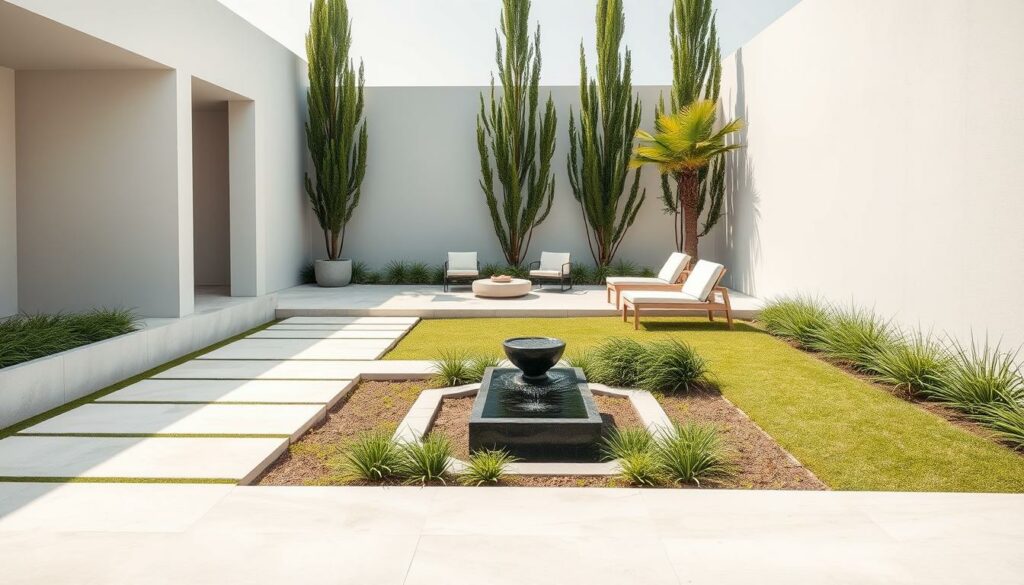
The minimalist approach cuts away excess to show structure, light, and calm. In a small yard, a thoughtful minimalist garden can turn clutter into peaceful rooms. This style uses modern garden design ideas like balance and open spaces to create restful landscapes.
Defining Minimalist Gardens
Minimalist gardens focus on simplicity and control. They use a few plants, clear sightlines, and geometric shapes to create visual order. Designers use modernist landscape ideas like repetition and empty space to form calm outdoor rooms.
Key Design Elements of Minimalism
Start with a small list of plants, using two to five species repeatedly. Evergreen plants like boxwood and Japanese holly provide year-round structure. Ornamental grasses such as Festuca and Pennisetum add movement and texture.
Hardscape materials are key. Bluestone, corten steel, gravel, and concrete pavers define paths and seating areas. Repeating materials creates rhythm, while clear sightlines strengthen the design.
Benefits of a Minimalist Approach
Minimalist gardens require little maintenance and use water wisely. A narrow palette lowers pruning and fertilizing, making gardens more sustainable. Allergy-friendly plants and accessible designs make these spaces easy to use.
This style fits well in urban yards where space is limited. A clean minimalist layout can make small spaces feel larger and more intentional. Modern landscaping combines naturally with minimalism for practical and stylish garden design.
| Design Focus | Typical Elements | Practical Benefit |
|---|---|---|
| Plant Palette | 2–5 recurring species; boxwood, Japanese holly, Festuca | Lower maintenance; year-round structure |
| Hardscape | Bluestone, concrete pavers, corten steel, gravel | Durability; clear circulation |
| Form & Texture | Geometric beds, repeated textures, negative space | Strong visual order; calm atmosphere |
| Water Use | Drought-tolerant species, mulching, efficient irrigation | Lower water bills; sustainable upkeep |
| Best Sites | Small urban lots, courtyards, rooftop terraces | Maximizes perceived space; modern curb appeal |
Integrating Native Plants into Design
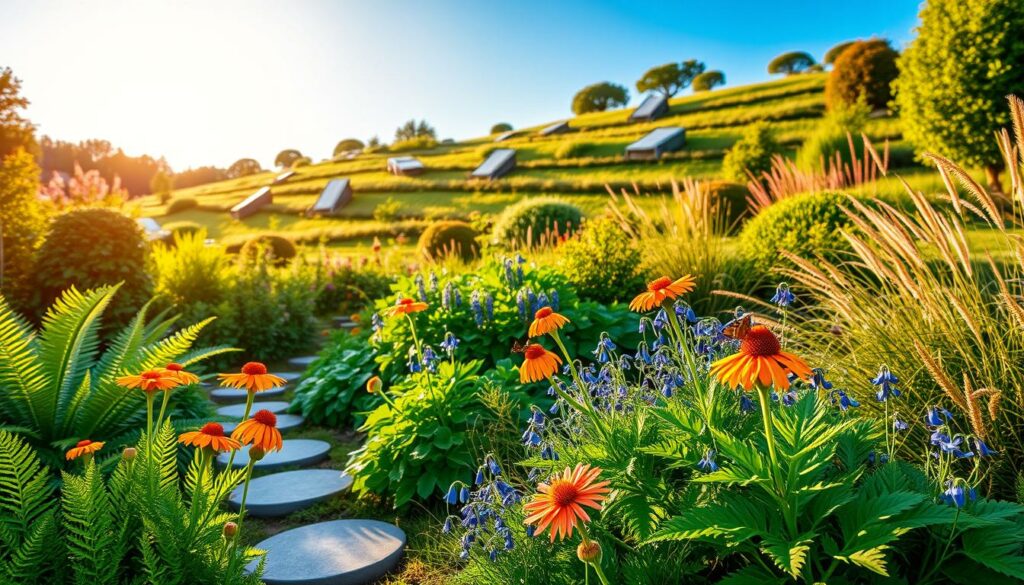
Integrating native plants into modern garden design builds resilience and brings clear ecological benefits. A garden with local species lowers maintenance and improves soil health. This method also supports pollinators and suits sustainable urban garden plans.
Advantages of Using Native Plants
Native plants fit regional climates well. They require less watering and fewer fertilizers, cutting water use and nutrient runoff.
Homeowners benefit from disease and pest resistance when using locally proven species. Wildlife, such as bees, butterflies, and birds, depend on native plants for food and shelter. This creates habitat corridors in towns and cities.
Native species improve soil structure and help microbial life. Their deep roots prevent erosion and boost water absorption during heavy rains. Gardens with native plants stay healthier through climate changes.
Popular Native Plants in the U.S.
Choosing plants by region helps ensure success. In the Eastern U.S., Echinacea, Asclepias tuberosa, and Ilex verticillata offer seasonal beauty and attract pollinators.
In the Midwest, Rudbeckia hirta, Panicum virgatum, and Amelanchier provide strong form and benefit wildlife. For the Southwest, try Salvia greggii, Agave species, and Muhlenbergia rigens for drought resistance and unique texture.
The Pacific Northwest favors Mahonia (Oregon grape), Camassia, and various Carex sedges for layered planting in moist areas. Check state Cooperative Extension offices, the USDA Plant Hardiness Zone map, or the Lady Bird Johnson Wildflower Center for exact regional lists and tips.
Creating Biodiversity in Small Spaces
Small yards can host diverse plant life with smart design. Layering canopy, shrub, understory, and groundcover creates vertical habitat without extra ground use. Native perennials and grasses fit well in containers and raised beds.
Pollinator pockets, short native meadow strips, and vines on trellises add habitat value. Mixing hardscape with plant groupings balances style and function while giving shelter to insects and small birds.
Local native plant nurseries and extension services suggest species fitting microclimates and lighting. Use their advice alongside sustainable garden solutions to support biodiversity in compact spaces.
| Region | Examples | Key Benefit |
|---|---|---|
| Eastern U.S. | Echinacea, Asclepias tuberosa, Ilex verticillata | Pollinator support and seasonal interest |
| Midwest | Rudbeckia hirta, Panicum virgatum, Amelanchier | Resilience to variable weather and wildlife forage |
| Southwest | Salvia greggii, Agave spp., Muhlenbergia rigens | Drought tolerance and strong architectural form |
| Pacific Northwest | Mahonia, Camassia, Carex species | Shade tolerance and year-round structure |
Sustainable Practices for Modern Gardens
Modern garden design benefits when sustainability is at the heart of planning. Small choices in materials, water, and soil care build resilient outdoor spaces.
These spaces save money and protect local ecosystems.
Eco-Friendly Materials and Supplies
Hardscape choices shape long-term impact. Recycled concrete pavers and permeable paving reduce runoff and extend surface life.
Corten steel is durable for edging. FSC-certified or reclaimed wood offers sustainable decking.
Low-VOC sealants and natural fiber textiles cut chemical emissions. Sustainably produced furniture, like teak from certified suppliers, supports ethical supply chains.
Buyers should choose reputable brands and local nurseries to lower transport emissions and help regional economies.
Water Conservation Techniques
Water conservation methods can greatly reduce irrigation needs. Xeriscaping and drought-tolerant plants require less watering.
Drip irrigation targets roots and cuts evaporation. Rain barrels and cisterns collect roof runoff for reuse.
Rain gardens and swales slow water and let it soak into the ground. Permeable surfaces help recharge groundwater.
Mulching keeps soil moist and controls weeds. Irrigate early morning and use timers or smart controllers for efficiency.
Many U.S. water departments offer rebates for efficient irrigation upgrades.
Importance of Soil Health
Healthy soil is the base of sustainable garden solutions. Soil testing through county services provides data for proper amendments.
Adding compost and organic matter feeds microbes that improve soil structure and nutrient cycling.
Cover cropping and no-till beds protect soil life and reduce erosion. Biochar and compost teas help microbial health.
Better soil reduces the need for synthetic fertilizers and cuts water usage over time.
Waste Reduction and Maintenance
Composting yard waste returns nutrients to garden beds and lowers landfill waste. Choosing perennials over annuals reduces planting and waste.
Integrated pest management cuts chemical use by combining monitoring, biological controls, and targeted treatments.
These sustainable practices support modern garden design that is beautiful, lasting, and resource-conscious.
Utilizing Vertical Gardening Techniques
Vertical gardening is a smart way to expand planting areas without taking up more ground space. It turns walls, fences, and balconies into productive green surfaces. This technique fits tight city lots and supports urban garden planning by using height and layering plants for year-round beauty.
Benefits of Vertical Gardening
Growing plants upward increases usable space and boosts yield per square foot. Plants also filter air and soften hard edges, improving air quality around homes. Vertical gardens create privacy screens and visual focal points.
They shape microclimates that can moderate heat near sunlit walls. This helps keep spaces cooler in summer.
Best Plants for Vertical Gardens
Edible plants good for vertical gardens include compact tomatoes, strawberries, and climbing beans. Herbs like basil, thyme, and oregano work well in shallow pockets. Ornamental plants such as nasturtiums, clematis, ferns, and Sedum add beauty to living walls.
Gardeners in coastal areas should choose salt-tolerant plants. Those in the Southwest need heat-hardy varieties. Local nurseries or extension services can suggest plants suited to your climate.
Creative Vertical Garden Structures
Modular living wall systems, like felt pockets and tray systems, make installation and upkeep easier. Trellises, arbors, and espalier trained along fences create elegant shapes. Cable green screens and pallet gardens offer low-cost options for renters.
Brands such as Woolly Pocket offer lightweight felt pockets for plants with shallow roots. Shelf-style stacks and trays make it easy to rotate crops and maintain drainage. Built-in drip irrigation and light soil help keep weight down.
Check load-bearing capacity before attaching to walls. Map sun exposure to match plants to light needs. Provide extra soil depth for bigger roots, plan for winter protection, and schedule regular fertilizing. Homeowners can hire local installers or use DIY kits based on budget and skill.
Outdoor Living Areas: Extension of Indoor Space
A yard can act like an extra room when planned with clear purpose. Contemporary landscaping ideas create zones for cooking, dining, lounging, play, and gardening. Thoughtful design focuses on smooth transitions, defined sightlines, and easy paths.
Durable surfaces support both entertaining and quiet relaxation. Choose materials that endure local weather and keep maintenance low. Consider sightlines from key interior points to keep the garden connected and functional.
Designing functional outdoor spaces
Start by mapping activity zones. Place the grill near the kitchen and dining area for easy serving. Set lounge seating where views and shade meet.
Add play or gardening areas away from traffic for safe movement. Define circulation with paving bands, low plants, or a change in material. Align pathways with entry points and keep transitions gradual for smooth movement.
Furniture options for outdoor comfort
Choose all-weather pieces like synthetic wicker, powder-coated aluminum, sustainably sourced teak, and composite furniture. Use cushions made from Sunbrella or other UV- and mildew-resistant fabrics for lasting comfort.
Modular sectional seating adapts to different group sizes. Include multipurpose items such as storage benches and convertible tables to save space. Brands like West Elm or Crate & Barrel offer modern options, and Wayfair has a wider selection.
Incorporating shade and shelter
Shade extends the usable hours and seasons outdoors. Options include pergolas with adjustable louvers, retractable awnings, umbrellas, and shade sails. Permanent pavilions or pergolas anchor patios and offer space for lighting and fans.
Add heating with patio heaters or fire pits to extend use into cooler months. Outdoor kitchens and covered dining areas make the yard feel like an added room. Always check local codes and permits before installing structures.
Comfort and durability planning
Plan drainage and use slip-resistant surfaces for safety. Choose materials rated for conditions like salt air or freeze-thaw cycles. Add insect-friendly plants and screened areas when needed.
Blending these elements lifts modern garden design into a practical, stylish home extension. Thoughtful outdoor living design turns trendy backyards into lasting spaces for everyday life.
Innovative Garden Lighting Solutions
Garden lighting changes a yard after dark. It extends usable space and highlights plants. It also helps people move safely.
This section shares practical options and design tips for modern garden lighting. The goal is to balance how things look and work.
Types of Lighting
Path lights give soft, steady light for walkways. Spotlights shine on trees and sculptures. Uplighting lights up trunks and walls.
Downlighting creates natural moonlight from pergolas or trees. String lights and step lights add charm and mark stairs. In-ground fixtures hide uplights for focal points.
Fixtures come in bronze, stainless steel, and powder-coated finishes. These are built to last. IP65 or higher ratings mean the lights survive wet areas well.
Solar-powered lights save on installation costs. They work well off-grid and need little maintenance.
Enhancing Ambiance with LED Lights
LEDs use much less energy than halogen bulbs. They last thousands of hours. Their color temperature is adjustable. They also support smooth dimming for layered lighting.
Warm white LEDs create cozy evening vibes on patios and seating areas. Cooler tones work for sleek terraces in modern yards. They support advanced garden styles.
Smart LED lights link to apps and voice control. This makes setting scenes easy. They pair well with lighting and climate gadgets for mood and comfort control.
Safety and Security Benefits
Good lighting cuts trip risks and helps nighttime navigation on steps and paths. Task lights at doors and gates improve safety when coming or going.
Layer lighting by combining path lights with accent uplights on plants. Motion sensors and timers save energy and scare off intruders.
Security system integration adds alerts and schedules. Follow dark-sky rules to reduce glare and protect neighbors and wildlife.
Design tips:
- Use three-point lighting for key plants: backlight, fill, and highlight.
- Hide fixtures to avoid glare and keep sightlines clean.
- Choose low-voltage transformers for safer, flexible layouts.
- Balance solar and wired solutions to match use and budget.
Modern garden lighting enhances design, safety, and usability. Smart choices support sleek aesthetics and work well with lighting and climate control gadgets. They help create memorable outdoor experiences.
Incorporating Smart Technology in Gardens
Smart tools are changing how people care for their outdoor spaces. They fit well into modern garden designs. These devices keep plants healthy while saving time and water.
Smart irrigation systems use weather-based controllers and soil sensors to water plants only as needed. Brands like Rachio, Rain Bird, and Hunter adjust watering based on rainfall and soil data. This leads to water savings and healthier plants.
Installation includes mounting the controller, wiring valves, placing sensors in roots, and connecting to Wi-Fi. Many U.S. cities offer rebates for efficient controllers. This helps reduce upfront costs.
Garden monitoring apps collect all plant care in one place. They offer reminders, pest identification, and track microclimates. Apps like GrowIt!, PlantSnap, and OpenGarden provide plant ID and community advice. They can connect with sensors and irrigation to use local data for smart choices.
Linking apps to hardware gives precise, local feedback. Users track soil moisture, get pest alerts, and receive customized care plans. This detail supports advanced garden designs while keeping maintenance easy.
Lighting and climate gadgets make outdoor areas nicer and more comfortable. Smart lights like Philips Hue Outdoor and LIFX allow scheduling and color changes for evening moods. Remote heaters and smart fans help extend use through cooler seasons.
Serious gardeners also use climate controllers in greenhouses to manage temperature and humidity. Smart plugs and voice helpers simplify these routines. These tools help create flexible outdoor spaces for year-round enjoyment.
Security, privacy, and reliability are important with connected devices. Use a secure network, strong passwords, and update firmware often to reduce risks. Battery-backed controllers and local fail-safes keep systems working during power outages.
Balance is key. Too many devices can cause complexity. Focus on water savings, plant health, comfort, and good outdoor use. Smart choices keep gardens efficient without extra tech layers.
| Feature | Representative Brands | Primary Benefit | Typical Cost Range |
|---|---|---|---|
| Weather-based irrigation controller | Rachio, Rain Bird | Automated schedule adjustments for water savings | $100–$300 |
| Soil moisture sensor | Hunter, Vegetronix | Water only when root zones need it | $50–$200 |
| Garden monitoring app | GrowIt!, PlantSnap, OpenGarden | Plant ID, care reminders, microclimate tracking | Free–$50/year |
| Smart outdoor lighting | Philips Hue Outdoor, LIFX | Color control and scheduled ambiance | $50–$250 per fixture |
| Climate controller (greenhouse) | Inkbird, Titan Controls | Automated temp and humidity regulation | $100–$400 |
| Smart plugs and switches | TP-Link, Wemo | Remote power and automation for heaters or fans | $20–$60 |
Color Schemes and Plant Combinations
The right color choices shape mood, scale, and movement in modern garden design. Thoughtful color schemes guide the eye and create depth. They also make small yards feel larger.
This short guide shows practical ways to pair plants, plan seasons, and use color. It helps you achieve cutting-edge garden aesthetics.
Understanding Color Theory in Gardening
Gardeners use complementary, analogous, and monochromatic schemes to set tone. Complementary mixes like orange and blue create dramatic contrast. They also draw focus to garden features.
Analogous palettes such as blue, purple, and pink offer calm transitions. A monochromatic plan in blues and silvers creates a cool, modern feel.
Color choice affects perceived space. Light, cool hues open areas, while warm, saturated tones bring elements forward. Designers balance flower color with foliage for harmony.
This balance helps reinforce cutting-edge garden aesthetics.
Mixing Annuals and Perennials
Perennials form a reliable backbone. Salvia, Echinacea, and Heuchera provide structure and repeat blooms. Annuals add flexibility and instant impact.
Petunias, marigolds, and cosmos fill gaps and change yearly. This provides fresh looks in the garden.
Succession planting keeps blooms continuous. Start with spring bulbs and early perennials, then add summer annuals. Layer heights and textures carefully.
Taller perennials anchor the back, and shorter annuals edge paths. This approach maximizes color schemes. It supports mixing annuals and perennials effectively.
Seasonal Color Planning
A seasonal plan ensures interest across the year. Spring bulbs like tulips and daffodils start the show. Summer perennials supply sustained color.
Autumn features come from maples and ornamental grasses. Winter interest relies on evergreen form and berries from holly or cotoneaster.
Match plants to USDA hardiness zones for regional success. In cold zones, choose bulbs and hardy perennials. Warm climates extend color with heat-tolerant annuals.
Use a planting calendar tied to zones. It guides seasonal color planning effectively.
Practical tips reinforce any scheme: test small plots before committing, photograph combinations at different light levels, and mind scale and contrast.
Emphasize foliage color as much as blooms to sustain depth between flower flushes.
| Goal | Plant Examples | Best Use |
|---|---|---|
| Create a cool, modern palette | Russian sage, Lavender, Artemisia | Monochromatic blues and silvers for sleek modern garden design |
| High-impact contrast | Calendula, Salvia, Blue asters | Complementary pairings for focal beds and containers |
| Continuous seasonal color | Tulips, Echinacea, Sedum, Holly | Succession plan that supports seasonal color planning year-round |
| Flexible, changeable borders | Petunias, Marigolds, Cosmos with Heuchera | Mixing annuals and perennials for quick refresh and long-term structure |
Hardscaping Trends in Modern Gardens
The shift toward clean lines and low-maintenance yards has made hardscaping central to modern garden design. Homeowners choose durable surfaces that frame plantings and control stormwater. They also create clear pathways for easy movement.
Small changes like new paving patterns or a narrow rill can reshape a yard without full reconstruction.
Popular materials now include poured concrete with refined finishes, large-format porcelain pavers, bluestone, and decomposed granite. Other choices are corten steel and sustainably sourced timber.
Each option differs in durability, maintenance, heat retention, slip resistance, and cost. Permeable materials like open-joint pavers or gravel support stormwater management and reduce runoff.
Designers recommend matching materials to site conditions and how the space will be used. Denser stone or concrete works best for high-traffic zones. Shaded, wet corners need slip-resistant surfaces.
Timber decks require treatment or naturally rot-resistant wood, like ipe, to last longer.
Creating pathways and patios begins with clear design rules. Maintain comfortable widths and plan smooth slopes for ADA-friendly access. Use material transitions to define different zones.
Path widths range from 3 feet for single-file use to 5 feet for two people to pass comfortably. Patio size depends on purpose; a dining area for six needs about 12 by 12 feet.
A lounge with seating may require 14 by 16 feet.
Pattern choices add character to hardscapes. Running bond and basketweave offer classic looks. Large stepping stones with gravel or moss joints create a soft, modern feel.
Joint materials affect drainage and appearance. Pea gravel, polymeric sand, or planted moss each provide different textures and maintenance needs.
Water features in hardscape have shifted from ornate to minimal designs. Reflecting pools, narrow rills, sculptural bubblers, and planted-edge ponds fit modern gardens.
Sound, size, and placement shape their impact. A narrow rill can lead the eye along a path. A small reflecting pool can anchor a courtyard.
Mechanical needs matter a lot. Pumps, filters, and frost protection should fit the feature’s size and local climate.
Easy access for winterizing and cleaning helps reduce upkeep. Good siting prevents unwanted insect habitats and splash that could damage nearby paving.
Integration and sustainability connect all these elements. Permeable paving, rain capture, and built-in planters soften hard edges. They also help manage runoff.
Combining planted swales with corten steel edges or using decomposed granite paths balances beauty and function.
For complex grading or drainage, work with a licensed landscape architect or certified contractor. They ensure the design works well.
These professionals coordinate structural details, specify pumps and filtration, and create drawings that protect your investment and the environment.
| Material | Pros | Cons | Best Uses |
|---|---|---|---|
| Poured Concrete (Refined Finish) | Durable, customizable finish, cost-effective | Can retain heat, needs control joints | Driveways, large patios, modern courtyards |
| Large-Format Porcelain Pavers | Low maintenance, wide color range, slip resistance | Higher material cost, requires proper base | Patios, terraces, rooftop gardens |
| Bluestone | Natural look, durable, cool underfoot | Higher cost, variable thickness | Walkways, elegant patios |
| Decomposed Granite | Permeable, affordable, natural texture | Requires edging, can erode without care | Informal paths, seating areas |
| Corten Steel | Striking patina, long-lasting as an edge | Can stain adjacent materials, cost varies | Raised planters, edging, sculptural features |
| Sustainably Sourced Timber (e.g., Ipe) | Warm aesthetic, renewable options, comfortable | Requires sealing, price varies by species | Decks, intimate seating areas |
The Impact of Art and Sculpture in Gardens
Art in gardens can turn a yard into a special, meaningful place. In modern designs, sculptures make good visual anchors. They guide movement and frame views clearly.
Thoughtful placement helps bring innovative landscape ideas into everyday outdoor life.
Choosing the Right Pieces
Select art based on size, material, and how much care it needs. Bronze, stainless steel, stone, and treated wood each last different lengths of time. They also change color or texture in unique ways.
Match geometric art with simple garden beds. Pair natural shapes with wild, naturalistic plants. Buy from local artists, galleries, or trusted garden art sellers for quality and authenticity.
Benefits of Focal Points
Focal points like sculptures, special trees, or water features set a clear visual order. They draw the eye along paths and help guide movement. These features can also hide utility areas or unattractive views.
Use one strong artwork per garden section. Add smaller accents to support it. This approach creates clarity without making the space feel crowded.
Balancing Natural and Artistic Elements
Blend art with plants by repeating colors, textures, or materials. Place pieces on low stands, inside plant beds, or near evergreens so they stay visible year-round. Try temporary art first before deciding to keep it.
Don’t overcrowd the garden; this keeps the space balanced with nature’s rhythm. Also, secure art pieces well, prevent theft, and follow local rules.
Using temporary exhibits lets homeowners update their garden’s story. This keeps the mix of living plants and art fresh and balanced.