

More than 60% of new plant owners give up within a year because their houseplants fail. Many common varieties survive neglect and bounce back with little fuss. This article focuses on Plants That Are Hard to Kill. They are perfect for readers who want easy plants to care for without daily attention.
“Hard to kill” means a plant tolerates irregular watering. It adapts to different light levels, resists pests, and recovers from occasional neglect. These houseplants make ideal companions for busy people, offices, and beginners.
Low maintenance indoor plants offer clear benefits beyond toughness. They improve indoor air quality, add visual appeal, and boost mood with minimal care. This guide covers popular categories like succulents, snake plants, pothos, ZZ plants, spider plants, and peace lilies. It also shows how to choose and maintain them.
Key Takeaways
- Plants That Are Hard to Kill tolerate neglect and variable light.
- Resilient houseplants like snake plants and pothos suit beginners and busy households.
- Low maintenance plants improve air quality and reduce stress with little effort.
- Choose species that resist pests and recover from irregular watering.
- This guide highlights easy plants to care for with practical tips to keep them thriving.
Introduction to Low-Maintenance Plants
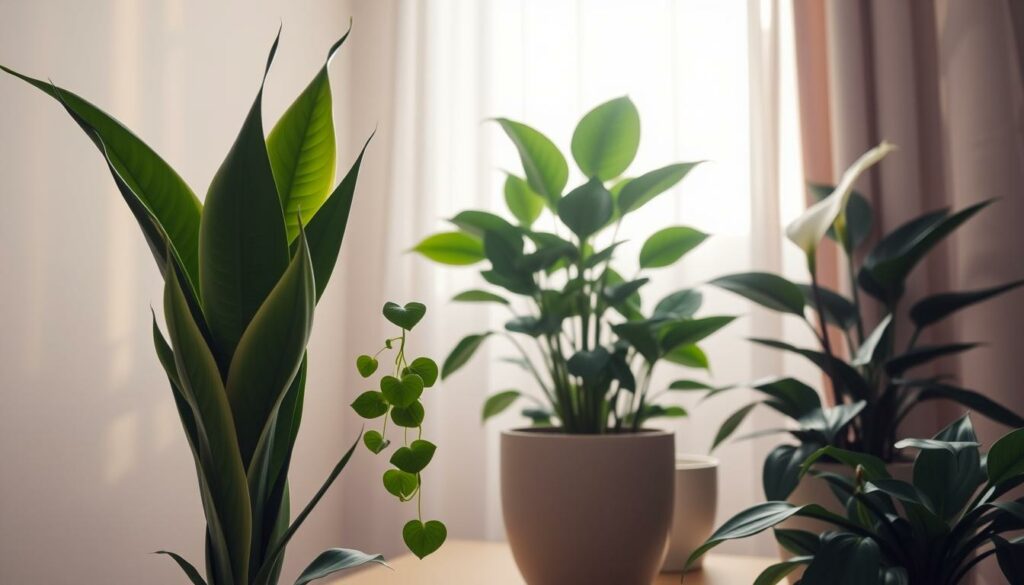
Low maintenance indoor plants need little water and can handle different light levels. They require rare fertilizing and repotting. These plants suit busy schedules and small spaces well.
People can enjoy greenery without needing much experience. Interest in beginner-friendly plants has grown with urban living and busy routines. Many desks are now placed near windows due to remote work.
Biophilic design has made plants part of home décor. Builders, apartments, and brands like IKEA and The Sill see more demand for easy-care plants.
Many low-effort plants share traits. Succulents store water to survive dry spells. Slow growth means less pruning and repotting.
Tough leaves can handle some neglect. Flexible root systems grow well in shallow pots and adjust to moisture changes.
Indoor environments in the U.S. affect plant choices. Apartment windows provide low to moderate light, and temperatures stay between 65–75°F.
These conditions favor hardy plants like snake plants, pothos, and ZZ plants. They grow well in dim light and steady warmth.
This guide offers practical care tips and plant profiles. It explains hardiness zones and gives troubleshooting advice.
Readers will find step-by-step care instructions and comparisons of popular species. The guide also offers quick fixes for common issues with low-maintenance plants.
Benefits of Having Easy Plants to Care For
Bringing resilient houseplants into a home or office gives both practical and emotional benefits. Easy plants fit busy routines well while enhancing indoor spaces. Low maintenance and hardy indoor plants provide a noticeable boost without needing daily care.
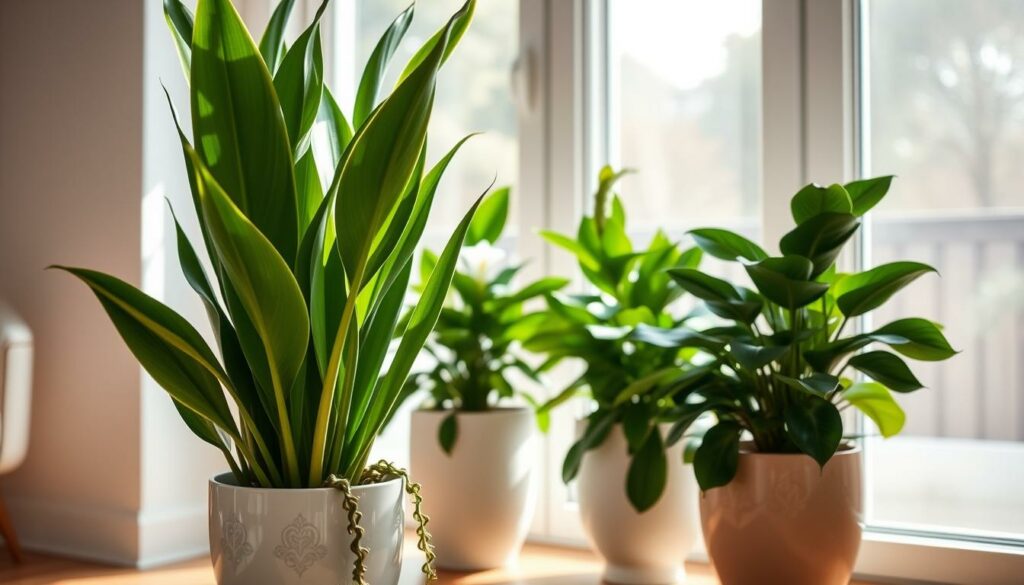
Many studies, like NASA’s clean air research, show common houseplants remove harmful chemicals from indoor air. Snake plant (Sansevieria), pothos (Epipremnum aureum), and peace lily (Spathiphyllum) are low maintenance plants that clean air. These plants do not replace ventilation or air purifiers but help create a healthier microclimate with good airflow.
Enhancing Indoor Air Quality
Placing hardy indoor plants where people spend time reduces stuffiness and some airborne pollutants. Small groups of plants near workspaces or living rooms increase their positive effects. Choosing species known for air filtration keeps care simple and effective.
Creating a Relaxing Environment
Visual greenery lowers stress and boosts mood, focus, and productivity. Studies show plants help with faster mental recovery and better concentration. Easy plants remove the stress of complex care, allowing owners to enjoy these benefits peacefully.
To maximize calm, place resilient plants near desks, on nightstands, or in bathrooms with indirect light. Grouping low maintenance plants creates soothing focal points that fit most rooms and routines.
Selecting the Right Plants for Beginners
Choosing the right houseplants sets new owners up for success. This short guide helps match living conditions and lifestyle with beginner-friendly plants.
It covers light, watering, space, pet safety, and simple maintenance to make plant care approachable.
Factors to Consider When Choosing
Light availability is the first test. Identify spots that get bright direct, bright indirect, or low light.
Use a smartphone light meter app or watch sunlight through a day to know what suits each plant.
Watering schedule matters next. Pick plants that fit a weekly, biweekly, or monthly routine based on watering habits.
Match a plant’s needs to your real habits to avoid over- or under-watering.
Space and growth habit affect placement. Think about trailing versus upright types and the mature size of a plant.
For example, pothos trails and can hang, snake plants grow upright, and ZZ plants stay compact in small pots.
Pet safety should not be overlooked. Many popular easy-to-care-for plants like pothos and peace lily are toxic to cats and dogs.
Choose pet-safe alternatives such as spider plant, or check ASPCA resources before buying.
Maintenance tasks include pruning, repotting, and fertilizing. Low-effort plants need fewer interventions.
Think about how often you want to prune or repot and select low-effort plants accordingly.
Popular Choices for New Plant Owners
A short list of reliable starters helps build confidence. Each plant recommendation includes a one-line reason to keep selection simple.
- Snake plant — tolerates neglect and thrives in varied light.
- Pothos — versatile grower that adapts to many conditions.
- ZZ plant — drought-tolerant and compact for small spaces.
- Spider plant — air-purifying, produces pups for propagation.
- Peace lily — forgives irregular watering and produces blooms.
- Succulents — store water and stay compact for windowsills.
Begin with one or two species to learn routine care before expanding your collection. Use beginner plant care tips to track light and watering schedules and set reminders.
Where to buy healthy starter plants in the United States: local nurseries, big-box stores like Home Depot and Lowe’s, reputable online sellers such as The Sill and Bloomscape, and farmer’s markets for regionally adapted specimens.
| Plant | Light | Watering Frequency | Pet Safety | Why It’s Good for Beginners |
|---|---|---|---|---|
| Snake plant | Low to bright indirect | Monthly | Toxic to pets | Tolerates neglect and irregular care |
| Pothos | Low to bright indirect | Biweekly | Toxic to pets | Fast grower, adaptable to many spots |
| ZZ plant | Low to bright indirect | Monthly | Toxic to pets | Drought-tolerant and compact |
| Spider plant | Bright indirect | Weekly to biweekly | Mildly toxic | Easy propagation and air-purifying |
| Peace lily | Low to bright indirect | Weekly | Toxic to pets | Shows when it needs water and blooms |
| Succulents | Bright direct to bright indirect | Biweekly to monthly | Varies by species | Store water and suit sunny windowsills |
Succulents: The Ideal Choice for Busy Individuals
Succulents provide a practical way to add greenery without much upkeep. These indoor plants store water in fleshy leaves. This makes them forgiving when schedules get hectic.
They fit well in apartments, offices, and shelves where light levels vary.
Types of Low-Care Succulents
Common easy succulents include Echeveria, Haworthia, Sedum, Aloe vera, and Crassula (jade plant). Echeveria has compact rosette shapes and shows bright colors in sunlight.
Haworthia stays small and tolerates low light. It is great for desks and simple care.
Sedum offers trailing forms for hanging pots and grows well in mixed light. Aloe vera needs bright light and has medicinal uses.
However, it is toxic to cats and dogs. Check ASPCA guidance before placing it near pets. Crassula tolerates indoor heat and adapts to common household conditions.
How to Water and Care for Succulents
Use the “soak and dry” method: water thoroughly until it drains. Then wait for the soil to dry completely before watering again.
This prevents root rot. It also matches how succulents store moisture.
Choose well-draining soil mixes and pots with drainage holes. A cactus/succulent mix works well.
You can also amend potting soil with perlite to improve drainage. Most succulents prefer bright direct to bright indirect light.
Rotate pots to encourage even growth and prevent stretching. In winter, reduce watering and stop fertilizing.
Keep temperatures above 50°F to avoid stress. Watch for overwatering signs like soft, mushy leaves or root rot.
Wrinkled leaves usually mean underwatering. Fix this with a proper soak of water.
Snake Plant: The Almost Indestructible Plant
The Snake Plant is one of the easiest plants for busy homes.
It grows well in bedrooms, offices, and living rooms with little care.
Many growers call it one of the most resilient houseplants available today.
Characteristics of the Species
Known as Sansevieria and now Dracaena trifasciata, it has stiff, upright leaves with attractive variegation.
The leaves range from deep green to chartreuse bands and form tight rosettes ideal for narrow spaces.
This plant tolerates low to bright indirect light and survives many temperature ranges.
The Snake Plant tolerates drought well and needs little feeding.
It produces oxygen at night and removes common indoor pollutants.
This makes it perfect for bedrooms or studies.
It rarely has pest problems, adding to its popularity as a reliable indoor plant.
Practical Tips for Successful Growth
Water the plant sparingly and let the soil dry completely between waterings.
Overwatering is the main risk; in winter, water even less to avoid root rot.
Use a well-draining potting mix and a shallow pot if space is small.
The roots like snug containers and usually need repotting only every two to three years.
Place the plant in bright, indirect light for best growth.
It can survive low light but grows slowly in dim conditions.
Avoid long exposure to direct afternoon sun, which can scorch the leaves.
For pests like mealybugs or scale, use insecticidal soap or neem oil as directed.
Propagation is easy and rewarding.
You can divide clumps during repotting to grow new plants.
Leaf cuttings root well if kept moist in a light medium.
These features make the Snake Plant a favorite among easy-care and tough houseplants.
Pothos: Versatile and Resilient
Pothos is one of the easiest houseplants for new plant owners to grow. It suits many interiors and appeals to people who want low-fuss care. Its trailing vines look great in hanging baskets, on shelves, or up moss poles for vertical impact.
Pothos is highly low maintenance. It grows from a single stem cutting, with roots forming in water or soil. This makes it perfect for sharing with friends and growing your collection.
Different Varieties of Pothos
Golden Pothos has classic heart-shaped leaves with yellow variegation. It tolerates dim rooms well and adapts easily. Marble Queen shows bold white variegation and likes bright, indirect light to keep colors sharp.
Neon Pothos has bright chartreuse leaves to lighten dark corners. Satin Pothos features scalloped, lightly silvered leaves and grows compactly. All these have a trailing habit, good for hanging pots or training up supports.
Each variety differs a bit in growth speed and light needs, offering many options for homes. Propagation stays easy for all, making them great beginner plants.
Light and Water Requirements
Pothos likes bright, indirect light but can survive in low light. Direct afternoon sun may scorch leaves and fade variegation. The best spot is near east or north windows or behind sheer curtains.
Water when the top 1–2 inches of soil feel dry. Too much water risks root rot, so use well-draining soil. Feed monthly with balanced fertilizer in spring and summer to keep growth steady.
Pothos contains calcium oxalate crystals, which are toxic if eaten by pets or people. Place plants out of reach from curious cats or small children. This caution does not lessen its status as a top beginner-friendly, low-maintenance houseplant.
ZZ Plant: A Hardy Indoor Companion
The ZZ Plant brings reliable greenery to homes and offices. It stands out with glossy, waxy leaves and thick rhizomes that store water.
This toughness makes it one of the best low-effort plants for busy lives and shared spaces.
The plant tolerates dim corners and fluorescent office light. It responds well to moderate indirect sun.
It ranks high among easy-to-care-for plants because it bounces back from missed waterings and adapts to indoor conditions.
Unique Features of the ZZ Plant
Zamioculcas zamiifolia stores moisture in rhizomes, allowing long gaps between watering. The glossy leaves resist dust and stay neat with occasional wiping.
All parts of the plant are toxic if ingested. Gloves are recommended for sensitive skin and homes with pets or children.
The ZZ Plant handles low light and office environments well. Its slow, steady growth suits those who want green impact without constant care.
Minimal Care Needed for ZZ Plants
Water sparingly and let the soil dry out between waterings. In many homes, watering every two to three weeks works well.
Use well-draining potting mix to avoid soil that holds excess moisture. This helps prevent root rot.
Light feeding in spring supports growth. Remove yellow leaves and wipe foliage to keep the plant healthy.
Overwatering is the most common problem. Signs include yellowing and mushy stems, which mean you should repot and trim affected roots.
| Care Aspect | Best Practice | Why It Matters |
|---|---|---|
| Watering | Allow soil to dry; water every 2–3 weeks | Prevents root rot and suits the rhizome’s water storage |
| Light | Low to moderate indirect light | Supports steady growth without leaf scorch |
| Soil & Potting | Well-draining mix with aeration | Reduces overwatering risk and improves root health |
| Fertilizing | Light feeding in spring | Boosts growth while avoiding nutrient burn |
| Maintenance | Wipe leaves, remove yellowing stems | Keeps foliage attractive and checks pests |
| Safety | Use gloves if handling; keep away from pets | Prevents accidental ingestion and skin irritation |
Spider Plant: Natural Pest Control
The Spider Plant offers useful benefits and easy care, making it perfect for new plant owners. It is one of the easiest plants to care for. Many beginners choose it as a popular, low-maintenance indoor plant for apartments and offices.
Spider plants improve indoor air quality by removing pollutants like formaldehyde and xylene. They produce many small plantlets called spiderettes. These make it easy to propagate and share with others. The American Society for the Prevention of Cruelty to Animals says they are safe for cats and dogs. However, chewing the plant can cause mild stomach upset in some pets.
Benefits of Spider Plants
Spider plants purify the air, making them great for bedrooms and workspaces. Their plantlets allow easy propagation, turning one pot into many plants. Their appearance works well in hanging baskets, shelves, and tabletops, adding style with little effort.
Growing Conditions for Spider Plants
Spider plants need bright, indirect light but can handle lower light. Avoid strong direct sunlight to prevent leaf burn.
Water when the soil’s top inch feels dry. Keep soil moist but never waterlogged. Water less often in winter to match slower growth.
Use well-draining soil and feed monthly with balanced fertilizer during active growth. They prefer moderate humidity and temperatures between 65 and 75°F. Misting or placing the pot in a bathroom can help increase humidity.
Brown leaf tips often result from fluoride in tap water, low humidity, or too much fertilizer. Use filtered or distilled water if possible. Flush the soil occasionally to clear out excess salts.
Peace Lily: Beauty with Ease
The Peace Lily has glossy green leaves and white spathes that brighten rooms with little fuss. It is one of the easiest plants to care for. Many casual plant owners like it because it is forgiving and very resilient indoors.
The plant prefers bright, indirect light but can live in lower light found in offices and living rooms. Avoid long exposure to direct sun, as it can bleach the leaves. Water when the topsoil feels slightly dry to keep soil moist but not soggy.
Use well-draining, nutrient-rich potting mix. Feed the plant with a balanced houseplant fertilizer every six to eight weeks during growing season. Wilting usually means the plant is thirsty and it recovers quickly after watering. Keep it away from pets and children because it has calcium oxalate crystals that cause irritation if eaten.
Care Requirements
- Light: bright, indirect; tolerates low light
- Water: consistent moisture; avoid waterlogged soil
- Soil: well-draining, nutrient-rich mix
- Feeding: balanced fertilizer every 6–8 weeks in spring and summer
- Toxicity: contains calcium oxalate; keep away from pets and children
Blooming Tips
To encourage spathes, keep moisture steady and feed regularly in bright indirect light. Mature plants bloom more reliably. Remove yellow or brown spathes at the base to keep the plant neat and invite new growth.
Brown leaf tips can mean low humidity or fluoride sensitivity in tap water. Using distilled or filtered water often helps. Many peace lilies bloom in spring, while some bloom year-round if conditions stay steady.
| Feature | Recommendation | Benefit |
|---|---|---|
| Light | Bright, indirect; avoid direct sun | Prevents leaf bleaching and supports blooms |
| Watering | Keep soil consistently moist but not soggy | Quick recovery from wilting; healthier foliage |
| Soil & Feeding | Well-draining potting mix; feed every 6–8 weeks | Promotes growth and flowering |
| Maintenance | Prune spent spathes and yellow leaves | Encourages new blooms and tidy appearance |
| Special Care | Use distilled water if tips brown; keep away from pets | Reduces leaf tip burn and prevents poisoning risks |
Understanding Plant Hardiness Zones
Gardeners who move houseplants outdoors or place pots on porches benefit from knowing plant hardiness zones. The USDA map groups regions by average annual minimum winter temperatures. This system helps when choosing hardy indoor plants for outdoor spots or summer displays.
Microclimates affect how plants do. A sunroom, balcony, or urban heat island can keep nights warmer. These spots help many easy plants survive where the zone map alone would not predict.
Watching local conditions reduces risk when you move houseplants outdoors. This helps protect the plants better.
Acclimation is important when moving plants outside. Start by placing pots in dappled light. Increase sun exposure over several days. Avoid leaving plants out overnight if temperatures get too low.
These beginner plant care tips protect the leaves and roots during the transition. They keep plants safe and healthy.
Importance of Hardiness in Plant Care
Knowing a plant’s hardiness stops cold damage and poor growth. Many common houseplants are tropical. They do not tolerate freezing temperatures. Understanding zones helps you plan for screened porches, cold-hardy plants, and seasonal moves.
Resources for Plant Hardiness Information
- Consult the USDA Plant Hardiness Zone Map for baseline zone data.
- Check the Arbor Day Foundation zone tool for interactive overlays and local context.
- Contact local cooperative extension services at land-grant universities for region-specific advice.
- Visit regional nurseries to learn which hardy indoor plants succeed in nearby microclimates.
Apps and online maps with GPS overlays give quick location references. When unsure, test one or two plants in a protected spot. These small trials follow beginner plant care tips. They build confidence with easy plants to care for.
Quick Tips for Successful Plant Care
New plant owners benefit from a short, practical guide that focuses on steady habits. This section shares clear beginner plant care tips to help people keep low-effort plants healthy.
Follow simple routines and observe plants often to catch problems early.
Many mistakes come from good intentions. Overwatering is the most common issue. Soggy soil and pots without drainage invite root rot.
Choose containers with drainage holes and use well-draining potting mix when growing easy plants to care for.
Common Mistakes New Plant Owners Make
Improper lighting can spoil a plant quickly. Placing a low-light species in direct sun or keeping a sun-loving plant in dim rooms stresses the foliage.
Match each plant’s light needs to its location. Move pots if leaves look pale or scorched.
Neglecting pests undermines success with simple care plants. Inspect new purchases for spider mites, mealybugs, and scale.
Quarantine new arrivals for a week and check leaves and stems before mixing them with other houseplants.
Overfertilizing damages roots and causes salt buildup. Feed sparingly, using a balanced houseplant fertilizer at half strength during the growing season.
Flush the soil occasionally to remove excess salts and keep low-effort plants thriving.
Wrong pot choice leads to water stress. Oversized pots hold too much moisture and keep roots wet.
Select pots suited to the plant’s root ball. Ensure drainage so water can pass through freely.
Signs of Stress in Easy Care Plants
Yellowing leaves can mean overwatering, nutrient deficiency, or normal aging. Check soil moisture first before changing light or fertilizer routines for simple care plants.
Wilting often signals underwatering but may point to root disease when soil is wet.
Feel the root zone and inspect the potting mix to tell which issue is present.
Brown tips or edges usually reflect low humidity, fluoride in tap water, or fertilizer salts.
Trim damaged tips and try distilled or rainwater if tap water seems to cause spotting on low-effort plants.
Pale or leggy growth shows insufficient light. Move the plant to brighter indirect light.
Rotate it regularly so growth stays even among easy plants to care for.
Presence of pests appears as sticky residue, webbing, or visible insects.
Treat immediately with insecticidal soap, neem oil, or careful manual removal. Early action stops small infestations from spreading.
| Problem | Likely Cause | Quick Fix |
|---|---|---|
| Yellow Leaves | Overwatering, nutrient lack, natural aging | Check moisture, reduce watering, feed lightly |
| Wilting | Underwatering or root issues | Feel soil, water if dry, inspect roots if soggy |
| Brown Tips | Low humidity, fluoride, salt buildup | Use filtered water, trim tips, flush soil |
| Leggy Growth | Insufficient light | Move to brighter indirect light, rotate pot |
| Pest Signs | Spider mites, mealybugs, scale | Quarantine, treat with neem oil or insecticidal soap |
Conclusion: Embracing Plant Parenthood
Starting a collection of resilient houseplants is a simple way to build confidence. Beginner-friendly and low maintenance indoor plants help new owners learn core skills. These easy plants provide a stable base before trying more demanding varieties.
Encouraging Future Plant Adventures
Begin with one or two species like snake plant or pothos. Track watering and light and watch how they respond over weeks. You can try propagation and new plants as you gain experience.
Joining local plant groups, social media communities, or workshops at nurseries like The Sill or botanical gardens offers useful hands-on learning.
The Joy of Caring for Easy Plants
Low maintenance indoor plants bring steady rewards: improved mood, accomplishment, and nicer living spaces. Watching a houseplant recover after care changes is very satisfying. Consistent light, proper watering, and occasional feeding help beginner plants thrive with little time needed.