

Nearly 70% of home lawns in temperate U.S. zones improve within one growing season. This happens when homeowners follow a seasonal fertilizing plan. Timing and product choice both matter for success.
This guide explains seasonal fertilizing as matching fertilizer type, nutrient ratios, and timing to plant growth and regional conditions. It is built for homeowners, landscapers, and hobby gardeners. This helps create a clear lawn care schedule with the best times to fertilize grass in temperate U.S. zones.
Readers will learn how seasonal fertilizing improves turf color and density. It also strengthens root systems, reduces weed and pest pressure, and improves drought resilience. The guide covers timing, nutrient needs by season, and choices between organic and synthetic fertilizers like Milorganite and Espoma.
It also explains quick- and slow-release fertilizers, soil testing, product recommendations such as Scotts, application techniques, and common mistakes to avoid.
Before using any fertilizer, readers should check municipal fertilizer bans and watershed rules. They should also consult local extension services for specific advice. Following a careful lawn care calendar leads to healthier lawns and sustainable results.
Key Takeaways
- Seasonal fertilizing aligns nutrients with plant growth to improve turf health and reduce waste.
- A clear lawn care schedule helps determine the best time to fertilize grass in temperate U.S. zones.
- Choose products (organic or synthetic) and release types based on season and soil test results.
- Check local regulations and consult extension services before applying fertilizer.
- Proper timing and technique reduce runoff and support drought resilience and pest resistance.
Understanding Seasonal Fertilizing
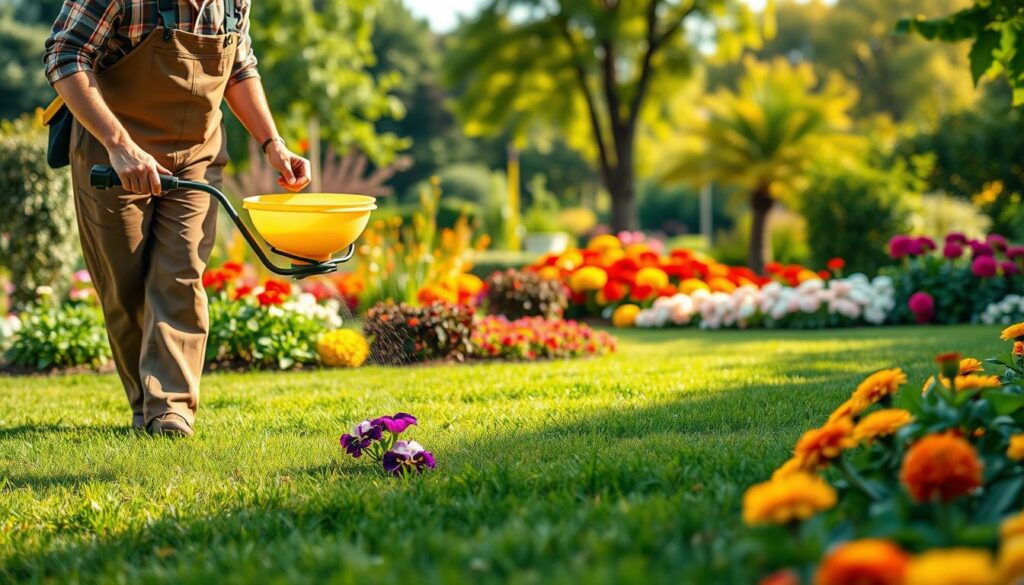
Seasonal fertilizing matches nutrients to plant growth cycles. This helps improve turf health and cuts down on waste. Following lawn maintenance tips leads to greener, stronger yards and less risk of runoff.
Local climate, grass type, and soil tests guide when and what fertilizer to use. This creates the best outcomes for your lawn.
Importance of Timing
Cool-season grasses like tall fescue and Kentucky bluegrass grow most in spring and early fall. They need more nitrogen at these times to support leaf growth and color.
Warm-season grasses such as Bermuda and zoysia grow fast from late spring through summer. Fertilizing then helps them green up well.
Fertilizing with too much nitrogen during dormancy causes weak shoots and higher disease risk. It can also lead to nutrient runoff, harming waterways. This mistake harms lawn health and defeats simple lawn care tips.
Fertilizing schedules vary across the US. Northern lawns follow a different calendar from southern ones. Those in transition zones should check with county extension services for local advice.
Nutrient Needs by Season
The main nutrients are nitrogen (N), phosphorus (P), and potassium (K). Nitrogen fuels leaf growth and color. Phosphorus helps roots develop. Potassium boosts stress tolerance and cold hardiness.
In spring, use a balanced fertilizer to promote top growth. Starter formulas with moderate phosphorus help new lawns establish roots better.
Use caution with nitrogen in summer. Split and lower doses reduce heat stress. Boosting potassium helps lawns handle heat and dry spells.
In fall, apply lower nitrogen and more potassium. This builds root reserves and preps for winter. Aeration with slow-release nitrogen gives steady feeding and improves spring recovery.
Winter needs little fertilizer. Focus on soil health and organic matter. In some areas, a late-season potassium boost helps cold tolerance before dormancy.
Micronutrients like iron, manganese, and sulfur matter if soil locks up nutrients. Iron fixes yellowing in high-pH soils. Soil tests find any micronutrient gaps to avoid unnecessary treatments.
Soil testing is key for any fertilizer plan. Use USDA extension labs, commercial services, or kits like Rapitest to check pH and nutrients before applying fertilizer.
| Season | Primary Focus | Typical Nutrient Emphasis |
|---|---|---|
| Spring | Top growth and establishment | Balanced N, moderate P for new seed, steady K |
| Summer | Stress management | Lower or split N rates, increased K for heat/drought tolerance |
| Fall | Root building and winter prep | Lower N, higher K, slow-release N after aeration |
| Winter | Soil health and minimal feeding | Minimal N, focus on organic matter and pre-winter K where appropriate |
Types of Fertilizers
Choosing the right fertilizer shapes results across the year. This overview clarifies differences, risks, and seasonal fits for gardeners.
It helps gardeners create a lawn care schedule that matches soil tests and local climate.
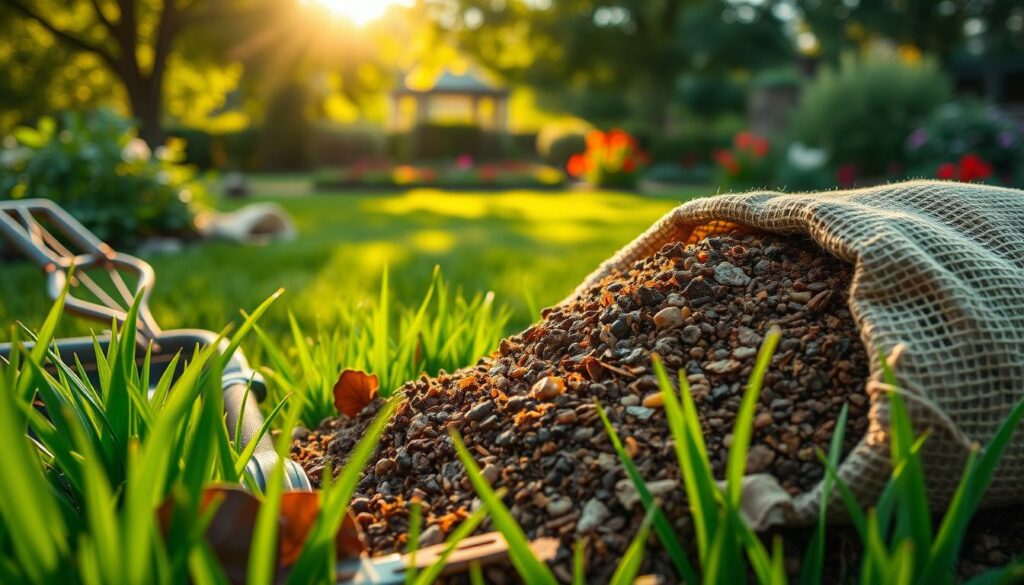
Organic vs. Synthetic
Organic fertilizers come from plant or animal matter. Examples include compost, manure, bone meal, blood meal, feather meal, Milorganite, and Espoma products.
Microbes break these materials down, releasing nutrients slowly. This improves soil structure and supports the microbiome.
Synthetic fertilizers use manufactured compounds like urea, ammonium sulfate, monoammonium phosphate, and potassium sulfate. Brands such as Scotts Turf Builder offer fast nutrient availability with predictable N-P-K ratios.
Organic pros include long-term soil health, lower burn risk, and steady feeding. However, they have lower nutrient concentration, variable ratios, higher cost, and need larger application volumes.
Synthetic pros are precise ratios, cost-effectiveness, and rapid results. Drawbacks include higher runoff risk and possible disruption of soil biota if used long-term only.
Most professionals suggest a blended approach. Use organics to build soil health and synthetics for targeted, timely corrections within a seasonal fertilizing plan.
Quick-Release vs Slow-Release
Quick-release fertilizers such as urea and ammonium sulfate deliver nutrients fast. They prompt rapid green-up but carry a higher burn risk and need frequent reapplication.
Slow-release options include coated ureas, sulfur-coated urea, and many organic sources. They provide steady nutrients over weeks or months.
Slow-release fertilizers reduce leaching and lower the chance of burning the lawn.
Use quick-release when lawns need urgent recovery or fast greening. Choose slow-release for routine maintenance and to limit environmental impact.
Best Fertilizers for Seasons
Spring favors balanced formulas like 10-10-10 when soil tests show a need. Starter fertilizers with higher phosphorus, like 10-20-10, work well for new seedings.
Scotts Turf Builder Starter Food for New Grass is a common choice. Always follow label instructions and local regulations.
Summer needs slow-release, lower-nitrogen blends to avoid tender top growth that stresses roots. Products labeled for summer or those with more potassium perform well.
Organic options such as Milorganite offer gentle feeding during hot months.
Fall benefits from moderate nitrogen and higher potassium blends, like 6-24-24 or winterizer mixes. These support root growth and help plants withstand winter.
In winter or off-season, avoid high-nitrogen fertilizers. Apply compost, soil conditioners, or slow-release organics only when soil tests show a need.
Spring Fertilizing Strategies
Spring offers a narrow window for effective seasonal fertilizing. Following a simple lawn care calendar helps homeowners pick the best time to fertilize grass. It also helps plan tasks like soil testing, aeration, and overseeding.
These steps set the stage for a vigorous growing season. They reduce the need for corrective work later.
Preparing the Soil
Begin with a soil test in late winter or very early spring. Use local land-grant extension services like Cornell or the University of California Cooperative Extension. Test results reveal pH and nutrient needs and guide correct lime or sulfur use.
Apply lime several weeks before major fertilization when pH needs raising. Use sulfur according to lab recommendations when the pH must be lowered. Core aeration helps root growth if compaction or thick thatch is present.
For overseeding, mow to the proper height and clear debris. Rake lightly so seed contacts soil. Proper seedbed prep improves germination and makes fertilizing more effective.
Recommended Products
Starter fertilizers with higher phosphorus help new lawns. Consider Scotts Turf Builder Starter or Espoma Organic Lawn Starter and follow label rates. Check local rules that may limit phosphorus use.
For spring feeding, choose balanced slow-release blends like 10-10-10 or 12-4-8 with polymer-coated urea. These extend nutrient uptake. Organic options like Milorganite or compost from local vendors work well too.
When planning crabgrass prevention, time pre-emergent herbicides like prodiamine or pendimethalin with early spring fertilization. Always read product labels to confirm herbicide and fertilizer compatibility.
Application Techniques
Select the right spreader for precision. Drop spreaders deliver consistent rates while rotary spreaders cover ground faster. Calibrate the spreader according to product label before applying fertilizer.
Follow label N-P-K rates and convert to pounds of nitrogen per 1,000 sq ft. Cool-season lawns get about 3–4 lb N per 1,000 ft2 annually, split in several applications. Warm-season lawns usually take 2–4 lb N during their active season.
Water lightly after quick-release fertilizers to move nutrients into roots. Slow-release products benefit from gentle irrigation, but heavy watering risks leaching. Sweep granules off sidewalks to prevent runoff.
Store fertilizers securely away from children and pets. These lawn tips reduce waste, protect water quality, and keep the yard on track with the spring lawn care calendar.
Summer Fertilizing Tips
Summer needs a careful approach to feeding plants. Warm days, high heat, and uneven rainfall change plant needs.
Use seasonal fertilizing methods to protect roots, reduce stress, and keep turf and beds healthy in hot weather.
Maintaining Plant Health
Avoid high-nitrogen feeds during peak heat to prevent weak, soft top growth. Use slow-release formulas for steady nutrients without excess shoot growth.
If color is desired, apply light, frequent low-rate feeds instead of heavy single doses.
Apply fertilizer early morning or late afternoon to reduce evaporation and stress. Raise mower blades on cool-season lawns to 3–3.5 inches to shade soil and keep moisture.
These lawn tips help keep plants strong and reduce pests.
Watering and Fertilizing Together
Water deeply but not often to encourage deep roots. Aim for about one inch of water weekly, adjusting for rainfall.
Apply granular fertilizers before planned deep watering, or follow label directions for irrigation-activated products.
Liquid feeds can be used with irrigation if compatible with equipment. Avoid feeding before drought or heatwaves; wait for cooler weather.
A clear lawn care plan that pairs feeding with watering keeps applications safe and effective.
Signs of Nutrient Deficiency
Nitrogen shortage shows as pale green or yellow turf and slow growth. Iron deficiency causes interveinal chlorosis on young leaves, often in high-pH soils.
Potassium shortages lead to brown leaf edges and lower drought tolerance during hot spells.
Phosphorus problems are rare but can cause poor root growth in cool, wet soils.
When symptoms occur, test soil or tissue before adding fertilizers. Tests prevent overuse that can hide disease or soil issues.
| Issue | Visible Signs | Immediate Action | Follow-up |
|---|---|---|---|
| Nitrogen deficiency | Uniform yellowing, slow growth | Apply low-rate, slow-release nitrogen in early morning | Monitor growth; adjust lawn care schedule to avoid heavy midsummer feeds |
| Iron deficiency | Interveinal chlorosis on young leaves | Use a foliar iron product or soil acidifier if pH is high | Perform soil test to check pH and nutrient balance |
| Potassium deficiency | Brown leaf margins, poor drought tolerance | Apply potassium-rich fertilizer at low rate | Improve watering schedule and include potassium in seasonal fertilizing plan |
| General stress or unknown | Patchy discoloration, thinning turf | Hold off on heavy feeding; test soil or tissue first | Address drainage, compaction, or pest issues based on results |
Fall Fertilizing Approaches
Fall gives a last chance to strengthen roots and store energy before winter. Thoughtful fertilizing helps lawns and perennials survive cold spells. It also helps them grow strong in spring. Homeowners should follow a lawn care calendar. Adjust treatments to fit their local climate and plant types.
Preparing for Winter
The fall goal for cool-season grasses is building carbohydrate reserves and stronger roots. Apply a winterizer fertilizer higher in potassium with controlled nitrogen four to six weeks before the first hard freeze. This time usually falls between mid-September and November depending on location.
Core aeration in early fall relieves soil compaction and improves seed contact. Follow aeration with overseeding and light feeding to fill thin spots. These steps fit well into a lawn care calendar for best results.
Best Practices for Perennials
Late-season, low-nitrogen fertilizer with higher potassium benefits perennial beds by promoting root storage. Stop high-nitrogen feeds eight to ten weeks before frost to avoid tender growth that cold can damage.
Apply organic mulch after soil cools to moderate temperature and reduce freeze-thaw damage to shallow roots. Cut back perennials after first frost or leave seedheads for birds. Then adjust fertilization to your cleanup timing.
Timing for Fall Applications
Cool-season turf gets its most important feeding in the fall. Schedule the main application between late August and October based on local cues. Aim for a major feed about six to eight weeks before dormancy to build winter strength.
Warm-season grasses need a late-summer feed while actively growing. Then taper off as dormancy approaches. Avoid high-nitrogen treatments in late fall to prevent frost-sensitive growth.
| Plant Type | Recommended Window | Key Fertilizer Traits | Complementary Actions |
|---|---|---|---|
| Cool-season turf (fescue, bluegrass) | Late Aug–Oct; main feed 6–8 weeks before dormancy | Higher K, moderate N, controlled-release | Core aeration, overseed, winterizer 4–6 weeks before first freeze |
| Warm-season turf (Bermuda, St. Augustine) | Late summer; avoid late fall N | Moderate K, low late-season N | Final summer feed during active growth, then taper |
| Perennial beds | Apply late season; stop high N 8–10 weeks before frost | Low N, higher K | Mulch after soil cools; cut back after first frost or leave seedheads |
| General lawn care planning | Follow regional lawn care calendar | Season-specific formulations | Consult state extension recommendations and adapt seasonal lawn treatments |
Winter Care and Fertilizing
The dormant months call for a light, deliberate approach to lawn and garden care. Winter is a time to plan and protect rather than to feed aggressively. Thoughtful seasonal fertilizing and lawn treatments focus on soil health and risk reduction so plants grow strongly in spring.
When to Fertilize in Winter
Routine fertilizing during true dormancy is usually not needed for cool- and warm-season grasses unless soil tests show problems. Late fall winterizer applications serve as the final pre-winter feed. In mild USDA zones 8–10, limited winter feeding for warm-season ornamentals may be fine when recommended by local extension services.
Avoid high-nitrogen fall products that increase risk of snow mold and damage from freeze-thaw cycles. If you need to apply fertilizer, choose formulations that reduce disease risk. Time treatments to stable, warmer periods between freezes.
Protecting Plants from Cold
Mulch provides steady insulation for roots of perennials and newly planted shrubs. Use straw or shredded bark and keep mulch a few inches away from stems to prevent rot. For brief cold snaps, burlap wraps or frost cloth give quick protection to tender plants.
Frozen lawns are fragile. Heavy foot traffic and late-season aeration or mechanical work should wait until thaw to avoid compaction and turf injury. Lawn treatments that focus on protection rather than growth lower risk during freeze events.
Soil Health Considerations
Winter is a good time to apply compost or organic matter as a topdressing where suitable. Cold months slow microbial activity, causing organic fertilizers to decompose slowly. This slow breakdown can supply nutrients in spring when the soil warms and microbes become active again.
Use winter to act on soil test results. Apply lime or sulfur well before spring seeding or major fertilization. This timing allows chemical adjustments to take effect and supports nutrient balance for grass and plants when growth starts.
| Winter Goal | Recommended Action | Why It Matters |
|---|---|---|
| Minimize disease risk | Skip high-N fall feeds; use low-N winterizers if needed | Reduces snow mold and damage from freeze-thaw cycles |
| Protect roots | Apply 2–4 inches of mulch; avoid contact with stems | Insulates roots and maintains soil temperature |
| Plan soil amendments | Topdress with compost; schedule lime/sulfur now | Allows time for microbial activity and chemical reactions |
| Limit winter feeding | Only fertilize if soil tests indicate a need or local guidance permits | Prevents wasted inputs and protects plant hardiness |
| Preserve turf | Avoid foot traffic on frozen lawns; delay heavy work until thaw | Prevents compaction and mechanical injury to crowns |
Specialty Fertilizing for Specific Plants
Specialty fertilizing means giving each plant the right nutrition throughout the year. This plan links fertilizing with plant type, soil health, and pest control. It helps plants grow better and cuts down on waste.
Vegetable gardens separate heavy feeders like tomatoes, corn, and squash from lighter feeders such as beans and root crops.
At planting, use a starter with moderate phosphorus to help transplants build strong roots. Side-dress corn and tomatoes with nitrogen during fast growth.
Compost and organic fertilizers like Espoma Garden-Tone or Neptune’s Harvest are good for home gardens. Avoid fresh manure near harvest time on leafy and root crops to keep food safe.
Perennials need a balanced, slow-release fertilizer in early spring. Use a formula with less nitrogen and more potassium in late summer to support blooms and roots.
Annuals and container plants need light, frequent feeding with water-soluble mixes like 20-20-20 or bloom boosters. Potting soil loses nutrients fast.
Bulbs require phosphorus-rich fertilizer when planting and again when leaves appear. Limit nitrogen late in the season to protect bulb growth.
Turf needs care specific to its species. Cool-season grasses get most feeding in fall, while warm-season grasses thrive with spring and summer feeding.
Shaded lawns need less nitrogen. They may benefit from slow-release iron to improve color without causing too much growth.
New lawns need starter fertilizers with phosphorus and proper watering. Sod may need a quick-release nitrogen boost early on, while seeded lawns need steady care with starter fertilizer.
Combining pest and weed control with fertilizing limits problems from overfeeding. Over-fertilized lawns attract pests and raise chemical use.
A clear grass fertilizing schedule helps time treatments and prevents stressing plants with overlapping inputs.
| Plant Type | Recommended Approach | Timing | Example Products |
|---|---|---|---|
| Heavy-feeding vegetables | Starter phosphorus, midseason nitrogen side-dress | Planting; midseason | Espoma Garden-Tone, Neptune’s Harvest |
| Light-feeding vegetables | Moderate balanced feed, compost topdress | Preplant; as needed | Compost, organic granular blends |
| Perennials | Slow-release balanced feed; late-season K boost | Early spring; late summer | Slow-release 10-10-10; bloom formulations |
| Annuals & containers | Frequent light liquid feeding | Growing season, every 1–2 weeks | Water-soluble 20-20-20; bloom boosters |
| Bulbs | High-phosphorus at planting and emergence | Planting; green-up | Bulb-specific granular fertilizers |
| Cool-season lawns | Major fall feed; light spring application | Fall; early spring | Organic lawn fertilizer; slow-release blends |
| Warm-season lawns | Spring-summer feeding; avoid late fall N | Late spring through summer | Sod starter; warm-season turf formulas |
| Shaded lawns | Lower N rates; iron for color | As needed during growing season | Slow-release iron products |
For eco-friendly gardening, pick certified organic lawn fertilizer. Follow a clear grass fertilizing schedule to time applications well.
Pair this schedule with seasonal lawn treatments to keep balance and cut down on runoff risks.
Addressing Common Fertilizing Mistakes
Mistakes with fertilizer cause poor results, wasted money, and harm to the environment.
This brief guide points out frequent errors and gives practical steps to improve seasonal fertilizing and the lawn care schedule without adding risk.
Over-Fertilization Complications
Too much fertilizer can burn leaves and cause lush top growth with weak roots.
Lawns may become more prone to brown patch and dollar spot.
Runoff of nitrogen and phosphorus harms ponds and streams. Many cities restrict fertilizer near water bodies.
Over-fertilization creates greater upkeep needs and may force extra watering to dilute salts.
Homeowners pay for product that offers no benefit and may need professional treatment to restore balance.
Misunderstanding Plant Needs
The “more is better” approach for nitrogen leads to trouble.
Different grass species and garden plants need distinct nutrients and timing.
Feeding cool-season turf heavily in midsummer often stresses the grass instead of helping it.
Skipping soil tests invites unnecessary phosphorus applications where soil P is already high.
Many states limit phosphorus use to prevent pollution. Relying on assumptions instead of measurements weakens any lawn care plan.
Best Practices to Avoid Issues
Run a soil test every two to three years and follow recommendations from land-grant universities like Penn State or the University of Florida.
Use those results to set a lawn care schedule that matches your climate and species.
Calibrate spreaders and measure areas to apply the correct rate per 1,000 ft2.
Follow the product label as law. Prefer slow-release sources for routine maintenance.
Save quick-release fertilizers for targeted recovery.
Split the year’s nitrogen into smaller applications to reduce stress and leaching risks.
Keep cultural practices current: proper mowing height, periodic aeration, overseeding, and sensible irrigation reduce fertilizer needs.
Keep a simple record of dates, products, rates, and weather to improve future fertilizing efforts.
These notes help prevent over-fertilization and make a lawn maintenance schedule easier to follow year after year.
Conclusion and Fertilizing Resources
Effective seasonal fertilizing depends on matching timing, product type, and application rate to plant needs and climate.
Key steps include fall feeding for cool-season grasses and timely spring starts. Summer feeding should be cautious.
Focus on soil health and testing throughout the year. A balanced plan blends organic and synthetic fertilizers.
Favor slow-release sources to keep turf healthy and reduce nutrient loss and runoff.
Helpful Gardening Books
For practical lawn and garden advice, try The Lawn Bible by David R. Mellor. It offers regional tips and clear routines.
Teaming with Microbes by Jeff Lowenfels and Wayne Lewis explains soil biology fundamentals. This helps support any fertilizing schedule.
The Organic Lawn Care Manual by Paul Tukey covers seasonal treatments and organic methods. Rodale’s Basic Organic Gardening and The Flower Gardener’s Bible provide useful advice for vegetables and flowers.
Useful Websites and Forums
Trusted sources include federal and university sites, extension pages, and professional groups. These offer evidence-based lawn care calendars and fertilizing tips.
Peer forums like GardenWeb, LawnSite, and r/lawncare share real-world experience. Always check their advice against extension recommendations.
Manufacturer pages from Scotts, Milorganite, and Espoma help with label details, spreader calibration, and coverage calculators.
Local Extension Services
County and state Cooperative Extension Services are the best for region-specific soil testing and pest diagnosis.
Home gardeners should send soil samples to extension labs for accurate nutrient advice. They also provide fact sheets on fertilization schedules.
Extension recommendations support water-wise practices and nutrient management. They help protect waterways and meet local rules.