

Nearly 40% of American homes have yards or balconies with less than two hours of direct sunlight daily.
This makes shade gardening important for many people.
This guide explains how to choose, plant, and care for shade plants suited to U.S. climates.
It covers plants that tolerate little or no direct sun, including perennials, annuals, ground covers, and flowering low-light plants.
The guide helps homeowners, renters with shaded yards, and apartment dwellers looking for indoor shade plants.
Landscape designers and gardeners can also use it to boost curb appeal or create cool, low-light spots.
Readers will learn how to assess shade, pick the best plants, and use proper soil and watering methods.
Recommendations come from trusted sources like USDA Cooperative Extension, the American Horticultural Society, and reputable nurseries.
This ensures evidence-based care and realistic expectations for both outdoor and indoor shade conditions.
Key Takeaways
- Shade plants and low light plants suit outdoor and indoor settings, from perennials to ground covers.
- Understanding light levels helps select the best shade plants for each spot.
- Good soil and proper watering are critical for shade-loving plants to thrive.
- Seasonal care and plant choices vary by U.S. climate and location.
- Cooperative Extension and the American Horticultural Society offer reliable, research-based advice.
Understanding Shade Plants
Shade garden plants bring life to corners that rarely see direct sun. They adapt to filtered light beneath trees, along north-facing fences, and next to buildings.
Gardeners who learn their needs can turn unused areas into vibrant, low-maintenance displays.
Definition and Characteristics
Shade plants are species adapted to limited direct sunlight. Many evolved under tree canopies or beside walls.
Shade tolerance ranges from deep shade, with less than three hours of direct sun, to partial shade, which gets three to six hours, and dappled shade that offers intermittent light.
These plants often show larger or thinner leaves to capture more light. They grow more slowly and build extra chlorophyll for efficient photosynthesis under indirect light.
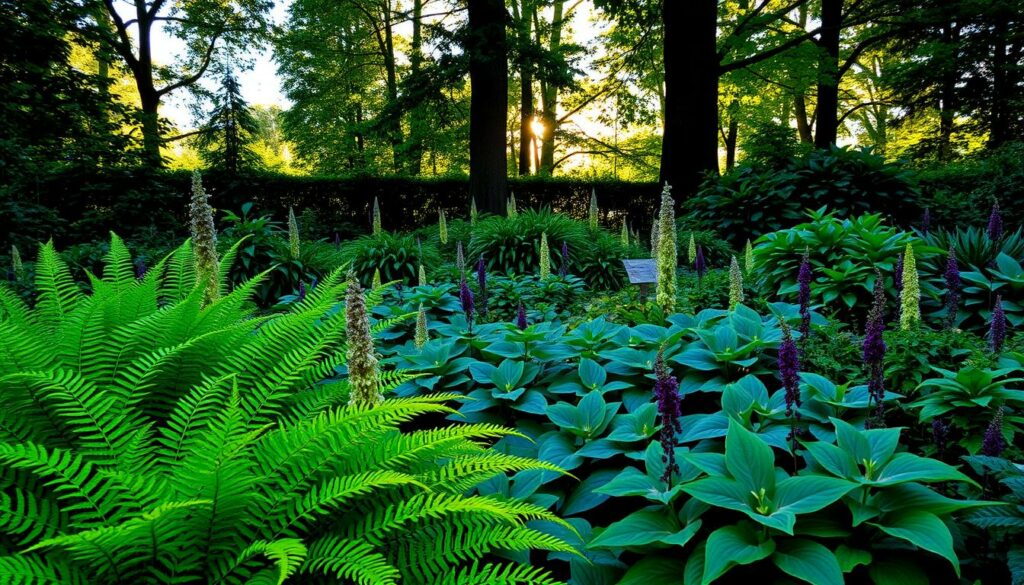
Visual traits include broad hosta leaves, delicate fern fronds, and plume-like astilbe foliage designed to maximize light capture.
Importance in Landscaping
Shade-loving plants make underused spaces productive and attractive. They stabilize soil on slopes and reduce heat stress during summer.
These plants demand less watering than sun beds. Planting shade-tolerant plants beneath trees or along shady walls creates habitat for pollinators and beneficial insects.
Thoughtful use of shade plants can raise curb appeal and help cool home exteriors. This improves energy efficiency.
Cooperative Extension programs recommend matching species to microclimates and conserving water in shaded beds to ensure long-term success.
Types of Shade Plants
Shade creates unique gardening opportunities. Using a mix of perennials, annuals, and ground covers adds interest to low-light spots.
Choosing the right plants ensures color, texture, and easy care throughout the year.
Perennials for Shady Areas
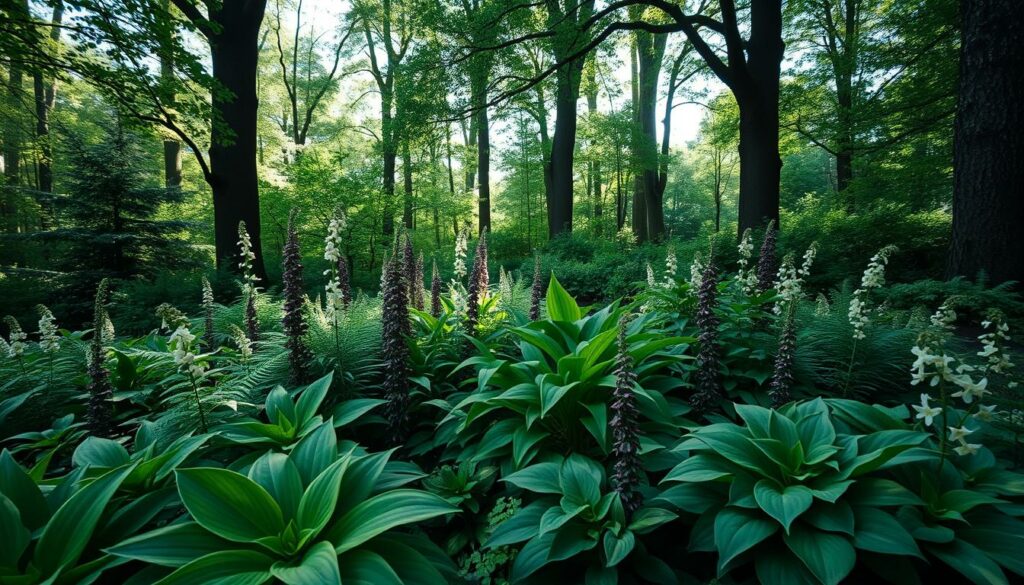
Perennial shade plants come back every year and form the garden’s main structure. Popular choices include hostas, astilbes, and hellebores.
Match bloom times, leaf shapes, and USDA hardiness zones when designing your beds. Many perennials like rich, well-drained soil with steady moisture.
Using mulch and compost improves soil and helps plants stay healthy every year.
Annuals That Flourish in Sedentary Sunlight
Annual shade plants add quick color and allow flexibility in garden design. Impatiens, wax begonias, and coleus grow well in shade containers or as underplants.
They let gardeners try new colors without long-term commitment. Use them to refresh displays each season or brighten shady patios.
Ground Covers for Shade
Ground cover plants block weeds, keep moisture, and connect taller plants into a green carpet. Good options include pachysandra, ajuga, and vinca minor.
Some ground covers spread fast. Check invasive species lists and ask nurseries before planting ajuga or vinca.
Choose varieties that fit your site to prevent future control problems.
Popular Shade-Loving Plants
Shady corners can host many plants suited to low light. The best shade plants have attractive foliage, reliable growth, and need little care.
This section highlights three favorites that grow well in part to full shade. They help make quiet garden spaces more beautiful.
Hostas: Versatile and Beautiful
Hostas are classic shade plants known for their various leaf shapes and colors. They range from tiny ground-hugging types to big plants. Their leaves can be deep green, blue-green, variegated, or gold.
Hostas like rich, well-draining soil kept evenly moist. Mulch helps keep moisture and stops weeds. Gardeners should watch for deer and slugs and plan control methods when needed.
These plants grow well in USDA zones 3–9. Dividing them every three to four years keeps the clumps fresh and strong.
Ferns: Elegant Additions to Shaded Gardens
Ferns add fine texture and give a woodland feel to shady areas. Native choices like ostrich and lady ferns, plus Japanese painted fern, are popular.
They like humus-rich, slightly acidic soil with steady moisture and good drainage. Many ferns handle deep shade well and deer usually avoid them.
Plant ferns in groups to create a natural woodland look and stronger visual impact.
Astilbes: Colorful Blooms in Low Light
Astilbes have feathery flower plumes in pink, red, white, and lavender. They bring color in mid- to late summer among shade plants.
They prefer moist soil and grow well in part to full shade. Astilbes fit well in borders, mass plantings, and mixed perennial beds.
Choosing different heights and bloom times extends color and adds layers through the season. Regular watering and mulch help astilbes bloom strong and stay healthy.
How to Choose Shade Plants for Your Garden
Choosing the right plants starts with careful observation and simple tests. A short walk at dawn, midday, and dusk shows sun patterns. This helps you find the best shade plants for your garden.
Assessing Light Conditions
Observe the spot for several days. Note hours of direct sun using a light meter app or notebook. Classify areas as full shade (0 hours), deep shade, part shade (3–6 hours), or dappled shade.
Match each area to plant needs. Some plants like morning sun. Others prefer north-facing or deep shade. This reduces stress and helps plants thrive.
Soil Quality Considerations
Test soil for texture, pH, and organic matter. Most shade plants like rich, well-draining soil with pH near 6.0–7.0. Azaleas and rhododendrons need more acidic soil.
Improve poor soil with compost, leaf mold, or manure to boost health. Avoid compacting soil near roots. For clay soil or root-heavy spots, use raised beds or containers.
Evaluating Plant Size and Growth
Check nursery labels and extension data for mature plant size. Space plants properly to avoid crowding when they grow.
Consider tree root competition. Use root barriers or choose plants with shallow roots. Containers can also limit root competition. Planning ahead keeps shade plants healthy and strong.
Tips for Planting Shade Plants
Planting a successful shade garden starts with clear, simple steps. This guide covers soil, layout, and timing. It helps gardeners choose the best approach for long-term health and beauty.
Best Practices for Soil Preparation
Clear weeds and invasive roots before digging. Loosen soil to 8–12 inches where roots allow. Mix in 2–4 inches of compost or well-rotted organic matter to boost fertility and water retention.
This foundation supports shade plants that prefer rich, even moisture. For heavy clay soil, blend coarse sand and compost to improve drainage. For sandy soil, add more organic matter to hold water.
Apply 2–3 inches of shredded bark or leaf mulch to keep moisture and moderate temperature. Keep mulch away from crowns to avoid rot.
Spacing and Arrangement Techniques
Follow nursery spacing recommendations but allow room for mature size. Plan for growth and airflow to reduce disease pressure. Use odd-number groupings like 3, 5, or 7 for natural-looking clusters.
Layer plants by height for depth and interest. Place tall backdrops such as ferns and astilbes at the rear. Put mid-layer plants like hostas in the middle and groundcovers up front.
Leave maintenance paths or pockets for access.
Timing for Planting
Plant in spring after the last frost or early fall 6–8 weeks before first frost. Cooler temperatures and higher soil moisture improve success. Container-grown plants can be set anytime during the growing season if kept watered.
Avoid moving plants during peak summer heat or droughts. Proper timing reduces transplant shock and supports steady growth.
| Task | Recommended Action | Why It Helps |
|---|---|---|
| Soil amendment | Add 2–4 inches compost; loosen 8–12 inches | Improves fertility and moisture retention for best shade plants |
| Drainage fix | Mix coarse sand into clay; increase organic matter in sand | Balances water retention and percolation during wet spells |
| Mulching | Apply 2–3 inches shredded bark or leaves; keep away from crowns | Conserves moisture and stabilizes soil temperature |
| Plant spacing | Follow labels; leave room for mature size; use odd-number groups | Prevents crowding and enhances visual appeal when spacing shade plants |
| Plant arrangement | Layer tall, mid, and low plants; include access paths | Creates depth and simplifies care in a timing plant shade garden |
| Best planting times | Spring after frost or early fall (6–8 weeks before frost) | Cooler weather and moist soil help roots establish |
| Container planting | Flexible during season with consistent watering | Allows staggered additions of best shade plants to the bed |
Watering and Maintenance Needs
Shade beds and containers need a gentle, steady approach to stay healthy. Soil in shaded areas holds moisture longer than sunny spots. However, tree roots and dense plantings can create dry pockets. Regular checks help prevent both drought stress and waterlogging.
Check moisture by inserting a finger 2–3 inches into the soil or using a moisture meter. Water deeply and less often to encourage roots to grow downward. Container plants may need daily attention in warm weather. In-ground plantings usually require thorough watering less frequently.
Understanding Moisture Levels
Observe how quickly the topsoil dries after rain. Mulch helps conserve moisture and moderates temperature. Avoid shallow, frequent watering that keeps roots near the surface; this makes plants fragile in heat or wind.
Fertilization Strategies
Apply a balanced slow-release fertilizer in early spring or use compost as an annual top-dressing. For acid-loving plants like rhododendrons and azaleas, use formulas made for acid soils and follow label directions. Over-fertilizing causes weak growth and raises disease risk.
Combine light feeding with good soil care for best results. Healthy soil cuts the need for heavy fertilization. It supports steady growth throughout the season.
Pruning and Division
Remove dead or damaged leaves to reduce disease pressure and improve appearance. Deadhead spent blooms to encourage more flowering and send energy back to roots. Divide crowded perennials such as hostas and astilbes in spring or fall to renew vigor.
When shaping woody shrubs, prune to keep form and remove crossing branches. Avoid hard pruning late in the season before frost. Gentle, timely cuts keep shade-tolerant plants manageable and predictable.
Creating a Shade Garden Design
A successful shade garden design begins with a clear plan. It balances height, texture, and color. The goal is to make low-light areas feel inviting using shade plants that thrive without direct sun.
Layering Plants for Visual Interest
Layering plants shade-wise means arranging a canopy, mid-layer, and ground layer for depth. Start with trees or large shrubs at the back. Add mid-height choices like hostas, astilbes, and heuchera. Finish with groundcovers such as vinca or pachysandra.
Repeat shapes and foliage textures to build rhythm. Place a specimen hosta or a clump of ferns as a focal point.
Incorporating Hardscapes in Shade Areas
Hardscapes in a shade garden transform dark patches into usable spaces. Paths, benches, and rock elements give structure and contrast to soft foliage.
Choose permeable pavers and gravel to prevent soil compaction and improve drainage. Water features and a simple LED-lit bench make the area comfortable for evening use.
Color Schemes That Work in Low Light
Color schemes for low light should emphasize foliage and contrast. Variegated leaves, silver and blue tones, and bright chartreuse varieties brighten dark corners more than many flowers.
When using blooms, pick whites, pale pinks, and lavender for a clear pop. Combine cool blues and purples for calm moods. Mix chartreuse and variegation for energetic contrast.
| Design Element | Recommended Plants or Materials | Effect in Shade |
|---|---|---|
| Canopy Layer | Amelanchier, Japanese maple (Acer palmatum) | Filters light, defines height, creates shelter |
| Mid Layer | Hostas, Astilbes, Heuchera | Provides texture and seasonal interest |
| Ground Layer | Pachysandra, Vinca, Lamium | Covers soil, reduces weeds, unifies design |
| Hardscapes | Permeable pavers, gravel paths, stone benches | Improves access, contrasts foliage, reduces compaction |
| Accent Colors | Blue hostas, silver Heuchera, white astilbe | Brightens shade, draws focus, balances tones |
Common Challenges with Shade Plants
Shade gardens offer calm beauty and cool microclimates. They also bring recurring problems with shade plants that need care.
This brief guide outlines steps to spot issues early. It helps protect plant health in shady spots.
Many gardeners face pests that shade plants attract in low-light spots. Slugs and snails often graze hostas. Vine weevils chew roots of groundcovers.
Aphids and spider mites appear in dry indoor shade. Use handpicking to remove visible pests. Beer traps catch slugs effectively.
Apply beneficial nematodes and choose iron phosphate baits where they are safe to control pests.
Fungal diseases appear from poor airflow or excess moisture. Watch for leaf spot and powdery mildew. Remove infected leaves as soon as possible.
Avoid overhead watering and space plants well. Good airflow reduces disease pressure in shade gardens.
Compacted soil causes restricted roots and low oxygen. It limits nutrient uptake and stunts plant growth.
Alleviate compaction by top-dressing with compost. Use a broadfork to loosen soil without harming tree roots.
Raised beds work well when compaction is severe. Mulch helps protect soil and keeps moisture steady.
Containers or root-pruning barriers reduce stress in heavy root competition zones. They give plants room to grow well.
Root rot issues often trouble shade areas with poor drainage. Waterlogged soil invites crown rot and root decay.
Amend heavy soils with organic matter to improve drainage. Install French drains in chronically wet spots if possible.
Some plants tolerate wet feet and do well in soggy areas. Japanese iris and marsh marigold grow where others fail.
Watch for yellowing, wilting, and slow growth as early signs of root trouble. Replant in better-draining soil quickly to save plants.
| Problem | Common Signs | Immediate Action | Long-term Fix |
|---|---|---|---|
| Slugs & Snails | Holes in leaves, slime trails | Handpick, set traps, apply iron phosphate | Mulch management, beneficial nematodes |
| Vine Weevil | Wilting, chewed roots | Inspect roots, remove affected plants | Use nematodes and avoid overwatering |
| Aphids & Spider Mites | Distorted leaves, fine webbing | Blast with water, apply targeted organic spray | Encourage predators like lady beetles |
| Fungal Leaf Spot / Mildew | Spots, white powdery coating | Remove infected parts, improve airflow | Adjust spacing and avoid overhead irrigation |
| Compacted Soil | Poor growth, surface crusting | Top-dress with compost | Broadfork, raised beds, regular mulching |
| Root & Crown Rot | Yellowing, wilting, slow growth | Check drainage, replant in drier soil | Soil amendment, French drains, plant wet-tolerant species |
Seasonal Care for Shade Plants
Seasonal care keeps a shady garden healthy as weather changes. A plan for fall, spring, and summer protects roots and reduces pests. The notes below guide tasks and show what to watch for each season.
Preparing for Winter Dormancy
In autumn, remove spent foliage to reduce disease and pest overwintering. Clean beds carefully without disturbing perennial crowns. This lowers spring cleanup and limits fungal spores.
Apply a 3–4 inch mulch layer after soil cools to protect roots. Keep mulch away from stems to prevent rot. Check USDA hardiness to decide if extra protection is needed.
Tender annuals and container plants should be moved indoors or treated as single-season plantings. Label containers with plant names and notes for proper care. These steps are key winter tasks for shade plants.
Spring Awakening: Early Care Tips
As temperatures rise, remove winter mulch slowly to avoid trapping moisture and causing rot. Expose crowns gradually to encourage steady growth.
Divide clumps like hostas and astilbes when new shoots appear. Begin light feeding with slow-release fertilizer. Test soil moisture before setting watering schedules.
Adjust water based on rainfall and soil drainage. Inspect plants for pests or winter damage. Reposition crowns or replant shallow-rooted perennials if frost heaving occurred. Early action speeds recovery and sets plants up for the season.
Summer Maintenance in Humid Conditions
Warm, humid months raise fungal disease risks. Water in the morning to help foliage dry during the day. Avoid wetting leaves when possible.
Thin dense plantings to improve air flow. Monitor slugs and snails, increasing control during damp spells. Even shady sites may need extra watering during heatwaves.
Check soil moisture regularly and water at the root zone. Prune dead or diseased leaves to reduce spread. These summer tasks help shade plants stay vigorous through humid periods.
| Season | Key Tasks | Targets |
|---|---|---|
| Fall | Remove spent foliage; apply 3–4″ mulch; move tender containers | Reduce pests, insulate roots, protect annuals |
| Spring | Gradual mulch removal; divide and transplant perennials; start slow-release feed | Prevent rot, encourage growth, restore nutrient balance |
| Summer | Morning watering; improve air circulation; slug control | Limit fungal disease, reduce leaf wetness, protect from heat stress |
Noteworthy Shade Plant Combinations
Creating a lively shade garden needs thoughtful plant combos that balance form, color, and care needs. A few well-chosen groupings provide year-round interest. They also keep maintenance simple.
Below is practical guidance for reliable pairings and design ideas to suit different light and moisture conditions.
Pairing Hostas with Ferns
Pairing hostas with ferns creates a classic look. Hostas bring broad, bold leaves that anchor beds. Ferns add delicate fronds for airiness and movement.
Choose hosta cultivars with blue, variegated, or golden foliage. Mix in ostrich fern or Japanese painted fern for contrast. Both groups share similar moisture and soil needs.
This pairing offers reliable results as among the best shade plants.
Contrast and Cohesion: Mixing Textures
Mixing coarse and fine elements enhances depth. Coarse-leaved plants, like ligularia and large hostas, contrast well with fine-textured ferns and heuchera.
Repeat leaf shapes or a color accent to tie the bed together. Add evergreen or semi-evergreen groundcovers like pachysandra for winter structure.
Thoughtful use of shade plant textures keeps the composition cohesive and lively.
Color Combination Ideas for Impact
Effective color combos for shade gardens range from bold contrasts to soothing monochromes. High-contrast schemes use blue-foliaged hostas with chartreuse heuchera and white astilbe blooms.
Calming monochromatic schemes layer greens and silvers across textures to create a restful retreat. Seasonal accents like impatiens or begonias add summer pops without upsetting perennial structure.
These approaches show why the best shade plants work together, not compete.
Expanding Your Shade Plant Knowledge
Gardeners who want better results seek trusted advice and real examples. This guide points to helpful reads and nearby gardens. It also shows active online shade plant groups where fans trade tips and ID help.
Resources for Further Reading
Publications from land-grant universities give region-specific advice. The University of Minnesota Extension and Penn State Extension offer bulletins on selection and pest control.
The American Horticultural Society provides plant care summaries and reference lists for landscapers.
For books, readers choose practical classics. Dirr’s Encyclopedia of Trees and Shrubs helps with shade tree choices. The Shade Garden by Keith Wiley shows design ideas and planting plans.
These books work well with extension fact sheets for local details.
Botanical Gardens and Shade Plant Exhibits
Visiting live displays clarifies texture, scale, and seasonal interest. Gardens like New York Botanical Garden, Chicago Botanic Garden, and Longwood Gardens have shade garden exhibits.
The exhibits include labeled specimens and changing displays. Many gardens offer classes and plant sales with regionally proven plants.
Seeing mature plantings helps gardeners pick shade plants that suit their yard and microclimate.
Online Communities for Enthusiasts
Forums and social platforms speed problem-solving and identification. Garden.org boards, Reddit’s r/gardening, and Facebook groups hosted by local societies let members share photos and success stories.
Plant databases like Missouri Botanical Garden Plant Finder and RHS profiles check hardiness and light needs. These resources complement community advice for confident choices.
| Resource Type | Example | Best Use |
|---|---|---|
| Extension Publications | University of Minnesota Extension, Penn State Extension | Regional selection, pest and disease guidance |
| Books | Dirr’s Encyclopedia of Trees and Shrubs; The Shade Garden by Keith Wiley | Design ideas, species and cultivar details |
| Botanical Gardens | New York Botanical Garden; Chicago Botanic Garden; Longwood Gardens | Inspiration, labeled specimens, classes and sales |
| Plant Databases | Missouri Botanical Garden Plant Finder; RHS plant profiles | Hardiness, light needs, care notes |
| Online Communities | Garden.org forums; Reddit r/gardening; horticulture Facebook groups | Identification, troubleshooting, swapping tips |
Conclusion: Embracing the Beauty of Shade Plants
Shade gardens offer a calm alternative to sunny beds by highlighting foliage, texture, and steady moisture. The best shade plants bring structure and interest throughout the year. Shade-tolerant plants help conserve water and reduce heat stress in urban yards.
Using native low-light plants supports local insects and birds. This practice strengthens biodiversity around the home.
Final Thoughts on Garden Harmony
Designing with shade garden plants means thinking in layers. Large-leaved hostas, feathery ferns, and contrasty groundcovers form a cohesive palette. Soil, drainage, and consistent watering keep these plants healthy.
When chosen carefully, shade plants create tranquil spaces. These spaces feel intentional and balanced.
Encouragement to Experiment with Shade Gardening
Start small with a container of begonias or a shaded bed with hostas and ferns. This lets gardeners test microclimates. Keep a brief journal to note which low-light plants thrive.
Consult local extension services or neighborhood nurseries for regional guidance. Apply the planting and assessment tips in this guide to find the best shade plants. Mix combinations and enjoy the quiet beauty of shade-tolerant gardens.