

Nearly 40% of U.S. houseplant buyers choose succulents. These plants need little care and have striking shapes. This shows succulents are now very popular.
This guide offers practical steps for both beginners and experienced gardeners.
This short guide helps three groups across the U.S. First, beginners want the best succulents. Second, home gardeners need reliable care tips for indoor plants. Third, hobbyists want to master propagation and advanced maintenance.
The article has clear goals. It shares useful care tips like watering schedules and a simple soil mix recipe. It teaches how to repot and prune succulents with confidence. The guide helps make succulent care easy and stress-free.
The content has ten sections: definitions, types, benefits, care essentials, pests, propagation, indoor vs. outdoor gardening, design ideas, seasonal care, and more learning resources. Each section works as a quick reference for problems or planning new displays.
Readers should use this guide as a living reference. It helps create healthy, attractive succulent arrangements and solve common problems. It also promotes responsible and sustainable growing practices.
Key Takeaways
- Succulents are popular for easy care and striking looks. This guide offers practical advice focused on the U.S.
- Beginners get recommendations on the best succulents and simple care routines.
- The guide gives step-by-step tips on watering and soil mix recipes.
- Sections cover identification, propagation, seasonal changes, and pest control.
- This resource helps build confidence in repotting and maintaining succulent collections.
What Are Succulent Plants?
Succulents are a diverse group of plants. They are prized for water-saving forms and striking textures. This introduction helps identify basic succulent features.
Learn why these plants thrive in tough environments. The following sections explain traits and strategies. These shape care choices in a useful guide.
Definition and Characteristics
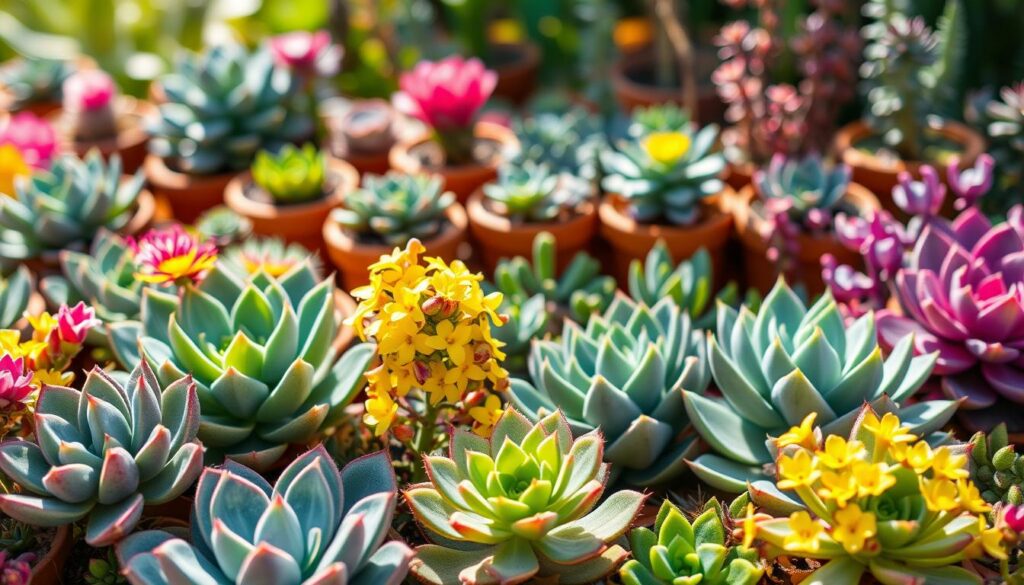
Succulents store water in fleshy leaves, stems, or roots. Families like Crassulaceae (Echeveria), Cactaceae (cacti), and Agavaceae (Agave) share this trait. Many use CAM photosynthesis to reduce water loss.
They open stomata at night instead of day. Succulents often have plump leaves and waxy or hairy surfaces. Sizes range from tiny living stones to large agaves.
Flowering varies from subtle to dramatic. Flowers often grow on tall inflorescences.
Environmental Adaptations
Succulents live in deserts, rocky slopes, alpine scree, and dry grasslands. Adaptations help them survive heat, cold, and drought. Water-storage tissues and reflective coatings reduce evaporation.
Roots can be shallow to catch quick rain or deep to reach groundwater. Some species enter dormancy to survive drought or cold. Knowing these helps with light, water, and soil care.
| Feature | Function | Care Tip |
|---|---|---|
| Fleshy leaves and stems | Store water for dry periods | Use fast-draining soil and water sparingly |
| CAM photosynthesis | Opens stomata at night to reduce water loss | Provide warm days and cool nights when possible |
| Waxy or hairy surfaces | Reflect sunlight and limit transpiration | Avoid overwatering; give bright, indirect light |
| Shallow vs. deep roots | Adaptation to rainfall pattern or groundwater access | Match pot depth and watering frequency to species |
| Seasonal dormancy | Survive prolonged drought or cold | Reduce water and fertilizer during dormancy |
Types of Succulent Plants
Succulents come in many shapes, sizes, and require different care. This section covers common groups gardeners find. It also highlights species good for new growers and rare favorites prized for vivid colors.
Popular Varieties
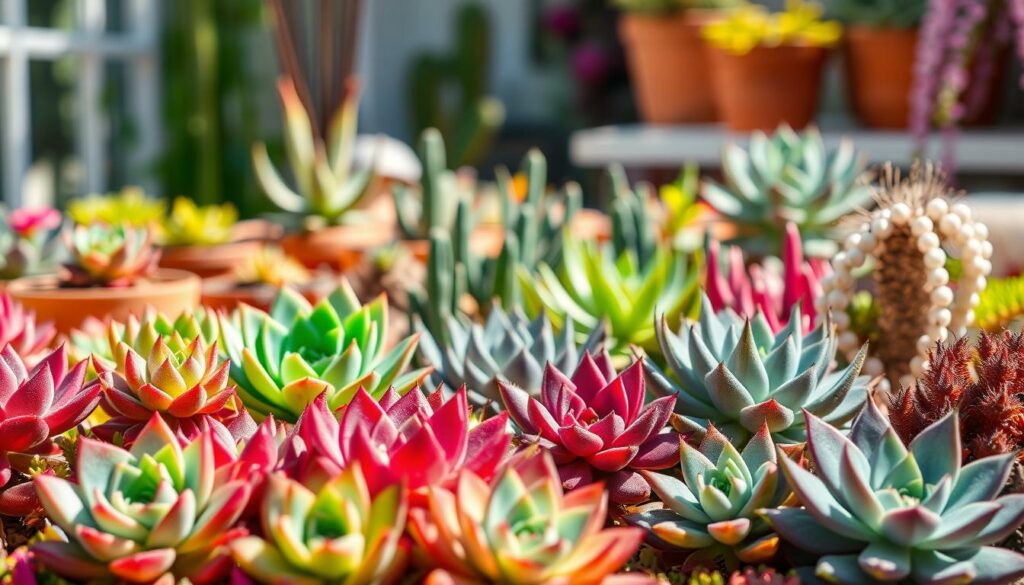
Many gardeners seek popular succulents that tolerate some neglect and root easily. Echeveria forms rosettes and grows from leaf cuttings. Sedum includes groundcovers and trailing types like Sedum morganianum (burro’s tail).
Haworthia does well indoors as it tolerates low light. Aloe vera is both medicinal and decorative. Crassula ovata, the jade plant, is a sturdy, easy-care houseplant. These plants are found at Home Depot, Lowe’s, and local nurseries, making them great for beginners.
Unique and Rare Succulents
Collectors value species that look different from usual types. Lithops, called living stones, mimic pebbles to avoid being eaten. Pleiospilos and Conophytum are rare mesembs with special seasonal cycles.
Euphorbia obesa, the baseball plant, grows in a unique spherical shape. Crested or variegated forms of Euphorbia lactea and Echeveria attract specialist growers. Most need exact light, temperature, or dormancy care. These are best bought from specialist suppliers or plant societies.
Colorful Succulent Options
Gardeners wanting vivid colors pick species that change shade with stress or season. Sedum rubrotinctum, or pork and beans, turns red under bright light and mild drought. Echeveria ‘Perle von Nurnberg’ shows lavender-rose tones that deepen in sunlight.
Sempervivum, called hens and chicks, changes color through seasons. Crassula capitella ‘Campfire’ produces bold red-orange leaves in strong light. Light intensity, temperature changes, and drought cycles cause these colors. To keep color bright, give plenty of light, avoid overwatering, and protect plants from cold.
Benefits of Growing Succulents
Succulents offer practical benefits for homes and offices. They add visual interest with their many shapes and colors. Many types can also improve indoor air quality and fit small spaces.
These plants work well for busy schedules and places with limited room.
Improving air quality is a good reason to keep succulents. Aloe vera and Sansevieria release oxygen while reducing some harmful compounds. Grouping pots can help keep room humidity steady without adding much moisture like leafy plants do.
Air Quality Improvement
Succulents perform photosynthesis and release oxygen during the day. Aloe and snake plants are often praised for their indoor air benefits. They are not a full air-purifying solution but add noticeable value inside.
Visual Appeal and Aesthetics
Succulents have attractive shapes and interesting textures. They fit well in minimalist designs, terrariums, and living walls. Their small rosettes and sculptural stems suit windowsills, desks, and crowded apartments easily.
Low Maintenance Requirements
Succulents are loved because they need less watering and little fertilizing. Owners should provide enough light and water on schedule. Repot every 1 to 3 years and check plants for pests regularly.
| Benefit | Examples | Practical Care Notes |
|---|---|---|
| Air quality improvement | Aloe vera, Sansevieria | Place near windows; avoid overwatering to keep roots healthy |
| Visual appeal | Echeveria, Haworthia, Crassula | Use mixed containers and contrast textures for impact |
| Low maintenance | Sedum, Sempervivum, Agave (small forms) | Water sparingly, repot every 1–3 years, monitor light levels |
Essential Care Tips for Succulents
Succulents grow best with simple routines that match their natural needs. This section explains light, water, and soil tips. These tips help beginners and experienced gardeners keep plants healthy and bright.
Light Requirements
Sun-loving succulents like Echeveria and Sedum need six or more hours of bright light daily. Varieties such as Haworthia and some Sansevieria prefer bright, indirect light. Signs of too little light include stretching and a faded color.
Too much direct sun causes brown, sunburned patches on leaves. Place pots near south- or west-facing windows. During darker months, use an LED grow light to keep succulents healthy indoors.
Watering Guidelines
The best method is “soak and dry.” Water thoroughly until excess drains. Then, let soil dry before watering again. This protects roots and lowers rot risks.
Watering frequency changes with seasons and climate. Water every 7–14 days in growth periods. In fall and winter dormancy, water every 3–6 weeks. Test soil with a finger or moisture meter before watering.
Watch for signs: shriveled leaves show underwatering. Mushy stems and black bases mean overwatering and possible rot. A clear watering schedule avoids guesswork.
Soil and Fertilization Needs
Choose a well-draining soil mix. Commercial mixes like Miracle-Gro Cactus, Palm & Citrus Mix drain well. DIY mixes with two parts potting soil, one part coarse perlite or pumice, and one part coarse sand also work.
Unglazed terracotta pots improve airflow and dry soil faster. Make sure every pot has drainage holes to stop waterlogging. Glazed pots are okay if drainage is good.
Feed sparingly during the growing season. Use a diluted balanced fertilizer like 10-10-10 or a cactus fertilizer once a month. Avoid heavy feeding in winter when succulents rest.
Common Pests and Diseases
Succulents face common threats that can reduce their health and ruin displays. Quick recognition and steady care help plants recover. This guide helps spot issues early and choose the best prevention and treatment.
Mealybugs look like white, cottony clusters in leaf axils and on roots. Scale insects form hard or soft bumps on stems and leaves. Spider mites make fine webs and cause faded, spotted leaves. Fungus gnats are tiny flies that rise from moist soil.
Check the undersides of leaves, leaf axils, and root crowns for early pest signs. Use a magnifier to see small pests. Sticky yellow traps catch adult fungus gnats and confirm infestations.
Diseases affecting succulents
Root and stem rot come from wet soil and poor drainage. Infected tissue turns soft, discolored, and may smell bad. Fungal leaf spots and powdery mildew happen in humid, poorly ventilated areas.
Viruses cause distorted growth or unusual colors. There are no cures for viral infections. Isolate and dispose of affected plants to stop spread.
Prevention and treatment strategies
Prevention starts with clean tools and fresh, well-draining soil. Make sure pots have drainage holes. Avoid watering from above. Quarantine new plants for two to three weeks before adding them to collections.
To control pests, wipe mealybugs and scale with isopropyl alcohol swabs or use insecticidal soap. Severe infestations may need systemic insecticides made for houseplants. To treat fungus gnats, let soil dry, use sticky traps, or apply beneficial nematodes or Bacillus thuringiensis israelensis (BTI) when needed.
When rot shows, remove the plant from its pot. Trim affected tissue with sterile tools. Then repot into dry, fresh soil. Succulents that are slightly pot-bound often recover when left to dry and repotted into a well-draining mix.
Consistent monitoring, timely action, and these care steps reduce pests and slow disease spread in succulent collections.
Propagation Methods for Succulents
Succulent propagation offers gardeners ways to grow plants without buying new ones. These methods suit both beginners and experts. Below are three common approaches with clear steps and tips.
Leaf Cuttings
Leaf cuttings work best for Echeveria, Sedum, and many Crassula species. Choose healthy, plump leaves and remove them by twisting or cutting at the base. Let the ends callus for one to seven days, based on humidity.
Place the callused leaves on well-draining soil and mist lightly when the surface dries. Roots start in one to four weeks. New rosettes may form over several weeks to months.
Water sparingly until the pups are established to avoid rot.
Stem Cuttings
Stem cuttings suit Sedum, Senecio, Crassula, Kalanchoe, and Aeonium plants. Cut a healthy stem and let the wound callus for two to seven days. Insert the cut end into moist, well-draining soil and keep it in bright, indirect light.
Longer cuttings store more energy, helping larger plants grow. A rooting hormone can speed growth but is not required. Wait to water until roots appear.
Avoid overwatering young stems to reduce failure.
Division Techniques
Division suits clumping succulents like Sempervivum (hens and chicks), many Sedum species, and some Aloe varieties. Gently separate offsets or pups using clean tools after removing the plant from its pot.
Let any wounds dry briefly before repotting. Place divisions into fresh soil and keep them out of full sun to help acclimate.
Division creates immediate, established plants and has a lower failure rate than cuttings. Sanitize tools to prevent disease.
Indoor vs. Outdoor Succulent Gardening
Succulent enthusiasts must weigh light, temperature, and moisture to decide between indoor and outdoor succulent care. Each setting needs small adjustments to protect plants. These changes help boost growth.
The following outline gives practical steps for home growers and landscape gardeners.
Indoor care best practices
Place succulents near south- or west-facing windows to get the most natural light. Rotate pots weekly to encourage even growth. If windows get little light, use LED grow lights in winter or apartments with limited sun.
Keep indoor humidity moderate and avoid steamy rooms unless they are well ventilated. Use a small fan sometimes to lower fungal risk.
Choose shallow pots with drainage holes and use saucers to protect surfaces. Keep plants away from cold AC vents and direct heat from radiators.
Outdoor settings and site selection
Select well-draining spots in landscapes, raised beds, or containers. Add coarse sand, pumice, or gravel to heavy soils so roots get air. For containers, use quality cactus mix and extra drainage in rainy seasons.
Match species to USDA hardiness zones. Many succulents tolerate drought but not long frost. Use hardy Sempervivum or Sedum where freezes are common.
Add succulents into xeriscaping, rock gardens, and pollinator-friendly beds. These reduce water use and add texture all year.
Seasonal considerations for transitions and protection
Acclimate plants slowly when moving them between places to prevent sunburn. Start with a few hours in shade and increase sun time over one to two weeks.
Move frost-sensitive plants indoors before freezes. Use frost cloths for brief cold snaps and plan winter shelter for potted plants.
During heavy rains, shelter outdoor pots or raise them on well-draining surfaces. This prevents waterlogging and root rot. Check plants after storms to reduce losses.
Design Ideas Using Succulents
Urban gardeners and hobbyists who want low-maintenance style find succulents perfect for creative displays. This section gives clear advice on mixing practical care with strong visual impact. Follow these steps to make arrangements for patios, living rooms, and community spaces.
Container Gardening Tips
Use porous terracotta pots if you want soil to dry quickly. Choose glazed pots when you prefer slower moisture loss. Always pick containers with drainage holes to stop root rot.
Choose a pot that fits roots snugly to avoid overwatering. Use cactus mix or make your own blend with coarse sand for quick drainage.
Mix textures by pairing rosettes with trailing sedums and some upright species to add height. Cover the soil surface with gravel or decorative stones to keep it tidy and reduce splash.
Vertical Gardens and Arrangements
Vertical succulent gardens fit well on patios and near bright windows indoors. Use wall planters, pocket systems, or lined pallets with breathable fabric for drainage.
Pick shallow-rooting types like Sedum, Sempervivum, and small Echeveria offsets. Arrange them by color and texture to create contrast and a clear focal point.
Water by hand from the top or install a simple drip line. Keep the soil firm to prevent slumping. Prune often so big plants don’t crowd smaller ones.
Succulent Terrariums
Open terrariums are best for succulents because they stop too much humidity. Start with gravel or lava rock as a drainage layer, then add a thin layer of activated charcoal to keep things fresh.
Next, add cactus potting mix and place compact rosettes, tiny groundcovers, and small offsets. Keep terrariums in bright, indirect light. Water sparingly to avoid condensation.
If you see a lot of condensation, open or remove the lid to air out the plants. Small, low-profile terrariums make great desktop or shelf decorations.
Seasonal Care for Succulents
Succulents change growth, water needs, and light with the seasons. A simple routine that fits spring, summer, and winter keeps them healthy. The tips below guide gardeners living in the United States.
Spring growth strategies
After winter dormancy, check roots and repot if the plant is rootbound. Refresh the topsoil layer to improve air flow. Increase watering slowly as new shoots grow. Use a diluted balanced or cactus fertilizer once a month to help steady growth.
Spring is perfect for propagation. Take leaf or stem cuttings in spring and early summer when they root best. Label cuttings, and keep them in bright, indirect light until they are strong.
Summer care tips
Reduce heat stress by giving afternoon shade in hot areas to prevent sunburn. Use soak-and-dry watering: water deeply, then let soil dry before watering again. Water a little more during long heat waves.
Watch for pests in warm months. Mealybugs and spider mites grow well in heat. Keep good airflow and treat infestations early with insecticidal soap or alcohol swabs.
For outdoor succulents, secure pots against strong winds. Make sure drains are fast during summer rains. Move pots to cover if storms are coming.
Winter protection practices
Cut back watering since many succulents become dormant. Water every 3–6 weeks based on the species, pot size, and indoor heat. Avoid waterlogging cold roots.
Protect frost-sensitive succulents when temps fall below about 40°F (4–5°C). Hardy types like Sempervivum can freeze but benefit from mulch or a shield against freeze-thaw damage.
Use grow lights to add light during short winter days. Rotate plants often to avoid one-sided growth. Keep them near cool, dry spots away from drafty windows.
| Season | Key Actions | Common Risks |
|---|---|---|
| Spring | Repot if rootbound; refresh topsoil; gradual increase in water; monthly diluted fertilizer; propagate cuttings | Overwatering after dormancy; weak root systems if not repotted |
| Summer | Provide afternoon shade; follow soak-and-dry; increase checks for pests; secure pots | Sunburn, pest outbreaks, root rot from poor drainage |
| Winter | Reduce watering to every 3–6 weeks; protect below ~40°F; use grow lights and rotate plants | Frost damage, etiolation from low light, overwatering in dormancy |
Resources for Further Learning
For readers who want to deepen their knowledge, a curated set of resources makes follow-up practical and reliable.
This section points to authoritative books, active online communities, and local outlets that support hands-on learning about succulent plants.
Topics range from basic care to advanced propagation and how to repot succulents.
Recommended Books and Guides
Good reference books provide both broad knowledge and practical tips.
Debra Lee Baldwin’s Succulents Simplified offers clear guidance on care and design.
Fred Dortort’s The Timber Press Guide to Succulent Plants of the World serves as a species reference.
For creative projects, Miniature Terrariums covers small-scale displays.
University extension publications, such as those from the University of California Agriculture and Natural Resources, give region-specific and scientific advice on pests and diseases.
Online Communities and Forums
Active online groups speed learning with photos, troubleshooting, and step-by-step tutorials.
The r/succulents subreddit and GardenWeb forums host lively discussions on propagation techniques and rare species.
Specialist Facebook groups focus on exchanges and problem-solving among enthusiasts.
Visual learners should follow growers like Mountain Crest Gardens and instructional YouTube channels for demonstrations of propagation methods and practical videos on how to repot succulents.
Local Plant Nurseries and Shops
Local nurseries and plant sales are valuable for regionally adapted plants and supplies.
Independent garden centers, botanical garden sales, and Master Gardener programs offer workshops and advice tailored to local climates.
Chain retailers such as Home Depot and Lowe’s carry common varieties, while specialty nurseries stock rarer specimens.
Visitors can also find quality soils, pumice, and horticultural sand locally.
They can learn best practices for succulent care suited to their USDA hardiness zone.
Practical tips: keep a plant journal to log watering, repotting dates, and propagation results.
Use local climate data to match species and schedule seasonal care.
These steps help turn reading and online advice into successful, long-term results for succulent growing and propagation.