

Nearly 60% of home gardeners say heat stress is the biggest threat to summer yields. Yet many water plants shallowly or leave them exposed at midday.
This short guide gives practical summer gardening tips for gardeners across the United States. It explains how to reduce heat stress, save water, and keep plants flowering and fruiting well.
The article shows ways to face common summer gardening challenges. It covers climate awareness, watering schedules, choosing heat-tolerant plants, maintaining soil health, and managing pests sustainably.
Readers, whether community gardeners or backyard growers, will find clear steps for a healthy summer garden. The guide moves from understanding summer climate effects to watering, plant choice, soil care, shading, monitoring, pruning, harvesting, preparing for fall, and sustainable practices.
Following these tips helps gardeners reduce stress on plants. They get better blooms, more fruit, fewer pests, and an easy path into fall planting.
Key Takeaways
- Recognize heat stress early and adjust care to prevent lasting damage.
- Prioritize deep, infrequent watering and use mulch to retain moisture.
- Select heat-tolerant and native plants to reduce maintenance needs.
- Maintain healthy soil with organic matter and test pH as needed.
- Use shading and timing strategies to protect plants during peak heat.
- Monitor the garden regularly to catch problems before they spread.
Understanding Summer Climate Effects on Plants
Summer brings long days, heat spikes, and dry air that change how plants grow. Gardeners watch daytime highs, nighttime lows, and heat waves. This helps crops survive stress.
Urban heat islands push temperatures higher than rural areas. Plants in city yards need different care than those in rural gardens.
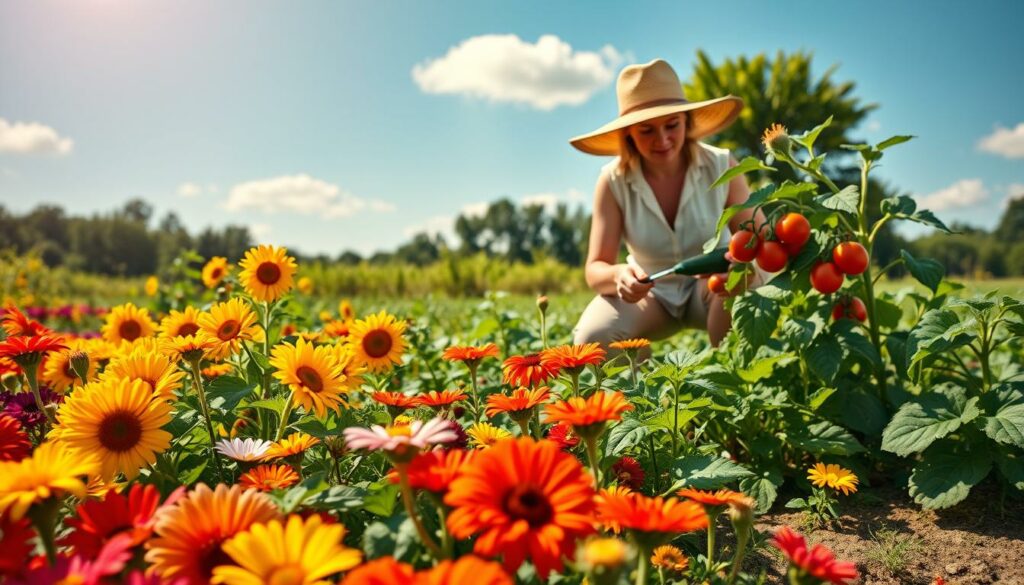
The USDA hardiness zones help with winter planning. But microclimates matter in midseason. Soil temperatures and shade patterns affect plant physiology.
Reflected heat from pavement also changes how plants respond. Simple soil probes from brands like Rapitest help gardeners track soil warmth. Digital thermometers let them time planting and watering better.
Importance of Temperature Awareness
High daytime heat slows photosynthesis and raises transpiration in plants. Warm nights reduce plant recovery. Heat waves cause sunscald on fruit and bark.
They can make flowers drop in tomatoes and peppers. These effects lower yields and weaken plant health.
Monitoring local forecasts and bulletins from institutions like University of California Cooperative Extension offers helpful alerts. Checking soil temperature guides when to transplant or apply heat-sensitive treatments.
Adjusting Watering Schedules
Evapotranspiration rises as temperatures climb. Gardeners must adjust watering frequency and depth. Shallow, frequent watering wastes water and keeps roots near the surface.
Deep, infrequent watering helps roots grow downward and improves drought resilience. Shift irrigation to early morning or late evening to save water and reduce fungal risk.
Containers dry faster, so check soil daily. In-ground beds need longer, less frequent watering sessions.
Identifying Heat-Stressed Plants
Heat stress shows with visible signs. Temporary wilting that recovers at night is normal. Prolonged limpness signals trouble.
Browning leaf edges, yellowing between veins, leaf drop, slow growth, and poor fruit set show heat injury. Quick checks include using a soil moisture meter or digging to feel soil dampness.
Check leaves for dullness that signals stomatal closure. Give a deep drink, add shade with cloth or screen, and apply mulch to save moisture.
If symptoms persist, contact the local county extension office for diagnosis and treatment. Extension agents test soil, identify pests or diseases, and suggest remedies for summer gardening challenges.
Essential Watering Techniques for Summer
Summer gardening tips focus on managing water well. Plants deal with heat, wind, and dry soil. Clear watering methods help roots survive and grow strong.
The tips below show practical ways to water summer plants. These proven techniques keep gardens healthy during hot weather.
Deep Watering vs. Frequent Watering
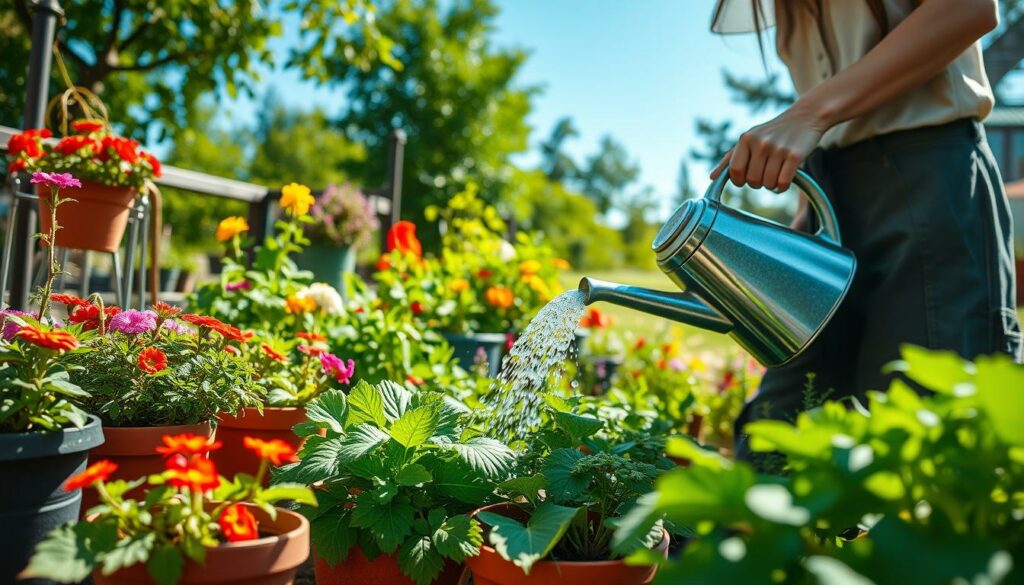
Deep watering means watering less often but giving more water each time. This soaks the root zone deeply and encourages roots to grow downward.
Shallow, frequent watering keeps roots near the soil surface. This makes plants more sensitive to drought and less sturdy.
Gardeners should moisten soil to typical root depths. For many vegetables, this is about 6–12 inches. Established shrubs and trees need water deeper than 12 inches.
Use a trowel or soil probe to check how far moisture reaches after watering. This ensures proper deep watering.
Soaker hoses, drip irrigation, and slow-release irrigation bags work well. These methods deliver water slowly, reduce runoff, and cut evaporation loss.
These are key parts of smart summer gardening techniques.
Best Times to Water Plants
Early morning, before 9 a.m., is the best time to water. Cooler air cuts evaporation. Wet leaves dry fast in morning sun, lowering fungal risks.
If watering in the morning is not possible in hot regions, late evening after sundown is okay. Evening watering may slightly increase fungal risks.
Avoid watering at mid-day unless plants face extreme heat or need quick cooling.
Using Mulch to Retain Moisture
Mulch lowers surface evaporation, helps control soil temperature, and stops weeds from growing. Organic mulches improve soil as they break down.
Inorganic mulches like gravel are good for dry gardens and xeriscaping. They help keep moisture in the soil.
Apply organic mulches 2–4 inches deep. Keep mulch 1–2 inches away from plant stems to prevent rot.
Replenish mulch in mid-summer if it thins out. This forms a core part of summer gardening techniques along with good irrigation.
| Technique | How It Helps | Recommended Use |
|---|---|---|
| Deep Watering | Encourages deep root growth, increases drought resilience | Use soaker hoses or drip systems; check with trowel to 6–12 inches |
| Frequent Shallow Watering | Maintains surface moisture but creates weak root systems | Avoid for vegetables and perennials; use only for seedlings and pots |
| Morning Watering | Lower evaporation; reduces fungal disease risk | Water before 9 a.m. when possible |
| Evening Watering | Useful when mornings are unavailable; slightly higher fungal risk | Use after sundown in very hot areas; avoid leaving foliage wet overnight |
| Organic Mulch | Retains moisture, cools soil, adds organic matter | Apply 2–4 inches, keep clear of stems, replenish mid-summer |
| Inorganic Mulch | Reduces evaporation for xeric gardens; long-lasting | Use gravel or rock for drought-tolerant beds and pathways |
Choosing the Right Plants for Summer Gardens
Picking plants that thrive in heat makes summer gardening easier and more rewarding. The right mix boosts blooms, saves water, and supports pollinators.
This short guide highlights heat-tolerant choices, the benefits of native selections, and vibrant summer annuals to consider.
Heat-Tolerant Varieties
Heat-tolerant vegetables like okra, sweet potatoes, eggplant, and peppers handle high temperatures and give steady harvests.
Herbs such as basil, rosemary, and thyme thrive in hot, sunny sites and require little care. Ornamentals like lantana, zinnia, and salvia provide reliable color when days are long.
When choosing cultivars, look for tags that say heat-tolerant or disease-resistant. Match plants to USDA zones for best results and care guidance.
Native Plants and Their Advantages
Native species often do better than exotics in local summer conditions. They have strong root systems and need less water.
They resist regional pests and offer food and shelter for bees, butterflies, and birds.
Examples common across many U.S. regions include coneflower, black-eyed Susan, and mountain mint. For precise regional lists, gardeners can consult state extension offices or the Lady Bird Johnson Wildflower Center before planting.
Summer Annuals to Consider
Annuals offer quick color and flexible rotation. Marigolds, cosmos, portulaca, vinca, and celosia handle heat and bloom continuously with care.
Plant in stages and use succession sowing to keep beds filled by replacing spent plants with heat-tolerant types.
| Plant Type | Examples | Key Benefits | Care Notes |
|---|---|---|---|
| Heat-Tolerant Vegetables | Okra, Sweet Potatoes, Eggplant, Peppers | Reliable yields in high temps | Mulch to keep roots cool; water deeply once a week |
| Herbs | Basil, Rosemary, Thyme | Low water needs; culinary use | Plant in well-drained soil; pinch for bushier growth |
| Native Perennials | Coneflower, Black-eyed Susan, Mountain Mint | Support pollinators; drought-adapted | Establish with regular watering, reduce over time |
| Summer Annuals | Marigold, Cosmos, Portulaca, Vinca, Celosia | Bright color; fast turnover | Succession sowing extends bloom period |
| Ornamentals | Lantana, Zinnia, Salvia | Heat-loving showstoppers | Full sun and well-drained soil; deadhead for more blooms |
Use these summer gardening tips when planning beds and containers. Matching plant choices to microclimates and soil types reduces stress.
This guide explains how to care for summer plants in practical ways. Combining natives, heat-tolerant cultivars, and summer annuals creates resilient, colorful gardens through the hottest months.
Maintaining Soil Health During Hot Months
Hot weather is harder on soil than people think. Good soil keeps roots cool and holds moisture. It also supplies nutrients so plants can grow well.
These simple steps help you maintain a summer garden. They explain how to care for summer plants without causing extra stress.
Testing Soil pH
Soil pH controls how plants get nutrients like nitrogen, phosphorus, potassium, iron, and manganese. If pH is off, plants may turn yellow or grow poorly.
Home test kits and pH meters give quick readings for backyard plots. For detailed results, you can send samples to a county extension lab like USDA’s.
Adjust pH only after testing. Use lime to raise pH and sulfur to lower it. Follow label rates and extension advice to avoid mistakes.
Adding Organic Matter
Organic matter helps soil hold water and gives plants nutrients. It also improves soil structure and helps beneficial microbes grow.
This is very important during heat when water is scarce. Good materials include well-aged compost, leaf mold, composted manure, and worm castings.
Apply a 1–2 inch top-dressing and mix lightly when needed. Early summer applications help keep moisture through mid-summer. Avoid heavy tilling because it can harm soil health.
Fertilizing Safely in Summer
Use balanced, slow-release fertilizers or light water-soluble feeds. This reduces stress on plants. Be sure to follow label rates to prevent salt buildup and root damage.
Avoid heavy nitrogen during peak heat. It can cause soft, thirsty growth. For fruiting crops like tomatoes and peppers, use fertilizers higher in potassium and phosphorus.
Targeted feeding keeps yields steady and plants strong. Below is a quick reference for common summer soil tasks and materials. It will help you care for summer plants effectively.
| Task | Recommended Materials | Timing |
|---|---|---|
| pH testing | Home test kit, pH meter, county extension lab | Early summer and mid-season check |
| Raise pH | Garden lime (pelleted or powdered) | Apply after test results; follow label rates |
| Lower pH | Elemental sulfur or acidifying amendments | Apply per test recommendation; allow time to react |
| Add organic matter | Well-aged compost, leaf mold, composted manure, worm castings | Early summer top-dress 1–2 inches; incorporate lightly |
| Fertilize | Balanced slow-release, light water-soluble feeds, K-rich formulas for fruiting crops | Light applications in cooler mornings; avoid heavy N during heat |
Pest Control Strategies in Hot Weather
Hot months bring quick pest cycles and new challenges for gardeners. This guide offers practical summer tips. Focus on safe, effective pest control and gardening techniques to keep plants healthy.
Early recognition makes treatment easier. Check leaves, undersides, stems, and soil once or twice a week. Look for sticky residue, discolored leaves, or chewed stems.
Choose controls that fit pest pressure. When pests are few, mechanical removal and cultural changes can stop outbreaks early.
Common Summer Pests
Aphids, spider mites, whiteflies, tomato hornworms, squash vine borers, Japanese beetles, and slugs often appear. Some thrive in heat and drought. Others grow with humidity. Local extension services can help identify threats in your area.
Natural Pest Deterrents
Beneficial insects like lady beetles, lacewings, and parasitic wasps reduce pests without chemicals. Plant dill, fennel, and native wildflowers to attract these helpful bugs.
Use insecticidal soaps, neem oil, diatomaceous earth, and row covers on vulnerable crops. Follow product labels carefully. Avoid spraying during hot midday hours to prevent leaf burn.
Timing for Effective Treatment
Treat pests early when infestations are small for best results. Apply sprays or dusts in early morning or late evening. This limits harm to pollinators and reduces plant damage from sunlight.
Practice integrated pest management: monitor often, use handpicking and traps, rotate crops, adjust irrigation to reduce slug habitats, and save chemicals for severe outbreaks.
| Problem | Natural Option | Best Time to Apply | Notes |
|---|---|---|---|
| Aphids | Insecticidal soap; introduce lady beetles | Early morning or late evening | |
| Spider mites | Increase humidity, use neem oil | Evening to avoid leaf burn | |
| Whiteflies | Yellow sticky traps; lacewing release | Morning monitoring, treatments at dusk | |
| Tomato hornworms | Handpick; Bacillus thuringiensis for heavy infestations | Early morning when caterpillars are active | |
| Squash vine borer | Row covers; remove affected stems | Cover during egg-laying season; inspect weekly | |
| Japanese beetles | Trap nearby; handpick into soapy water | Late afternoon when beetles are sluggish | |
| Slugs | Diatomaceous earth; reduce ground moisture | Dusk and night monitoring |
Protecting Plants from Excessive Sun Exposure
Summer brings bright days and intense heat. Gardeners need summer gardening tips to keep plants thriving. This guide covers tools and placement strategies to reduce stress and boost garden resilience.
Utilizing shade cloths
Shade cloths come in densities from 30% to 90%. Use lighter shading like 30–50% for young transplants and vegetable starts. Choose 60–90% for delicate ornamentals or heat waves.
Brands like Coolaroo and Sunblock offer horticultural fabrics found at garden centers and online retailers.
Install cloth on frames or hoops above beds to allow air movement beneath. Good airflow prevents heat buildup and reduces disease risk. Fasten edges securely and leave ventilation space when covering large shrubs or containers.
Strategic plant placement
Map microclimates by watching the yard for several days. Note where morning sun is strong and where afternoon shade cools down temperatures.
Put sun-loving crops like tomatoes and peppers in bright spots. Place shade-tolerant species where afternoon shade comes from walls or tree canopy. Move potted plants during mid-day heat to cooler corners or patios to cut water loss.
Benefits of companion planting
Tall neighbors can give dappled shade for lower crops. Plant corn or sunflowers near summer squash to offer relief in hot sites.
Interplant basil with tomatoes to deter pests and help pollinators while blooming. Watch water and nutrient competition when pairing heavy feeders. Maintain spacing and check soil moisture to prevent root stress or crowding.
| Strategy | When to Use | Practical Tips |
|---|---|---|
| Shade cloth (30–50%) | Young transplants, seedlings | Use lightweight fabric on hoops; allow good airflow under the cloth |
| Shade cloth (60–90%) | Delicate ornamentals, heat waves | Secure edges, create raised frames to avoid touching foliage |
| Microclimate mapping | All gardens | Observe sun patterns for several days; place plants by intensity |
| Container mobility | Patios, decks, balconies | Move pots to shade during hottest hours; use wheeled caddies if heavy |
| Companion planting | Mixed beds, vegetable plots | Use tall plants for dappled shade; balance spacing and water needs |
Managing Weeds During the Summer
Warm weather makes weeds grow faster. They compete hard with your plants for water and nutrients. Practical routines help manage weeds and keep your summer garden tidy and productive.
Use focused methods with short, regular sessions instead of long, infrequent ones. This stops weeds from producing seeds. It also reduces stress on your good plants.
The right tools save time and remove roots that cause weeds to grow back.
Effective Weeding Techniques
Manual removal works best for small gardens. Grasp each weed near the soil. Pull steadily to lift the whole root system out.
Loose soil helps roots come out cleanly. Use a hori hori knife for deep taproots. A dandelion fork helps with stubborn weeds.
Hand cultivators work well for shallow beds. For larger plots, wheel hoes remove surface weeds and help in row cultivation.
Discard weeds carefully. Compost only if plant material is weed-free or processed hot enough. Do not add seeding weeds to cold compost.
Mulching to Suppress Weeds
Organic mulch blocks light and stops weed seeds from growing. Apply 2–4 inches of shredded bark, straw, or leaf mulch around beds.
Landscape fabric under decorative gravel helps suppress weeds in paths and display areas. Top up mulch after heavy rains in mid-summer to keep it effective.
Keep mulch a few inches away from stems and trunks. This prevents moisture diseases.
Timing for Weeding Sessions
Weeding after rain or deep watering is easier. Soft soil loosens roots for smooth removal.
Spend 15–30 minutes every few days weeding. This prevents seedlings from maturing and dropping seeds.
Focus on early-season control to reduce weed competition during hot months. Regular checks pair well with summer care tips, emphasizing steady effort over rescue.
| Task | Recommended Frequency | Best Tools | Notes |
|---|---|---|---|
| Hand pulling small weeds | Every 2–3 days | Gloves, hand cultivator | Pull after watering for full root removal |
| Removing deep-rooted weeds | Weekly as needed | Hori hori knife, dandelion fork | Lift the root to prevent regrowth |
| Wide-bed or row cultivation | Weekly to biweekly | Wheel hoe, stirrup hoe | Use shallow passes to avoid disturbing crop roots |
| Mulch application | Initial spring, top-up mid-summer | Rake, wheelbarrow | 2–4 inches of organic mulch; keep away from stems |
| Compost disposal checks | As weeds are removed | Hot compost bin, thermometer | Hot compost seeds and roots; avoid cold composting seeded weeds |
Importance of Regular Garden Monitoring
Regular garden monitoring keeps summer beds productive and strong. A short, steady routine helps catch problems early. It also guides watering, feeding, and pest control decisions.
These summer gardening tips focus on clear, repeatable checks. They make plant care less guesswork and more effective.
Signs of Plant Stress
Gardeners should watch for wilting, yellowing, or browning leaves and stunted growth. Leaf curl and early leaf drop also signal trouble. Reduced flowering or fruit means stress is affecting yield.
Root rot feels mushy and smells bad. Pest damage looks like holes, chewing marks, sticky residue, or spots.
To tell water stress from disease, check the soil. Wilting with cool, wet soil suggests root disease. Wilting with dry soil means drought stress. This simple check helps decide whether to water more, improve drainage, or treat disease.
Keeping a Gardening Journal
A gardening journal records planting dates, varieties, fertilizing, watering, pest outbreaks, heat waves, heavy rains, and harvest dates. Noting these creates a seasonal archive. It reveals patterns and improves timing for garden care.
Use a paper notebook, spreadsheet, or apps like Gardenize or GrowIt! to log your entries. Photos paired with notes increase accuracy and speed diagnosis. Over time, the journal teaches how to care better for summer plants and improves gardening tips for your plot.
Conducting Routine Plant Inspections
A weekly walk-through with a checklist makes monitoring easy. Check soil moisture, under leaves for pests, new growth, flowers, fruit, and irrigation systems. Mark any unusual signs for follow-up.
Photograph beds for before-and-after comparison and quicker diagnosis. If you see unfamiliar symptoms, contact local cooperative extension offices, Master Gardener programs, or university diagnostic labs. These resources turn your observations into useful action on how to care for summer plants.
Techniques for Pruning in Summer
Summer pruning helps gardeners keep plants healthy and control their size. It also encourages longer blooming when done carefully. Light trimming midseason can remove dead stems and improve air flow.
Heavy cuts are better done in late winter or early spring for most woody plants.
Understanding When to Prune
Gardeners should prune lightly during heat waves to prevent stressing plants. For fruiting trees and shrubs, remove suckers and spent growth. This raises airflow and lowers disease risk.
Avoid major cuts during extreme heat. Large wounds need energy to heal and leave plants weak.
Annuals and perennials benefit from deadheading to keep flowers blooming longer. Shear only a little to keep shape without causing tender shoots that could burn in heat.
Tools Needed for Effective Pruning
Use bypass pruners for clean cuts on living wood. Loppers are good for thicker branches. A pruning saw works best for big limbs. Hand shears are useful on hedges and perennials.
Keep blades sharp and clean. Disinfect between plants with isopropyl alcohol or diluted bleach to stop disease spread. Always wear gloves and protective eyewear when pruning.
How Pruning Affects Growth
Pruning redirects energy to the remaining buds and can start new shoots. Timing affects flowering. Light summer pruning of roses helps them bloom again.
But heavy cutting of spring-flowering shrubs in summer can remove next year’s buds and reduce flowers. Improper summer pruning can cause tender growth that heat and pests damage easily.
Use careful cuts, follow summer pruning tips, and help plants recover strong and fast.
Harvesting Summer Crops at the Right Time
Timing the harvest keeps flavor, texture, and yield at their best. Good timing is key when caring for summer plants. Small daily checks improve garden health and crop quality.
Recognizing Ripeness in Vegetables
Tomatoes are ready when fully colored and give slightly to gentle pressure. Cucumbers should be crisp and deep green before they turn yellow. Peppers need a firm feel and the right color for their variety.
Beans snap crisply when broken. Summer squash is best when tender with glossy skin.
Tasting small samples helps confirm flavor and texture. This hands-on check complements visual clues. It helps decide when to harvest summer crops.
Timing and Techniques for Harvesting
Harvest in the cool morning to keep produce firm and flavorful. Use clean, sharp shears or knives to cut stems cleanly and reduce disease risks.
For continuous producers like beans and zucchini, check every one to three days during peak season. This encourages more production.
Handle tomatoes and delicate fruits gently to avoid bruising. Stack harvested produce shallowly in containers to prevent crushing. These simple steps protect your yield.
Post-Harvest Care
Remove damaged produce immediately to stop disease from spreading. Cool harvests quickly by shading, rinsing in cool water, or refrigerating, depending on the crop.
Store tomatoes at room temperature and away from direct sun for best flavor. Leafy greens should be washed and kept cool with moisture control in the refrigerator.
Root crops like sweet potatoes may need curing before long storage. Process extra harvest by canning, freezing, pickling, or dehydrating to save your summer bounty.
Preparing Your Garden for Fall
As summer winds down, gardeners shift focus to preparing beds for the cooler weather. A short checklist helps protect soil health and extend harvests.
Small, steady tasks yield big rewards when getting your garden ready for fall.
Transitioning to Fall Crops
Choose cool-season vegetables like lettuce, spinach, kale, radishes, broccoli, and carrots. Plant them using regional first-frost dates found on USDA zone maps or extension calendars.
Succession planting keeps the harvest steady throughout autumn.
Use row covers or cold frames to extend harvests into late fall. These protections add weeks of production for brassicas and leafy greens.
Cleaning Up Debris
Remove spent annuals, fallen fruit, and diseased material to reduce pest and disease problems next spring.
Compost healthy debris. Send infected plants to municipal green waste or burn them if local rules allow.
Sanitize pruners and shovels after cleanup. Limit tilling to only when needed to protect soil structure and preserve beneficial microbes.
Planning for Next Year’s Garden
Review your gardening journal to note summer successes and problems. Use these notes to plan crop rotations that reduce soil diseases.
Schedule soil testing in late summer or early fall to guide soil amendments. Plant cover crops like legumes or rye to rebuild organic matter and fix nitrogen before spring.
Order seeds early. Sketch bed layouts considering shifting shade, irrigation access, and lessons learned from summer gardening.
Sustainable Practices for Summer Gardening
Summer brings heat and water stress. Sustainable gardening methods help plants thrive while cutting resource use. Compost and smart irrigation keep soil healthy and reduce synthetic inputs.
Small changes, like grouping plants by water needs, make a big difference during hot months.
Benefits of Composting
Composting kitchen scraps and yard waste produces organic matter that improves soil water retention and fertility. These are vital for summer gardening. Home methods range from backyard piles to tumblers and hot composting.
Hot composting can reach temperatures that kill weed seeds and pathogens. Popular tumblers from Jora or Envirocycle speed processing. Kitchen pails with carbon filters keep odors down.
Aim for a balanced carbon-to-nitrogen (C:N) mix. Turn regularly to maintain airflow.
Water Conservation Techniques
Efficient irrigation keeps plants hydrated without waste. Drip irrigation, soaker hoses, and smart timers from Rain Bird or Orbit deliver water to the root zone. These reduce evaporation.
Rain barrels collect roof runoff where local rules allow. Hydrozoning groups plants by water need to save water. Xeriscaping and adding organic matter also improve moisture retention.
Homeowners should check municipal rebates for rain barrels or smart controller programs to stretch budgets further.
Using Natural Fertilizers
Using natural fertilizers supports long-term soil health. Compost, composted manure, fish emulsion, kelp extracts, bone meal, and blood meal supply different nutrients. Apply them based on soil test results and label directions to avoid runoff.
Moderation is key in high heat to prevent soft, tender growth that suffers in drought. Integrate cover crops, crop rotation, and mycorrhizal inoculants to build fertility over time. This reduces reliance on synthetic options.